Drop shot rig
Rig · Last reviewed 2026-08-10
Weight at the bottom, hook tied in above it — a finesse arrangement that suspends a small lure at a fixed height and lets it be worked without moving.
Safety: fish welfare — can cause injury needing treatment.
A drop shot, with the weight below the hook
Rig · Draft — not yet checked against an external reference
This drawing has not been checked against any reference outside FishingHQ. It shows how the components are arranged; it is not a certified tying sequence. Follow the written steps.
Describe this diagram in words
A vertical rig seen side on. The main line runs from the rod straight down to a weight resting on the bottom. Part way up, a hook is tied directly into the main line so that it stands out horizontally, carrying a small soft bait. The weight is therefore BELOW the hook, which is the reverse of every other rig here and the property the arrangement is named for. An arrow marks the distance between hook and weight, which is adjustable and sets the height at which the bait is held above the bottom — the reason the rig works over weed, deep silt and snaggy ground. A note records that it is worked in one place rather than retrieved, which makes it a closing tool rather than a searching one.
How this drawing was produced
Built during an earlier pass. Every other rig in FishingHQ hangs its weight below or beside the hook; this one inverts that, and the inversion is not obvious from a component list. The adjustable hook-to-weight distance is drawn as a dimension because it is the single number a reader sets, and the figure carries the page's own conclusion that the rig is a closing tool rather than a searching one.
What it is for
To suspend a small soft lure at a controlled height above the bottom and animate it in place, for fish that have been located but are not prepared to chase.
Components, from rod to hook
- Braided main line, for sensitivity.
- A fluorocarbon leader.
- A hook tied in with a knot that leaves a long tag end, positioned at the chosen height above the weight.
- The tag end running down from the hook to the weight.
- A drop shot weight with a line-gripping clip, so its distance can be adjusted without retying.
- A small soft plastic, nose-hooked or wacky-rigged.
What it does in the water
The weight sits on the bottom and stays there. The line above it is under light tension from the rod, and the hook stands off it horizontally with the lure held out from the line. Shaking the rod tip transmits movement down the line, and because the weight does not move, the lure quivers and swims on the spot. Takes usually register as a distinct tap through the braid, or as the line simply loading up with weight.
When to use it
For perch, zander and pike around structure, in deep margins, in cold water, and anywhere a lure needs to stay in the strike zone rather than pass through it. It is poor in strong current, which sweeps the light rig, and poor for searching, because it covers very little water.
Common mistakes
- Tying the hook so it lies along the line rather than standing out at right angles.
- Retrieving the rig instead of working it in place, which discards its whole advantage.
- Setting the drop distance by habit rather than by where the fish are holding.
- Using a weight much heavier than needed, which kills the sensitivity the rig exists for.
- Fishing monofilament, whose stretch hides everything the rig is designed to transmit.
How this rig behaves, and where it goes wrong
The drop shot rig inverts the usual order. The weight goes on the very end of the line and the hook is tied in some distance above it, standing off the line at right angles. The weight rests on the bottom, and the lure is suspended at whatever height the hook was tied.
The consequence is the capability nothing else has: the lure can be shaken, twitched and animated indefinitely while staying in exactly the same place. A conventional retrieve gives a fish one opportunity to commit as the lure passes; a drop shot gives it as many as the angler is willing to offer.
Getting the hook to stand off the line correctly is the part people get wrong, and it is not subtle — a hook lying flat against the line hooks very few fish.
When drop shot rather than a jig, and when it is the wrong idea entirely
A jig head puts the weight AT the lure. A drop shot puts the weight BELOW it, on the end of the line, with the hook tied in above. That single change decides everything the rig is good and bad at.
Because the weight is on the bottom and the lure is above it, the lure can be worked WITHOUT MOVING IT ALONG. Slack and tighten the line and the bait shivers, rises and settles in one place at a fixed height. That is the presentation for a fish that is located and unwilling — perch tight to a structure, zander sitting in a depression, anything that has followed a lure and refused it.
It is also the arrangement for fishing a precise height off the bottom, which matters over weed, over deep silt that a jig sinks into, and over snaggy ground where the weight can be sacrificed and the hook kept clear.
WHERE IT IS THE WRONG CHOICE is equally clear and less often said. Drop shot is slow. If the fish have not been located, a rig that excels at working one square metre thoroughly is the wrong tool for covering a lake, and a jig or a crank searching water will find fish faster. It is poor in strong current, where the weight drags and the whole geometry collapses. It is poor at distance, because the arrangement casts badly compared with a compact jig. And it is a finesse presentation: against fish actively chasing bait fish in open water, a moving lure usually beats a hovering one.
The honest summary is that drop shot is a closing tool rather than a searching one, and most poor days with it are days it was used to search.
What experienced anglers do — why, and the sources (2)
Widely and independently recommended by experienced anglers and specialist sources. This is real angling knowledge, not proof: controlled evidence for it is limited, and FishingHQ records it as convention rather than as a demonstrated effect.
- Angling Times — Bauer Media (Specialist angling publication)Relied on for: Contemporary UK predator and lure angling practice as reported by practitioners, including finesse soft-plastic presentation.States this directlyCitation checked — the work exists and is described correctly
- General angling website restatements of established technique — Various (Credible secondary source)Relied on for: Widely restated descriptions of established lure-rigging convention, recorded as practitioner consensus rather than as scholarship.Background and mechanism onlyCitation checked — the work exists and is described correctly
Deep hooking, and why a static small bait raises the risk
This rig carries a welfare consideration that the tackle discussion around it usually skips, and it follows from exactly the property that makes it effective.
A drop-shot bait sits still, at a fixed height, for a long time, on a small hook. A fish that would nip at a moving lure and be hooked in the front of the mouth has time to take a stationary small bait properly and turn with it. The result is a genuinely higher rate of deep-hooked fish than fast-moving lure fishing produces, and it falls hardest on perch, which are the species the rig is most used for and which take a small bait fully.
WHAT REDUCES IT is mostly attention rather than tackle. The rig transmits takes clearly through a taut line to a weight on the bottom, so the information is available — a tap, a slackening, a weight that was not there before. Striking on that information rather than waiting for the rod to pull round is the main thing, and it is the opposite of what a static presentation psychologically encourages.
Beyond that: a hook large enough in the gape to catch in the jaw rather than be swallowed, a point kept sharp so it takes hold on the first contact, and barbless or micro-barbed points so that a bad hookhold can be reversed. Long forceps and a disgorger should be in reach before the first cast.
And where a fish is hooked deeply, cutting the line close and returning it is very frequently the better outcome than an extended attempt at retrieval. That is a general handling principle rather than a drop-shot one, and it applies here more often than it does with most rigs because of what this rig is designed to do.
Official guidance — why, and the sources (2)
Stated by a fisheries authority, scientific institute or recognised angling body. Authoritative, but summarising rather than demonstrating.
- Humane Harvesting of Fish: percussive stunning and percussive equipment — Humane Slaughter Association (Angling or fisheries organisation)Relied on for: Welfare consequences of capture, handling and terminal tackle, and the practices that reduce injury.States this directlyNot yet checked
- Angling Trust guidance for anglers — Angling Trust (Angling or fisheries organisation)Relied on for: Guidance to anglers on fishery rules, conditions of access and expected handling practice.States this directlyCitation checked — the work exists and is described correctly
Safety
Fish welfare — Can cause injury needing treatment
The property that makes the rig work also raises deep hooking. A small bait held stationary at a fixed height on a small hook gives a fish time to take it fully and turn with it, where the same fish would nip at a moving lure and be hooked in the front of the mouth. It falls hardest on perch, which are what the rig is most used for and which take a small bait completely.
What reduces it: Strike on the information the rig already transmits — a tap, a slackening, a weight that was not there — rather than waiting for the rod to pull round. Use a hook large enough in the gape to catch in the jaw, keep the point sharp so it takes hold on first contact, and fish barbless or micro-barbed so a bad hookhold can be reversed. Carry long forceps and a disgorger within reach before the first cast, and where a fish is hooked deeply cut the line close and return it rather than extending the retrieval.
Check the rules before you fish
Fishing laws, bylaws, access rules, seasons, bait restrictions and permitted methods vary by location and can change. Check the current rules from the relevant authority and the water you intend to fish before fishing.
Check with:
- Current national or regional law for where you are fishing
- Current local bylaws
- The relevant fisheries authority
- The landowner, club or fishery whose water it is
- Any restrictions specific to the species or the method you intend to use
Where to go next
Fish it is built for
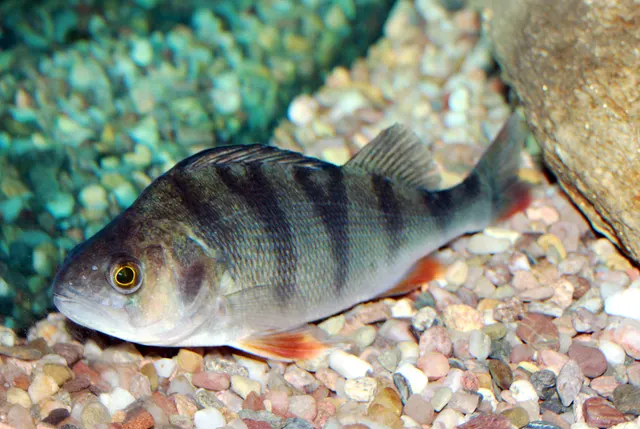 European perchThe rig holds a small soft bait stationary at a chosen height off the bottom, which suits a fish that hunts small prey close to structure and will inspect a stationary bait for a long time.
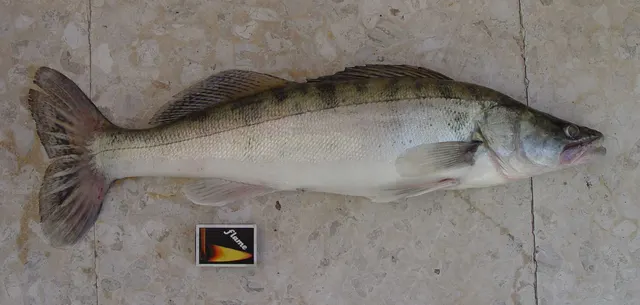 ZanderUsed for zander over deeper structure and in current, where holding a bait at a fixed height above the bottom matters more than covering ground.
How it is fished
What it is made of
- Non-slip loop knotA small soft plastic fished nearly static on a taut line is as dependent on free movement as anything in fishing, and the drop-shot's leader is usually fluorocarbon chosen for stiffness rather than for suppleness.
- Palomar knotDrop-shotting needs the hook to stand off the line at a right angle, which follows from how the palomar is tied and left long.
- Soft plasticsFlexible moulded lures that feel like prey when a fish takes hold — the most versatile lure family, and the one that has grown most.
Worth understanding first
- Choosing a rig for the conditionsThe only arrangement in FishingHQ that puts the weight BELOW the hook, which is what makes it the spine's answer for a suspended bait at a chosen height, fished vertically and with finesse.
- Soft plastic riggingDrop-shotting separates weight from hook entirely, which is the far end of the rigging spectrum from a moulded jig head.
- What a rig does, and how to read oneA rig that inverts the usual order — weight below the hook rather than above it — is the best possible test of whether a reader can read a rig rather than recognise one.
Instead of this
Rules and access
Environment and conservation
History and culture
Sources and evidence
Why the 13 connections on this page are here, and the sources
Fish it is built for
What experienced anglers do — 2 connections
Widely and independently recommended by experienced anglers and specialist sources. This is real angling knowledge, not proof: controlled evidence for it is limited, and FishingHQ records it as convention rather than as a demonstrated effect.
European perch
Which species a terminal arrangement is directed at is established practitioner knowledge, converging across independent angling traditions and literatures, and is labelled as consensus rather than as tested result.
- Angling Times — Bauer Media (Specialist angling publication)Relied on for: Contemporary UK predator and lure angling practice as reported by practitioners, including finesse soft-plastic presentation.States this directlyCitation checked — the work exists and is described correctly
- General angling website restatements of established technique — Various (Credible secondary source)Relied on for: Widely restated descriptions of established lure-rigging convention, recorded as practitioner consensus rather than as scholarship.Background and mechanism onlyCitation checked — the work exists and is described correctly
Zander
Which species a terminal arrangement is directed at is established practitioner knowledge, converging across independent angling traditions and literatures, and is labelled as consensus rather than as tested result.
- Angling Times — Bauer Media (Specialist angling publication)Relied on for: Contemporary UK predator and lure angling practice as reported by practitioners, including finesse soft-plastic presentation.States this directlyCitation checked — the work exists and is described correctly
- General angling website restatements of established technique — Various (Credible secondary source)Relied on for: Widely restated descriptions of established lure-rigging convention, recorded as practitioner consensus rather than as scholarship.Background and mechanism onlyCitation checked — the work exists and is described correctly
How it is fished
What experienced anglers do — 1 connection
Widely and independently recommended by experienced anglers and specialist sources. This is real angling knowledge, not proof: controlled evidence for it is limited, and FishingHQ records it as convention rather than as a demonstrated effect.
Drop shotting
That a method is conventionally fished on a particular terminal arrangement, drawn from angling literature and from widely restated practitioner description rather than from testing.
- Angling Times — Bauer Media (Specialist angling publication)Relied on for: Contemporary UK lure and predator angling practice as reported by practitioners, including braid-to-lure connections and finesse rigging.States this directlyCitation checked — the work exists and is described correctly
- How to Tie Fishing Knots — uni, blood, improved blood, surgeon's and loop knots — Recreational Boating & Fishing Foundation (Take Me Fishing) (Angling or fisheries organisation)Relied on for: A contemporary national angling-participation body's knot guide, covering the connections used in modern lure fishing and the materials they are tied in.States this directlyPassage read and verified
What it is made of
What experienced anglers do — 3 connections
Widely and independently recommended by experienced anglers and specialist sources. This is real angling knowledge, not proof: controlled evidence for it is limited, and FishingHQ records it as convention rather than as a demonstrated effect.
Non-slip loop knot
An arrangement joined to the knot that actually builds it, written where the knot is characteristic of that arrangement rather than merely possible in it. This is the edge a reader travels: they arrive looking for the arrangement and need the connection it depends on.
- Sea Angler — Bauer Media (Specialist angling publication)Relied on for: British sea angling practice: shock leaders, multi-hook trace construction and the dropper loops a trace is built from.FishingHQ's interpretation of what it saysCitation checked — the work exists and is described correctly
- General angling website restatements of established technique — Various (Credible secondary source)Relied on for: Widely restated descriptions of established connection convention, recorded as practitioner consensus rather than as scholarship.Background and mechanism onlyCitation checked — the work exists and is described correctly
- Freshwater Fishing — Macdonald & Jane's, 1975 (Specialist angling publication)Relied on for: Comprehensive angling practice: reel filling, leader and dropper construction, and the connections each arrangement rests on.States this directlyCitation checked — the work exists and is described correctly
- Coarse Fishing — A. & C. Black, 1912 (Specialist angling publication)Relied on for: Classical coarse angling practice: hooklengths, loops, droppers and the terminal arrangements built from them.States this directlyCitation checked — the work exists and is described correctly
Palomar knot
A rig whose geometry is produced by the knot rather than by a component.
- Freshwater Fishing — Macdonald & Jane's, 1975 (Specialist angling publication)Relied on for: Knot selection for joining line to terminal tackle and line to line.States this directlyCitation checked — the work exists and is described correctly
- IGFA International Angling Rules and World Record Requirements — International Game Fish Association (Angling or fisheries organisation)Relied on for: The role of knots and connections in terminal tackle, and the line-class conventions that depend on them.States this directlyPassage read and verified
Soft plastics
Standard presentation for the rig.
- Angling Times — Bauer Media (Specialist angling publication)Relied on for: Soft plastic selection and presentation on drop shot rigs.Citation checked — the work exists and is described correctly
- Sea Angler — Bauer Media (Specialist angling publication)Relied on for: Equivalent practice in a separate tradition.Citation checked — the work exists and is described correctly
Worth understanding first
What experienced anglers do — 3 connections
Widely and independently recommended by experienced anglers and specialist sources. This is real angling knowledge, not proof: controlled evidence for it is limited, and FishingHQ records it as convention rather than as a demonstrated effect.
Choosing a rig for the conditions
An arrangement joined to the guidance that selects it. That guidance names eleven rigs against four questions and pointed at none of them, so a reader following the procedure to its conclusion could not reach the answer.
- Sea Angler — Bauer Media (Specialist angling publication)Relied on for: British sea angling practice: how tide, wind, swell and water clarity change where and how a mark is fished.FishingHQ's interpretation of what it saysCitation checked — the work exists and is described correctly
- Freshwater Fishing — Macdonald & Jane's, 1975 (Specialist angling publication)Relied on for: Comprehensive angling practice across disciplines, including water reading, seasonal condition and the tackle each demands.States this directlyCitation checked — the work exists and is described correctly
Soft plastic rigging
The separation of weight from hook is the defining feature of the rig.
- Angling Times — Bauer Media (Specialist angling publication)Relied on for: Contemporary lure angling practice with modern materials and lure types.States this directlyCitation checked — the work exists and is described correctly
- Sea Angler — Bauer Media (Specialist angling publication)Relied on for: Saltwater lure angling practice with the same materials and lure types.States this directlyCitation checked — the work exists and is described correctly
What a rig does, and how to read one
Why it works. How knots and rigs behave is established practitioner knowledge converging across independent angling traditions, and is described as agreement between them rather than as a tested result.
- Angling Times — Bauer Media (Specialist angling publication)Relied on for: Contemporary UK coarse and match angling practice as reported by practitioners, including rig and knot convention.States this directlyCitation checked — the work exists and is described correctly
- Sea Angler — Bauer Media (Specialist angling publication)Relied on for: Contemporary UK sea angling practice as reported by practitioners, including rig construction, leaders and line choice.States this directlyCitation checked — the work exists and is described correctly
Instead of this
What experienced anglers do — 1 connection
Widely and independently recommended by experienced anglers and specialist sources. This is real angling knowledge, not proof: controlled evidence for it is limited, and FishingHQ records it as convention rather than as a demonstrated effect.
Paternoster rig
The structural relationship is evident and is noted in contemporary practice.
- Angling Times — Bauer Media (Specialist angling publication)Relied on for: The structural relationship between drop shot and paternoster arrangements.Citation checked — the work exists and is described correctly
- Sea Angler — Bauer Media (Specialist angling publication)Relied on for: Paternoster rig construction, from the sea angling tradition.Citation checked — the work exists and is described correctly
Rules and access
Official guidance — 1 connection
Stated by a fisheries authority, scientific institute or recognised angling body. Authoritative, but summarising rather than demonstrating.
Method and bait restrictions
This points to the kind of rule that applies rather than to a rule itself. Rig restrictions are set by individual fisheries far more often than by statute, they differ between neighbouring waters, and they change — so the page points at the idea and tells you who to ask.
- Environment Agency fisheries management, byelaws and rod licensing information — Environment Agency (Government fisheries body)Relied on for: That fisheries authorities and fishery owners set restrictions on gear and terminal arrangements, and that these vary by water and change over time.States this directlyCitation checked — the work exists and is described correctly
- Angling Trust guidance for anglers — Angling Trust (Angling or fisheries organisation)Relied on for: Guidance to anglers on fishery rules and conditions of access, including gear and method restrictions set by individual waters.States this directlyCitation checked — the work exists and is described correctly
Environment and conservation
Official guidance — 1 connection
Stated by a fisheries authority, scientific institute or recognised angling body. Authoritative, but summarising rather than demonstrating.
Lead in angling
An environmental claim attached to the arrangement that causes it, held to the authoritative standard this kind of claim requires because tackle loss and lead use are matters of regulation and of published conservation evidence rather than of preference.
- The Control of Pollution (Anglers' Lead Weights) Regulations 1986 — The Stationery Office (UK statutory instrument), 1986 (Standards body)Relied on for: That lead fishing weights within specified size ranges have been made subject to regulatory restriction, so a shotting arrangement is a regulated choice rather than only a technical one.States this directlyPassage read and verified
- Regulation of lead fishing weights results in mute swan population recovery — Biological Conservation, 2019 (Scientific literature)Relied on for: The waterfowl poisoning evidence that produced the restriction, and the population recovery that followed it.States this directlyCitation checked — the work exists and is described correctly
History and culture
What experienced anglers do — 1 connection
Widely and independently recommended by experienced anglers and specialist sources. This is real angling knowledge, not proof: controlled evidence for it is limited, and FishingHQ records it as convention rather than as a demonstrated effect.
The development of artificial lures
Where a terminal arrangement came from and what it displaced, drawn from the angling literature and from widely restated practitioner accounts rather than from scholarship.
- Angling Times — Bauer Media (Specialist angling publication)Relied on for: Contemporary UK predator and lure angling practice as reported by practitioners, including finesse soft-plastic presentation.States this directlyCitation checked — the work exists and is described correctly
- General angling website restatements of established technique — Various (Credible secondary source)Relied on for: Widely restated descriptions of established lure-rigging convention, recorded as practitioner consensus rather than as scholarship.Background and mechanism onlyCitation checked — the work exists and is described correctly
How FishingHQ labels evidence is explained in the evidence policy.