Zander
Fish · Last reviewed 2026-08-10
A shoaling freshwater predator built for hunting in low light and coloured water, and the fish that made a virtue of the conditions pike find difficult.
Safety: barotrauma and pressure injury — can cause injury needing treatment. 5 more points apply here.
Barotrauma and pressure injury — Can cause injury needing treatment
Zander brought quickly from deep water suffer swimbladder expansion and can be unable to swim back down. A fish that floats after release does not recover.
What reduces it: Retrieve more slowly from depth, and if fish from deep water are consistently arriving distressed, move shallower rather than continuing.
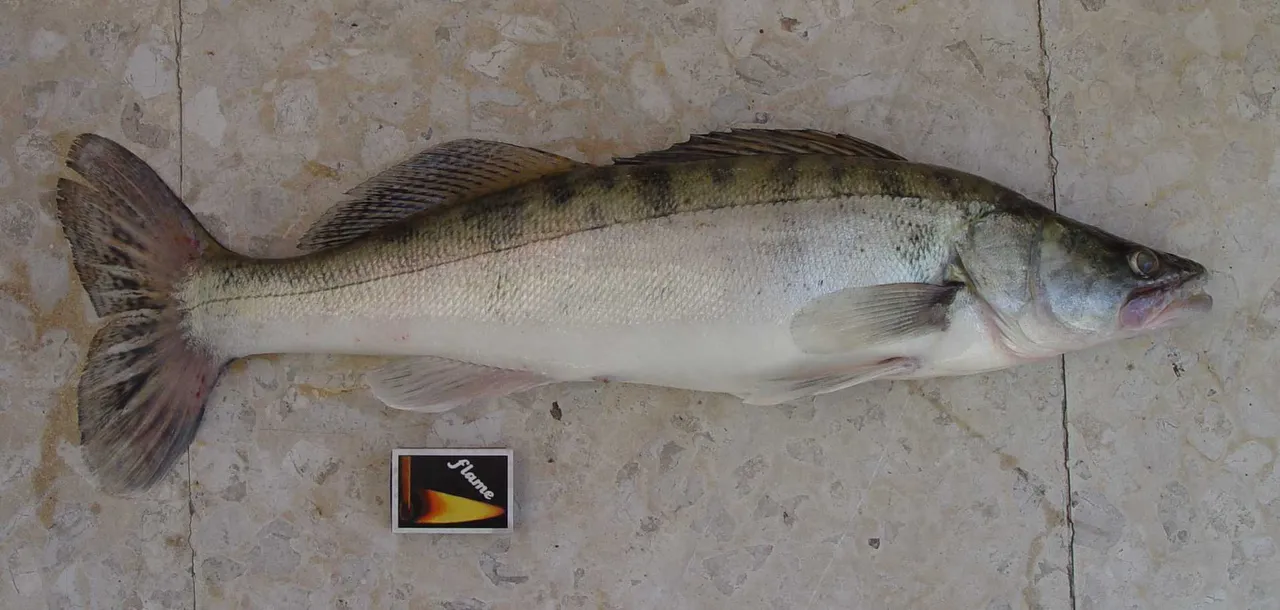
How this was identified, and who took it
Identified by: Full lateral view of a fresh fish. Spiny first dorsal with its rows of dark spots, the flank barring, the canine teeth and the pointed head are all legible. Third zander candidate reviewed; the first two were rejected.eLNuko — Public domain, via Wikimedia Commons — source, licence
Catching Zander
Everything here on fishing for it. Each entry opens the page behind it.
- Ground
- When
- Sept–Feb — months recorded at the places that document it, not a season for the whole range.
- Where
- 14 places FishingHQ documents — strongest claim anywhere: regular local target · From the shore
Zander are often described as a cross between a pike and a perch. They are neither — they are a large percid, closely related to perch and to the North American walleye — but the description survives because it captures how they look: a long, muscular, pike-like body carrying a perch's two dorsal fins and a mouth full of prominent canine teeth.
What actually distinguishes them is sensory. Zander have a reflective layer behind the retina, the same structure that makes a cat's eyes shine, and it gives them usable vision at light levels where their prey has almost none. That is the whole species in one adaptation. Zander thrive in exactly the water most predators struggle in — turbid rivers, eutrophic lakes, coloured water, the hours around dusk and dawn — because low light is not a limitation for them, it is an advantage.
For an angler that reorganises everything. The productive periods are the ones nobody else wants, the productive water is the water that looks unpromising, and a lure that works by vibration in the murk will usually beat one that works by looking convincing.
Zander are also an introduced species across much of western Europe, including Britain, and that carries consequences discussed below rather than skated over.
Gear for this fish
- Drop shot rigUsed for zander over deeper structure and in current, where holding a bait at a fixed height above the bottom matters more than covering ground.
- Jigs and jig headsThe head weight decides the fall speed, and the fall is what a zander responds to. This is the clearest case in freshwater of the jighead being the lure and the plastic being the dressing.
- Soft plasticsZander hunt in low light and coloured water using a light-sensitive eye, and they take a small soft bait on the drop far more often than on the retrieve — which is why the vertical and lift-and-fall presentations dominate and a steady retrieve does not.
- Wire trace deadbait rigZander take deadbaits on the same ground and carry teeth that will cut through nylon, so the same trace requirement applies even though the fish is smaller.
Where Zander is documented
Places where public sources describe this species as fished, with how it is fished and how strongly the evidence supports it. This is not a range map and it is not a recommendation — it is what has been written down about a fishery rather than a record of any individual catch, and being listed is never permission to fish.
The Fens and their drains
9 documented places
The Old Bedford River and the Delph
Drain
Regular local target
From the shore
Around Oct, Nov, Dec, Jan, Feb
River reach
Regular local target
From the shore
Around Oct, Nov, Dec, Jan, Feb
River reach
Regular local target
From the shore
Around Oct, Nov, Dec, Jan, Feb
River reach
Regular local target
From the shore
Around Oct, Nov, Dec, Jan, Feb
Drain
Regular local target
From the shore
Around Oct, Nov, Dec, Jan, Feb
Drain
Regular local target
From the shore
Around Oct, Nov, Dec, Jan, Feb
Drain
Regular local target
From the shore
Around Oct, Nov, Dec, Jan, Feb
Drain
Regular local target
From the shore
Around Oct, Nov, Dec, Jan, Feb
Drain
Regular local target
From the shore
Around Oct, Nov, Dec, Jan, Feb
The English canal network
3 documented places
Canal section
Regular local target
From the shore
Canal section
Regular local target
From the shore
Around Sept, Oct, Nov, Dec, Jan, Feb
The Gloucester and Sharpness Canal
Canal section
Regular local target
From the shore
Around Sept, Oct, Nov, Dec, Jan, Feb
England and Wales
2 documented places
River reach
Regular local target
From the shore
Around Oct, Nov, Dec, Jan, Feb
River reach
Repeatedly reported
From the shore
What these strengths mean
- Regular local target
- Fishing sources describe this as a normal local target here, not merely as caught.
- Repeatedly reported
- Several independent public accounts. Enough to say it happens more than once; not enough to call it a fishery.
When to fish for zander
Where the places here state a season for zander, it clusters in Oct–Feb. This is a count of how many documented places name each month — evidence about when people fish for it, not a prediction of what any particular day will produce.
| Jan | Feb | Mar | Apr | May | Jun | Jul | Aug | Sep | Oct | Nov | Dec |
|---|---|---|---|---|---|---|---|---|---|---|---|
| January: 12 places name this month — most places. | February: 12 places name this month — most places. | March: no place here names this month — no place names it. | April: no place here names this month — no place names it. | May: no place here names this month — no place names it. | June: no place here names this month — no place names it. | July: no place here names this month — no place names it. | August: no place here names this month — no place names it. | September: 2 places name this month — few places. | October: 12 places name this month — most places. | November: 12 places name this month — most places. | December: 12 places name this month — most places. |
12 of the 14 places that record catches of zander state which months. The other 2 name no season, so they are counted in neither direction: the shape above is what the dated records say, not the whole picture. The dated records span 3 separate areas.
Identification
- Scientific name
- Sander lucioperca
- Family
- Percidae
- Water
- Freshwater, Brackish
- Conservation status
- Least Concern
- Regions
- Western Europe, Central & Eastern Europe, Northern Europe, Britain & Ireland
- Two separate dorsal fins, the first spiny — the percid arrangement, shared with perch — on a long, pike-like body.
- Prominent canine teeth at the front of both jaws, considerably larger than a perch's.
- Pale, slightly translucent eye with a reflective sheen, which is the light-gathering layer behind the retina.
- Grey-green to bronze flanks with faint dark barring, far less distinct than a perch's bold bars.
- No barbels, unlike burbot; no single soft dorsal, unlike pike.
Size
- Typical
- 40–60 cm and 1–3 kg for most fish caught.
- Large
- Over 75 cm and 5 kg.
Exceptional: FishBase records a maximum of 100 cm and 20 kg. Fish approaching that are exceptional anywhere in the European range and are almost always from large, productive lowland river systems.
An introduced predator, and what that means
Zander are not native to Britain and are not native to much of western Europe. They were introduced, they established, and in several countries their arrival has been followed by documented declines in prey-fish populations.
That puts an angler in an awkward position, and it is worth setting out honestly rather than resolving it in either direction. Zander are a legitimate and rewarding catch where they are established, and no amount of angling will remove them from a large river system. At the same time, moving them to a new water is not a neutral act, and the movement of live fish between waters is both the mechanism by which they spread and, in many jurisdictions, unlawful.
FishingHQ's position is the narrow one it can actually support: fish for them where they are, do not move them anywhere, and treat the biosecurity guidance on this site as applying with particular force to a species whose introduction history is this recent.
Official guidance — why, and the sources (2)
Stated by a fisheries authority, scientific institute or recognised angling body. Authoritative, but summarising rather than demonstrating.
- FishBase: a global information system on fishes — Froese, R. and D. Pauly, eds. — FishBase Consortium (Scientific institute)Relied on for: That Sander lucioperca has been widely introduced outside its native range, with documented adverse ecological impacts recorded in several countries.States this directlyPassage read and verified
- Check Clean Dry — biosecurity guidance for water users — GB Non-native Species Secretariat (Conservation authority)Relied on for: That movement of live fish between waters is a principal pathway for the spread of non-native species.States this directlyPassage read and verified
Teeth, gill covers and a fish that is easily damaged in warm water
Zander have long canines at the front of the jaw and a dense band of smaller teeth behind them, and the injury they cause is a puncture rather than a laceration. The gill covers are sharp-edged and are what most people actually cut themselves on while trying to avoid the teeth.
The grip is across the back of the head with fingers well clear of the gill covers, or a lip grip supported by a second hand under the body. Nothing goes inside the mouth without long forceps.
The part that matters more is what zander do not tolerate. They are a low-light, deeper-water predator with large light-sensitive eyes, and fish brought up from depth in warm water recover poorly. Long fights, long air exposure and bright sunlight compound each other, and a zander that swims off strongly can still be a fish that does not survive the night.
So the handling discipline is speed rather than technique: net, unhook in the net where possible, support horizontally, and return without a photograph if the fish has come from deep water on a warm day. Where the species is non-native, whether it goes back at all is a local regulatory question with a genuinely varying answer.
What experienced anglers do — why, and the sources (2)
Widely and independently recommended by experienced anglers and specialist sources. This is real angling knowledge, not proof: controlled evidence for it is limited, and FishingHQ records it as convention rather than as a demonstrated effect.
- Angling Times — Bauer Media (Specialist angling publication)Relied on for: Predator angling practice on handling and returning zander.States this directlyCitation checked — the work exists and is described correctly
- Freshwater Fishing — Macdonald & Jane's, 1975 (Specialist angling publication)Relied on for: Handling principles for freshwater predators, including support and unhooking.States this directlyCitation checked — the work exists and is described correctly
What a zander can see that other predators cannot
ESTABLISHED. Zander have a tapetum lucidum — a reflective layer behind the retina that returns light through the photoreceptors a second time — which is what makes their eyes appear to glow and which substantially improves vision in low light. This is the same adaptation found in nocturnal mammals and it is well documented in the species.
WHAT FOLLOWS FROM IT. Zander hunt effectively in conditions where their prey sees poorly: at night, at dawn and dusk, at depth, and in coloured water. The advantage is comparative rather than absolute — they see better than their prey does in the same low light, which is what matters for a predator.
AND THE CORRESPONDING WEAKNESS. Bright, clear, sunlit conditions offer them no advantage and may be genuinely uncomfortable, which is the biological basis for their association with deeper water and turbid systems.
WHAT ANGLERS RELIABLY REPORT. Far better catches at night and in coloured water, and a preference for baits fished close to the bottom. The first follows directly from the established physiology; the second is convention.
WHAT IS UNRESOLVED. Whether lure colour matters to a fish with this visual apparatus is asserted constantly and tested almost never.
Backed by research — why, and the sources (2)
Supported by peer-reviewed research or fisheries science. The sources are listed and can be checked.
- FishBase: a global information system on fishes — Froese, R. and D. Pauly, eds. — FishBase Consortium (Scientific institute)Relied on for: Life history, spawning biology, habitat association and feeding ecology for the species.States this directlyPassage read and verified
- Freshwater Fishes of the British Isles — HarperCollins (New Naturalist 75), 1992 (Reference work)Relied on for: Life history and behaviour of European freshwater fishes, independently of the angling literature.Background and mechanism onlyCitation checked — the work exists and is described correctly
A light-limited predator, and why the year is really about water clarity
Zander have a seasonal pattern that looks like a temperature response and is really a light response, and understanding that reorganises everything about when they are catchable.
THE EYE IS THE WHOLE STORY. A zander's retina carries a tapetum lucidum — a reflective layer behind the photoreceptors that returns light through them a second time, the same structure that makes a cat's eyes shine. It multiplies sensitivity in very low light, and it makes bright light uncomfortable. The consequence is a predator with a decisive advantage over its prey in conditions where the prey cannot see well: dusk, night, deep water, and coloured water.
SO THE FISH HUNTS WHEN THE LIGHT SUITS IT, and the year follows from that rather than from the thermometer. The autumn and winter peak that this species is known for coincides with shortening days, rising turbidity from rain and wind, and the collapse of the summer algal clarity — every one of which extends the number of hours in which a zander is the best-equipped animal in the water. Cold does not drive the peak; darkness does.
SUMMER PUSHES THE FEEDING INTO THE NIGHT for the same reason. Long, bright days in clear water shrink the zander's window to a few hours around dark, which is why summer zander fishing is a nocturnal activity and why the hour either side of dusk is disproportionately productive in every month of the year.
SPRING IS THE EXCEPTION AND IT IS BEHAVIOURAL. Zander spawn on cleaned hard substrate in shallow water, and the male guards the nest aggressively, fanning the eggs and driving off intruders. That aggression makes him easy to catch and his removal leaves the eggs to silt up and fail. It is the one period where the fish's behaviour makes it vulnerable in a way that matters to the population rather than to the individual, and it is the biological reason close seasons of this shape commonly exist. What is legally in force on any water is current, local and not something this page states.
Backed by research — why, and the sources (2)
Supported by peer-reviewed research or fisheries science. The sources are listed and can be checked.
- Freshwater Fishes of the British Isles — HarperCollins (New Naturalist 75), 1992 (Reference work)Relied on for: Seasonal behaviour, spawning timing and temperature response of European freshwater fishes.States this directlyCitation checked — the work exists and is described correctly
- FishBase: a global information system on fishes — Froese, R. and D. Pauly, eds. — FishBase Consortium (Scientific institute)Relied on for: Temperature tolerance, depth range, spawning season and migratory behaviour recorded for the species.States this directlyPassage read and verified
Real parental care in a percid, and what happens to an abandoned nest
Zander practise a genuine parental investment that is unusual among the fish on FishingHQ, and understanding it explains both why the fishery works in spring and why it should not.
THE NEST IS PREPARED, NOT FOUND. In spring the male selects and cleans a patch of hard substrate — gravel, a root mass, a submerged branch, stone — fanning silt away with his fins until the surface is clean enough for adhesive eggs to attach. That preparation is real work and it is a deliberate act of site selection rather than a broadcast over whatever is there.
AND THEN HE STAYS. After the female has deposited the eggs he guards them, driving off intruders and — crucially — fanning water over them continuously with his pectoral fins. That fanning is not decorative: adhesive eggs in still water sitting on a substrate accumulate silt and deplete the oxygen immediately around them, and a clutch that is not aerated fungusses and dies. The male is doing a job the water cannot do for itself.
WHICH MEANS THE COST OF REMOVING HIM IS NOT ONE FISH. A guarding male is aggressive, stationary, findable, and will attack a lure or a bait presented near the nest as a threat rather than as food. He is, in other words, unusually easy to catch. A nest whose guard is removed silts up, deoxygenates and fails within a short period — the entire brood, from one fish taken.
THAT IS THE BIOLOGY. It is also the reasoning behind close seasons of the shape that exist across much of the species' range: not sentiment about disturbing fish, but a specific mechanism by which one removal costs a brood. What is actually in force on any water is current, local, and not stated here.
AND IT SITS ODDLY WITH THE SPECIES' STATUS ELSEWHERE, which is worth acknowledging. Zander are native to central and eastern Europe and introduced — and in places regarded as a problem — further west. Where a population is unwanted the calculus around a guarding male is entirely different, and that is a local management question rather than one with a general answer.
Backed by research — why, and the sources (4)
Supported by peer-reviewed research or fisheries science. The sources are listed and can be checked.
- Freshwater Fishes of the British Isles — HarperCollins (New Naturalist 75), 1992 (Reference work)Relied on for: Spawning habitat, timing, egg deposition and recruitment of European freshwater fishes.States this directlyCitation checked — the work exists and is described correctly
- FishBase: a global information system on fishes — Froese, R. and D. Pauly, eds. — FishBase Consortium (Scientific institute)Relied on for: Reproductive mode, spawning season and parental care recorded for the species.States this directlyPassage read and verified
- FishBase: a global information system on fishes — Froese, R. and D. Pauly, eds. — FishBase Consortium (Scientific institute)Relied on for: Reproductive mode, spawning season, fecundity, parental care, sex-change pattern and larval development recorded for the species.States this directlyPassage read and verified
- The IUCN Red List of Threatened Species — International Union for Conservation of Nature (Conservation authority)Relied on for: Assessment, population trend, and the life-history traits — age at maturity, longevity, reproductive strategy — that determine sensitivity to exploitation.States this directlyCitation checked — the work exists and is described correctly
A fish whose British size ceiling is not the same as its European one
Zander are the clearest case on FishingHQ of a species whose size expectation must be stated by region, because the introduced British population and the native continental one are not comparable animals.
THE NATIVE RANGE PRODUCES THE LARGE FISH. Zander are a fish of large, productive, turbid lowland rivers and their associated lakes and reservoirs across central and eastern Europe, and in the biggest of those systems — long, warm, rich, full of prey fish — they reach sizes far beyond what British waters produce. The FishBase maximum on this page belongs to that world and should be read as such.
THE BRITISH POPULATION IS INTRODUCED, RECENT AND HABITAT-LIMITED. Zander in Britain occupy fenland drains, canals, some lowland rivers and a small number of reservoirs. Those waters are mostly small, shallow and cool by continental standards, the population is young in evolutionary terms, and the ceiling is correspondingly lower. A fish over the 'large' threshold on this page is a very good British zander; the exceptional figure is not a British expectation at all.
GROWTH IS PREY-DRIVEN AND THAT MAKES IT VOLATILE. Zander are obligate piscivores from an early stage and they grow at whatever rate the prey supply allows. A drain full of small roach produces fast-growing zander; the same drain after a fish kill or a roach decline produces slow ones. Zander fisheries are notably boom-and-bust for exactly this reason, and a water's reputation for size is frequently a decade out of date.
FEMALES ARE THE BIG FISH, and the difference is substantial. Every large zander is female, and males are noticeably smaller at the same age.
AND THE FISH LOOKS BIGGER THAN IT IS. A zander is long, slim and low-slung compared with a pike of the same weight, and the length flatters the estimate. A metre-long zander is a serious fish and it will weigh a good deal less than a metre-long pike. Where the question is whether a fish was exceptional, the length and the water it came from settle it better than the impression at the net.
Backed by research — why, and the sources (2)
Supported by peer-reviewed research or fisheries science. The sources are listed and can be checked.
- Freshwater Fishes of the British Isles — HarperCollins (New Naturalist 75), 1992 (Reference work)Relied on for: Growth, age structure, maximum sizes and regional variation in British and European freshwater fishes.States this directlyCitation checked — the work exists and is described correctly
- FishBase: a global information system on fishes — Froese, R. and D. Pauly, eds. — FishBase Consortium (Scientific institute)Relied on for: Maximum recorded length and weight and reported longevity for the species.Background and mechanism onlyPassage read and verified
Turbid, deep, featureless water: a predator that prefers the conditions others avoid
Zander habitat is defined by light rather than by structure, and that single fact separates them from every other predator they share water with.
THE EYE IS THE HABITAT ADAPTATION. A zander's retina carries a reflective tapetum lucidum, which gives it usable vision at light levels where pike and perch are effectively blind. That capability is only an advantage where light is genuinely limited, so zander concentrate in exactly the water other predators find difficult: turbid, coloured, deep, or dark.
WHICH MAKES THEIR PREFERRED WATERS LOOK UNPROMISING. Large lowland rivers carrying suspended sediment, fenland drains, canals, deep coloured reservoirs and turbid lakes are prime zander habitat. Clear, weedy, shallow water is not — where a lake clears, zander decline relative to pike and perch, and where a lake colours up, they gain. That is a habitat competition story rather than an abundance one.
STRUCTURE MATTERS LESS THAN DEPTH AND EDGE. Zander are not ambush predators tied to cover in the way pike are; they hunt in loose groups, often over open bottom, working the deeper water and moving onto shallower shelves and margins to feed as light falls. So they relate to depth changes, channel edges, drop-offs and the boundary between deep and shallow rather than to weed or snags. A featureless deep drain that would look empty to a pike angler can be full of zander.
TIME OF DAY IS PART OF THE HABITAT. The same fish occupies deep water by day and shallow margins at dawn, dusk and through the night, and a habitat description that does not include the light state is only half the answer.
THEY NEED PREY FISH IN QUANTITY, AND SPECIFICALLY SMALL ONES. Zander have a narrow gape relative to their length and are specialists on small silver fish, so the habitat must hold abundant roach, bream fry or similar. Waters with a strong small-prey population support zander well; waters where the prey base is large-bodied do not.
AND SPAWNING PLACES A SEPARATE, HARDER REQUIREMENT. Zander need a firm substrate — gravel, root, hard bottom, submerged timber — for the male to clean and guard a nest on, in water that is otherwise soft-bottomed. Waters with plenty of adult habitat and no hard spawning substrate hold zander that were stocked rather than zander that were bred, which is a common situation in British drains and reservoirs.
Backed by research — why, and the sources (2)
Supported by peer-reviewed research or fisheries science. The sources are listed and can be checked.
- Freshwater Fishes of the British Isles — HarperCollins (New Naturalist 75), 1992 (Reference work)Relied on for: Habitat association, distribution and ecology of European freshwater fishes, including position within a water body.States this directlyCitation checked — the work exists and is described correctly
- FishBase: a global information system on fishes — Froese, R. and D. Pauly, eds. — FishBase Consortium (Scientific institute)Relied on for: Habitat association, depth range and water-type tolerance recorded for the species.States this directlyPassage read and verified
Lifecycle and reproduction
Zander grow quickly where prey is abundant and reach maturity at three to five years. FishBase records a maximum age of 17 years. Growth and survival are strongly year-class driven: a warm spring producing a strong year class can dominate a fishery's catches for years afterwards, which is why zander populations tend to move in waves rather than staying level.
Zander spawn in spring on a nest — a cleaned patch of gravel, root or hard substrate, prepared and then guarded by the male, which is a genuine parental investment and unusual among the fish on FishingHQ. The guarding male drives off intruders and fans the eggs. Disturbing a nesting male has consequences beyond the individual fish, because an abandoned nest is a lost brood.
Feeding and senses
Zander are piscivores that hunt shoaling prey in open water and along structure, typically working in loose groups. Adults feed predominantly on gregarious pelagic fish — FishBase's diet record puts them at a trophic level of 4.0, the same bracket as pike. Unlike pike they do not rely on a single ambush from cover; they push prey and take it in the confusion, which is why they hunt best at the light levels where a shoal cannot hold formation.
This is the species' defining feature. The tapetum lucidum behind the retina reflects light back through it, effectively giving the eye two chances at the same photons, and the result is functional vision in conditions approaching darkness. Zander are correspondingly light-sensitive in the other direction and tend to go deep or into cover in bright conditions. The lateral line does the rest of the work in genuinely coloured water. In practical terms: fish for them at dusk, at night, in colour, or deep — and prefer lures that displace water over lures that merely look right.
Through the year
Zander feed through the year with a marked autumn and winter peak, when shoals concentrate and water clarity typically drops. Spring brings spawning and a period where nesting males are vulnerable and best left alone. Summer pushes feeding into darkness. Within a day, the hour either side of dark is disproportionately productive across the whole year.
Distribution
Native to the Caspian, Baltic, Black and Aral Sea basins and to the Elbe and Maritza drainages, reaching north to about 65°N in Finland. Widely introduced outside that range, including into Britain, with documented adverse ecological effects in several countries. The global IUCN category is Least Concern, assessed in May 2022.
This is a biological range — where the species occurs, not a prediction that you will catch one. To browse the fishing geography FishingHQ holds, start at fishing places.
Why anglers care
A major predator target across continental Europe and a growing one in Britain, fished for with soft plastics, jigs and deadbaits. Zander angling is unusually technical for a predator species because so much of it depends on getting the depth and the light conditions right rather than on the lure itself.
Handling and returning
The canine teeth and the spiny first dorsal both bite. Grip across the back behind the dorsal, keep fingers clear of the front of the jaws, and unhook with forceps. Zander are more fragile than pike: they suffer noticeably from barotrauma when brought up quickly from deep water, and they are sensitive to warm water and to handling. Keep them wet, keep it short, and support the fish while it recovers.
Going further
- What does zander eat? — feeding biology, kept separate from what anglers infer from it.
Safety
Barotrauma and pressure injury is set out at the top of this page, where it cannot be missed.
Injury while handling fish — Minor injury
The canine teeth puncture and the spiny first dorsal cuts. Neither is in the pike class, but both produce contaminated wounds that infect readily.
What reduces it: Grip across the back behind the spiny dorsal so the fin folds, keep fingers out of the front of the mouth, and unhook with forceps rather than by hand.
Precautions that always apply here
- Wet your hands before touching a fish. Dry hands strip the protective mucus layer that keeps infection out.
- Unhook fish on a wet mat or in the water, never on gravel, stone or a hard bank.
- Handle spined and venomous species with the spines controlled. Know which local species have them before you fish, not afterwards.
- Never move live fish, live bait or water from one water to another.
Check the rules before you fish
Fishing laws, bylaws, access rules, seasons, bait restrictions and permitted methods vary by location and can change. Check the current rules from the relevant authority and the water you intend to fish before fishing.
Check with:
- Current national or regional law for where you are fishing
- Current local bylaws
- The relevant fisheries authority
- The landowner, club or fishery whose water it is
- Any restrictions specific to the species or the method you intend to use
Where to go next
Similar and related fish
- RoachZander are specialist fish predators and small cyprinids dominate the diet wherever the two occur — which is why they are so effective in the turbid, cyprinid-rich waters they favour.
- BleakBleak are a principal zander prey in the open water of European rivers and reservoirs, taken in low light where the zander's tapetum gives it an advantage.
- RuffeRuffe appear consistently in zander diets, and both species are adapted to feeding in turbid water where sight-hunting predators do less well.
Where it lives
Where you will find it
- Central and eastern European river fishingThe premier predator target across most of the region, and the species around which its boat lure fishing developed.
- GermanyA dominant predator of the large engineered lowland rivers and their groyne fields, where turbid water suits an eye adapted to low light.
- PolandNative to the Vistula and Oder systems and to the Baltic lagoons, where it moves between fresh and brackish water — one of the few places a reader can meet the fish in the range it spread from rather than where it was introduced.
- The Baltic SeaOccupies brackish coastal waters and shallow bays, where the turbidity of the inshore Baltic suits a light-limited predator particularly well.
- The Baltic statesNative and abundant in the great lakes and in the Curonian Lagoon, where the brackish water suits it as well as fresh water does.
- The DanubeNative and widespread through the middle and lower river, supporting some of the best zander fishing in Europe.
- The Danube basinNative to the system and reaching sizes across the middle and lower river that its introduced British populations do not approach.
- The English canal networkThrough much of the connected network after spreading from its original introduction, and now a canal fish in the English public mind. Its status as a non-native predator carries specific rules that differ by area and have changed.
8 more
- The Fens and their drains Fishing regions
- The Finnish lake district Fishing regions
- The IJsselmeer Fishing regions
- The Netherlands Fishing regions
- The Rhine Fishing regions
- The River Ebro Fishing regions
- The River Thames Fishing regions
- The River Trent Fishing regions
Understanding this fish
- Contaminants, and what accumulates in a fishA freshwater apex piscivore that grows old in still and slow water, and one of the species European freshwater consumption advice is most often issued about — usually alongside pike, and usually per water body rather than in general.
- Eating freshwater fish you have caughtA premium food fish across central Europe and a controlled non-native in England, which makes the question of what to do with one genuinely different depending on which side of the Channel it was caught.
- Floating, suspending and sinking luresThe opposite requirement in the same water. Zander hold hard on the bottom in low light and turbid water, so a lure that hangs mid-water is fishing above them — which is why the same lake fished for pike and for zander wants opposite buoyancy on the same day.
- How fish detect preyZander have a light-gathering reflective layer behind the retina, which is why they feed hard at dusk and in coloured water — the single most useful fact about fishing for them.
- Urban and canal fishingCanals and drains are prime zander water precisely because they are turbid, featureless and deep in the channel — conditions a light-limited predator exploits.
Told apart from
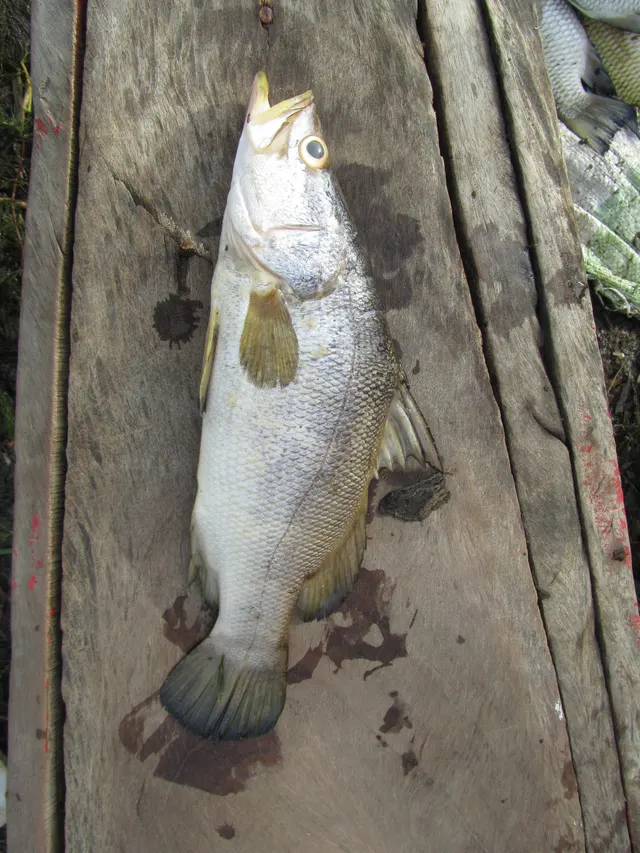 Nile perchBoth are introduced piscivores whose spread is contested, at opposite ends of the scale — one reshaped a lake's entire fauna, the other is an argued-about fisheries management question in European rivers.
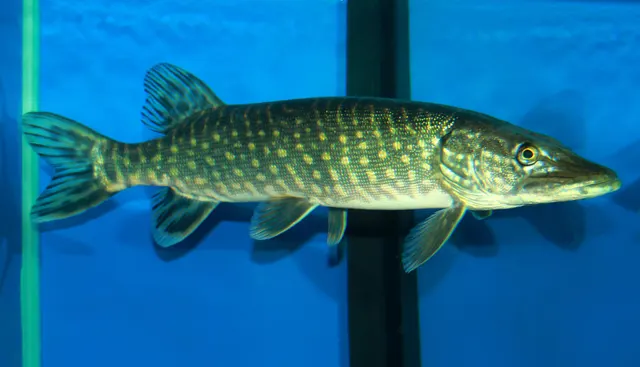 Northern pikeThe two are constantly confused as a catch and are almost nothing alike: pike is an ambush predator of clear, weedy water hunting by sight; zander is a low-light shoal hunter that is at its best in the turbid water pike struggle in.
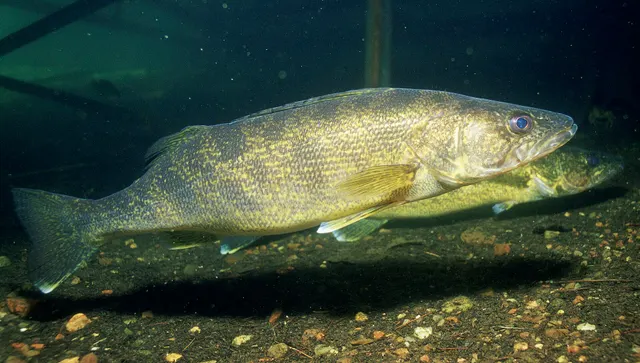 WalleyeClose relatives in the same genus doing the same job on different continents — both low-light shoal hunters of large turbid water, and both routinely mistaken for pike by people who have not seen the two dorsals.
Environment and conservation
Sources and evidence
- FishBase: a global information system on fishes — Froese, R. and D. Pauly, eds. — FishBase Consortium (Scientific institute)Relied on for: Family (Percidae), maxima of 100 cm SL and 20 kg, maximum age 17 years, native distribution, brackish tolerance, the association with large turbid rivers and eutrophic lakes, the pelagic-fish diet, and Least Concern assessed 27 May 2022. Read during source review.States this directlyPassage read and verified
Why the 34 connections on this page are here, and the sources
Similar and related fish
Backed by research — 3 connections
Supported by peer-reviewed research or fisheries science. The sources are listed and can be checked.
Roach
A claim about feeding ecology, held to a scientific standard. Recorded diet composition for Sander lucioperca is consistently dominated by small shoaling fish, cyprinids prominent among them.
- FishBase: a global information system on fishes — Froese, R. and D. Pauly, eds. — FishBase Consortium (Scientific institute)Relied on for: Recorded diet composition for Sander lucioperca as a piscivore taking small shoaling fish.States this directlyPassage read and verified
- Freshwater Fishes of the British Isles — HarperCollins (New Naturalist 75), 1992 (Reference work)Relied on for: The feeding ecology of Sander lucioperca in European fresh waters, including Rutilus rutilus among the small shoaling cyprinids taken.States this directlyCitation checked — the work exists and is described correctly
The inverse edge, stated separately for the same reason the pike cluster states it separately: a reader on the roach page is asking a different question from a reader on the zander page.
- Freshwater Fishes of the British Isles — HarperCollins (New Naturalist 75), 1992 (Reference work)Relied on for: Predation pressure on roach populations from introduced and native piscivores.States this directlyCitation checked — the work exists and is described correctly
- FishBase: a global information system on fishes — Froese, R. and D. Pauly, eds. — FishBase Consortium (Scientific institute)Relied on for: Diet records for Sander lucioperca.Background and mechanism onlyPassage read and verified
Bleak
Recorded diet evidence identifies Alburnus alburnus as a food item of this predator at species level. The edge is written at that granularity and no further.
- FishBase: a global information system on fishes — Froese, R. and D. Pauly, eds. — FishBase Consortium (Scientific institute)Relied on for: Food items recorded for this predator, including Alburnus alburnus.States this directlyPassage read and verified
- FAO Species Identification Guides for Fishery Purposes and the FAO Species Catalogues — Food and Agriculture Organization of the United Nations (Scientific institute)Relied on for: Species account describing the diet of this predator in the region where Alburnus alburnus occurs.Background and mechanism onlyCitation checked — the work exists and is described correctly
Ruffe
Recorded diet evidence identifies Gymnocephalus cernua as a food item of this predator at species level. The edge is written at that granularity and no further.
- FishBase: a global information system on fishes — Froese, R. and D. Pauly, eds. — FishBase Consortium (Scientific institute)Relied on for: Food items recorded for this predator, including Gymnocephalus cernua.States this directlyPassage read and verified
- FAO Species Identification Guides for Fishery Purposes and the FAO Species Catalogues — Food and Agriculture Organization of the United Nations (Scientific institute)Relied on for: Species account describing the diet of this predator in the region where Gymnocephalus cernua occurs.Background and mechanism onlyCitation checked — the work exists and is described correctly
How it is caught
What experienced anglers do — 1 connection
Widely and independently recommended by experienced anglers and specialist sources. This is real angling knowledge, not proof: controlled evidence for it is limited, and FishingHQ records it as convention rather than as a demonstrated effect.
Drop shotting
A practitioner claim about presentation, labelled as such. The mechanism — bait held off bottom in the fish's feeding layer — is the part that generalises.
- Angling Times — Bauer Media (Specialist angling publication)Relied on for: Drop-shot presentation for zander in British waters.Citation checked — the work exists and is described correctly
- Pike Anglers' Club of Great Britain guidance on pike care and handling — Pike Anglers' Club of Great Britain, 1977 (Angling or fisheries organisation)Relied on for: Practitioner treatment of light lure presentation for zander, from a source independent of the angling press.Passage read and verified
Gear for this fish
What experienced anglers do — 4 connections
Widely and independently recommended by experienced anglers and specialist sources. This is real angling knowledge, not proof: controlled evidence for it is limited, and FishingHQ records it as convention rather than as a demonstrated effect.
Drop shot rig
Which species a terminal arrangement is directed at is established practitioner knowledge, converging across independent angling traditions and literatures, and is labelled as consensus rather than as tested result.
- Angling Times — Bauer Media (Specialist angling publication)Relied on for: Contemporary UK predator and lure angling practice as reported by practitioners, including finesse soft-plastic presentation.States this directlyCitation checked — the work exists and is described correctly
- General angling website restatements of established technique — Various (Credible secondary source)Relied on for: Widely restated descriptions of established lure-rigging convention, recorded as practitioner consensus rather than as scholarship.Background and mechanism onlyCitation checked — the work exists and is described correctly
Jigs and jig heads
A practitioner claim about which lure family answers this species' feeding or holding behaviour.
- Freshwater Fishing — Macdonald & Jane's, 1975 (Specialist angling publication)Relied on for: Lure and spinning practice for freshwater predators in Britain and northern Europe.States this directlyCitation checked — the work exists and is described correctly
- Angling Times — Bauer Media (Specialist angling publication)Relied on for: Contemporary British and European lure practice for this species in the weekly angling press.Background and mechanism onlyCitation checked — the work exists and is described correctly
Soft plastics
A practitioner claim about which lure family answers this species' feeding or holding behaviour.
- Freshwater Fishing — Macdonald & Jane's, 1975 (Specialist angling publication)Relied on for: Lure and spinning practice for freshwater predators in Britain and northern Europe.States this directlyCitation checked — the work exists and is described correctly
- Angling Times — Bauer Media (Specialist angling publication)Relied on for: Contemporary British and European lure practice for this species in the weekly angling press.Background and mechanism onlyCitation checked — the work exists and is described correctly
Wire trace deadbait rig
Which species a terminal arrangement is directed at is established practitioner knowledge, converging across independent angling traditions and literatures, and is labelled as consensus rather than as tested result.
- Pike and the Pike Angler — Stanley Paul, 1981 (Specialist angling publication)Relied on for: Pike angling practice including deadbait presentation, wire traces, multi-hook arrangements and their origins.States this directlyCitation checked — the work exists and is described correctly
- Pike Anglers' Club of Great Britain guidance on pike care and handling — Pike Anglers' Club of Great Britain, 1977 (Angling or fisheries organisation)Relied on for: Pike care and handling guidance, including trace requirements and the unhooking consequences of terminal arrangements.States this directlyPassage read and verified
Where it lives
Backed by research — 1 connection
Supported by peer-reviewed research or fisheries science. The sources are listed and can be checked.
Canals
Habitat association recorded for the species, in an environment FishingHQ describes on its own page.
- Freshwater Fishes of the British Isles — HarperCollins (New Naturalist 75), 1992 (Reference work)Relied on for: Habitat association and distribution of European freshwater fishes, including occurrence in artificial and modified waters.States this directlyCitation checked — the work exists and is described correctly
- FishBase: a global information system on fishes — Froese, R. and D. Pauly, eds. — FishBase Consortium (Scientific institute)Relied on for: Habitat association, depth range and water-type tolerance recorded for the species.States this directlyPassage read and verified
Where you will find it
Backed by research — 16 connections
Supported by peer-reviewed research or fisheries science. The sources are listed and can be checked.
Central and eastern European river fishing
A distributional claim taken from reference sources on the species rather than from angling report. It states presence and asserts nothing about a fishery.
- FishBase: a global information system on fishes — Froese, R. and D. Pauly, eds. — FishBase Consortium (Scientific institute)Relied on for: Distribution, habitat association, depth range and life history recorded for the species concerned.States this directlyPassage read and verified
- The IUCN Red List of Threatened Species — International Union for Conservation of Nature (Conservation authority)Relied on for: Global distribution, population trend and extinction-risk assessment for the species concerned.States this directlyCitation checked — the work exists and is described correctly
Germany
That a species occurs in these waters, drawn from distribution science and stock assessment. It is a statement about where the animal lives and is not a statement that anybody will catch one, still less where.
- Freshwater Fishes of the British Isles — HarperCollins (New Naturalist 75), 1992 (Reference work)Relied on for: Distribution, habitat requirement and life history of European freshwater fishes, including their occurrence across the continental range named.States this directlyCitation checked — the work exists and is described correctly
- FishBase: a global information system on fishes — Froese, R. and D. Pauly, eds. — FishBase Consortium (Scientific institute)Relied on for: Recorded distribution and habitat association of the freshwater and migratory species named.States this directlyPassage read and verified
Poland
That a species occurs in these waters, drawn from distribution science and stock assessment. It is a statement about where the animal lives and is not a statement that anybody will catch one, still less where.
- Freshwater Fishes of the British Isles — HarperCollins (New Naturalist 75), 1992 (Reference work)Relied on for: Distribution, habitat requirement and life history of European freshwater fishes, including their occurrence across the continental range named.States this directlyCitation checked — the work exists and is described correctly
- FishBase: a global information system on fishes — Froese, R. and D. Pauly, eds. — FishBase Consortium (Scientific institute)Relied on for: Recorded distribution and habitat association of the freshwater and migratory species named.States this directlyPassage read and verified
The Baltic Sea
Occurrence of the species in this system or along this coast: a statement about the animal's distribution, not a venue recommendation.
- Freshwater Fishes of the British Isles — HarperCollins (New Naturalist 75), 1992 (Reference work)Relied on for: Distribution and habitat association of European freshwater fishes, including their occurrence in brackish and coastal waters.States this directlyCitation checked — the work exists and is described correctly
- FishBase: a global information system on fishes — Froese, R. and D. Pauly, eds. — FishBase Consortium (Scientific institute)Relied on for: Salinity tolerance and distribution recorded for the species.States this directlyPassage read and verified
The Baltic states
That a species occurs in these waters, drawn from distribution science and stock assessment. It is a statement about where the animal lives and is not a statement that anybody will catch one, still less where.
- Freshwater Fishes of the British Isles — HarperCollins (New Naturalist 75), 1992 (Reference work)Relied on for: Distribution, habitat requirement and life history of European freshwater fishes, including their occurrence across the continental range named.States this directlyCitation checked — the work exists and is described correctly
- FishBase: a global information system on fishes — Froese, R. and D. Pauly, eds. — FishBase Consortium (Scientific institute)Relied on for: Recorded distribution and habitat association of the freshwater and migratory species named.States this directlyPassage read and verified
The Danube
A distributional claim taken from reference works and databases on the fishes of the region rather than from angling report. It states presence and asserts nothing about a fishery.
- FishBase: a global information system on fishes — Froese, R. and D. Pauly, eds. — FishBase Consortium (Scientific institute)Relied on for: Distribution, habitat association, life history and size recorded for the species concerned.States this directlyPassage read and verified
- Freshwater Fishes of the British Isles — HarperCollins (New Naturalist 75), 1992 (Reference work)Relied on for: Biology, distribution, life history and conservation status of northern European freshwater and diadromous fishes.States this directlyCitation checked — the work exists and is described correctly
The Danube basin
A distribution association between an animal and a kind of water, rather than a claim about any named mark.
- Freshwater Fishes of the British Isles — HarperCollins (New Naturalist 75), 1992 (Reference work)Relied on for: Distribution and habitat association of European freshwater fishes, including occurrence in the river system concerned.States this directlyCitation checked — the work exists and is described correctly
- FishBase: a global information system on fishes — Froese, R. and D. Pauly, eds. — FishBase Consortium (Scientific institute)Relied on for: Distribution and habitat association recorded for the species.States this directlyPassage read and verified
The English canal network
A claim that a place contains the ground, water and seasonal conditions the species is associated with. It is a distributional statement about the world, it rests on the regional reference literature, and it deliberately asserts nothing about access, permission or catch.
- Freshwater Fishes of the British Isles — HarperCollins (New Naturalist 75), 1992 (Reference work)Relied on for: Distribution, ecology and conservation status of the freshwater fishes of the British Isles, including in artificial and modified waters.States this directlyCitation checked — the work exists and is described correctly
- Environment Agency fisheries management, byelaws and rod licensing information — Environment Agency (Government fisheries body)Relied on for: Fisheries monitoring, water quality and species distribution in English rivers, canals and still waters.States this directlyCitation checked — the work exists and is described correctly
The Fens and their drains
A distributional claim about where a species occurs, which is a claim about the world and rests on the reference literature rather than on angling report.
- Freshwater Fishes of the British Isles — HarperCollins (New Naturalist 75), 1992 (Reference work)Relied on for: Distribution, habitat association and ecology of the freshwater fishes of the British Isles.States this directlyCitation checked — the work exists and is described correctly
- FishBase: a global information system on fishes — Froese, R. and D. Pauly, eds. — FishBase Consortium (Scientific institute)Relied on for: Distribution, habitat association and life history recorded for the species.States this directlyPassage read and verified
The Finnish lake district
A claim that a place contains the ground, water and seasonal conditions the species is associated with. It is a distributional statement about the world, it rests on the regional reference literature, and it deliberately asserts nothing about access, permission or catch.
- Freshwater Fishes of the British Isles — HarperCollins (New Naturalist 75), 1992 (Reference work)Relied on for: Distribution, ecology and conservation status of European freshwater and migratory fishes, including in modified and artificial waters.States this directlyCitation checked — the work exists and is described correctly
- FishBase: a global information system on fishes — Froese, R. and D. Pauly, eds. — FishBase Consortium (Scientific institute)Relied on for: Recorded distribution, habitat association and life history for the freshwater and migratory species named.States this directlyPassage read and verified
The IJsselmeer
A distributional claim taken from reference works and databases on the fishes of the region rather than from angling report. It states presence and asserts nothing about a fishery.
- FishBase: a global information system on fishes — Froese, R. and D. Pauly, eds. — FishBase Consortium (Scientific institute)Relied on for: Distribution, habitat association, life history and size recorded for the species concerned.States this directlyPassage read and verified
- Freshwater Fishes of the British Isles — HarperCollins (New Naturalist 75), 1992 (Reference work)Relied on for: Biology, distribution, life history and conservation status of northern European freshwater and diadromous fishes.States this directlyCitation checked — the work exists and is described correctly
The Netherlands
That a species occurs in these waters, drawn from distribution science and stock assessment. It is a statement about where the animal lives and is not a statement that anybody will catch one, still less where.
- Freshwater Fishes of the British Isles — HarperCollins (New Naturalist 75), 1992 (Reference work)Relied on for: Distribution, habitat requirement and life history of European freshwater fishes, including their occurrence across the continental range named.States this directlyCitation checked — the work exists and is described correctly
- FishBase: a global information system on fishes — Froese, R. and D. Pauly, eds. — FishBase Consortium (Scientific institute)Relied on for: Recorded distribution and habitat association of the freshwater and migratory species named.States this directlyPassage read and verified
The Rhine
A claim that a place contains the ground, water and seasonal conditions the species is associated with. It is a distributional statement about the world, it rests on the regional reference literature, and it deliberately asserts nothing about access, permission or catch.
- Freshwater Fishes of the British Isles — HarperCollins (New Naturalist 75), 1992 (Reference work)Relied on for: Distribution, ecology and conservation status of European freshwater and migratory fishes, including in modified and artificial waters.States this directlyCitation checked — the work exists and is described correctly
- FishBase: a global information system on fishes — Froese, R. and D. Pauly, eds. — FishBase Consortium (Scientific institute)Relied on for: Recorded distribution, habitat association and life history for the freshwater and migratory species named.States this directlyPassage read and verified
The River Ebro
A distributional claim taken from reference works and databases on the fishes of the region rather than from angling report. It states presence and asserts nothing about a fishery.
- The IUCN Red List of Threatened Species — International Union for Conservation of Nature (Conservation authority)Relied on for: Global extinction-risk assessment, population trend and identified threats for the species concerned.States this directlyCitation checked — the work exists and is described correctly
- FishBase: a global information system on fishes — Froese, R. and D. Pauly, eds. — FishBase Consortium (Scientific institute)Relied on for: Distribution, habitat association and life history recorded for the species concerned.States this directlyPassage read and verified
The River Thames
A distributional claim taken from reference works on the fishes of the region rather than from angling report. It states presence and asserts nothing about a fishery.
- FishBase: a global information system on fishes — Froese, R. and D. Pauly, eds. — FishBase Consortium (Scientific institute)Relied on for: Distribution, habitat association, life history and depth range recorded for the species concerned.States this directlyPassage read and verified
- Freshwater Fishes of the British Isles — HarperCollins (New Naturalist 75), 1992 (Reference work)Relied on for: Biology, distribution and conservation status of British and Irish freshwater and diadromous fishes.States this directlyCitation checked — the work exists and is described correctly
- The Fishes of the British Isles and North-West Europe — Macmillan, 1969 (Reference work)Relied on for: Distribution, habitat and biology of the fishes of the British Isles and north-west Europe.States this directlyCitation checked — the work exists and is described correctly
The River Trent
A claim that a place contains the ground, water and seasonal conditions the species is associated with. It is a distributional statement about the world, it rests on the regional reference literature, and it deliberately asserts nothing about access, permission or catch.
- Freshwater Fishes of the British Isles — HarperCollins (New Naturalist 75), 1992 (Reference work)Relied on for: Distribution, habitat and conservation status of British freshwater fishes, including the isolated glacial-relict populations of northern England.States this directlyCitation checked — the work exists and is described correctly
- Environment Agency fisheries management, byelaws and rod licensing information — Environment Agency (Government fisheries body)Relied on for: Fisheries monitoring, water quality and species distribution in English rivers and still waters.States this directlyCitation checked — the work exists and is described correctly
Understanding this fish
Backed by research — 3 connections
Supported by peer-reviewed research or fisheries science. The sources are listed and can be checked.
Contaminants, and what accumulates in a fish
That bioaccumulation is relevant to this species, because it is large, long-lived and high in a food web. It states no consumption limit and no frequency — those are issued by authorities, differ by water body and by who is eating, and the record it points at says so.
- Fish and Fishery Products Hazards and Controls Guidance — US Food and Drug Administration, Center for Food Safety and Applied Nutrition, 2022 (Standards body)Relied on for: Chemical contaminants in fishery products, the accumulation of methylmercury with age and trophic position, and the basis on which consumption advice is issued.States this directlyPassage read and verified
- FishBase: a global information system on fishes — Froese, R. and D. Pauly, eds. — FishBase Consortium (Scientific institute)Relied on for: Trophic level, maximum size, maximum reported age and feeding biology of the species named.States this directlyPassage read and verified
How fish detect prey
A sensory-biology claim that directly determines when and where the species feeds, and therefore belongs on the mechanism concept rather than only in the species prose.
- FishBase: a global information system on fishes — Froese, R. and D. Pauly, eds. — FishBase Consortium (Scientific institute)Relied on for: Morphological and behavioural description of Sander lucioperca including low-light feeding.States this directlyPassage read and verified
- Freshwater Fishes of the British Isles — HarperCollins (New Naturalist 75), 1992 (Reference work)Relied on for: The eye structure of percids adapted to low light and its behavioural consequence.States this directlyCitation checked — the work exists and is described correctly
Urban and canal fishing
A species joined to the environment-based practice record that describes the water it occupies.
- Freshwater Fishes of the British Isles — HarperCollins (New Naturalist 75), 1992 (Reference work)Relied on for: Distribution and habitat association of European freshwater fishes, including occurrence in the river system concerned.States this directlyCitation checked — the work exists and is described correctly
- FishBase: a global information system on fishes — Froese, R. and D. Pauly, eds. — FishBase Consortium (Scientific institute)Relied on for: Distribution and habitat association recorded for the species.States this directlyPassage read and verified
Official guidance — 1 connection
Stated by a fisheries authority, scientific institute or recognised angling body. Authoritative, but summarising rather than demonstrating.
Eating freshwater fish you have caught
A link from a long-lived freshwater predator to the record on contaminant accumulation and consumption advice, which applies to its trophic position rather than to any particular water.
- Fish and Fishery Products Hazards and Controls Guidance — US Food and Drug Administration, Center for Food Safety and Applied Nutrition, 2022 (Standards body)Relied on for: Hazards and controls for fish and fishery products: scombrotoxin formation and the species groups associated with it, seafood parasites, and natural toxins.States this directlyPassage read and verified
What experienced anglers do — 1 connection
Widely and independently recommended by experienced anglers and specialist sources. This is real angling knowledge, not proof: controlled evidence for it is limited, and FishingHQ records it as convention rather than as a demonstrated effect.
Floating, suspending and sinking lures
A fish or a record joined to the comparison it is a worked example of, written only where the subject's own behaviour is what makes the comparison concrete rather than where the comparison could apply to it.
- Freshwater Fishes of the British Isles — HarperCollins (New Naturalist 75), 1992 (Reference work)Relied on for: Feeding biology, behaviour and life history of the freshwater fishes of the British Isles.States this directlyCitation checked — the work exists and is described correctly
- FishBase: a global information system on fishes — Froese, R. and D. Pauly, eds. — FishBase Consortium (Scientific institute)Relied on for: Recorded feeding biology, environment and behaviour of the species named.States this directlyPassage read and verified
Told apart from
Official guidance — 1 connection
Stated by a fisheries authority, scientific institute or recognised angling body. Authoritative, but summarising rather than demonstrating.
Nile perch
A comparison between two introduction cases, held to an authoritative standard because it is a claim about management rather than about technique.
- Check Clean Dry — biosecurity guidance for water users — GB Non-native Species Secretariat (Conservation authority)Relied on for: The framework for assessing introduced aquatic species and the range of outcomes from introduction.States this directlyPassage read and verified
- FishBase: a global information system on fishes — Froese, R. and D. Pauly, eds. — FishBase Consortium (Scientific institute)Relied on for: Introduction records and reported ecological impact for both species.States this directlyPassage read and verified
What experienced anglers do — 1 connection
Widely and independently recommended by experienced anglers and specialist sources. This is real angling knowledge, not proof: controlled evidence for it is limited, and FishingHQ records it as convention rather than as a demonstrated effect.
Northern pike
The comparison is what a reader arriving at either page is actually holding in their head, and the contrast in hunting strategy is the useful part rather than the family difference.
- Pike and the Pike Angler — Stanley Paul, 1981 (Specialist angling publication)Relied on for: The characterisation of pike as a visual ambush predator of clearer, weedier water.Citation checked — the work exists and is described correctly
- Pike Anglers' Club of Great Britain guidance on pike care and handling — Pike Anglers' Club of Great Britain, 1977 (Angling or fisheries organisation)Relied on for: Practitioner treatment of pike and zander as distinct catch requiring different approaches, from a source independent of the angling press.Passage read and verified
Backed by research — 1 connection
Supported by peer-reviewed research or fisheries science. The sources are listed and can be checked.
Walleye
A comparison resting on shared genus and documented ecology rather than on resemblance, which is what makes it more than a curiosity.
- FishBase: a global information system on fishes — Froese, R. and D. Pauly, eds. — FishBase Consortium (Scientific institute)Relied on for: That Sander vitreus is a Percidae of the genus Sander occupying lakes, pools, backwaters and runs of medium to large rivers, feeding at night mainly on insects and fishes.States this directlyPassage read and verified
- Freshwater Fishes of the British Isles — HarperCollins (New Naturalist 75), 1992 (Reference work)Relied on for: The ecology and low-light feeding of Sander lucioperca in European fresh waters.States this directlyCitation checked — the work exists and is described correctly
Environment and conservation
Official guidance — 1 connection
Stated by a fisheries authority, scientific institute or recognised angling body. Authoritative, but summarising rather than demonstrating.
Invasive species and biosecurity
An establishment and management claim, held to an authoritative standard because it concerns what a statutory body treats as a non-native species.
- Check Clean Dry — biosecurity guidance for water users — GB Non-native Species Secretariat (Conservation authority)Relied on for: The status of species introduced outside their native range in Great Britain and the general management framework applied to them.States this directlyPassage read and verified
- Environment Agency fisheries management, byelaws and rod licensing information — Environment Agency (Government fisheries body)Relied on for: That the movement and stocking of fish is regulated in England and Wales.FishingHQ's interpretation of what it saysCitation checked — the work exists and is described correctly
How FishingHQ labels evidence is explained in the evidence policy.