Wire trace deadbait rig
Rig · Last reviewed 2026-08-10
Two trebles on a wire trace, positioned in the outer flesh of a deadbait so the fish can be struck promptly and hooked in the jaw.
Safety: fish welfare — can cause serious injury or death. 4 more points apply here.
A wire trace deadbait rig, and why the trace is long
Rig · Draft — not yet checked against an external reference
This drawing has not been checked against any reference outside FishingHQ. It shows how the components are arranged; it is not a certified tying sequence. Follow the written steps.
Describe this diagram in words
A deadbait rig laid out horizontally. The main line runs in from the left to a swivel, beyond which the wire trace runs to the bait. Two treble hooks are set into the flank of the deadbait, one towards the head and one towards the tail, so that a point lies near the jaw whichever way a pike turns the bait in its mouth. The trace is drawn long, and labelled as needing to be longer than the fish's jaw, because a pike takes a deadbait head first and turns it, so the line above the hooks spends time inside the mouth. Two notes record that the wire is a requirement rather than a preference — teeth part nylon and fluorocarbon, and a fish that breaks off carries the hooks — and that long forceps and cutters belong in reach before the first cast.
How this drawing was produced
Built during an earlier pass. The trace length is the part that is routinely got wrong — a trace shorter than the fish's jaw simply moves the vulnerable line a few inches further from the teeth — so the figure states the requirement on the drawing rather than in the caption. The unhooking equipment is named on the figure for the same reason: this rig makes a bite likely and the equipment decides what happens next.
What it is for
To present a dead fish securely enough to cast, with hooks positioned so that a promptly-struck take results in a hook-hold in the front of the jaw rather than deep in the throat, and with a bite-resistant connection so a fish that breaks off does not carry the tackle away.
Components, from rod to hook
- Main line from the reel.
- A running or float-stopped arrangement, depending on whether the bait is fished static, popped up or beneath a float.
- A swivel joining the main line to the trace.
- Wire trace of 30–45 cm, of an appropriate breaking strain and construction.
- Two semi-barbless or crushed-barb trebles, the upper one sliding so its position can be adjusted for bait size.
- The deadbait, scored so scent escapes.
What it does in the water
Fished static, the bait lies on the bottom with the trace extended, and the scent trail does the work. Fished popped up, a buoyant insert lifts the bait clear of silt where it is far more visible and where the scent disperses more widely. A pike takes the bait crosswise and moves off with it before turning it to swallow head-first; the whole point of the hook positioning is that the strike comes during that first movement, while the hooks are still near the front of the fish's mouth.
When to use it
For pike in cold and coloured water, at night, and wherever a static bait outfishes a worked lure. It is the primary alternative to lure fishing in the predator angler's repertoire and the more productive of the two through the winter.
Common mistakes
- Burying the trebles inside the bait so they cannot take hold until the bait is well inside the fish.
- Letting a run develop before striking, which is the single largest cause of deep-hooked pike.
- Using unkinked, damaged or rusted wire, which fails at the worst moment.
- Fishing without long forceps and hook cutters to hand.
- Leaving the rods unattended, so a taking fish swallows the bait unchecked.
How this rig behaves, and where it goes wrong
This is the standard arrangement for presenting a dead fish to a pike, and every element of it is a welfare decision as much as a fishing one.
The wire is there so the fish cannot bite through and swim away with hooks in it. The two trebles are positioned in the OUTER flesh — one near the tail root, one near the flank or head — rather than buried inside, so that when the take is struck promptly the hooks are near the outside of the bait and take hold in the jaw rather than in the throat. And the whole rig exists on the assumption that the angler strikes immediately rather than letting a run develop.
That last point is the one that matters most. A perfectly set up trace fished by somebody who lets a run go for thirty seconds will still produce a deep-hooked fish. The rig is not a substitute for prompt striking; it is what makes prompt striking effective.
Why the trace is not a preference, and what the substitutes actually cost
Most terminal decisions on FishingHQ are trade-offs. This one is not, and it is worth stating plainly because the substitutes are widely discussed and all of them fail in the same direction.
A pike's teeth will part monofilament and fluorocarbon. Not reliably, not immediately, and that is precisely the problem: a heavy fluorocarbon leader survives most encounters and fails some of them, which produces a fish swimming away with hooks in its mouth and a trailing length of line. The failure mode is not a lost fish. It is a fish that may die slowly, and it is entirely avoidable.
THE SUBSTITUTES AND WHAT THEY COST. Heavy fluorocarbon is the common one and it is a probability argument rather than a solution. Titanium is genuinely effective and expensive. Heavy multi-strand wire is effective and stiffer to present with. Kevlar and similar braids resist abrasion and are cut by teeth. The only arrangement that reliably survives is wire of adequate rating, correctly joined, and inspected.
AND THE TRACE ONLY WORKS IF IT IS LONG ENOUGH. A trace shorter than the fish's jaw is decorative. A pike takes a deadbait head-first and turns it, so the line above the hooks spends time inside the mouth; a short trace simply moves the vulnerable line a few inches further away from where the teeth are.
This is also why the rig belongs to a fishery with a whole separate set of expectations around unhooking equipment. Anyone fishing it should have long forceps, cutters capable of cutting the hooks, and an unhooking mat before the first cast rather than after the first fish. The rig makes a bite likely; the equipment decides what happens next.
Official guidance — why, and the sources (2)
Stated by a fisheries authority, scientific institute or recognised angling body. Authoritative, but summarising rather than demonstrating.
- Pike and the Pike Angler — Stanley Paul, 1981 (Specialist angling publication)Relied on for: Pike angling practice including deadbait presentation, wire traces and multi-hook arrangements.States this directlyCitation checked — the work exists and is described correctly
- Pike Anglers' Club of Great Britain guidance on pike care and handling — Pike Anglers' Club of Great Britain, 1977 (Angling or fisheries organisation)Relied on for: Pike care and handling guidance, including trace requirements and the unhooking consequences of terminal arrangements.States this directlyPassage read and verified
Hook arrangement, and the trade the treble makes
The traditional deadbait arrangement is two trebles set along the flank of the bait, and it is effective for a mechanical reason: a pike turns a bait in its mouth before swallowing it, and hooks distributed along the bait's length give a point somewhere near the jaw whichever way the fish has it.
That effectiveness has a cost, and it is the reason the arrangement is now contested. More points in a mouth means more damage on unhooking, a longer unhooking, and a much worse outcome if a fish has taken the bait deeply. The trade is real in both directions: a rig that hooks reliably in the front of the mouth is better for the fish than one that produces deep-hooked fish through missed and delayed strikes.
WHAT ACTUALLY REDUCES DEEP HOOKING is not the hook pattern. It is not leaving the bait. A pike takes a deadbait and holds it before turning and swallowing, so the window between the take and the bait going down is where the whole outcome is decided. Bite indication that is watched, and a strike inside that window, does more for the fish than any choice between singles, doubles and trebles.
Where the pattern does matter is in what happens after a bad take. Barbless or semi-barbless points, and hooks small enough to be turned and backed out rather than cut, make an unhooking that has already gone wrong recoverable. Several fisheries now require some version of this, and the requirement varies by water and changes.
The honest summary is that this is the rig in the coarse catalogue whose welfare outcome depends least on the rig and most on the person holding the rod.
What experienced anglers do — why, and the sources (2)
Widely and independently recommended by experienced anglers and specialist sources. This is real angling knowledge, not proof: controlled evidence for it is limited, and FishingHQ records it as convention rather than as a demonstrated effect.
- Pike and the Pike Angler — Stanley Paul, 1981 (Specialist angling publication)Relied on for: Pike angling practice including deadbait presentation, wire traces and multi-hook arrangements.States this directlyCitation checked — the work exists and is described correctly
- Pike Anglers' Club of Great Britain guidance on pike care and handling — Pike Anglers' Club of Great Britain, 1977 (Angling or fisheries organisation)Relied on for: Pike care and handling guidance, including trace requirements and the unhooking consequences of terminal arrangements.States this directlyPassage read and verified
Safety
Fish welfare — Can cause serious injury or death
A deadbait taken and swallowed leaves trebles in a pike's throat or gills, which frequently cannot be removed without fatal damage. This is the most avoidable serious welfare failure in predator angling and it is a consequence of timing far more than of tackle.
What reduces it: Strike every run immediately. Position hooks in the outer flesh, not inside the bait. Use crushed-barb or semi-barbless trebles. Never leave rods unattended. Carry long forceps and hook cutters, and know how to use them before you need to.
Hooks and barbs — Can cause injury needing treatment
Two trebles, a fish with teeth, and cold hands. A pike shaking its head with a loose treble drives the free points into whatever is nearby, including the angler.
What reduces it: Crush the barbs, control the fish on a mat before touching the hooks, and carry cutters strong enough to cut a treble shank so that fish and person can be separated instantly if it goes wrong.
Precautions that always apply here
- Keep fingers out of the gills and clear of the teeth. Gill damage is usually fatal to the fish, and several species will remove skin from a finger.
- Unhook fish on a wet mat or in the water, never on gravel, stone or a hard bank.
- If a hook goes past the barb into a person, cut the line, leave the hook where it is, and get medical help. Pulling it back out does far more damage than pushing it through under proper care.
Further safety reading
- Handling fish safely — Two trebles in the jaw of a fish with several hundred teeth, held by somebody who has to get both out. This is the single most-discussed unhooking hazard in British angling and it belongs on the arrangement that creates it, not only on the handling page.
- Hook injuries — The other end of the same event. A treble that comes free of the fish while the second treble is still in it has somewhere else to go, and the hand holding the jaw open is the nearest thing to it.
Check the rules before you fish
Fishing laws, bylaws, access rules, seasons, bait restrictions and permitted methods vary by location and can change. Check the current rules from the relevant authority and the water you intend to fish before fishing.
Check with:
- Current national or regional law for where you are fishing
- Current local bylaws
- The relevant fisheries authority
- The landowner, club or fishery whose water it is
- Any restrictions specific to the species or the method you intend to use
Where to go next
Fish it is built for
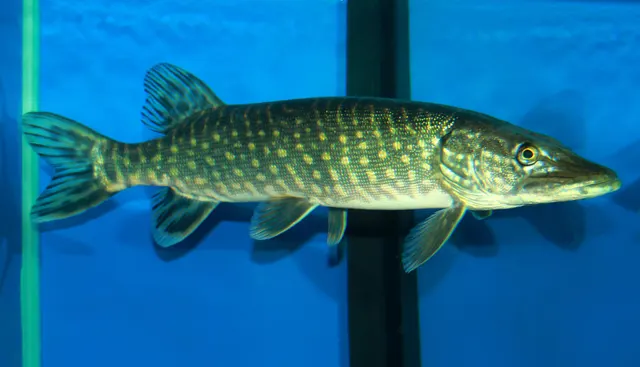 Northern pikeThe trace is not a preference here. A pike's teeth will part any monofilament or fluorocarbon leader, and a fish that breaks off carrying hooks is the outcome the wire exists to prevent.
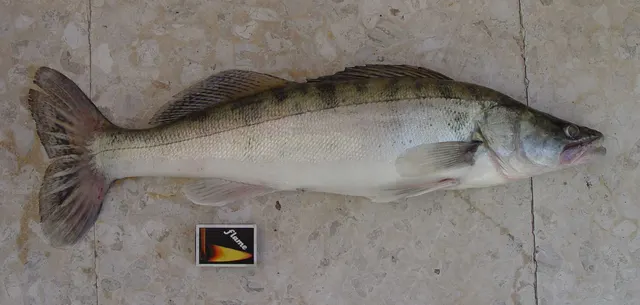 ZanderZander take deadbaits on the same ground and carry teeth that will cut through nylon, so the same trace requirement applies even though the fish is smaller.
How it is fished
- DeadbaitingA pike's dentition will part monofilament, so a wire trace is a requirement rather than a preference — and it is a fish-welfare requirement first, because a fish that breaks off carries the hooks away with it.
- LivebaitingThe same requirement for the same reason. The presentation differs; the consequence of fishing without wire does not.
What it is made of
- Uni knotThe uni holds in the monofilament or braid above the trace swivel, which is where the join actually is.
- Haywire twistThe edge this rig was missing. It was joined to the uni knot, which is right for the NYLON end and cannot terminate wire — so the arrangement pointed at a knot that cannot build its defining component. Single-strand wire is twisted rather than tied, and this is what finishes it.
- Sea deadbaitsHook position on this rig is a welfare decision: hooks in the outer flesh can take hold in the jaw when the take is struck promptly.
- Wire tracesA short length of wire between line and hooks, and the single most important piece of terminal tackle in predator fishing — for the fish's sake, not the angler's.
Worth understanding first
- Choosing a rig for the conditionsThe spine's one requirement rather than selection. Where a fish with teeth can reach the line, wire is a welfare condition and not a performance choice — a pike that bites through nylon swims away carrying hooks.
- Leaders and tracesThe rig is built around the trace, so the reasoning about why the trace is there belongs with it.
Rules and access
Environment and conservation
History and culture
Sources and evidence
Why the 15 connections on this page are here, and the sources
Fish it is built for
What experienced anglers do — 2 connections
Widely and independently recommended by experienced anglers and specialist sources. This is real angling knowledge, not proof: controlled evidence for it is limited, and FishingHQ records it as convention rather than as a demonstrated effect.
Northern pike
Which species a terminal arrangement is directed at is established practitioner knowledge, converging across independent angling traditions and literatures, and is labelled as consensus rather than as tested result.
- Pike and the Pike Angler — Stanley Paul, 1981 (Specialist angling publication)Relied on for: Pike angling practice including deadbait presentation, wire traces, multi-hook arrangements and their origins.States this directlyCitation checked — the work exists and is described correctly
- Pike Anglers' Club of Great Britain guidance on pike care and handling — Pike Anglers' Club of Great Britain, 1977 (Angling or fisheries organisation)Relied on for: Pike care and handling guidance, including trace requirements and the unhooking consequences of terminal arrangements.States this directlyPassage read and verified
Zander
Which species a terminal arrangement is directed at is established practitioner knowledge, converging across independent angling traditions and literatures, and is labelled as consensus rather than as tested result.
- Pike and the Pike Angler — Stanley Paul, 1981 (Specialist angling publication)Relied on for: Pike angling practice including deadbait presentation, wire traces, multi-hook arrangements and their origins.States this directlyCitation checked — the work exists and is described correctly
- Pike Anglers' Club of Great Britain guidance on pike care and handling — Pike Anglers' Club of Great Britain, 1977 (Angling or fisheries organisation)Relied on for: Pike care and handling guidance, including trace requirements and the unhooking consequences of terminal arrangements.States this directlyPassage read and verified
How it is fished
What experienced anglers do — 2 connections
Widely and independently recommended by experienced anglers and specialist sources. This is real angling knowledge, not proof: controlled evidence for it is limited, and FishingHQ records it as convention rather than as a demonstrated effect.
Deadbaiting
That a method is conventionally fished on a particular terminal arrangement, drawn from angling literature and from widely restated practitioner description rather than from testing.
- Pike Anglers' Club of Great Britain guidance on pike care and handling — Pike Anglers' Club of Great Britain, 1977 (Angling or fisheries organisation)Relied on for: Pike unhooking and handling guidance, including what a multi-hook deadbait arrangement means for the person taking it out and for the fish.States this directlyPassage read and verified
- Pike and the Pike Angler — Stanley Paul, 1981 (Specialist angling publication)Relied on for: Pike angling practice including deadbait presentation, trace construction and the unhooking that follows from it.States this directlyCitation checked — the work exists and is described correctly
Livebaiting
That a method is conventionally fished on a particular terminal arrangement, drawn from angling literature and from widely restated practitioner description rather than from testing.
- Pike Anglers' Club of Great Britain guidance on pike care and handling — Pike Anglers' Club of Great Britain, 1977 (Angling or fisheries organisation)Relied on for: Pike unhooking and handling guidance, including what a multi-hook deadbait arrangement means for the person taking it out and for the fish.States this directlyPassage read and verified
- Pike and the Pike Angler — Stanley Paul, 1981 (Specialist angling publication)Relied on for: Pike angling practice including deadbait presentation, trace construction and the unhooking that follows from it.States this directlyCitation checked — the work exists and is described correctly
What it is made of
What experienced anglers do — 4 connections
Widely and independently recommended by experienced anglers and specialist sources. This is real angling knowledge, not proof: controlled evidence for it is limited, and FishingHQ records it as convention rather than as a demonstrated effect.
Uni knot
Standard knot for the connection, independently described.
- Freshwater Fishing — Macdonald & Jane's, 1975 (Specialist angling publication)Relied on for: The grinner knot for attaching swivels and terminal components.Citation checked — the work exists and is described correctly
- Trout & Salmon — Bauer Media (Specialist angling publication)Relied on for: The same knot used for equivalent connections in an independent tradition.Citation checked — the work exists and is described correctly
The rig and the join it needs at the mono end.
- Freshwater Fishing — Macdonald & Jane's, 1975 (Specialist angling publication)Relied on for: Knot selection for joining line to terminal tackle and line to line.States this directlyCitation checked — the work exists and is described correctly
- IGFA International Angling Rules and World Record Requirements — International Game Fish Association (Angling or fisheries organisation)Relied on for: The role of knots and connections in terminal tackle, and the line-class conventions that depend on them.States this directlyPassage read and verified
Haywire twist
An arrangement joined to the knot that actually builds it, written where the knot is characteristic of that arrangement rather than merely possible in it. This is the edge a reader travels: they arrive looking for the arrangement and need the connection it depends on.
- Pike and the Pike Angler — Stanley Paul, 1981 (Specialist angling publication)Relied on for: Pike angling practice including wire trace construction and the terminations single-strand wire requires.States this directlyCitation checked — the work exists and is described correctly
- Pike Anglers' Club of Great Britain guidance on pike care and handling — Pike Anglers' Club of Great Britain, 1977 (Angling or fisheries organisation)Relied on for: Pike rig and handling guidance, including the welfare case for wire and what a trace failure means for a fish that breaks off.States this directlyPassage read and verified
- Sea Angler — Bauer Media (Specialist angling publication)Relied on for: British sea angling practice: shock leaders, multi-hook trace construction and the dropper loops a trace is built from.FishingHQ's interpretation of what it saysCitation checked — the work exists and is described correctly
- General angling website restatements of established technique — Various (Credible secondary source)Relied on for: Widely restated descriptions of established connection convention, recorded as practitioner consensus rather than as scholarship.Background and mechanism onlyCitation checked — the work exists and is described correctly
Sea deadbaits
Standard presentation, independently described.
- Pike and the Pike Angler — Stanley Paul, 1981 (Specialist angling publication)Relied on for: Deadbait hook positioning and trace construction.Citation checked — the work exists and is described correctly
- Angling Trust guidance for anglers — Angling Trust (Angling or fisheries organisation)Relied on for: Welfare guidance on hook placement and prompt striking for predator angling.Citation checked — the work exists and is described correctly
Wire traces
The rig is defined by the component.
- Pike and the Pike Angler — Stanley Paul, 1981 (Specialist angling publication)Relied on for: Trace construction for deadbait rigs.Citation checked — the work exists and is described correctly
- Freshwater Fishing — Macdonald & Jane's, 1975 (Specialist angling publication)Relied on for: Wire trace use in British predator practice.Citation checked — the work exists and is described correctly
Worth understanding first
What experienced anglers do — 1 connection
Widely and independently recommended by experienced anglers and specialist sources. This is real angling knowledge, not proof: controlled evidence for it is limited, and FishingHQ records it as convention rather than as a demonstrated effect.
Choosing a rig for the conditions
An arrangement joined to the guidance that selects it. That guidance names eleven rigs against four questions and pointed at none of them, so a reader following the procedure to its conclusion could not reach the answer.
- Sea Angler — Bauer Media (Specialist angling publication)Relied on for: British sea angling practice: how tide, wind, swell and water clarity change where and how a mark is fished.FishingHQ's interpretation of what it saysCitation checked — the work exists and is described correctly
- Freshwater Fishing — Macdonald & Jane's, 1975 (Specialist angling publication)Relied on for: Comprehensive angling practice across disciplines, including water reading, seasonal condition and the tackle each demands.States this directlyCitation checked — the work exists and is described correctly
Official guidance — 1 connection
Stated by a fisheries authority, scientific institute or recognised angling body. Authoritative, but summarising rather than demonstrating.
Leaders and traces
Specialist body guidance on deadbait rigs and trace material.
- Pike Anglers' Club of Great Britain guidance on pike care and handling — Pike Anglers' Club of Great Britain, 1977 (Angling or fisheries organisation)Relied on for: Guidance on deadbait rig construction and wire trace use.States this directlyPassage read and verified
Safety reading
Official guidance — 2 connections
Stated by a fisheries authority, scientific institute or recognised angling body. Authoritative, but summarising rather than demonstrating.
Handling fish safely
A link from the arrangement to the substantial safety topic describing the injury it is associated with, rather than a warning restated on the record itself.
- Pike Anglers' Club of Great Britain guidance on pike care and handling — Pike Anglers' Club of Great Britain, 1977 (Angling or fisheries organisation)Relied on for: Pike unhooking and handling guidance, including what a multi-hook deadbait arrangement means for the person taking it out and for the fish.States this directlyPassage read and verified
- Pike and the Pike Angler — Stanley Paul, 1981 (Specialist angling publication)Relied on for: Pike angling practice including deadbait presentation, trace construction and the unhooking that follows from it.States this directlyCitation checked — the work exists and is described correctly
Hook injuries
A link from the arrangement to the substantial safety topic describing the injury it is associated with, rather than a warning restated on the record itself.
- RoSPA water safety information and UK accidental drowning statistics — Royal Society for the Prevention of Accidents (Water-safety or diver-training authority)Relied on for: That angling injuries are dominated by hooks entering the person handling them, and the circumstances in which that happens.States this directlyPassage read and verified
- Angling Trust guidance for anglers — Angling Trust (Angling or fisheries organisation)Relied on for: Guidance to anglers on handling hooks and terminal tackle, and on what to do when a hook goes in.States this directlyCitation checked — the work exists and is described correctly
Rules and access
Official guidance — 1 connection
Stated by a fisheries authority, scientific institute or recognised angling body. Authoritative, but summarising rather than demonstrating.
Method and bait restrictions
This points to the kind of rule that applies rather than to a rule itself. Rig restrictions are set by individual fisheries far more often than by statute, they differ between neighbouring waters, and they change — so the page points at the idea and tells you who to ask.
- Environment Agency fisheries management, byelaws and rod licensing information — Environment Agency (Government fisheries body)Relied on for: That fisheries authorities and fishery owners set restrictions on gear and terminal arrangements, and that these vary by water and change over time.States this directlyCitation checked — the work exists and is described correctly
- Angling Trust guidance for anglers — Angling Trust (Angling or fisheries organisation)Relied on for: Guidance to anglers on fishery rules and conditions of access, including gear and method restrictions set by individual waters.States this directlyCitation checked — the work exists and is described correctly
Environment and conservation
Official guidance — 1 connection
Stated by a fisheries authority, scientific institute or recognised angling body. Authoritative, but summarising rather than demonstrating.
Discarded line and lost tackle
An environmental claim attached to the arrangement that causes it, held to the authoritative standard this kind of claim requires because tackle loss and lead use are matters of regulation and of published conservation evidence rather than of preference.
- Angling Trust guidance for anglers — Angling Trust (Angling or fisheries organisation)Relied on for: Guidance to anglers treating lost and discarded line and terminal tackle as an avoidable environmental harm and an avoidable cause of access loss.States this directlyCitation checked — the work exists and is described correctly
- Good Fish Guide — Marine Conservation Society (Conservation authority)Relied on for: That lost fishing gear persists in the marine environment and continues to entangle, which is the mechanism the discarded-tackle page describes.Background and mechanism onlyCitation checked — the work exists and is described correctly
History and culture
What experienced anglers do — 1 connection
Widely and independently recommended by experienced anglers and specialist sources. This is real angling knowledge, not proof: controlled evidence for it is limited, and FishingHQ records it as convention rather than as a demonstrated effect.
Commercial fishing's influence on angling
Where a terminal arrangement came from and what it displaced, drawn from the angling literature and from widely restated practitioner accounts rather than from scholarship.
- Pike and the Pike Angler — Stanley Paul, 1981 (Specialist angling publication)Relied on for: Pike angling practice including deadbait presentation, wire traces, multi-hook arrangements and their origins.States this directlyCitation checked — the work exists and is described correctly
- Pike Anglers' Club of Great Britain guidance on pike care and handling — Pike Anglers' Club of Great Britain, 1977 (Angling or fisheries organisation)Relied on for: Pike care and handling guidance, including trace requirements and the unhooking consequences of terminal arrangements.States this directlyPassage read and verified
How FishingHQ labels evidence is explained in the evidence policy.