Livebaiting
Method · Last reviewed 2026-08-10
Presenting a living fish as bait for predators — effective, and the most heavily restricted and most ethically contested method in freshwater angling.
Safety: biosecurity and disease transfer — can cause serious injury or death. 4 more points apply here.
Livebaiting presents a live fish, usually hooked lightly and fished beneath a float or on a leger, so that its movement and distress signals attract a predator. It works, and it works well, and it is also the method on FishingHQ that carries the most substantial constraints.
Those constraints come from three directions and FishingHQ states all three rather than any one of them. Welfare: a live fish used as bait is a fish deliberately exposed to being eaten, and that is a genuine ethical objection rather than a squeamish one. Biosecurity: moving live fish between waters is one of the most effective ways to transfer disease and non-native species, and it has caused documented, permanent damage to fisheries. Regulation: the use of livebait, and the movement of live fish, is restricted or prohibited in many jurisdictions and closely controlled in others.
The method is documented here because it exists, is long-established, and is lawful under conditions in some places. What is permitted where you are is a question for the relevant authority and the water itself, not for this page.
What it is
Predator fishing using a living fish as bait — typically a small coarse fish such as a roach, rudd or dace — presented beneath a float or on a leger so that it can move within a limited area but cannot leave it. The hook hold is deliberately light, usually in the root of the dorsal fin or in the upper lip, so that the bait stays alive and mobile and so that the hooks sit where a predator taking the bait crossways will meet them. What separates it from every other predator method is that the attractant is produced by the bait itself and continues whether or not the angler does anything.
What it is for
To present the most convincing possible signal of an easy meal to a predator, and to keep producing it without the angler working the bait. Historically this was the default method for pike, zander and perch across much of Europe, and the tackle traditions of several countries were built around it. It has since been largely displaced by deadbaiting and by lure fishing — partly by regulation, partly by the biosecurity case against moving live fish, and partly because a static deadbait turned out to catch as many large pike in cold water as a livebait does. Where it survives, it survives for coloured water, deep water and fish that will not come to a lure.
Setting it up
- Only ever use bait taken from the same water you are fishing, where that is permitted at all.
- Never transport live fish between waters — this is both a biosecurity failure and unlawful in many jurisdictions.
- Use a bite-resistant trace, as for any predator method.
- Answer takes promptly; the deep-hooking risk is at least as high as with deadbaits.
- Check what is permitted where you are fishing before you plan a session around it.
What it catches
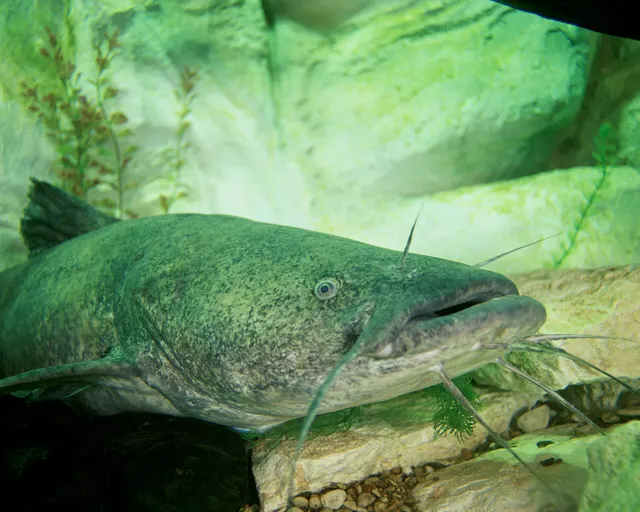 Flathead catfishThe one catfish that will not take a prepared or cut bait. Live fish presented near heavy cover after dark is the method, and there is no real alternative.
- Great snakeheadFrogs, poppers and soft plastics worked over weed and shallow cover.
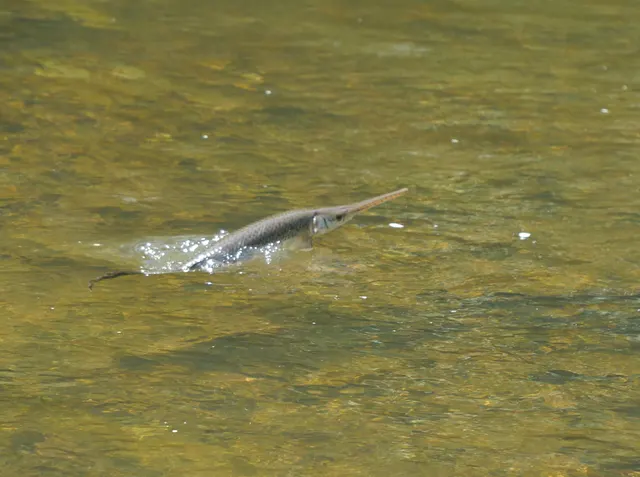 Longnose garRope lures that tangle in the teeth, since conventional hooks slide out of the bony beak.
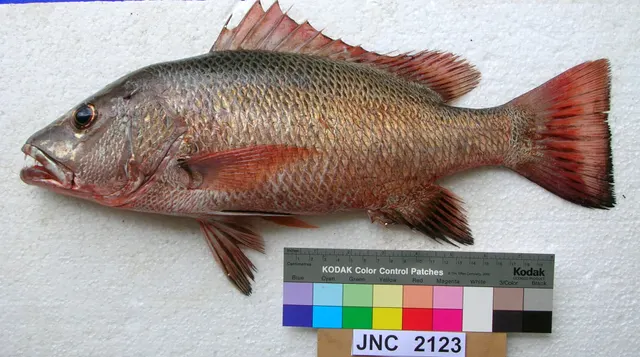 Mangrove jackLures cast tight to snags on heavy leaders, because the fight is decided in the first two seconds.
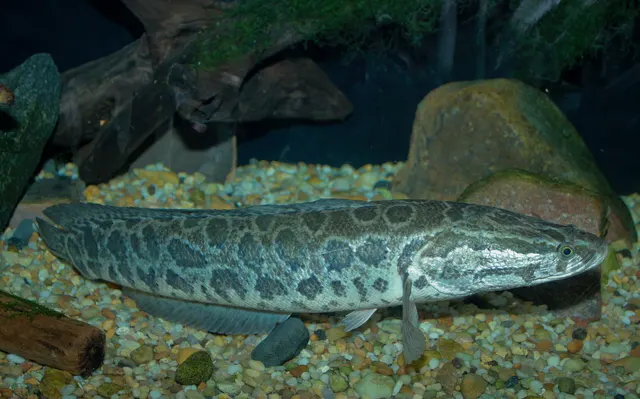 Northern snakeheadTopwater frogs and soft plastics over weed, under jurisdiction-specific rules on handling and release.
- Spotted sorubimLive and cut baits fished on the bottom at night from boat and bank.
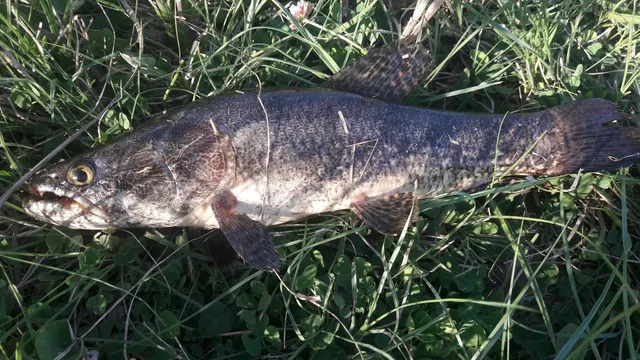 TraíraLive bait fished beside weed and timber is the traditional approach across the range and remains the most effective in heavily coloured water.
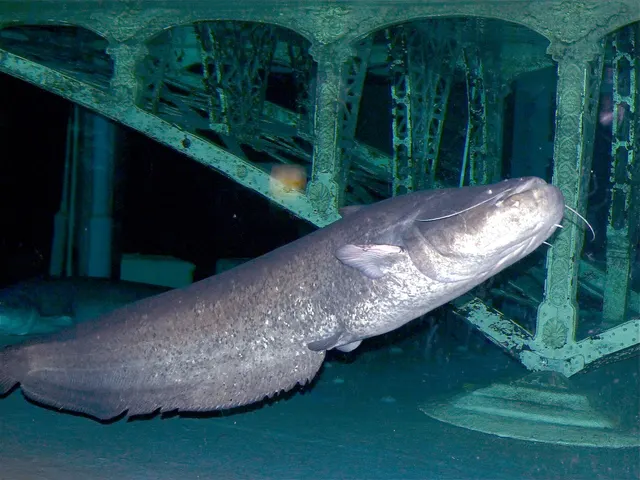 Wels catfishA live fish presented near the bottom exploits a predator that hunts by lateral line and smell in water where sight is useless. Its legality varies substantially between countries and within them.
What you fish it with
How it works
A distressed or restricted fish produces vibration and erratic movement that predators detect through the lateral line at considerable distance, and which reads as a vulnerable target. That signal is the whole mechanism, and it is why the method works in coloured water and at night as well as in clear conditions.
It also explains the method's characteristic bite pattern. A pike usually takes a livebait across the body, moves off with it, and only then turns it to swallow head-first. The float going away is therefore the beginning of the take rather than the end of it, and the angler's judgement about when to strike is a welfare decision as much as a hooking one — too early and the hooks are outside the fish, too late and they are past its throat.
Conditions
Where permitted, livebaiting suits coloured water, deep water, weedy water and any condition in which a predator must find the bait rather than see it. It is at its most distinctive in warm water and in the periods when predators are actively hunting, because that is when movement matters more than scent does.
It is worth stating the reverse plainly, because it is the fact most often left out. In cold water, when pike are least inclined to chase anything, a static deadbait frequently outfishes a live one — the fish is scavenging rather than hunting and a moving bait is not what it is looking for. So livebaiting is not a stronger version of deadbaiting that always wins; it is a different presentation with a different season, and an angler who reaches for it by default in January is fishing the harder of the two methods for no gain.
Common mistakes
- Assuming it is permitted because it is traditional; the rules vary substantially and change.
- Transporting bait fish from one water to another, which is the single most damaging thing an angler can do.
- Keeping bait in conditions that leave it stressed and half-dead, which defeats the purpose and is indefensible on welfare grounds.
- Letting runs develop, and deep-hooking fish as a result.
- Using a bait far larger than the predators present will take, and then waiting all day for a run that was never going to come.
Advantages
- Produces the strongest natural attraction signal of any predator method.
- Effective in conditions where visual methods fail — colour, depth, darkness, weed.
- Covers an area actively without the angler working the bait.
- Selects for predators that are hunting rather than scavenging, which lure fishing also does but scent methods do not.
Limitations
- Restricted or prohibited in many places, and subject to rules that vary and change.
- Carries a substantial biosecurity risk if bait is moved between waters.
- Raises welfare objections that a great many anglers share.
- Requires obtaining and keeping bait fish alive and in good condition.
Terms you will meet
- Run
- A predator taking the bait and moving off with it. The word covers the whole event from the float first moving to the point at which the angler strikes, and the judgement about where in that window to strike is the method's central skill.
- Snap tackle
- A wire trace carrying two small treble hooks at a set distance apart, so a bait can be held at two points and the hooks sit where the predator's mouth will close. Designed specifically so a take can be answered early rather than deep.
- Bait tank or bait bucket
- Aerated water for keeping bait fish alive and in condition. Bait kept badly is bait that does not work; it is also the part of the method where welfare failures actually happen, rather than at the hook.
- Paternoster
- A rig holding the bait a set distance above a lead on the bottom, so a livebait swims in a defined layer rather than diving into weed or hiding under the bank.
Where people fish it
One place here names this among the ways it is fished. Being named here describes what sources report, not that the method is permitted — check the local rules before you fish.
Safety
Biosecurity and disease transfer — Can cause serious injury or death
Live fish moved between waters carry disease, parasites and — where the bait species is not native to the destination — the potential to establish a new population. Damage of this kind is permanent and cannot be undone by any subsequent management.
What reduces it: Never move live fish or water between waters, under any circumstances. Use bait only from the water being fished, where that is lawful, and check what is permitted before fishing.
Fish welfare — Can cause injury needing treatment
A live fish used as bait is subjected to hooking, confinement and predation. There is a legitimate ethical objection to this that a substantial proportion of anglers hold.
What reduces it: FishingHQ does not attempt to resolve the ethical question. Where the method is used lawfully, keeping bait in good condition, minimising handling and answering takes promptly are the practical minimum.
Precautions that always apply here
- Never move live fish, live bait or water from one water to another.
- Check, clean and dry your kit between different waters — the published guidance is 48 hours’ drying, in sunlight where possible, because a number of invasive species survive over two weeks in damp conditions. Nets, boots and wet mats move invasive species and disease more effectively than anything else anglers do.
- Keep fingers out of the gills and clear of the teeth. Gill damage is usually fatal to the fish, and several species will remove skin from a finger.
Check the rules before you fish
Fishing laws, bylaws, access rules, seasons, bait restrictions and permitted methods vary by location and can change. Check the current rules from the relevant authority and the water you intend to fish before fishing.
Check with:
- Current national or regional law for where you are fishing
- Current local bylaws
- The relevant fisheries authority
- The landowner, club or fishery whose water it is
- Any restrictions specific to the species or the method you intend to use
Where to go next
Related techniques
Skills behind it
- Live or dead: what changes for the fishThe method page describes how it is done. This is where what it costs — in welfare terms and in biosecurity terms — is set out rather than assumed.
- Osmoregulation and diadromous fishMarine live baits die in fresh water from osmotic failure, not suffocation.
- What a leader is, and when you need oneThe same requirement for the same reason. The presentation differs; the consequence of fishing without a trace does not.
- Why bait dies quicklyWarm water holds less oxygen and a warm fish needs more, and the two effects compound.
- Why fish are hooked deeply, and how to reduce itBait taken and moved with is swallowed far more readily than a lure that is rejected on contact.
Compared with
Rules and access
Environment and conservation
- Biosecurity: check, clean, dryLive bait, the water it is kept in and the containers it travels in are three separate pathways, and the movement of live fish is separately controlled almost everywhere.
- Invasive species and biosecurityMoving live fish between waters is the single most damaging thing an angler can do, and it is the reason this method is restricted where it is.
Sources and evidence
Why the 19 connections on this page are here, and the sources
What it catches
What experienced anglers do — 8 connections
Widely and independently recommended by experienced anglers and specialist sources. This is real angling knowledge, not proof: controlled evidence for it is limited, and FishingHQ records it as convention rather than as a demonstrated effect.
Flathead catfish
A practitioner claim following directly from the species' verified diet.
- General angling website restatements of established technique — Various (Credible secondary source)Relied on for: Widely restated practitioner accounts that flathead catfish take live bait and refuse cut and prepared baits.Citation checked — the work exists and is described correctly
- Angling Times — Bauer Media (Specialist angling publication)Relied on for: Contemporary treatment of live bait presentation for large predatory fish.Citation checked — the work exists and is described correctly
Great snakehead
A practitioner claim about how Channa marulius is commonly fished, following from where and how it feeds.
- General angling website restatements of established technique — Various (Credible secondary source)Relied on for: Widely restated practitioner accounts of fishing for great snakehead.Citation checked — the work exists and is described correctly
- Sea Angler — Bauer Media (Specialist angling publication)Relied on for: Practitioner treatment of the methods used for great snakehead and comparable species.Citation checked — the work exists and is described correctly
Longnose gar
A practitioner claim about how Lepisosteus osseus is commonly fished, following from where and how it feeds.
- General angling website restatements of established technique — Various (Credible secondary source)Relied on for: Widely restated practitioner accounts of fishing for longnose gar.Citation checked — the work exists and is described correctly
- Sea Angler — Bauer Media (Specialist angling publication)Relied on for: Practitioner treatment of the methods used for longnose gar and comparable species.Citation checked — the work exists and is described correctly
Mangrove jack
A practitioner claim about how Lutjanus argentimaculatus is commonly fished, following from where and how it feeds.
- General angling website restatements of established technique — Various (Credible secondary source)Relied on for: Widely restated practitioner accounts of fishing for mangrove jack.Citation checked — the work exists and is described correctly
- Sea Angler — Bauer Media (Specialist angling publication)Relied on for: Practitioner treatment of the methods used for mangrove jack and comparable species.Citation checked — the work exists and is described correctly
Northern snakehead
A practitioner claim about how Channa argus is commonly fished, following from where and how it feeds.
- General angling website restatements of established technique — Various (Credible secondary source)Relied on for: Widely restated practitioner accounts of fishing for northern snakehead.Citation checked — the work exists and is described correctly
- Sea Angler — Bauer Media (Specialist angling publication)Relied on for: Practitioner treatment of the methods used for northern snakehead and comparable species.Citation checked — the work exists and is described correctly
Spotted sorubim
A practitioner claim about how Pseudoplatystoma corruscans is commonly fished, following from where and how it feeds.
- General angling website restatements of established technique — Various (Credible secondary source)Relied on for: Widely restated practitioner accounts of fishing for spotted sorubim.Citation checked — the work exists and is described correctly
- Sea Angler — Bauer Media (Specialist angling publication)Relied on for: Practitioner treatment of the methods used for spotted sorubim and comparable species.Citation checked — the work exists and is described correctly
Traíra
A statement about how a species is fished outside Europe, resting on restated international practice rather than on the British angling literature.
- General angling website restatements of established technique — Various (Credible secondary source)Relied on for: Widely restated descriptions of regional angling practice, recorded as consensus rather than as scholarship.States this directlyCitation checked — the work exists and is described correctly
- IGFA International Angling Rules and World Record Requirements — International Game Fish Association (Angling or fisheries organisation)Relied on for: International recreational angling practice and the record framework that documents which species are pursued and how.Background and mechanism onlyPassage read and verified
Wels catfish
Established angling practice for this species, recorded as convention. The note states the property of the animal or its water that makes the method the answer.
- Freshwater Fishing — Macdonald & Jane's, 1975 (Specialist angling publication)Relied on for: Freshwater angling technique and its application to this species.States this directlyCitation checked — the work exists and is described correctly
- Angling Times — Bauer Media (Specialist angling publication)Relied on for: Contemporary practice for this species in the British and European coarse press.Background and mechanism onlyCitation checked — the work exists and is described correctly
Related techniques
What experienced anglers do — 1 connection
Widely and independently recommended by experienced anglers and specialist sources. This is real angling knowledge, not proof: controlled evidence for it is limited, and FishingHQ records it as convention rather than as a demonstrated effect.
Predator fishing
How the discipline classifies it, rather than a claim about how it is fished.
- Pike and the Pike Angler — Stanley Paul, 1981 (Specialist angling publication)Relied on for: Livebaiting as a historical and current predator method.Citation checked — the work exists and is described correctly
- Freshwater Fishing — Macdonald & Jane's, 1975 (Specialist angling publication)Relied on for: The categorisation of livebaiting within British predator practice.Citation checked — the work exists and is described correctly
What you fish it with
What experienced anglers do — 1 connection
Widely and independently recommended by experienced anglers and specialist sources. This is real angling knowledge, not proof: controlled evidence for it is limited, and FishingHQ records it as convention rather than as a demonstrated effect.
Wire trace deadbait rig
That a method is conventionally fished on a particular terminal arrangement, drawn from angling literature and from widely restated practitioner description rather than from testing.
- Pike Anglers' Club of Great Britain guidance on pike care and handling — Pike Anglers' Club of Great Britain, 1977 (Angling or fisheries organisation)Relied on for: Pike unhooking and handling guidance, including what a multi-hook deadbait arrangement means for the person taking it out and for the fish.States this directlyPassage read and verified
- Pike and the Pike Angler — Stanley Paul, 1981 (Specialist angling publication)Relied on for: Pike angling practice including deadbait presentation, trace construction and the unhooking that follows from it.States this directlyCitation checked — the work exists and is described correctly
Skills behind it
What experienced anglers do — 2 connections
Widely and independently recommended by experienced anglers and specialist sources. This is real angling knowledge, not proof: controlled evidence for it is limited, and FishingHQ records it as convention rather than as a demonstrated effect.
Live or dead: what changes for the fish
Why it works, resting on practice reported consistently across independent angling traditions rather than on experiment.
- Pike and the Pike Angler — Stanley Paul, 1981 (Specialist angling publication)Relied on for: Pike angling practice including deadbait and livebait use, presentation and the reasoning behind bait choice for predators.States this directlyCitation checked — the work exists and is described correctly
- Angling Times — Bauer Media (Specialist angling publication)Relied on for: Contemporary UK predator angling practice as reported by practitioners, including bait and lure convention.States this directlyCitation checked — the work exists and is described correctly
What a leader is, and when you need one
A link from a practice or a piece of equipment to the explanation of what it is for. The two records are halves of one answer and the edge is what lets a reader arriving at either find the other.
- Angling Times — Bauer Media (Specialist angling publication)Relied on for: Contemporary UK coarse, match and predator practice as reported by practitioners, including lure and line convention.FishingHQ's interpretation of what it saysCitation checked — the work exists and is described correctly
- General angling website restatements of established technique — Various (Credible secondary source)Relied on for: Widely restated descriptions of contemporary tackle convention, recorded as practitioner consensus rather than as scholarship.Background and mechanism onlyCitation checked — the work exists and is described correctly
Backed by research — 3 connections
Supported by peer-reviewed research or fisheries science. The sources are listed and can be checked.
Osmoregulation and diadromous fish
Marine live baits die in fresh water from osmotic failure, not suffocation.
- FishBase: a global information system on fishes — Froese, R. and D. Pauly, eds. — FishBase Consortium (Scientific institute)Relied on for: Species and habitat data underlying this connection. Marine live baits die in fresh water from osmotic failure, not suffocation.States this directlyPassage read and verified
Why bait dies quickly
Live fish bait is where the temperature relationship bites hardest.
- Cefas science, advice and data on marine and freshwater environments — Centre for Environment, Fisheries and Aquaculture Science (Government fisheries body)Relied on for: The relationship between water temperature, dissolved oxygen capacity and metabolic demand in aquatic organisms.States this directlyCitation checked — the work exists and is described correctly
Why fish are hooked deeply, and how to reduce it
Deep hooking risk is highest in bait methods, which is where the guidance is worth most.
- A review of catch-and-release angling mortality with implications for no-take reserves — Reviews in Fish Biology and Fisheries 15:129–154, 2005 (Scientific literature)Relied on for: Review establishing hooking location among the strongest determinants of catch-and-release mortality, and the gear and timing factors that influence it.States this directlyCitation checked — the work exists and is described correctly
Compared with
Official guidance — 1 connection
Stated by a fisheries authority, scientific institute or recognised angling body. Authoritative, but summarising rather than demonstrating.
Livebaiting at sea
A regulatory-structure comparison, stated as variation rather than as content.
- Environment Agency fisheries management, byelaws and rod licensing information — Environment Agency (Government fisheries body)Relied on for: That method and bait restrictions are standard instruments of fisheries regulation.FishingHQ's interpretation of what it saysCitation checked — the work exists and is described correctly
- Check Clean Dry — biosecurity guidance for water users — GB Non-native Species Secretariat (Conservation authority)Relied on for: That live fish movement is regulated because of its role as an introduction pathway.States this directlyPassage read and verified
Rules and access
Official guidance — 1 connection
Stated by a fisheries authority, scientific institute or recognised angling body. Authoritative, but summarising rather than demonstrating.
Method and bait restrictions
Live bait use and live fish movement are subject to statutory and fishery-level restriction.
- Environment Agency fisheries management, byelaws and rod licensing information — Environment Agency (Government fisheries body)Relied on for: That method and bait restrictions including live fish use exist in statutory byelaws.FishingHQ's interpretation of what it saysCitation checked — the work exists and is described correctly
- Check Clean Dry — biosecurity guidance for water users — GB Non-native Species Secretariat (Conservation authority)Relied on for: The biosecurity basis of controls on live fish movement.States this directlyPassage read and verified
Environment and conservation
Official guidance — 2 connections
Stated by a fisheries authority, scientific institute or recognised angling body. Authoritative, but summarising rather than demonstrating.
Biosecurity: check, clean, dry
An environmental effect attached to the practice that causes it, resting on guidance and monitoring published by the responsible bodies rather than on advocacy.
- Check Clean Dry — biosecurity guidance for water users — GB Non-native Species Secretariat (Conservation authority)Relied on for: Non-native species pathways, the check-clean-dry biosecurity approach and the role of recreational water users in spread.States this directlyPassage read and verified
- Environment Agency fisheries management, byelaws and rod licensing information — Environment Agency (Government fisheries body)Relied on for: The structure of freshwater fisheries regulation including fish movement, bait movement and biosecurity controls.States this directlyCitation checked — the work exists and is described correctly
Invasive species and biosecurity
Live fish movement is identified as a principal introduction pathway for non-native species and disease.
- Check Clean Dry — biosecurity guidance for water users — GB Non-native Species Secretariat (Conservation authority)Relied on for: That movement of live fish and water between waters is a recognised introduction pathway.States this directlyPassage read and verified
- Environment Agency fisheries management, byelaws and rod licensing information — Environment Agency (Government fisheries body)Relied on for: That the movement of live fish is controlled by statute in England.FishingHQ's interpretation of what it saysCitation checked — the work exists and is described correctly
How FishingHQ labels evidence is explained in the evidence policy.