Traíra
Fish · Last reviewed 2026-08-15
South America's most widely caught freshwater ambush predator: a cylindrical, heavily-toothed fish of still and slow water that can breathe air and survive where almost nothing else will.
Safety: injury while handling fish — can cause serious injury or death. One more point applies here.
How this was identified, and who took it
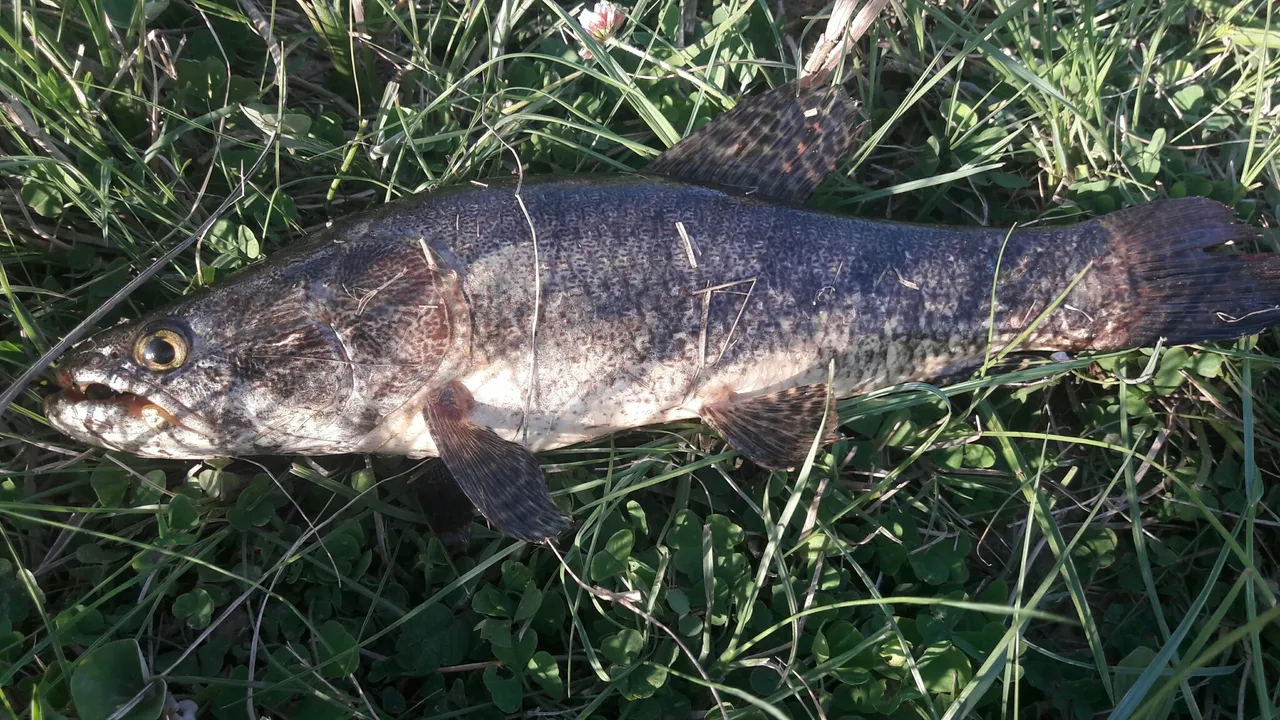
Identified by: Cylindrical body with a large blunt head and prominent conical teeth in the jaw, golden eye, mottled dark barring on a brown-grey flank, rounded caudal fin and no adipose fin — the field combination for Hoplias malabaricus. Two agreeing identifications on the source, none disagreeing. The Hoplias species complex is genuinely difficult below this level and the page does not claim more than the genus-level characters shown.Daniel Dias — CC BY-SA, via iNaturalist — source, licenceCatching Traíra
Everything here on fishing for it. Each entry opens the page behind it.
- Ground
Traíra is the South American predator people actually catch, as opposed to the ones they read about.
PEACOCK BASS AND ARAPAIMA GET THE COVERAGE. Traíra gets the fishing. Hoplias malabaricus occurs across an enormous range from Central America to Argentina, in almost every kind of still and slow water — lagoons, oxbows, flooded ditches, farm ponds, backwaters and the margins of large rivers — and it is the fish an angler with a lure rod encounters more than any other across most of that range.
IT IS BUILT AS AN AMBUSH PREDATOR AND LOOKS IT. A long, cylindrical, heavy-bodied fish with a large blunt head, a wide mouth and prominent conical teeth, marked in browns and greys with irregular blotching that breaks up its outline in weed and leaf litter. The dorsal is set well back and there is no adipose fin.
IT CAN BREATHE AIR, which is the property that explains its distribution. Traíra can use its swim bladder for aerial respiration and survive in water with very low dissolved oxygen — warm, stagnant, weed-choked, drying pools where other predators cannot persist. That tolerance is why it occupies water nothing else does and why it is present in habitats that look unfishable.
THE TEETH ARE A GENUINE HANDLING PROBLEM. Traíra bite, they bite hard, and they continue to do so after landing. Anybody handling one for the first time on the basis that it is a modest-sized fish learns otherwise.
AND THE GENUS IS A TAXONOMIC TANGLE. Hoplias malabaricus as usually applied covers what is now understood to be a complex of similar species, with several described and more suspected. A traíra from Argentina and one from the Guianas may not be the same animal, and no field character will settle it.
How it is caught
- LivebaitingLive bait fished beside weed and timber is the traditional approach across the range and remains the most effective in heavily coloured water.
- SpinningSurface lures, weedless soft plastics and spinnerbaits worked in and around cover, which is the most widely practised freshwater lure fishing in South America.
Identification
- Scientific name
- Hoplias malabaricus
- Family
- Erythrinidae
- Water
- Freshwater
- Conservation status
- Least Concern
- Regions
- Central & South America, Caribbean
- A LONG, CYLINDRICAL, HEAVY BODY with a large blunt head and a wide mouth — the shape of an ambush predator rather than a pursuit one, and quite unlike the compressed body of a peacock bass.
- PROMINENT CONICAL TEETH in both jaws, visible when the mouth is open and the reason the fish is called a wolf fish in English.
- NO ADIPOSE FIN, which separates it from the characins — piranha, pacu, dorado and their relatives — that share the same water.
- Rounded tail and a dorsal fin set well back along the body.
- Mottled brown, grey and olive with irregular dark blotching and often oblique bars, breaking up the outline against leaf litter and weed.
- The genus is a species complex: Hoplias malabaricus as usually applied covers several similar species, and a specific identification within it cannot be made in the field.
Size
- Typical
- 0.5–2 kg and 25–45 cm for rod-caught fish.
- Large
- Over 3 kg and 50 cm is a good traíra across most of the range.
Exceptional: Reported maxima are around 65 cm and 5 kg for this species; much larger Hoplias exist and belong to other members of the genus, which is one practical reason the complex matters.
The water nothing else lives in
Traíra habitat is defined by a physiological capability rather than by a preference.
IT BREATHES AIR. Hoplias can use its swim bladder for aerial respiration, taking oxygen at the surface when the dissolved oxygen in the water is too low to support it. That single capability decides where the fish lives.
SO IT OCCUPIES WATER OTHER PREDATORS CANNOT. Warm, stagnant, weed-choked lagoons; oxbows cut off from the river; drainage ditches; farm ponds; shrinking dry-season pools; flooded grassland. These are habitats where dissolved oxygen falls to levels that exclude most fish, and traíra persist in them.
WITHIN THAT WATER IT IS A COVER FISH. Weed beds, submerged timber, leaf litter, undercut margins and floating vegetation are where it holds, because it is an ambush predator that needs to be unseen until the moment it strikes.
THE WET-AND-DRY CYCLE ORGANISES EVERYTHING. On rising water fish disperse into flooded areas; on falling water they are concentrated into whatever holds water. The dry-season pool full of traíra, isolated and oxygen-poor, is the characteristic South American fishing situation and it is a direct consequence of the air breathing.
IT IS ALSO FOUND IN LARGE RIVERS, but at their margins and in their backwaters rather than in the main flow. This is not a fish of current.
AND THE RANGE IS ENORMOUS BECAUSE THE TOLERANCE IS. A species that can survive low oxygen, high temperature, isolation and nest-guard its young is a species that colonises almost any standing water it reaches — which is why traíra turn up in places an angler would not think to look.
Backed by research — why, and the sources (2)
Supported by peer-reviewed research or fisheries science. The sources are listed and can be checked.
- FishBase: a global information system on fishes — Froese, R. and D. Pauly, eds. — FishBase Consortium (Scientific institute)Relied on for: Distribution, habitat association, depth range, diet, growth, maximum size and reproductive parameters recorded for the species.States this directlyPassage read and verified
- The IUCN Red List of Threatened Species — International Union for Conservation of Nature (Conservation authority)Relied on for: Global conservation assessment, range and recorded threats for the species.States this directlyCitation checked — the work exists and is described correctly
How big a traíra gets, and why the answer depends which one it is
Traíra size is complicated by a taxonomic problem that has practical consequences.
A TYPICAL ROD-CAUGHT FISH IS 25 TO 45 CENTIMETRES AND HALF A KILO TO TWO KILOS. Over three kilos and fifty centimetres is a good one across most of the range.
REPORTED MAXIMA FOR HOPLIAS MALABARICUS are around 65 centimetres and five kilograms.
BUT MUCH LARGER HOPLIAS EXIST, and they are other species. The genus includes considerably larger members — the fish sold to anglers as 'giant wolf fish' in Guyana and Suriname are a different animal reaching several times this weight. A claimed enormous traíra is far more likely to be a congener than a record.
AND MALABARICUS ITSELF IS A COMPLEX. What is called Hoplias malabaricus across South America is now understood to cover several similar species, some described and more suspected, differing in ways that field characters do not resolve. A fish from Argentina and one from the Guianas may not be conspecific, and this page describes the complex as anglers encounter it rather than pretending to a resolution the taxonomy has not reached.
GROWTH IS MODERATELY FAST AND MATURITY IS EARLY, which combined with nest-guarding lets populations establish quickly in newly available water.
THE PRACTICAL CONSEQUENCE is that size expectations should come from the local fishery rather than from a published maximum, and that anybody claiming a record should establish which Hoplias they have before claiming anything.
Backed by research — why, and the sources (2)
Supported by peer-reviewed research or fisheries science. The sources are listed and can be checked.
- FishBase: a global information system on fishes — Froese, R. and D. Pauly, eds. — FishBase Consortium (Scientific institute)Relied on for: Distribution, habitat association, depth range, diet, growth, maximum size and reproductive parameters recorded for the species.States this directlyPassage read and verified
- The IUCN Red List of Threatened Species — International Union for Conservation of Nature (Conservation authority)Relied on for: Global conservation assessment, range and recorded threats for the species.States this directlyCitation checked — the work exists and is described correctly
Handling traíra: it bites on landing and keeps biting
Traíra is the second of the two species in this batch where the danger runs towards the angler, and the specific problem is behavioural rather than merely anatomical.
THE TEETH ARE PROMINENT CONICAL AND IN BOTH JAWS, which is why the fish is called a wolf fish in English. That much is ordinary for a toothy predator. What is not ordinary is what the animal does with them once it is out of the water: a traíra bites on landing and keeps biting, working its jaws repeatedly rather than thrashing once and going still.
WHICH REMOVES THE LIP GRIP ENTIRELY. On most predatory fish the lower jaw is the safe handle. Here it is not available at any size, and an angler who has learned to grip a bass or a snook by the jaw is reaching for exactly the wrong place.
SO CONTROL IS ESTABLISHED AGAINST A SURFACE. Pin the fish against a boat deck, a mat or the ground rather than holding it in free space, use long pliers or a de-hooking tool, and wear gloves. Keep the head pointed away from everybody. And accept that cutting the trace and returning the fish is the correct answer more often than it is chosen.
THE TACKLE REFLECTS THE SAME FACT. Wire or heavy fluorocarbon traces are normal in this fishery because the teeth cut ordinary line, and an angler who has been bitten off repeatedly has been given the information rather than bad luck.
THE AIR-BREATHING CAPACITY CHANGES THE WELFARE CALCULATION AND IS EASY TO MISREAD. Traíra can breathe air and survive in water almost nothing else tolerates, which means a fish out of the water is not in the immediate distress a gill-breather would be. That is not a licence to keep it out longer — the skin, the eyes and the exhaustion of the fight all still apply — but it does mean a careful unhooking under control is a better trade than a rushed one, which is the opposite of the advice for most species.
AND THE WATER IS USUALLY WARM AND OFTEN LOW IN OXYGEN, which is the ordinary tropical release problem: a fish played hard in warm water recovers slowly, and holding it upright until it leaves under its own power is the part that decides whether the release worked.
What experienced anglers do — why, and the sources (3)
Widely and independently recommended by experienced anglers and specialist sources. This is real angling knowledge, not proof: controlled evidence for it is limited, and FishingHQ records it as convention rather than as a demonstrated effect.
- General angling website restatements of established technique — Various (Credible secondary source)Relied on for: Widely restated descriptions of established angling practice for the species named, recorded as practitioner consensus rather than as scholarship.Background and mechanism onlyCitation checked — the work exists and is described correctly
- Do we need species-specific guidelines for catch-and-release recreational angling? — Biodiversity and Conservation 14:1195–1209, 2005 (Scientific literature)Relied on for: That catch-and-release outcomes are species-specific, that handling, air exposure and physiological state drive post-release mortality, and that general guidelines under-serve species with particular vulnerabilities.States this directlyCitation checked — the work exists and is described correctly
- Understanding the Complexity of Catch-and-Release in Recreational Fishing — Reviews in Fisheries Science 15:75–167, 2007 (Scientific literature)Relied on for: The mechanisms of post-release mortality in recreational fisheries, including handling damage, air exposure, exhaustion and thermal stress.States this directlyCitation checked — the work exists and is described correctly
The traíra year, a guarded nest, and a fish that outlasts the water
Traíra's year is set by the wet and dry cycle across almost all of its enormous range, and the species' two unusual traits — parental care and air breathing — are both best understood as answers to that cycle.
ON RISING WATER THE FISH DISPERSE. The wet season floods margins, ditches, ponds and low ground, and traíra spread into all of it. Prey is abundant, the water is turbid, and the fish are scattered across an area many times the dry-season extent. That is a poor time to fish for them and an excellent time to be one.
SPAWNING FITS INTO THAT PERIOD AND IS UNUSUAL FOR THE COMPANY IT KEEPS. Traíra build and guard a nest in shallow vegetated margins, with the male defending eggs and young. Most of the fish sharing this water — characins, cichlids aside — broadcast and leave. Guarding a nest is a substantial investment in a small number of offspring, and it pays off precisely in the marginal, unstable, isolated waters this species specialises in, where a broadcast spawner's eggs would mostly be lost.
ON FALLING WATER THE SYSTEM CONCENTRATES. As levels drop, fish are compressed into shrinking pools, ditches and channels. That is when the fishing is easiest, because everything is in a fraction of the space and visible, and it is also when the air-breathing capacity earns its keep.
WHICH IS THE TRAIT THAT DEFINES THE SPECIES' DISTRIBUTION. Traíra can take atmospheric oxygen, which means it survives in warm, stagnant, deoxygenated pools where almost nothing else can — the isolated farm pond, the drying ditch, the cut-off oxbow. Combine that with nest-guarding and the result is an animal that colonises and persists in waters that other predators cannot reach or cannot hold, which is a large part of why the range runs from Costa Rica to northern Argentina across almost every kind of still and slow water.
AND THE SPECIES COMPLEX IS THE HONEST CAVEAT. Hoplias malabaricus as the name is usually applied covers several similar species, and a specific identification within the complex cannot be made in the field. Life-history details reported for one member may not hold for another, which is why this section describes the pattern rather than asserting precise timings.
THE PRACTICAL READING. Fish the falling and low water, expect the fish to be in cover rather than open water, and treat a guarding fish in the shallow margins during the wet season as one to leave alone.
Backed by research — why, and the sources (2)
Supported by peer-reviewed research or fisheries science. The sources are listed and can be checked.
- FishBase: a global information system on fishes — Froese, R. and D. Pauly, eds. — FishBase Consortium (Scientific institute)Relied on for: Recorded distribution, size, growth, reproduction and life-history data for the species named.States this directlyPassage read and verified
- General angling website restatements of established technique — Various (Credible secondary source)Relied on for: Widely restated descriptions of established angling practice for the species named, recorded as practitioner consensus rather than as scholarship.Background and mechanism onlyCitation checked — the work exists and is described correctly
Lifecycle and reproduction
Moderately fast-growing and maturing early, with populations able to establish quickly in newly available water — a consequence of the air-breathing tolerance and of parental care of the eggs. Life span is moderate rather than long.
Builds and guards a nest in shallow vegetated margins, with the male defending eggs and young. Parental care is unusual among the fish it shares water with and is a substantial part of why the species colonises isolated and temporary waters so effectively.
Feeding and senses
An ambush predator of fish, amphibians, crustaceans and anything else it can take, striking from cover with a short violent rush. It does not chase; it waits in weed, timber or leaf litter and accelerates once.
A visual and lateral-line hunter at short range in turbid, weedy water, where the ambush strategy works and a pursuit predator's advantages disappear. Active in low light and at night as well as by day.
Through the year
Distribution follows the wet and dry cycle across most of the range: fish spread into flooded areas on rising water and are concentrated into shrinking pools as it falls. The dry-season concentration is when the fishing is easiest and when the air-breathing capacity earns its keep.
Distribution
An enormous range across Central and South America, from Costa Rica south through the Amazon, Orinoco, Paraná and Paraguay basins to northern Argentina, in still and slow waters of almost every description including isolated pools, ditches and farm ponds.
This is a biological range — where the species occurs, not a prediction that you will catch one. To browse the fishing geography FishingHQ holds, start at fishing places.
Why anglers care
The most widely caught freshwater predator across most of South America, taken on surface lures, weedless soft plastics, spinnerbaits and live bait fished in and around cover. Its practical significance is accessibility: it lives in the water closest to where people are — ditches, ponds and lagoon margins — and it takes a lure aggressively, which makes it the species most South American lure anglers start on.
Handling and returning
The teeth are the whole handling problem and they are worse than the fish's size suggests. A traíra bites on landing and keeps biting, and a lip grip is not an option. Control the fish against a surface, use long pliers, and wear gloves. Wire or heavy fluorocarbon traces are normal because the teeth cut line.
Safety
Injury while handling fish — Can cause serious injury or death
Traíra have prominent conical teeth in both jaws and bite hard on landing, repeatedly, and for as long as they are handled. The injuries are worse than the fish's modest size suggests, and a lip grip — the reflex for a similar-sized bass — puts fingers exactly where the teeth are.
What reduces it: Never lip-grip a Hoplias. Control the fish against a surface or in a cradle, use long pliers to unhook, and wear gloves. Fish wire or heavy fluorocarbon traces, because the teeth cut line as readily as they cut skin.
Worse when:
- Removing treble-hooked surface lures, which is how most traíra are caught
- Handling in a small boat where a dropped fish ends up underfoot
- Night and low-light fishing, when the fish is most active and least visible
Precautions that always apply here
- Keep fingers out of the gills and clear of the teeth. Gill damage is usually fatal to the fish, and several species will remove skin from a finger.
Check the rules before you fish
Fishing laws, bylaws, access rules, seasons, bait restrictions and permitted methods vary by location and can change. Check the current rules from the relevant authority and the water you intend to fish before fishing.
Check with:
- Current national or regional law for where you are fishing
- Current local bylaws
- The relevant fisheries authority
- The landowner, club or fishery whose water it is
- Any restrictions specific to the species or the method you intend to use
Where to go next
Where it lives
Understanding this fish
More fish
Not related to this page — just the rest of the section. There is little else joined to this subject yet, and a short page should still lead somewhere.
Sources and evidence
- FishBase: a global information system on fishes — Froese, R. and D. Pauly, eds. — FishBase Consortium (Scientific institute)Relied on for: Distribution, habitat association, depth range, diet, growth, maximum size and reproductive parameters recorded for the species.States this directlyPassage read and verified
- The IUCN Red List of Threatened Species — International Union for Conservation of Nature (Conservation authority)Relied on for: Global conservation assessment, range and recorded threats for the species.States this directlyCitation checked — the work exists and is described correctly
- General angling website restatements of established technique — Various (Credible secondary source)Relied on for: Widely restated descriptions of species behaviour and regional angling practice, recorded as consensus rather than as scholarship.States this directlyCitation checked — the work exists and is described correctly
Why the 4 connections on this page are here, and the sources
How it is caught
What experienced anglers do — 2 connections
Widely and independently recommended by experienced anglers and specialist sources. This is real angling knowledge, not proof: controlled evidence for it is limited, and FishingHQ records it as convention rather than as a demonstrated effect.
Livebaiting
A statement about how a species is fished outside Europe, resting on restated international practice rather than on the British angling literature.
- General angling website restatements of established technique — Various (Credible secondary source)Relied on for: Widely restated descriptions of regional angling practice, recorded as consensus rather than as scholarship.States this directlyCitation checked — the work exists and is described correctly
- IGFA International Angling Rules and World Record Requirements — International Game Fish Association (Angling or fisheries organisation)Relied on for: International recreational angling practice and the record framework that documents which species are pursued and how.Background and mechanism onlyPassage read and verified
Spinning
A statement about how a species is fished outside Europe, resting on restated international practice rather than on the British angling literature.
- General angling website restatements of established technique — Various (Credible secondary source)Relied on for: Widely restated descriptions of regional angling practice, recorded as consensus rather than as scholarship.States this directlyCitation checked — the work exists and is described correctly
- IGFA International Angling Rules and World Record Requirements — International Game Fish Association (Angling or fisheries organisation)Relied on for: International recreational angling practice and the record framework that documents which species are pursued and how.Background and mechanism onlyPassage read and verified
Where it lives
Backed by research — 1 connection
Supported by peer-reviewed research or fisheries science. The sources are listed and can be checked.
Lowland stillwaters
A distributional claim about a species outside the range of the British reference works, resting on the global databases instead.
- FishBase: a global information system on fishes — Froese, R. and D. Pauly, eds. — FishBase Consortium (Scientific institute)Relied on for: Distribution, habitat association, depth range, diet and reproductive parameters recorded for the species.States this directlyPassage read and verified
- The IUCN Red List of Threatened Species — International Union for Conservation of Nature (Conservation authority)Relied on for: Global conservation assessment, range and recorded threats for the species.States this directlyCitation checked — the work exists and is described correctly
Understanding this fish
Backed by research — 1 connection
Supported by peer-reviewed research or fisheries science. The sources are listed and can be checked.
How fish detect prey
A species joined to the mechanism it is a worked example of, written only where the species demonstrates the mechanism unusually clearly rather than where it is merely subject to it.
- FishBase: a global information system on fishes — Froese, R. and D. Pauly, eds. — FishBase Consortium (Scientific institute)Relied on for: Recorded environment, respiration, oxygen tolerance, feeding biology, growth, longevity and distribution of the species named.States this directlyPassage read and verified
- The IUCN Red List of Threatened Species — International Union for Conservation of Nature (Conservation authority)Relied on for: Conservation assessment, recorded threats and population trend of the species named.States this directlyCitation checked — the work exists and is described correctly
How FishingHQ labels evidence is explained in the evidence policy.