Wels catfish
Fish · Last reviewed 2026-08-10
Europe's largest freshwater fish, reaching well over two metres, and an expanding introduced range that has made it one of the continent's most contested species.
Safety: biosecurity and disease transfer — can cause serious injury or death. 5 more points apply here.
How this was identified, and who took it
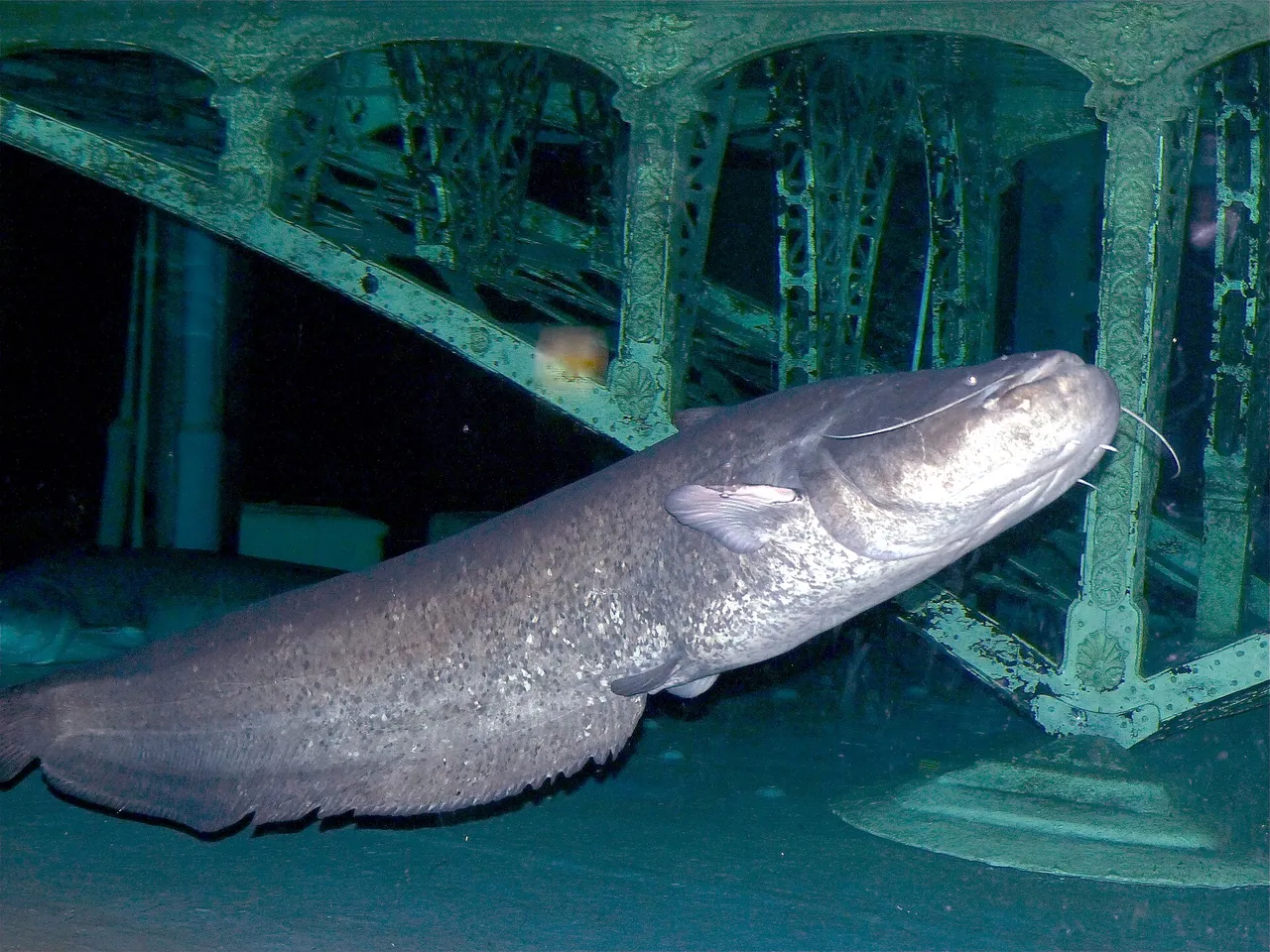
Identified by: Broad flattened head with two very long maxillary barbels and shorter chin barbels, small eyes, mottled scaleless body and the extremely long anal fin running to the tail — the character that defines Silurus. Photographed in an aquarium; colour is green-shifted.Bernard DUPONT from FRANCE — CC BY-SA 2.0, via Wikimedia Commons — source, licence_(13532570755).jpg)
Catching Wels catfish
Everything here on fishing for it. Each entry opens the page behind it.
The wels catfish is the largest freshwater fish in Europe and one of the largest in the world, reaching well over two metres and more than a hundred kilograms. It is also, in much of western Europe, an introduction — and the argument about it is one of the liveliest in European freshwater fisheries.
It is unmistakable: a huge scaleless body, a broad flattened head, a very wide mouth, two long barbels on the upper jaw and four shorter ones beneath, and a very long anal fin running most of the way to the tail. Nothing else in European fresh water looks remotely like it.
As a predator it is nocturnal, ambush-oriented and extremely catholic — fish, crayfish, amphibians, waterfowl and small mammals are all recorded, and its willingness to take large prey is what generates both its sporting reputation and the alarm about its spread. It hunts by chemical and vibrational detection rather than sight, which suits the turbid, slow, warm water it prefers and makes it effective at night.
Its native range is eastern and central Europe and western Asia; it has been introduced across much of western and southern Europe, where populations are expanding and where its effect on native fish is actively debated. FishingHQ records that debate rather than settling it, because the evidence genuinely is contested.
How it is caught
- LedgeringWels hold in deep holes and under structure in daylight and feed on the bottom at night, and a static bottom bait presented to a known hole is the traditional European approach.
- LivebaitingA live fish presented near the bottom exploits a predator that hunts by lateral line and smell in water where sight is useless. Its legality varies substantially between countries and within them.
- SpinningLarge lures fished slowly through the deep water wels occupy have become a mainstream approach, and they take fish the static methods do not reach.
Gear for this fish
- Soft plasticsVery large soft baits fished slowly along the bottom of the deep holes wels occupy in daylight are the standard European lure approach, and the size is a response to the fish's preference for a single substantial food item.
- SwimbaitsLarge jointed swimbaits work on wels because the fish hunts by lateral line in poor visibility and responds to the displacement a big-bodied lure makes, not to its detail.
Managed fisheries for wels catfish
These are private businesses rather than public water: you pay for a day, and the fishery sets its own rules on top of whatever the law requires. That is the opposite of the section above, where the places are public geography and being listed is never permission to fish. Nothing here is a recommendation, the order is alphabetical, and no price or opening hour is carried because both change faster than this page does.
Linear Fisheries
Carp and specimen water · Enslow, Kidlington, Oxfordshire
Managed for larger carp and specimen fish
A complex of carp and mixed coarse lakes in the Oxfordshire gravel-pit country, run on both day tickets and syndicates, with its own bait and tackle shop on site.
Named by the fishery as a species you can fish for. Also named here: Common bream, Common carp, European perch, Northern pike, Roach, Tench.
How you get a day: Book in advance, Membership or syndicate.
The fishery’s own conditions: Bait fishing permitted, Coarse tactics permitted, Night fishing permitted, Catch and release only.
Season: Open through the year, with individual waters occasionally closed and stated as such on the fishery's own booking platform.
The rules this fishery sets, in its own terms
- Rules are published per water and the fishery states that they are enforced, with sections on fish care, swim reservation and retention slings.
- Individual lakes are booked through the fishery's own platform rather than by turning up at every water.
- Under-sixteens fish free with a paying adult at weekends and during school holidays.
Checked against the operator's own information. Last checked 2026-08-29.
A fishery’s own conditions — barbless hooks, no keepnets, no night fishing — are conditions of that water and not law. The licences and close seasons a jurisdiction requires are a separate matter and are set out by the fisheries authority, never here. Telephone before travelling, and see every fishing business FishingHQ lists.
Identification
- Scientific name
- Silurus glanis
- Family
- Siluridae
- Water
- Freshwater, Brackish
- Conservation status
- Least Concern
- Regions
- Central & Eastern Europe, Western Europe, Northern Europe, Britain & Ireland, Mediterranean, South Asia
- Enormous scaleless body with a broad, flattened head and a very wide mouth.
- Two very long barbels on the upper jaw and four shorter ones on the lower — the six-barbel arrangement is diagnostic.
- A very long anal fin running most of the distance from the vent to the tail, and a tiny dorsal fin far forward.
- Mottled dark green-brown to almost black above, pale and blotchy below; colour varies with water.
- No other European freshwater fish approaches this shape or size, so identification is unambiguous.
Size
- Typical
- 5–20 kg (11–44 lb)
- Large
- 40–70 kg (88–154 lb)
Exceptional: Over 90 kg (198 lb); maximum published weight 306 kg
A warm-season predator that barely feeds in the cold
Wels catfish are strongly temperature-dependent, and the seasonal swing in their activity is larger than for almost any other European freshwater fish.
THEY NEED WARMTH TO FEED. Wels activity and feeding rise sharply above a threshold water temperature and fall away almost completely below it. In cold water they hold in deep holes and under structure and feed very little, which is why the European wels season is effectively a warm-months one.
SUMMER IS THE PEAK, and the peak is nocturnal. Wels feed most actively at night and at low light in the warm months, moving from deep daytime cover onto shallower flats, margins and into the upper water column to hunt.
SPAWNING IS IN LATE SPRING AND EARLY SUMMER when water reaches a threshold, with the male preparing a nest site in vegetation or among roots and guarding the eggs — a period during which fish are concentrated in shallow marginal habitat.
AUTUMN COOLING BRINGS A FEEDING PERIOD before the shutdown, and it is a productive window.
FLOW AND WEATHER EVENTS MATTER. Warm humid nights, thunderstorms and rising water are all associated with increased activity, and these are among the better-attested pieces of practitioner knowledge for the species.
AND IN THE INTRODUCED RANGE THE SEASONALITY TRAVELS. Wels established in western and southern Europe show the same thermal pattern, and warmer rivers extend their active season — which is one mechanism by which climate is expanding the species' effective range.
Backed by research — why, and the sources (2)
Supported by peer-reviewed research or fisheries science. The sources are listed and can be checked.
- Freshwater Fishes of the British Isles — HarperCollins (New Naturalist 75), 1992 (Reference work)Relied on for: Distribution, habitat association, spawning requirements and ecology of European freshwater fishes.States this directlyCitation checked — the work exists and is described correctly
- FishBase: a global information system on fishes — Froese, R. and D. Pauly, eds. — FishBase Consortium (Scientific institute)Relied on for: Distribution, habitat association, depth range, size, reproduction and life-history parameters recorded for the species.States this directlyPassage read and verified
A very large fish with no spines and a mouth that grips
Wels catfish invert the usual pattern. There are no dangerous spines — unusually for a catfish — and the hazards come from size and from a mouth designed to hold prey.
The mouth is lined with dense pads of small backward-facing teeth. They do not cut, they abrade, and a hand inserted to unhook a large fish comes out raw. Anglers who handle wels routinely describe the effect as sandpaper, and repeated over a session it removes skin.
The real problem is mass. A large wels is longer than the person holding it and heavier than most freshwater fish anybody will ever lift. It cannot be handled alone, it cannot be lifted vertically, and a fish that decides to move while being held on a bank will win. Handling in the water, or in a large mat with the body fully supported, is the only version of this that is safe for either party.
The welfare arithmetic is unusual too. Wels are long-lived and the very large individuals are decades old, so a badly handled big fish costs a population something a small one does not. Keeping the fish wet, supported and briefly handled is the whole of it, and the size makes each of those harder rather than optional.
What experienced anglers do — why, and the sources (2)
Widely and independently recommended by experienced anglers and specialist sources. This is real angling knowledge, not proof: controlled evidence for it is limited, and FishingHQ records it as convention rather than as a demonstrated effect.
- Angling Times — Bauer Media (Specialist angling publication)Relied on for: Predator angling practice on handling very large freshwater fish.States this directlyCitation checked — the work exists and is described correctly
- Freshwater Fishing — Macdonald & Jane's, 1975 (Specialist angling publication)Relied on for: Handling principles for large freshwater fish, including support and mats.States this directlyCitation checked — the work exists and is described correctly
A nest-guarding giant, and why warming water is expanding the range
Wels reproduction combines a familiar strategy with a specific environmental requirement, and that requirement is the reason the species is moving north across Europe.
THE STRATEGY IS NEST GUARDING. In early summer, when water is warm, the male clears a spawning site in shallow vegetated margins — a depression among roots and plant material — and after spawning he remains, guarding the eggs and aerating them with fin movement until they hatch. This is substantial parental investment from a very large fish, and it makes the guarding male aggressive, stationary and comparatively easy to locate.
THE REQUIREMENT IS THE INTERESTING PART. Wels need SUSTAINED WARM SHALLOW VEGETATED WATER at spawning time — not merely a warm day, but a period of it, in the right habitat. That is a genuine constraint rather than a preference: a summer that does not deliver it produces no recruitment. And it is why the northern edge of the species' natural range sat where it did, along a line determined by summer water temperature rather than by anything about the adult fish, which tolerates cold perfectly well.
WHICH IS WHY THE RANGE IS EXPANDING NORTHWARD NOW. Warming summer water is progressively satisfying that spawning requirement in catchments where it was previously not met, and populations that were maintained only by stocking — adults surviving, recruitment failing — are becoming self-sustaining. A reproductive constraint lifting is a different and more durable kind of range expansion than adults simply surviving further north.
AND THAT MATTERS BECAUSE OF WHAT THE ANIMAL IS. Wels are Europe's largest freshwater fish, extremely long-lived, and generalist apex predators taking fish, crayfish, amphibians and waterfowl. Where they are introduced outside their native range — which now includes a substantial part of western Europe — establishment is effectively irreversible, and the point at which a population becomes irreversible is the point at which it begins to spawn successfully rather than the point at which it was released.
What may be done with the species varies sharply between countries and is current local information.
Backed by research — why, and the sources (4)
Supported by peer-reviewed research or fisheries science. The sources are listed and can be checked.
- Freshwater Fishes of the British Isles — HarperCollins (New Naturalist 75), 1992 (Reference work)Relied on for: Spawning habitat, timing, egg deposition and recruitment of European freshwater fishes.States this directlyCitation checked — the work exists and is described correctly
- FishBase: a global information system on fishes — Froese, R. and D. Pauly, eds. — FishBase Consortium (Scientific institute)Relied on for: Reproductive mode, spawning season and parental care recorded for the species.States this directlyPassage read and verified
- FishBase: a global information system on fishes — Froese, R. and D. Pauly, eds. — FishBase Consortium (Scientific institute)Relied on for: Reproductive mode, spawning season, fecundity, parental care, sex-change pattern and larval development recorded for the species.States this directlyPassage read and verified
- The IUCN Red List of Threatened Species — International Union for Conservation of Nature (Conservation authority)Relied on for: Assessment, population trend, and the life-history traits — age at maturity, longevity, reproductive strategy — that determine sensitivity to exploitation.States this directlyCitation checked — the work exists and is described correctly
Bottom baits, night, and a method built around scent rather than sight
Wels catfish methods follow from a nocturnal, bottom-oriented predator that finds food by chemistry and by water movement rather than by eye.
STATIC BAIT FISHING ON THE BOTTOM IS THE FOUNDATION. Large, strongly scented baits — fish sections, whole small fish, worms in quantity, squid, and in some fisheries pellet and paste baits — fished hard on the bed, at night, in the areas the record's habitat material identifies. The fish comes to the bait; the angler does not go to the fish.
SCENT IS THE MECHANISM AND IT DECIDES BAIT CHOICE. Wels have exceptional chemoreception and a well-developed lateral line, and they hunt effectively in complete darkness and in turbid water. Baits are chosen for how much they leak into the water rather than for appearance, which is why oily fish baits dominate.
NIGHT IS WHEN IT HAPPENS. This is a nocturnal fish, and the productive window is after dark and around dawn. Daytime sessions on most waters are markedly less productive, and that is behavioural rather than a matter of pressure.
LURE FISHING IS GENUINELY EFFECTIVE AND HAS GROWN CONSIDERABLY. Large soft baits, swimbaits and vertically jigged lures take wels, particularly in deeper water and in rivers, and vertical presentation from a boat over located fish has become a major approach on the continental rivers where the species is largest.
THE 'CLONK' IS A REAL AND UNUSUAL TECHNIQUE worth naming: a shaped wooden tool struck on the water surface to produce a distinctive sound that appears to attract or provoke wels beneath a boat, used with a bait fished vertically. It is long-established practitioner practice on the Danube, Volga and Ebro systems, its mechanism is not settled, and FishingHQ records it as practitioner consensus rather than established fact.
THE TACKLE IS HEAVY BECAUSE THE FISH IS AND BECAUSE THE GROUND IS SNAGGY, and the fight is a matter of steady pressure rather than of stopping runs.
AND HANDLING NEEDS TWO PEOPLE AND A PLAN. A large wels cannot be lifted by one person or supported by a jaw grip, and the species is introduced outside its native range in several countries where what may be done with a captured fish differs sharply — a matter for the competent authority.
What experienced anglers do — why, and the sources (2)
Widely and independently recommended by experienced anglers and specialist sources. This is real angling knowledge, not proof: controlled evidence for it is limited, and FishingHQ records it as convention rather than as a demonstrated effect.
- Coarse Fishing — A. & C. Black, 1912 (Specialist angling publication)Relied on for: Established coarse angling practice, including method, presentation and the reasoning behind them.States this directlyCitation checked — the work exists and is described correctly
- Freshwater Fishing — Macdonald & Jane's, 1975 (Specialist angling publication)Relied on for: Freshwater angling technique and the principles behind method selection.States this directlyCitation checked — the work exists and is described correctly
Deep, slow, dark and structured: a very large fish in water nobody can see into
Wels catfish habitat is the deep, turbid, structured part of a large lowland river or lake, and every sensory and behavioural feature of the animal fits it.
THE FISH IS BUILT FOR DARKNESS AND TURBIDITY. Wels have small eyes, long barbels carrying dense chemoreceptors, and a well-developed lateral line, and they hunt effectively with no light at all. That removes water clarity from the list of habitat requirements and puts them in the deep, coloured, silted water most predators avoid.
SO THE GROUND IS DEEP HOLES, UNDERCUT BANKS, SUBMERGED TIMBER AND STRUCTURE in large slow rivers, connected backwaters, oxbows, canals, lakes and reservoirs across central and eastern Europe, with introduced populations well beyond. They lie up in cover through the day and move out to feed over open bottom and into the margins at night.
TEMPERATURE DRIVES ACTIVITY AND SETS THE NORTHERN LIMIT. Wels are warm-water fish that feed hard in summer and become largely inactive in cold water, which is why their natural range is southern and central rather than northern European and why introduced populations thrive where summers are long.
SPAWNING TIES THEM TO SHALLOW VEGETATED MARGINS for part of the year, which is a habitat requirement quite unlike the adult one: a nest among roots or vegetation in warm shallow water, guarded by the male. A water with excellent deep adult habitat and no vegetated margin may hold stocked wels and produce none.
THE RESERVOIRS AND CANALISED RIVERS OF EUROPE SUIT THEM VERY WELL, which is worth stating because it is part of why the species has expanded. Deep, warm, food-rich, structurally simple impoundments with abundant prey fish are close to ideal, and some of the largest fish now come from waters that did not exist a century ago.
AND THE INTRODUCTION QUESTION IS A LEGAL ONE. Wels are introduced well outside their native range and are treated as a species of concern in several jurisdictions, where moving, keeping or returning fish is restricted. That is a matter for the competent authority.
Backed by research — why, and the sources (2)
Supported by peer-reviewed research or fisheries science. The sources are listed and can be checked.
- Freshwater Fishes of the British Isles — HarperCollins (New Naturalist 75), 1992 (Reference work)Relied on for: Habitat association, spawning behaviour, seasonal activity and ecology of freshwater fishes, including position within a water body.States this directlyCitation checked — the work exists and is described correctly
- FishBase: a global information system on fishes — Froese, R. and D. Pauly, eds. — FishBase Consortium (Scientific institute)Relied on for: Habitat association, spawning season, temperature tolerance and water-type tolerance recorded for the species.States this directlyPassage read and verified
Lifecycle and reproduction
Long-lived and slow to mature, reaching maturity at three to five years and living several decades. Spawns in early summer in shallow vegetated water, the male building a rough nest and guarding the eggs. Growth is strongly temperature-dependent, which is a large part of why introduced populations in warmer southern European rivers have grown so fast and so large.
Nest spawning in shallow vegetated margins in early summer when water is warm, with the male clearing a site, guarding the eggs and aerating them until hatching. The requirement for warm shallow vegetated water at spawning time is one of the constraints on the northern edge of the range, and warming water is one reason the species is expanding northward.
Feeding and senses
An opportunistic nocturnal predator taking fish, crayfish, amphibians, and recorded taking waterfowl and small mammals. Feeding is largely by ambush from cover, with prey detected by chemical and vibrational cues rather than by sight. The willingness to take very large prey items relative to its own size is characteristic and is the basis of the alarm about its effect on native fish.
Chemoreception and mechanoreception dominate. The long barbels carry dense taste receptors and the lateral line is highly developed, which lets the fish hunt effectively in complete darkness and heavy turbidity. Sight contributes little. This is why the species is a night fishery and why baits presenting strong scent and vibration work.
Through the year
Strongly temperature-driven. Feeding is minimal in cold water and increases sharply as water warms, with the warm months being the productive period and summer nights the best of it. Fish move from deep holes to shallower feeding areas at night. The southern parts of the introduced range give a longer active season than the native northern range, which is part of why introduced fish grow so large.
Distribution
Native to eastern and central Europe and western Asia, in the Danube, Dnieper, Volga and associated basins and the Baltic, Black, Caspian and Aral Sea drainages. Widely introduced across western and southern Europe including France, Spain, Italy and Britain, where populations are established and in places expanding.
This is a biological range — where the species occurs, not a prediction that you will catch one. To browse the fishing geography FishingHQ holds, start at fishing places.
Why anglers care
A major specialist target across continental Europe, particularly in France, Spain and Italy, fished with large deadbaits, live baits, lures and by the traditional clonk method. A substantial destination fishery has developed around introduced populations in southern European rivers. In parts of its introduced range angling is viewed as a control mechanism as much as a sport, which shapes local rules.
Handling and returning
A very large, heavy, powerful fish that must be handled in the water and supported horizontally with two people for a big one. There are no sharp spines but the mouth carries dense pads of small abrasive teeth that will remove skin from a hand held in it for long. Use a large mat or cradle, keep the fish wet, minimise air time, and where the species is non-native, establish the local requirement rather than assuming it should be returned.
Going further
- What does wels catfish eat? — feeding biology, kept separate from what anglers infer from it.
Safety
Biosecurity and disease transfer — Can cause serious injury or death
Wels catfish are widely introduced beyond their native range in Europe, where populations are expanding and their effect on native fish is actively debated. Live movement is how it happens.
What reduces it: Never move live fish or water between waters. Clean, drain, dry and check equipment. Where the species is non-native, establish what the local requirement is — in several jurisdictions returning one is not permitted.
Injury while handling fish — Can cause injury needing treatment
A very large and powerful fish. The mouth carries dense abrasive tooth pads that strip skin from a hand held inside it, and a fish of this size can injure somebody simply by moving.
What reduces it: Handle in the water with two people for a large fish. Support horizontally with a cradle or large mat. Expect abrasion if you hold the lower jaw and consider a glove. Never attempt to lift a very large fish alone.
Precautions that always apply here
- Support the fish's weight along its body, keep it out of the water for as short a time as possible, and hold it over something soft.
- Wet your hands before touching a fish. Dry hands strip the protective mucus layer that keeps infection out.
- Check, clean and dry your kit between different waters — the published guidance is 48 hours’ drying, in sunlight where possible, because a number of invasive species survive over two weeks in damp conditions. Nets, boots and wet mats move invasive species and disease more effectively than anything else anglers do.
- Never move live fish, live bait or water from one water to another.
Check the rules before you fish
Fishing laws, bylaws, access rules, seasons, bait restrictions and permitted methods vary by location and can change. Check the current rules from the relevant authority and the water you intend to fish before fishing.
Check with:
- Current national or regional law for where you are fishing
- Current local bylaws
- The relevant fisheries authority
- The landowner, club or fishery whose water it is
- Any restrictions specific to the species or the method you intend to use
Where to go next
Similar and related fish
- BleakBleak shoaling near the surface at night are a regular item, which is one of the reasons wels are caught on surface-fished baits despite being bottom-associated animals.
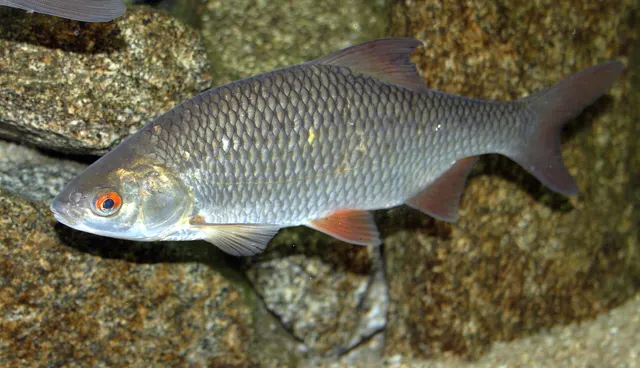 RoachRoach and other cyprinids are the staple prey of wels across their European range, taken mainly at night and located by the barbels and lateral line rather than by sight.
Where it lives
Where you will find it
- Central and eastern European river fishingThe region's headline fish, reaching genuinely enormous size in the big rivers and reservoirs, and the subject of a specialist fishery with methods found almost nowhere else.
- CyprusPresent in the stocked reservoirs alongside carp, and part of what makes this a recognisably European coarse fishery conducted in a dry mountain landscape.
- FranceIntroduced and now established through the large regulated rivers, where it has become a major specialist target and a live management argument at the same time.
- HungaryNative to the Danube and Tisza and reaching great size in both, which is why Hungary is a destination for anglers whose target is one fish rather than a day's sport.
- ItalyIntroduced to the Po system in the twentieth century and now the headline freshwater fish of northern Italy by size, supporting a specialist fishery that did not exist two generations ago.
- PolandNative to the great lowland rivers and their reservoirs, reaching sizes that make it the largest fish an angler is likely to encounter in Polish freshwater.
- RomaniaAbundant through the lower Danube and the delta channels, and the large predator a delta angler is most likely to actually encounter.
- SpainIntroduced rather than native, established in the Ebro and other regulated river systems, and the fish that draws specialist freshwater anglers to Spain from across the continent.
4 more
- The Danube Fishing regions
- The Danube basin Fishing regions
- The Rhine Fishing regions
- The River Ebro Fishing regions
Understanding this fish
- Contaminants, and what accumulates in a fishAmong the largest and longest-lived predators in European fresh water, feeding at the top of river and reservoir food webs for decades. Longevity is the variable here rather than size: a fish that has been eating other fish for twenty years has been accumulating for twenty years.
- Handling a large fish for the tableThe largest fish a European freshwater angler is likely to land, and one where the decision to keep it is almost always the wrong one — a very large, very old animal, in a water where its removal is noticed.
Environment and conservation
Sources and evidence
- FishBase: a global information system on fishes — Froese, R. and D. Pauly, eds. — FishBase Consortium (Scientific institute)Relied on for: Scientific name, family placement in the Siluridae, a maximum length of 273 cm TL, a maximum published weight of 130.0 kg, a maximum reported age of 80 years.States this directlyPassage read and verified
- FishBase: a global information system on fishes — Froese, R. and D. Pauly, eds. — FishBase Consortium (Scientific institute)Relied on for: Environment, climate zone and depth range as recorded: Freshwater; brackish; benthopelagic; non-migratory; depth range 0 - 30 m . Temperate; 4°C - 20°C ; 62°N - 36°N, 0°E - 80°EStates this directlyPassage read and verified
- FishBase: a global information system on fishes — Froese, R. and D. Pauly, eds. — FishBase Consortium (Scientific institute)Relied on for: The IUCN Red List category for Silurus glanis — Least Concern, assessed 29 May 2022 — as republished by FishBase, the Red List itself being unreachable during review.States this directlyPassage read and verified
- Freshwater Fishes of the British Isles — HarperCollins (New Naturalist 75), 1992 (Reference work)Relied on for: The ecology, distribution and introduction history of Silurus glanis in European fresh waters.States this directlyCitation checked — the work exists and is described correctly
- Check Clean Dry — biosecurity guidance for water users — GB Non-native Species Secretariat (Conservation authority)Relied on for: The framework by which introduced predatory fish are assessed and managed in Britain, including this species.States this directlyPassage read and verified
Why the 24 connections on this page are here, and the sources
Similar and related fish
Backed by research — 2 connections
Supported by peer-reviewed research or fisheries science. The sources are listed and can be checked.
Bleak
Recorded diet evidence identifies Alburnus alburnus as a food item of this predator at species level. The edge is written at that granularity and no further.
- FishBase: a global information system on fishes — Froese, R. and D. Pauly, eds. — FishBase Consortium (Scientific institute)Relied on for: Food items recorded for this predator, including Alburnus alburnus.States this directlyPassage read and verified
- FAO Species Identification Guides for Fishery Purposes and the FAO Species Catalogues — Food and Agriculture Organization of the United Nations (Scientific institute)Relied on for: Species account describing the diet of this predator in the region where Alburnus alburnus occurs.Background and mechanism onlyCitation checked — the work exists and is described correctly
Roach
Recorded diet evidence identifies Rutilus rutilus as a food item of this predator at species level. The edge is written at that granularity and no further.
- FishBase: a global information system on fishes — Froese, R. and D. Pauly, eds. — FishBase Consortium (Scientific institute)Relied on for: Food items recorded for this predator, including Rutilus rutilus.States this directlyPassage read and verified
- FAO Species Identification Guides for Fishery Purposes and the FAO Species Catalogues — Food and Agriculture Organization of the United Nations (Scientific institute)Relied on for: Species account describing the diet of this predator in the region where Rutilus rutilus occurs.Background and mechanism onlyCitation checked — the work exists and is described correctly
How it is caught
What experienced anglers do — 3 connections
Widely and independently recommended by experienced anglers and specialist sources. This is real angling knowledge, not proof: controlled evidence for it is limited, and FishingHQ records it as convention rather than as a demonstrated effect.
Ledgering
Established angling practice for this species, recorded as convention. The note states the property of the animal or its water that makes the method the answer.
- Freshwater Fishing — Macdonald & Jane's, 1975 (Specialist angling publication)Relied on for: Freshwater angling technique and its application to this species.States this directlyCitation checked — the work exists and is described correctly
- Angling Times — Bauer Media (Specialist angling publication)Relied on for: Contemporary practice for this species in the British and European coarse press.Background and mechanism onlyCitation checked — the work exists and is described correctly
Livebaiting
Established angling practice for this species, recorded as convention. The note states the property of the animal or its water that makes the method the answer.
- Freshwater Fishing — Macdonald & Jane's, 1975 (Specialist angling publication)Relied on for: Freshwater angling technique and its application to this species.States this directlyCitation checked — the work exists and is described correctly
- Angling Times — Bauer Media (Specialist angling publication)Relied on for: Contemporary practice for this species in the British and European coarse press.Background and mechanism onlyCitation checked — the work exists and is described correctly
Spinning
Established angling practice for this species, recorded as convention. The note states the property of the animal or its water that makes the method the answer.
- Freshwater Fishing — Macdonald & Jane's, 1975 (Specialist angling publication)Relied on for: Freshwater angling technique and its application to this species.States this directlyCitation checked — the work exists and is described correctly
- Angling Times — Bauer Media (Specialist angling publication)Relied on for: Contemporary practice for this species in the British and European coarse press.Background and mechanism onlyCitation checked — the work exists and is described correctly
Gear for this fish
What experienced anglers do — 2 connections
Widely and independently recommended by experienced anglers and specialist sources. This is real angling knowledge, not proof: controlled evidence for it is limited, and FishingHQ records it as convention rather than as a demonstrated effect.
Soft plastics
A practitioner claim about which lure family answers this species' feeding or holding behaviour.
- Freshwater Fishing — Macdonald & Jane's, 1975 (Specialist angling publication)Relied on for: Lure and spinning practice for freshwater predators in Britain and northern Europe.States this directlyCitation checked — the work exists and is described correctly
- Angling Times — Bauer Media (Specialist angling publication)Relied on for: Contemporary British and European lure practice for this species in the weekly angling press.Background and mechanism onlyCitation checked — the work exists and is described correctly
Swimbaits
A practitioner claim about which lure family answers this species' feeding or holding behaviour.
- Freshwater Fishing — Macdonald & Jane's, 1975 (Specialist angling publication)Relied on for: Lure and spinning practice for freshwater predators in Britain and northern Europe.States this directlyCitation checked — the work exists and is described correctly
- Angling Times — Bauer Media (Specialist angling publication)Relied on for: Contemporary British and European lure practice for this species in the weekly angling press.Background and mechanism onlyCitation checked — the work exists and is described correctly
Where it lives
Backed by research — 2 connections
Supported by peer-reviewed research or fisheries science. The sources are listed and can be checked.
Floodplains, backwaters and oxbows
A habitat association resting on the regional identification and fisheries literature rather than on angling report.
- The Flood Pulse Concept in River-Floodplain Systems — Canadian Special Publication of Fisheries and Aquatic Sciences 106, Department of Fisheries and Oceans, Ottawa, 1989 (Scientific literature)Relied on for: That fish move laterally onto the inundated floodplain to feed and breed and return to the channel as water falls, and that floodplain inundation drives production in large river systems.States this directlyCitation checked — the work exists and is described correctly
- FAO Species Identification Guides for Fishery Purposes and the FAO Species Catalogues — Food and Agriculture Organization of the United Nations (Scientific institute)Relied on for: Habitat association and distribution of the species concerned.States this directlyCitation checked — the work exists and is described correctly
Lowland rivers
A habitat claim held to a scientific standard.
- FishBase: a global information system on fishes — Froese, R. and D. Pauly, eds. — FishBase Consortium (Scientific institute)Relied on for: That Silurus glanis is a freshwater and brackish demersal species of European and western Asian river systems.States this directlyPassage read and verified
- Freshwater Fishes of the British Isles — HarperCollins (New Naturalist 75), 1992 (Reference work)Relied on for: The habitat use and nocturnal feeding of Silurus glanis in European fresh waters.States this directlyCitation checked — the work exists and is described correctly
Where you will find it
Backed by research — 12 connections
Supported by peer-reviewed research or fisheries science. The sources are listed and can be checked.
Central and eastern European river fishing
A distributional claim taken from reference sources on the species rather than from angling report. It states presence and asserts nothing about a fishery.
- FishBase: a global information system on fishes — Froese, R. and D. Pauly, eds. — FishBase Consortium (Scientific institute)Relied on for: Distribution, habitat association, depth range and life history recorded for the species concerned.States this directlyPassage read and verified
- The IUCN Red List of Threatened Species — International Union for Conservation of Nature (Conservation authority)Relied on for: Global distribution, population trend and extinction-risk assessment for the species concerned.States this directlyCitation checked — the work exists and is described correctly
Cyprus
A distribution edge resting on published regional identification and distribution references, written where the species is genuinely characteristic of the destination's fishing rather than merely recorded from its waters.
- FAO Species Identification Guides for Fishery Purposes and the FAO Species Catalogues — Food and Agriculture Organization of the United Nations (Scientific institute)Relied on for: Distribution, habitat association and biology of the fishes of the eastern central Atlantic and the Mediterranean, from the regional identification guides prepared for fishery purposes.States this directlyCitation checked — the work exists and is described correctly
- FishBase: a global information system on fishes — Froese, R. and D. Pauly, eds. — FishBase Consortium (Scientific institute)Relied on for: Recorded environment, depth range, distribution and biology of the species named.States this directlyPassage read and verified
France
That a species occurs in these waters, drawn from distribution science and stock assessment. It is a statement about where the animal lives and is not a statement that anybody will catch one, still less where.
- Freshwater Fishes of the British Isles — HarperCollins (New Naturalist 75), 1992 (Reference work)Relied on for: Distribution, habitat requirement and life history of European freshwater fishes, including their occurrence across the continental range named.States this directlyCitation checked — the work exists and is described correctly
- FishBase: a global information system on fishes — Froese, R. and D. Pauly, eds. — FishBase Consortium (Scientific institute)Relied on for: Recorded distribution and habitat association of the freshwater and migratory species named.States this directlyPassage read and verified
Hungary
That a species occurs in these waters, drawn from distribution science and stock assessment. It is a statement about where the animal lives and is not a statement that anybody will catch one, still less where.
- Freshwater Fishes of the British Isles — HarperCollins (New Naturalist 75), 1992 (Reference work)Relied on for: Distribution, habitat requirement and life history of European freshwater fishes, including their occurrence across the continental range named.States this directlyCitation checked — the work exists and is described correctly
- FishBase: a global information system on fishes — Froese, R. and D. Pauly, eds. — FishBase Consortium (Scientific institute)Relied on for: Recorded distribution and habitat association of the freshwater and migratory species named.States this directlyPassage read and verified
Italy
That a species occurs in these waters, drawn from distribution science and stock assessment. It is a statement about where the animal lives and is not a statement that anybody will catch one, still less where.
- Freshwater Fishes of the British Isles — HarperCollins (New Naturalist 75), 1992 (Reference work)Relied on for: Distribution, habitat requirement and life history of European freshwater fishes, including their occurrence across the continental range named.States this directlyCitation checked — the work exists and is described correctly
- FishBase: a global information system on fishes — Froese, R. and D. Pauly, eds. — FishBase Consortium (Scientific institute)Relied on for: Recorded distribution and habitat association of the freshwater and migratory species named.States this directlyPassage read and verified
Poland
That a species occurs in these waters, drawn from distribution science and stock assessment. It is a statement about where the animal lives and is not a statement that anybody will catch one, still less where.
- Freshwater Fishes of the British Isles — HarperCollins (New Naturalist 75), 1992 (Reference work)Relied on for: Distribution, habitat requirement and life history of European freshwater fishes, including their occurrence across the continental range named.States this directlyCitation checked — the work exists and is described correctly
- FishBase: a global information system on fishes — Froese, R. and D. Pauly, eds. — FishBase Consortium (Scientific institute)Relied on for: Recorded distribution and habitat association of the freshwater and migratory species named.States this directlyPassage read and verified
Romania
That a species occurs in these waters, drawn from distribution science and stock assessment. It is a statement about where the animal lives and is not a statement that anybody will catch one, still less where.
- Freshwater Fishes of the British Isles — HarperCollins (New Naturalist 75), 1992 (Reference work)Relied on for: Distribution, habitat requirement and life history of European freshwater fishes, including their occurrence across the continental range named.States this directlyCitation checked — the work exists and is described correctly
- FishBase: a global information system on fishes — Froese, R. and D. Pauly, eds. — FishBase Consortium (Scientific institute)Relied on for: Recorded distribution and habitat association of the freshwater and migratory species named.States this directlyPassage read and verified
Spain
That a species occurs in these waters, drawn from distribution science and stock assessment. It is a statement about where the animal lives and is not a statement that anybody will catch one, still less where.
- Freshwater Fishes of the British Isles — HarperCollins (New Naturalist 75), 1992 (Reference work)Relied on for: Distribution, habitat requirement and life history of European freshwater fishes, including their occurrence across the continental range named.States this directlyCitation checked — the work exists and is described correctly
- FishBase: a global information system on fishes — Froese, R. and D. Pauly, eds. — FishBase Consortium (Scientific institute)Relied on for: Recorded distribution and habitat association of the freshwater and migratory species named.States this directlyPassage read and verified
The Danube
A distributional claim taken from reference works and databases on the fishes of the region rather than from angling report. It states presence and asserts nothing about a fishery.
- FishBase: a global information system on fishes — Froese, R. and D. Pauly, eds. — FishBase Consortium (Scientific institute)Relied on for: Distribution, habitat association, life history and size recorded for the species concerned.States this directlyPassage read and verified
- Freshwater Fishes of the British Isles — HarperCollins (New Naturalist 75), 1992 (Reference work)Relied on for: Biology, distribution, life history and conservation status of northern European freshwater and diadromous fishes.States this directlyCitation checked — the work exists and is described correctly
The Danube basin
A distribution association between an animal and a kind of water, rather than a claim about any named mark.
- Freshwater Fishes of the British Isles — HarperCollins (New Naturalist 75), 1992 (Reference work)Relied on for: Distribution and habitat association of European freshwater fishes, including occurrence in the river system concerned.States this directlyCitation checked — the work exists and is described correctly
- FishBase: a global information system on fishes — Froese, R. and D. Pauly, eds. — FishBase Consortium (Scientific institute)Relied on for: Distribution and habitat association recorded for the species.States this directlyPassage read and verified
The Rhine
A claim that a place contains the ground, water and seasonal conditions the species is associated with. It is a distributional statement about the world, it rests on the regional reference literature, and it deliberately asserts nothing about access, permission or catch.
- Freshwater Fishes of the British Isles — HarperCollins (New Naturalist 75), 1992 (Reference work)Relied on for: Distribution, ecology and conservation status of European freshwater and migratory fishes, including in modified and artificial waters.States this directlyCitation checked — the work exists and is described correctly
- FishBase: a global information system on fishes — Froese, R. and D. Pauly, eds. — FishBase Consortium (Scientific institute)Relied on for: Recorded distribution, habitat association and life history for the freshwater and migratory species named.States this directlyPassage read and verified
The River Ebro
A distributional claim taken from reference works and databases on the fishes of the region rather than from angling report. It states presence and asserts nothing about a fishery.
- The IUCN Red List of Threatened Species — International Union for Conservation of Nature (Conservation authority)Relied on for: Global extinction-risk assessment, population trend and identified threats for the species concerned.States this directlyCitation checked — the work exists and is described correctly
- FishBase: a global information system on fishes — Froese, R. and D. Pauly, eds. — FishBase Consortium (Scientific institute)Relied on for: Distribution, habitat association and life history recorded for the species concerned.States this directlyPassage read and verified
Understanding this fish
Backed by research — 1 connection
Supported by peer-reviewed research or fisheries science. The sources are listed and can be checked.
Contaminants, and what accumulates in a fish
That bioaccumulation is relevant to this species, because it is large, long-lived and high in a food web. It states no consumption limit and no frequency — those are issued by authorities, differ by water body and by who is eating, and the record it points at says so.
- Fish and Fishery Products Hazards and Controls Guidance — US Food and Drug Administration, Center for Food Safety and Applied Nutrition, 2022 (Standards body)Relied on for: Chemical contaminants in fishery products, the accumulation of methylmercury with age and trophic position, and the basis on which consumption advice is issued.States this directlyPassage read and verified
- FishBase: a global information system on fishes — Froese, R. and D. Pauly, eds. — FishBase Consortium (Scientific institute)Relied on for: Trophic level, maximum size, maximum reported age and feeding biology of the species named.States this directlyPassage read and verified
Official guidance — 1 connection
Stated by a fisheries authority, scientific institute or recognised angling body. Authoritative, but summarising rather than demonstrating.
Handling a large fish for the table
A link from a species reaching sizes at which chilling from the outside fails to the record that covers the consequences, and to the retention decision that precedes it.
- Fish and Fishery Products Hazards and Controls Guidance — US Food and Drug Administration, Center for Food Safety and Applied Nutrition, 2022 (Standards body)Relied on for: Hazards and controls for fish and fishery products: scombrotoxin formation and the species groups associated with it, seafood parasites, and natural toxins.States this directlyPassage read and verified
Environment and conservation
Official guidance — 1 connection
Stated by a fisheries authority, scientific institute or recognised angling body. Authoritative, but summarising rather than demonstrating.
Invasive species and biosecurity
An introduction-impact claim held to an authoritative standard because it concerns a statutory management question.
- Check Clean Dry — biosecurity guidance for water users — GB Non-native Species Secretariat (Conservation authority)Relied on for: The framework by which introduced predatory fish are assessed and managed in Britain, including Silurus glanis.States this directlyPassage read and verified
- Freshwater Fishes of the British Isles — HarperCollins (New Naturalist 75), 1992 (Reference work)Relied on for: The introduction history of Silurus glanis into western European waters outside its native range.States this directlyCitation checked — the work exists and is described correctly
How FishingHQ labels evidence is explained in the evidence policy.