Cyprus
Fishing regions · Last reviewed 2026-08-19
The eastern Mediterranean's largest island: warm, clear, nutrient-poor water with almost no tide, a shore fishery of small resident fish, and a reservoir network that makes it one of the few Mediterranean islands with real freshwater fishing.
Being listed here is not permission to fish. What that meansClose
Access, fishing rights, seasons, licences, local bylaws and permitted methods vary and can change. Check current access, permission, local regulations, closures and restrictions before you travel or fish. FishingHQ describes what the ground is and names who holds the answer; it does not hold the answer itself.
Find the authority for a jurisdiction · What FishingHQ does and does not cover
CYPRUS IS THE EASTERN MEDITERRANEAN AT ITS MOST CHARACTERISTIC, AND THAT MEANS SOMETHING SPECIFIC ABOUT THE FISHING.
The eastern basin is the warmest, saltiest and least productive part of the Mediterranean, which is itself one of the least productive seas in the world. Water clarity is exceptional and it is exceptional for the same reason the fishing is hard: there is very little plankton in it. A visitor arriving from the Atlantic expects clear water to mean good fishing and finds the opposite.
SO THE SHORE FISHERY IS ONE OF SMALL RESIDENT FISH, PATIENTLY FISHED. Bream of several species, wrasse, picarel, bogue, small groupers, garfish, and — the fish that most rewards effort — grey mullet in the harbours. Light tackle, small hooks, fine line and groundbait are the technique, and an angler using British sea tackle here will catch nothing and conclude the sea is empty. It is not empty; it is full of fish that weigh eighty grams.
THERE IS ALMOST NO TIDE, AND THAT REMOVES A WHOLE LAYER OF PLANNING. Mediterranean tidal range is measured in centimetres. Everything a British or Atlantic shore angler does around the state of the tide simply does not apply, and what replaces it is time of day, wind, and water clarity after a blow. Dawn, dusk and night are the productive windows.
THE PELAGIC SEASON IS THE EXCEPTION AND IT IS WORTH TIMING FOR. Amberjack, bonito, little tunny and barracuda come inshore seasonally and are taken from rock marks on lures, which is a completely different proposition from the resident fishery and is the one time light tackle is the wrong answer.
AND CYPRUS HAS FRESHWATER FISHING, WHICH ALMOST NO MEDITERRANEAN ISLAND DOES. The island has no permanent rivers of consequence and has built more than a hundred dams and reservoirs to hold winter rain. Those reservoirs are stocked and managed, and they hold carp, catfish, trout at altitude, and other coarse species. It is a genuine and organised fishery with its own permit system, and it is entirely invisible in tourist material.
THE ISLAND IS POLITICALLY DIVIDED AND THAT IS A PRACTICAL FISHING FACT rather than a background one. Administration, permits and authorities differ between the areas, and a permission obtained in one is not a permission in the other. This page names the shape of that and states nothing about what any rule currently is.
What fishing here is like
The third largest Mediterranean island, in the eastern basin south of Turkey. Warm, exceptionally clear, highly saline and nutrient-poor water, with negligible tidal range. A coast of rock headlands, low cliffs, sandy bays and long beaches, with harbours and breakwaters at the main towns. Inland, the Troodos massif rises to nearly two thousand metres and carries cold streams; there are no permanent rivers of consequence, and more than a hundred dams and reservoirs have been built to hold winter rainfall. Politically divided, with different administrations, permit systems and authorities in different parts of the island.
What dominates
Light shore fishing from rock, breakwater and harbour wall for bream, wrasse, picarel, bogue and small groupers, using fine tackle, small hooks and groundbait — this is the island's characteristic sea fishing and it is a patience-and-finesse discipline rather than a power one. Mullet fishing in harbours, which is the most technical and most rewarding shore species. Seasonal lure and spinning from rock marks for amberjack, bonito, little tunny and barracuda. Boat fishing over reef and drop-off, and offshore trolling in season. Freshwater fishing on the stocked reservoirs for carp, catfish and trout, which is organised, permitted and almost unknown to visitors. Spearfishing and freediving are widely practised and the visibility is among the best in the Mediterranean.
The water available
Rock headlands, low limestone cliffs and platforms, and rock-and-sand mixed ground. Long sandy beaches, particularly on the east and south-east. Harbours, marinas and breakwaters, which are the most accessible and most consistently productive shore marks. Seagrass meadows in the shallow bays, which are the most important nursery habitat here and are protected in places. Reef and rocky drop-offs offshore. Inland: more than a hundred artificial reservoirs of varying size and altitude, cold streams in the Troodos, and effectively no natural standing or running water of consequence. Salt lakes near Larnaca and Akrotiri, which are seasonal, protected and not a fishery.
How the rules are structured
The island is politically divided and administered separately, and permits, authorities and rules differ between the areas — a permission obtained in one is not a permission in the other, and this is the single most consequential administrative fact for a visitor. Sea angling from the shore is generally accessible, with licensing requirements that have changed over time and that differ by area. FRESHWATER FISHING IS SEPARATELY ADMINISTERED AND REQUIRES ITS OWN PERMIT: the reservoirs are managed waters with their own rules on methods, seasons, retention and access, and a sea-fishing position resolves nothing about them. Spearfishing is subject to its own provisions, which differ from those for rod fishing and which include restrictions around particular areas and equipment. Marine protected areas, seagrass protections and archaeological protections all exist along this coast and all can modify what is otherwise permitted. FishingHQ does not state what any current rule is, in any part of the island; the fisheries authority for the area being fished holds the position, and for the reservoirs it is the water management body.
Who to ask
- The fisheries and marine research authority administering sea angling, licensing and marine protection for its part of the island.
- The water development and reservoir management body, which administers the inland reservoir fishery separately from sea angling and issues its own permits.
- The separate administration in the northern part of the island, which operates its own permit system and its own rules; a permission from one administration is not a permission in the other.
- Marine protected area and Natura site administrations, which cover seagrass meadows, turtle nesting beaches and several stretches of coast.
- Antiquities authorities, which restrict activity — including diving and anchoring — over protected underwater archaeological sites, a constraint uncommon elsewhere on FishingHQ.
Words you will meet
- Tsipoura
- Gilthead bream, the most sought-after of the shore breams and also the mainstay of Mediterranean aquaculture — so the name on a menu is far more often a farmed fish than a wild one.
- Lavraki
- European sea bass. Present but far less abundant and far less central to angling here than in the Atlantic, which surprises British visitors more than anything else about the fishing.
- Kefalos
- Grey mullet, the characteristic harbour species and the one that most rewards fine tackle and groundbaiting.
- Marida / gopa
- Picarel and bogue — small shoaling fish that make up much of what a shore angler actually catches here, eaten fried whole and not regarded as a poor result.
- Magiatiko
- Greater amberjack, the seasonal pelagic prize from rock marks and the reason to bring heavier lure tackle for part of the year.
Conditions and hazards
The sea here is comparatively benign and the hazards are correspondingly easy to underestimate. There is effectively no tide, which removes cut-off risk and also removes the habit of thinking about it — visitors then misjudge rock platforms in swell, which does arrive and does sweep low limestone ledges. Sun, heat and dehydration are the dominant everyday risk: summer temperatures are extreme, shade on a breakwater is nil, and a full day's fishing without water is genuinely dangerous. Rock and limestone platforms are sharp and become slippery where wet or algal. Sea urchins are abundant on the rock ground and are the commonest injury to waders and swimmers; several fish carry venomous spines, including weever in the sandy shallows and scorpionfish on the rock. Water in the reservoirs is cold at depth and the banks are frequently steep, unfenced and unstable, and the reservoirs are remote with limited mobile coverage. The island is divided and there are areas where access is restricted or prohibited for reasons that have nothing to do with fishing, including buffer zones and military areas; these are not always obviously marked to a visitor and no fishing source is the right authority for them.
Why clear water means poor fishing here, and what to do about it
Almost every visitor arrives with the same expectation and it is exactly backwards. Water this clear looks like the best fishing they have ever seen and is in fact evidence of the opposite.
CLARITY IS AN ABSENCE OF PLANKTON. Water is turbid where it is productive: suspended organic matter, plankton blooms and river-borne nutrients are what make an Atlantic sea green and what feed everything in it. The eastern Mediterranean has almost no river input relative to its size, high evaporation, high salinity, and correspondingly very low nutrient levels. It is among the most oligotrophic — nutrient-poor — seas on earth, and it is transparent for that reason.
SO THE FOOD WEB IS SHORT AND THE FISH ARE SMALL. Low primary production supports a limited biomass, and it is distributed among a large number of species rather than concentrated in a few abundant ones. The result is a shore fishery of many kinds of small fish rather than a few kinds of large ones, and that is a permanent structural fact rather than a symptom of overfishing — though overfishing has made it considerably worse.
WHICH CHANGES THE TACKLE COMPLETELY. Fine line, small hooks, small baits, and enough groundbait to bring fish to a spot and hold them there. A rod-and-lead outfit that works on a Cornish beach will not register a bite from a fish of this size, and the angler concludes there is nothing there. This is the single most common visitor mistake and it is a tackle error rather than a location one.
CLARITY ALSO MEANS THE FISH SEE YOU AND SEE THE LINE. Fine fluorocarbon, longer casts than the depth would suggest, and fishing at first light, last light or at night are all responses to the same problem. Night fishing from a lit harbour wall is genuinely the most productive shore option here.
AND IT MAKES A BLOW WORTH WAITING FOR. Water coloured by a few days of wind is the one time this coast fishes like a productive one — the fish lose their advantage, they move closer in, and the tackle can be scaled up. Experienced local anglers fish after weather rather than in fine conditions, which is the reverse of the holidaymaker's instinct.
Backed by research — why, and the sources (3)
Supported by peer-reviewed research or fisheries science. The sources are listed and can be checked.
- The European Environment Agency's assessments of Europe's waters, seas and coasts — European Environment Agency, Copenhagen (Conservation authority)Relied on for: State-of-the-environment assessment of Europe's seas, including the Mediterranean, and the coverage and designation of marine protected sites.States this directlyCitation checked — the work exists and is described correctly
- FishBase: a global information system on fishes — Froese, R. and D. Pauly, eds. — FishBase Consortium (Scientific institute)Relied on for: Recorded environment, depth range, distribution and biology of the species named.States this directlyPassage read and verified
- FAO Species Identification Guides for Fishery Purposes and the FAO Species Catalogues — Food and Agriculture Organization of the United Nations (Scientific institute)Relied on for: Distribution, habitat association and identification of the fishes of the eastern central Atlantic and the Mediterranean, from the regional identification guides prepared for fishery purposes.States this directlyCitation checked — the work exists and is described correctly
The reservoirs, which are the island's least-known fishery
Cyprus is one of very few Mediterranean islands with a real freshwater fishery, and it exists because the island has a water problem rather than because it has rivers.
THERE ARE NO RIVERS OF CONSEQUENCE. Watercourses run in winter and dry in summer, which is the normal condition of a Mediterranean island. What the island has instead is more than a hundred dams built to capture winter rainfall — a national water strategy that incidentally created a network of standing waters where none existed.
THOSE RESERVOIRS ARE STOCKED AND MANAGED. Carp are the mainstay, along with catfish, and the higher and colder reservoirs in the Troodos hold trout. This is a deliberate fishery with permits, seasons and rules rather than an accident, and it is administered by the water authority rather than by the sea fisheries body — which means a visitor who has resolved their sea-fishing position has resolved nothing about it.
THE FISHING IS RECOGNISABLY EUROPEAN COARSE FISHING IN AN UNRECOGNISABLE LANDSCAPE. Bottom fishing and float fishing for carp on baited swims, in a dry mountain valley, with water temperatures that shut the fishing down in the middle of a summer day and open it at dawn and dusk. The seasonal rhythm is inverted relative to Britain: the good fishing is spring and autumn, and high summer is the hard season rather than the easy one.
DRAWDOWN IS THE CONDITION THAT DECIDES EVERYTHING. These are water-supply reservoirs, so levels fall through the dry season by very large amounts. A swim that was a comfortable bank in April may be a hundred metres from the water in September, features move, and the fish concentrate into whatever depth remains. Reading a drawn-down reservoir is the local skill.
AND THE BANKS ARE NOT MANAGED FOR ANGLERS. Steep, unstable, unfenced, and frequently a long walk from a road, with limited mobile coverage. This is remote fishing in a country most visitors experience as a beach resort, and it should be approached as remote fishing.
What experienced anglers do — why, and the sources (2)
Widely and independently recommended by experienced anglers and specialist sources. This is real angling knowledge, not proof: controlled evidence for it is limited, and FishingHQ records it as convention rather than as a demonstrated effect.
- The European Environment Agency's assessments of Europe's waters, seas and coasts — European Environment Agency, Copenhagen (Conservation authority)Relied on for: State-of-the-environment assessment of Europe's seas, including the Mediterranean, and the coverage and designation of marine protected sites.States this directlyCitation checked — the work exists and is described correctly
- FishBase: a global information system on fishes — Froese, R. and D. Pauly, eds. — FishBase Consortium (Scientific institute)Relied on for: Recorded environment, depth range, distribution and biology of the species named.States this directlyPassage read and verified
A divided island, and what that means before you cast
Cyprus is administered separately in different parts of the island, and for a visiting angler that is a practical constraint rather than a political footnote. This page describes the shape of it and states no rule.
PERMISSIONS DO NOT TRANSFER. Different administrations operate different permit systems for sea and for inland fishing, with different requirements, different issuing bodies and different rules. A document obtained in one part of the island is not a document in the other, and an angler who assumes otherwise has no permission at all rather than a slightly wrong one.
THE FRESHWATER AND SEA SYSTEMS ARE ALSO SEPARATE FROM EACH OTHER, within each administration. The reservoirs are managed by a water authority; the coast by a fisheries authority. Two questions, two bodies, and neither answers for the other.
SPEARFISHING IS A THIRD SEPARATE QUESTION and it is the one that differs most sharply. Its provisions are distinct from rod fishing everywhere on FishingHQ and they are distinct here, including restrictions tied to particular areas, to equipment and to proximity to other activities. A diver who has established that rod fishing is straightforward has established nothing.
ACCESS RESTRICTIONS EXIST THAT ARE NOT ABOUT FISHING AT ALL. Buffer zones, military areas and restricted coast exist on this island, they are not always obviously marked to somebody unfamiliar with them, and no fishing source is the right authority for where they are. The same applies to protected underwater archaeological sites, which carry diving and anchoring restrictions that are uncommon elsewhere on FishingHQ and are seriously enforced.
THE PRACTICAL SEQUENCE. Establish which administration governs where you intend to fish. Establish whether it is sea or inland, because that decides which body to ask. Ask that body. If you intend to spearfish, ask again, separately. And treat any access restriction you encounter on the ground as real regardless of what a fishing permission says, because the two are unrelated systems.
Official guidance — why, and the sources (3)
Stated by a fisheries authority, scientific institute or recognised angling body. Authoritative, but summarising rather than demonstrating.
- The European Environment Agency's assessments of Europe's waters, seas and coasts — European Environment Agency, Copenhagen (Conservation authority)Relied on for: State-of-the-environment assessment of Europe's seas, including the Mediterranean, and the coverage and designation of marine protected sites.States this directlyCitation checked — the work exists and is described correctly
- CMAS technical and sporting standards for underwater activities — Confédération Mondiale des Activités Subaquatiques (Standards body)Relied on for: Technical and sporting standards for underwater activity, including the conduct and organisation of spearfishing.Background and mechanism onlyCitation checked — the work exists and is described correctly
- DAN guidance on freediving safety, hypoxia and shallow-water blackout — Divers Alert Network (Water-safety or diver-training authority)Relied on for: Guidance on freediving safety, hypoxia, shallow-water blackout and the buddy practice that mitigates them.States this directlyPassage read and verified
Some of what lives here
Fish recorded here that FishingHQ holds a reviewed photograph of. It is not a complete list of what Cyprus holds, and it is not a prediction that you will catch any of them — it is a way in to the ones we can show you.
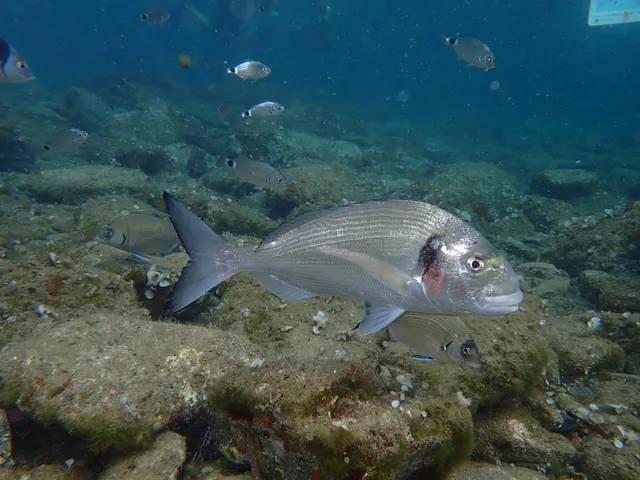 Gilthead breamThe Mediterranean's most prized sea bream, marked by a golden band between the eyes, with a jaw powerful enough to crush shellfish and a range now expanding northward.
jujurenoult — CC BY 4.0, via Wikimedia Commons
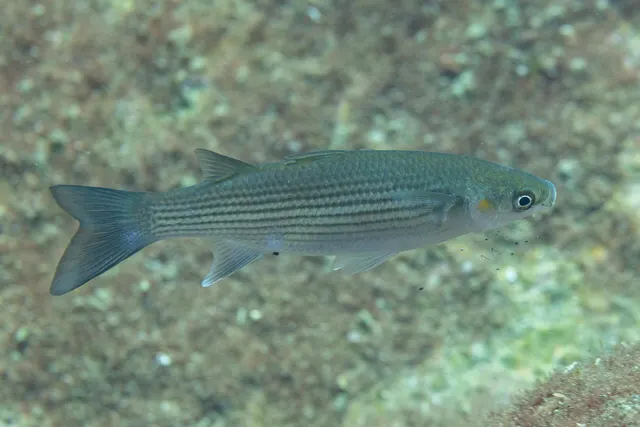 Thick-lipped grey mulletA shoaling coastal fish that eats algae and detritus rather than prey — which makes it the hardest common sea fish to catch and the most interesting to think about.
Diego Delso — CC BY-SA 4.0, via Wikimedia Commons
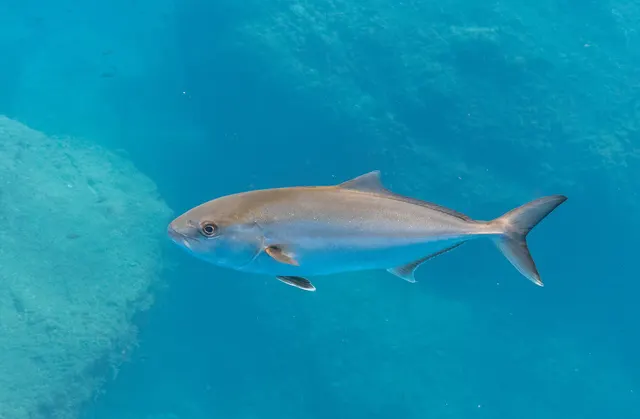 Greater amberjackThe largest amberjack — a circumglobal reef and wreck predator that fights downward with more raw power per kilogram than almost anything, and carries a genuine ciguatera caveat.
Diego Delso — CC BY-SA 4.0, via Wikimedia Commons
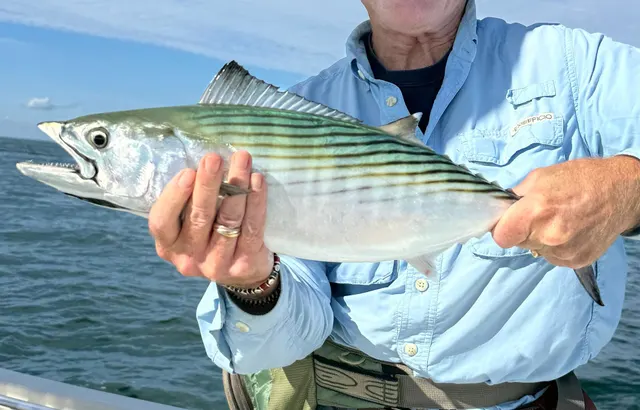 Atlantic bonitoA small, fast, striped tuna relative that arrives on temperate coasts in shoals each year and is the most accessible member of the family to a shore angler.
ricofish — CC0, via Wikimedia Commons
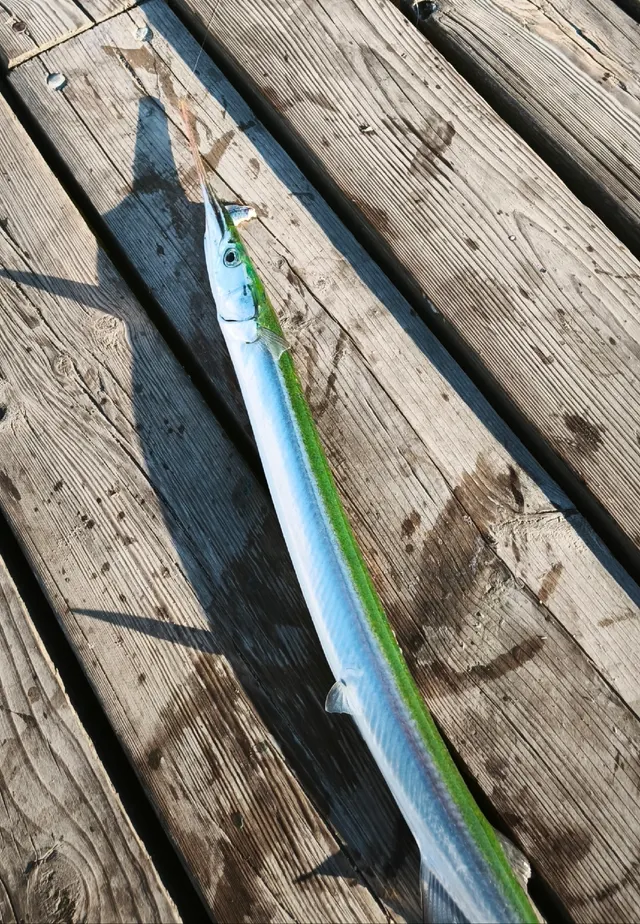 GarfishA slender surface-hunting fish with a long beaked jaw and green bones — a harmless pigment that alarms people unnecessarily.
Dmitry Petrov — CC BY, via iNaturalist
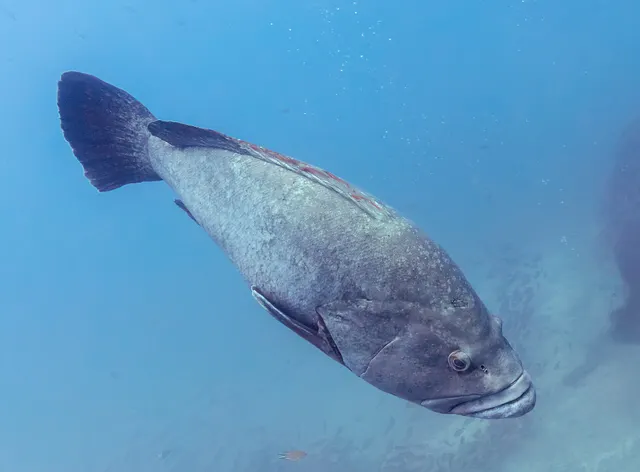 Dusky grouperThe Mediterranean's iconic reef predator: territorial, slow to mature, sex-changing, and the species whose decline made the case for marine protected areas there.
Diego Delso — CC BY-SA 4.0, via Wikimedia Commons
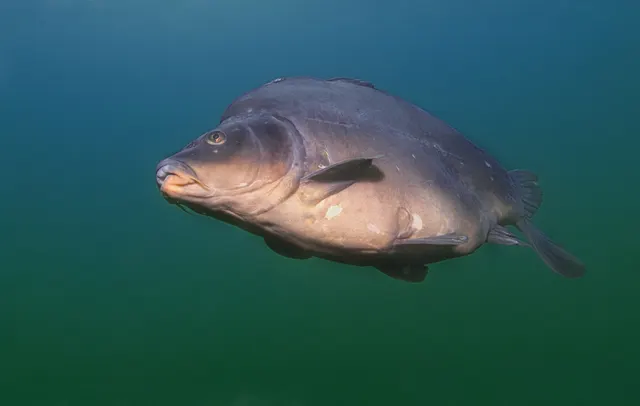 Common carpA large, long-lived, highly adaptable cyprinid whose capacity to learn has shaped more angling technique than any other freshwater fish.
Sven Riewe, CC0, via Wikimedia Commons
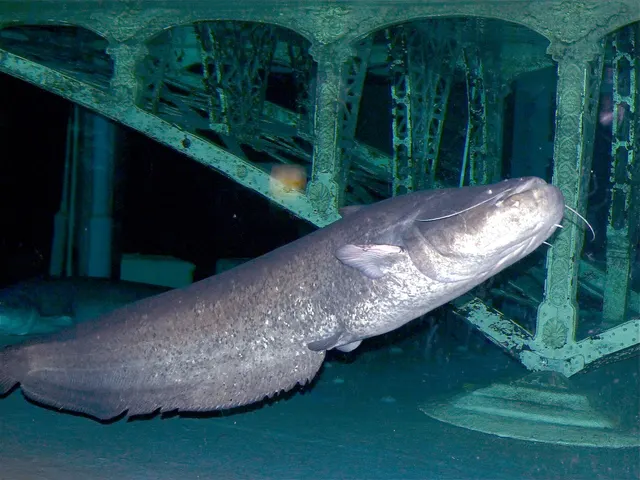 Wels catfishEurope's largest freshwater fish, reaching well over two metres, and an expanding introduced range that has made it one of the continent's most contested species.
Bernard DUPONT from FRANCE — CC BY-SA 2.0, via Wikimedia Commons
Safety
Further safety reading
- Sun, dehydration and fatigue — The dominant everyday hazard and the one visitors most consistently underestimate, because the sea here is benign enough to make everything feel low-consequence. Summer temperatures are extreme, breakwaters and rock platforms carry no shade at all, and a full day's fishing without carried water is genuinely dangerous rather than uncomfortable.
- Venomous and spined fish — Sea urchins on the rock ground are the commonest injury here by a wide margin, and weever buried in the sandy shallows are the one that turns a paddle into a hospital visit. Scorpionfish on the rock carry venomous spines and are caught from the shore often enough to matter. None of these is exotic; all of them are met by someone in shorts and sandals who was not thinking about it.
Check the rules before you fish
Fishing laws, bylaws, access rules, seasons, bait restrictions and permitted methods vary by location and can change. Check the current rules from the relevant authority and the water you intend to fish before fishing.
Check with:
- Current national or regional law for where you are fishing
- Current local bylaws
- The relevant fisheries authority
- The landowner, club or fishery whose water it is
- Any restrictions specific to the species or the method you intend to use
Where to go next
What swims here
- Atlantic bonitoPart of the same seasonal pelagic run, taken from rock marks and small boats when the fish are inshore. Timing a trip for that window changes what the island offers more than choosing a different coast does.
- Common carpThe mainstay of the island's reservoir fishery, which exists because Cyprus has a water problem rather than because it has rivers. More than a hundred dams built to hold winter rainfall created a network of standing waters where none existed, and they are stocked and managed as fisheries.
- Dusky grouperPresent on the rock and reef ground, long-lived, slow-growing and heavily depleted across the Mediterranean. It is the species most often cited when the eastern basin's fishing is described as having been much better within living memory.
- GarfishA surface fish taken from breakwaters and rock, and a useful reminder that the productive layer here is frequently the top metre rather than the bottom — which is the reverse of what a bottom-fishing visitor assumes.
- Gilthead breamThe most sought-after of the shore breams and the clearest case of why a market name is a poor identification: gilthead is the mainstay of Mediterranean aquaculture, so a fish on a plate here is far more often farmed than caught.
- Great barracudaPresent in the eastern basin and increasingly so, which makes it one of the species a visitor may meet that older accounts of Mediterranean fishing do not lead them to expect.
- Greater amberjackThe seasonal exception to the island's small-fish rule, and the one time light tackle is the wrong answer. Amberjack come inshore to rock marks in season and are taken on lures, which is a completely different fishery from the resident one that occupies the rest of the year.
- Lesser weeverBuried in the sandy shallows of exactly the beaches visitors wade from, and the commonest venomous injury on this coast after sea urchins. A hazard of the swimming rather than of the fishing, and one a barefoot angler meets first.
5 more
- Rainbow trout Fish
- Red scorpionfish Fish
- Thick-lipped grey mullet Fish
- Wels catfish Fish
- White seabream Fish
How people fish here
- Coarse fishingThe edge that makes this island unusual in FishingHQ. Almost no Mediterranean island has a freshwater fishery, and Cyprus has more than a hundred stocked reservoirs administered separately from the sea by a water authority — carp, catfish and trout, fished with recognisably European coarse methods in a dry mountain landscape, and invisible in every piece of tourist material about the place.
- Sea fishingThe larger half by volume of visitors, and a fishery that punishes Atlantic habits: no tide to plan around, water clear enough that the fish see the line, and a resident population of many small species rather than a few large ones.
How this compares
- Cape VerdeBoth are warm islands with famously clear water and they fish nothing like each other, for a reason that is physical rather than incidental. Cape Verde has oceanic water against the rock and no shelf, so ocean fish come within casting range and the tackle scales up. Cyprus sits in a nearly enclosed, nutrient-poor basin where the clarity is evidence of how little is in the water, and the tackle scales down to hooks and lines a British sea angler would think were for coarse fishing. A traveller who has fished one will carry exactly the wrong assumptions to the other.
- Malta and GozoTwo Mediterranean islands whose shore fishing is genuinely similar — small resident fish, fine tackle, no tide, clear nutrient-poor water, deep water close in on rock coasts — and whose administration is not. Malta is one jurisdiction; Cyprus is administered separately in different parts of the island, and a permission in one part is not a permission in the other. The fishing transfers and the paperwork does not.
Environment and conservation
- Fish stocks and sustainabilityThe eastern Mediterranean is structurally nutrient-poor and has additionally been heavily fished, and the two compound: a short food web supporting a limited biomass has less capacity to absorb pressure than a productive Atlantic shelf does. That is why the fishing here is frequently described as having been much better within living memory, and why the resident fish are small by nature as well as by depletion.
- Marine protected areas and spearfishingSeagrass meadows, turtle nesting beaches and protected stretches of coast all carry designations here, and so — unusually for FishingHQ — do underwater archaeological sites, which restrict diving and anchoring for reasons unrelated to fisheries and are seriously enforced.
Sources and evidence
- The European Environment Agency's assessments of Europe's waters, seas and coasts — European Environment Agency, Copenhagen (Conservation authority)Relied on for: State-of-the-environment assessment of Europe's seas, including the Mediterranean, and the coverage and designation of marine protected sites.States this directlyCitation checked — the work exists and is described correctly
- FAO Species Identification Guides for Fishery Purposes and the FAO Species Catalogues — Food and Agriculture Organization of the United Nations (Scientific institute)Relied on for: Distribution, habitat association and identification of the fishes of the eastern central Atlantic and the Mediterranean, from the regional identification guides prepared for fishery purposes.States this directlyCitation checked — the work exists and is described correctly
- FishBase: a global information system on fishes — Froese, R. and D. Pauly, eds. — FishBase Consortium (Scientific institute)Relied on for: Recorded environment, depth range, distribution and biology of the species named.States this directlyPassage read and verified
- CMAS technical and sporting standards for underwater activities — Confédération Mondiale des Activités Subaquatiques (Standards body)Relied on for: Technical and sporting standards for underwater activity, including the conduct and organisation of spearfishing.Background and mechanism onlyCitation checked — the work exists and is described correctly
- DAN guidance on freediving safety, hypoxia and shallow-water blackout — Divers Alert Network (Water-safety or diver-training authority)Relied on for: Guidance on freediving safety, hypoxia, shallow-water blackout and the buddy practice that mitigates them.States this directlyPassage read and verified
Why the 21 connections on this page are here, and the sources
What swims here
Backed by research — 13 connections
Supported by peer-reviewed research or fisheries science. The sources are listed and can be checked.
Atlantic bonito
A distribution edge resting on published regional identification and distribution references, written where the species is genuinely characteristic of the destination's fishing rather than merely recorded from its waters.
- FAO Species Identification Guides for Fishery Purposes and the FAO Species Catalogues — Food and Agriculture Organization of the United Nations (Scientific institute)Relied on for: Distribution, habitat association and biology of the fishes of the eastern central Atlantic and the Mediterranean, from the regional identification guides prepared for fishery purposes.States this directlyCitation checked — the work exists and is described correctly
- FishBase: a global information system on fishes — Froese, R. and D. Pauly, eds. — FishBase Consortium (Scientific institute)Relied on for: Recorded environment, depth range, distribution and biology of the species named.States this directlyPassage read and verified
Common carp
A distribution edge resting on published regional identification and distribution references, written where the species is genuinely characteristic of the destination's fishing rather than merely recorded from its waters.
- FAO Species Identification Guides for Fishery Purposes and the FAO Species Catalogues — Food and Agriculture Organization of the United Nations (Scientific institute)Relied on for: Distribution, habitat association and biology of the fishes of the eastern central Atlantic and the Mediterranean, from the regional identification guides prepared for fishery purposes.States this directlyCitation checked — the work exists and is described correctly
- FishBase: a global information system on fishes — Froese, R. and D. Pauly, eds. — FishBase Consortium (Scientific institute)Relied on for: Recorded environment, depth range, distribution and biology of the species named.States this directlyPassage read and verified
Dusky grouper
A distribution edge resting on published regional identification and distribution references, written where the species is genuinely characteristic of the destination's fishing rather than merely recorded from its waters.
- FAO Species Identification Guides for Fishery Purposes and the FAO Species Catalogues — Food and Agriculture Organization of the United Nations (Scientific institute)Relied on for: Distribution, habitat association and biology of the fishes of the eastern central Atlantic and the Mediterranean, from the regional identification guides prepared for fishery purposes.States this directlyCitation checked — the work exists and is described correctly
- FishBase: a global information system on fishes — Froese, R. and D. Pauly, eds. — FishBase Consortium (Scientific institute)Relied on for: Recorded environment, depth range, distribution and biology of the species named.States this directlyPassage read and verified
Garfish
A distribution edge resting on published regional identification and distribution references, written where the species is genuinely characteristic of the destination's fishing rather than merely recorded from its waters.
- FAO Species Identification Guides for Fishery Purposes and the FAO Species Catalogues — Food and Agriculture Organization of the United Nations (Scientific institute)Relied on for: Distribution, habitat association and biology of the fishes of the eastern central Atlantic and the Mediterranean, from the regional identification guides prepared for fishery purposes.States this directlyCitation checked — the work exists and is described correctly
- FishBase: a global information system on fishes — Froese, R. and D. Pauly, eds. — FishBase Consortium (Scientific institute)Relied on for: Recorded environment, depth range, distribution and biology of the species named.States this directlyPassage read and verified
Gilthead bream
A distribution edge resting on published regional identification and distribution references, written where the species is genuinely characteristic of the destination's fishing rather than merely recorded from its waters.
- FAO Species Identification Guides for Fishery Purposes and the FAO Species Catalogues — Food and Agriculture Organization of the United Nations (Scientific institute)Relied on for: Distribution, habitat association and biology of the fishes of the eastern central Atlantic and the Mediterranean, from the regional identification guides prepared for fishery purposes.States this directlyCitation checked — the work exists and is described correctly
- FishBase: a global information system on fishes — Froese, R. and D. Pauly, eds. — FishBase Consortium (Scientific institute)Relied on for: Recorded environment, depth range, distribution and biology of the species named.States this directlyPassage read and verified
Great barracuda
A distribution edge resting on published regional identification and distribution references, written where the species is genuinely characteristic of the destination's fishing rather than merely recorded from its waters.
- FAO Species Identification Guides for Fishery Purposes and the FAO Species Catalogues — Food and Agriculture Organization of the United Nations (Scientific institute)Relied on for: Distribution, habitat association and biology of the fishes of the eastern central Atlantic and the Mediterranean, from the regional identification guides prepared for fishery purposes.States this directlyCitation checked — the work exists and is described correctly
- FishBase: a global information system on fishes — Froese, R. and D. Pauly, eds. — FishBase Consortium (Scientific institute)Relied on for: Recorded environment, depth range, distribution and biology of the species named.States this directlyPassage read and verified
Greater amberjack
A distribution edge resting on published regional identification and distribution references, written where the species is genuinely characteristic of the destination's fishing rather than merely recorded from its waters.
- FAO Species Identification Guides for Fishery Purposes and the FAO Species Catalogues — Food and Agriculture Organization of the United Nations (Scientific institute)Relied on for: Distribution, habitat association and biology of the fishes of the eastern central Atlantic and the Mediterranean, from the regional identification guides prepared for fishery purposes.States this directlyCitation checked — the work exists and is described correctly
- FishBase: a global information system on fishes — Froese, R. and D. Pauly, eds. — FishBase Consortium (Scientific institute)Relied on for: Recorded environment, depth range, distribution and biology of the species named.States this directlyPassage read and verified
Lesser weever
A distribution edge resting on published regional identification and distribution references, written where the species is genuinely characteristic of the destination's fishing rather than merely recorded from its waters.
- FAO Species Identification Guides for Fishery Purposes and the FAO Species Catalogues — Food and Agriculture Organization of the United Nations (Scientific institute)Relied on for: Distribution, habitat association and biology of the fishes of the eastern central Atlantic and the Mediterranean, from the regional identification guides prepared for fishery purposes.States this directlyCitation checked — the work exists and is described correctly
- FishBase: a global information system on fishes — Froese, R. and D. Pauly, eds. — FishBase Consortium (Scientific institute)Relied on for: Recorded environment, depth range, distribution and biology of the species named.States this directlyPassage read and verified
Rainbow trout
A distribution edge resting on published regional identification and distribution references, written where the species is genuinely characteristic of the destination's fishing rather than merely recorded from its waters.
- FAO Species Identification Guides for Fishery Purposes and the FAO Species Catalogues — Food and Agriculture Organization of the United Nations (Scientific institute)Relied on for: Distribution, habitat association and biology of the fishes of the eastern central Atlantic and the Mediterranean, from the regional identification guides prepared for fishery purposes.States this directlyCitation checked — the work exists and is described correctly
- FishBase: a global information system on fishes — Froese, R. and D. Pauly, eds. — FishBase Consortium (Scientific institute)Relied on for: Recorded environment, depth range, distribution and biology of the species named.States this directlyPassage read and verified
Red scorpionfish
A distribution edge resting on published regional identification and distribution references, written where the species is genuinely characteristic of the destination's fishing rather than merely recorded from its waters.
- FAO Species Identification Guides for Fishery Purposes and the FAO Species Catalogues — Food and Agriculture Organization of the United Nations (Scientific institute)Relied on for: Distribution, habitat association and biology of the fishes of the eastern central Atlantic and the Mediterranean, from the regional identification guides prepared for fishery purposes.States this directlyCitation checked — the work exists and is described correctly
- FishBase: a global information system on fishes — Froese, R. and D. Pauly, eds. — FishBase Consortium (Scientific institute)Relied on for: Recorded environment, depth range, distribution and biology of the species named.States this directlyPassage read and verified
Thick-lipped grey mullet
A distribution edge resting on published regional identification and distribution references, written where the species is genuinely characteristic of the destination's fishing rather than merely recorded from its waters.
- FAO Species Identification Guides for Fishery Purposes and the FAO Species Catalogues — Food and Agriculture Organization of the United Nations (Scientific institute)Relied on for: Distribution, habitat association and biology of the fishes of the eastern central Atlantic and the Mediterranean, from the regional identification guides prepared for fishery purposes.States this directlyCitation checked — the work exists and is described correctly
- FishBase: a global information system on fishes — Froese, R. and D. Pauly, eds. — FishBase Consortium (Scientific institute)Relied on for: Recorded environment, depth range, distribution and biology of the species named.States this directlyPassage read and verified
Wels catfish
A distribution edge resting on published regional identification and distribution references, written where the species is genuinely characteristic of the destination's fishing rather than merely recorded from its waters.
- FAO Species Identification Guides for Fishery Purposes and the FAO Species Catalogues — Food and Agriculture Organization of the United Nations (Scientific institute)Relied on for: Distribution, habitat association and biology of the fishes of the eastern central Atlantic and the Mediterranean, from the regional identification guides prepared for fishery purposes.States this directlyCitation checked — the work exists and is described correctly
- FishBase: a global information system on fishes — Froese, R. and D. Pauly, eds. — FishBase Consortium (Scientific institute)Relied on for: Recorded environment, depth range, distribution and biology of the species named.States this directlyPassage read and verified
White seabream
A distribution edge resting on published regional identification and distribution references, written where the species is genuinely characteristic of the destination's fishing rather than merely recorded from its waters.
- FAO Species Identification Guides for Fishery Purposes and the FAO Species Catalogues — Food and Agriculture Organization of the United Nations (Scientific institute)Relied on for: Distribution, habitat association and biology of the fishes of the eastern central Atlantic and the Mediterranean, from the regional identification guides prepared for fishery purposes.States this directlyCitation checked — the work exists and is described correctly
- FishBase: a global information system on fishes — Froese, R. and D. Pauly, eds. — FishBase Consortium (Scientific institute)Relied on for: Recorded environment, depth range, distribution and biology of the species named.States this directlyPassage read and verified
How people fish here
What experienced anglers do — 2 connections
Widely and independently recommended by experienced anglers and specialist sources. This is real angling knowledge, not proof: controlled evidence for it is limited, and FishingHQ records it as convention rather than as a demonstrated effect.
Coarse fishing
Written because the freshwater half is the genuinely surprising fact about this destination and because it is separately administered — a reader who has resolved their sea-fishing position has resolved nothing about it.
- The European Environment Agency's assessments of Europe's waters, seas and coasts — European Environment Agency, Copenhagen (Conservation authority)Relied on for: State-of-the-environment assessment of Europe's seas including the Mediterranean, nutrient status, and the coverage of marine protected sites.States this directlyCitation checked — the work exists and is described correctly
- EMODnet — the European Marine Observation and Data Network — The European Commission, assembled from the national hydrographic offices, geological surveys and marine institutes of the member states (Scientific institute)Relied on for: Bathymetry, salinity and physical oceanography of European and adjacent sea basins.States this directlyCitation checked — the work exists and is described correctly
Sea fishing
The discipline edge every coastal region carries, written with the specific way a visitor's home-coast method fails here.
- The European Environment Agency's assessments of Europe's waters, seas and coasts — European Environment Agency, Copenhagen (Conservation authority)Relied on for: State-of-the-environment assessment of Europe's seas including the Mediterranean, nutrient status, and the coverage of marine protected sites.States this directlyCitation checked — the work exists and is described correctly
- EMODnet — the European Marine Observation and Data Network — The European Commission, assembled from the national hydrographic offices, geological surveys and marine institutes of the member states (Scientific institute)Relied on for: Bathymetry, salinity and physical oceanography of European and adjacent sea basins.States this directlyCitation checked — the work exists and is described correctly
How this compares
What experienced anglers do — 2 connections
Widely and independently recommended by experienced anglers and specialist sources. This is real angling knowledge, not proof: controlled evidence for it is limited, and FishingHQ records it as convention rather than as a demonstrated effect.
Cape Verde
A comparison written where a traveller will reach one record having read the other and would otherwise carry an assumption across that does not hold.
- The European Environment Agency's assessments of Europe's waters, seas and coasts — European Environment Agency, Copenhagen (Conservation authority)Relied on for: State-of-the-environment assessment of Europe's seas including the Mediterranean, nutrient status, and the coverage of marine protected sites.States this directlyCitation checked — the work exists and is described correctly
- EMODnet — the European Marine Observation and Data Network — The European Commission, assembled from the national hydrographic offices, geological surveys and marine institutes of the member states (Scientific institute)Relied on for: Bathymetry, salinity and physical oceanography of European and adjacent sea basins.States this directlyCitation checked — the work exists and is described correctly
Malta and Gozo
A comparison written where a traveller will reach one record having read the other and would otherwise carry an assumption across that does not hold.
- The European Environment Agency's assessments of Europe's waters, seas and coasts — European Environment Agency, Copenhagen (Conservation authority)Relied on for: State-of-the-environment assessment of Europe's seas including the Mediterranean, nutrient status, and the coverage of marine protected sites.States this directlyCitation checked — the work exists and is described correctly
- EMODnet — the European Marine Observation and Data Network — The European Commission, assembled from the national hydrographic offices, geological surveys and marine institutes of the member states (Scientific institute)Relied on for: Bathymetry, salinity and physical oceanography of European and adjacent sea basins.States this directlyCitation checked — the work exists and is described correctly
Safety reading
Official guidance — 2 connections
Stated by a fisheries authority, scientific institute or recognised angling body. Authoritative, but summarising rather than demonstrating.
Sun, dehydration and fatigue
A destination joined to the hazard that is genuinely distinctive of it, rather than to the general hazards of being near water. Written where a visitor's home-coast habits are the specific thing that fails here.
- RNLI water safety guidance: cold water shock and Float to Live — Royal National Lifeboat Institution (Water-safety or diver-training authority)Relied on for: Water safety guidance including sudden immersion, swell on rock platforms and the behaviour that reduces the risk.Background and mechanism onlyPassage read and verified
- Rock fishing safety and the declared lifejacket areas of New South Wales — NSW Department of Primary Industries and Surf Life Saving NSW (Water-safety or diver-training authority)Relied on for: Rock fishing safety guidance including swell, wave sets on ledges and the equipment and behaviour that reduce drowning risk.States this directlyCitation checked — the work exists and is described correctly
Venomous and spined fish
A destination joined to the hazard that is genuinely distinctive of it, rather than to the general hazards of being near water. Written where a visitor's home-coast habits are the specific thing that fails here.
- RNLI water safety guidance: cold water shock and Float to Live — Royal National Lifeboat Institution (Water-safety or diver-training authority)Relied on for: Water safety guidance including sudden immersion, swell on rock platforms and the behaviour that reduces the risk.Background and mechanism onlyPassage read and verified
- Rock fishing safety and the declared lifejacket areas of New South Wales — NSW Department of Primary Industries and Surf Life Saving NSW (Water-safety or diver-training authority)Relied on for: Rock fishing safety guidance including swell, wave sets on ledges and the equipment and behaviour that reduce drowning risk.States this directlyCitation checked — the work exists and is described correctly
Environment and conservation
Backed by research — 1 connection
Supported by peer-reviewed research or fisheries science. The sources are listed and can be checked.
Fish stocks and sustainability
Written because a visitor needs both halves of the explanation. Attributing small fish entirely to overfishing is wrong, and attributing it entirely to oligotrophy is also wrong.
- The European Environment Agency's assessments of Europe's waters, seas and coasts — European Environment Agency, Copenhagen (Conservation authority)Relied on for: State-of-the-environment assessment of Europe's seas including the Mediterranean, nutrient status, and the coverage of marine protected sites.States this directlyCitation checked — the work exists and is described correctly
- EMODnet — the European Marine Observation and Data Network — The European Commission, assembled from the national hydrographic offices, geological surveys and marine institutes of the member states (Scientific institute)Relied on for: Bathymetry, salinity and physical oceanography of European and adjacent sea basins.States this directlyCitation checked — the work exists and is described correctly
Official guidance — 1 connection
Stated by a fisheries authority, scientific institute or recognised angling body. Authoritative, but summarising rather than demonstrating.
Marine protected areas and spearfishing
Written because the archaeological restriction is a class of constraint a visiting angler or diver will not anticipate from anywhere else on FishingHQ.
- The European Environment Agency's assessments of Europe's waters, seas and coasts — European Environment Agency, Copenhagen (Conservation authority)Relied on for: State-of-the-environment assessment of Europe's seas including the Mediterranean, nutrient status, and the coverage of marine protected sites.States this directlyCitation checked — the work exists and is described correctly
- EMODnet — the European Marine Observation and Data Network — The European Commission, assembled from the national hydrographic offices, geological surveys and marine institutes of the member states (Scientific institute)Relied on for: Bathymetry, salinity and physical oceanography of European and adjacent sea basins.States this directlyCitation checked — the work exists and is described correctly
How FishingHQ labels evidence is explained in the evidence policy.