The River Ebro
Fishing regions · Last reviewed 2026-08-15
Spain's largest river by flow, dammed into a chain of vast reservoirs, and the water that made wels catfish a destination fishery for northern European anglers — almost entirely on species that are not native to it.
Safety: sun, dehydration and fatigue — can cause injury needing treatment. 2 more points apply here.
Being listed here is not permission to fish. What that meansClose
Access, fishing rights, seasons, licences, local bylaws and permitted methods vary and can change. Check current access, permission, local regulations, closures and restrictions before you travel or fish. FishingHQ describes what the ground is and names who holds the answer; it does not hold the answer itself.
Find the authority for a jurisdiction · What FishingHQ does and does not cover
The Ebro rises in the Cantabrian mountains and runs south-east across northern Spain to a delta on the Mediterranean, and it is the largest Spanish river by discharge.
IT IS A REGULATED RIVER RATHER THAN A FREE ONE. A chain of dams — Mequinenza, Riba-roja and Flix on the lower river being the ones anglers name — converts long reaches into deep, warm, slow reservoir water, and the river below them runs at a level set by release rather than by rainfall. The fishing follows the engineering: the famous stretches are reservoir and tailwater, not natural river.
ITS REPUTATION RESTS ON INTRODUCED SPECIES. Wels catfish, zander and largemouth bass are not native to the Ebro. They were introduced during the twentieth century, found warm slow water with abundant forage and few competitors, and grew to sizes that made the river internationally famous. Common carp, also long established rather than native in this system, reach large sizes for the same reasons.
THAT IS THE RECORD'S CENTRAL FACT AND IT CUTS BOTH WAYS. For a visiting angler the Ebro offers freshwater fish larger than anything in Britain, on water that is accessible and fishable. For the river it represents a substantially altered ecology, with documented pressure on native Iberian fishes — many of which are endemic to the peninsula and assessed as threatened. Both things are true at once, and a record that mentioned only the first would be selling a fishery while ignoring what it is made of.
AND THE JURISDICTION IS THE FIRST SURPRISE FOR A BRITISH VISITOR. Spain issues freshwater fishing licences through its autonomous communities, not through a single national body — and the Ebro runs through several. Which licence a stretch requires is a question about which community's bank you are standing on.
What fishing here is like
A large, heavily regulated river in a hot, dry landscape, running through steep limestone country into a chain of deep reservoirs before a long lower river and a delta. The water is warm through a long summer, coloured for much of the year, and productive.
The fishing culture around the reservoirs is substantially an international visiting one: guided sessions, specialist catfish and carp operations, and boats. Alongside it runs a Spanish local angling culture with different priorities, and the two do not always overlap.
How people fish here
7 methods are recorded on the places documented here, counted from the records themselves rather than from what is practised in the country. Each opens a full guide to the technique.
Spinning
Recorded at 2 places here, over estuary, reservoir.
Casting an artificial lure and retrieving it so that it moves like something alive — the most direct form of lure fishing.
Deadbaiting
Recorded at 1 place here, over reservoir.
Presenting a dead fish as bait for predators — a method that works because scavenging is normal predator behaviour, not an exception.
Drop shotting
Recorded at 1 place here, over reservoir.
A finesse rig with the weight below the hook, letting a small soft plastic be worked in place, off the bottom, without moving anywhere.
Float fishing
Recorded at 1 place here, over estuary.
Suspending a bait at a controlled depth beneath a buoyant indicator — the most visual, most controllable and most widely applicable method in angling.
Kayak fishing
Recorded at 1 place here, over estuary.
A platform rather than a technique: quiet, shallow-draught access to water no other craft reaches, bought at the price of exposure, and a discipline where the decision not to launch is part of the skill.
Ledgering
Recorded at 1 place here, over reservoir.
Fishing a bait on the bottom held by a weight, with no float — the simplest way to fish at distance, in depth, or in wind.
Surfcasting
Recorded at 1 place here, over estuary.
Casting heavy baited tackle from a beach into surf — a method defined by distance, by tide, and by reading water that all looks the same.
These are the methods documented at the places FishingHQ holds here. A species listed beside a method is documented on the same ground, which is not the same as being taken that way — where a source establishes the method a fish was caught on, it is stated on that place’s own page. All fishing methods.
What dominates
Wels catfish fishing, which is the river's international reputation — from the bank with heavy static tackle and from boats, including the vertical and clonk methods that are continental specialisms rather than British ones. Carp fishing on the reservoirs, which brought many of the first British visitors. Zander fishing on lures and baits in deep reservoir water. Predator lure fishing generally, including largemouth bass on the warmer shallow arms. Local Spanish angling for native and introduced species, which is a separate culture with its own conventions.
The water available
Deep reservoir basins behind large dams, thermally stratified through the summer. Flooded river channels and drowned tributary arms within the reservoirs. Tailwater below dams, running at a level set by release rather than by weather. A long lower river through terraced agricultural country. A large Mediterranean delta of channels, lagoons and rice fields where fresh water meets salt. Steep rocky margins and extensive submerged timber.
How the rules are structured
Spain devolves inland fisheries administration to its autonomous communities, and the Ebro crosses several of them — so the operative answer to 'what is the rule' changes along the river, and a licence issued by one community is not automatically the answer in the next. Permission is typically layered: an autonomous community licence to fish at all, plus any specific authorisation attaching to a particular water, and separate arrangements again for fishing from a boat. Non-native species are managed actively across Spain, and rules on the retention, transport and live use of introduced fish are subject to national and regional measures that have been revised repeatedly and that anglers from other countries frequently get wrong. Rules on live and dead bait, on keeping fish, and on night fishing vary. Several stretches lie within protected areas with their own constraints. FishingHQ does not state what any current rule is: establish which autonomous community administers the specific stretch, obtain the licence from that community, and confirm the current position on species handling and retention with them before fishing.
Who to ask
- The autonomous community administering the specific stretch — the Ebro crosses several, and this is the licence-issuing body rather than any national one
- The Spanish national environment administration, for measures on non-native species that apply above the regional level
- The Ebro basin water authority, for reservoir operation, release schedules and water-level information
- The manager of the specific reservoir, marina or launching facility, for boat and access arrangements
- The protected-area authority, where a stretch lies within a designated site
Words you will meet
- Siluro
- The wels catfish in Spanish, and the word a visitor will see on every local sign, guide listing and tackle shelf on the lower Ebro.
- Embalse
- A reservoir. Mequinenza and Riba-roja are embalses rather than lakes, and the distinction matters because the level is operated rather than natural.
- Clonk
- A shaped wooden or plastic tool struck on the water to produce a sound that attracts catfish, used from a boat over deep water. A continental catfish technique with no British equivalent, and one whose legality varies by jurisdiction.
- Riu Ebre
- The river's Catalan name, used on the lower river through Catalonia. Reading local information means recognising both forms.
Conditions and hazards
Heat is the first hazard and the one visitors underestimate. Summer air temperatures on the lower Ebro are far above anything British fishing prepares for, and long sessions on exposed banks and open boats produce heat exhaustion and severe sunburn.
Reservoir levels are operated, and water can rise or fall on a release schedule rather than with the weather. Banks that were dry can be under water, and margins that were fishable can become a long drop to a fallen level.
The reservoirs are big enough to build a genuine wave in wind, and small boats are exposed on them.
Submerged timber is extensive and is a real hazard to boats and to wading alike.
Large catfish are handled at close quarters and are strong enough to injure. Their mouths are abrasive rather than toothed, and the injuries that occur are usually to the angler's arm and to the fish.
And storms in the surrounding hills can be sudden and electrically active in summer, which matters on open water with a carbon rod.
A river shaped by dams rather than by weather
The Ebro that anglers fish is not the river the geography describes. A chain of large dams on the lower river converts long reaches into deep, slow, warm reservoir water, and what runs below them is released rather than rained.
THE CONSEQUENCES ARE ECOLOGICAL, NOT JUST SCENIC. Slow warm water with a long growing season, abundant forage fish, and deep basins that hold temperature suits large predatory fish extremely well. It suits the river's native Iberian fishes — many of them small, endemic, adapted to seasonal Mediterranean rivers that run hard in winter and shrink in summer — considerably less well.
THE LEVEL IS AN OPERATIONAL DECISION. Reservoir drawdown and release for irrigation and power mean the water can move substantially without weather, which changes where fish are and where a bank angler can stand. A visitor who reads the sky rather than the release schedule has read the wrong thing.
AND THE TAILWATERS ARE THEIR OWN HABITAT: cooler, faster and more oxygenated than the reservoir above, holding different fish and fishing differently.
Backed by research — why, and the sources (2)
Supported by peer-reviewed research or fisheries science. The sources are listed and can be checked.
- FishBase: a global information system on fishes — Froese, R. and D. Pauly, eds. — FishBase Consortium (Scientific institute)Relied on for: Distribution, habitat association, life history, size and feeding behaviour recorded for the species concerned.States this directlyPassage read and verified
- The IUCN Red List of Threatened Species — International Union for Conservation of Nature (Conservation authority)Relied on for: Global extinction-risk assessment, population trend and identified threats for the species concerned.States this directlyCitation checked — the work exists and is described correctly
The fish, and the fact that most of them were put there
WELS CATFISH are the reason most visitors come. Europe's largest freshwater fish, native to eastern and central Europe rather than to Iberia, introduced to the Ebro system in the twentieth century, and grown there to sizes that made the river famous.
COMMON CARP reach large weights in the warm productive reservoirs and were the species that brought the first wave of British anglers.
ZANDER are present and are likewise introduced, occupying the deeper coloured water where their low-light vision gives them an advantage.
LARGEMOUTH BASS, a North American species, are established in the warmer shallow arms.
NATIVE IBERIAN FISHES are the other half of the story and are rarely the reason anyone travels. The peninsula holds a distinctive endemic freshwater fauna — barbels, nase and chub found nowhere else — and a substantial proportion of it is assessed as threatened, with introduced predators, water abstraction and habitat alteration among the identified pressures.
HOLDING BOTH FACTS AT ONCE is the only honest position. The Ebro is a remarkable angling destination and an altered ecosystem, and it is the same set of introductions that produced both.
Backed by research — why, and the sources (2)
Supported by peer-reviewed research or fisheries science. The sources are listed and can be checked.
- FishBase: a global information system on fishes — Froese, R. and D. Pauly, eds. — FishBase Consortium (Scientific institute)Relied on for: Distribution, habitat association, life history, size and feeding behaviour recorded for the species concerned.States this directlyPassage read and verified
- The IUCN Red List of Threatened Species — International Union for Conservation of Nature (Conservation authority)Relied on for: Global extinction-risk assessment, population trend and identified threats for the species concerned.States this directlyCitation checked — the work exists and is described correctly
How it is fished, and the methods that have no British equivalent
CATFISH FROM THE BANK is the accessible starting point: heavy static tackle, large baits, and long waits punctuated by a fish that changes the scale of everything a British angler owns.
CATFISH FROM A BOAT opens the deep water, and with it the continental methods. Vertical fishing over marked fish in deep basins is a boat-and-electronics discipline. Clonking — striking a shaped tool on the surface to produce a sound that draws catfish up — is a technique with no British parallel at all, and one whose permissibility varies between jurisdictions.
CARP FISHING on the reservoirs is recognisably the British discipline scaled up, with bank access, baiting and long sessions.
PREDATOR LURE FISHING for zander and bass works the timber, the drop-offs and the shallow arms respectively, and is closer to a European lure culture than to a British one.
AND GUIDING IS NORMAL HERE in a way it is not on British coarse water. Much of the visiting fishery runs through operations that supply boats, local knowledge and the licensing route, and for a first visit that is a sensible way to arrive rather than an admission of defeat.
What experienced anglers do — why, and the sources (2)
Widely and independently recommended by experienced anglers and specialist sources. This is real angling knowledge, not proof: controlled evidence for it is limited, and FishingHQ records it as convention rather than as a demonstrated effect.
- Angling Times — Bauer Media (Specialist angling publication)Relied on for: Contemporary angling practice as reported by practitioners, including continental destination fishing undertaken from the UK.States this directlyCitation checked — the work exists and is described correctly
- General angling website restatements of established technique — Various (Credible secondary source)Relied on for: Widely restated descriptions of European venue character and method convention, recorded as practitioner consensus rather than as scholarship.Background and mechanism onlyCitation checked — the work exists and is described correctly
The year, and why summer is not the obvious answer
The Ebro's season is governed by heat and by reservoir operation rather than by a British-style close season calendar.
SPRING brings warming water, pre-spawning catfish activity and carp coming onto the shallows, and it is widely regarded as the strongest period for large fish.
EARLY SUMMER continues that while the water is still fresh and levels are high.
HIGH SUMMER is hot enough to make the middle of the day unfishable for the angler and to push fish deep and nocturnal. Sessions move to dawn, dusk and dark. This is also when reservoir drawdown for irrigation is at its most significant.
AUTUMN cools and re-concentrates fish, and predator fishing improves as forage shoals tighten.
WINTER is a real winter inland — cold, with clearer water and much slower catfish — and it is the period when the river fishes least like its reputation.
CLOSE SEASONS AND PERMITTED PERIODS ARE A REGULATORY MATTER, they differ between autonomous communities and species, and they are not stated here.
What experienced anglers do — why, and the sources (2)
Widely and independently recommended by experienced anglers and specialist sources. This is real angling knowledge, not proof: controlled evidence for it is limited, and FishingHQ records it as convention rather than as a demonstrated effect.
- General angling website restatements of established technique — Various (Credible secondary source)Relied on for: Widely restated descriptions of European venue character and method convention, recorded as practitioner consensus rather than as scholarship.Background and mechanism onlyCitation checked — the work exists and is described correctly
- Angling Times — Bauer Media (Specialist angling publication)Relied on for: Contemporary angling practice as reported by practitioners, including continental destination fishing undertaken from the UK.States this directlyCitation checked — the work exists and is described correctly
Two words that will not translate, and two names for the same river
SILURO is the wels catfish, and it is the word on the signs, the guide listings and the shop shelves. A visitor asking for catfish tackle in English will be understood; a visitor reading local information will need the Spanish.
EMBALSE means reservoir. Mequinenza and Riba-roja are embalses, and the word carries the information that the level is operated rather than natural — which is the single most useful thing to know about them.
CLONK names both the tool and the method: a shaped implement struck on the water over deep basins to draw catfish. There is no British equivalent technique and therefore no British word.
RIU EBRE is the Catalan name for the river, used along the lower reaches. Official information, signage and local reporting may use either form.
AND BOGA, BARBO and MADRILLA are among the names for the native Iberian fishes a visitor will hear and will probably not catch, which is worth knowing because they are the part of the fauna the introductions bear on.
What experienced anglers do — why, and the sources (2)
Widely and independently recommended by experienced anglers and specialist sources. This is real angling knowledge, not proof: controlled evidence for it is limited, and FishingHQ records it as convention rather than as a demonstrated effect.
- General angling website restatements of established technique — Various (Credible secondary source)Relied on for: Widely restated descriptions of European venue character and method convention, recorded as practitioner consensus rather than as scholarship.Background and mechanism onlyCitation checked — the work exists and is described correctly
- FishBase: a global information system on fishes — Froese, R. and D. Pauly, eds. — FishBase Consortium (Scientific institute)Relied on for: Distribution, habitat association, life history, size and feeding behaviour recorded for the species concerned.States this directlyPassage read and verified
A licence issued by a region, not by a country
THE STRUCTURAL POINT FIRST. Spain administers inland fishing through its autonomous communities rather than through a single national licence. The Ebro crosses several of them. So the question 'what licence do I need for the Ebro' has no single answer — it has an answer per stretch, and the stretch is defined by which community's territory the bank belongs to.
PERMISSION IS TYPICALLY LAYERED: the community licence to fish at all, any authorisation attaching to a specific water or reserve, and separate arrangements for boat fishing.
NON-NATIVE SPECIES RULES ARE THE ONES VISITORS MOST OFTEN GET WRONG. Spain manages introduced species actively, and measures affecting the retention, transport and live use of introduced fish have been revised repeatedly at both national and regional level. A visitor's assumption carried from another country is the least reliable guide available.
PROTECTED AREAS along the river and in the delta add their own constraints.
AND BIOSECURITY IS A GENUINE OBLIGATION rather than a formality: this is a system that demonstrates what moving species between waters does, and cleaning and drying gear between waters is the practice that limits it.
FISHINGHQ STATES NO CURRENT RULE. Identify the autonomous community for the stretch, obtain the licence from that community, and confirm the current species-handling position with it before fishing.
Official guidance — why, and the sources (2)
Stated by a fisheries authority, scientific institute or recognised angling body. Authoritative, but summarising rather than demonstrating.
- Code of Conduct for Responsible Fisheries — Food and Agriculture Organization of the United Nations, Rome, 1995 (Standards body)Relied on for: International principles for responsible fisheries, including the layering of national and regional authority and the management of shared and transboundary waters.States this directlyCitation checked — the work exists and is described correctly
- Check Clean Dry — biosecurity guidance for water users — GB Non-native Species Secretariat (Conservation authority)Relied on for: The pathways, impacts and management of non-native aquatic species, and the biosecurity practice that limits their spread between waters.States this directlyPassage read and verified
How a Spanish river became a British destination
The Ebro's angling reputation is recent and its history is a travel history rather than a local one.
THE CARP CAME FIRST. Through the 1980s and 1990s British carp anglers, running out of large fish at home, began travelling to continental waters, and the Ebro reservoirs offered warm productive water with large fish and straightforward access. A guiding and holiday industry grew around that traffic.
THE CATFISH CHANGED THE SCALE. As the introduced wels population matured, the river began producing fish larger than anything in British fresh water by an order of magnitude, and the destination shifted from a carp trip to a catfish trip.
THE LOCAL HISTORY IS OLDER AND DIFFERENT. The Ebro basin has supported river fisheries, mills, weirs and tenurial fishing rights for many centuries, in the same broad European pattern of river fishery as private, granted and contested property that shaped medieval and early-modern practice across the continent.
AND THE DAMS ARE THE HINGE. The twentieth-century damming that created the reservoirs created the habitat that the introductions then filled. The fishery a visitor books today is roughly seventy years old and is an artefact of hydroelectric policy.
What experienced anglers do — why, and the sources (2)
Widely and independently recommended by experienced anglers and specialist sources. This is real angling knowledge, not proof: controlled evidence for it is limited, and FishingHQ records it as convention rather than as a demonstrated effect.
- Fishers' Craft and Lettered Art: Tracts on Fishing from the End of the Middle Ages — University of Toronto Press, 1997 (Scientific literature)Relied on for: Medieval and early-modern European fishing practice, fishery organisation, and the legal and tenurial arrangements governing rivers, lakes and ponds.States this directlyCitation checked — the work exists and is described correctly
- Angling Times — Bauer Media (Specialist angling publication)Relied on for: Contemporary angling practice as reported by practitioners, including continental destination fishing undertaken from the UK.States this directlyCitation checked — the work exists and is described correctly
Heat, released water, and a fish that can hold a hand
The Ebro's dangers are the three that a visiting angler is least likely to have planned for, and they are unrelated to each other, which is why they are worth stating together.
THE FIRST IS THE HEAT, AND IT IS NOT A COMFORT PROBLEM. Summer air temperatures in the Ebro valley routinely reach the high thirties and beyond, the banks are open, the shade is limited, and the fishing that draws people here is a long-session fishery in which somebody sits still for many hours. Heat illness develops in exactly those conditions: sustained exposure, inadequate fluid, and a person who is concentrating on something else. It progresses from feeling unwell to being unable to make decisions, which means the person who should recognise it is the person who has lost the capacity to. Plan the fluid before the session rather than during it, take the middle of the day out of the water, and treat somebody becoming confused or stopping sweating as an emergency rather than as tiredness.
THE SECOND IS THAT THIS RIVER IS OPERATED. The Ebro is heavily dammed for hydroelectricity and irrigation, and the level below a dam is a function of what the operator is doing rather than of the weather. Water can rise substantially and quickly with no rain anywhere, and it can fall the same way, stranding a boat or leaving a bank that was fishable an hour ago as a mud slope above a drop. A river whose level is decided by a control room does not give the warnings a rain-fed river gives, and the correct assumption is that the level you arrive to is not the level you will leave.
THE THIRD IS THE CATFISH, AND IT IS A HANDLING PROBLEM RATHER THAN AN ATTACK. Wels catfish here reach a size at which the fish is a physical object comparable to the person holding it. The mouth has no teeth in the cutting sense but is lined with dense pads of tiny recurved teeth that grip, and the conventional lip-grip on a large one puts a forearm inside a mouth that closes. The injury is abrasive rather than penetrating and it is unpleasant rather than dangerous — but a large fish that then rolls, in water, with an arm inside it, is a drowning mechanism rather than a graze. Handle large catfish in the water where possible, do not put an arm inside the mouth of a fish you cannot control, and never do it in water above knee depth.
Official guidance — why, and the sources (2)
Stated by a fisheries authority, scientific institute or recognised angling body. Authoritative, but summarising rather than demonstrating.
- RNLI water safety guidance: cold water shock and Float to Live — Royal National Lifeboat Institution (Water-safety or diver-training authority)Relied on for: Cold water shock and the immersion response, tidal cut-off, and water-safety guidance for shore anglers and small-craft users.States this directlyPassage read and verified
- General angling website restatements of established technique — Various (Credible secondary source)Relied on for: Widely restated descriptions of how these waters are conventionally fished and what local practice treats as dangerous, recorded as practitioner consensus rather than as scholarship.Background and mechanism onlyCitation checked — the work exists and is described correctly
Some of what lives here
Fish recorded here that FishingHQ holds a reviewed photograph of. It is not a complete list of what The River Ebro holds, and it is not a prediction that you will catch any of them — it is a way in to the ones we can show you.
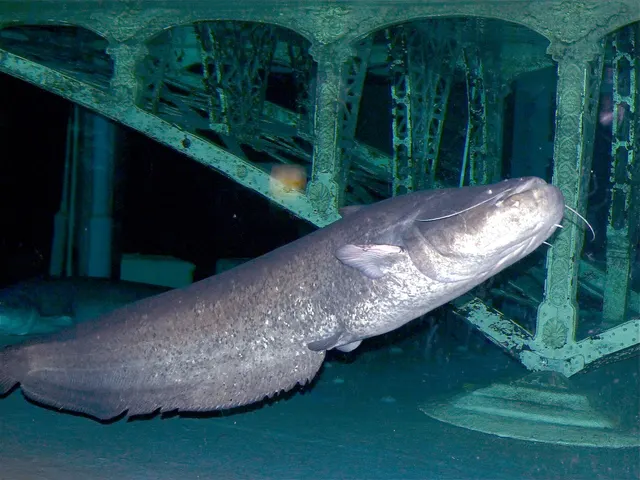 Wels catfishEurope's largest freshwater fish, reaching well over two metres, and an expanding introduced range that has made it one of the continent's most contested species.
Bernard DUPONT from FRANCE — CC BY-SA 2.0, via Wikimedia Commons
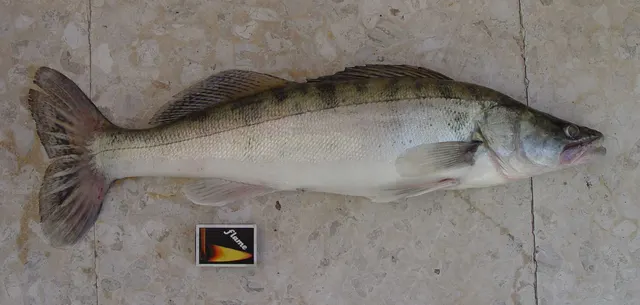 ZanderA shoaling freshwater predator built for hunting in low light and coloured water, and the fish that made a virtue of the conditions pike find difficult.
eLNuko — Public domain, via Wikimedia Commons
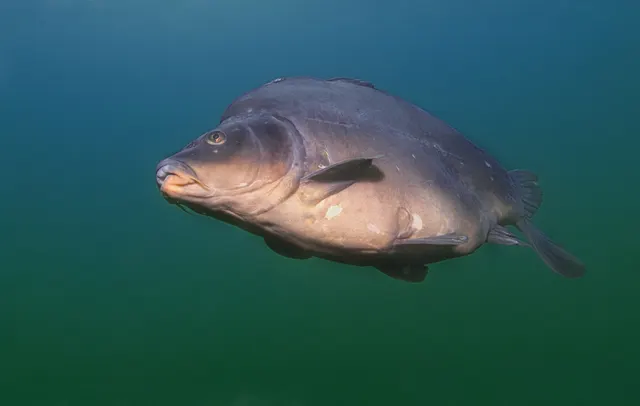 Common carpA large, long-lived, highly adaptable cyprinid whose capacity to learn has shaped more angling technique than any other freshwater fish.
Sven Riewe, CC0, via Wikimedia Commons
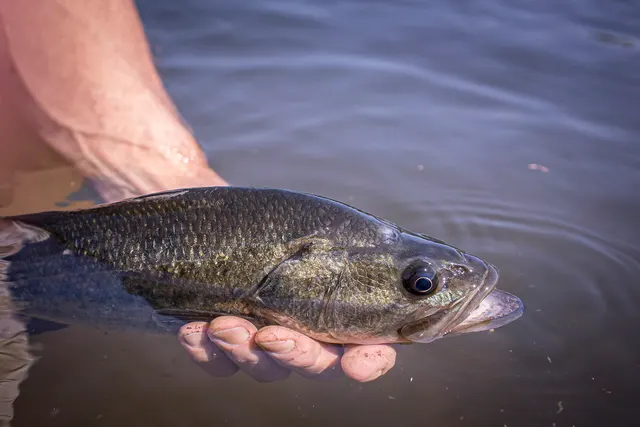 Largemouth bassThe most heavily fished freshwater sport species in the world: an ambush predator of warm, weedy, structured water.
USFWS Mountain Prairie, Public domain, via Wikimedia Commons
Places within this area
Publicly documented fishing geography. FishingHQ describes what the ground is; it does not say whether you may fish it, and every one of these sends that question to the body that holds the answer. Browse every place in this part of the world.
Who to ask before fishing any of these
FishingHQ does not know the current access position here. Inland fishing in Spain is licensed by the autonomous community, and a great many waters additionally require a separate permit issued per water and frequently per day, often by ballot on the better rivers. Seasons, methods and permit systems differ between neighbouring communities and change. Establish which community administers this water and check with it before going.
FishingHQ does not know the current access position here, and in Spain the first question is which administration to ask. Recreational sea fishing, underwater fishing and shellfish gathering are licensed by the autonomous community rather than by the state, with separate licences for each and different validity in each community, and state and European measures apply on top. Everything changes. Establish which autonomous community this water belongs to, and check the current position with its fisheries administration, before going. This water is tidal and transitional, so the freshwater regime may also apply above the tidal limit: FishingHQ does not know the current access position here. Inland fishing in Spain is licensed by the autonomous community, and a great many waters additionally require a separate permit issued per water and frequently per day, often by ballot on the better rivers. Seasons, methods and permit systems differ between neighbouring communities and change. Establish which community administers this water and check with it before going.
The Ebro at Mequinensa
Reservoir · Fresh water
A long impounded reach of the Ebro behind a hydroelectric dam in Aragón, running through steep dry country, with deep water against rock walls, submerged former river channel and standing timber, and shallow arms where tributaries enter.
Sheltered by the valley walls from most directions, with the down-valley wind the one that builds a sea.
Particular to this ground: drowning and immersion.
Particular to this water: This is working water-management or navigation infrastructure, operated to a schedule set by its authority rather than by anything happening in the fishing, and access to it is that authority's decision.
The Ebro delta
Estuary · Brackish water
A large low-lying delta projecting into the Mediterranean, built of river sediment, with rice fields across its interior, shallow brackish bays behind sand spits on both flanks, extensive reed and a shifting sand mouth.
Very low and open, with almost no tide and the wind deciding conditions; the enclosed bays behind the spits are sheltered whatever the sea is doing.
Particular to this water: This ground lies in or beside a marine protected area whose zoning constrains fishing, diving, anchoring and collection independently of any licence, with rules that differ between zones and boundaries that are not visible from the water.
Safety
Sun, dehydration and fatigue — Can cause injury needing treatment
Summer temperatures on the lower Ebro are far above anything British fishing conditions prepare for, and long sessions on exposed banks or in open boats produce heat exhaustion, severe sunburn and dehydration — with judgement degrading before the angler notices.
What reduces it: Fish the ends of the day rather than the middle, carry far more water than feels necessary, use shade and cover the skin rather than relying on sunscreen alone, and treat the loss of appetite or a headache as a signal to stop rather than to continue.
Drowning and immersion — Can cause injury needing treatment
Reservoir levels are operated rather than natural and can rise or fall on a release schedule with no weather to warn of it. Banks can become islands, margins can become steep drops to a fallen level, and extensive submerged timber holds boats and fouls swimmers.
What reduces it: Establish the release and drawdown position for the water before fishing it, do not camp or set up on ground you have not seen at a different level, wear a buoyancy aid in a boat, and treat submerged timber as a boat hazard rather than a feature.
Injury while handling fish — Can cause injury needing treatment
Large wels catfish are handled at close quarters, are extremely strong, and have abrasive pads rather than teeth that remove skin from a forearm held in the mouth. A fish of that size can also injure an angler simply by moving.
What reduces it: Handle large catfish in the water rather than on the bank, use a second pair of hands, support the fish rather than lifting it by the jaw alone, and accept that a chin-glove or equivalent protection is normal equipment rather than an affectation.
Further safety reading
- Sun, dehydration and fatigue — Summer temperatures on the lower Ebro are far beyond anything British fishing prepares for, and long exposed sessions produce heat exhaustion and dehydration with judgement degrading before the angler notices.
Check the rules before you fish
Fishing laws, bylaws, access rules, seasons, bait restrictions and permitted methods vary by location and can change. Check the current rules from the relevant authority and the water you intend to fish before fishing.
Check with:
- Current national or regional law for where you are fishing
- Current local bylaws
- The relevant fisheries authority
- The landowner, club or fishery whose water it is
- Any restrictions specific to the species or the method you intend to use
Where to go next
What swims here
- Common carpLong established in the system and reaching large weights in warm productive reservoirs, which is what drew the first wave of visiting anglers in the 1980s and 1990s.
- Largemouth bassA North American species established in the warmer shallow arms of the reservoirs, and one more line in a fauna assembled by introduction.
- Wels catfishWels are not native to the Ebro. Introduced during the twentieth century into warm slow reservoir water with abundant forage, they reached sizes that made the river internationally famous.
- ZanderAlso introduced rather than native, and favoured by deep coloured reservoir water in which their low-light vision is an advantage.
Local knowledge
- River levels, and what a flood changesThe Ebro's level is an operational decision rather than a weather event: reservoir drawdown and release for irrigation and power move the water with no rain to warn of it, which is a different reading problem from a spate river.
- Thermoclines and stratificationThe deep reservoir basins stratify strongly through a long hot summer, and the catfish and zander fishing follows the layers rather than the map.
How this compares
Environment and conservation
Sources and evidence
- FishBase: a global information system on fishes — Froese, R. and D. Pauly, eds. — FishBase Consortium (Scientific institute)Relied on for: Distribution, habitat association, life history, size and feeding behaviour recorded for the species concerned.States this directlyPassage read and verified
- The IUCN Red List of Threatened Species — International Union for Conservation of Nature (Conservation authority)Relied on for: Global extinction-risk assessment, population trend and identified threats for the species concerned.States this directlyCitation checked — the work exists and is described correctly
- Code of Conduct for Responsible Fisheries — Food and Agriculture Organization of the United Nations, Rome, 1995 (Standards body)Relied on for: International principles for responsible fisheries, including the layering of national and regional authority and the management of shared and transboundary waters.States this directlyCitation checked — the work exists and is described correctly
Why the 10 connections on this page are here, and the sources
What swims here
Backed by research — 4 connections
Supported by peer-reviewed research or fisheries science. The sources are listed and can be checked.
Common carp
A distributional claim taken from reference works and databases on the fishes of the region rather than from angling report. It states presence and asserts nothing about a fishery.
- The IUCN Red List of Threatened Species — International Union for Conservation of Nature (Conservation authority)Relied on for: Global extinction-risk assessment, population trend and identified threats for the species concerned.States this directlyCitation checked — the work exists and is described correctly
- FishBase: a global information system on fishes — Froese, R. and D. Pauly, eds. — FishBase Consortium (Scientific institute)Relied on for: Distribution, habitat association and life history recorded for the species concerned.States this directlyPassage read and verified
Largemouth bass
A distributional claim taken from reference works and databases on the fishes of the region rather than from angling report. It states presence and asserts nothing about a fishery.
- The IUCN Red List of Threatened Species — International Union for Conservation of Nature (Conservation authority)Relied on for: Global extinction-risk assessment, population trend and identified threats for the species concerned.States this directlyCitation checked — the work exists and is described correctly
- FishBase: a global information system on fishes — Froese, R. and D. Pauly, eds. — FishBase Consortium (Scientific institute)Relied on for: Distribution, habitat association and life history recorded for the species concerned.States this directlyPassage read and verified
Wels catfish
A distributional claim taken from reference works and databases on the fishes of the region rather than from angling report. It states presence and asserts nothing about a fishery.
- The IUCN Red List of Threatened Species — International Union for Conservation of Nature (Conservation authority)Relied on for: Global extinction-risk assessment, population trend and identified threats for the species concerned.States this directlyCitation checked — the work exists and is described correctly
- FishBase: a global information system on fishes — Froese, R. and D. Pauly, eds. — FishBase Consortium (Scientific institute)Relied on for: Distribution, habitat association and life history recorded for the species concerned.States this directlyPassage read and verified
Zander
A distributional claim taken from reference works and databases on the fishes of the region rather than from angling report. It states presence and asserts nothing about a fishery.
- The IUCN Red List of Threatened Species — International Union for Conservation of Nature (Conservation authority)Relied on for: Global extinction-risk assessment, population trend and identified threats for the species concerned.States this directlyCitation checked — the work exists and is described correctly
- FishBase: a global information system on fishes — Froese, R. and D. Pauly, eds. — FishBase Consortium (Scientific institute)Relied on for: Distribution, habitat association and life history recorded for the species concerned.States this directlyPassage read and verified
How people fish here
What experienced anglers do — 1 connection
Widely and independently recommended by experienced anglers and specialist sources. This is real angling knowledge, not proof: controlled evidence for it is limited, and FishingHQ records it as convention rather than as a demonstrated effect.
Predator fishing
Which branch of fishing dominates a water is a statement about practice rather than about the place, and is recorded as convention.
- General angling website restatements of established technique — Various (Credible secondary source)Relied on for: Widely restated descriptions of European venue character and method convention, recorded as consensus rather than as scholarship.Background and mechanism onlyCitation checked — the work exists and is described correctly
- Angling Times — Bauer Media (Specialist angling publication)Relied on for: Contemporary angling practice as reported by practitioners, including continental destination fishing undertaken from the UK.States this directlyCitation checked — the work exists and is described correctly
Local knowledge
What experienced anglers do — 2 connections
Widely and independently recommended by experienced anglers and specialist sources. This is real angling knowledge, not proof: controlled evidence for it is limited, and FishingHQ records it as convention rather than as a demonstrated effect.
River levels, and what a flood changes
A place joined to the mechanism that explains what is distinctive about fishing there, which is what makes a location page transferable rather than local colour.
- General angling website restatements of established technique — Various (Credible secondary source)Relied on for: Widely restated descriptions of European venue character and method convention, recorded as consensus rather than as scholarship.Background and mechanism onlyCitation checked — the work exists and is described correctly
- Angling Times — Bauer Media (Specialist angling publication)Relied on for: Contemporary angling practice as reported by practitioners, including continental destination fishing undertaken from the UK.States this directlyCitation checked — the work exists and is described correctly
Thermoclines and stratification
A place joined to the mechanism that explains what is distinctive about fishing there, which is what makes a location page transferable rather than local colour.
- General angling website restatements of established technique — Various (Credible secondary source)Relied on for: Widely restated descriptions of European venue character and method convention, recorded as consensus rather than as scholarship.Background and mechanism onlyCitation checked — the work exists and is described correctly
- Angling Times — Bauer Media (Specialist angling publication)Relied on for: Contemporary angling practice as reported by practitioners, including continental destination fishing undertaken from the UK.States this directlyCitation checked — the work exists and is described correctly
How this compares
What experienced anglers do — 1 connection
Widely and independently recommended by experienced anglers and specialist sources. This is real angling knowledge, not proof: controlled evidence for it is limited, and FishingHQ records it as convention rather than as a demonstrated effect.
The Danube
Two records a reader will hold together, joined where the comparison teaches something neither states alone.
- General angling website restatements of established technique — Various (Credible secondary source)Relied on for: Widely restated descriptions of European venue character and method convention, recorded as consensus rather than as scholarship.Background and mechanism onlyCitation checked — the work exists and is described correctly
- Angling Times — Bauer Media (Specialist angling publication)Relied on for: Contemporary angling practice as reported by practitioners, including continental destination fishing undertaken from the UK.States this directlyCitation checked — the work exists and is described correctly
Safety reading
Official guidance — 1 connection
Stated by a fisheries authority, scientific institute or recognised angling body. Authoritative, but summarising rather than demonstrating.
Sun, dehydration and fatigue
A hazard characteristic of the water, joined to the topic that treats it in full, on guidance published by water safety bodies.
- RNLI water safety guidance: cold water shock and Float to Live — Royal National Lifeboat Institution (Water-safety or diver-training authority)Relied on for: Water safety guidance including immersion, cold water shock and the circumstances in which water users get into difficulty.States this directlyPassage read and verified
- RoSPA water safety information and UK accidental drowning statistics — Royal Society for the Prevention of Accidents (Water-safety or diver-training authority)Relied on for: Accident-prevention guidance on inland and open water, including small craft, banks, exposure and lone working.States this directlyPassage read and verified
Environment and conservation
Official guidance — 1 connection
Stated by a fisheries authority, scientific institute or recognised angling body. Authoritative, but summarising rather than demonstrating.
Invasive species and biosecurity
An environmental claim about a named water, limited to what the cited assessment and international guidance set out.
- The IUCN Red List of Threatened Species — International Union for Conservation of Nature (Conservation authority)Relied on for: Extinction-risk assessment, population trend and the threats identified for freshwater and diadromous species, including barriers to migration and exploitation.States this directlyCitation checked — the work exists and is described correctly
- Code of Conduct for Responsible Fisheries — Food and Agriculture Organization of the United Nations, Rome, 1995 (Standards body)Relied on for: International principles for responsible fisheries, including the management of shared and transboundary waters and of introduced species.States this directlyCitation checked — the work exists and is described correctly
How FishingHQ labels evidence is explained in the evidence policy.