Hungary
Fishing regions · Last reviewed 2026-08-18
Central Europe's largest shallow lake, two great rivers, a wels catfish culture of international standing — and an angling administration that examines competence and counts every fish taken.
Safety: weather and lightning — can cause serious injury or death. 3 more points apply here.
Being listed here is not permission to fish. What that meansClose
Access, fishing rights, seasons, licences, local bylaws and permitted methods vary and can change. Check current access, permission, local regulations, closures and restrictions before you travel or fish. FishingHQ describes what the ground is and names who holds the answer; it does not hold the answer itself.
Find the authority for a jurisdiction · What FishingHQ does and does not cover
Hungary is landlocked, flat, and holds more fishable water per head than that description suggests.
LAKE BALATON IS THE DEFINING WATER. The largest lake in central Europe by surface area and one of the shallowest of its size anywhere — an inland sea in extent and a large pond in depth. That combination decides everything about it: it warms fast, it stirs to the bed in wind, it produces spectacular short-lived squalls, and its fishery is governed by a dedicated administration rather than by the general framework.
THE TISZA AND THE DANUBE ARE THE TWO RIVERS. The Danube is the continental artery; the Tisza is Hungary's own, a slow, warm, silty lowland river running the length of the Great Plain, and the site of one of Europe's great biological spectacles — the mass emergence of the long-tailed mayfly, locally called the flowering of the Tisza.
THE CULTURE IS CARP AND CATFISH. Hungary's ponds and rivers produced carp husbandry alongside Bohemia's, its competitive carp fishing is internationally significant, and its wels catfish fishery on the rivers and reservoirs is among the strongest in Europe. Clonking — attracting catfish with a shaped implement struck on the water — is a living method here rather than a folk memory.
AND THE ADMINISTRATION FOLLOWS THE REGIONAL PATTERN. A state fishing document that rests on an examination, an association or water permit on top of it, and a mandatory catch record. Arrangements for visitors exist and are set by the administration. Balaton is administered separately from the general framework, which is a fact worth knowing before buying anything.
What fishing here is like
A landlocked lowland country occupying the Carpathian basin, drained by the Danube and the Tisza and almost entirely flat through its eastern two-thirds. The Great Plain is a landscape of slow, warm, silty rivers with high clay banks, oxbows cut off by centuries of river regulation, and extensive fish pond systems. Lake Balaton dominates the west: some six hundred square kilometres of water averaging only a few metres deep, which behaves like no other large European lake. The Danube runs through the north and along part of the southern border, with a large island system and side channels. Small uplands in the north and west carry a modest amount of cold water. Summers are hot and continental, winters are cold enough for ice on the shallower waters, and the whole system runs warmer than its latitude suggests.
What dominates
Carp fishing, in a country where carp are both a centuries-old agricultural animal and a serious sporting catch, on ponds, reservoirs and rivers, with an internationally significant competitive scene. Wels catfish fishing on the Danube, the Tisza and the larger reservoirs, including clonking. Predator fishing for zander, pike and perch on Balaton, the rivers and the reservoirs. Feeder and float fishing on the slow rivers and the oxbows, with a strong match tradition. Fly fishing is a minority pursuit here because cold water is scarce, and is concentrated in the northern hills and on stocked waters. Ice fishing on the shallower lakes and ponds in colder winters.
The water available
A very large, very shallow lake that warms quickly, mixes to the bed in wind and holds extensive reed margins. Slow, warm, silty lowland rivers with steep clay banks, engineered by two centuries of regulation and flood works. Numerous cut-off oxbows and dead arms, which are among the most productive still waters in the country. The Danube main stem with its island and side-channel systems. Extensive managed fish pond systems, several of them also internationally important wetlands. Reservoirs, including one very large shallow artificial lake built on former marsh. A modest amount of cold upland water in the north. Thermal groundwater is abundant in Hungary and locally influences the temperature and ice cover of some waters.
How the rules are structured
The Hungarian arrangement follows the central European pattern and adds a significant exception.
THE STATE DOCUMENT RESTS ON A QUALIFICATION. As across this belt, the entry document follows an examination on identification, close seasons, protected species and methods. Visitor arrangements exist and are set by the administration rather than by FishingHQ.
THE WATER PERMIT IS SEPARATE and is issued by whoever administers the water — the national angling federation and its member associations administer a great deal of it, with the rest held by the state, by pond and fishery operators and by private owners.
THE CATCH RECORD IS MANDATORY. Retained fish are entered, and this page is returned at the end of its term. It is a management instrument for a fishery administered collectively, and it is a legal obligation rather than a courtesy.
BALATON IS ADMINISTERED SEPARATELY. The lake has its own management body and its own arrangements, which is a structural fact rather than a rule — a reader who has resolved their position for a river in eastern Hungary has not resolved it for Balaton.
PROTECTED SPECIES AND PROTECTED AREAS sit above all of it, and several of the fish pond systems are internationally designated wetlands with conservation requirements that have nothing to do with fisheries administration.
FishingHQ does not state what any current rule is: no season, no size, no method and no limit. Establish which body administers this water, and ask it.
Who to ask
- The national angling federation and its member association, which administer much of the country's fishing and issue permits and catch records.
- The Lake Balaton fishery management body, which administers that lake separately from the general framework.
- The national fisheries administration, for the state document, the examination behind it and protected species.
- The pond, reservoir or fishery operator, where the water is commercially or privately managed.
- The national park or protected-area administration, where the water is inside a designated wetland or reserve.
Words you will meet
- Horgászjegy
- The angling ticket or permit for a water or district, issued by the body administering the fishing there, and supplied with the catch record that must be kept and returned.
- Tiszavirágzás
- The flowering of the Tisza — the mass emergence of the long-tailed mayfly in early summer, when enormous numbers of adults appear over the river for a few days. A genuine biological spectacle and a period when the river's fish feed on almost nothing else.
- Harcsa
- Wels catfish. Hungary's heavyweight catch, fished on the Danube, the Tisza and the reservoirs, and the fish the clonking tradition exists for.
- Kuttyogató
- The clonking implement — a shaped wooden tool struck on the water to produce a sound that draws wels catfish. A living traditional method on these rivers rather than a historical curiosity.
- Holtág
- A dead arm or cut-off oxbow, left behind by the regulation of the rivers. These are among the most productive still waters in the country and fish quite differently from the river that made them.
Conditions and hazards
Hungary's hazards are shallow-water hazards, which are systematically underestimated because shallow water does not look dangerous.
BALATON IS THE CLEAR CASE. A very large, very shallow lake responds to wind almost instantly: a squall can raise a short, steep, breaking sea across open water in minutes, and the lake has a well-known reputation for exactly that. Small craft are caught out by it regularly, and the mechanism is not depth but the speed of onset — there is very little time between the sky changing and the water changing. There is a public storm-warning system on the lake for this reason, and understanding it is part of going afloat there.
THE RIVERS HAVE STEEP, UNDERCUT CLAY BANKS that collapse without warning, particularly after rain or when a river drops and leaves them saturated. Somebody standing on the lip of an undercut bank is standing on nothing.
THE SLOW RIVERS ARE DECEPTIVE. A wide, slow, warm river with no visible turbulence still carries enough flow to move a person off their feet in deep silt, and the beds are soft, deep and difficult to get out of.
SUMMER HEAT IS A REAL HAZARD on the open plain, where there is no shade, sessions are long and the water offers no relief.
WELS CATFISH REACH A SIZE AT WHICH HANDLING IS A PHYSICAL RISK — to fingers, to backs, and to anybody trying to control a large fish in a small boat.
AND ICE, WHERE IT FORMS, IS MADE UNPREDICTABLE BY THERMAL GROUNDWATER. Hungary has abundant thermal springs and some waters receive warm groundwater, which can leave ice locally thin with no surface indication whatever.
A lake the size of a sea and the depth of a pond
Balaton is worth understanding physically, because almost everything anglers say about it follows from two numbers: it is very large and it is very shallow.
SHALLOWNESS DECIDES THE TEMPERATURE. A water body only a few metres deep has little thermal mass, so it warms rapidly in spring, reaches summer temperatures a deep lake never sees, and cools just as fast in autumn. That produces a warm-water fish community — carp, bream, zander, pike, perch, catfish — and rules out the cold-water species a deep lake of the same area would hold.
SHALLOWNESS ALSO DECIDES THE MIXING. A deep lake stratifies in summer, separating warm surface water from cold deep water, and stays that way for months. Balaton does not: wind reaches the bed across most of its area, so it mixes almost continuously, resuspending fine sediment and keeping nutrients circulating. That is why the water is characteristically turbid rather than clear, and it is not a sign of pollution — it is what a large shallow lake does.
AND THAT TURBIDITY EXPLAINS THE ZANDER. A percid adapted to hunting in low light and coloured water has a systematic advantage over sight-feeding predators in exactly these conditions, and Balaton's zander fishery is famous for the same reason its water is cloudy.
THE REED MARGINS ARE THE OTHER STRUCTURAL FEATURE. Extensive reed beds fringe much of the lake, provide the spawning and nursery habitat for most of what lives there, and are protected accordingly. A shallow lake without its reed margin is a much poorer lake, which is why their condition is a live management issue.
THE TISZA IS A COMPLETELY DIFFERENT PROBLEM AND A MORE INTERESTING ONE. A slow, warm, silty lowland river that has been shortened and straightened dramatically over two centuries of regulation works, leaving a chain of cut-off oxbows along its length — dead arms which are now among the most productive still waters in the country and which fish nothing like the river.
AND THE MAYFLY EMERGENCE IS A GENUINE PHENOMENON RATHER THAN A TOURIST CLAIM. The long-tailed mayfly spends years as a burrowing larva in the river's clay banks and emerges en masse in early summer, adults appearing in enormous numbers over a few days, mating above the water and dying within hours. For that short period the river's fish feed on almost nothing else, which is a fact with obvious consequences for anybody fishing it, in both directions.
THE DANUBE IS THE THIRD WATER, and it behaves as it does everywhere along its central course — big, powerful, engineered, holding catfish, zander, asp, barbel and carp, with side channels and island systems that are quite separate fisheries from the main stem.
Backed by research — why, and the sources (4)
Supported by peer-reviewed research or fisheries science. The sources are listed and can be checked.
- Freshwater Fishes of the British Isles — HarperCollins (New Naturalist 75), 1992 (Reference work)Relied on for: Distribution, ecology, life history and conservation status of European freshwater fishes, including the migratory salmonids and the cyprinid and percid communities named.States this directlyCitation checked — the work exists and is described correctly
- FishBase: a global information system on fishes — Froese, R. and D. Pauly, eds. — FishBase Consortium (Scientific institute)Relied on for: Recorded distribution, habitat association and life history of the freshwater and migratory species named.States this directlyPassage read and verified
- FishBase: a global information system on fishes — Froese, R. and D. Pauly, eds. — FishBase Consortium (Scientific institute)Relied on for: Recorded distribution, depth range, habitat association, size and biology of the species named.States this directlyPassage read and verified
- The IUCN Red List of Threatened Species — International Union for Conservation of Nature (Conservation authority)Relied on for: Current global and regional conservation assessment for the species named, with the assessment date.Background and mechanism onlyCitation checked — the work exists and is described correctly
The examination, the permit, the book — and why Balaton is not covered by any of it
Hungary sits inside the central European qualification belt, and it adds one exception large enough that missing it will cost a visitor a day.
THE ENTRY DOCUMENT RESTS ON A QUALIFICATION. As in Poland, Czechia, Slovakia and Germany, the first thing an angler needs is evidence of having been examined on identification, close seasons, protected species and permitted methods. Visitor arrangements exist and are set by the administration. This is why arranging fishing here starts before travelling.
THE PERMIT FOR THE WATER IS A SEPARATE PURCHASE from a separate body — the national angling federation's member associations administer a great deal of the country's water, with the rest held by the state, by fishery operators and by private owners.
THE CATCH RECORD IS PART OF THE PERMIT AND IT IS MANDATORY. Retained fish are entered and this page is returned at the end of its term. As everywhere in this region, it exists because the fishery is administered collectively and a collective fishery has to be able to measure what is taken from it.
AND BALATON IS ADMINISTERED SEPARATELY. The lake has its own management body and its own arrangements, distinct from the general framework that covers the rivers and the association waters. A reader who has sorted out their position for the Tisza has not sorted it out for Balaton, and the reverse is equally true. This is a structural feature of Hungarian fisheries administration rather than a rule that might change next season, and it is the single most useful thing to know before buying anything.
SEVERAL OF THE POND SYSTEMS ARE INTERNATIONALLY DESIGNATED WETLANDS, which brings a conservation administration alongside the fisheries one, with requirements that have nothing to do with angling permits and that apply regardless of them.
PROTECTED SPECIES exist here as everywhere in the Danube basin, and the sturgeons in particular are in a critical state throughout the system.
FishingHQ does not state what any current rule is: no season, no size and no limit. Identify the body that administers this water — and check whether it is the general framework or a lake-specific one — then ask.
Official guidance — why, and the sources (2)
Stated by a fisheries authority, scientific institute or recognised angling body. Authoritative, but summarising rather than demonstrating.
- Code of Conduct for Responsible Fisheries — Food and Agriculture Organization of the United Nations, Rome, 1995 (Standards body)Relied on for: The international framework within which national and regional fisheries authorities set, revise and enforce measures, and the principle that responsible fishing includes the safety of fishers.Background and mechanism onlyCitation checked — the work exists and is described correctly
- ICES Advice on fishing opportunities, catch and effort — International Council for the Exploration of the Sea (Scientific institute)Relied on for: That the stock advice European fisheries measures are set against is produced internationally and revised annually, which is the mechanism by which a national measure changes without the national law changing.States this directlyCitation checked — the work exists and is described correctly
Catfish, clonking, and a carp culture older than the sport
Hungarian angling has two centres and both of them predate sport fishing as an idea.
CARP ARE AN AGRICULTURAL ANIMAL HERE FIRST. The pond systems of the Carpathian basin were built to produce food, over centuries, in a landscape with abundant flat ground and manageable water. That industry is the origin of European carp husbandry along with Bohemia's, and it is why carp in this part of the world carry a cultural weight they do not carry in Britain — they are a Christmas food, a working crop and a sporting fish at the same time. The competitive carp scene that grew on top of that is internationally significant, and its technical culture is a direct descendant of people who knew these fish as livestock.
WELS CATFISH ARE THE OTHER CENTRE, and the fishery for them is among Europe's strongest. The Danube, the Tisza and the large reservoirs hold them at substantial size, and the methods are correspondingly heavy: big baits, boats, strong tackle, and a great deal of attention to where a large predator will actually sit in a big slow river.
CLONKING IS THE DISTINCTIVE METHOD AND IT IS ALIVE. A shaped implement is struck on the water surface to produce a specific low sound, repeated in a pattern, over water believed to hold catfish. Practitioners are clear about what it does — it draws a response from fish rather than guaranteeing one — and about what it does not, which is work everywhere or always. It is one of extremely few genuinely distinctive angling methods still in ordinary use in Europe, and it belongs to this river system rather than to any one country on it.
ZANDER FISHING ON BALATON is the third pillar, and follows from the lake's turbidity: a predator adapted to hunting in low light in coloured water, in a lake that is coloured and shallow across its whole area.
FEEDER AND MATCH FISHING is strong on the slow rivers and the oxbows, as it is across the region, and the dead arms of the Tisza are among the country's most valued waters for it.
FLY FISHING IS A MINORITY PURSUIT AND THE REASON IS GEOGRAPHIC RATHER THAN CULTURAL. Hungary has very little cold running water; the country is flat, warm and slow. What fly fishing exists is concentrated in the northern hills and on stocked waters, and an angler travelling here for salmonids has misread the map.
What experienced anglers do — why, and the sources (4)
Widely and independently recommended by experienced anglers and specialist sources. This is real angling knowledge, not proof: controlled evidence for it is limited, and FishingHQ records it as convention rather than as a demonstrated effect.
- Sea Angler — Bauer Media (Specialist angling publication)Relied on for: Long-running published description of European sea angling practice by region and by ground type, including the destinations British anglers travel to.FishingHQ's interpretation of what it saysCitation checked — the work exists and is described correctly
- General angling website restatements of established technique — Various (Credible secondary source)Relied on for: Widely restated descriptions of which practices are conventionally used in the waters named, recorded as practitioner consensus rather than as scholarship.Background and mechanism onlyCitation checked — the work exists and is described correctly
- Fishers' Craft and Lettered Art: Tracts on Fishing from the End of the Middle Ages — University of Toronto Press, 1997 (Scientific literature)Relied on for: That European fishing traditions develop around the water and fish available to them, and the historical method of reading such traditions.Background and mechanism onlyCitation checked — the work exists and is described correctly
- General angling website restatements of established technique — Various (Credible secondary source)Relied on for: Widely restated descriptions of regional angling practice, recorded as practitioner consensus rather than as scholarship.Background and mechanism onlyCitation checked — the work exists and is described correctly
A shallow lake that turns in minutes, and banks made of nothing
Shallow, warm and inland reads as safe, and each of those three words hides a specific mechanism.
BALATON'S SQUALLS ARE THE HAZARD THE LAKE IS KNOWN FOR. A very large, very shallow water body has almost no inertia: when wind arrives, the surface responds immediately, and because the depth is small the waves that form are short, steep and breaking rather than long and rolling. The onset can be a matter of minutes. Small craft are caught out on this lake regularly, not because the water is deep or cold but because there is so little time between the first sign and the full sea. There is a public storm-warning system on the lake precisely because of this, and anybody going afloat there should know how it works and what its stages mean before launching, not after.
UNDERCUT CLAY BANKS ARE THE RIVER HAZARD. The Tisza and the lowland Danube reaches run between high, soft banks that the river erodes from beneath. The top looks solid. It may be a lip over nothing, and it collapses without warning — most readily after rain, and after a flood has dropped and left the bank saturated and unsupported. Stand back from the edge, and treat a fresh vertical face as evidence that this bank is actively failing.
SLOW WATER IS STILL MOVING WATER. A wide river with a featureless surface can carry more flow than it appears to, and the bed is deep soft silt that grips. Getting out of that combination is much harder than getting into it.
SUMMER HEAT ON THE PLAIN IS A GENUINE RISK. There is no shade, the sessions are long, and heat exhaustion degrades judgement and coordination well before it produces collapse.
LARGE CATFISH ARE A HANDLING HAZARD IN THEMSELVES. A fish of that mass in a small boat, or held badly on a bank, injures people — hands, backs and, if it is in the boat with somebody, more than that. Plan the landing before the fish is beaten rather than after.
AND THERMAL GROUNDWATER MAKES ICE UNRELIABLE. Hungary has abundant thermal springs and some waters receive warm groundwater, which can leave ice locally thin over an inflow with nothing visible on the surface to say so. Any ice here needs current local knowledge rather than a rule of thumb.
Official guidance — why, and the sources (4)
Stated by a fisheries authority, scientific institute or recognised angling body. Authoritative, but summarising rather than demonstrating.
- RNLI water safety guidance: cold water shock and Float to Live — Royal National Lifeboat Institution (Water-safety or diver-training authority)Relied on for: Cold water shock and the immersion response, tidal cut-off, and water-safety guidance for shore anglers and small-craft users.States this directlyPassage read and verified
- Met Office shipping forecast, inshore waters forecast and marine warnings — Met Office, United Kingdom (Government fisheries body)Relied on for: That inshore waters forecasts, sea state and swell are the operative inputs for shore and small-craft decisions in north-west European waters.States this directlyCitation checked — the work exists and is described correctly
- Code of Conduct for Responsible Fisheries — Food and Agriculture Organization of the United Nations, Rome, 1995 (Standards body)Relied on for: The international framework within which national and regional fisheries authorities set, revise and enforce measures, and the principle that responsible fishing includes the safety of fishers.Background and mechanism onlyCitation checked — the work exists and is described correctly
- ICES Advice on fishing opportunities, catch and effort — International Council for the Exploration of the Sea (Scientific institute)Relied on for: That the stock advice European fisheries measures are set against is produced internationally and revised annually, which is the mechanism by which a national measure changes without the national law changing.States this directlyCitation checked — the work exists and is described correctly
Some of what lives here
Fish recorded here that FishingHQ holds a reviewed photograph of. It is not a complete list of what Hungary holds, and it is not a prediction that you will catch any of them — it is a way in to the ones we can show you.
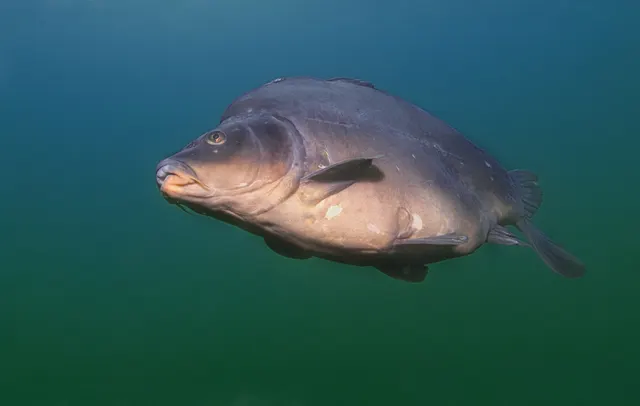 Common carpA large, long-lived, highly adaptable cyprinid whose capacity to learn has shaped more angling technique than any other freshwater fish.
Sven Riewe, CC0, via Wikimedia Commons
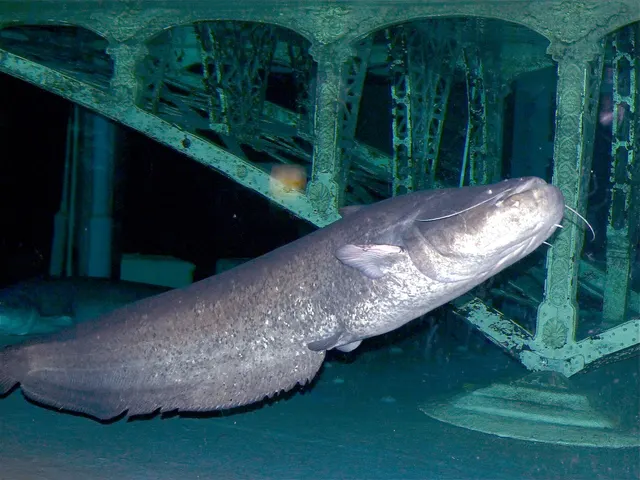 Wels catfishEurope's largest freshwater fish, reaching well over two metres, and an expanding introduced range that has made it one of the continent's most contested species.
Bernard DUPONT from FRANCE — CC BY-SA 2.0, via Wikimedia Commons
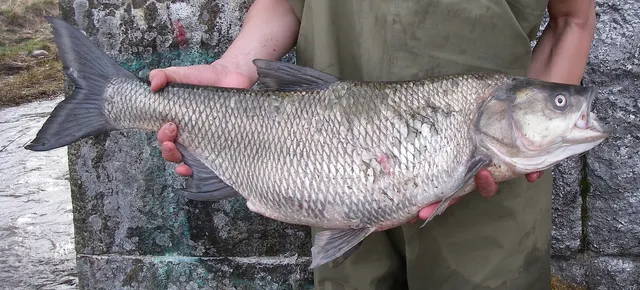 AspEurope's largest predatory cyprinid, a fast open-water hunter that smashes into baitfish shoals at the surface and is fished like a saltwater predator.
Jenny Glans — CC BY-SA 3.0, via Wikimedia Commons
Safety
Weather and lightning — Can cause serious injury or death
A very large, very shallow lake responds to wind almost immediately, raising a short, steep, breaking sea across open water within minutes of a squall arriving. Small craft on Lake Balaton are caught out by the speed of onset rather than by depth or cold.
What reduces it: Learn the lake's public storm-warning system and its stages before launching, treat a warning as a reason to be ashore rather than to hurry, and give a small craft a much larger margin than the lake's appearance suggests.
Worse when:
- On open water away from the shore, where there is no shelter to reach.
- In summer, when convective squalls build fastest and with least warning.
Slips, trips and falls — Can cause serious injury or death
The lowland rivers run between high, soft clay banks that the river undercuts from beneath. The top surface looks solid while being a lip over nothing, and it collapses without warning into deep water with a soft bed.
What reduces it: Stand well back from the edge, treat a fresh vertical face as evidence of an actively failing bank, and be most cautious after rain and after a flood has dropped and left the bank saturated.
Sun, dehydration and fatigue — Can cause injury needing treatment
Long summer sessions on the open plain, where there is no shade and temperatures are high, produce dehydration and heat exhaustion that degrade judgement and coordination before they produce any obvious collapse.
What reduces it: Carry substantially more water than the session appears to need, create shade rather than expecting to find it, and fish the ends of the day rather than the middle of it in high summer.
Injury while handling fish — Can cause injury needing treatment
Wels catfish reach a mass at which handling is a physical hazard — to hands in the mouth, to backs lifting, and to anybody sharing a small boat with a fish that is not yet finished.
What reduces it: Decide how a large fish will be landed, supported and released before it is beaten, handle it in the water where possible, and never lift a large catfish unsupported or alone.
Further safety reading
- Sun, dehydration and fatigue — Long summer sessions on the open Danube plain and on Balaton, where shade is scarce and heat degrades judgement before it produces any obvious collapse.
Check the rules before you fish
Fishing laws, bylaws, access rules, seasons, bait restrictions and permitted methods vary by location and can change. Check the current rules from the relevant authority and the water you intend to fish before fishing.
Check with:
- Current national or regional law for where you are fishing
- Current local bylaws
- The relevant fisheries authority
- The landowner, club or fishery whose water it is
- Any restrictions specific to the species or the method you intend to use
Where to go next
What swims here
- AspA surface-feeding cyprinid predator of the large rivers, hunted on lures in a way that has no close equivalent in British or Irish freshwater and is worth understanding before travelling.
- Common carpThe fish the Hungarian fishery is built around, in pond systems and in Balaton, and the basis of a specimen culture that has shaped carp fishing across Europe.
- Wels catfishNative to the Danube and Tisza and reaching great size in both, which is why Hungary is a destination for anglers whose target is one fish rather than a day's sport.
How people fish here
How this compares
Rules and access
Sources and evidence
- Freshwater Fishes of the British Isles — HarperCollins (New Naturalist 75), 1992 (Reference work)Relied on for: Distribution, ecology, life history and conservation status of European freshwater fishes, including the migratory salmonids and the cyprinid and percid communities named.States this directlyCitation checked — the work exists and is described correctly
- FishBase: a global information system on fishes — Froese, R. and D. Pauly, eds. — FishBase Consortium (Scientific institute)Relied on for: Recorded distribution, habitat association and life history of the freshwater and migratory species named.States this directlyPassage read and verified
- FishBase: a global information system on fishes — Froese, R. and D. Pauly, eds. — FishBase Consortium (Scientific institute)Relied on for: Recorded distribution, depth range, habitat association, size and biology of the species named.States this directlyPassage read and verified
- The IUCN Red List of Threatened Species — International Union for Conservation of Nature (Conservation authority)Relied on for: Current global and regional conservation assessment for the species named, with the assessment date.Background and mechanism onlyCitation checked — the work exists and is described correctly
- Fishers' Craft and Lettered Art: Tracts on Fishing from the End of the Middle Ages — University of Toronto Press, 1997 (Scientific literature)Relied on for: That European fishing traditions develop around the water and fish available to them, and the historical method of reading such traditions.Background and mechanism onlyCitation checked — the work exists and is described correctly
- General angling website restatements of established technique — Various (Credible secondary source)Relied on for: Widely restated descriptions of regional angling practice, recorded as practitioner consensus rather than as scholarship.Background and mechanism onlyCitation checked — the work exists and is described correctly
Why the 8 connections on this page are here, and the sources
What swims here
Backed by research — 3 connections
Supported by peer-reviewed research or fisheries science. The sources are listed and can be checked.
Asp
That a species occurs in these waters, drawn from distribution science and stock assessment. It is a statement about where the animal lives and is not a statement that anybody will catch one, still less where.
- Freshwater Fishes of the British Isles — HarperCollins (New Naturalist 75), 1992 (Reference work)Relied on for: Distribution, habitat requirement and life history of European freshwater fishes, including their occurrence across the continental range named.States this directlyCitation checked — the work exists and is described correctly
- FishBase: a global information system on fishes — Froese, R. and D. Pauly, eds. — FishBase Consortium (Scientific institute)Relied on for: Recorded distribution and habitat association of the freshwater and migratory species named.States this directlyPassage read and verified
Common carp
That a species occurs in these waters, drawn from distribution science and stock assessment. It is a statement about where the animal lives and is not a statement that anybody will catch one, still less where.
- Freshwater Fishes of the British Isles — HarperCollins (New Naturalist 75), 1992 (Reference work)Relied on for: Distribution, habitat requirement and life history of European freshwater fishes, including their occurrence across the continental range named.States this directlyCitation checked — the work exists and is described correctly
- FishBase: a global information system on fishes — Froese, R. and D. Pauly, eds. — FishBase Consortium (Scientific institute)Relied on for: Recorded distribution and habitat association of the freshwater and migratory species named.States this directlyPassage read and verified
Wels catfish
That a species occurs in these waters, drawn from distribution science and stock assessment. It is a statement about where the animal lives and is not a statement that anybody will catch one, still less where.
- Freshwater Fishes of the British Isles — HarperCollins (New Naturalist 75), 1992 (Reference work)Relied on for: Distribution, habitat requirement and life history of European freshwater fishes, including their occurrence across the continental range named.States this directlyCitation checked — the work exists and is described correctly
- FishBase: a global information system on fishes — Froese, R. and D. Pauly, eds. — FishBase Consortium (Scientific institute)Relied on for: Recorded distribution and habitat association of the freshwater and migratory species named.States this directlyPassage read and verified
How people fish here
What experienced anglers do — 2 connections
Widely and independently recommended by experienced anglers and specialist sources. This is real angling knowledge, not proof: controlled evidence for it is limited, and FishingHQ records it as convention rather than as a demonstrated effect.
Carp fishing
That a discipline is conventionally practised in these waters, drawn from published description of practice rather than from participation data, and labelled as consensus accordingly.
- Sea Angler — Bauer Media (Specialist angling publication)Relied on for: Long-running published description of European sea angling practice by region and destination, including where British anglers travel and what they fish for there.FishingHQ's interpretation of what it saysCitation checked — the work exists and is described correctly
- General angling website restatements of established technique — Various (Credible secondary source)Relied on for: Widely restated descriptions of which disciplines are conventionally practised in the waters named, recorded as practitioner consensus rather than as scholarship.Background and mechanism onlyCitation checked — the work exists and is described correctly
Predator fishing
That a discipline is conventionally practised in these waters, drawn from published description of practice rather than from participation data, and labelled as consensus accordingly.
- Sea Angler — Bauer Media (Specialist angling publication)Relied on for: Long-running published description of European sea angling practice by region and destination, including where British anglers travel and what they fish for there.FishingHQ's interpretation of what it saysCitation checked — the work exists and is described correctly
- General angling website restatements of established technique — Various (Credible secondary source)Relied on for: Widely restated descriptions of which disciplines are conventionally practised in the waters named, recorded as practitioner consensus rather than as scholarship.Background and mechanism onlyCitation checked — the work exists and is described correctly
How this compares
What experienced anglers do — 1 connection
Widely and independently recommended by experienced anglers and specialist sources. This is real angling knowledge, not proof: controlled evidence for it is limited, and FishingHQ records it as convention rather than as a demonstrated effect.
Austria
A navigational link between two places a reader is genuinely choosing between or reasoning across, offered as orientation rather than as a ranking.
- Sea Angler — Bauer Media (Specialist angling publication)Relied on for: Long-running published description of European sea angling practice by region and destination, including where British anglers travel and what they fish for there.FishingHQ's interpretation of what it saysCitation checked — the work exists and is described correctly
- General angling website restatements of established technique — Various (Credible secondary source)Relied on for: Widely restated descriptions of which disciplines are conventionally practised in the waters named, recorded as practitioner consensus rather than as scholarship.Background and mechanism onlyCitation checked — the work exists and is described correctly
Safety reading
Official guidance — 1 connection
Stated by a fisheries authority, scientific institute or recognised angling body. Authoritative, but summarising rather than demonstrating.
Sun, dehydration and fatigue
A link from the place to the substantial safety topic describing the mechanism that hurts people there, rather than a warning restated in prose on the record itself.
- RNLI water safety guidance: cold water shock and Float to Live — Royal National Lifeboat Institution (Water-safety or diver-training authority)Relied on for: Cold water shock and the immersion response, tidal cut-off, and water-safety guidance for shore anglers and small-craft users.States this directlyPassage read and verified
Rules and access
Official guidance — 1 connection
Stated by a fisheries authority, scientific institute or recognised angling body. Authoritative, but summarising rather than demonstrating.
Licences and permission
This points to the kind of rule that applies rather than to a rule itself. The same question is administered differently in each of these countries, so the page says that the answer is held elsewhere and changes.
- Code of Conduct for Responsible Fisheries — Food and Agriculture Organization of the United Nations, Rome, 1995 (Standards body)Relied on for: The international framework within which national and regional fisheries authorities set, revise and enforce measures, and the principle that the responsible authority rather than a third party holds the current position.Background and mechanism onlyCitation checked — the work exists and is described correctly
- ICES Advice on fishing opportunities, catch and effort — International Council for the Exploration of the Sea (Scientific institute)Relied on for: That the stock advice European measures are set against is produced internationally and revised annually, which is how a national measure changes without the national law changing.States this directlyCitation checked — the work exists and is described correctly
How FishingHQ labels evidence is explained in the evidence policy.