France
Fishing regions · Last reviewed 2026-08-13
Three coasts on two seas plus one of Europe's largest inland fisheries, governed by a licensing system that treats fresh water and salt water as almost unrelated activities — and a shore-gathering tradition with no British equivalent.
Safety: tides and being cut off — can cause serious injury or death. One more point applies here.
Being listed here is not permission to fish. What that meansClose
Access, fishing rights, seasons, licences, local bylaws and permitted methods vary and can change. Check current access, permission, local regulations, closures and restrictions before you travel or fish. FishingHQ describes what the ground is and names who holds the answer; it does not hold the answer itself.
Find the authority for a jurisdiction · What FishingHQ does and does not cover
France is the highest-dependency jurisdiction on FishingHQ's geography ranking, and the reason is that very little about it is uniform.
THERE ARE THREE DISTINCT COASTS. The Channel and North Sea coast is tidal on a scale few countries experience — the Baie du Mont-Saint-Michel and the Normandy and Breton coasts carry some of the largest tidal ranges in Europe, exposing enormous areas of ground twice a day. The Atlantic coast runs from Brittany's rock and islands south through the long sand beaches of the Landes to the Basque country, exposed to North Atlantic swell throughout. And the Mediterranean coast is effectively tideless, warmer, clearer and a completely different fishery.
THE INLAND FISHERY IS ENORMOUS AND IS ORGANISED DIFFERENTLY FROM ANYTHING BRITISH. France holds major rivers — the Loire, Rhône, Seine, Garonne, Dordogne — plus alpine lakes, canals and a very large stillwater carp scene, and the whole of it is administered through a structure of local fishing associations, the AAPPMA, federated by département. Membership of an association carries the right to fish its waters, and the arrangement means access is organised around joining rather than around day tickets.
AND THE TWO SYSTEMS BARELY TOUCH. Freshwater fishing requires membership and a national levy; recreational sea fishing from the shore has historically required no licence at all, while sea fishing from a boat and underwater fishing carry their own separate declarations and rules. An angler moving from a French river to a French beach moves between two different administrative worlds, which is the single most useful structural fact for a visitor.
PÊCHE À PIED IS THE PRACTICE WITH NO BRITISH EQUIVALENT. Gathering shellfish and other shore animals on foot at low tide is a mass cultural activity on the Atlantic and Channel coasts, practised by families rather than by specialists, and it is regulated in detail: by species, by size, by quantity, by season, by area, and by the sanitary classification and biotoxin status of the ground. On a big spring tide in Normandy or Brittany the exposed sand carries a substantial fraction of the local population.
CARP FISHING IS THE OTHER THING FRANCE IS KNOWN FOR ABROAD, and it is a genuine phenomenon rather than a marketing one: large gravel pits, lakes and stretches of the Rhône and Saône hold very large fish, and a specialist visiting fishery has grown around them over four decades.
What fishing here is like
Three coasts with three different characters — a very high-range tidal Channel coast, an exposed Atlantic coast, and a near-tideless Mediterranean — plus one of the largest freshwater fisheries in Europe. The freshwater and sea sides are administered as separate worlds. Shore gathering on foot is a mass activity rather than a specialism, and specimen carp fishing draws visitors from across the continent.
What you can target here
One entry per fish, grouped by how you would be fishing — because the answer is a different one from the rocks and from a boat. Each entry says how strongly the sources support it and how much evidence sits behind it. These are documented catches, not a forecast, and none of it is a statement that you may fish any particular ground.
From the shore · 16
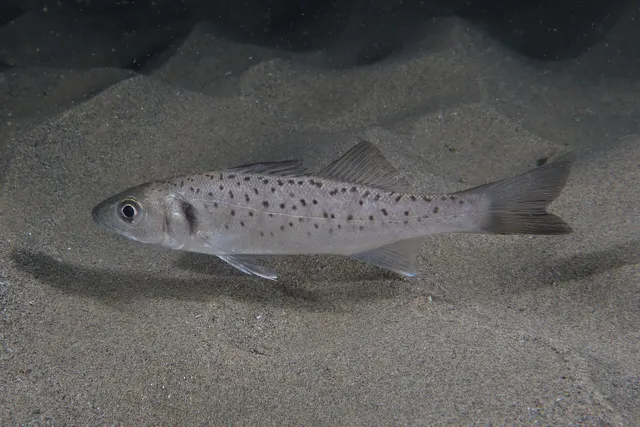 European sea bassCharacteristic of this water6 placesPointe du Raz, The Golfe du Morbihan, The Côte Sauvage, Quiberon, The Baie de Douarnenez and 2 moreOver bay, estuary, headland, rock mark, tidal channelAround Apr–Nov
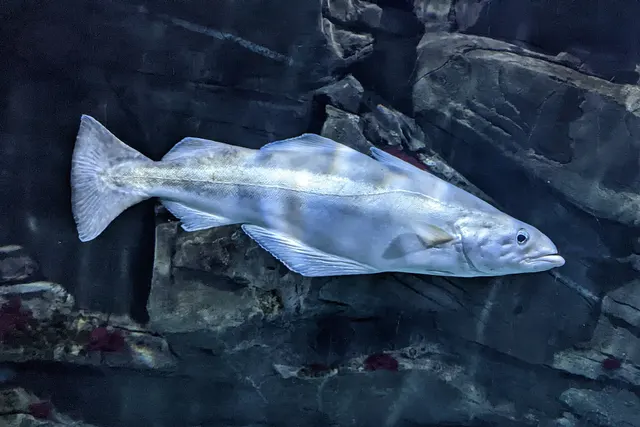 PollackRegular local target3 placesPointe du Raz, The Baie de Douarnenez, The Côte Sauvage, QuiberonOver bay, headland, rock mark
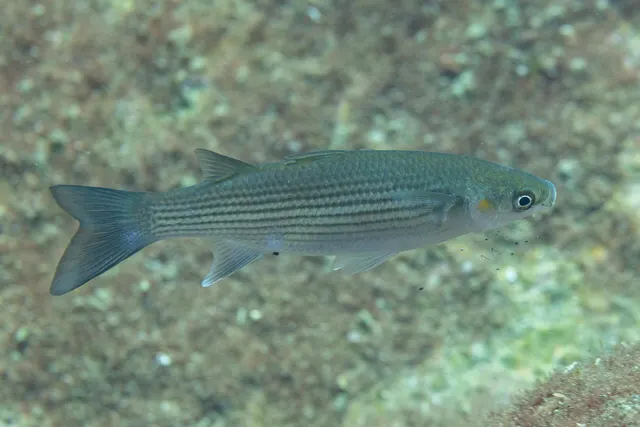 Thick-lipped grey mulletRegular local target3 placesThe Baie de Douarnenez, The Golfe du Morbihan, The Bay of Mont-Saint-MichelOver bay, tidal channel
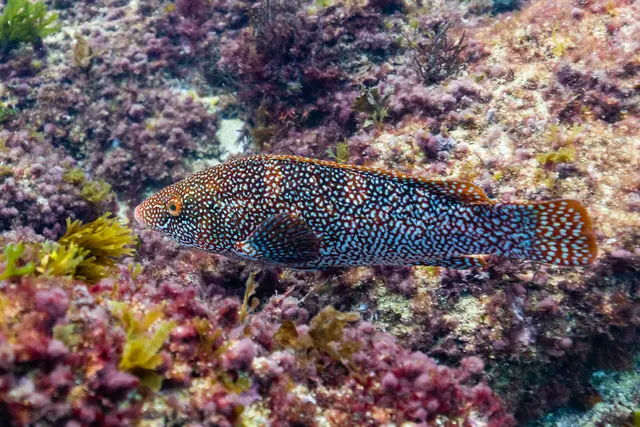 Ballan wrasseRegular local target2 placesPointe du Raz, The Côte Sauvage, QuiberonOver headland, rock mark
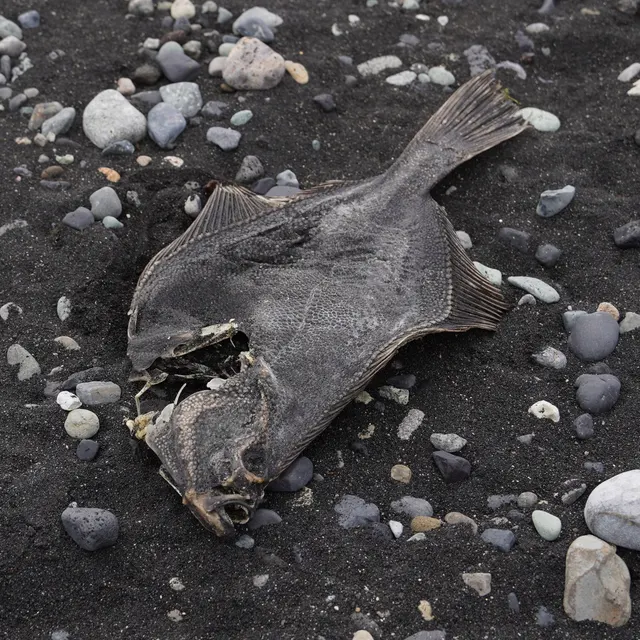 European flounderRegular local target2 placesThe Golfe du Morbihan, The Bay of Mont-Saint-MichelOver bay, tidal channel
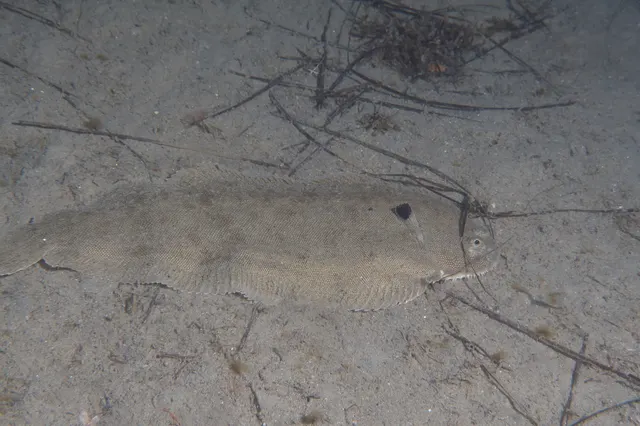 Common soleRegular local target1 placeThe Gironde estuaryOver estuary
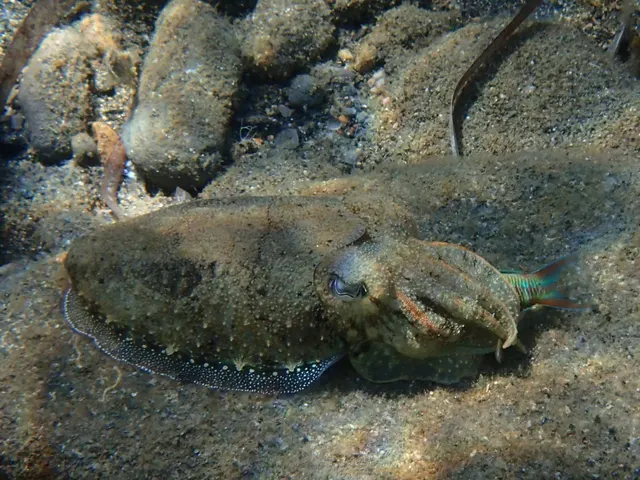
Also documented from the shore: Flathead grey mullet · Atlantic mackerel · Common cuttlefish · European squid · Meagre · Blue mussel · Common cockle · Common octopus · Conger eel · Native oyster
From a boat · 3
What these strengths mean
- Characteristic of this water
- This water is strongly identified with this species by the sources that cover it.
- Regular local target
- Fishing sources describe this as a normal local target here, not merely as caught.
- Seasonal
- Well supported, and concentrated in part of the year rather than spread through it.
- Recorded here
- At least one credible public account of this species being caught here. That is all it means.
- How breadth is counted
- A fish documented at six marks is shown as six marks: breadth never raises the strength on its own. A fishery account describes the fishing; a recorded catch reports one specific catch. How evidence is weighed.
How people fish here
11 methods are recorded on the places documented here, counted from the records themselves rather than from what is practised in the country. Each opens a full guide to the technique.
Spinning
Recorded at 10 places here, over bay, estuary, confluence, headland.
Casting an artificial lure and retrieving it so that it moves like something alive — the most direct form of lure fishing.
Documented on the same ground: European sea bass, Ballan wrasse, Common sole, European flounder, Flathead grey mullet, Pollack.
Ledgering
Recorded at 6 places here, over estuary, bay, confluence, river reach.
Fishing a bait on the bottom held by a weight, with no float — the simplest way to fish at distance, in depth, or in wind.
Documented on the same ground: European sea bass, Common sole, European flounder, Flathead grey mullet, Thick-lipped grey mullet, Common cuttlefish.
Float fishing
Recorded at 5 places here, over bay, cove, estuary, headland.
Suspending a bait at a controlled depth beneath a buoyant indicator — the most visual, most controllable and most widely applicable method in angling.
Documented on the same ground: European sea bass, Ballan wrasse, Pollack, Thick-lipped grey mullet, Atlantic mackerel, European squid.
Drop shotting
Recorded at 3 places here, over confluence, reservoir, river reach.
A finesse rig with the weight below the hook, letting a small soft plastic be worked in place, off the bottom, without moving anywhere.
Kayak fishing
Recorded at 3 places here, over bay, estuary, tidal channel.
A platform rather than a technique: quiet, shallow-draught access to water no other craft reaches, bought at the price of exposure, and a discipline where the decision not to launch is part of the skill.
Documented on the same ground: European sea bass, Common sole, European flounder, Flathead grey mullet, Pollack, Thick-lipped grey mullet.
Eging
Recorded at 2 places here, over bay, tidal channel.
Jigging for squid and cuttlefish with a barbed, weighted lure worked in lifts and pauses — a Japanese discipline with its own tackle, vocabulary and competitive scene.
Documented on the same ground: European sea bass, European flounder, Pollack, Thick-lipped grey mullet, Common cuttlefish, European squid.
Shore diving
Recorded at 2 places here, over cove, rock mark.
Entering and leaving the water from land under your own power — the most accessible spearfishing and the one where the entry and exit are the dangerous part.
Documented on the same ground: European sea bass, Ballan wrasse, Pollack, Atlantic mackerel, Common octopus.
Surfcasting
Recorded at 2 places here, over bay, estuary.
Casting heavy baited tackle from a beach into surf — a method defined by distance, by tide, and by reading water that all looks the same.
Documented on the same ground: Common sole, European flounder, European sea bass, Flathead grey mullet, Thick-lipped grey mullet, Meagre.
Aspetto (waiting)
Recorded at 1 place here, over cove.
Descending, settling on the bottom and waiting for fish to come to you — the technique that produces most of the large fish taken by shore divers.
2 further methods are recorded at one or two places each: Deadbaiting, Trolling.
These are the methods documented at the places FishingHQ holds here. A species listed beside a method is documented on the same ground, which is not the same as being taken that way — where a source establishes the method a fish was caught on, it is stated on that place’s own page. All fishing methods.
The fishing year here
The months the records under this area actually name, tightest season first. This is “observed in these months” rather than a season: a species whose months nobody recorded is not listed, because a gap in the evidence is not a year-round fishery.
- Atlantic mackerelJune to September
- Common cuttlefishMarch to June
- European squidSeptember to December
- MeagreJune to September
- European sea bassApril to November
Areas within this one
One coast, island group or system inside this area has a fishing guide of its own.
Brittany and the French Atlantic coast
4 documented places
A granite peninsula thrown out into the Atlantic between the Channel and Biscay, carrying the largest tidal ranges in Europe, ferocious races around its headlands and islands, and the continental heartland of bass fishing.
Documented here: European sea bass, Pollack, Ballan wrasse, Thick-lipped grey mullet, European flounder
Fished by: spinning, float fishing, eging, kayak fishing
What dominates
Surfcasting on the Atlantic sand beaches for bass, sole, flatfish and rays. Rock and harbour fishing in Brittany and on the Mediterranean coast. Small-boat and charter fishing over the shelf, including seasonal tuna. Coarse and carp fishing across the inland waters, with a large specimen carp scene. Fly fishing on the alpine and limestone rivers. Pêche à pied — shore gathering on foot — on the Channel and Atlantic coasts, at very large scale. Spearfishing on the Mediterranean and Breton rock coasts, separately regulated.
The water available
Very high-range tidal flats, estuaries and rocky coast on the Channel; granite rock, islands and reef in Brittany; long dissipative sand beaches with offshore bar systems on the Landes and Gironde coast; large estuaries including the Loire, Gironde and Adour; a near-tideless rocky and sandy Mediterranean shore; and inland, major lowland rivers, alpine and pre-alpine lakes, limestone chalk-fed rivers, canals and extensive gravel-pit stillwaters.
How the rules are structured
Freshwater and marine recreational fishing are administered separately and the difference is the first thing to establish. Inland fishing is organised through local associations — AAPPMA — federated at département level, with membership and a national levy conferring the right to fish association waters; seasons, methods and species rules are set at that level and vary between départements. Recreational sea fishing is administered by the maritime authorities, with separate arrangements for shore, boat and underwater fishing, mandatory declarations for some activities, and minimum sizes and gear rules that differ from the freshwater ones. Pêche à pied carries its own rules on species, size, quantity, season and area, plus sanitary classification and biotoxin closures. Marine protected areas and reserves apply along all three coasts. FishingHQ does not state what any current rule is.
Who to ask
- The local AAPPMA and the départemental federation, for inland fishing rights, seasons and membership.
- The Office français de la biodiversité, for freshwater fisheries policy and enforcement.
- The direction interrégionale de la mer and the relevant préfecture maritime, for recreational sea fishing and underwater fishing.
- The départemental authority publishing pêche à pied rules and shellfish ground classifications.
- The regional health and environment service, whose biotoxin monitoring determines whether a shellfish ground may be worked.
- The managing body of any marine protected area or nature reserve on the stretch of coast concerned.
Words you will meet
- AAPPMA
- Association agréée pour la pêche et la protection du milieu aquatique — the local angling association that holds fishing rights on a stretch of water. Membership rather than a day ticket is the normal route to inland fishing in France.
- Pêche à pied
- Gathering shellfish and other shore animals on foot at low tide. A mass cultural activity on the Channel and Atlantic coasts, regulated by species, size, quantity, season, area and the sanitary status of the ground.
- Baïne
- A temporary pool between the beach and an offshore bar on the Atlantic sand coast, draining seaward through a channel as the tide falls. That channel is a rip current and baïnes are the specific documented drowning hazard of the Landes and Gironde beaches.
- Coefficient de marée
- A number from roughly 20 to 120 published with French tide tables, expressing the size of the tide. Above about 100 is a big spring tide, which governs both the shore fishing and the pêche à pied.
- Carte de pêche
- The inland fishing permit, obtained through an AAPPMA and carrying the national levy. It is not a sea fishing licence and confers nothing on the coast.
Conditions and hazards
The Channel and Atlantic tidal ranges are among the largest in Europe and are the dominant hazard: ground that is dry for kilometres at low water floods faster than a person walks, and being cut off while gathering on foot is a recurring cause of death rather than a theoretical risk. The tide coefficient is the number to read before going out. On the Atlantic sand coast, baïnes generate powerful rip currents in water that looks benign, and long-period Atlantic swell arrives independently of local wind, breaking heavily on shoaling ground with no local warning. In Brittany the hazard is rock: low platforms exposed to swell, and the same set-wave mechanism that operates on every Atlantic coast. The Mediterranean coast removes the tide and keeps the swell. Water temperature is cool enough on the northern coasts that immersion is serious for most of the year.
Pêche à pied: what it is, and why it is regulated so carefully
Shore gathering on foot is the French practice that most surprises visitors, because there is no equivalent tradition at that scale in Britain and because the regulatory apparatus around it is far heavier than the informality of the activity suggests.
WHAT IT INVOLVES. On a large spring tide the sea withdraws far enough on the Channel and Atlantic coasts to expose sand, mud, rock and eelgrass ground that is under water for the rest of the month. People walk out onto it with rakes, hooks and buckets and gather cockles, clams, razor clams, mussels, oysters, winkles, whelks, shore crabs, prawns and sometimes octopus from the rock pools. It is a family activity, it is generational, and on a big tide the number of people on the sand is considerable.
AND THE RULES ARE DETAILED BECAUSE THE PRESSURE IS REAL. Minimum sizes apply per species and are enforced with gauges. Quantities are capped per person per tide. Some grounds are closed seasonally, some permanently. Certain tools are prohibited on certain ground because of the damage they do — turning stones and not replacing them destroys the habitat under them, and specific rules address it. Access to particular beds is restricted where the ground is professionally worked.
THE HEALTH DIMENSION IS SEPARATE AND OVERRIDES EVERYTHING. Filter-feeding shellfish concentrate whatever is in the water: sewage-derived pathogens where the ground is influenced by run-off or outfall, and algal biotoxins that cause paralytic, diarrhetic and amnesic shellfish poisoning. Those toxins survive cooking, survive freezing, and cannot be seen, smelled or tasted. Harvest areas are therefore sanitarily classified and monitored, and closures are published and change on a timescale of days.
SO THE STRUCTURE OF THE QUESTION, WHICH IS THE PART THAT GENERALISES: before gathering anywhere, establish the classification and current biotoxin status of that specific ground, the species and size rules, the quantity limit, and whether the bed is open. All four are held by the local authority and none of them is stated here. What is durable is knowing that all four exist.
AND THE TIDE THAT MAKES IT POSSIBLE IS THE THING THAT KILLS PEOPLE. A coefficient above 100 exposes ground a long way out, and the flood across flat sand outruns a walking adult. Gatherers are absorbed in the ground at their feet, facing away from the sea, in exactly the posture that makes a returning tide invisible until it is behind them.
Official guidance — why, and the sources (4)
Stated by a fisheries authority, scientific institute or recognised angling body. Authoritative, but summarising rather than demonstrating.
- Fish and Fishery Products Hazards and Controls Guidance — US Food and Drug Administration, Center for Food Safety and Applied Nutrition, 2022 (Standards body)Relied on for: That bivalve molluscs concentrate pathogens and algal biotoxins, that biotoxins survive cooking and cannot be detected by inspection, and that harvest area classification and biotoxin monitoring are the controls.States this directlyPassage read and verified
- Good Fish Guide — Marine Conservation Society (Conservation authority)Relied on for: Stock and method assessment for commercially and recreationally taken shellfish and the management measures applied.Background and mechanism onlyCitation checked — the work exists and is described correctly
- RNLI water safety guidance: cold water shock and Float to Live — Royal National Lifeboat Institution (Water-safety or diver-training authority)Relied on for: Cold water shock and the immersion response, tidal cut-off, shore angling hazards and small-craft guidance.States this directlyPassage read and verified
- United States Lifesaving Association public education on rip currents and the surf zone — United States Lifesaving Association (Water-safety or diver-training authority)Relied on for: Surf zone hazards, rip current formation and behaviour, and public guidance on shore-break and steep-beach hazards.States this directlyCitation checked — the work exists and is described correctly
Two administrative worlds, and why a visitor should know which one they are in
The most useful structural fact about fishing in France is that fresh water and salt water are governed by entirely separate systems that share almost nothing, and a visitor who assumes otherwise gets it wrong in both directions.
THE INLAND SYSTEM IS ASSOCIATION-BASED. Fishing rights on a given stretch of river or lake are generally held by a local association — an AAPPMA — and the route to fishing is to hold a permit through one, carrying the national levy. Reciprocal arrangements between associations and between départements extend where that permit is valid, and those arrangements differ. Seasons, permitted methods, species-specific rules and night-fishing permissions are set locally, and a rule that applies on one département's stretch of a river may not apply on the next. This is a genuinely different model from a national rod licence plus a day ticket, and the practical implication is that establishing which association controls a water is the first step rather than an afterthought.
THE MARINE SYSTEM IS ADMINISTERED BY THE MARITIME AUTHORITIES and is organised by activity rather than by place. Shore fishing, fishing from a boat, and underwater fishing are treated as distinct activities with distinct requirements, and the requirements have changed over time — declarations for some activities, size limits, gear restrictions, and prohibitions on selling any recreational catch. Underwater fishing in particular carries its own conditions relating to age, insurance and equipment.
AND PÊCHE À PIED IS A THIRD THING AGAIN, with rules published at départemental level and health status published by a different body entirely.
WHY THIS MATTERS MORE THAN THE DETAIL. FishingHQ does not state what any of these currently require, because it changes and because getting it wrong has consequences. What transfers is the shape: in France, identify whether the activity is inland, marine, or gathering; identify the body that administers that activity; and expect the answer to differ between départements even for the same activity on the same river. A permit that is entirely correct for one of the three confers nothing in the other two.
Official guidance — why, and the sources (2)
Stated by a fisheries authority, scientific institute or recognised angling body. Authoritative, but summarising rather than demonstrating.
- Fishers' Craft and Lettered Art: Tracts on Fishing from the End of the Middle Ages — University of Toronto Press, 1997 (Scientific literature)Relied on for: That fishing traditions develop around the water and fish available to them, and the historical method of reading such traditions.States this directlyCitation checked — the work exists and is described correctly
- Words of the Lagoon: Fishing and Marine Lore in the Palau District of Micronesia — University of California Press, Berkeley, 1981 (Reference work)Relied on for: That local fishing practice encodes detailed knowledge of fish and conditions, and that the practice is frequently the record of the ecology.Background and mechanism onlyCitation checked — the work exists and is described correctly
Four coasts and a continental interior
France's fishing environments are unusually varied for a single European country, and the useful division is by water rather than by region.
THE CHANNEL COAST IS TIDAL AND SHALLOW. Very large tidal ranges in the bays of the north-west expose enormous intertidal areas, and the fishing is estuarine, tidal and shellfish-rich. The bay systems here have some of the largest ranges in Europe.
THE BRITTANY COAST IS ROCK, ISLAND AND CURRENT. A granite coastline with archipelagos, strong tidal streams and deep water close in produces a rock and boat fishery quite unlike the rest of the country's.
THE ATLANTIC COAST SOUTH OF BRITTANY IS SAND AND SURF. The Landes coast is a long straight sandy shore with a powerful surf, backed by dune and forest, with almost no natural shelter — a surfcasting coast in the fullest sense.
THE MEDITERRANEAN COAST IS A DIFFERENT SEA ENTIRELY: negligible tide, warm clear water, rocky calanques in the east and the Rhône delta's lagoons in the west, with a fauna and a set of methods that share little with the Atlantic side.
THE INTERIOR IS A MAJOR FRESHWATER COUNTRY. Large slow rivers — the Loire, Seine, Rhône, Garonne, Saône — carry a substantial coarse and predator fishery; upland streams in the Massif Central, Alps and Pyrenees are trout and grayling water; and a very large number of lakes, reservoirs and canals extend it further.
AND THE CANAL NETWORK IS A FISHERY IN ITS OWN RIGHT, extensive, accessible and heavily fished, which is a category of water Britain has and uses far less.
Backed by research — why, and the sources (2)
Supported by peer-reviewed research or fisheries science. The sources are listed and can be checked.
- Freshwater Fishes of the British Isles — HarperCollins (New Naturalist 75), 1992 (Reference work)Relied on for: Distribution, habitat association, spawning requirements and ecology of European freshwater fishes.States this directlyCitation checked — the work exists and is described correctly
- FishBase: a global information system on fishes — Froese, R. and D. Pauly, eds. — FishBase Consortium (Scientific institute)Relied on for: Distribution, habitat association, size and life history recorded for the species.Background and mechanism onlyPassage read and verified
Bass, carp, catfish and the fish France made famous
France's species picture is genuinely two-sided, and its freshwater fauna has been more influential internationally than its marine one.
EUROPEAN SEA BASS IS THE ATLANTIC COAST'S PRINCIPAL TARGET, worked from rock, beach and boat, and the French recreational fishery for it is among the largest in Europe.
SEABREAM, POLLACK, WRASSE AND MACKEREL fill the rest of the Atlantic inshore picture, with meagre in the estuaries and southern beaches and rays and flatfish over clean ground.
THE MEDITERRANEAN COAST HOLDS A DIFFERENT SET — dentex, dusky grouper, white seabream, gilthead bream, bonito and amberjack — with the eastern rock coast and the western lagoons offering quite different fishing again.
CARP FISHING IS WHERE FRANCE CHANGED THE SPORT. Large French gravel pits, rivers and reservoirs holding very big carp became the destination that shaped modern European carp angling, and a substantial part of British carp culture is oriented towards French water.
WELS CATFISH IS THE OTHER FRENCH SPECIALITY. Established and thriving in the large rivers, particularly the Rhône, Saône and Ebro-adjacent systems, catfish reaching very large sizes support a specialist fishery that barely existed a few decades ago.
ZANDER, PIKE AND PERCH occupy the same large rivers and canals and support a strong predator lure fishery.
TROUT AND GRAYLING HOLD THE UPLAND STREAMS, and the chalk and limestone rivers of the east are internationally regarded fly water.
AND THE SHELLFISH FISHERY IS ENORMOUS. Oysters, mussels, cockles, clams and razor shells are cultivated and gathered at a scale that makes France one of Europe's principal shellfish producers, and pêche à pied brings a very large number of people onto the intertidal.
Backed by research — why, and the sources (2)
Supported by peer-reviewed research or fisheries science. The sources are listed and can be checked.
- Freshwater Fishes of the British Isles — HarperCollins (New Naturalist 75), 1992 (Reference work)Relied on for: Distribution, habitat association, spawning requirements and ecology of European freshwater fishes.States this directlyCitation checked — the work exists and is described correctly
- FishBase: a global information system on fishes — Froese, R. and D. Pauly, eds. — FishBase Consortium (Scientific institute)Relied on for: Distribution, habitat association, size and life history recorded for the species.Background and mechanism onlyPassage read and verified
Pêche à pied, carp bivvies and a coast fished from a small boat
The disciplines practised in France are broad, and several are practised at a scale Britain does not match.
PÊCHE À PIED IS THE MASS PARTICIPATION DISCIPLINE. Gathering shellfish, crabs and other species on foot at low water is a family activity on the Atlantic and Channel coasts, practised by very large numbers of people on the big spring tides, with its own tools, its own seasons and its own local rules.
SMALL-BOAT SEA FISHING IS ENORMOUS. France's recreational boat sector is one of the largest in Europe, working the Atlantic and Mediterranean coasts for bass, seabream, pollack and, offshore, tuna.
SURFCASTING ON THE LANDES BEACHES is a serious discipline with heavy tackle, long rods and a strong competitive scene, targeting bass, meagre and rays in a powerful surf.
CARP FISHING IS A DESTINATION INDUSTRY. Long-session carp angling on large French waters, with the bivvy-and-bait culture that goes with it, is a substantial sector serving both domestic and, heavily, British anglers.
CATFISH FISHING IS THE SPECIALIST GROWTH AREA, worked from bank and boat on the large rivers with very heavy tackle.
COARSE AND MATCH FISHING ON RIVERS AND CANALS is well established, with a strong competitive structure and a large domestic following.
FLY FISHING ON THE UPLAND AND CHALK STREAMS has a serious technical culture, and several French rivers are internationally regarded.
AND SPEARFISHING IS PRACTISED ON BOTH COASTS, with the Mediterranean side in particular carrying a long tradition, subject to national rules on equipment and to a prohibition on combining it with breathing apparatus.
What experienced anglers do — why, and the sources (2)
Widely and independently recommended by experienced anglers and specialist sources. This is real angling knowledge, not proof: controlled evidence for it is limited, and FishingHQ records it as convention rather than as a demonstrated effect.
- General angling website restatements of established technique — Various (Credible secondary source)Relied on for: Widely restated practice associating this discipline or technique with this place, recorded as practitioner consensus rather than as tested fact.Background and mechanism onlyCitation checked — the work exists and is described correctly
- Fishers' Craft and Lettered Art: Tracts on Fishing from the End of the Middle Ages — University of Toronto Press, 1997 (Scientific literature)Relied on for: That fishing traditions develop around the water and fish available to them, and the historical method of reading such traditions from their documentary record.States this directlyCitation checked — the work exists and is described correctly
A country with a real four-season fishing year
France's size and latitude range give it a genuinely varied seasonal calendar, and the two coasts do not run on the same one.
SPRING OPENS THE FRESHWATER YEAR. The trout season opens in spring under a national framework administered locally, upland rivers are high with snowmelt in the mountains, and the lowland rivers and canals warm into their coarse fishing season.
SUMMER IS THE ATLANTIC COAST'S SEASON for bass and inshore species, the Mediterranean's for pelagics, and the peak of carp and catfish activity on the large rivers. It is also when pêche à pied is at its most popular on the big tides.
AUTUMN IS THE BEST GENERAL PERIOD ON THE ATLANTIC, with warm water, feeding bass, and the first weather stirring the ground; and it is the peak of the predator fishing season inland as pike and zander feed hard.
WINTER CLOSES MUCH OF THE FRESHWATER FISHERY. Closed seasons for trout and for predators apply on much of the water under a system administered by department, and the dates differ. On the coast, winter is bass spawning time offshore and a period of heavy Atlantic swell inshore.
THE MEDITERRANEAN RUNS A DIFFERENT CALENDAR, with a longer warm season, negligible tide, and a summer peak that is about crowding as much as about fish.
TIDES DOMINATE THE ATLANTIC AND CHANNEL CALENDAR at the fortnightly scale. With ranges among the largest in Europe in the northern bays, the spring-neap cycle decides what is fishable, what is gatherable and what is dangerous, and French coastal life is organised around the published coefficient de marée.
AND THE CLOSED SEASONS ARE THE PRACTICAL CONSTRAINT a visitor most often meets, because they are set locally and differ across a border a reader would not expect.
Backed by research — why, and the sources (2)
Supported by peer-reviewed research or fisheries science. The sources are listed and can be checked.
- Freshwater Fishes of the British Isles — HarperCollins (New Naturalist 75), 1992 (Reference work)Relied on for: Distribution, habitat association, spawning requirements and ecology of European freshwater fishes.States this directlyCitation checked — the work exists and is described correctly
- FishBase: a global information system on fishes — Froese, R. and D. Pauly, eds. — FishBase Consortium (Scientific institute)Relied on for: Distribution, habitat association, size and life history recorded for the species.Background and mechanism onlyPassage read and verified
Coefficient, carte de pêche and words a visitor needs
French angling vocabulary contains several terms that carry practical information a visitor will otherwise miss entirely.
COEFFICIENT DE MARÉE IS THE MOST USEFUL. French tide tables publish a coefficient — a number expressing the size of a tide relative to the average — and coastal life is organised around it. A high coefficient means a big spring tide: more exposed ground, stronger streams, better gathering, more hazard. It is a genuinely superior piece of public information to anything published in Britain and a visitor should learn to read it.
CARTE DE PÊCHE NAMES THE FRESHWATER PERMIT. Freshwater angling in France requires membership of an approved fishing association and a corresponding permit, administered through a federation in each department. It is not a national rod licence in the British sense; it is an association membership with statutory backing.
AAPPMA NAMES THE LOCAL ASSOCIATION that issues it and manages the water. The acronym is unavoidable and the body is the one to ask about a particular river.
PÊCHE À PIED NAMES INTERTIDAL GATHERING ON FOOT, and it is a recognised activity with its own rules on sizes, quantities and tools rather than an informal pastime.
NO-KILL NAMES CATCH-AND-RELEASE WATER, borrowed into French and used to designate specific stretches managed for release only, particularly on trout rivers.
SANDRE NAMES ZANDER, BROCHET NAMES PIKE AND SILURE NAMES WELS CATFISH, and these three are the predator fishery a visiting lure angler will meet.
AND CATÉGORIE — FIRST OR SECOND — CLASSIFIES A WATER by whether salmonids dominate, and it determines which seasons and rules apply. It is the first thing to establish about any French river.
What experienced anglers do — why, and the sources (2)
Widely and independently recommended by experienced anglers and specialist sources. This is real angling knowledge, not proof: controlled evidence for it is limited, and FishingHQ records it as convention rather than as a demonstrated effect.
- General angling website restatements of established technique — Various (Credible secondary source)Relied on for: Widely restated practice associating this discipline or technique with this place, recorded as practitioner consensus rather than as tested fact.Background and mechanism onlyCitation checked — the work exists and is described correctly
- Fishers' Craft and Lettered Art: Tracts on Fishing from the End of the Middle Ages — University of Toronto Press, 1997 (Scientific literature)Relied on for: That fishing traditions develop around the water and fish available to them, and the historical method of reading such traditions from their documentary record.States this directlyCitation checked — the work exists and is described correctly
Oyster beds, associations and a river fishery rebuilt from law
France's fishing history has produced institutions that look unfamiliar from across the Channel and explain a great deal about how the country fishes.
THE OYSTER INDUSTRY IS THE OLDEST CONTINUOUS COMMERCIAL FISHERY and it shaped whole stretches of coast. Cultivation on the Atlantic and Channel coasts developed through the nineteenth century after natural beds were depleted, and the resulting industry, its parks and its landscapes are a defining feature of the shore.
THE ASSOCIATION SYSTEM IS THE FRESHWATER LEGACY. Rather than a state rod licence, France built a structure of local approved fishing associations with statutory functions, federated by department, holding fishing rights and managing water. It gives anglers a formal role in management that the British system does not, and it is why the first question about a French river is which association holds it.
THE CARP DESTINATION INDUSTRY IS RECENT AND CONSEQUENTIAL. From the late twentieth century, large French waters holding very big carp became the international destination for specimen carp angling, reshaping the sport in Britain and across Europe and creating a substantial rural tourism sector.
THE CATFISH ARRIVED AND STAYED. Wels catfish spread through French river systems within a few decades, creating a major new fishery and a continuing argument about the ecological consequences of a large introduced predator.
THE MIGRATORY FISH DECLINE IS THE SOBER CHAPTER. Atlantic salmon, allis and twaite shad, sea lamprey and eel populations in French rivers declined substantially under damming, abstraction and water quality pressures, and the restoration programmes — fish passes, dam removals on some systems — are among the more ambitious in Europe.
AND THE BASS MEASURES OF THE LAST DECADE hit the French recreational sector particularly hard, because that sector is so large, and the political argument that followed shaped how European recreational fisheries are counted.
Official guidance — why, and the sources (2)
Stated by a fisheries authority, scientific institute or recognised angling body. Authoritative, but summarising rather than demonstrating.
- Fishers' Craft and Lettered Art: Tracts on Fishing from the End of the Middle Ages — University of Toronto Press, 1997 (Scientific literature)Relied on for: The historical development of European fishing practice, its transmission and its documentary record, including medieval and early modern fisheries.States this directlyCitation checked — the work exists and is described correctly
- Code of Conduct for Responsible Fisheries — Food and Agriculture Organization of the United Nations, Rome, 1995 (Standards body)Relied on for: Principles for fisheries management including the treatment of traditional, small-scale and shared fisheries, against which historical arrangements can be read.Background and mechanism onlyCitation checked — the work exists and is described correctly
One card, three thousand doors, and two categories of water
French freshwater administration looks bewildering from outside and is actually one of the most coherent systems in Europe once its shape is clear.
IT IS A FEDERATION, NOT A MARKET OF LOCAL SCHEMES. At the bottom are thousands of approved local associations, each holding or managing the fishing on particular water and doing the stocking, warden and habitat work. Each belongs to a departmental federation; the federations belong to a national body. The card an angler buys is issued through an association, and what it reaches depends on that association's federation and on the reciprocity arrangements that federation has entered into with others. So the question is not "which of thousands of schemes do I need?" but "which association, and how far does its federation's card travel?"
THE CATEGORIES ARE THE OTHER HALF AND THEY DECIDE THE SEASON. Water is legally classified: first category is salmonid water, second category is everything else. The classification attaches to the stretch, is published by the departmental administration, and governs when fishing is permitted and by what methods. It is not a description of the fish present — a second-category river may hold trout, and a first-category one may hold a great deal that is not salmonid — and treating it as a description rather than as a legal category is the standard route into fishing a closed season honestly.
OWNERSHIP MATTERS TOO. On non-navigable water the fishing right belongs to the riparian owner, who commonly makes it available to the local association; on navigable water the state domain applies and the fishing is administered publicly. Which regime applies changes what a card actually buys on a given stretch.
Official guidance — why, and the sources (2)
Stated by a fisheries authority, scientific institute or recognised angling body. Authoritative, but summarising rather than demonstrating.
- Code of Conduct for Responsible Fisheries — Food and Agriculture Organization of the United Nations, Rome, 1995 (Standards body)Relied on for: The international framework within which national and regional fisheries authorities set, revise and enforce measures, and the principle that responsible fishing includes the safety of fishers.Background and mechanism onlyCitation checked — the work exists and is described correctly
- ICES Advice on fishing opportunities, catch and effort — International Council for the Exploration of the Sea (Scientific institute)Relied on for: That the stock advice European fisheries measures are set against is produced internationally and revised annually, which is the mechanism by which a national measure changes without the national law changing.States this directlyCitation checked — the work exists and is described correctly
The sea and the shore are two further regimes, and a freshwater card reaches neither
THE SEA IS A COMPLETELY SEPARATE SYSTEM AND THIS IS WHERE VISITORS GO WRONG. There is no French sea angling licence in the freshwater sense, and it does not follow that sea fishing is unregulated. Recreational sea fishing sits under national and European measures; certain activities carry a declaration requirement; species and size measures apply; certain catches must be marked; boat fishing has its own arrangements; and underwater fishing is a separate licensed category with its own minimum age, its own equipment prohibitions and its own distance rules from bathers, harbours and moored craft. A freshwater card is not relevant to any of it and the absence of a licence is not the absence of law.
GATHERING ON FOOT IS A THIRD REGIME. The shore gathering tradition is enormous on the Channel and Atlantic coasts, and it carries quantities, minimum sizes, permitted tools, protected areas and — the part that matters most — health classifications and closures based on monitoring the gatherer cannot perform. A closure exists because something was measured; the shellfish look, smell and taste exactly the same either way.
FishingHQ does not state what any current rule is: no season, no size and no quantity. Establish fresh or salt; if fresh, establish the category and the association; if salt, establish which measures and which activity; and ask the body that holds the current answer.
Official guidance — why, and the sources (2)
Stated by a fisheries authority, scientific institute or recognised angling body. Authoritative, but summarising rather than demonstrating.
- Code of Conduct for Responsible Fisheries — Food and Agriculture Organization of the United Nations, Rome, 1995 (Standards body)Relied on for: The international framework within which national and regional fisheries authorities set, revise and enforce measures, and the principle that responsible fishing includes the safety of fishers.Background and mechanism onlyCitation checked — the work exists and is described correctly
- ICES Advice on fishing opportunities, catch and effort — International Council for the Exploration of the Sea (Scientific institute)Relied on for: That the stock advice European fisheries measures are set against is produced internationally and revised annually, which is the mechanism by which a national measure changes without the national law changing.States this directlyCitation checked — the work exists and is described correctly
Sand that floods faster than you walk, and a wave that runs upstream
France's characteristic hazard is not the sea being rough. It is the sea arriving.
TIDAL CUT-OFF ON THE GREAT SAND FLATS IS THE MECHANISM THAT KILLS PEOPLE HERE. Where the tidal range is among the largest on earth and the ground is nearly flat, the water's edge moves horizontally very fast — faster than somebody can walk on soft sand, and across terrain that gives no visual cue that it is happening because there is no slope to read. People go out on the ebb to gather or to fish, lose track of time, and find the channel behind them already filled. The Bay of Mont-Saint-Michel is the famous case and the same physics operates along the whole Normandy, Brittany and Vendée coast.
WHAT ADDRESSES IT IS PLANNING RATHER THAN CAUTION. Know the tide times for that specific place, set a turning time and keep it, know the route back and how long it takes rather than how far it is, never rely on outrunning water across soft ground, and treat fog — which is common on these flats — as a reason not to go rather than a reason to be careful. Some of these sands also carry soft, saturated patches that behave like quicksand, and being stuck on a flooding flat is the worst version of this problem.
THE ATLANTIC SURF BEACHES ARE RIP-CURRENT COASTS. The Landes and the south-west have a well-documented drowning record among swimmers, and the physics does not distinguish between a swimmer and an angler wading a trough between bars.
Official guidance — why, and the sources (5)
Stated by a fisheries authority, scientific institute or recognised angling body. Authoritative, but summarising rather than demonstrating.
- RNLI water safety guidance: cold water shock and Float to Live — Royal National Lifeboat Institution (Water-safety or diver-training authority)Relied on for: Cold water shock and the immersion response, tidal cut-off, and water-safety guidance for shore anglers and small-craft users.States this directlyPassage read and verified
- Met Office shipping forecast, inshore waters forecast and marine warnings — Met Office, United Kingdom (Government fisheries body)Relied on for: That inshore waters forecasts, sea state and swell are the operative inputs for shore and small-craft decisions in north-west European waters.States this directlyCitation checked — the work exists and is described correctly
- Rock fishing safety and the declared lifejacket areas of New South Wales — NSW Department of Primary Industries and Surf Life Saving NSW (Water-safety or diver-training authority)Relied on for: Rock-platform fishing hazards, the mechanism by which anglers are swept from platforms by individual sets rather than by average conditions, and the measures that address it.States this directlyCitation checked — the work exists and is described correctly
- RNLI water safety guidance: cold water shock and Float to Live — Royal National Lifeboat Institution (Water-safety or diver-training authority)Relied on for: Cold water shock, immersion response and the advice to carry a means of calling for help on the person.States this directlyPassage read and verified
- Shellfish classification — Food Standards Agency, 2026 (Government fisheries body)Relied on for: That shellfish harvesting areas are classified for food safety, that the classification governs what may be taken and how it must be treated, and that it is set and revised by the authority on monitoring results rather than fixed.States this directlyCitation checked — the work exists and is described correctly
Rock, bore, a tideless inversion, and a hazard that is not about drowning at all
BRITTANY'S ROCK AND ISLANDS RUN FAST STREAMS AND TAKE OCEAN SWELL. Rock platforms here behave as rock platforms do everywhere: swell arrives in sets rather than evenly, so the twenty minutes before somebody is swept off look entirely survivable. Watch a full set cycle before committing, know the escape route and its timing, wear flotation rather than carry it, and treat a rising swell forecast as a reason not to go.
THE TIDAL BORE IS A SPECIFIC LOCAL HAZARD. On the Gironde, the Dordogne and the Garonne, large tides produce a wave that runs upstream against the current. It is locally famous, it is timetabled, and it will catch anybody standing in or beside those rivers who did not know it was coming.
THE MEDITERRANEAN'S HAZARDS ARE THE INVERSE SET. Effectively no tide, so the cut-off reflex has nothing to work on; instead, heat and sun on long summer sessions, heavy small-craft traffic in water where a person is nearly invisible from a planing boat, the mistral turning a calm coast into a hard offshore blow within hours, and — for underwater fishing — hypoxic blackout, which gives no warning, happens most often in the last few metres of the ascent, and is survivable only if a partner is watching that specific diver at that moment.
AND SHELLFISH GATHERING CARRIES A HAZARD THAT IS NOT ABOUT DROWNING AT ALL. Filter-feeding animals concentrate biotoxins and microbiological contamination out of the water around them. Neither cooking nor appearance nor smell nor taste removes a biotoxin, harvesting areas are classified and closed on monitoring results, and those results are not visible from the beach. Check the current classification before gathering, every time.
Official guidance — why, and the sources (5)
Stated by a fisheries authority, scientific institute or recognised angling body. Authoritative, but summarising rather than demonstrating.
- RNLI water safety guidance: cold water shock and Float to Live — Royal National Lifeboat Institution (Water-safety or diver-training authority)Relied on for: Cold water shock and the immersion response, tidal cut-off, and water-safety guidance for shore anglers and small-craft users.States this directlyPassage read and verified
- Met Office shipping forecast, inshore waters forecast and marine warnings — Met Office, United Kingdom (Government fisheries body)Relied on for: That inshore waters forecasts, sea state and swell are the operative inputs for shore and small-craft decisions in north-west European waters.States this directlyCitation checked — the work exists and is described correctly
- Rock fishing safety and the declared lifejacket areas of New South Wales — NSW Department of Primary Industries and Surf Life Saving NSW (Water-safety or diver-training authority)Relied on for: Rock-platform fishing hazards, the mechanism by which anglers are swept from platforms by individual sets rather than by average conditions, and the measures that address it.States this directlyCitation checked — the work exists and is described correctly
- RNLI water safety guidance: cold water shock and Float to Live — Royal National Lifeboat Institution (Water-safety or diver-training authority)Relied on for: Cold water shock, immersion response and the advice to carry a means of calling for help on the person.States this directlyPassage read and verified
- Shellfish classification — Food Standards Agency, 2026 (Government fisheries body)Relied on for: That shellfish harvesting areas are classified for food safety, that the classification governs what may be taken and how it must be treated, and that it is set and revised by the authority on monitoring results rather than fixed.States this directlyCitation checked — the work exists and is described correctly
Some of what lives here
Fish recorded here that FishingHQ holds a reviewed photograph of. It is not a complete list of what France holds, and it is not a prediction that you will catch any of them — it is a way in to the ones we can show you.
- European sea bassA fast, predatory inshore fish that hunts in broken water and surf, and one of the most closely managed recreational species in European seas.
Julien Renoult — CC BY 4.0, via Wikimedia Commons
- Common soleA nocturnal, sand-dwelling flatfish with a rounded head and a small twisted mouth, and one of the most valuable food fish in European waters.
Julien Renoult — CC BY, via iNaturalist
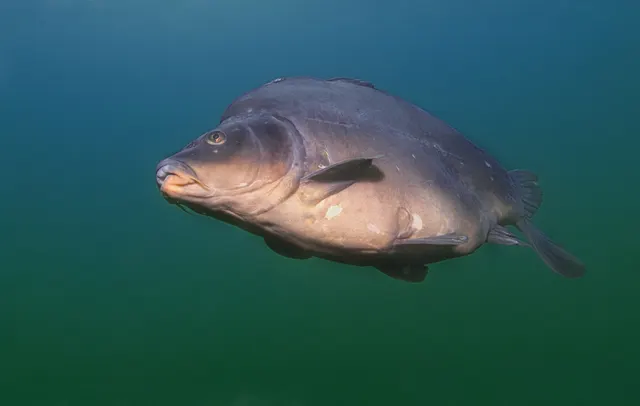 Common carpA large, long-lived, highly adaptable cyprinid whose capacity to learn has shaped more angling technique than any other freshwater fish.
Sven Riewe, CC0, via Wikimedia Commons
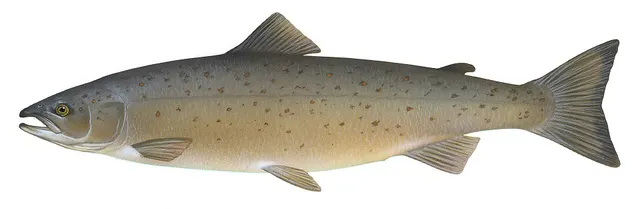 Atlantic salmonAn anadromous salmonid that migrates from its natal river to the North Atlantic and returns to spawn — and a species in serious, well-documented decline.
Knepp, Timothy, Public domain, via Wikimedia Commons
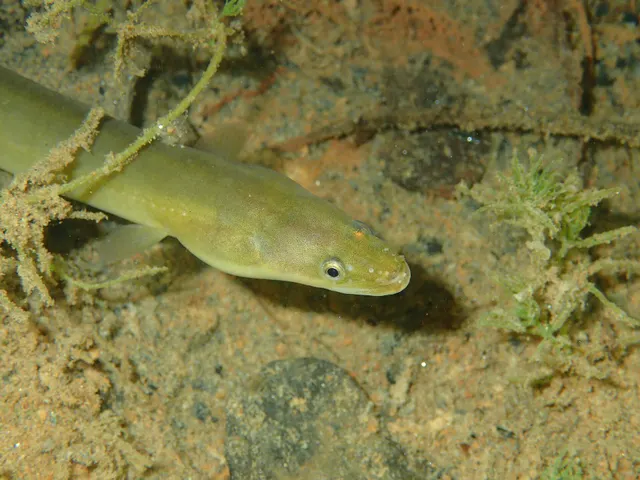 European eelA Critically Endangered fish that breeds in the Sargasso Sea, drifts to Europe as a transparent larva, lives decades in fresh water and returns once to spawn and die.
jujurenoult — CC BY 4.0, via Wikimedia Commons
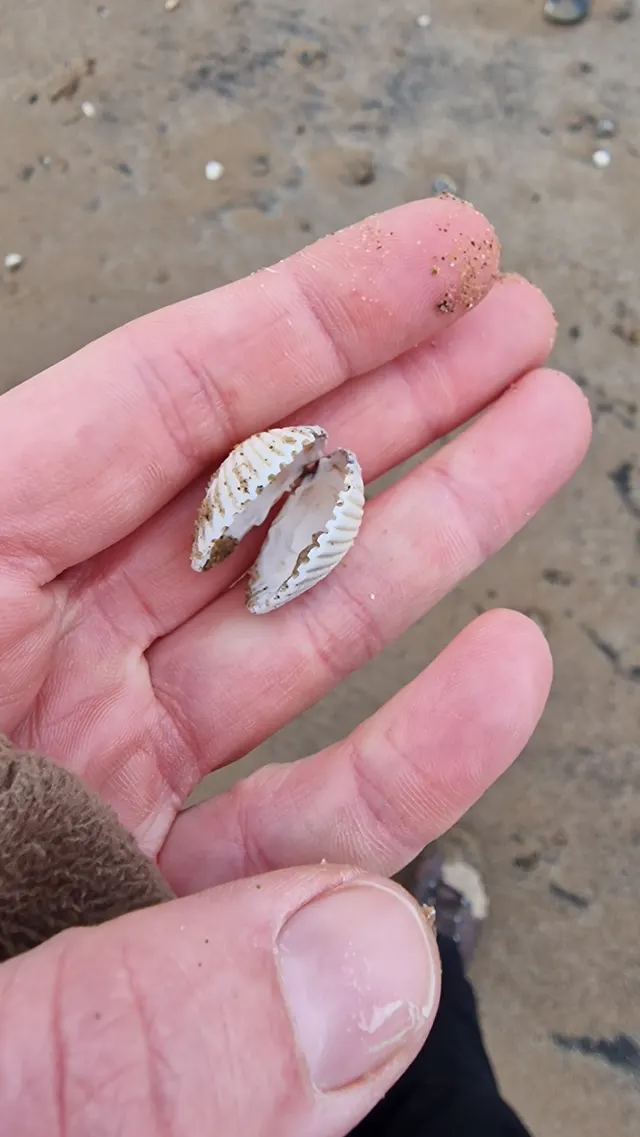 Common cockleA ribbed bivalve living just under the surface of intertidal sand and mud, gathered by rake and by foot, and the animal behind one of the most dangerous gathering fisheries there is.
bitsandbugs — CC0, via iNaturalist
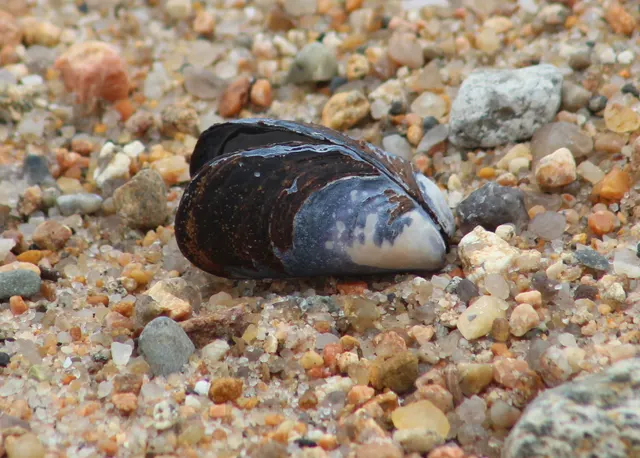 Blue musselThe commonest gathered shellfish on Atlantic European shores, attached to rock by threads it spins itself, and an animal whose safety is decided entirely by the water it grew in.
Steven Lamonde — CC BY, via iNaturalist
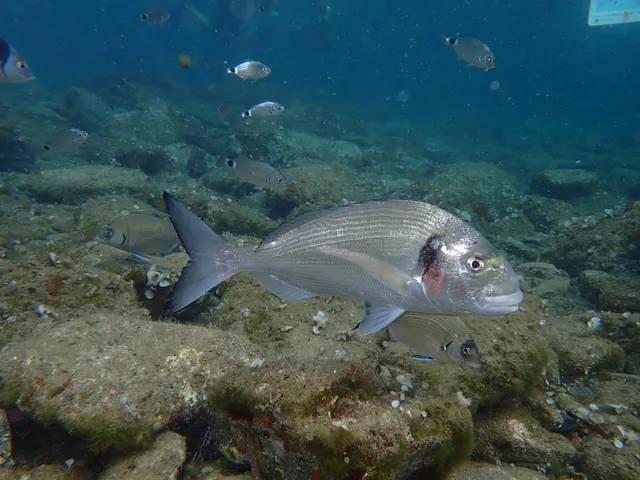 Gilthead breamThe Mediterranean's most prized sea bream, marked by a golden band between the eyes, with a jaw powerful enough to crush shellfish and a range now expanding northward.
jujurenoult — CC BY 4.0, via Wikimedia Commons
Places within this area
Publicly documented fishing geography. FishingHQ describes what the ground is; it does not say whether you may fish it, and every one of these sends that question to the body that holds the answer. Browse every place in this part of the world.
Who to ask before fishing any of these
FishingHQ does not know the current access position here. Recreational sea fishing in France is not generally licensed for shore angling, but national and European measures on species, sizes, quantities and gear apply, some species carry a declaration or marking requirement, and access to structures, beaches and shellfish grounds is governed locally. All of it changes. Check the current position with the maritime prefecture or the departmental directorate for the sea, and with the commune, before going. This water is tidal and transitional, so the freshwater regime may also apply above the tidal limit: FishingHQ does not know the current access position here. Inland fishing in France runs through membership: an angler joins an approved local fishing association, which is affiliated to a departmental federation, and pays the national levy alongside it — so the permission and the licence arrive together and are bought from the association rather than from a state counter. Waters, seasons, methods and reciprocity arrangements differ by department and change. Check with the departmental fishing federation and the local association before going.
FishingHQ does not know the current access position here. Recreational sea fishing in France is not generally licensed for shore angling, but national and European measures on species, sizes, quantities and gear apply, some species carry a declaration or marking requirement, and access to structures, beaches and shellfish grounds is governed locally. All of it changes. Check the current position with the maritime prefecture or the departmental directorate for the sea, and with the commune, before going.
FishingHQ does not know the current access position here. Inland fishing in France runs through membership: an angler joins an approved local fishing association, which is affiliated to a departmental federation, and pays the national levy alongside it — so the permission and the licence arrive together and are bought from the association rather than from a state counter. Waters, seasons, methods and reciprocity arrangements differ by department and change. Check with the departmental fishing federation and the local association before going.
The Bay of Mont-Saint-Michel
Bay · Brackish water
An enormous shallow bay at the base of the Cotentin peninsula, uncovering several hundred square kilometres of sand and mud at low water, cut by shifting channels carrying three rivers, with mussel and oyster ground across the flats and quicksand in places.
Sheltered from ocean swell by the shape of the coast, so every hazard here is tidal, and the tidal hazard is among the largest in Europe.
Particular to this ground: tides and being cut off, drowning and immersion.
Severe hazards of France apply here: moving water and currents.
Particular to this water: Shellfish harvesting areas are classified for food safety and are opened and closed on monitoring results a gatherer cannot see. Neither cooking nor appearance removes a biotoxin. Check the current classification with the responsible authority before taking anything. This ground lies in or beside a marine protected area whose zoning constrains fishing, diving, anchoring and collection independently of any licence, with rules that differ between zones and boundaries that are not visible from the water.
The Gironde estuary
Estuary · Brackish water
The largest estuary in western Europe, formed where the Garonne and Dordogne meet, carrying a very heavy silt load, with extensive mud banks, shifting channels and a wide mouth between Pointe de Grave and Royan.
The mouth takes Atlantic swell across a bar; the inner estuary is sheltered and dominated by flow rather than by sea.
Particular to this ground: cold water shock.
Severe hazards of France apply here: tides and being cut off, moving water and currents.
Particular to this water: This is working water-management or navigation infrastructure, operated to a schedule set by its authority rather than by anything happening in the fishing, and access to it is that authority's decision.
The Étang de Thau
Estuary · Brackish water
A large shallow coastal lagoon on the French Mediterranean coast, separated from the sea by a sand bar and exchanging through channels at Sète, with soft mud, extensive eelgrass and an oyster and mussel culture occupying much of its area.
Severe hazards of France apply here: tides and being cut off, moving water and currents.
Particular to this water: Shellfish harvesting areas are classified for food safety and are opened and closed on monitoring results a gatherer cannot see. Neither cooking nor appearance removes a biotoxin. Check the current classification with the responsible authority before taking anything.
The Calanques
Cove · Salt water
A sequence of steep limestone inlets cut into the coast between Marseille and Cassis, with white cliffs, small shingle beaches at their heads, boulder and rock underwater and deep clear water immediately offshore.
Sheltered inside the inlets and exposed on the headlands between them, with the mistral producing the worst conditions from the north-west.
Particular to this ground: drowning and immersion, sun, dehydration and fatigue, boat traffic and being seen.
Severe hazards of France apply here: tides and being cut off, moving water and currents.
Particular to this water: This ground lies in or beside a marine protected area whose zoning constrains fishing, diving, anchoring and collection independently of any licence, with rules that differ between zones and boundaries that are not visible from the water. Underwater fishing is licensed and regulated separately from rod fishing throughout this jurisdiction, with its own age, equipment and distance requirements, and holding a rod licence is not permission to spearfish.
The Loire at Nantes
River reach · Brackish water
The lowest freshwater and upper tidal reach of France's longest river as it passes through Nantes: a wide, sandy, heavily engineered channel with quay walls, islands and slack water behind training works.
Severe hazards of France apply here: tides and being cut off, moving water and currents.
Particular to this water: This is working water-management or navigation infrastructure, operated to a schedule set by its authority rather than by anything happening in the fishing, and access to it is that authority's decision.
Lac du Der
Reservoir · Fresh water
One of the largest artificial lakes in western Europe, built to regulate the Seine, with a shallow shelving bed over former farmland, standing dead timber in places, extensive shallow bays and a level drawn down substantially through the year.
Very large and open, so wind builds a short steep sea quickly and there is little shelter on the main body.
Particular to this ground: cold water shock.
Severe hazards of France apply here: moving water and currents.
Particular to this water: This is working water-management or navigation infrastructure, operated to a schedule set by its authority rather than by anything happening in the fishing, and access to it is that authority's decision. This ground lies in or beside a marine protected area whose zoning constrains fishing, diving, anchoring and collection independently of any licence, with rules that differ between zones and boundaries that are not visible from the water.
The Rhône at Lyon
Confluence · Fresh water
The meeting of the Rhône and the Saône in the middle of Lyon: two large rivers of quite different character — one cold, fast and Alpine-fed, the other slow, warm and turbid — joining between engineered quays in the city centre.
Severe hazards of France apply here: moving water and currents.
Particular to this water: This is working water-management or navigation infrastructure, operated to a schedule set by its authority rather than by anything happening in the fishing, and access to it is that authority's decision.
Safety
Tides and being cut off — Can cause serious injury or death
The Channel and Atlantic coasts carry some of the largest tidal ranges in Europe. Ground exposed for kilometres at low water floods faster than a person can walk, and channels fill behind gatherers before the water reaches them. People gathering on foot are looking down and facing away from the sea, which is the posture in which a returning tide is not noticed.
What reduces it: Read the tide coefficient and the times before going out rather than while out. Fix a time to be off the ground and treat it as non-negotiable. Know where the channels behind you are, and never let the exit fill before you use it.
Worse when:
- Big spring tides with a high coefficient, which expose the most ground and flood fastest.
- Flat sand and mud flats with channels behind them, where the water arrives from more than one direction.
- Fog or failing light, when the edge of the water cannot be seen.
Moving water and currents — Can cause serious injury or death
On the Atlantic sand coast, water pushed over an offshore bar returns seaward through gaps in it as concentrated rip currents — the baïnes — which carry waders and swimmers offshore from water that looks calm. Long-period Atlantic swell arrives independently of local wind and breaks heavily on shoaling ground and on Breton rock platforms.
What reduces it: Read a swell forecast rather than only a wind forecast. Recognise a baïne channel by its darker, calmer, seaward-moving water between areas of breaking waves, and stay out of it. Watch a full set before committing to a low rock platform.
Further safety reading
- Rock platform and cliff safety — Long-period Atlantic swell breaks in sets onto the low granite platforms of the Breton coast, independently of local wind.
- Tides and being cut off — The Channel and Atlantic tidal ranges are among the largest in Europe, and being cut off while gathering on foot is a recurring cause of death rather than a theoretical risk.
- Wading safely — Baïnes on the Atlantic sand coast generate powerful rip currents through gaps in offshore bars, in water that looks benign.
Check the rules before you fish
Fishing laws, bylaws, access rules, seasons, bait restrictions and permitted methods vary by location and can change. Check the current rules from the relevant authority and the water you intend to fish before fishing.
Check with:
- Current national or regional law for where you are fishing
- Current local bylaws
- The relevant fisheries authority
- The landowner, club or fishery whose water it is
- Any restrictions specific to the species or the method you intend to use
Where to go next
What swims here
- Atlantic salmonReturns to rivers of the Atlantic seaboard including the Loire-Allier and the Breton and Basque rivers, at the southern edge of the European range where populations are small and locally distinct.
- Blue musselGathered from rock and cultivated on the Atlantic and Channel coasts, including on the bouchot posts that are a characteristic feature of the Breton and Norman shore.
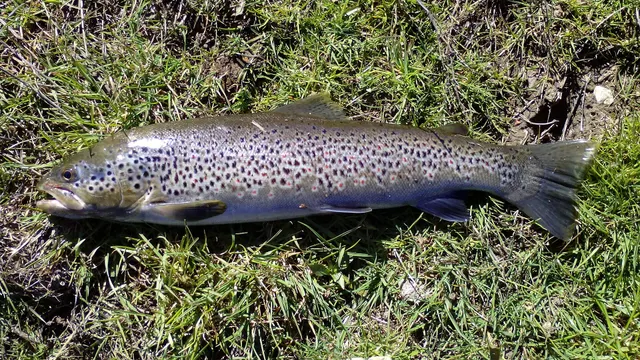 Brown troutThe species the first-category classification exists for, from Normandy chalk streams to Pyrenean and Alpine torrents — four very different fisheries under one legal label.
- Common carpThe species the visiting specimen fishery is built on, in gravel pits, lakes and the Rhône and Saône systems, at sizes that draw anglers from across Europe.
- Common cockleWorked on the Channel and Atlantic intertidal flats by pêche à pied gatherers on large spring tides, under species, size, quantity and sanitary rules.
- Common soleUses the extensive clean sandy ground of the Atlantic and Channel coasts, supporting both a commercial fishery and a shore night fishery over it.
- European eelGlass eels arrive on the Atlantic coast and ascend the Loire, Gironde and Adour, which historically supported one of Europe's most significant elver fisheries and is now among the most tightly restricted.
- European lobsterPresent on the rocky ground of Brittany and the Channel coast, where the small-scale pot fishery is long established.
5 more
- European sea bass Fish
- Gilthead bream Fish
- Razor clam Fish
- Sea lamprey Fish
- Wels catfish Fish
How this compares
- PortugalTwo Atlantic states sharing a swell regime, an upwelling system and much of a species list, and administering recreational fishing through almost entirely different structures — which is what makes the two worth reading side by side.
- SpainTwo neighbours sharing an Atlantic and a Mediterranean coast and administering them completely differently — national federation in one, seventeen autonomous communities in the other.
- The Bay of BiscayThe bay's northern and eastern shores are French, and the swell, shelf and canyon structure the system page describes is what the French Atlantic coast is exposed to.
Rules and access
- Close seasonsThe legal first/second category classification of the stretch decides the season, and it is a legal category rather than a description of the fish present. Treating it as a description is the standard route into fishing a closed season in good faith.
- Licences and permissionOne national card sold through thousands of local associations, where what it reaches depends on the association's federation and its reciprocity arrangements — and a sea fishery that needs no such card and is not therefore unregulated.
Environment and conservation
Sources and evidence
- ICES Advice on fishing opportunities, catch and effort — International Council for the Exploration of the Sea (Scientific institute)Relied on for: Stock distribution, ecoregion description and the hydrography of the sea areas assessed.States this directlyCitation checked — the work exists and is described correctly
- FishBase: a global information system on fishes — Froese, R. and D. Pauly, eds. — FishBase Consortium (Scientific institute)Relied on for: Distribution and habitat association of the species named as characteristic of these waters.States this directlyPassage read and verified
- Fishers' Craft and Lettered Art: Tracts on Fishing from the End of the Middle Ages — University of Toronto Press, 1997 (Scientific literature)Relied on for: That fishing traditions develop around the water and fish available to them, and the historical method of reading such traditions.States this directlyCitation checked — the work exists and is described correctly
- Words of the Lagoon: Fishing and Marine Lore in the Palau District of Micronesia — University of California Press, Berkeley, 1981 (Reference work)Relied on for: That local fishing practice encodes detailed knowledge of fish and conditions, and that the practice is frequently the record of the ecology.Background and mechanism onlyCitation checked — the work exists and is described correctly
Why the 25 connections on this page are here, and the sources
What swims here
Backed by research — 13 connections
Supported by peer-reviewed research or fisheries science. The sources are listed and can be checked.
Atlantic salmon
Occurrence of the species in these waters: a statement about the animal's distribution, not a venue recommendation.
- FishBase: a global information system on fishes — Froese, R. and D. Pauly, eds. — FishBase Consortium (Scientific institute)Relied on for: Distribution, habitat association and salinity tolerance recorded for the species, including its occurrence in these waters.States this directlyPassage read and verified
- The IUCN Red List of Threatened Species — International Union for Conservation of Nature (Conservation authority)Relied on for: Assessment and range description for the species.Background and mechanism onlyCitation checked — the work exists and is described correctly
Blue mussel
Occurrence of the species in these waters: a statement about the animal's distribution, not a venue recommendation.
- FishBase: a global information system on fishes — Froese, R. and D. Pauly, eds. — FishBase Consortium (Scientific institute)Relied on for: Distribution, habitat association and salinity tolerance recorded for the species, including its occurrence in these waters.States this directlyPassage read and verified
- The IUCN Red List of Threatened Species — International Union for Conservation of Nature (Conservation authority)Relied on for: Assessment and range description for the species.Background and mechanism onlyCitation checked — the work exists and is described correctly
Brown trout
That a species occurs in these waters, drawn from distribution science and stock assessment. It is a statement about where the animal lives and is not a statement that anybody will catch one, still less where.
- Freshwater Fishes of the British Isles — HarperCollins (New Naturalist 75), 1992 (Reference work)Relied on for: Distribution, habitat requirement and life history of European freshwater fishes, including their occurrence across the continental range named.States this directlyCitation checked — the work exists and is described correctly
- FishBase: a global information system on fishes — Froese, R. and D. Pauly, eds. — FishBase Consortium (Scientific institute)Relied on for: Recorded distribution and habitat association of the freshwater and migratory species named.States this directlyPassage read and verified
Common carp
Occurrence of the species in these waters: a statement about the animal's distribution, not a venue recommendation.
- FishBase: a global information system on fishes — Froese, R. and D. Pauly, eds. — FishBase Consortium (Scientific institute)Relied on for: Distribution, habitat association and salinity tolerance recorded for the species, including its occurrence in these waters.States this directlyPassage read and verified
- The IUCN Red List of Threatened Species — International Union for Conservation of Nature (Conservation authority)Relied on for: Assessment and range description for the species.Background and mechanism onlyCitation checked — the work exists and is described correctly
Common cockle
Occurrence of the species in these waters: a statement about the animal's distribution, not a venue recommendation.
- FishBase: a global information system on fishes — Froese, R. and D. Pauly, eds. — FishBase Consortium (Scientific institute)Relied on for: Distribution, habitat association and salinity tolerance recorded for the species, including its occurrence in these waters.States this directlyPassage read and verified
- The IUCN Red List of Threatened Species — International Union for Conservation of Nature (Conservation authority)Relied on for: Assessment and range description for the species.Background and mechanism onlyCitation checked — the work exists and is described correctly
Common sole
Occurrence of the species in these waters: a statement about the animal's distribution, not a venue recommendation.
- The Fishes of the British Isles and North-West Europe — Macmillan, 1969 (Reference work)Relied on for: Distribution and habitat association of fishes in north-west European and eastern Atlantic waters.States this directlyCitation checked — the work exists and is described correctly
- FishBase: a global information system on fishes — Froese, R. and D. Pauly, eds. — FishBase Consortium (Scientific institute)Relied on for: Distribution, depth range and habitat association recorded for the species.States this directlyPassage read and verified
European eel
Occurrence of the species in these waters: a statement about the animal's distribution, not a venue recommendation.
- FishBase: a global information system on fishes — Froese, R. and D. Pauly, eds. — FishBase Consortium (Scientific institute)Relied on for: Distribution, habitat association and salinity tolerance recorded for the species, including its occurrence in these waters.States this directlyPassage read and verified
- The IUCN Red List of Threatened Species — International Union for Conservation of Nature (Conservation authority)Relied on for: Assessment and range description for the species.Background and mechanism onlyCitation checked — the work exists and is described correctly
European lobster
Occurrence of the species in these waters: a statement about the animal's distribution, not a venue recommendation.
- FishBase: a global information system on fishes — Froese, R. and D. Pauly, eds. — FishBase Consortium (Scientific institute)Relied on for: Distribution, habitat association and salinity tolerance recorded for the species, including its occurrence in these waters.States this directlyPassage read and verified
- The IUCN Red List of Threatened Species — International Union for Conservation of Nature (Conservation authority)Relied on for: Assessment and range description for the species.Background and mechanism onlyCitation checked — the work exists and is described correctly
European sea bass
Occurrence of the species in these waters: a statement about the animal's distribution, not a venue recommendation.
- The Fishes of the British Isles and North-West Europe — Macmillan, 1969 (Reference work)Relied on for: Distribution and habitat association of fishes in north-west European and eastern Atlantic waters.States this directlyCitation checked — the work exists and is described correctly
- FishBase: a global information system on fishes — Froese, R. and D. Pauly, eds. — FishBase Consortium (Scientific institute)Relied on for: Distribution, depth range and habitat association recorded for the species.States this directlyPassage read and verified
Gilthead bream
Occurrence of the species in these waters: a statement about the animal's distribution, not a venue recommendation.
- The Fishes of the British Isles and North-West Europe — Macmillan, 1969 (Reference work)Relied on for: Distribution and habitat association of fishes in north-west European and eastern Atlantic waters.States this directlyCitation checked — the work exists and is described correctly
- FishBase: a global information system on fishes — Froese, R. and D. Pauly, eds. — FishBase Consortium (Scientific institute)Relied on for: Distribution, depth range and habitat association recorded for the species.States this directlyPassage read and verified
Razor clam
Occurrence of the species in these waters: a statement about the animal's distribution, not a venue recommendation.
- FishBase: a global information system on fishes — Froese, R. and D. Pauly, eds. — FishBase Consortium (Scientific institute)Relied on for: Distribution, habitat association and salinity tolerance recorded for the species, including its occurrence in these waters.States this directlyPassage read and verified
- The IUCN Red List of Threatened Species — International Union for Conservation of Nature (Conservation authority)Relied on for: Assessment and range description for the species.Background and mechanism onlyCitation checked — the work exists and is described correctly
Sea lamprey
That the species occurs in these waters, drawn from distribution science and stock literature.
- FishBase: a global information system on fishes — Froese, R. and D. Pauly, eds. — FishBase Consortium (Scientific institute)Relied on for: Distribution, environment and diadromous parasitic life history of Petromyzon marinus.States this directlyPassage read and verified
- Freshwater Fishes of the British Isles — HarperCollins (New Naturalist 75), 1992 (Reference work)Relied on for: The lampreys of the British Isles and north-west Europe: identification, the ammocoete larval phase, spawning behaviour and population status.States this directlyCitation checked — the work exists and is described correctly
Wels catfish
That a species occurs in these waters, drawn from distribution science and stock assessment. It is a statement about where the animal lives and is not a statement that anybody will catch one, still less where.
- Freshwater Fishes of the British Isles — HarperCollins (New Naturalist 75), 1992 (Reference work)Relied on for: Distribution, habitat requirement and life history of European freshwater fishes, including their occurrence across the continental range named.States this directlyCitation checked — the work exists and is described correctly
- FishBase: a global information system on fishes — Froese, R. and D. Pauly, eds. — FishBase Consortium (Scientific institute)Relied on for: Recorded distribution and habitat association of the freshwater and migratory species named.States this directlyPassage read and verified
How people fish here
What experienced anglers do — 3 connections
Widely and independently recommended by experienced anglers and specialist sources. This is real angling knowledge, not proof: controlled evidence for it is limited, and FishingHQ records it as convention rather than as a demonstrated effect.
Carp fishing
The discipline that dominates fishing in this place, recorded as established practice rather than as a ranking.
- General angling website restatements of established technique — Various (Credible secondary source)Relied on for: Widely restated practice associating this discipline with this place, recorded as practitioner consensus rather than as tested fact.Background and mechanism onlyCitation checked — the work exists and is described correctly
- Fishers' Craft and Lettered Art: Tracts on Fishing from the End of the Middle Ages — University of Toronto Press, 1997 (Scientific literature)Relied on for: That fishing traditions develop around the water and fish available to them, and the historical method of reading such traditions.States this directlyCitation checked — the work exists and is described correctly
Sea fishing
The discipline that dominates fishing in this place, recorded as established practice rather than as a ranking.
- General angling website restatements of established technique — Various (Credible secondary source)Relied on for: Widely restated practice associating this discipline with this place, recorded as practitioner consensus rather than as tested fact.Background and mechanism onlyCitation checked — the work exists and is described correctly
- Fishers' Craft and Lettered Art: Tracts on Fishing from the End of the Middle Ages — University of Toronto Press, 1997 (Scientific literature)Relied on for: That fishing traditions develop around the water and fish available to them, and the historical method of reading such traditions.States this directlyCitation checked — the work exists and is described correctly
Spearfishing
The discipline that dominates fishing in this place, recorded as established practice rather than as a ranking.
- General angling website restatements of established technique — Various (Credible secondary source)Relied on for: Widely restated practice associating this discipline with this place, recorded as practitioner consensus rather than as tested fact.Background and mechanism onlyCitation checked — the work exists and is described correctly
- Fishers' Craft and Lettered Art: Tracts on Fishing from the End of the Middle Ages — University of Toronto Press, 1997 (Scientific literature)Relied on for: That fishing traditions develop around the water and fish available to them, and the historical method of reading such traditions.States this directlyCitation checked — the work exists and is described correctly
How this compares
What experienced anglers do — 3 connections
Widely and independently recommended by experienced anglers and specialist sources. This is real angling knowledge, not proof: controlled evidence for it is limited, and FishingHQ records it as convention rather than as a demonstrated effect.
Portugal
One of these areas contains the other, so the conditions described in the larger are the conditions the smaller inherits — which makes the comparison a matter of geography rather than of opinion.
- General angling website restatements of established technique — Various (Credible secondary source)Relied on for: Widely restated practice associating this discipline with this place, recorded as practitioner consensus rather than as tested fact.Background and mechanism onlyCitation checked — the work exists and is described correctly
- Fishers' Craft and Lettered Art: Tracts on Fishing from the End of the Middle Ages — University of Toronto Press, 1997 (Scientific literature)Relied on for: That fishing traditions develop around the water and fish available to them, and the historical method of reading such traditions.States this directlyCitation checked — the work exists and is described correctly
Spain
A navigational link between two places a reader is genuinely choosing between or reasoning across, offered as orientation rather than as a ranking.
- Sea Angler — Bauer Media (Specialist angling publication)Relied on for: Long-running published description of European sea angling practice by region and destination, including where British anglers travel and what they fish for there.FishingHQ's interpretation of what it saysCitation checked — the work exists and is described correctly
- General angling website restatements of established technique — Various (Credible secondary source)Relied on for: Widely restated descriptions of which disciplines are conventionally practised in the waters named, recorded as practitioner consensus rather than as scholarship.Background and mechanism onlyCitation checked — the work exists and is described correctly
The Bay of Biscay
One of these areas contains the other, so the conditions described in the larger are the conditions the smaller inherits — which makes the comparison a matter of geography rather than of opinion.
- General angling website restatements of established technique — Various (Credible secondary source)Relied on for: Widely restated practice associating this discipline with this place, recorded as practitioner consensus rather than as tested fact.Background and mechanism onlyCitation checked — the work exists and is described correctly
- Fishers' Craft and Lettered Art: Tracts on Fishing from the End of the Middle Ages — University of Toronto Press, 1997 (Scientific literature)Relied on for: That fishing traditions develop around the water and fish available to them, and the historical method of reading such traditions.States this directlyCitation checked — the work exists and is described correctly
Safety reading
Official guidance — 3 connections
Stated by a fisheries authority, scientific institute or recognised angling body. Authoritative, but summarising rather than demonstrating.
Rock platform and cliff safety
A hazard characteristic of this place, connected to the safety topic that explains the mechanism.
- United States Lifesaving Association public education on rip currents and the surf zone — United States Lifesaving Association (Water-safety or diver-training authority)Relied on for: Surf zone hazards, rip current formation, shore-break and steep-beach hazards, and public guidance on them.States this directlyCitation checked — the work exists and is described correctly
- RNLI water safety guidance: cold water shock and Float to Live — Royal National Lifeboat Institution (Water-safety or diver-training authority)Relied on for: Shore angling hazards including shore-break, cold water shock and being swept in.States this directlyPassage read and verified
Tides and being cut off
A hazard characteristic of this place, connected to the safety topic that explains the mechanism.
- RNLI water safety guidance: cold water shock and Float to Live — Royal National Lifeboat Institution (Water-safety or diver-training authority)Relied on for: Cold water shock and the immersion response, tidal cut-off, shore angling hazards and small-craft guidance.States this directlyPassage read and verified
- RoSPA water safety information and UK accidental drowning statistics — Royal Society for the Prevention of Accidents (Water-safety or diver-training authority)Relied on for: Accidental drowning statistics and the circumstances in which recreational water users are most often killed.States this directlyPassage read and verified
Wading safely
A hazard characteristic of this place, connected to the safety topic that explains the mechanism.
- United States Lifesaving Association public education on rip currents and the surf zone — United States Lifesaving Association (Water-safety or diver-training authority)Relied on for: Surf zone hazards, rip current formation, shore-break and steep-beach hazards, and public guidance on them.States this directlyCitation checked — the work exists and is described correctly
- RNLI water safety guidance: cold water shock and Float to Live — Royal National Lifeboat Institution (Water-safety or diver-training authority)Relied on for: Shore angling hazards including shore-break, cold water shock and being swept in.States this directlyPassage read and verified
Rules and access
Official guidance — 2 connections
Stated by a fisheries authority, scientific institute or recognised angling body. Authoritative, but summarising rather than demonstrating.
Close seasons
This points to the kind of rule that applies rather than to a rule itself. The same question is administered differently in each of these countries, so the page says that the answer is held elsewhere and changes.
- Code of Conduct for Responsible Fisheries — Food and Agriculture Organization of the United Nations, Rome, 1995 (Standards body)Relied on for: The international framework within which national and regional fisheries authorities set, revise and enforce measures, and the principle that the responsible authority rather than a third party holds the current position.Background and mechanism onlyCitation checked — the work exists and is described correctly
- ICES Advice on fishing opportunities, catch and effort — International Council for the Exploration of the Sea (Scientific institute)Relied on for: That the stock advice European measures are set against is produced internationally and revised annually, which is how a national measure changes without the national law changing.States this directlyCitation checked — the work exists and is described correctly
Licences and permission
This points to the kind of rule that applies rather than to a rule itself. The same question is administered differently in each of these countries, so the page says that the answer is held elsewhere and changes.
- Code of Conduct for Responsible Fisheries — Food and Agriculture Organization of the United Nations, Rome, 1995 (Standards body)Relied on for: The international framework within which national and regional fisheries authorities set, revise and enforce measures, and the principle that the responsible authority rather than a third party holds the current position.Background and mechanism onlyCitation checked — the work exists and is described correctly
- ICES Advice on fishing opportunities, catch and effort — International Council for the Exploration of the Sea (Scientific institute)Relied on for: That the stock advice European measures are set against is produced internationally and revised annually, which is how a national measure changes without the national law changing.States this directlyCitation checked — the work exists and is described correctly
Environment and conservation
Official guidance — 1 connection
Stated by a fisheries authority, scientific institute or recognised angling body. Authoritative, but summarising rather than demonstrating.
Fish stocks and sustainability
An environmental pressure operating here, recorded rather than adjudicated.
- ICES Advice on fishing opportunities, catch and effort — International Council for the Exploration of the Sea (Scientific institute)Relied on for: Stock status, environmental pressures and the scientific basis for advice in the sea area concerned.States this directlyCitation checked — the work exists and is described correctly
- Good Fish Guide — Marine Conservation Society (Conservation authority)Relied on for: Stock and method assessment and the conservation measures applied to the fisheries.Background and mechanism onlyCitation checked — the work exists and is described correctly
How FishingHQ labels evidence is explained in the evidence policy.