The Gironde estuary
Estuary · Brackish water · in France
The largest estuary in western Europe, formed where the Garonne and Dordogne meet, carrying a very heavy silt load, with extensive mud banks, shifting channels and a wide mouth between Pointe de Grave and Royan.
Safety: cold water shock — can cause serious injury or death. 2 more points apply here.
FishingHQ describes what this place is, not whether you may fish it. Access, permits and who to ask.
What you can catch here
Documented at this place, grouped by how you would be fishing, with how strongly the sources support each one. This is what has been written down, not a forecast, and being listed is never permission to fish.
From the shore · 4
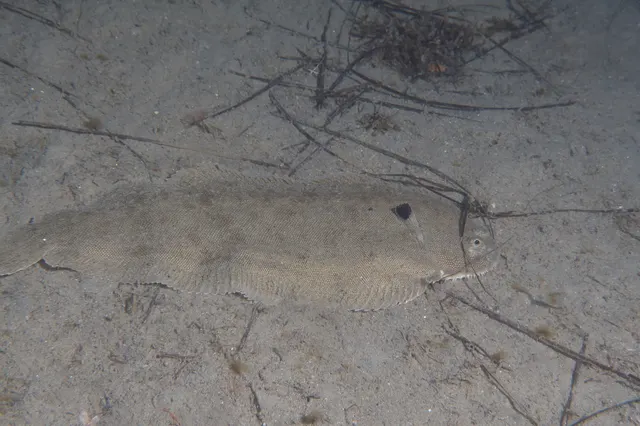 Common soleRegular local target1 placeThe Gironde estuaryOver estuary
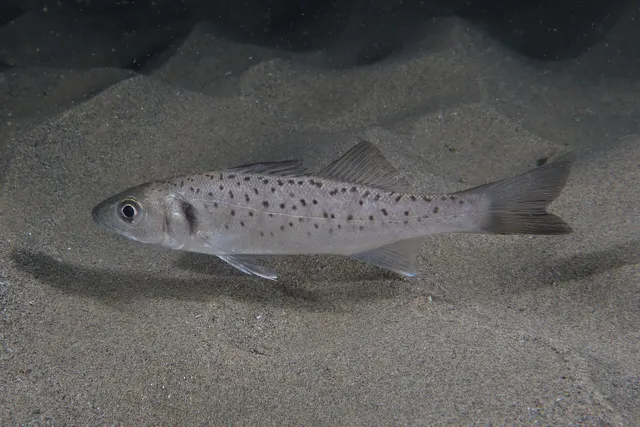 European sea bassRegular local target1 placeThe Gironde estuaryOver estuaryAround May–Oct
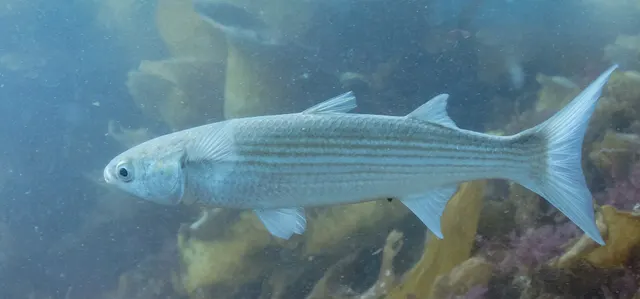 Flathead grey mulletRegular local target1 placeThe Gironde estuaryOver estuary
- MeagreSeasonal1 placeThe Gironde estuaryOver estuaryAround Jun–Sept
From a boat · 2
What these strengths mean
- Regular local target
- Fishing sources describe this as a normal local target here, not merely as caught.
- Seasonal
- Well supported, and concentrated in part of the year rather than spread through it.
- How breadth is counted
- A fish documented at six marks is shown as six marks: breadth never raises the strength on its own. A fishery account describes the fishing; a recorded catch reports one specific catch. How evidence is weighed.
Recorded here, but not a species to target
These are recorded here, but they are not fish to take. Each is either assessed as Critically Endangered or protected by statute in this jurisdiction, and taking one may be prohibited outright — elsewhere every rod-caught fish must be returned. Read the species page and check the current rules with the authority before fishing.
How people fish it
Practised here: Sea fishing.
Methods the sources name for this ground. Each one is explained in full on its own page.
- Ledgering
Fishing a bait on the bottom held by a weight, with no float — the simplest way to fish at distance, in depth, or in wind.
- Spinning
Casting an artificial lure and retrieving it so that it moves like something alive — the most direct form of lure fishing.
- Surfcasting
Casting heavy baited tackle from a beach into surf — a method defined by distance, by tide, and by reading water that all looks the same.
- Kayak fishing
A platform rather than a technique: quiet, shallow-draught access to water no other craft reaches, bought at the price of exposure, and a discipline where the decision not to launch is part of the skill.
The ground and the water
- The ground
- The largest estuary in western Europe, formed where the Garonne and Dordogne meet, carrying a very heavy silt load, with extensive mud banks, shifting channels and a wide mouth between Pointe de Grave and Royan.
- Exposure
- The mouth takes Atlantic swell across a bar; the inner estuary is sheltered and dominated by flow rather than by sea.
- Depth
- Turbid and shallow over the banks with deep dredged and natural channels.
- Tide and flow
- A large tidal range meeting a very large river discharge, producing strong streams throughout and a tidal bore on the upper Garonne and Dordogne on the biggest tides.
Through the year
The months the sources attach to each species here. Where a species carries no season it is listed underneath rather than assumed to run through the year.
| Species | J | F | M | A | M | J | J | A | S | O | N | D |
|---|---|---|---|---|---|---|---|---|---|---|---|---|
| European sea bass — regular local target, recorded in May, June, July, August, September, October. | ||||||||||||
| Meagre — seasonal, recorded in June, July, August, September. |
Recorded here with no season stated: Common sole, Flathead grey mullet.
Safety
Cold water shock — Can cause serious injury or death
Northern European water is cold enough for most of the year to trigger the involuntary gasp and the loss of swimming ability that decides most immersion deaths, and it does so within the first minute, long before hypothermia is relevant.
What reduces it: Wear a buoyancy aid rather than carry one, carry a means of calling for help on the person rather than in a bag, and plan on the assumption that an unplanned entry into the water is survivable only if somebody knows immediately.
Tides and being cut off — Can cause serious injury or death
The Channel and Atlantic coasts carry some of the largest tidal ranges in Europe. Ground exposed for kilometres at low water floods faster than a person can walk, and channels fill behind gatherers before the water reaches them. People gathering on foot are looking down and facing away from the sea, which is the posture in which a returning tide is not noticed.
What reduces it: Read the tide coefficient and the times before going out rather than while out. Fix a time to be off the ground and treat it as non-negotiable. Know where the channels behind you are, and never let the exit fill before you use it.
Worse when:
- Big spring tides with a high coefficient, which expose the most ground and flood fastest.
- Flat sand and mud flats with channels behind them, where the water arrives from more than one direction.
- Fog or failing light, when the edge of the water cannot be seen.
Moving water and currents — Can cause serious injury or death
On the Atlantic sand coast, water pushed over an offshore bar returns seaward through gaps in it as concentrated rip currents — the baïnes — which carry waders and swimmers offshore from water that looks calm. Long-period Atlantic swell arrives independently of local wind and breaks heavily on shoaling ground and on Breton rock platforms.
What reduces it: Read a swell forecast rather than only a wind forecast. Recognise a baïne channel by its darker, calmer, seaward-moving water between areas of breaking waves, and stay out of it. Watch a full set before committing to a low rock platform.
Rules and access
FishingHQ does not know the current access position here. Recreational sea fishing in France is not generally licensed for shore angling, but national and European measures on species, sizes, quantities and gear apply, some species carry a declaration or marking requirement, and access to structures, beaches and shellfish grounds is governed locally. All of it changes. Check the current position with the maritime prefecture or the departmental directorate for the sea, and with the commune, before going. This water is tidal and transitional, so the freshwater regime may also apply above the tidal limit: FishingHQ does not know the current access position here. Inland fishing in France runs through membership: an angler joins an approved local fishing association, which is affiliated to a departmental federation, and pays the national levy alongside it — so the permission and the licence arrive together and are bought from the association rather than from a state counter. Waters, seasons, methods and reciprocity arrangements differ by department and change. Check with the departmental fishing federation and the local association before going.
Particular to this water: This is working water-management or navigation infrastructure, operated to a schedule set by its authority rather than by anything happening in the fishing, and access to it is that authority's decision.
Who holds the answer:
- The maritime prefecture and the departmental directorate for the territories and the sea, for recreational sea fishing measures in French waters.
- The commune and, where one exists, the port authority, for access to beaches, structures and shellfish grounds.
- The departmental fishing and aquatic-environment federation, which sets the waters, seasons and reciprocity for its department.
- The approved local fishing association that holds the rights on the water.
- The national biodiversity agency, for fisheries policing and for the national levy.
- The local AAPPMA and the départemental federation, for inland fishing rights, seasons and membership.
- The Office français de la biodiversité, for freshwater fisheries policy and enforcement.
- The direction interrégionale de la mer and the relevant préfecture maritime, for recreational sea fishing and underwater fishing.
- The départemental authority publishing pêche à pied rules and shellfish ground classifications.
- The regional health and environment service, whose biotoxin monitoring determines whether a shellfish ground may be worked.
- The managing body of any marine protected area or nature reserve on the stretch of coast concerned.
Sources for this place
- EMODnet — the European Marine Observation and Data Network — The European Commission, assembled from the national hydrographic offices, geological surveys and marine institutes of the member states (Scientific institute)Relied on for: Charted bathymetry, seabed substrate and seabed habitat for European sea areas, assembled from the national hydrographic and geological surveys, at the resolution the product publishes.States this directlyCitation checked — the work exists and is described correctly
- The European Environment Agency's assessments of Europe's waters, seas and coasts — European Environment Agency, Copenhagen (Conservation authority)Relied on for: Assessment of Europe's coasts and regional seas, including the condition of coastal water bodies, the pressures recorded on them and the coverage of designated sites.Background and mechanism onlyCitation checked — the work exists and is described correctly
- ICES Advice on fishing opportunities, catch and effort — International Council for the Exploration of the Sea (Scientific institute)Relied on for: Ecoregion description, stock distribution, nursery function and the hydrography of the north-east Atlantic and Baltic sea areas assessed.States this directlyCitation checked — the work exists and is described correctly
- FishBase: a global information system on fishes — Froese, R. and D. Pauly, eds. — FishBase Consortium (Scientific institute)Relied on for: Recorded distribution, depth range and habitat association of the species named for this ground.States this directlyPassage read and verified
How FishingHQ labels evidence is explained in the evidence policy. Last reviewed 2026-08-18.