Sand eel
Bait · Last reviewed 2026-08-10
The forage fish that most of the North Atlantic's predators actually eat, and consequently the bait that most reliably imitates what is already on the menu.
Safety: biosecurity and disease transfer — can cause injury needing treatment. 5 more points apply here.
- What it actually is
- Small slender fish of the family Ammodytidae, chiefly Ammodytes and Hyperoplus species in the North Atlantic. Silvery, with a pointed lower jaw and a long low dorsal fin. Not eels.
- How long it keeps
- Live sand eels last hours to a day or two in good conditions and die quickly in warm or crowded water. Frozen, several months if kept genuinely hard frozen and never partly thawed. Thawed, one session. The failure is textural: a soft sand eel cannot be presented and will not hold on a hook however fresh it smells.
The sand eel is not an eel. It is a small, slender, silvery fish of the family Ammodytidae that buries itself in clean sand and emerges to feed in the water column — and it is, by a wide margin, the most important forage fish in the North Atlantic.
That single fact is why it matters as bait. Bass, cod, pollack, mackerel, turbot and a long list of others eat sand eels as a staple, and a bait that presents one is presenting exactly what the predator is already looking for. Nothing else in the sea-angler's bait box has that advantage so unambiguously.
It is used in three forms. LIVE sand eels are the most effective and the most demanding, requiring a proper aerated container and careful handling. FROZEN sand eels are the practical standard, and their quality depends almost entirely on how well they were frozen and how few times they have thawed. And ARTIFICIAL sand eels — soft plastics and the traditional rubber eels — are effective enough that they occupy a large part of the lure market on their own.
The conservation dimension is real. Sand eel stocks are the base of a food web that includes seabirds as well as fish, and sand eel fisheries have been closed or restricted in parts of the North Sea specifically because of the knock-on effects on breeding seabirds. Anyone using them as bait should understand that they are buying into that.
What it is
Slim, silvery, soft-bodied and very fragile. The body is delicate enough that a sand eel damaged in handling will not swim properly and is worth discarding, and frozen ones turn to mush if thawed and refrozen. The silver flank is the attractant, so anything that scuffs it reduces the bait's value.
Fish it catches
- Blonde rayBlonde rays take a greater proportion of fish than the smaller rays, and sandeel and launce are the conventional baits for them.
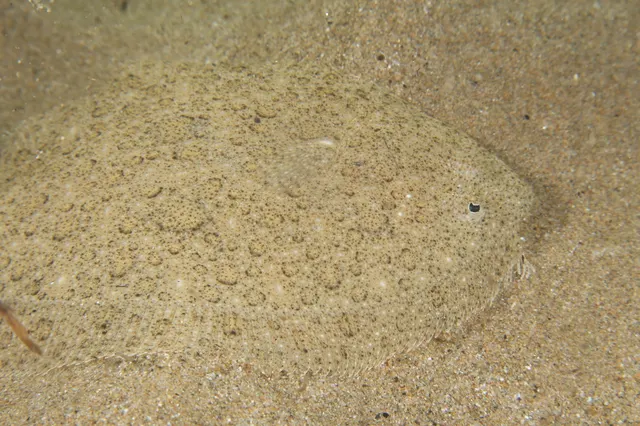 BrillSand eel and strip baits fished over clean sandy ground.
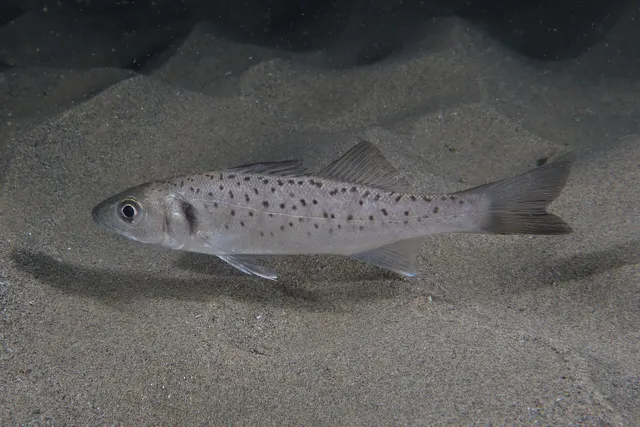 European sea bassThe forage fish bass actually eat across most of their range, which makes a sand eel the one bait whose effectiveness needs no explanation.
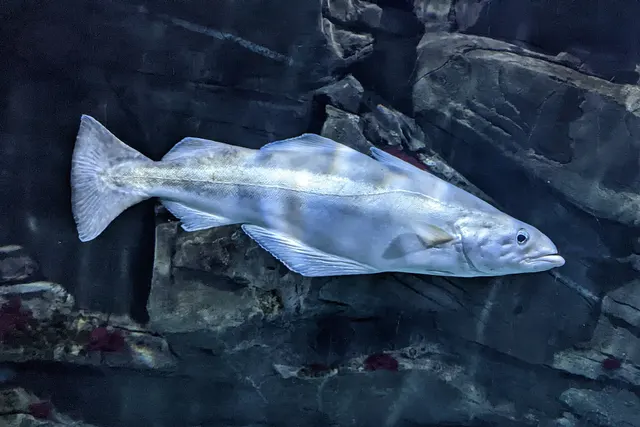 PollackWhere pollack are taken on bait rather than on lures, sandeel is what the sources name — the Mayo directory is explicit that the pollack and coalfish from a named pier prefer fresh or frozen sandeel, with squid, lugworm and lures as backups.
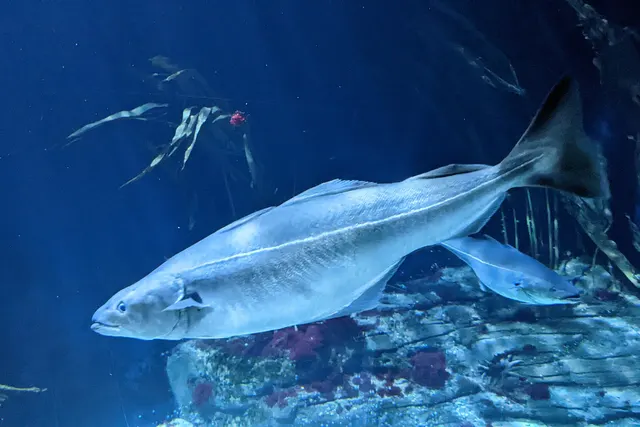 SaitheA midwater hunter of small shoaling fish, taken on whole sand eels fished on a flowing trace or on artificial eels worked at speed.
- Small-eyed rayThe conventional bait, and directly explained by the diet: sandeel is a notably important part of what draws the fish into shallow surf.
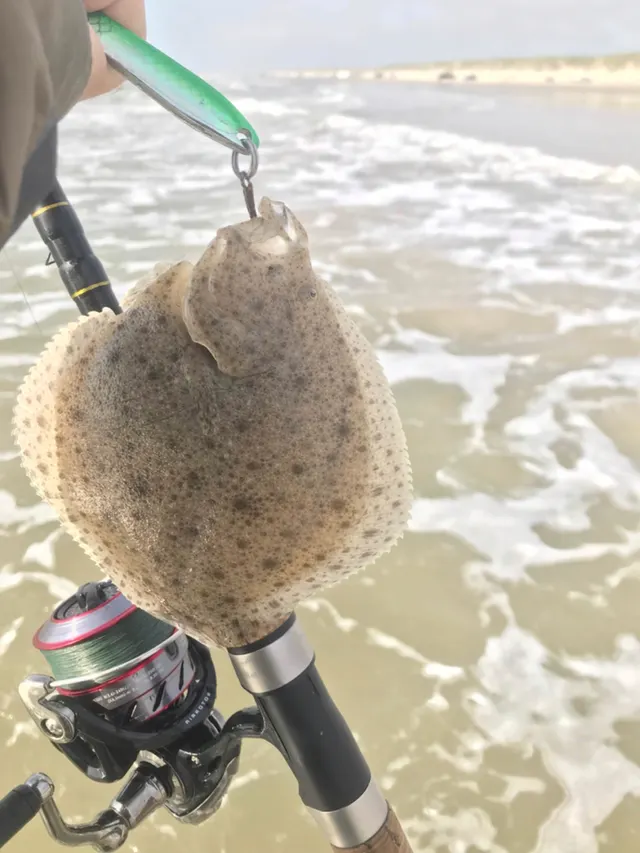 TurbotSand eel presented on the ground where the fish lies buried.
Finding and obtaining it
Bought frozen from tackle shops, which is the practical standard; obtained live from bait suppliers or by netting where permitted; or collected by raking sand at low water on suitable ground, which is regulated in many places. Live sand eels are sometimes available from charter operators. Check what is permitted locally before collecting — sand eel gathering and netting are restricted in a number of jurisdictions on conservation grounds rather than on access grounds.
Keeping and storing it
Live: in a purpose-made aerated bucket or courge with cool clean seawater, at low density, out of the sun, with water changed regularly. They are among the more demanding live baits to keep. Frozen: in session-sized packs, kept hard frozen and thawed only as used. A block thawed and refrozen is ruined and will not stay on a hook.
Keeping it alive
A dedicated aerated container with cool clean seawater at low stocking density, shaded from sun, with regular partial water changes. Sand eels are far less tolerant than most live baits and will die quickly in a warm crowded bucket. Handle as little as possible and with wet hands. Do not transport live sand eels between coasts, and never release unused live bait.
Preparing it
Live eels are used whole and hooked to preserve movement. Frozen eels are used whole for larger fish, or cut into sections for smaller ones, and are much easier to handle while still slightly frozen. Where a whole frozen eel is used, binding it to the hook with bait elastic prevents the body breaking up on the cast.
Using it
Whole and lightly hooked through the nose or upper jaw for live baits, so the eel swims naturally. Frozen eels are mounted whole on a long-shank hook or a two-hook pennell, bound with elastic, and fished on a flowing trace so the bait works in the tide. Sections are used on smaller hooks for mixed ground. The presentation to aim for is a bait that looks like it is swimming rather than one that is merely attached.
Disposing of what is left
Take unused bait home. Do not tip live or dead sand eels into the sea at the end of a session — it is a biosecurity route and, with live bait, a potential introduction. Dispose of dead bait in household waste and take all packaging home.
Biosecurity
Live bait moved between coasts is a documented pathway for the transfer of non-native organisms and pathogens. Do not move live bait between waters or regions. Do not release unused live bait. Clean and dry bait containers and cool boxes between trips.
Storing sand eel without turning it to mush
Sand eel is a soft, oily fish, and both of those properties work against storage.
WHY IT SPOILS FAST. Oily fish oxidise quickly and the enzymes that break down the flesh continue working after death, accelerating sharply with temperature. A sand eel left in the sun for an hour is soft; left for a session it is unusable and smells of it.
FRESH OR FROZEN, KEEP IT COLD AND KEEP IT DRY. A cool box with ice, the fish separated from meltwater rather than sitting in it. Water leaches oil and softens the flesh, which is precisely what makes it fall off a hook.
FREEZING WELL IS ABOUT PACKING. Freeze them flat and individually rather than as a block, so that only what is needed comes out. Wrap tightly — air causes freezer burn, and freezer-burnt sand eel loses the oil that is the whole attraction. Blast-frozen sand eel bought frozen is generally better than anything frozen slowly at home, because slow freezing forms the large crystals that destroy texture.
THAWING IS WHERE MOST OF IT IS RUINED. Thaw slowly and cold, use what is thawed, and do not refreeze. A sand eel thawed and refrozen is a bag of oil and skin.
PRESENTATION FOLLOWS FROM ALL OF THIS. Soft bait needs support: bait elastic, a whipping of thread, or a wire through the body. That is not a workaround for poor storage — even perfectly kept sand eel is soft — but poor storage turns a bait that needs support into one that cannot be cast at all.
Obtaining sand eel responsibly
Sand eels are the single most ecologically significant bait on FishingHQ, and the reason is that almost everything eats them.
WHAT DEPENDS ON THEM. Sand eels are a keystone forage fish across the north-east Atlantic and North Sea. Seabirds — kittiwakes, puffins, terns, guillemots — feed their chicks on them, and breeding success in several species tracks sand eel availability closely enough that the link is documented rather than inferred. Cod, bass, mackerel, pollack and many others feed on them heavily. So does the commercial fishery.
WHY THAT MATTERS TO AN ANGLER BUYING A BOX. The quantity a recreational angler uses is trivial against an industrial fishery, and that is a reason for proportion rather than for indifference: it means the useful question is where the bait came from, not whether to use it.
GATHERING THEM YOURSELF is done by netting in the shallows or by raking or 'scratching' them from wet sand at low water. Both disturb the same intertidal ground bait digging affects, and raking in particular turns over sediment. The same practice applies: work a small area, take what will be used, and leave the ground as you found it.
AND THE RULES HERE ARE UNUSUALLY LIVE. Sand eel fisheries have been subject to closures and restrictions in several areas specifically because of the seabird link, and those measures change. Netting, raking and collection are variously regulated by inshore fisheries bodies and by protected-area conditions.
FishingHQ does not state what is currently permitted. Check with the inshore fisheries body and the protected-area manager for the ground concerned before collecting.
Backed by research — why, and the sources (2)
Supported by peer-reviewed research or fisheries science. The sources are listed and can be checked.
- ICES Advice on fishing opportunities, catch and effort — International Council for the Exploration of the Sea (Scientific institute)Relied on for: Scientific advice on sand eel stocks and the ecosystem role of forage fish in the north-east Atlantic and North Sea.States this directlyCitation checked — the work exists and is described correctly
- JNCC species and habitat conservation advice — Joint Nature Conservation Committee (Conservation authority)Relied on for: The link between sand eel availability and seabird breeding success, and the protected-area framework applied to it.States this directlyCitation checked — the work exists and is described correctly
Safety
Biosecurity and disease transfer — Can cause injury needing treatment
Moving live bait between coasts transfers organisms and pathogens, and releasing unused live bait is a direct introduction route.
What reduces it: Do not move live bait between waters or coasts. Never release unused live bait. Clean and dry containers between trips.
Tides and being cut off — Can cause injury needing treatment
Where sand eels are collected by raking, that happens at low water on open sand with attention on the ground rather than the sea.
What reduces it: Check tide times and heights, identify the exit before going out, and leave on a set clock time. Do not collect alone on remote ground.
Precautions that always apply here
- Check, clean and dry your kit between different waters — the published guidance is 48 hours’ drying, in sunlight where possible, because a number of invasive species survive over two weeks in damp conditions. Nets, boots and wet mats move invasive species and disease more effectively than anything else anglers do.
- Never move live fish, live bait or water from one water to another.
- Check the tide before you go and know your exit route. Being cut off is the commonest way a shore session becomes a rescue.
- Tell somebody where you are going and when you expect to be back.
Check the rules before you fish
Fishing laws, bylaws, access rules, seasons, bait restrictions and permitted methods vary by location and can change. Check the current rules from the relevant authority and the water you intend to fish before fishing.
Check with:
- Current national or regional law for where you are fishing
- Current local bylaws
- The relevant fisheries authority
- The landowner, club or fishery whose water it is
- Any restrictions specific to the species or the method you intend to use
Where to go next
How it is fished
Understanding it
Environment and conservation
Sources and evidence
- Sea Angler — Bauer Media (Specialist angling publication)Relied on for: Practitioner treatment of sand eel as bait, including live storage, frozen quality and presentation on flowing traces.FishingHQ's interpretation of what it saysCitation checked — the work exists and is described correctly
- ICES Advice on fishing opportunities, catch and effort — International Council for the Exploration of the Sea (Scientific institute)Relied on for: That sand eel stocks are assessed and that sand eel fisheries have been subject to closures and restrictions in parts of the North Sea in relation to their role as forage for seabirds and predatory fish.States this directlyCitation checked — the work exists and is described correctly
Why the 11 connections on this page are here, and the sources
Fish it catches
What experienced anglers do — 7 connections
Widely and independently recommended by experienced anglers and specialist sources. This is real angling knowledge, not proof: controlled evidence for it is limited, and FishingHQ records it as convention rather than as a demonstrated effect.
Blonde ray
A bait joined to the fish it is conventionally used for. Convention, recorded as convention.
- Sea Angler — Bauer Media (Specialist angling publication)Relied on for: Contemporary UK sea angling practice as reported by practitioners, including ground, seasonal timing, bait and method convention.States this directlyCitation checked — the work exists and is described correctly
- General angling website restatements of established technique — Various (Credible secondary source)Relied on for: Widely restated descriptions of species behaviour and regional angling practice, recorded as consensus rather than as scholarship.Background and mechanism onlyCitation checked — the work exists and is described correctly
Brill
A practitioner claim about tackle commonly used for Scophthalmus rhombus.
- General angling website restatements of established technique — Various (Credible secondary source)Relied on for: Widely restated practitioner accounts of this presentation for brill.Citation checked — the work exists and is described correctly
- Angling Times — Bauer Media (Specialist angling publication)Relied on for: Practitioner treatment of comparable presentations for the species group.Citation checked — the work exists and is described correctly
European sea bass
A practitioner claim about a bait-species pairing, with the underlying forage relationship supported separately.
- Sea Angler — Bauer Media (Specialist angling publication)Relied on for: Practitioner treatment of sand eel as a bass bait, live and frozen.Citation checked — the work exists and is described correctly
- Cefas science, advice and data on marine and freshwater environments — Centre for Environment, Fisheries and Aquaculture Science (Government fisheries body)Relied on for: The inshore habitat use and diet of European sea bass, including small forage fish.Citation checked — the work exists and is described correctly
Pollack
Named by a practitioner directory that ranks it above the alternatives and by a statutory guide independently.
- Sea Angling in Ireland: the shore marks of Mayo — Sea Angling Ireland (Credible secondary source)Relied on for: A county directory stating that the pollack and coalfish of a named pier prefer fresh or frozen sandeel, with the alternatives ranked behind it.Passage read and verified
- Inland Fisheries Ireland: South West Sea Angling Guide — the Kerry and Beara angling marks — Inland Fisheries Ireland, 2020 (Government fisheries body)Relied on for: The statutory body naming sandeel among the baits at the marks where it gives pollack over rough ground.Passage read and verified
Saithe
A practitioner claim about a bait-species pairing.
- Sea Angler — Bauer Media (Specialist angling publication)Relied on for: Practitioner treatment of sand eel presentation for midwater gadoids over wrecks and reefs.Citation checked — the work exists and is described correctly
- General angling website restatements of established technique — Various (Credible secondary source)Relied on for: Widely restated practitioner guidance on flowing traces and artificial sand eels.Citation checked — the work exists and is described correctly
Small-eyed ray
A bait joined to the fish it is conventionally used for. Convention, recorded as convention.
- Sea Angler — Bauer Media (Specialist angling publication)Relied on for: Contemporary UK sea angling practice as reported by practitioners, including ground, seasonal timing, bait and method convention.States this directlyCitation checked — the work exists and is described correctly
- General angling website restatements of established technique — Various (Credible secondary source)Relied on for: Widely restated descriptions of species behaviour and regional angling practice, recorded as consensus rather than as scholarship.Background and mechanism onlyCitation checked — the work exists and is described correctly
Turbot
A practitioner claim about tackle commonly used for Scophthalmus maximus.
- General angling website restatements of established technique — Various (Credible secondary source)Relied on for: Widely restated practitioner accounts of this presentation for turbot.Citation checked — the work exists and is described correctly
- Angling Times — Bauer Media (Specialist angling publication)Relied on for: Practitioner treatment of comparable presentations for the species group.Citation checked — the work exists and is described correctly
How it is fished
What experienced anglers do — 2 connections
Widely and independently recommended by experienced anglers and specialist sources. This is real angling knowledge, not proof: controlled evidence for it is limited, and FishingHQ records it as convention rather than as a demonstrated effect.
Drift fishing
The sand-eel record asks for a bait that looks like it is swimming rather than merely attached. A drift supplies continuous, varying water speed over the ground, which is the only presentation that achieves it without a retrieve.
- Sea Angler — Bauer Media (Specialist angling publication)Relied on for: Specialist treatment of which bait or lure family this technique is fished with.States this directlyCitation checked — the work exists and is described correctly
- General angling website restatements of established technique — Various (Credible secondary source)Relied on for: The independently restated practitioner pairing of this technique with this family.Background and mechanism onlyCitation checked — the work exists and is described correctly
Surfcasting
The sand-eel record's claim is that it is what most North Atlantic predators actually eat. A surf beach is where bass and rays hunt them inshore, which makes the bait a match to the venue rather than a general offering.
- Sea Angler — Bauer Media (Specialist angling publication)Relied on for: Specialist treatment of which bait or lure family this technique is fished with.States this directlyCitation checked — the work exists and is described correctly
- General angling website restatements of established technique — Various (Credible secondary source)Relied on for: The independently restated practitioner pairing of this technique with this family.Background and mechanism onlyCitation checked — the work exists and is described correctly
Understanding it
What experienced anglers do — 1 connection
Widely and independently recommended by experienced anglers and specialist sources. This is real angling knowledge, not proof: controlled evidence for it is limited, and FishingHQ records it as convention rather than as a demonstrated effect.
Freezing and thawing bait without ruining it
Why it works, resting on practice reported consistently across independent angling traditions rather than on experiment.
- Coarse Fishing — A. & C. Black, 1912 (Specialist angling publication)Relied on for: Classical coarse angling practice: baits, hooking, loose feed, presentation and swim selection.States this directlyCitation checked — the work exists and is described correctly
- Sea Angler — Bauer Media (Specialist angling publication)Relied on for: Contemporary UK sea angling practice as reported by practitioners, including bait preparation, hooking and presentation.States this directlyCitation checked — the work exists and is described correctly
Environment and conservation
Official guidance — 1 connection
Stated by a fisheries authority, scientific institute or recognised angling body. Authoritative, but summarising rather than demonstrating.
Fish stocks and sustainability
An environmental claim held to an authoritative standard, resting on assessment and on documented management action.
- ICES Advice on fishing opportunities, catch and effort — International Council for the Exploration of the Sea (Scientific institute)Relied on for: That sand eel stocks are assessed and that sand eel fisheries have been subject to closures and restrictions in relation to their role as forage for seabirds and predatory fish.States this directlyCitation checked — the work exists and is described correctly
How FishingHQ labels evidence is explained in the evidence policy.