Fish strip and cut bait
Bait · Last reviewed 2026-08-10
Fresh fish cut into strips or chunks — the cheapest, most available and most consistently underrated sea bait there is, and the one most improved by knowing how to cut it.
Safety: hooks and barbs — can cause injury needing treatment. 4 more points apply here.
- What it actually is
- Whole or sectioned fish of many species. Oily species — mackerel, herring, sardine, sand eel — are considerably more effective than white fish because scent is the working mechanism.
- How long it keeps
- Fresh fish is at its best on the day and declines noticeably within a day or two even chilled. Frozen, a few months for oily fish, which go rancid faster than white fish. Thawed, one session. The test is texture and appearance: bait that is soft or dull is bait that will neither stay on a hook nor attract anything.
Cut bait is fish, cut up. It is the oldest sea bait in the world, it is available anywhere fish are landed, and it catches an enormous range of species — and it is used badly by most people who use it.
The difference between good and poor cut bait is almost entirely in freshness and in cutting. A strip cut from a freshly killed mackerel, tapered so it flutters in the tide, with the silver skin left on, is a genuinely excellent bait. The same fish two days old in a warm bag, hacked into a rectangle, is not. That gap is larger than the gap between most bait types.
The forms matter. A STRIP is a tapered length cut along the flank or the belly, hooked at the thick end so the taper works in the current — this is the standard for most species. A CHUNK is a solid block, used for larger predators and for scent rather than movement. A FILLET or FLAPPER is a whole side or a whole fish with the flesh opened out, used for big baits. And a HEAD, which most people discard, is one of the best baits available for large ground fish.
Oily fish — mackerel, herring, sardine — outperform white fish substantially because the scent trail is the mechanism, and the oilier the fish the stronger the trail.
What it is
Firm flesh with skin on one side, releasing oil and amino acids into the water. The skin holds the bait together and provides the flash; the flesh provides the scent. Freshness is everything: fresh fish is firm, silver and cuts cleanly, while stale fish is soft, dull and falls off the hook.
Fish it catches
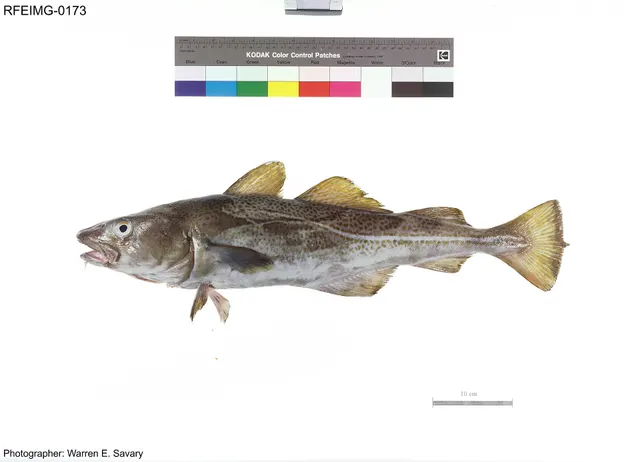 Atlantic codThe workhorse cod bait, alone or tipping a worm — a tapered mackerel strip fished from the thick end so it works in the tide.
- Blonde rayFish strip, often tipped with squid so the bait survives being held in tide long enough for a ray to find it.
- Bull hussHuss want a fish bait and a well-presented one. A Galway contributor is specific that the huss at his mark require a double sandeel properly presented rather than the mackerel that takes the dogfish beside them.
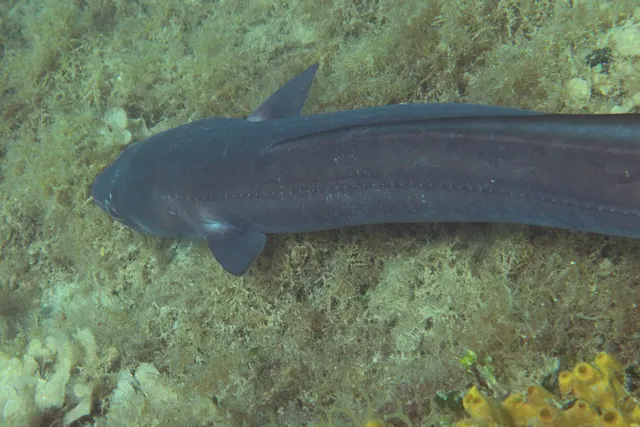 Conger eelLarge oily deadbaits fished tight to structure. Conger locate a bait by scent in complete darkness, which is why the oiliest fish available is the right one.
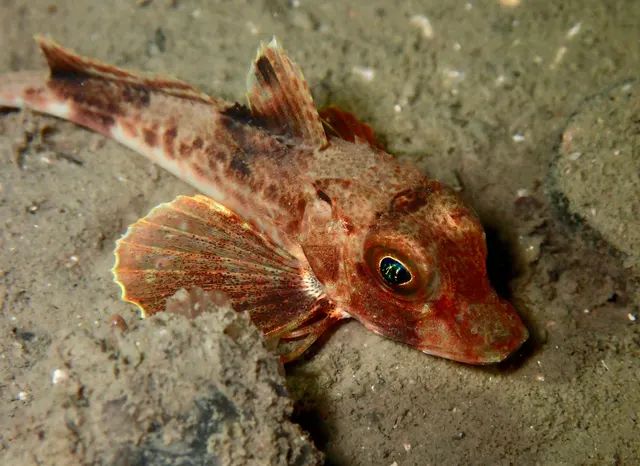 Grey gurnardMackerel or squid strip on the seabed is the everyday gurnard bait from a boat.
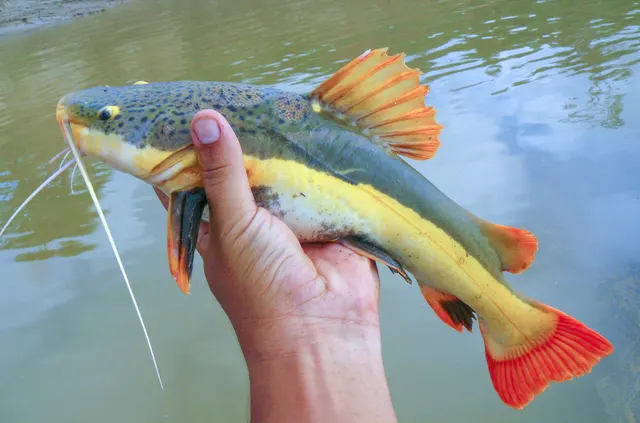 Redtail catfishCut and whole dead baits fished static on the bottom at night.
- Small-spotted catsharkThe dogfish bait, and the reason a dogfish is the fish an angler catches while waiting for something else: mackerel on the bottom takes them wherever they are, which on these coasts is everywhere.
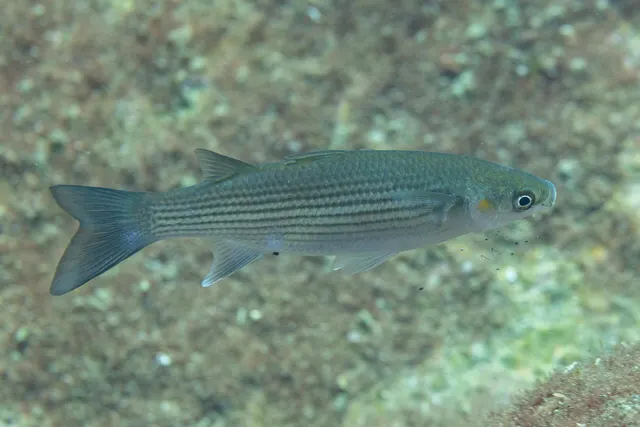 Thick-lipped grey mulletThe other mullet bait, and the one that works where a harbour has a fish factory or a commercial fleet: small pieces of fish or offal. The statutory guide names it at Fenit, at Castletownbere and at Ballycotton, and a Dublin page describes a mackerel's liver whipped into muslin.
4 more
- Thornback ray Fish
- Tope Fish
- Tub gurnard Fish
- Turbot Fish
Finding and obtaining it
Caught fresh, bought from a fishmonger, or bought frozen from tackle shops. Fresh-caught mackerel used the same day is the best bait of this kind there is. Frozen is the practical standard and quality depends on how it was frozen. Where fish is caught specifically for bait, the same size and species rules apply as for any other capture, which is a local question.
Keeping and storing it
Keep as cold as possible and out of the sun — a cool box with ice is not a refinement for cut bait, it is what makes it work. Freeze in session-sized portions and never refreeze thawed fish, which turns the flesh to mush. Whole fish freeze better than cut pieces; cut on the day where possible.
Keeping it alive
Not applicable: cut bait is dead by definition. Where fish are caught to be used as bait, they should be dispatched promptly and properly rather than left to die, and then chilled immediately — which improves both the welfare position and the bait.
Preparing it
Cut on a board with a sharp knife. For a strip, cut along the flank or belly with a taper so the bait narrows toward the tail — the taper is what makes it flutter and it is the single most commonly skipped step. Leave the skin on. For chunks, cut across the body into solid blocks. Cut bait fresh on the day rather than in advance, and keep cut bait as cold as uncut.
Using it
Hook a strip once through the thick end so the taper trails and works in the tide; do not thread it flat along the hook, which stops it moving. Chunks are hooked through once and left solid. Whole flappers and heads are mounted on large hooks or pennell rigs and bound with elastic. In every case the aim is a bait that moves in the current and releases scent downtide, rather than one that is neatly attached.
Disposing of what is left
Take unused bait home and dispose of it in household waste, or refreeze only if it has genuinely not thawed. Do not leave cut bait or packaging on a beach, rock mark or boat: it attracts gulls and rats, fouls the mark, and discarded plastic packaging is a marine litter source.
Biosecurity
Moving fish between waters, including as dead bait, can transfer pathogens, and the use of dead sea fish as bait in fresh water is restricted in a number of jurisdictions for exactly that reason. Do not move bait between fresh and salt water. Clean and dry containers between trips.
Oil is the working ingredient, and oxidation is what destroys it
Cut-bait storage is a chemistry problem more than a hygiene one, and once that is clear the rules stop looking like superstition.
THE BAIT WORKS BY LEAKING OIL AND AMINO ACIDS, which is why oily species — mackerel, herring, sardine, sandeel — outperform white fish so decisively. Scent is the mechanism, and the oil is the vehicle. Everything about storing cut bait is about protecting that oil.
AND THE OIL IS EXACTLY WHAT DEGRADES FIRST. Unsaturated fats oxidise on exposure to air, warmth and light, going rancid — and rancid oil smells wrong to a person and, as far as practitioner evidence goes, is far less attractive to fish. That is why oily fish freeze less well and for less time than white fish, which is the reverse of what people assume from the fact that oily fish is the better bait.
SO THE THREE ENEMIES ARE AIR, WARMTH AND TIME, IN THAT ORDER. Wrapping tightly excludes air; freezing quickly and keeping cold slows oxidation; and portioning means nothing is thawed and refrozen. Repeated freeze-thaw is the commonest way cut bait is ruined, and the damage is textural as well as chemical — ice crystals rupture the cells, and the flesh turns to mush that will not stay on a hook.
CUT LATE, NOT EARLY. Every cut surface is new surface exposed to air, so a whole fish keeps better than pieces and pieces keep better than strips. Cutting on the day is a genuine improvement rather than a nicety, and it is also when the taper — the single most-skipped step in preparing a strip — is easiest to get right.
A COOL BOX IS NOT A REFINEMENT ON A BOAT OR A BEACH. Bait sitting in the sun for an hour has lost a substantial part of what makes it work, and the difference between a chilled bait and a warm one is visible in a session's results. This is the same time-and-temperature principle that governs fish for the table, applied to fish for the hook.
THE TEST IS ALWAYS TEXTURE AND APPEARANCE RATHER THAN A DATE. Firm, bright, cleanly cutting flesh is good bait; soft, dull, smeared flesh is not, and it will neither stay on a hook nor draw anything to it.
AND FISH CAUGHT SPECIFICALLY FOR BAIT IS STILL A CAPTURE. Size limits, bag limits and species restrictions apply to it exactly as they do to fish taken for the table, and what applies is a matter for the competent authority.
What experienced anglers do — why, and the sources (2)
Widely and independently recommended by experienced anglers and specialist sources. This is real angling knowledge, not proof: controlled evidence for it is limited, and FishingHQ records it as convention rather than as a demonstrated effect.
- Fish and Fishery Products Hazards and Controls Guidance — US Food and Drug Administration, Center for Food Safety and Applied Nutrition, 2022 (Standards body)Relied on for: Time-and-temperature control of seafood, spoilage mechanisms and the hazards associated with inadequately chilled fish and shellfish.States this directlyPassage read and verified
- Sea Angler — Bauer Media (Specialist angling publication)Relied on for: Established sea angling bait practice for keeping and freezing bait.Background and mechanism onlyCitation checked — the work exists and is described correctly
Safety
Hooks and barbs — Can cause injury needing treatment
Cutting bait with a sharp knife on a moving boat or wet rock, frequently in the dark and with cold hands, while also handling hooks.
What reduces it: Cut on a proper board with the blade moving away from you. Cut bait before rigging hooks rather than juggling both. Carry a light and keep the knife sheathed when not in use.
Fish welfare — Can cause injury needing treatment
Where fish are caught specifically for bait, leaving them to die in a bucket is both a welfare failure and produces worse bait than dispatching them properly.
What reduces it: Dispatch bait fish promptly and properly, then chill immediately. The welfare answer and the bait-quality answer are the same one.
Precautions that always apply here
- If a hook goes past the barb into a person, cut the line, leave the hook where it is, and get medical help. Pulling it back out does far more damage than pushing it through under proper care.
- Check, clean and dry your kit between different waters — the published guidance is 48 hours’ drying, in sunlight where possible, because a number of invasive species survive over two weeks in damp conditions. Nets, boots and wet mats move invasive species and disease more effectively than anything else anglers do.
- Never move live fish, live bait or water from one water to another.
Check the rules before you fish
Fishing laws, bylaws, access rules, seasons, bait restrictions and permitted methods vary by location and can change. Check the current rules from the relevant authority and the water you intend to fish before fishing.
Check with:
- Current national or regional law for where you are fishing
- Current local bylaws
- The relevant fisheries authority
- The landowner, club or fishery whose water it is
- Any restrictions specific to the species or the method you intend to use
Where to go next
How it is fished
- Crab snaringAn oily bait in the cage, which is the only reason a crab is standing on the snare when it is pulled.
- Crabbing with a line and a drop netFish tied to a line, held rather than hooked — which is what makes it safe for children and releasable for the crab.
- DeadbaitingHalf a bait rather than a whole one — a deliberate choice, not a smaller version of the same thing.
- Deep-drop fishingOily chunks that release scent at depth, where nothing is hunting by sight.
- Recreational pottingA pot without bait catches nothing — the bait is the mechanism, not an accessory.
- SurfcastingMackerel strip cut to work in the tide, which is the cheapest effective surf bait there is.
Sources and evidence
- Sea Angler — Bauer Media (Specialist angling publication)Relied on for: Practitioner treatment of cut bait preparation, including tapered strips, the importance of freshness and the effectiveness of oily species.FishingHQ's interpretation of what it saysCitation checked — the work exists and is described correctly
- General angling website restatements of established technique — Various (Credible secondary source)Relied on for: The widely restated practitioner position that a tapered strip fished from the thick end outfishes a flat one and that oily fish outperform white fish as bait.FishingHQ's interpretation of what it saysCitation checked — the work exists and is described correctly
Why the 18 connections on this page are here, and the sources
Fish it catches
What experienced anglers do — 12 connections
Widely and independently recommended by experienced anglers and specialist sources. This is real angling knowledge, not proof: controlled evidence for it is limited, and FishingHQ records it as convention rather than as a demonstrated effect.
Atlantic cod
A practitioner claim about a bait-species pairing.
- Sea Angler — Bauer Media (Specialist angling publication)Relied on for: Practitioner treatment of mackerel strip and cocktail baits for cod.Citation checked — the work exists and is described correctly
- General angling website restatements of established technique — Various (Credible secondary source)Relied on for: Widely restated practitioner guidance on cut bait preparation and cocktail baits.Citation checked — the work exists and is described correctly
Blonde ray
A bait joined to the fish it is conventionally used for. Convention, recorded as convention.
- Sea Angler — Bauer Media (Specialist angling publication)Relied on for: Contemporary UK sea angling practice as reported by practitioners, including ground, seasonal timing, bait and method convention.States this directlyCitation checked — the work exists and is described correctly
- General angling website restatements of established technique — Various (Credible secondary source)Relied on for: Widely restated descriptions of species behaviour and regional angling practice, recorded as consensus rather than as scholarship.Background and mechanism onlyCitation checked — the work exists and is described correctly
Bull huss
Two independent county pages naming fish baits for huss, one of them distinguishing the presentation from that used for a co-occurring species.
- Sea Angling in Ireland: the shore marks of Galway — Sea Angling Ireland (Credible secondary source)Relied on for: A named local contributor distinguishing the bait and the presentation that takes huss from the one that takes dogfish on the same mark.Passage read and verified
- Sea Angling in Ireland: the shore marks of Sligo and Leitrim — Sea Angling Ireland (Credible secondary source)Relied on for: A county directory naming fish baits for bull huss over the foul ground of the western rock marks.Passage read and verified
Conger eel
A practitioner claim following from the species' verified reliance on chemoreception.
- Sea Angler — Bauer Media (Specialist angling publication)Relied on for: Practitioner treatment of large oily deadbaits for conger fished tight to structure.Citation checked — the work exists and is described correctly
- General angling website restatements of established technique — Various (Credible secondary source)Relied on for: Widely restated practitioner guidance on conger bait selection.Citation checked — the work exists and is described correctly
Grey gurnard
A bait joined to the fish it is conventionally used for. Convention, recorded as convention.
- Sea Angler — Bauer Media (Specialist angling publication)Relied on for: Contemporary UK and European sea angling practice as reported by practitioners, including ground, seasonal timing, bait and method convention.States this directlyCitation checked — the work exists and is described correctly
- General angling website restatements of established technique — Various (Credible secondary source)Relied on for: Widely restated descriptions of species behaviour and regional angling practice, recorded as consensus rather than as scholarship.Background and mechanism onlyCitation checked — the work exists and is described correctly
Redtail catfish
A practitioner claim about tackle commonly used for Phractocephalus hemioliopterus.
- General angling website restatements of established technique — Various (Credible secondary source)Relied on for: Widely restated practitioner accounts of this presentation for redtail catfish.Citation checked — the work exists and is described correctly
- Angling Times — Bauer Media (Specialist angling publication)Relied on for: Practitioner treatment of comparable presentations for the species group.Citation checked — the work exists and is described correctly
Small-spotted catshark
Two independent county pages naming fish baits for dogfish, one of them with the hook size, the lead and the casting distance.
- Sea Angling in Ireland: the shore marks of Galway — Sea Angling Ireland (Credible secondary source)Relied on for: A named contributor giving mackerel on a single clipped-down 3/0 at about forty metres as the dogfish method at a named urban mark.Passage read and verified
- Sea Angling in Ireland: the shore marks of Donegal — Sea Angling Ireland (Credible secondary source)Relied on for: A county directory naming sandeel and fish baits for dogfish at the western beaches and rock marks.Passage read and verified
Thick-lipped grey mullet
Named at five working harbours across two publishers, and in each case attached to a harbour where fish waste is present — which is a mechanism rather than a preference.
- Inland Fisheries Ireland: South West Sea Angling Guide — the Kerry and Beara angling marks — Inland Fisheries Ireland, 2020 (Government fisheries body)Relied on for: The statutory body naming small pieces of fish offal for mullet at three separate working harbours.Passage read and verified
- Sea Angling in Ireland: the shore marks of Wicklow, Dublin, Louth and Meath — Sea Angling Ireland (Credible secondary source)Relied on for: A county directory describing a mackerel's liver wrapped in muslin on pennel-rigged hooks for harbour mullet.Passage read and verified
Thornback ray
Named for thornback by three independent publishers across two countries, consistently as mackerel with sandeel.
- Inland Fisheries Ireland: South West Sea Angling Guide — the west and south Cork angling marks — Inland Fisheries Ireland, 2020 (Government fisheries body)Relied on for: The statutory fisheries body naming the bait alongside the species and the tide window, mark by mark.Passage read and verified
- Sea Angling in Ireland: the shore marks of Clare and the Shannon estuary — Sea Angling Ireland (Credible secondary source)Relied on for: A practitioner shore directory naming the bait alongside the species, mark by mark.Passage read and verified
- British Sea Fishing: the ray, smooth-hound, whiting and flatfish entries — British Sea Fishing (Credible secondary source)Relied on for: A regional mark guide naming mackerel or herring strip and bluey for thornback at a run of south-east England marks.Passage read and verified
Tope
A bait joined to the fish it is conventionally used for. Convention, recorded as convention.
- Sea Angler — Bauer Media (Specialist angling publication)Relied on for: Contemporary UK sea angling practice as reported by practitioners, including ground, seasonal timing, bait and method convention.States this directlyCitation checked — the work exists and is described correctly
- General angling website restatements of established technique — Various (Credible secondary source)Relied on for: Widely restated descriptions of species behaviour and regional angling practice, recorded as consensus rather than as scholarship.Background and mechanism onlyCitation checked — the work exists and is described correctly
Tub gurnard
A bait joined to the fish it is conventionally used for. Convention, recorded as convention.
- Sea Angler — Bauer Media (Specialist angling publication)Relied on for: Contemporary UK and European sea angling practice as reported by practitioners, including ground, seasonal timing, bait and method convention.States this directlyCitation checked — the work exists and is described correctly
- General angling website restatements of established technique — Various (Credible secondary source)Relied on for: Widely restated descriptions of species behaviour and regional angling practice, recorded as consensus rather than as scholarship.Background and mechanism onlyCitation checked — the work exists and is described correctly
Turbot
A practitioner claim about tackle commonly used for Scophthalmus maximus.
- General angling website restatements of established technique — Various (Credible secondary source)Relied on for: Widely restated practitioner accounts of this presentation for turbot.Citation checked — the work exists and is described correctly
- Angling Times — Bauer Media (Specialist angling publication)Relied on for: Practitioner treatment of comparable presentations for the species group.Citation checked — the work exists and is described correctly
How it is fished
What experienced anglers do — 6 connections
Widely and independently recommended by experienced anglers and specialist sources. This is real angling knowledge, not proof: controlled evidence for it is limited, and FishingHQ records it as convention rather than as a demonstrated effect.
Crab snaring
A crab snare works by tightening loops around a crab already feeding on the bait cage. The technique's timing — feed, then pull — is decided entirely by how long the bait holds the animal in place.
- Sea Angler — Bauer Media (Specialist angling publication)Relied on for: Specialist treatment of which bait or lure family this technique is fished with.States this directlyCitation checked — the work exists and is described correctly
- FAO fishing gear types and fishing technology information — Food and Agriculture Organization of the United Nations (Scientific institute)Relied on for: The independently restated practitioner pairing of this technique with this family.Background and mechanism onlyCitation checked — the work exists and is described correctly
Crabbing with a line and a drop net
Nothing about this method is hooked. A crab grips a bait and is lifted while gripping it, so the bait must be tough enough to be held onto and tied on rather than threaded. That constraint is the whole of the tackle.
- Sea Angler — Bauer Media (Specialist angling publication)Relied on for: Specialist treatment of which bait or lure family this technique is fished with.States this directlyCitation checked — the work exists and is described correctly
- FAO fishing gear types and fishing technology information — Food and Agriculture Organization of the United Nations (Scientific institute)Relied on for: The independently restated practitioner pairing of this technique with this family.Background and mechanism onlyCitation checked — the work exists and is described correctly
Deadbaiting
A cut deadbait releases scent from the cut face and is fished where a whole bait is refused. The deadbait record's own hooking geometry changes for a half bait, which makes it a distinct presentation rather than a portion.
- Pike and the Pike Angler — Stanley Paul, 1981 (Specialist angling publication)Relied on for: Specialist treatment of which bait or lure family this technique is fished with.States this directlyCitation checked — the work exists and is described correctly
- Angling Times — Bauer Media (Specialist angling publication)Relied on for: The independently restated practitioner pairing of this technique with this family.Background and mechanism onlyCitation checked — the work exists and is described correctly
Deep-drop fishing
Below the light, a bait is found by scent and by lateral line. Cut bait releases scent downtide continuously, which is the property that matters at depth and the one the strip is cut to maximise.
- Sea Angler — Bauer Media (Specialist angling publication)Relied on for: Specialist treatment of which bait or lure family this technique is fished with.States this directlyCitation checked — the work exists and is described correctly
- General angling website restatements of established technique — Various (Credible secondary source)Relied on for: The independently restated practitioner pairing of this technique with this family.Background and mechanism onlyCitation checked — the work exists and is described correctly
Recreational potting
A pot does not attract by shape. Oily fish heads and frames are what draw crab and lobster into the funnel, and the soak time is measured against how long that bait keeps releasing scent.
- Sea Angler — Bauer Media (Specialist angling publication)Relied on for: Specialist treatment of which bait or lure family this technique is fished with.States this directlyCitation checked — the work exists and is described correctly
- FAO fishing gear types and fishing technology information — Food and Agriculture Organization of the United Nations (Scientific institute)Relied on for: The independently restated practitioner pairing of this technique with this family.Background and mechanism onlyCitation checked — the work exists and is described correctly
Surfcasting
The cut-bait page describes hooking a strip once through the thick end so the taper trails and works in the current. A surf beach supplies that current on every wave, and the bait is chosen for it.
- Sea Angler — Bauer Media (Specialist angling publication)Relied on for: Specialist treatment of which bait or lure family this technique is fished with.States this directlyCitation checked — the work exists and is described correctly
- General angling website restatements of established technique — Various (Credible secondary source)Relied on for: The independently restated practitioner pairing of this technique with this family.Background and mechanism onlyCitation checked — the work exists and is described correctly
How FishingHQ labels evidence is explained in the evidence policy.