Spain
Fishing regions · Last reviewed 2026-08-18
Two seas, seventeen fishing administrations and one of Europe's largest shore and spearfishing cultures — where the first question is never what the rule is but which government sets it.
Safety: cliffs and rock platforms — can cause serious injury or death. 3 more points apply here.
Shallow water blackout and breath-hold loss of consciousness — Can cause serious injury or death
Hypoxic blackout in breath-hold diving gives no warning symptoms and happens most often in the last few metres of the ascent. A diver who blacks out underwater without a partner watching them at that moment does not surface.
What reduces it: Dive one-up-one-down with direct supervision of every dive by a partner at the surface, train with a qualified instructor rather than by progression, and treat the buddy rule as the discipline's defining practice rather than as advice.
Being listed here is not permission to fish. What that meansClose
Access, fishing rights, seasons, licences, local bylaws and permitted methods vary and can change. Check current access, permission, local regulations, closures and restrictions before you travel or fish. FishingHQ describes what the ground is and names who holds the answer; it does not hold the answer itself.
Find the authority for a jurisdiction · What FishingHQ does and does not cover
Spain is a jurisdiction record whose defining fact is that the jurisdiction is not the country.
RECREATIONAL FISHING IS ADMINISTERED BY THE AUTONOMOUS COMMUNITIES. Seventeen of them, each licensing recreational sea fishing, underwater fishing and inland fishing separately, with different categories, different validity and different measures. A licence bought in one is not a licence in the next, and the boundary between them is frequently invisible from the water. This is the single most useful thing a visitor can be told about fishing in Spain, and it is structural rather than a rule that might change next season.
THE COUNTRY HAS TWO COMPLETELY DIFFERENT SEAS. The Atlantic side — Galicia, the Cantabrian coast, the Gulf of Cádiz — is cool, green, tidal, swell-exposed and productive, with the drowned river valleys of the rías and an inshore shellfish culture built on them. The Mediterranean side is warm, clear, nutrient-poor and effectively tideless, with rock and posidonia seagrass close inshore and a fishery organised around wind and light rather than tide. An angler who knows one of those coasts does not know the other.
AND THE STRAIT BETWEEN THEM IS ITS OWN PHENOMENON, with an enormous exchange of water running through a narrow gap and a tuna migration that has been fished with fixed traps since antiquity.
SPEARFISHING IS MAINSTREAM HERE RATHER THAN MARGINAL. Spain is one of the world's deepest competitive and recreational breath-hold hunting cultures, the equipment industry is largely Mediterranean, and the licence for it is a separate document from the rod one in every community that issues both. FishingHQ's spearfishing material is written globally; what changes in Spain is the administration and the density of practice, not the physiology.
INLAND, SPAIN IS A COUNTRY OF RESERVOIRS. Damming for water supply and power converted a great many rivers into large stillwaters, and those hold an introduced predator fishery — carp, black bass, pike, zander and, in the Ebro, wels catfish reaching sizes that draw anglers across Europe. The native salmonid and cyprinid fauna of the upper rivers is a separate and much older fishery with its own conservation problems and its own permit systems, several of which run by ballot.
WHAT A VISITOR SHOULD EXPECT is a coast where shore fishing is ordinary and unremarkable, an inland fishery whose headline species are not native, and an administrative layer that has to be resolved before anything else.
What fishing here is like
An Iberian landmass with two entirely different marine faces and a dammed, reservoir-dominated interior. The Atlantic north and west is cool, green, swell-exposed and strongly tidal, with drowned river valleys, rock headlands and long surf beaches. The Mediterranean east and south-east is warm, clear, oligotrophic and effectively tideless, with steep rock, posidonia seagrass meadows, sand bays and a fishery organised around wind, light and season rather than around tide. Between them the Strait of Gibraltar runs an enormous exchange of water through a narrow gap. Inland, the great rivers are heavily regulated by dams into chains of large reservoirs, and the upper reaches are cold, clear, steep salmonid and native cyprinid water.
How people fish here
6 methods are recorded on the places documented here, counted from the records themselves rather than from what is practised in the country. Each opens a full guide to the technique.
Float fishing
Recorded at 4 places here, over headland, beach.
Suspending a bait at a controlled depth beneath a buoyant indicator — the most visual, most controllable and most widely applicable method in angling.
Spinning
Recorded at 3 places here, over headland, beach.
Casting an artificial lure and retrieving it so that it moves like something alive — the most direct form of lure fishing.
Shore diving
Recorded at 2 places here, over headland.
Entering and leaving the water from land under your own power — the most accessible spearfishing and the one where the entry and exit are the dangerous part.
Aspetto (waiting)
Recorded at 1 place here, over headland.
Descending, settling on the bottom and waiting for fish to come to you — the technique that produces most of the large fish taken by shore divers.
Ledgering
Recorded at 1 place here, over headland.
Fishing a bait on the bottom held by a weight, with no float — the simplest way to fish at distance, in depth, or in wind.
Surfcasting
Recorded at 1 place here, over beach.
Casting heavy baited tackle from a beach into surf — a method defined by distance, by tide, and by reading water that all looks the same.
These are the methods documented at the places FishingHQ holds here. A species listed beside a method is documented on the same ground, which is not the same as being taken that way — where a source establishes the method a fish was caught on, it is stated on that place’s own page. All fishing methods.
What dominates
Shore angling on both coasts, from rock, beach, harbour wall and breakwater, which is the ordinary weekend fishing of the country. Recreational breath-hold spearfishing at a density and competitive depth matched in few other places. Boat and small-craft fishing including drifted and jigged techniques for pelagic species. Cephalopod fishing for squid and cuttlefish, which is a serious inshore pursuit on both coasts. Shellfish gathering and the licensed inshore shellfish trade, particularly in the Atlantic north-west. Inland, reservoir predator fishing for black bass, pike, zander and wels catfish, carp fishing of international standing on the larger reservoirs, and a native salmonid and barbel fishery in the upper rivers with its own permit systems.
The water available
Atlantic rías and drowned river valleys; exposed Atlantic headlands, reefs and surf beaches; the Cantabrian shelf; the Strait's tidal channel; Mediterranean rock coast with deep water close inshore; posidonia seagrass meadows; coastal lagoons and salt-pan systems; the Balearic and Canarian archipelagos, each with its own administration; large regulated reservoirs on the Ebro, Tagus, Duero and Guadiana; cold upper-river salmonid reaches; and semi-arid rivers whose summer flow falls to a chain of pools.
How the rules are structured
Recreational fishing in Spain is administered by the autonomous community rather than by the state, and that is the structural fact a visitor must resolve first. Each community issues its own licences — typically separate documents for shore angling, boat angling, underwater fishing and, where it applies, shellfish gathering — with its own validity, its own categories and its own measures, and a licence issued by one community does not carry into another. Inland waters are licensed by the community as well, and a great many of them additionally require a water-specific permit issued per day, in some cases allocated by ballot. Above that, state and European measures apply to species under national or international management, and marine reserves and protected areas carry rules that differ reserve by reserve. Underwater fishing is regulated separately from rod fishing everywhere, with its own minimum age, its own equipment prohibitions and its own distance rules from bathers, harbours and moored craft. FishingHQ does not state what any current rule is. Establish which community administers the water, and ask it.
Who to ask
- The fisheries administration of the autonomous community, which licenses recreational sea, underwater and inland fishing in its territory and is the body a visitor must identify first.
- The Spanish state fisheries administration, for species under national or European management and for measures beyond the communities' waters.
- The river basin authority, where the water is a regulated reservoir or a main-stem reach.
- The marine reserve or protected area administration, where the water is inside one.
- The port authority or the local cofradía, for access to harbour structures and for shellfish grounds.
Words you will meet
- Ría
- A drowned river valley on the Atlantic coast — a deep, sheltered, tidal inlet running well inland. Rías are the defining feature of the Galician and Cantabrian coast and are the reason that coast supports an inshore shellfish culture nothing on the Mediterranean side resembles.
- Cofradía
- A fishermen's guild, a body with centuries of continuity that co-manages inshore fishing and shellfish grounds alongside the administration. It is the reason inshore access questions on the Atlantic coast frequently route to a fishermen's organisation rather than to a government office.
- Pesca submarina
- Underwater fishing — breath-hold spearfishing. Named separately from 'pesca' throughout Spanish regulation because it is licensed separately, with its own age, equipment and distance rules, and treating the two as one document is the standard visitor error.
- Coto
- A managed inland fishing stretch under a permit system, frequently with a daily quota of rods and in the better waters allocated by ballot in advance. The word signals that a stretch is administered rather than open, and it is set by the autonomous community.
- Almadraba
- A fixed labyrinth trap of nets set on the migration path of bluefin tuna through the Strait of Gibraltar, worked since antiquity and still operated commercially under quota. Not a recreational method, and part of why tuna in this water is managed unusually tightly.
Conditions and hazards
The two coasts fail people in different ways. On the Atlantic side the hazard is Atlantic — long-period swell arriving on rock platforms in sets rather than as an average, cold water for most of the year, and tidal cut-off on ground that dries. That coast has a rock-fishing fatality record and the mechanism is the one rock platforms everywhere share: the conditions that kill look survivable for the twenty minutes before the set arrives. On the Mediterranean side the water is warmer and the swell smaller, and the hazards shift accordingly: heat, dehydration and sun on long summer sessions; boat traffic in water where visibility from a small craft is poor and a swimmer or diver is nearly invisible; and, for spearfishing, breath-hold blackout, which gives no warning and is the reason nobody dives alone. The Strait carries a genuine tidal-stream hazard unusual for the Mediterranean. Inland, reservoir margins can be steep, unstable and drawn down far below the visible waterline, and the semi-arid rivers can rise very fast on a summer storm falling well upstream of where somebody is standing.
Two seas, one country, and almost no overlap between them
Spain has more coastline than almost any European country and the useful way to think about it is as two separate fisheries that happen to share a government.
THE ATLANTIC SIDE IS COOL, GREEN AND FED. Upwelling along the north-west corner brings nutrient-rich water to the surface, primary production is high, the water is turbid by Mediterranean standards, and the biomass is correspondingly large. This is a coast of sea bass, pollack, wrasse, seabream, mackerel and horse mackerel, of large shoals of small pelagic fish, and of an inshore shellfish and cephalopod fishery that supports whole communities. The tidal range is real — several metres on springs — so the ground uncovers and the fishing works on the tide in a way a British angler will recognise immediately.
THE MEDITERRANEAN SIDE IS WARM, CLEAR AND HUNGRY. The eastern basin in particular is among the most nutrient-poor sea water in the world, and the clarity that makes it attractive is the visible symptom of low production. Fish are smaller, slower-growing and less abundant than the Atlantic coast produces, and the fishery is organised around structure rather than around tide: rock, drop-offs, the edges of posidonia meadows, harbour walls and the light line at dawn and dusk. Seabream of several species dominate the shore catch, with wrasse, mullet, barracuda and, seasonally, pelagic species moving through.
POSIDONIA IS THE SINGLE MOST IMPORTANT HABITAT ON THAT COAST and the least understood by visitors. It is a slow-growing marine flowering plant, not an alga, forming meadows that are the nursery and food base of the whole inshore system, and it is protected accordingly. Damage to it from anchoring is a live management issue across the western Mediterranean.
THE STRAIT IS A THIRD THING AGAIN. An enormous volume of water exchanges between two seas of different density through a gap fourteen kilometres wide, producing currents, internal waves and a concentration of migratory life — bluefin tuna above all — that has been exploited with fixed traps for more than two thousand years.
INLAND, THE HEADLINE FISH ARE NOT NATIVE, and this is worth stating plainly because it is unusual. The reservoirs that dominate Spanish fresh water hold black bass, pike, zander, carp and wels catfish, all introduced, and the wels in particular reaches sizes on the Ebro that draw specialist anglers from across the continent. The native fauna — Iberian barbel and nase species, native trout in the headwaters, and the migratory shads and lampreys of the Atlantic rivers — is older, far more endemic than most of Europe's, and in considerably more trouble. Several Iberian freshwater fishes exist nowhere else and carry threatened assessments, which is why the upper-river permit systems are as tightly managed as they are.
Backed by research — why, and the sources (4)
Supported by peer-reviewed research or fisheries science. The sources are listed and can be checked.
- ICES Advice on fishing opportunities, catch and effort — International Council for the Exploration of the Sea (Scientific institute)Relied on for: Ecoregion description, stock distribution and status, nursery function and the hydrography of the European sea areas assessed, including the Baltic, the North Sea, the Celtic Seas and the Iberian and Biscay shelf.States this directlyCitation checked — the work exists and is described correctly
- FAO Species Identification Guides for Fishery Purposes and the FAO Species Catalogues — Food and Agriculture Organization of the United Nations (Scientific institute)Relied on for: Identification, distribution and habitat association of the fishes and invertebrates of the Mediterranean, the Black Sea and the eastern central Atlantic.States this directlyCitation checked — the work exists and is described correctly
- FishBase: a global information system on fishes — Froese, R. and D. Pauly, eds. — FishBase Consortium (Scientific institute)Relied on for: Recorded distribution, depth range, habitat association, size and biology of the species named.States this directlyPassage read and verified
- The IUCN Red List of Threatened Species — International Union for Conservation of Nature (Conservation authority)Relied on for: Current global and regional conservation assessment for the species named, with the assessment date.Background and mechanism onlyCitation checked — the work exists and is described correctly
Seventeen administrations, and why that is the first thing to establish
The structure of Spanish fishing administration surprises visitors more than any rule inside it, and understanding the structure is what makes the rules findable.
THE COMMUNITIES LICENSE, NOT THE STATE. Recreational fishing — sea, inland and underwater — is a competence of the seventeen autonomous communities. Each issues its own licences, sets its own sizes, seasons and methods within the national and European frame, and runs its own protected areas. There is no single Spanish angling licence, and asking for one is the fastest way to be sent in a circle.
WHICH MEANS THE BOUNDARY MATTERS AND IS INVISIBLE. Somebody fishing along a coast can cross from one community's administration to another's without any change in the ground under their feet. The same is true inland, and more so, because river basins do not follow community boundaries either — which is why the basin authority appears alongside the community on any regulated reach.
THERE ARE USUALLY SEVERAL DOCUMENTS RATHER THAN ONE. Shore angling, boat angling and underwater fishing are commonly licensed separately, and shellfish gathering separately again where it is permitted at all. A person who holds a shore licence and picks up a speargun has not thereby acquired the second one.
UNDERWATER FISHING IS REGULATED AS ITS OWN ACTIVITY. Minimum ages, equipment prohibitions, distance rules from bathers, harbours and moored craft, and prohibitions on combining breath-hold hunting with compressed-air diving are standard features of the framework across the communities, and the details differ between them. This is the single area where a visitor is most likely to be non-compliant without realising it.
ABOVE ALL OF IT SIT STATE AND EUROPEAN MEASURES. Species under international management — bluefin tuna is the standing example — are governed by measures set well above the community, revised annually against scientific advice, and enforced regardless of which licence somebody holds. That is the mechanism by which what is permitted changes without any Spanish law changing.
AND MARINE RESERVES CARRY THEIR OWN RULES, ZONE BY ZONE. Spain has an extensive reserve network on both coasts and around the islands, with cores where nothing is permitted, buffers where some activity is, and boundaries that a person in the water cannot see. Reserve rules are independent of any licence.
WHAT A READER SHOULD DO. Establish which autonomous community administers this water. Ask its fisheries administration what licences exist, which one covers what they intend to do, and whether the water is inside a reserve. FishingHQ holds none of those answers and they change.
Official guidance — why, and the sources (3)
Stated by a fisheries authority, scientific institute or recognised angling body. Authoritative, but summarising rather than demonstrating.
- Code of Conduct for Responsible Fisheries — Food and Agriculture Organization of the United Nations, Rome, 1995 (Standards body)Relied on for: The international framework within which national and regional fisheries authorities set, revise and enforce measures, and the principle that responsible fishing includes the safety of fishers.Background and mechanism onlyCitation checked — the work exists and is described correctly
- ICES Advice on fishing opportunities, catch and effort — International Council for the Exploration of the Sea (Scientific institute)Relied on for: That the stock advice European fisheries measures are set against is produced internationally and revised annually, which is the mechanism by which a national measure changes without the national law changing.States this directlyCitation checked — the work exists and is described correctly
- Shellfish classification — Food Standards Agency, 2026 (Government fisheries body)Relied on for: That shellfish harvesting areas are classified for food safety, that the classification governs what may be taken and how it must be treated, and that it is set and revised by the authority on monitoring results rather than fixed.States this directlyCitation checked — the work exists and is described correctly
Atlantic rock, Mediterranean sun, and the two ways this coast hurts people
The two coasts produce two quite different casualty patterns and it is worth being specific about both, because an angler who has adapted to one will be under-prepared for the other.
THE ATLANTIC COAST IS A ROCK-PLATFORM COAST WITH ATLANTIC SWELL ON IT. Long-period swell generated far out in the ocean arrives at the north and west coasts with enormous energy and, critically, in sets rather than evenly. A platform that has been dry for twenty minutes is not a dry platform; it is a platform between sets. People are swept from Spanish rock marks by exactly the mechanism that takes them off Australian and Cornish ones, and the response is the same: watch a full set cycle before committing, know the escape route and how long it takes, wear flotation rather than carry it, do not fish a platform alone, and treat a rising swell forecast as a reason not to go.
THE WATER IS COLD ENOUGH TO MATTER on that coast for most of the year. Cold water shock decides an immersion in the first minute, long before hypothermia is relevant, and it does so by taking away breathing control and swimming ability.
TIDAL CUT-OFF WORKS THERE AND ESSENTIALLY NOT AT ALL ON THE MEDITERRANEAN SIDE, which is precisely why it catches people: an angler who has learned the Mediterranean coast has no framework for ground that uncovers and refloods.
THE MEDITERRANEAN HAZARDS ARE HEAT, TRAFFIC AND BREATH-HOLD. Long summer sessions on exposed rock in high sun produce dehydration and heat exhaustion that degrade judgement before they produce collapse. Small-craft and jet-ski traffic is heavy in season and a swimmer, diver or float is very hard to see from a planing boat, which is why a surface marker is standard rather than optional for anybody in the water.
AND BREATH-HOLD BLACKOUT IS THE ONE THAT KILLS EXPERIENCED PEOPLE. Hypoxic blackout gives no warning symptoms, happens most often in the last few metres of a surfacing ascent, and is survivable only if somebody is watching that specific diver at that specific moment. That is the whole argument for one-up-one-down direct supervision, and it is not a formality: a competent, fit, well-equipped spearfisher diving alone is the single commonest fatality profile in the discipline. FishingHQ publishes nothing designed to extend a breath-hold or increase a depth, and training with a qualified instructor is the answer to every question in that direction.
INLAND, THE RESERVOIR MARGINS AND THE FLASH FLOOD. Drawdown exposes steep, unstable, deeply soft margins well below the vegetation line, and a person who walks out onto them at low water can be unable to climb back. In the semi-arid catchments a storm falling on high ground can raise a dry-looking river bed hours later and many kilometres downstream, in clear weather where somebody is standing.
Official guidance — why, and the sources (6)
Stated by a fisheries authority, scientific institute or recognised angling body. Authoritative, but summarising rather than demonstrating.
- Rock fishing safety and the declared lifejacket areas of New South Wales — NSW Department of Primary Industries and Surf Life Saving NSW (Water-safety or diver-training authority)Relied on for: Rock-platform fishing hazards, the mechanism by which anglers are swept from platforms by individual sets rather than by average conditions, and the measures that address it.States this directlyCitation checked — the work exists and is described correctly
- RNLI water safety guidance: cold water shock and Float to Live — Royal National Lifeboat Institution (Water-safety or diver-training authority)Relied on for: Cold water shock, immersion response and the advice to carry a means of calling for help on the person.States this directlyPassage read and verified
- DAN guidance on freediving safety, hypoxia and shallow-water blackout — Divers Alert Network (Water-safety or diver-training authority)Relied on for: Hypoxic blackout in breath-hold diving, its absence of warning symptoms, and the direct supervision practice that addresses it.States this directlyPassage read and verified
- AIDA International freediving education and safety standards — AIDA International (Water-safety or diver-training authority)Relied on for: Freediving training and safety standards including one-up-one-down direct supervision and surface interval practice.States this directlyCitation checked — the work exists and is described correctly
- RNLI water safety guidance: cold water shock and Float to Live — Royal National Lifeboat Institution (Water-safety or diver-training authority)Relied on for: Cold water shock and the immersion response, tidal cut-off, and water-safety guidance for shore anglers and small-craft users.States this directlyPassage read and verified
- Met Office shipping forecast, inshore waters forecast and marine warnings — Met Office, United Kingdom (Government fisheries body)Relied on for: That inshore waters forecasts, sea state and swell are the operative inputs for shore and small-craft decisions in north-west European waters.States this directlyCitation checked — the work exists and is described correctly
Some of what lives here
Fish recorded here that FishingHQ holds a reviewed photograph of. It is not a complete list of what Spain holds, and it is not a prediction that you will catch any of them — it is a way in to the ones we can show you.
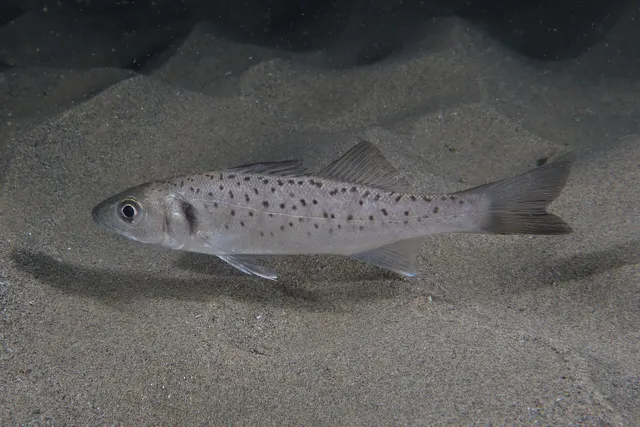 European sea bassA fast, predatory inshore fish that hunts in broken water and surf, and one of the most closely managed recreational species in European seas.
Julien Renoult — CC BY 4.0, via Wikimedia Commons
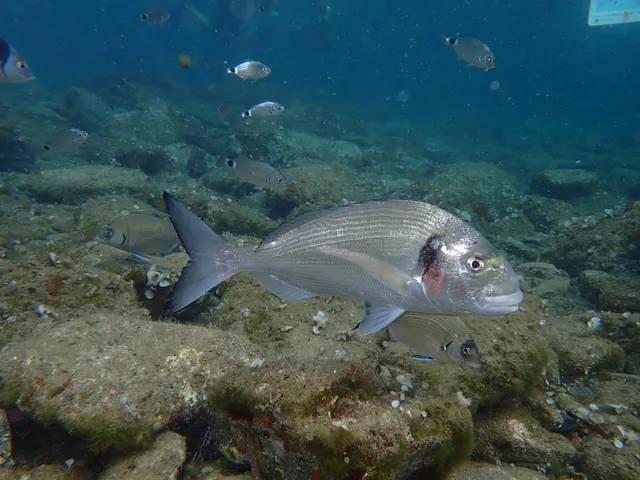 Gilthead breamThe Mediterranean's most prized sea bream, marked by a golden band between the eyes, with a jaw powerful enough to crush shellfish and a range now expanding northward.
jujurenoult — CC BY 4.0, via Wikimedia Commons
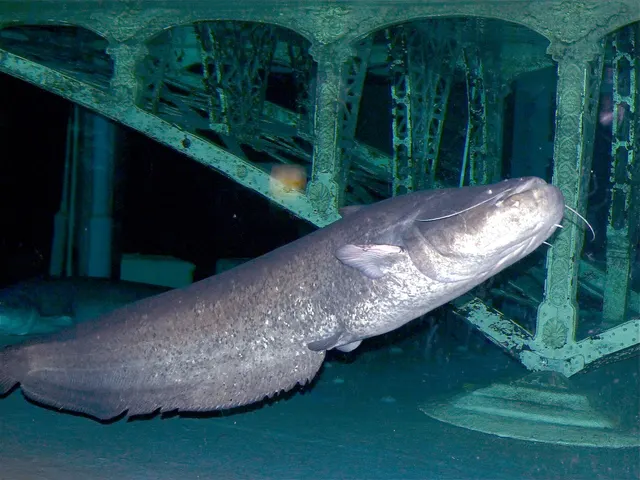 Wels catfishEurope's largest freshwater fish, reaching well over two metres, and an expanding introduced range that has made it one of the continent's most contested species.
Bernard DUPONT from FRANCE — CC BY-SA 2.0, via Wikimedia Commons
Places within this area
Publicly documented fishing geography. FishingHQ describes what the ground is; it does not say whether you may fish it, and every one of these sends that question to the body that holds the answer. Browse every place in this part of the world.
Who to ask before fishing any of these
FishingHQ does not know the current access position here, and in Spain the first question is which administration to ask. Recreational sea fishing, underwater fishing and shellfish gathering are licensed by the autonomous community rather than by the state, with separate licences for each and different validity in each community, and state and European measures apply on top. Everything changes. Establish which autonomous community this water belongs to, and check the current position with its fisheries administration, before going.
FishingHQ does not know the current access position here, and in Spain the first question is which administration to ask. Recreational sea fishing, underwater fishing and shellfish gathering are licensed by the autonomous community rather than by the state, with separate licences for each and different validity in each community, and state and European measures apply on top. Everything changes. Establish which autonomous community this water belongs to, and check the current position with its fisheries administration, before going. This water is tidal and transitional, so the freshwater regime may also apply above the tidal limit: FishingHQ does not know the current access position here. Inland fishing in Spain is licensed by the autonomous community, and a great many waters additionally require a separate permit issued per water and frequently per day, often by ballot on the better rivers. Seasons, methods and permit systems differ between neighbouring communities and change. Establish which community administers this water and check with it before going.
Cabo Peñas
Headland · Salt water
The northernmost point of Asturias: a quartzite headland with vertical cliffs, wave-cut platforms at their foot and reef running offshore into deep water on the Cantabrian shelf.
Fully exposed to the Bay of Biscay from north-west through north-east, and a reference point for the Cantabrian sea-area forecast.
Particular to this ground: cliffs and rock platforms, cold water shock.
Severe hazards of Spain apply here: shallow water blackout and breath-hold loss of consciousness, boat traffic and being seen.
Zurriola and the Urumea mouth, San Sebastián
Beach · Brackish water
An urban surf beach on the Basque coast beside the mouth of the Urumea, with a rock breakwater on its western side, clean sand in front and the sheltered shell-shaped bay of La Concha immediately west of the river.
Zurriola faces open Biscay and takes the swell; La Concha behind the island is one of the most sheltered urban bays on the coast.
Particular to this ground: cold water shock.
Severe hazards of Spain apply here: cliffs and rock platforms, shallow water blackout and breath-hold loss of consciousness, boat traffic and being seen.
Cap de Creus
Headland · Salt water
The easternmost point of mainland Spain: a peninsula of folded schist worn into fins, coves and islets where the Pyrenees meet the Mediterranean, with rock and posidonia below the surface and deep water immediately off the point.
Fully exposed to the tramuntana, a strong dry northerly that funnels down from the mountains and can blow for days, and to the sea it raises across the Gulf of Lion.
Particular to this ground: drowning and immersion, cliffs and rock platforms, sun, dehydration and fatigue.
Severe hazards of Spain apply here: shallow water blackout and breath-hold loss of consciousness, boat traffic and being seen.
Particular to this water: This ground lies in or beside a marine protected area whose zoning constrains fishing, diving, anchoring and collection independently of any licence, with rules that differ between zones and boundaries that are not visible from the water. Underwater fishing is licensed and regulated separately from rod fishing throughout this jurisdiction, with its own age, equipment and distance requirements, and holding a rod licence is not permission to spearfish.
Cabo de Gata
Headland · Salt water
A volcanic headland on the arid south-eastern corner of Spain, with dark rock cliffs, boulder falls, small sand and shingle coves between them and extensive posidonia meadow offshore.
Exposed from east through south, and one of the driest and sunniest coasts in Europe, which makes heat a planning factor rather than a comfort one.
Particular to this ground: drowning and immersion, sun, dehydration and fatigue.
Severe hazards of Spain apply here: cliffs and rock platforms, shallow water blackout and breath-hold loss of consciousness, boat traffic and being seen.
Particular to this water: This ground lies in or beside a marine protected area whose zoning constrains fishing, diving, anchoring and collection independently of any licence, with rules that differ between zones and boundaries that are not visible from the water. Underwater fishing is licensed and regulated separately from rod fishing throughout this jurisdiction, with its own age, equipment and distance requirements, and holding a rod licence is not permission to spearfish.
Safety
Shallow water blackout and breath-hold loss of consciousness is set out at the top of this page, where it cannot be missed.
Cliffs and rock platforms — Can cause serious injury or death
Long-period Atlantic swell arrives on the north and west coast rock platforms in sets rather than evenly, so the conditions that sweep somebody off look survivable for the twenty minutes beforehand. Wet rock and weed on a sloping platform remove any chance of self-recovery.
What reduces it: Watch a full set cycle before committing to a position, identify the escape route and how long it takes, wear a flotation aid rather than carry one, never fish a platform alone, and treat a rising swell forecast as a reason not to go rather than a reason to be careful.
Worse when:
- On the Atlantic north and west coasts, where ocean swell arrives with the full fetch behind it.
- On a rising swell, which arrives before the wind that generated it and looks like calm weather.
Boat traffic and being seen — Can cause serious injury or death
Small-craft and personal-watercraft traffic is heavy on the Mediterranean coast in season, and a swimmer, breath-hold diver or float is nearly invisible from a planing boat until it is too close to alter.
What reduces it: Use a surface marker buoy with a dive flag and keep it directly above the diver, stay inside marked swimming and diving zones where they exist, and treat busy water and poor visibility as a reason to move rather than to be careful.
Sun, dehydration and fatigue — Can cause injury needing treatment
Long summer sessions on exposed Mediterranean rock produce dehydration and heat exhaustion that degrade judgement and coordination well before they produce collapse, on ground where both are needed.
What reduces it: Carry substantially more water than the session appears to need, fish the ends of the day rather than the middle of it in high summer, and treat shade and a stopping time as part of the plan.
Further safety reading
- Breath-hold blackout — In a country where breath-hold hunting is mainstream, the discipline's defining risk is the one that most needs to be reachable from the geography rather than only from the technique pages.
- Rock platform and cliff safety — The Atlantic north and west coast is a rock-platform coast taking full ocean swell, and it fails people by the mechanism rock platforms share everywhere: the sets that sweep somebody off are not the average sea.
Check the rules before you fish
Fishing laws, bylaws, access rules, seasons, bait restrictions and permitted methods vary by location and can change. Check the current rules from the relevant authority and the water you intend to fish before fishing.
Check with:
- Current national or regional law for where you are fishing
- Current local bylaws
- The relevant fisheries authority
- The landowner, club or fishery whose water it is
- Any restrictions specific to the species or the method you intend to use
Where to go next
What swims here
- Common octopusCulturally and commercially central on the Atlantic coast in particular, where the pot fishery and the shore gathering tradition are both long established.
- European sea bassPresent on both Spanish coasts and fished from shore on each, which is part of why an angler can cross the country and recognise the fish while recognising nothing else about the water.
- Gilthead breamOne of the defining inshore fish of the Spanish Mediterranean and present on the Atlantic side as well, and the species most likely to be the answer to what somebody has caught off a Spanish rock.
- Wels catfishIntroduced rather than native, established in the Ebro and other regulated river systems, and the fish that draws specialist freshwater anglers to Spain from across the continent.
How this compares
- PortugalTwo Iberian jurisdictions sharing an Atlantic coast and administering it in opposite ways: Portugal licenses recreational sea fishing from the state, Spain from the autonomous community.
- FranceTwo neighbours sharing an Atlantic and a Mediterranean coast and administering them completely differently — national federation in one, seventeen autonomous communities in the other.
Rules and access
Sources and evidence
- ICES Advice on fishing opportunities, catch and effort — International Council for the Exploration of the Sea (Scientific institute)Relied on for: Ecoregion description, stock distribution and status, nursery function and the hydrography of the European sea areas assessed, including the Baltic, the North Sea, the Celtic Seas and the Iberian and Biscay shelf.States this directlyCitation checked — the work exists and is described correctly
- FAO Species Identification Guides for Fishery Purposes and the FAO Species Catalogues — Food and Agriculture Organization of the United Nations (Scientific institute)Relied on for: Identification, distribution and habitat association of the fishes and invertebrates of the Mediterranean, the Black Sea and the eastern central Atlantic.States this directlyCitation checked — the work exists and is described correctly
- FishBase: a global information system on fishes — Froese, R. and D. Pauly, eds. — FishBase Consortium (Scientific institute)Relied on for: Recorded distribution, depth range, habitat association, size and biology of the species named.States this directlyPassage read and verified
- The IUCN Red List of Threatened Species — International Union for Conservation of Nature (Conservation authority)Relied on for: Current global and regional conservation assessment for the species named, with the assessment date.Background and mechanism onlyCitation checked — the work exists and is described correctly
- Freshwater Fishes of the British Isles — HarperCollins (New Naturalist 75), 1992 (Reference work)Relied on for: Distribution, ecology, life history and conservation status of European freshwater fishes, including the migratory salmonids and the cyprinid and percid communities named.States this directlyCitation checked — the work exists and is described correctly
- FishBase: a global information system on fishes — Froese, R. and D. Pauly, eds. — FishBase Consortium (Scientific institute)Relied on for: Recorded distribution, habitat association and life history of the freshwater and migratory species named.States this directlyPassage read and verified
- Fishers' Craft and Lettered Art: Tracts on Fishing from the End of the Middle Ages — University of Toronto Press, 1997 (Scientific literature)Relied on for: That European fishing traditions develop around the water and fish available to them, and the historical method of reading such traditions.Background and mechanism onlyCitation checked — the work exists and is described correctly
- General angling website restatements of established technique — Various (Credible secondary source)Relied on for: Widely restated descriptions of regional angling practice, recorded as practitioner consensus rather than as scholarship.Background and mechanism onlyCitation checked — the work exists and is described correctly
Why the 11 connections on this page are here, and the sources
What swims here
Backed by research — 4 connections
Supported by peer-reviewed research or fisheries science. The sources are listed and can be checked.
Common octopus
That a species occurs in these waters, drawn from distribution science and stock assessment. It is a statement about where the animal lives and is not a statement that anybody will catch one, still less where.
- FAO Species Identification Guides for Fishery Purposes and the FAO Species Catalogues — Food and Agriculture Organization of the United Nations (Scientific institute)Relied on for: Identification, distribution and habitat association of the fishes and invertebrates of the Mediterranean and Black Sea.States this directlyCitation checked — the work exists and is described correctly
- FishBase: a global information system on fishes — Froese, R. and D. Pauly, eds. — FishBase Consortium (Scientific institute)Relied on for: Recorded distribution, depth range and habitat association of the species named.States this directlyPassage read and verified
European sea bass
That a species occurs in these waters, drawn from distribution science and stock assessment. It is a statement about where the animal lives and is not a statement that anybody will catch one, still less where.
- FishBase: a global information system on fishes — Froese, R. and D. Pauly, eds. — FishBase Consortium (Scientific institute)Relied on for: Recorded distribution, depth range and habitat association of the species named, including its occurrence in the waters of the jurisdiction named.States this directlyPassage read and verified
- ICES Advice on fishing opportunities, catch and effort — International Council for the Exploration of the Sea (Scientific institute)Relied on for: Stock distribution and assessment across the European ecoregions, which is the basis for stating that a species occurs in a given national sea area.States this directlyCitation checked — the work exists and is described correctly
Gilthead bream
That a species occurs in these waters, drawn from distribution science and stock assessment. It is a statement about where the animal lives and is not a statement that anybody will catch one, still less where.
- FAO Species Identification Guides for Fishery Purposes and the FAO Species Catalogues — Food and Agriculture Organization of the United Nations (Scientific institute)Relied on for: Identification, distribution and habitat association of the fishes and invertebrates of the Mediterranean and Black Sea.States this directlyCitation checked — the work exists and is described correctly
- FishBase: a global information system on fishes — Froese, R. and D. Pauly, eds. — FishBase Consortium (Scientific institute)Relied on for: Recorded distribution, depth range and habitat association of the species named.States this directlyPassage read and verified
Wels catfish
That a species occurs in these waters, drawn from distribution science and stock assessment. It is a statement about where the animal lives and is not a statement that anybody will catch one, still less where.
- Freshwater Fishes of the British Isles — HarperCollins (New Naturalist 75), 1992 (Reference work)Relied on for: Distribution, habitat requirement and life history of European freshwater fishes, including their occurrence across the continental range named.States this directlyCitation checked — the work exists and is described correctly
- FishBase: a global information system on fishes — Froese, R. and D. Pauly, eds. — FishBase Consortium (Scientific institute)Relied on for: Recorded distribution and habitat association of the freshwater and migratory species named.States this directlyPassage read and verified
How people fish here
What experienced anglers do — 2 connections
Widely and independently recommended by experienced anglers and specialist sources. This is real angling knowledge, not proof: controlled evidence for it is limited, and FishingHQ records it as convention rather than as a demonstrated effect.
Sea fishing
That a discipline is conventionally practised in these waters, drawn from published description of practice rather than from participation data, and labelled as consensus accordingly.
- Sea Angler — Bauer Media (Specialist angling publication)Relied on for: Long-running published description of European sea angling practice by region and destination, including where British anglers travel and what they fish for there.FishingHQ's interpretation of what it saysCitation checked — the work exists and is described correctly
- General angling website restatements of established technique — Various (Credible secondary source)Relied on for: Widely restated descriptions of which disciplines are conventionally practised in the waters named, recorded as practitioner consensus rather than as scholarship.Background and mechanism onlyCitation checked — the work exists and is described correctly
Spearfishing
That a discipline is conventionally practised in these waters, drawn from published description of practice rather than from participation data, and labelled as consensus accordingly.
- Sea Angler — Bauer Media (Specialist angling publication)Relied on for: Long-running published description of European sea angling practice by region and destination, including where British anglers travel and what they fish for there.FishingHQ's interpretation of what it saysCitation checked — the work exists and is described correctly
- General angling website restatements of established technique — Various (Credible secondary source)Relied on for: Widely restated descriptions of which disciplines are conventionally practised in the waters named, recorded as practitioner consensus rather than as scholarship.Background and mechanism onlyCitation checked — the work exists and is described correctly
How this compares
What experienced anglers do — 2 connections
Widely and independently recommended by experienced anglers and specialist sources. This is real angling knowledge, not proof: controlled evidence for it is limited, and FishingHQ records it as convention rather than as a demonstrated effect.
Portugal
A navigational link between two places a reader is genuinely choosing between or reasoning across, offered as orientation rather than as a ranking.
- Sea Angler — Bauer Media (Specialist angling publication)Relied on for: Long-running published description of European sea angling practice by region and destination, including where British anglers travel and what they fish for there.FishingHQ's interpretation of what it saysCitation checked — the work exists and is described correctly
- General angling website restatements of established technique — Various (Credible secondary source)Relied on for: Widely restated descriptions of which disciplines are conventionally practised in the waters named, recorded as practitioner consensus rather than as scholarship.Background and mechanism onlyCitation checked — the work exists and is described correctly
A navigational link between two places a reader is genuinely choosing between or reasoning across, offered as orientation rather than as a ranking.
- Sea Angler — Bauer Media (Specialist angling publication)Relied on for: Long-running published description of European sea angling practice by region and destination, including where British anglers travel and what they fish for there.FishingHQ's interpretation of what it saysCitation checked — the work exists and is described correctly
- General angling website restatements of established technique — Various (Credible secondary source)Relied on for: Widely restated descriptions of which disciplines are conventionally practised in the waters named, recorded as practitioner consensus rather than as scholarship.Background and mechanism onlyCitation checked — the work exists and is described correctly
France
A navigational link between two places a reader is genuinely choosing between or reasoning across, offered as orientation rather than as a ranking.
- Sea Angler — Bauer Media (Specialist angling publication)Relied on for: Long-running published description of European sea angling practice by region and destination, including where British anglers travel and what they fish for there.FishingHQ's interpretation of what it saysCitation checked — the work exists and is described correctly
- General angling website restatements of established technique — Various (Credible secondary source)Relied on for: Widely restated descriptions of which disciplines are conventionally practised in the waters named, recorded as practitioner consensus rather than as scholarship.Background and mechanism onlyCitation checked — the work exists and is described correctly
Safety reading
Official guidance — 2 connections
Stated by a fisheries authority, scientific institute or recognised angling body. Authoritative, but summarising rather than demonstrating.
Breath-hold blackout
A link from the place to the substantial safety topic describing the mechanism that hurts people there, rather than a warning restated in prose on the record itself.
- DAN guidance on freediving safety, hypoxia and shallow-water blackout — Divers Alert Network (Water-safety or diver-training authority)Relied on for: Hypoxic blackout in breath-hold diving, its absence of warning symptoms, and the direct supervision practice that addresses it.States this directlyPassage read and verified
Rock platform and cliff safety
A link from the place to the substantial safety topic describing the mechanism that hurts people there, rather than a warning restated in prose on the record itself.
- RNLI water safety guidance: cold water shock and Float to Live — Royal National Lifeboat Institution (Water-safety or diver-training authority)Relied on for: Cold water shock and the immersion response, tidal cut-off, and water-safety guidance for shore anglers and small-craft users.States this directlyPassage read and verified
Rules and access
Official guidance — 1 connection
Stated by a fisheries authority, scientific institute or recognised angling body. Authoritative, but summarising rather than demonstrating.
Licences and permission
This points to the kind of rule that applies rather than to a rule itself. The same question is administered differently in each of these countries, so the page says that the answer is held elsewhere and changes.
- Code of Conduct for Responsible Fisheries — Food and Agriculture Organization of the United Nations, Rome, 1995 (Standards body)Relied on for: The international framework within which national and regional fisheries authorities set, revise and enforce measures, and the principle that the responsible authority rather than a third party holds the current position.Background and mechanism onlyCitation checked — the work exists and is described correctly
- ICES Advice on fishing opportunities, catch and effort — International Council for the Exploration of the Sea (Scientific institute)Relied on for: That the stock advice European measures are set against is produced internationally and revised annually, which is how a national measure changes without the national law changing.States this directlyCitation checked — the work exists and is described correctly
How FishingHQ labels evidence is explained in the evidence policy.