Bread
Bait · Last reviewed 2026-08-10
A single loaf provides four genuinely different baits, catches a very wide range of species, and costs almost nothing.
- How long it keeps
- Days at room temperature; weeks frozen. Mouldy bread should not be used, and not for aesthetic reasons — introducing mould into a fishery is avoidable.
Bread is the most versatile cheap bait there is, and the versatility comes from the fact that different parts of a loaf behave completely differently in water.
Flake — soft crumb pinched onto the hook — is buoyant, breaks up gradually, and falls slowly. Crust floats, which makes it the classic surface bait for carp and chub. Punch — small discs cut from a slice with a tool — is a dense, tiny, precisely-sized bait for shy fish. Liquidised bread is a cloud feed that hangs in the water and drifts.
Bread's great virtue is visibility and softness. Fish take it confidently because it behaves like something that fell in, and a fish that has never seen a boilie will take bread. Its great limitation is durability: everything eats it, and it does not last.
What it is
Soft white crumb is light, buoyant and breaks down quickly, releasing a fine cloud. Crust is tougher and floats reliably. A punched disc from a fresh slice is dense enough to cast and small enough for a size 20 hook. Older, slightly dried bread punches and holds better than very fresh bread, which is one of the few cases where stale is preferable.
Fish it catches
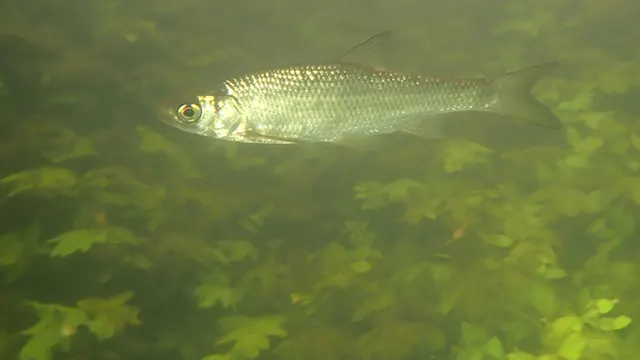 DacePunched bread and liquidised bread feed hold a dace shoal in a run and are the traditional winter approach when maggots stop working.
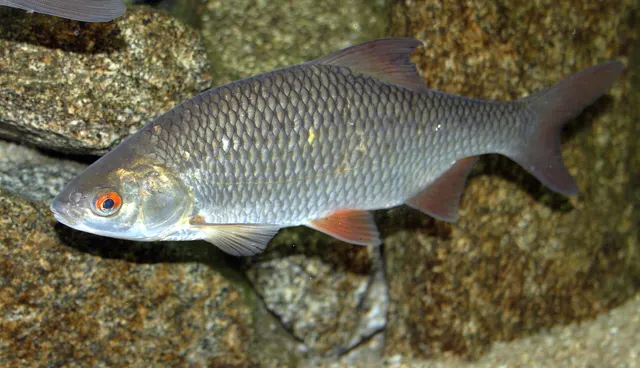 RoachPunched bread on a fine hook is one of the most effective winter roach baits there is, and it costs nothing.
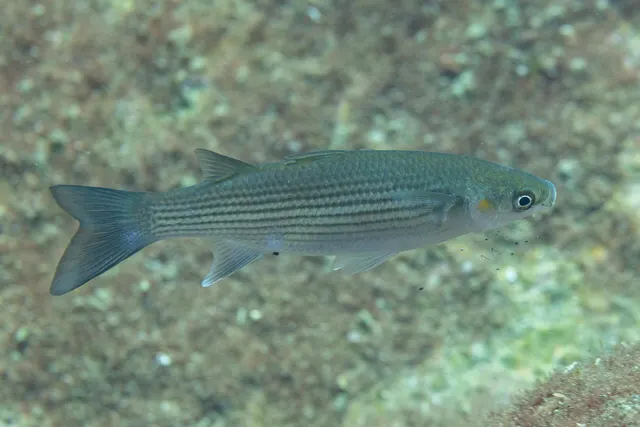 Thick-lipped grey mulletBread is the conventional starting bait for mullet in harbours precisely because it can be fished as loose feed and hook bait at once, which suits a fish that inspects at length before taking.
Finding and obtaining it
Any loaf. Plain white sliced bread is what most anglers use for punch and liquidised feed; an unsliced tin loaf gives better flake and crust. Nothing is gained by specialist products.
Keeping and storing it
Bread keeps as bread does. For angling, slices sealed in a bag and frozen are ideal, because bread thaws in minutes and a frozen slice punches cleanly. Liquidised bread freezes well in session-sized bags.
Preparing it
For flake, tear rather than cut, and pinch only the part that goes onto the hook so the rest stays fluffy. For crust, cut cubes with a little crumb attached to give the hook something to hold. For punch, use a fresh or slightly dried slice with the crusts off and a punch tool. For liquidised feed, blitz crustless bread in a food processor until it is a fine crumb.
Using it
Flake is pinched around the hook shank with the point left clear, and should be attached at one edge only so the rest stays soft and buoyant. Crust is hooked through the crust itself so it floats hook-down. Punch discs go straight onto a small hook. The universal error with bread is compressing it — squeezed bread is dense, sinks like a stone and does not break down.
Disposing of what is left
Take unused bread home. Do not feed the surplus into the swim on the way out, and be aware that bread is one of the baits fisheries most often ask to be used sparingly, because large quantities of decomposing bread affect water quality.
Biosecurity
Bread carries no fish disease risk. As with every bait, the equipment does: bowls, bags and anything that has held water from a fishery should be rinsed and dried before being used at a different one, because the water and the organic matter suspended in it are the transfer route rather than the bait itself.
Check the rules before you fish
Fishing laws, bylaws, access rules, seasons, bait restrictions and permitted methods vary by location and can change. Check the current rules from the relevant authority and the water you intend to fish before fishing.
Check with:
- Current national or regional law for where you are fishing
- Current local bylaws
- The relevant fisheries authority
- The landowner, club or fishery whose water it is
- Any restrictions specific to the species or the method you intend to use
Where to go next
How it is fished
- Float fishingFlake fished on the drop, and crust fished on top — both are float presentations before they are anything else.
- LedgeringA large piece of flake on the bottom, which is a specific and old chub and roach method.
- Surface fishing for coarse fishCrust, which floats hook-down, and is the original floating bait.
Instead of this
Sources and evidence
Why the 7 connections on this page are here, and the sources
Fish it catches
What experienced anglers do — 3 connections
Widely and independently recommended by experienced anglers and specialist sources. This is real angling knowledge, not proof: controlled evidence for it is limited, and FishingHQ records it as convention rather than as a demonstrated effect.
Dace
A statement about bait convention for a species, which is practice rather than biology.
- Coarse Fishing — A. & C. Black, 1912 (Specialist angling publication)Relied on for: Established coarse angling practice, including method selection, presentation and the reasoning behind them.States this directlyCitation checked — the work exists and is described correctly
- Freshwater Fishing — Macdonald & Jane's, 1975 (Specialist angling publication)Relied on for: Freshwater angling technique and the principles behind method selection.States this directlyCitation checked — the work exists and is described correctly
- General angling website restatements of established technique — Various (Credible secondary source)Relied on for: Widely restated angling practice, recorded as consensus rather than as scholarship.Background and mechanism onlyCitation checked — the work exists and is described correctly
Roach
Long-established and independently described.
- Coarse Fishing — A. & C. Black, 1912 (Specialist angling publication)Relied on for: Bread baits for roach and coarse fish.Citation checked — the work exists and is described correctly
- Angling Times — Bauer Media (Specialist angling publication)Relied on for: Contemporary bread punch practice for roach.Citation checked — the work exists and is described correctly
Thick-lipped grey mullet
Established angling convention about what a bait is used for. Convention is what this is, and labelling it as convention is what stops it being read as a tested result.
- Sea Angler — Bauer Media (Specialist angling publication)Relied on for: Contemporary UK sea angling practice as reported and restated by practitioners, including shore technique, bait use and species behaviour.States this directlyCitation checked — the work exists and is described correctly
- General angling website restatements of established technique — Various (Credible secondary source)Relied on for: Widely restated angling practice and belief, recorded as practitioner consensus rather than as tested fact.Background and mechanism onlyCitation checked — the work exists and is described correctly
How it is fished
What experienced anglers do — 3 connections
Widely and independently recommended by experienced anglers and specialist sources. This is real angling knowledge, not proof: controlled evidence for it is limited, and FishingHQ records it as convention rather than as a demonstrated effect.
Float fishing
The bread page describes flake attached at one edge so the rest stays soft and buoyant. That behaviour is only useful where the bait is falling through the water rather than lying on the bottom, which is the presentation a float creates.
- Coarse Fishing — A. & C. Black, 1912 (Specialist angling publication)Relied on for: Specialist treatment of which bait or lure family this technique is fished with.States this directlyCitation checked — the work exists and is described correctly
- Angling Times — Bauer Media (Specialist angling publication)Relied on for: The independently restated practitioner pairing of this technique with this family.Background and mechanism onlyCitation checked — the work exists and is described correctly
Ledgering
Bread flake ledgered is a distinct presentation rather than a substitution: the flake breaks down into a cloud around a static hookbait, which is something no other coarse bait does on the bottom.
- Coarse Fishing — A. & C. Black, 1912 (Specialist angling publication)Relied on for: Specialist treatment of which bait or lure family this technique is fished with.States this directlyCitation checked — the work exists and is described correctly
- Angling Times — Bauer Media (Specialist angling publication)Relied on for: The independently restated practitioner pairing of this technique with this family.Background and mechanism onlyCitation checked — the work exists and is described correctly
Surface fishing for coarse fish
The bread page describes crust hooked through the crust itself so it floats hook-down. That is a description of a surface bait and of nothing else, and predates every manufactured floater.
- Coarse Fishing — A. & C. Black, 1912 (Specialist angling publication)Relied on for: Specialist treatment of which bait or lure family this technique is fished with.States this directlyCitation checked — the work exists and is described correctly
- Angling Times — Bauer Media (Specialist angling publication)Relied on for: The independently restated practitioner pairing of this technique with this family.Background and mechanism onlyCitation checked — the work exists and is described correctly
Instead of this
What experienced anglers do — 1 connection
Widely and independently recommended by experienced anglers and specialist sources. This is real angling knowledge, not proof: controlled evidence for it is limited, and FishingHQ records it as convention rather than as a demonstrated effect.
Sweetcorn
The comparison is routine in coarse practice.
- Freshwater Fishing — Macdonald & Jane's, 1975 (Specialist angling publication)Relied on for: The comparative properties of bread and particle baits.Citation checked — the work exists and is described correctly
- Angling Times — Bauer Media (Specialist angling publication)Relied on for: Contemporary bait comparison.Citation checked — the work exists and is described correctly
How FishingHQ labels evidence is explained in the evidence policy.