Handling a large fish for the table
Explainer · Last reviewed 2026-08-15
A large fish is not a big version of a small one. Its centre stays warm for hours, it cannot be chilled from the outside, and every handling decision has to account for a body the ice cannot reach.
Safety: injury while handling fish — can cause injury needing treatment. 2 more points apply here.
Everything in catch handling scales badly, and the thing that scales worst is heat.
WHY SIZE CHANGES THE PROBLEM. Heat leaves a body through its surface, and surface area rises with the square of length while mass rises with the cube. A fish twice as long has four times the surface and eight times the mass, so it takes far longer to cool per kilogram — and the centre, which is the most valuable part, is the last place to get cold. A mackerel in an ice slurry is cold in minutes; a thirty-kilo fish laid on ice may have a warm core hours later.
AND SOME LARGE FISH START WARM. The FDA singles out tunas as "species that generate heat, resulting in internal temperatures that may exceed environmental temperatures" — they are endothermic to a degree and their muscle is above sea temperature while they are alive. A large tuna is therefore a fish that begins hot, holds heat, and is also among the most susceptible species to histamine formation. That combination is why commercial tuna handling is an elaborate discipline rather than a matter of putting the fish in a box.
WHAT ACTUALLY WORKS. Dispatch immediately and bleed at once, while the heart still moves blood — the effect is larger in big fish, and the blood volume is substantial. Gut promptly, because the gut of a large fish is a large warm mass of enzymes. Then chill from the inside as well as the outside: pack the body cavity with ice rather than laying the fish on top of it, and use slurry rather than blocks where possible. A fish that will not fit in any container is a fish to consider processing into pieces on the spot, where that is lawful and practical.
AND THIS IS WHERE THE DECISION TO KEEP IT DESERVES REAL THOUGHT. A large fish is many meals, a great deal of freezer space, and — in almost every species — a mature breeding animal that took a long time to become large. In many fisheries the large individuals contribute disproportionately to reproduction. There are places and species where taking one is entirely reasonable and there are many where the honest answer is a photograph and a careful return.
The practical question is therefore not only 'can I keep this fish cold' but 'do I have somewhere for it to go'. A twenty-kilo fish landed with no ice, no space and no plan is a fish that was going to be wasted from the moment it was gaffed, and that decision was made in the car park.
Why the release argument gets stronger as the fish gets bigger
The case for returning large fish rests on two separate things, and they point the same way for once.
The biological argument is that in most species fecundity rises steeply with size — a large female produces disproportionately more eggs than several small ones of the same combined weight, and in some species the eggs are of better quality too. Removing the largest individuals therefore takes more reproductive capacity out of a population than the same weight of small fish.
The practical argument is the one this page has been making: a large fish is genuinely difficult to handle well, and a fish handled badly is wasted whether or not it was legal to take. The gap between the number of large fish killed and the number eaten well is not small.
Against that sits a real counter-argument that should not be waved away: release mortality in large, deep-caught or heavily-played fish is not zero, and a fish that will not survive release is better killed and eaten than returned to die. Barotrauma in fish brought up from depth is the clearest case. The honest position is that the decision is species- and situation-specific, and that 'always release' is as unthinking as 'always keep'.
Backed by research — why, and the sources (2)
Supported by peer-reviewed research or fisheries science. The sources are listed and can be checked.
- A review of catch-and-release angling mortality with implications for no-take reserves — Reviews in Fish Biology and Fisheries 15:129–154, 2005 (Scientific literature)Relied on for: Review evidence on catch-and-release mortality, including the handling variables that determine whether a released fish survives.Background and mechanism onlyCitation checked — the work exists and is described correctly
- Good Fish Guide — Marine Conservation Society (Conservation authority)Relied on for: Sustainability ratings for commercially caught species and the stock considerations behind them.Background and mechanism onlyCitation checked — the work exists and is described correctly
Where the rules come into it
Many fisheries protect large fish specifically — through maximum sizes, slot limits, one-fish rules or outright release requirements — and several species may not be retained at all. Requirements to land fish whole also exist. Check the rules for the water and the species before deciding to keep a large fish.
Official guidance — why, and the sources
Stated by a fisheries authority, scientific institute or recognised angling body. Authoritative, but summarising rather than demonstrating.
Safety
Injury while handling fish — Can cause injury needing treatment
A large fish cools slowly from the outside and its core can remain warm for hours, so spoilage and — in susceptible species — histamine formation continue in the most valuable part of the fish while the surface feels cold. Tunas begin the process warm because they generate body heat.
What reduces it: Dispatch and bleed immediately, gut promptly, and chill from the inside as well as the outside by packing the cavity with ice rather than laying the fish on it. Use an ice slurry where possible. Consider whether the fish can realistically be kept cold at all before deciding to keep it.
Worse when:
- Tunas and other fish that generate heat before death
- Warm weather, long journeys home, and fish that will not fit in any cooled container
- Fish laid on top of ice rather than surrounded and packed with it
Knives and cutting tools — Can cause injury needing treatment
Large fish are processed with large knives, frequently on a boat deck or a beach, on an animal heavy enough that it shifts under its own weight. Gaffs, and the teeth and spines of large fish, add their own injury routes.
What reduces it: Work on a stable surface with the fish secured. Keep bystanders clear. Cut away from the supporting hand and expect the fish to move when it is cut.
Worse when:
- A moving boat, or wet rock
- Toothed or heavily spined species
Precautions that always apply here
- Keep fingers out of the gills and clear of the teeth. Gill damage is usually fatal to the fish, and several species will remove skin from a finger.
Further safety reading
- Handling fish safely — Large knives, a heavy animal that shifts under its own weight, and frequently a moving deck.
Check the rules before you fish
Fishing laws, bylaws, access rules, seasons, bait restrictions and permitted methods vary by location and can change. Check the current rules from the relevant authority and the water you intend to fish before fishing.
Check with:
- Current national or regional law for where you are fishing
- Current local bylaws
- The relevant fisheries authority
- The landowner, club or fishery whose water it is
- Any restrictions specific to the species or the method you intend to use
Where to go next
Fish this applies to
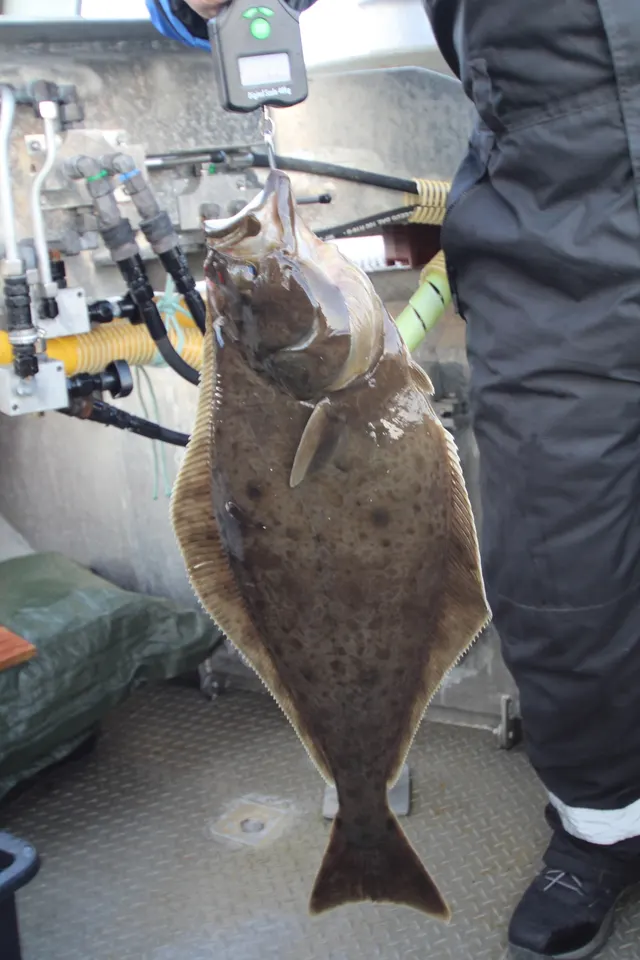 Atlantic halibutThe largest flatfish in the north Atlantic and the clearest British case of a fish whose handling problem is its mass: a body deep enough that ice on the surface never reaches the centre, on an animal slow-growing enough that keeping one is a conservation decision as much as a food one.
- Common octopusCephalopod flesh degrades quickly in warmth and the animal is generally taken in warm places, so immediate chilling is part of the capture rather than an afterthought.
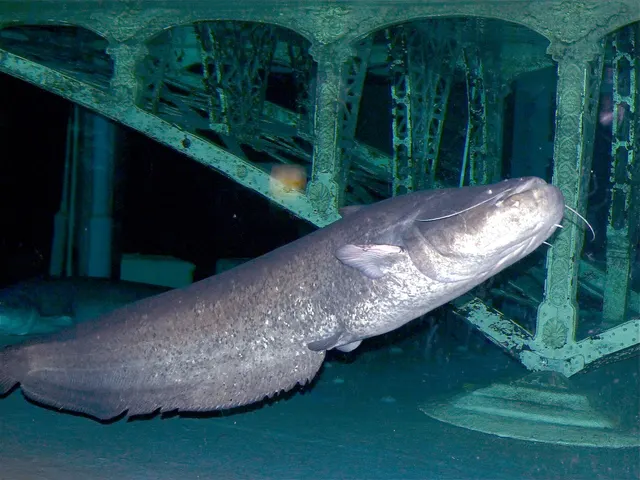 Wels catfishThe largest fish a European freshwater angler is likely to land, and one where the decision to keep it is almost always the wrong one — a very large, very old animal, in a water where its removal is noticed.
Related reading
- Contaminants, and what accumulates in a fishKeeping a smaller fish rather than the largest reduces contaminant exposure measurably, and it is the same decision the conservation material recommends for a completely different reason.
- Icing and chilling a catch: the only variable that matters muchEverything in chilling scales badly, and a large fish is where it stops working from the outside. Packing the cavity rather than laying the fish on ice is the difference.
How this compares
Rules and access
Sources and evidence
- Fish and Fishery Products Hazards and Controls Guidance — US Food and Drug Administration, Center for Food Safety and Applied Nutrition, 2022 (Standards body)Relied on for: Hazards and controls for fish and fishery products: scombrotoxin (histamine) formation, seafood parasites and the conditions that kill them, and natural toxins including their stability to cooking and freezing.States this directlyPassage read and verified
- A review of catch-and-release angling mortality with implications for no-take reserves — Reviews in Fish Biology and Fisheries 15:129–154, 2005 (Scientific literature)Relied on for: Review evidence on catch-and-release mortality, including the handling variables that determine whether a released fish survives.Background and mechanism onlyCitation checked — the work exists and is described correctly
- Good Fish Guide — Marine Conservation Society (Conservation authority)Relied on for: Sustainability ratings for commercially caught species and the stock considerations behind them.Background and mechanism onlyCitation checked — the work exists and is described correctly
Why the 8 connections on this page are here, and the sources
Fish this applies to
Official guidance — 2 connections
Stated by a fisheries authority, scientific institute or recognised angling body. Authoritative, but summarising rather than demonstrating.
Atlantic halibut
A link from a species that reaches sizes at which surface chilling fails to the record covering why mass changes the handling problem, resting on the guidance's treatment of internal temperature in large fish.
- Fish and Fishery Products Hazards and Controls Guidance — US Food and Drug Administration, Center for Food Safety and Applied Nutrition, 2022 (Standards body)Relied on for: Hazards and controls for fish and fishery products: scombrotoxin formation and the species groups associated with it, seafood parasites, and natural toxins.States this directlyPassage read and verified
Wels catfish
A link from a species reaching sizes at which chilling from the outside fails to the record that covers the consequences, and to the retention decision that precedes it.
- Fish and Fishery Products Hazards and Controls Guidance — US Food and Drug Administration, Center for Food Safety and Applied Nutrition, 2022 (Standards body)Relied on for: Hazards and controls for fish and fishery products: scombrotoxin formation and the species groups associated with it, seafood parasites, and natural toxins.States this directlyPassage read and verified
What experienced anglers do — 1 connection
Widely and independently recommended by experienced anglers and specialist sources. This is real angling knowledge, not proof: controlled evidence for it is limited, and FishingHQ records it as convention rather than as a demonstrated effect.
Common octopus
A record pointing at the practice or mechanism that explains it, so the explanation lives once rather than being restated on every species page.
- BlueWater Hunting and Freediving — BlueWater Freedivers, Ventura, California, 1995 (Practitioner report)Relied on for: Reef and blue-water breath-hold hunting practice, including fish behaviour, approach, catch handling and the judgement involved in taking a shot.States this directlyCitation checked — the work exists and is described correctly
- General angling website restatements of established technique — Various (Credible secondary source)Relied on for: Widely restated descriptions of fish behaviour and regional fishing practice, recorded as consensus rather than as scholarship.Background and mechanism onlyCitation checked — the work exists and is described correctly
Related reading
Backed by research — 1 connection
Supported by peer-reviewed research or fisheries science. The sources are listed and can be checked.
Contaminants, and what accumulates in a fish
A link from a species or a place to the accumulation mechanism that decides whether what is caught there should be eaten, resting on published seafood-hazard guidance and on the species' recorded diet and trophic position.
- ICES Advice on fishing opportunities, catch and effort — International Council for the Exploration of the Sea (Scientific institute)Relied on for: Contaminant monitoring in marine biota and the accumulation of contaminants through marine food webs.States this directlyCitation checked — the work exists and is described correctly
- Fish and Fishery Products Hazards and Controls Guidance — US Food and Drug Administration, Center for Food Safety and Applied Nutrition, 2022 (Standards body)Relied on for: Methylmercury in seafood, the species in which it accumulates, and the advisory approach taken to it.States this directlyPassage read and verified
Official guidance — 1 connection
Stated by a fisheries authority, scientific institute or recognised angling body. Authoritative, but summarising rather than demonstrating.
Icing and chilling a catch: the only variable that matters much
A link from the large-fish case to the general control, where the guidance's remarks on internal temperature explain why the general case needs modifying.
- Fish and Fishery Products Hazards and Controls Guidance — US Food and Drug Administration, Center for Food Safety and Applied Nutrition, 2022 (Standards body)Relied on for: Hazards and controls for fish and fishery products: scombrotoxin formation and the species groups associated with it, seafood parasites, and natural toxins.States this directlyPassage read and verified
How this compares
What experienced anglers do — 1 connection
Widely and independently recommended by experienced anglers and specialist sources. This is real angling knowledge, not proof: controlled evidence for it is limited, and FishingHQ records it as convention rather than as a demonstrated effect.
Dispatching a fish: doing it properly, or not doing it at all
A navigational claim that a reader on one of these pages is likely to want the other. It asserts adjacency of subject matter rather than a fact about the world.
- Sea Angler — Bauer Media (Specialist angling publication)Relied on for: Contemporary UK and European sea angling practice as reported by practitioners, including catch handling convention.States this directlyCitation checked — the work exists and is described correctly
- General angling website restatements of established technique — Various (Credible secondary source)Relied on for: Widely restated angling practice, recorded as consensus rather than as scholarship.Background and mechanism onlyCitation checked — the work exists and is described correctly
Safety reading
Official guidance — 1 connection
Stated by a fisheries authority, scientific institute or recognised angling body. Authoritative, but summarising rather than demonstrating.
Handling fish safely
A link from a catch-handling subject to the safety record that covers the injury or hazard route it creates.
- Fish and Fishery Products Hazards and Controls Guidance — US Food and Drug Administration, Center for Food Safety and Applied Nutrition, 2022 (Standards body)Relied on for: Hazards and controls for fish and fishery products: scombrotoxin formation and the species groups associated with it, seafood parasites, and natural toxins.States this directlyPassage read and verified
Rules and access
Official guidance — 1 connection
Stated by a fisheries authority, scientific institute or recognised angling body. Authoritative, but summarising rather than demonstrating.
Size limits and retention
This points to the kind of rule that applies rather than to a rule itself. The page already carries the notice that requirements vary; this says WHICH rules bear on it, which turns a generic warning into a route to the body that sets them.
- The IUCN Red List of Threatened Species — International Union for Conservation of Nature (Conservation authority)Relied on for: The conservation assessment of the species concerned, which is the basis on which protection measures are argued for and set.States this directlyCitation checked — the work exists and is described correctly
- ICES Advice on fishing opportunities, catch and effort — International Council for the Exploration of the Sea (Scientific institute)Relied on for: Stock status and the advice on which management and protection measures for the stocks concerned are set and revised.States this directlyCitation checked — the work exists and is described correctly
How FishingHQ labels evidence is explained in the evidence policy.