Contaminants, and what accumulates in a fish
Explainer · Last reviewed 2026-08-18
The catch-to-table layer covers the hazards that make somebody ill this week. This is the one that accumulates over years, is invisible, and is the reason official advice is expressed as a frequency rather than as a yes or no.
Safety: contamination and toxins in the catch — can cause injury needing treatment.
Contamination and toxins in the catch — Can cause injury needing treatment
Methylmercury and fat-soluble organic pollutants accumulate through food webs and build up over an animal's life, so large, old, predatory fish carry the highest loads. The effect is cumulative rather than acute: no single meal causes harm, and sustained high intake can, with the greatest consequence for the developing nervous system.
What reduces it: Check the current advice from the national food-safety authority, and for fresh water for the specific water body. Keep smaller individuals rather than the largest. For fat-soluble pollutants, remove skin, trim fat and discard belly flap and organs — but note that this does nothing for methylmercury, which is bound to the muscle.
Worse when:
- For women who are pregnant, may become pregnant, or are breastfeeding, and for young children, which is why advice is issued separately for those groups.
- In fresh waters with a specific industrial, mining, agricultural or urban history, where advisories are issued per water body rather than per species.
The rest of the catch-to-table material is about acute hazards — parasites, histamine, biotoxins, bacterial spoilage — where the question is whether this fish, today, will make somebody ill. Contaminants are a different shape of problem and need a different kind of answer.
WHAT ACCUMULATES AND WHY. Some contaminants are fat-soluble or bind to proteins, are not efficiently excreted, and therefore build up in an animal over its life. When a predator eats contaminated prey it takes on their accumulated load as well as its own, so concentration rises with each step up a food web — the same mechanism as ciguatera, applied to industrial and geological contaminants rather than to an algal toxin.
METHYLMERCURY IS THE PRINCIPAL ONE. Mercury enters water from natural and industrial sources, is converted by bacteria into methylmercury, and accumulates through the food web. It binds to muscle protein, which means it is in the flesh rather than the fat and cannot be trimmed away. Its concentration rises with the fish's age, size and trophic position, so the highest loads are in large, old, predatory fish — which are also the ones anglers most want to keep.
ORGANIC POLLUTANTS ARE THE SECOND GROUP and behave differently in one useful way. Substances of the PCB and dioxin families are fat-soluble and concentrate in fatty tissue, skin and organs — so trimming fat, removing skin and discarding the belly flap and organs genuinely reduces exposure, which is the opposite of the mercury case.
AND FRESHWATER ADDS LOCALITY. A river or stillwater downstream of a particular history — industrial, mining, agricultural, urban — can carry a specific local contaminant problem that has nothing to do with the species and everything to do with the water, which is why freshwater advisories are frequently issued per water body rather than per species.
WHICH IS WHY THE ADVICE IS A FREQUENCY RATHER THAN A PROHIBITION. Nobody is made ill by one meal. The concern is cumulative intake over months and years, so authorities express advice as how often a species may reasonably be eaten, and issue different advice for the groups where the consequence is greatest — women who are pregnant, may become pregnant or are breastfeeding, and young children, because methylmercury affects the developing nervous system.
AND FISH REMAIN GOOD FOOD, WHICH THE ADVICE ALSO SAYS. Every authority that issues contaminant advice also states that fish is a valuable part of a diet and that the answer is choosing which and how often rather than avoiding it. A record that presented only the hazard would be as misleading as one that omitted it.
FISHINGHQ PUBLISHES NO NUMBERS. Species lists, frequencies and thresholds are set by national food-safety authorities, differ between countries, and are revised as monitoring data accumulates. Check the current advice for the country and, for fresh water, for the specific water.
Why the advice singles out large old predators, and what to do with that
Every contaminant advisory anywhere converges on the same short list of fish, and understanding why turns a list to memorise into a rule that transfers.
THE MECHANISM IS ARITHMETIC. A fish takes in contaminant faster than it excretes it, so its burden rises with time. It also eats other animals that have been doing the same thing, so it inherits theirs. A ten-year-old predator that has eaten several thousand smaller fish carries its own decade of intake plus a share of each of theirs.
SO THREE PROPERTIES PREDICT THE LOAD, and they are properties an angler can see. AGE, because burden accumulates over time. SIZE, because it correlates with age and because a larger fish has eaten more. And TROPHIC POSITION, because a predator inherits from its prey and a plankton-feeder does not.
WHICH IS WHY THE SAME NAMES RECUR — large tuna, swordfish, marlin, shark, large pike — and why the same rule exonerates the same others: small, fast-growing, short-lived, low-trophic species such as sardines, sprats, herring and mackerel carry very much less.
AND IT GIVES AN ANGLER SOMETHING TO ACT ON THAT A CONSUMER DOES NOT HAVE. A person buying fish takes what is on the slab; a person catching it chooses. Keeping a smaller fish of a species rather than the largest one is a meaningful reduction in exposure — and it is the same decision the conservation material recommends for a completely different reason, because large old individuals are disproportionately valuable breeders.
THE PREPARATION ADVICE DIFFERS BY CONTAMINANT AND IT IS WORTH KNOWING WHICH IS WHICH. For the fat-soluble organic pollutants, removing skin, trimming fat, discarding the belly flap and the dark lateral muscle, and grilling so that fat drains all reduce exposure measurably. For methylmercury, none of that helps at all, because it is bound to the muscle protein the person is eating.
FOR FRESH WATER, ASK ABOUT THE WATER RATHER THAN THE SPECIES. Freshwater advisories are frequently water-specific because the contaminant history is local, and a species that is fine in one river may not be in another twenty kilometres away.
AND ASK THE RIGHT BODY. The national food-safety authority issues the advice, the environmental regulator holds the monitoring data behind it, and both revise. FishingHQ holds neither and publishes no figure.
Backed by research — why, and the sources (3)
Supported by peer-reviewed research or fisheries science. The sources are listed and can be checked.
- ICES Advice on fishing opportunities, catch and effort — International Council for the Exploration of the Sea (Scientific institute)Relied on for: Contaminant monitoring in European marine biota, the accumulation of contaminants through marine food webs, and the assessment framework applied to it.States this directlyCitation checked — the work exists and is described correctly
- Good Fish Guide — Marine Conservation Society (Conservation authority)Relied on for: Consumer-facing assessment of seafood, including the species for which contaminant advice is issued and the populations it is aimed at.Background and mechanism onlyCitation checked — the work exists and is described correctly
- Fish and Fishery Products Hazards and Controls Guidance — US Food and Drug Administration, Center for Food Safety and Applied Nutrition, 2022 (Standards body)Relied on for: Seafood hazards and controls, including ciguatera and methylmercury: the species and regions each is associated with, why cooking does not address either, and the control approach recommended.States this directlyPassage read and verified
Safety
Contamination and toxins in the catch is set out at the top of this page, where it cannot be missed.
Check the rules before you fish
Fishing laws, bylaws, access rules, seasons, bait restrictions and permitted methods vary by location and can change. Check the current rules from the relevant authority and the water you intend to fish before fishing.
Check with:
- Current national or regional law for where you are fishing
- Current local bylaws
- The relevant fisheries authority
- The landowner, club or fishery whose water it is
- Any restrictions specific to the species or the method you intend to use
Where to go next
Fish this applies to
- Atlantic blue marlinA very large apex predator, and a species where the conservation case and the contaminant case point at the same decision.
- Atlantic bluefin tunaLarge, long-lived and at the top of a marine food web, which is the profile in which methylmercury accumulates to the highest concentrations — and the reason advisories name it.
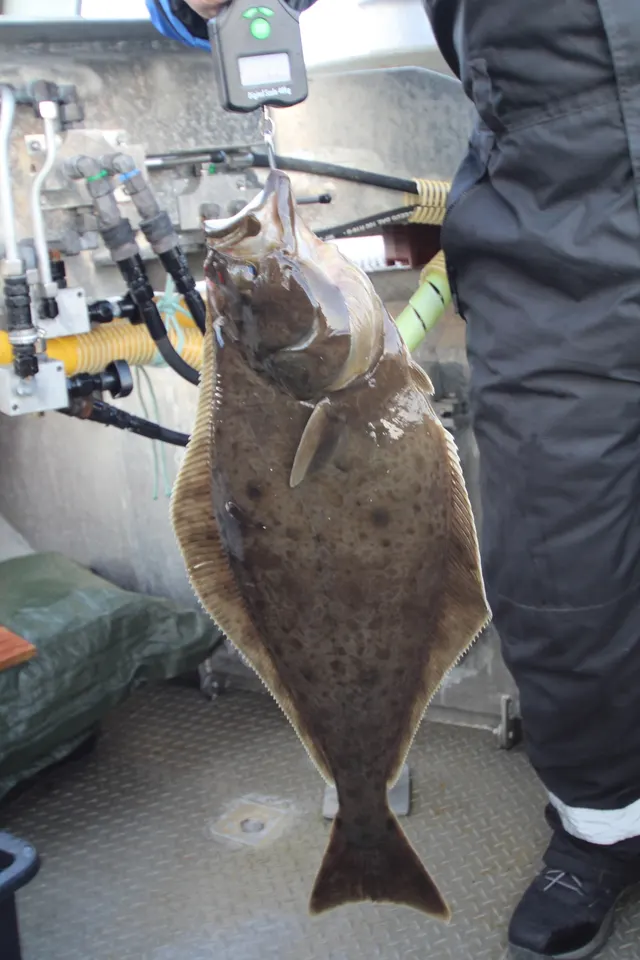 Atlantic halibutA very large, very slow-growing, long-lived marine predator, and the clearest case in the north-east Atlantic of a fish whose age rather than its habitat is the reason the mechanism applies.
- Blue sharkSharks accumulate methylmercury to concentrations that put them at the top of most advisory lists, which is one of several reasons the recreational fishery for them is overwhelmingly catch-and-release.
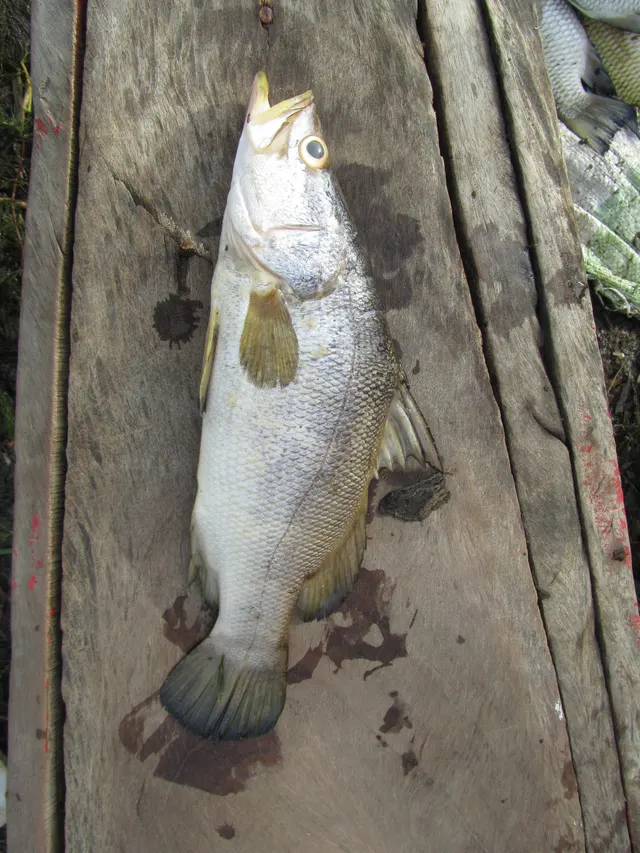 Nile perchA large introduced piscivore that came to dominate the food web it was introduced into, which is both why it grows to the size it does and why accumulation is relevant to it.
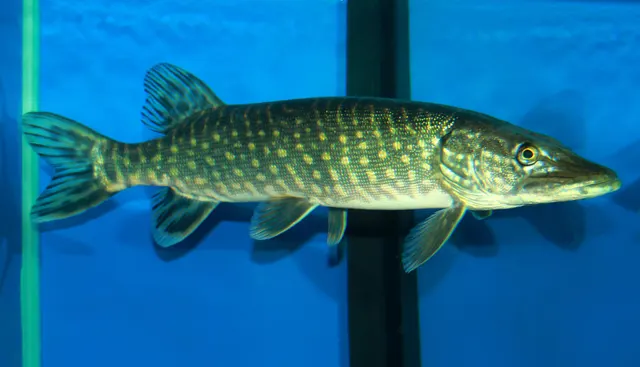 Northern pikeThe freshwater case: a long-lived apex predator in waters whose contaminant history is local, which is why freshwater advisories are frequently issued per water body rather than per species.
- SwordfishThe same three properties again: age, size and trophic position, which are what predict the load rather than the species name.
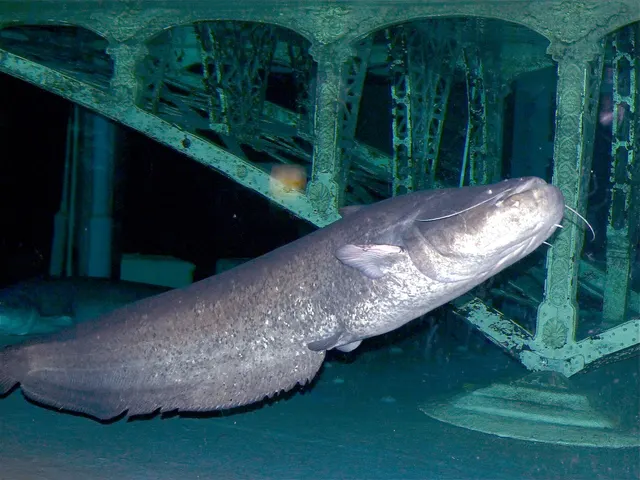 Wels catfishAmong the largest and longest-lived predators in European fresh water, feeding at the top of river and reservoir food webs for decades. Longevity is the variable here rather than size: a fish that has been eating other fish for twenty years has been accumulating for twenty years.
1 more
- Zander Fish
Where it matters
Related reading
- Eating freshwater fish you have caughtThe existing record's advisory paragraph, given the mechanism underneath it: why the advice is water-specific in fresh water and species-specific in the sea.
- Handling a large fish for the tableKeeping a smaller fish rather than the largest reduces contaminant exposure measurably, and it is the same decision the conservation material recommends for a completely different reason.
Sources and evidence
- ICES Advice on fishing opportunities, catch and effort — International Council for the Exploration of the Sea (Scientific institute)Relied on for: Contaminant monitoring in European marine biota, the accumulation of contaminants through marine food webs, and the assessment framework applied to it.States this directlyCitation checked — the work exists and is described correctly
- Good Fish Guide — Marine Conservation Society (Conservation authority)Relied on for: Consumer-facing assessment of seafood, including the species for which contaminant advice is issued and the populations it is aimed at.Background and mechanism onlyCitation checked — the work exists and is described correctly
- Fish and Fishery Products Hazards and Controls Guidance — US Food and Drug Administration, Center for Food Safety and Applied Nutrition, 2022 (Standards body)Relied on for: Seafood hazards and controls, including ciguatera and methylmercury: the species and regions each is associated with, why cooking does not address either, and the control approach recommended.States this directlyPassage read and verified
- Biotoxin and phytoplankton monitoring — Food Standards Agency, 2026 (Government fisheries body)Relied on for: The structure of official food-safety monitoring for seafood hazards and the principle that advice is issued and revised by the responsible authority rather than fixed.States this directlyPassage read and verified
- Environment Agency fisheries management, byelaws and rod licensing information — Environment Agency (Government fisheries body)Relied on for: Freshwater environmental monitoring including contaminant inputs to rivers and stillwaters, and the advisory arrangements that follow from it.Background and mechanism onlyCitation checked — the work exists and is described correctly
Why the 12 connections on this page are here, and the sources
Fish this applies to
Backed by research — 9 connections
Supported by peer-reviewed research or fisheries science. The sources are listed and can be checked.
Atlantic blue marlin
A link from a species or a place to the accumulation mechanism that decides whether what is caught there should be eaten, resting on published seafood-hazard guidance and on the species' recorded diet and trophic position.
- ICES Advice on fishing opportunities, catch and effort — International Council for the Exploration of the Sea (Scientific institute)Relied on for: Contaminant monitoring in marine biota and the accumulation of contaminants through marine food webs.States this directlyCitation checked — the work exists and is described correctly
- Fish and Fishery Products Hazards and Controls Guidance — US Food and Drug Administration, Center for Food Safety and Applied Nutrition, 2022 (Standards body)Relied on for: Methylmercury in seafood, the species in which it accumulates, and the advisory approach taken to it.States this directlyPassage read and verified
Atlantic bluefin tuna
A link from a species or a place to the accumulation mechanism that decides whether what is caught there should be eaten, resting on published seafood-hazard guidance and on the species' recorded diet and trophic position.
- ICES Advice on fishing opportunities, catch and effort — International Council for the Exploration of the Sea (Scientific institute)Relied on for: Contaminant monitoring in marine biota and the accumulation of contaminants through marine food webs.States this directlyCitation checked — the work exists and is described correctly
- Fish and Fishery Products Hazards and Controls Guidance — US Food and Drug Administration, Center for Food Safety and Applied Nutrition, 2022 (Standards body)Relied on for: Methylmercury in seafood, the species in which it accumulates, and the advisory approach taken to it.States this directlyPassage read and verified
Atlantic halibut
That bioaccumulation is relevant to this species, because it is large, long-lived and high in a food web. It states no consumption limit and no frequency — those are issued by authorities, differ by water body and by who is eating, and the record it points at says so.
- Fish and Fishery Products Hazards and Controls Guidance — US Food and Drug Administration, Center for Food Safety and Applied Nutrition, 2022 (Standards body)Relied on for: Chemical contaminants in fishery products, the accumulation of methylmercury with age and trophic position, and the basis on which consumption advice is issued.States this directlyPassage read and verified
- FishBase: a global information system on fishes — Froese, R. and D. Pauly, eds. — FishBase Consortium (Scientific institute)Relied on for: Trophic level, maximum size, maximum reported age and feeding biology of the species named.States this directlyPassage read and verified
Blue shark
A link from a species or a place to the accumulation mechanism that decides whether what is caught there should be eaten, resting on published seafood-hazard guidance and on the species' recorded diet and trophic position.
- ICES Advice on fishing opportunities, catch and effort — International Council for the Exploration of the Sea (Scientific institute)Relied on for: Contaminant monitoring in marine biota and the accumulation of contaminants through marine food webs.States this directlyCitation checked — the work exists and is described correctly
- Fish and Fishery Products Hazards and Controls Guidance — US Food and Drug Administration, Center for Food Safety and Applied Nutrition, 2022 (Standards body)Relied on for: Methylmercury in seafood, the species in which it accumulates, and the advisory approach taken to it.States this directlyPassage read and verified
Nile perch
That bioaccumulation is relevant to this species, because it is large, long-lived and high in a food web. It states no consumption limit and no frequency — those are issued by authorities, differ by water body and by who is eating, and the record it points at says so.
- Fish and Fishery Products Hazards and Controls Guidance — US Food and Drug Administration, Center for Food Safety and Applied Nutrition, 2022 (Standards body)Relied on for: Chemical contaminants in fishery products, the accumulation of methylmercury with age and trophic position, and the basis on which consumption advice is issued.States this directlyPassage read and verified
- FishBase: a global information system on fishes — Froese, R. and D. Pauly, eds. — FishBase Consortium (Scientific institute)Relied on for: Trophic level, maximum size, maximum reported age and feeding biology of the species named.States this directlyPassage read and verified
Northern pike
A link from a species or a place to the accumulation mechanism that decides whether what is caught there should be eaten, resting on published seafood-hazard guidance and on the species' recorded diet and trophic position.
- ICES Advice on fishing opportunities, catch and effort — International Council for the Exploration of the Sea (Scientific institute)Relied on for: Contaminant monitoring in marine biota and the accumulation of contaminants through marine food webs.States this directlyCitation checked — the work exists and is described correctly
- Fish and Fishery Products Hazards and Controls Guidance — US Food and Drug Administration, Center for Food Safety and Applied Nutrition, 2022 (Standards body)Relied on for: Methylmercury in seafood, the species in which it accumulates, and the advisory approach taken to it.States this directlyPassage read and verified
Swordfish
A link from a species or a place to the accumulation mechanism that decides whether what is caught there should be eaten, resting on published seafood-hazard guidance and on the species' recorded diet and trophic position.
- ICES Advice on fishing opportunities, catch and effort — International Council for the Exploration of the Sea (Scientific institute)Relied on for: Contaminant monitoring in marine biota and the accumulation of contaminants through marine food webs.States this directlyCitation checked — the work exists and is described correctly
- Fish and Fishery Products Hazards and Controls Guidance — US Food and Drug Administration, Center for Food Safety and Applied Nutrition, 2022 (Standards body)Relied on for: Methylmercury in seafood, the species in which it accumulates, and the advisory approach taken to it.States this directlyPassage read and verified
Wels catfish
That bioaccumulation is relevant to this species, because it is large, long-lived and high in a food web. It states no consumption limit and no frequency — those are issued by authorities, differ by water body and by who is eating, and the record it points at says so.
- Fish and Fishery Products Hazards and Controls Guidance — US Food and Drug Administration, Center for Food Safety and Applied Nutrition, 2022 (Standards body)Relied on for: Chemical contaminants in fishery products, the accumulation of methylmercury with age and trophic position, and the basis on which consumption advice is issued.States this directlyPassage read and verified
- FishBase: a global information system on fishes — Froese, R. and D. Pauly, eds. — FishBase Consortium (Scientific institute)Relied on for: Trophic level, maximum size, maximum reported age and feeding biology of the species named.States this directlyPassage read and verified
Zander
That bioaccumulation is relevant to this species, because it is large, long-lived and high in a food web. It states no consumption limit and no frequency — those are issued by authorities, differ by water body and by who is eating, and the record it points at says so.
- Fish and Fishery Products Hazards and Controls Guidance — US Food and Drug Administration, Center for Food Safety and Applied Nutrition, 2022 (Standards body)Relied on for: Chemical contaminants in fishery products, the accumulation of methylmercury with age and trophic position, and the basis on which consumption advice is issued.States this directlyPassage read and verified
- FishBase: a global information system on fishes — Froese, R. and D. Pauly, eds. — FishBase Consortium (Scientific institute)Relied on for: Trophic level, maximum size, maximum reported age and feeding biology of the species named.States this directlyPassage read and verified
Where it matters
Backed by research — 1 connection
Supported by peer-reviewed research or fisheries science. The sources are listed and can be checked.
Big-game fishing
A method or discipline joined to the mechanism that changes how it is conducted. Written where the method's own practice differs because of the mechanism — a different bait, a different season, a different handling routine, a decision not to eat something — and refused where the mechanism is merely true of the fish being caught.
- Fish and Fishery Products Hazards and Controls Guidance — US Food and Drug Administration, Center for Food Safety and Applied Nutrition, 2022 (Standards body)Relied on for: Hazard analysis for fish and fishery products, including scombrotoxin formation with time and temperature, ciguatera, and marine biotoxins in molluscan shellfish.States this directlyPassage read and verified
- Biotoxin and phytoplankton monitoring — Food Standards Agency, 2026 (Government fisheries body)Relied on for: Biotoxin and phytoplankton monitoring in shellfish harvesting areas and the basis on which areas are classified and closed.States this directlyPassage read and verified
Related reading
Backed by research — 2 connections
Supported by peer-reviewed research or fisheries science. The sources are listed and can be checked.
Eating freshwater fish you have caught
A link from a species or a place to the accumulation mechanism that decides whether what is caught there should be eaten, resting on published seafood-hazard guidance and on the species' recorded diet and trophic position.
- ICES Advice on fishing opportunities, catch and effort — International Council for the Exploration of the Sea (Scientific institute)Relied on for: Contaminant monitoring in marine biota and the accumulation of contaminants through marine food webs.States this directlyCitation checked — the work exists and is described correctly
- Fish and Fishery Products Hazards and Controls Guidance — US Food and Drug Administration, Center for Food Safety and Applied Nutrition, 2022 (Standards body)Relied on for: Methylmercury in seafood, the species in which it accumulates, and the advisory approach taken to it.States this directlyPassage read and verified
Handling a large fish for the table
A link from a species or a place to the accumulation mechanism that decides whether what is caught there should be eaten, resting on published seafood-hazard guidance and on the species' recorded diet and trophic position.
- ICES Advice on fishing opportunities, catch and effort — International Council for the Exploration of the Sea (Scientific institute)Relied on for: Contaminant monitoring in marine biota and the accumulation of contaminants through marine food webs.States this directlyCitation checked — the work exists and is described correctly
- Fish and Fishery Products Hazards and Controls Guidance — US Food and Drug Administration, Center for Food Safety and Applied Nutrition, 2022 (Standards body)Relied on for: Methylmercury in seafood, the species in which it accumulates, and the advisory approach taken to it.States this directlyPassage read and verified
How FishingHQ labels evidence is explained in the evidence policy.