Eating freshwater fish you have caught
Explainer · Last reviewed 2026-08-15
Most British freshwater fish are protected from being taken and assumed to be inedible. Neither is quite true, and the real considerations are contaminants, parasites and a rule framework unlike sea fishing's.
Safety: injury while handling fish — can cause injury needing treatment.
A British coarse angler will tell you that you cannot eat what they catch. A Polish, Czech, French or Swedish angler fishing the same species will find that baffling. Both are right about their own context, which is why this question needs separating carefully.
THE FIRST ANSWER IS ALMOST ALWAYS THE RULES, AND THEY RUN OPPOSITE TO THE SEA. British and Irish freshwater fishing is overwhelmingly catch-and-release by byelaw and fishery rule: coarse fish removal is restricted or prohibited on most waters, salmonids carry their own regimes, and taking fish from a club or day-ticket water without permission is simply not allowed. Much of continental Europe runs the other way, with bag limits and minimum sizes rather than a presumption of return. Nothing about the fish explains it; the first question is always what the water permits.
THE SECOND IS CONTAMINANTS, WHERE FRESHWATER GENUINELY DIFFERS FROM THE SEA. Rivers and lakes receive what their catchments carry, and long-lived predators concentrate it. Mercury, PCBs and other persistent compounds accumulate up the food chain and over an animal's life, so a large old pike from an industrialised catchment is a different proposition from a small roach in the same water. Hence consumption advisories specific to a water, a species, a size, and sometimes to who is eating.
FISHINGHQ WILL NOT SAY WHETHER THE FISH IN YOUR RIVER ARE SAFE TO EAT REGULARLY. That question has a real answer, published by the environment or health agency for that catchment, and it changes as monitoring does. The direction can be given: larger and older concentrates more than smaller and younger, predators more than plant and plankton feeders, fatty tissue more than muscle.
THIRD, PARASITES, WHICH BEHAVE DIFFERENTLY IN FRESH WATER. The FDA notes that freshwater fish "may have a parasite hazard from trematodes because these parasites enter the fish through the skin rather than in the food" — a route the marine nematodes do not use. Cooking through remains the control that works, and this is a large part of why the world's raw-fish traditions are overwhelmingly marine.
FOURTH, THE 'MUDDY' TASTE, WHICH IS REAL AND IS NOT DIRT. It comes from compounds produced by cyanobacteria and actinobacteria in the water and absorbed into the flesh. It is strongest in warm, still, productive water in summer and in bottom-feeding species, and much weaker in cold running water and in winter. It says nothing about safety. It is why the traditional eating seasons for many coarse species are winter ones, and why the same fish from a chalk stream and from a warm lowland pond taste like different animals.
AND FIFTH, THE BONES. Bream, the shads and much of the carp family carry rows of fine intramuscular bones that no filleting technique removes. The cuisines that eat these fish deal with them by technique or by acceptance, and an angler who fillets a bream expecting a bass has met a real property of the fish.
The species that are eaten, where, and why Britain is the outlier
The British view that coarse fish are inedible is a cultural position of relatively recent date, not a fact about the fish, and it is worth knowing that because it shapes what FishingHQ can usefully say.
Across central and eastern Europe, carp is a major food fish with an entire Christmas tradition attached; zander and pike-perch are premium restaurant species; pike is classic in French and Scandinavian cooking; and perch fillets are a Baltic and Alpine staple. Whitefish and vendace are commercially fished and highly regarded in the Nordic countries and around the Alpine lakes. None of these are survival food.
What Britain has instead is a match- and specimen-angling culture built around returning fish, plus byelaws that formalised it, plus — in the specimen carp fisheries — individually known and valued fish. In that context 'you cannot eat them' functions as shorthand for 'you must not take them here', and the shorthand became a belief about the fish.
The salmonids are the exception that proves it: trout and salmon have never lost their status as food in Britain, and are managed with taking in mind. The line is cultural and legal rather than gastronomic.
For a guide that covers European fishing, this matters practically. A record about eating pike is useless to a British reader as instruction and essential as context for the same reader fishing in Sweden or France, and it is exactly the kind of thing an angler travelling is unable to find written down.
What experienced anglers do — why, and the sources (3)
Widely and independently recommended by experienced anglers and specialist sources. This is real angling knowledge, not proof: controlled evidence for it is limited, and FishingHQ records it as convention rather than as a demonstrated effect.
- Freshwater Fishes of the British Isles — HarperCollins (New Naturalist 75), 1992 (Reference work)Relied on for: The freshwater fishes of the British Isles: distribution, biology and the human use of them.States this directlyCitation checked — the work exists and is described correctly
- Coarse Fishing — A. & C. Black, 1912 (Specialist angling publication)Relied on for: British coarse angling practice and its conventions, including the culture of returning fish that shapes what is done with a catch.States this directlyCitation checked — the work exists and is described correctly
- General angling website restatements of established technique — Various (Credible secondary source)Relied on for: Widely restated angling practice, recorded as practitioner consensus rather than as tested fact.Background and mechanism onlyCitation checked — the work exists and is described correctly
Where the rules come into it
Freshwater take is governed almost entirely at the level of the individual water. In Britain and Ireland most coarse fishing is catch-and-release by byelaw or fishery rule, salmonids carry separate regimes, and removal without permission is prohibited on most waters; much of continental Europe operates the opposite default with bag limits and minimum sizes. Consumption advisories are issued separately again, by environment or health authorities. Check all three before keeping a freshwater fish.
Official guidance — why, and the sources
Stated by a fisheries authority, scientific institute or recognised angling body. Authoritative, but summarising rather than demonstrating.
Safety
Injury while handling fish — Can cause injury needing treatment
Freshwater fish from some catchments accumulate persistent contaminants, concentrating with age, size and trophic level. Freshwater parasites can also enter fish through the skin rather than through prey, so raw preparation carries a hazard that cooking removes.
What reduces it: Check whether a consumption advisory exists for that water with the environment or health authority for the catchment, and follow it — advisories are frequently specific to species, size and to who is eating. Cook freshwater fish through rather than eating it raw or lightly cured.
Worse when:
- Large, old, predatory fish such as pike and zander
- Waters in industrialised or intensively farmed catchments
- Regular rather than occasional consumption, which is what most advisories address
Check the rules before you fish
Fishing laws, bylaws, access rules, seasons, bait restrictions and permitted methods vary by location and can change. Check the current rules from the relevant authority and the water you intend to fish before fishing.
Check with:
- Current national or regional law for where you are fishing
- Current local bylaws
- The relevant fisheries authority
- The landowner, club or fishery whose water it is
- Any restrictions specific to the species or the method you intend to use
Where to go next
Fish this applies to
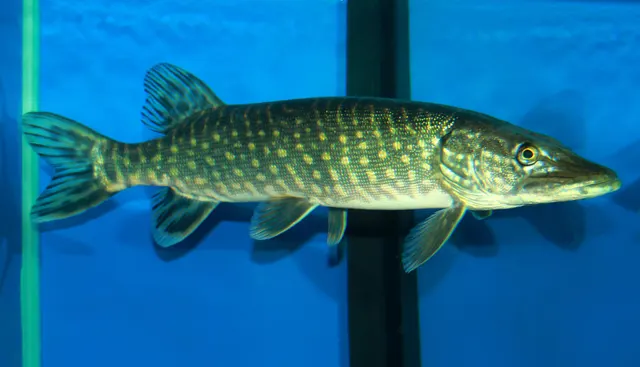 Northern pikeThe clearest illustration of the cultural split: an inedible nuisance in British angling writing and a classic food fish in French and Scandinavian cooking, with the difference lying entirely in the rules and the culture rather than in the fish.
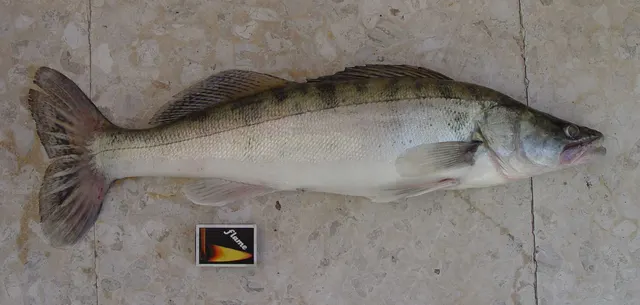 ZanderA premium food fish across central Europe and a controlled non-native in England, which makes the question of what to do with one genuinely different depending on which side of the Channel it was caught.
Related reading
- Contaminants, and what accumulates in a fishThe existing record's advisory paragraph, given the mechanism underneath it: why the advice is water-specific in fresh water and species-specific in the sea.
- Parasites in fish, and what freezing actually does about themFreshwater parasites arrive by a different route — through the skin rather than in prey — which is one of several reasons the world's raw-fish traditions are marine.
How this compares
Rules and access
Sources and evidence
- Fish and Fishery Products Hazards and Controls Guidance — US Food and Drug Administration, Center for Food Safety and Applied Nutrition, 2022 (Standards body)Relied on for: Hazards and controls for fish and fishery products: scombrotoxin (histamine) formation, seafood parasites and the conditions that kill them, and natural toxins including their stability to cooking and freezing.States this directlyPassage read and verified
- General angling website restatements of established technique — Various (Credible secondary source)Relied on for: Widely restated angling practice, recorded as practitioner consensus rather than as tested fact.Background and mechanism onlyCitation checked — the work exists and is described correctly
Why the 6 connections on this page are here, and the sources
Fish this applies to
Official guidance — 2 connections
Stated by a fisheries authority, scientific institute or recognised angling body. Authoritative, but summarising rather than demonstrating.
Northern pike
A link from a long-lived freshwater predator to the record covering contaminant accumulation and consumption advisories, which is a hazard specific to that trophic position and life span.
- Fish and Fishery Products Hazards and Controls Guidance — US Food and Drug Administration, Center for Food Safety and Applied Nutrition, 2022 (Standards body)Relied on for: Hazards and controls for fish and fishery products: scombrotoxin formation and the species groups associated with it, seafood parasites, and natural toxins.States this directlyPassage read and verified
Zander
A link from a long-lived freshwater predator to the record on contaminant accumulation and consumption advice, which applies to its trophic position rather than to any particular water.
- Fish and Fishery Products Hazards and Controls Guidance — US Food and Drug Administration, Center for Food Safety and Applied Nutrition, 2022 (Standards body)Relied on for: Hazards and controls for fish and fishery products: scombrotoxin formation and the species groups associated with it, seafood parasites, and natural toxins.States this directlyPassage read and verified
Related reading
Backed by research — 1 connection
Supported by peer-reviewed research or fisheries science. The sources are listed and can be checked.
Contaminants, and what accumulates in a fish
A link from a species or a place to the accumulation mechanism that decides whether what is caught there should be eaten, resting on published seafood-hazard guidance and on the species' recorded diet and trophic position.
- ICES Advice on fishing opportunities, catch and effort — International Council for the Exploration of the Sea (Scientific institute)Relied on for: Contaminant monitoring in marine biota and the accumulation of contaminants through marine food webs.States this directlyCitation checked — the work exists and is described correctly
- Fish and Fishery Products Hazards and Controls Guidance — US Food and Drug Administration, Center for Food Safety and Applied Nutrition, 2022 (Standards body)Relied on for: Methylmercury in seafood, the species in which it accumulates, and the advisory approach taken to it.States this directlyPassage read and verified
Official guidance — 1 connection
Stated by a fisheries authority, scientific institute or recognised angling body. Authoritative, but summarising rather than demonstrating.
Parasites in fish, and what freezing actually does about them
A link resting on the guidance's explicit statement that the freshwater trematode route differs from the marine nematode one.
- Fish and Fishery Products Hazards and Controls Guidance — US Food and Drug Administration, Center for Food Safety and Applied Nutrition, 2022 (Standards body)Relied on for: Hazards and controls for fish and fishery products: scombrotoxin formation and the species groups associated with it, seafood parasites, and natural toxins.States this directlyPassage read and verified
How this compares
What experienced anglers do — 1 connection
Widely and independently recommended by experienced anglers and specialist sources. This is real angling knowledge, not proof: controlled evidence for it is limited, and FishingHQ records it as convention rather than as a demonstrated effect.
Storing, freezing and thawing a catch
A navigational claim that a reader on one of these pages is likely to want the other. It asserts adjacency of subject matter rather than a fact about the world.
- Sea Angler — Bauer Media (Specialist angling publication)Relied on for: Contemporary UK and European sea angling practice as reported by practitioners, including catch handling convention.States this directlyCitation checked — the work exists and is described correctly
- General angling website restatements of established technique — Various (Credible secondary source)Relied on for: Widely restated angling practice, recorded as consensus rather than as scholarship.Background and mechanism onlyCitation checked — the work exists and is described correctly
Rules and access
Official guidance — 1 connection
Stated by a fisheries authority, scientific institute or recognised angling body. Authoritative, but summarising rather than demonstrating.
Size limits and retention
This points to the kind of rule that applies rather than to a rule itself. The page already carries the notice that requirements vary; this says WHICH rules bear on it, which turns a generic warning into a route to the body that sets them.
- Environment Agency fisheries management, byelaws and rod licensing information — Environment Agency (Government fisheries body)Relied on for: Freshwater and transitional-water fisheries management, the structure of licensing, close seasons and byelaws, and the measures applied to gear, bait, retention and fish movement.States this directlyCitation checked — the work exists and is described correctly
- Angling Trust guidance for anglers — Angling Trust (Angling or fisheries organisation)Relied on for: Guidance to anglers on fishery rules and conditions of access, including the restrictions individual waters and authorities set.States this directlyCitation checked — the work exists and is described correctly
How FishingHQ labels evidence is explained in the evidence policy.