Italy
Fishing regions · Last reviewed 2026-08-18
Eight thousand kilometres of Mediterranean coast, an Alpine river system at the other end of the same country, and a spearfishing tradition that shaped the equipment the rest of the world uses.
Safety: shallow water blackout and breath-hold loss of consciousness — can cause serious injury or death. 3 more points apply here.
Shallow water blackout and breath-hold loss of consciousness — Can cause serious injury or death
Hypoxic blackout gives no warning symptoms and takes a diver most often in the last few metres of the ascent. Without a partner watching that specific dive, a diver who blacks out does not surface.
What reduces it: Dive one-up-one-down with direct supervision of every dive, train with a qualified instructor rather than by self-progression, and treat solo diving as outside the discipline rather than as a risk to be managed.
Being listed here is not permission to fish. What that meansClose
Access, fishing rights, seasons, licences, local bylaws and permitted methods vary and can change. Check current access, permission, local regulations, closures and restrictions before you travel or fish. FishingHQ describes what the ground is and names who holds the answer; it does not hold the answer itself.
Find the authority for a jurisdiction · What FishingHQ does and does not cover
Italy is a jurisdiction record because the administration is genuinely distinctive, and because a country running from the Alps to the middle of the Mediterranean holds two fisheries that share nothing but a licence system.
THE COAST IS ENORMOUS AND ALMOST ENTIRELY MEDITERRANEAN. Something over eight thousand kilometres of it including the islands, on four named seas — Ligurian, Tyrrhenian, Ionian and Adriatic — each with a different depth profile, a different bottom and a different fishery. The Adriatic is shallow, silty and productive with a genuine if small tidal range at its northern end; the Tyrrhenian is deep close inshore with volcanic rock and steep drop-offs; the Ionian is deeper still; the Ligurian is a narrow shelf against mountains.
SPEARFISHING IS NOT A NICHE HERE. Italy is one of the two or three places where modern breath-hold hunting was developed, the technique vocabulary the rest of the world uses is substantially Italian, and much of the equipment industry is still Italian. Aspetto — waiting motionless on the bottom for fish to come to a diver — is an Italian word for an Italian technique. This matters for FishingHQ because it means Italy is not a place where global spearfishing intelligence is merely applied; it is a place a large part of it came from.
THE STRAIT OF MESSINA IS A WORLD FISHERY IN ITS OWN RIGHT, with a tidal exchange between two basins, a documented upwelling of deep-water species, and a swordfish harpoon fishery worked from high-masted boats that is among the most distinctive surviving traditional fisheries in Europe.
INLAND, ITALY IS ALPINE AT ONE END AND MEDITERRANEAN AT THE OTHER. The Po and its tributaries drain the southern Alps into a large lowland plain, producing a slow, rich, warm river system that now holds an enormous introduced wels catfish fishery alongside its native cyprinids. Above it, the Alpine and Apennine streams and the great subalpine lakes — deep, cold, clear — hold trout, char, grayling and whitefish. Those two are separate fisheries with separate cultures and separate seasons, and the region licenses both.
AND THE ADMINISTRATION SPLITS ALONG THE SAME LINE. Sea fishing is registered nationally; inland fishing is licensed by the region, and in places by the province below it. A visitor moving from a lake to the coast has changed administration.
What fishing here is like
A long peninsula and two large islands set in the middle of the Mediterranean, with four named seas around them and the southern Alps behind. The coast is predominantly rock and sand with very little tide, deep water close inshore on the Tyrrhenian and Ionian sides and a shallow, silty, comparatively productive shelf in the northern Adriatic where a modest tidal range does exist. Inland the country splits sharply: a large lowland plain drained by a slow, warm, rich river system, and above it a cold Alpine and Apennine world of steep streams and deep subalpine lakes. Coastal lagoons at the head of the Adriatic and in Sardinia form a third environment again, brackish and intensely productive.
What you can target here
One entry per fish, grouped by how you would be fishing — because the answer is a different one from the rocks and from a boat. Each entry says how strongly the sources support it and how much evidence sits behind it. These are documented catches, not a forecast, and none of it is a statement that you may fish any particular ground.
From the shore · 4
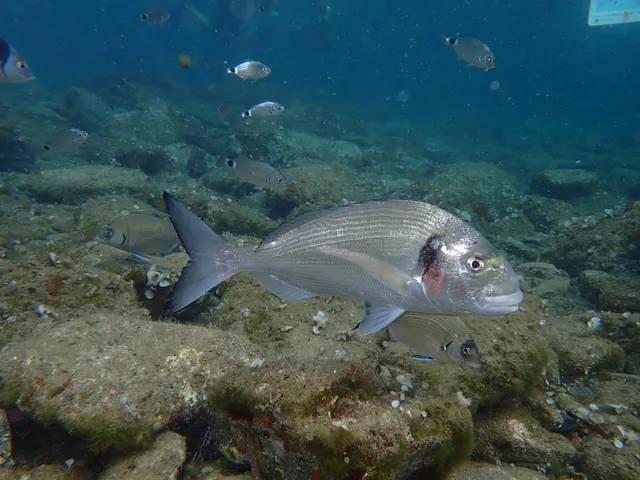 Gilthead breamCharacteristic of this water1 placeThe Venice lagoonOver estuary
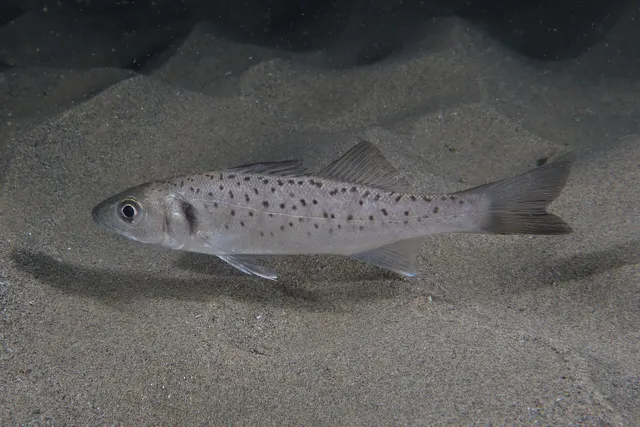 European sea bassRegular local target1 placeThe Venice lagoonOver estuary
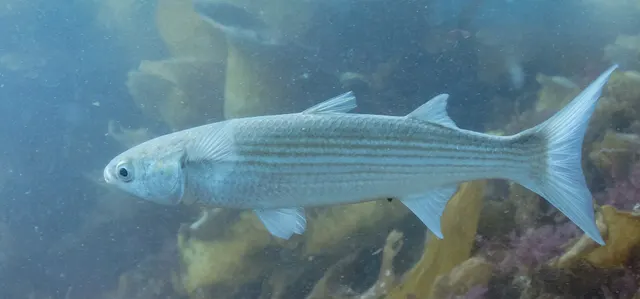 Flathead grey mulletRegular local target1 placeThe Venice lagoonOver estuary
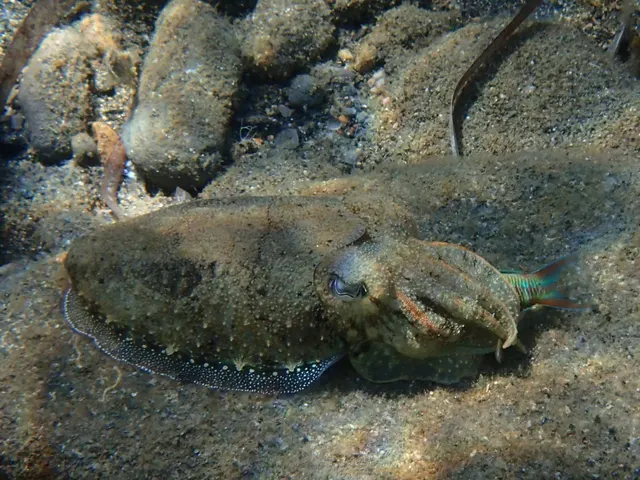 Common cuttlefishSeasonal1 placeThe Venice lagoonOver estuaryAround Mar–May, Oct–Nov
From a boat · 3
What these strengths mean
- Characteristic of this water
- This water is strongly identified with this species by the sources that cover it.
- Regular local target
- Fishing sources describe this as a normal local target here, not merely as caught.
- Seasonal
- Well supported, and concentrated in part of the year rather than spread through it.
- How breadth is counted
- A fish documented at six marks is shown as six marks: breadth never raises the strength on its own. A fishery account describes the fishing; a recorded catch reports one specific catch. How evidence is weighed.
How people fish here
9 methods are recorded on the places documented here, counted from the records themselves rather than from what is practised in the country. Each opens a full guide to the technique.
Spinning
Recorded at 4 places here, over estuary, lake, river reach.
Casting an artificial lure and retrieving it so that it moves like something alive — the most direct form of lure fishing.
Documented on the same ground: Gilthead bream, European sea bass, Flathead grey mullet, Common cuttlefish.
Float fishing
Recorded at 3 places here, over estuary, headland.
Suspending a bait at a controlled depth beneath a buoyant indicator — the most visual, most controllable and most widely applicable method in angling.
Documented on the same ground: Gilthead bream, European sea bass, Flathead grey mullet, Common cuttlefish.
Ledgering
Recorded at 3 places here, over estuary, river reach.
Fishing a bait on the bottom held by a weight, with no float — the simplest way to fish at distance, in depth, or in wind.
Documented on the same ground: Gilthead bream, European sea bass, Flathead grey mullet, Common cuttlefish.
Aspetto (waiting)
Recorded at 1 place here, over headland.
Descending, settling on the bottom and waiting for fish to come to you — the technique that produces most of the large fish taken by shore divers.
Deadbaiting
Recorded at 1 place here, over river reach.
Presenting a dead fish as bait for predators — a method that works because scavenging is normal predator behaviour, not an exception.
Jigging
Recorded at 1 place here, over lake.
Working a weighted lure with a rising-and-falling motion, usually vertically, so it behaves like a wounded or fleeing baitfish.
Kayak fishing
Recorded at 1 place here, over estuary.
A platform rather than a technique: quiet, shallow-draught access to water no other craft reaches, bought at the price of exposure, and a discipline where the decision not to launch is part of the skill.
Documented on the same ground: Gilthead bream, European sea bass, Flathead grey mullet, Common cuttlefish.
Shore diving
Recorded at 1 place here, over headland.
Entering and leaving the water from land under your own power — the most accessible spearfishing and the one where the entry and exit are the dangerous part.
Trolling
Recorded at 1 place here, over lake.
Towing lures or baits behind a moving boat to cover large volumes of water and locate scattered fish.
These are the methods documented at the places FishingHQ holds here. A species listed beside a method is documented on the same ground, which is not the same as being taken that way — where a source establishes the method a fish was caught on, it is stated on that place’s own page. All fishing methods.
What dominates
Shore angling from rock, breakwater, harbour wall and beach, which is the ordinary fishing of the coast and is practised heavily. Breath-hold spearfishing at a level of tradition and technical development matched almost nowhere else, including the ambush technique the discipline knows by its Italian name. Boat fishing including drifting, jigging, trolling for pelagic species and the traditional swordfish harpoon fishery of the Strait of Messina. Cephalopod fishing for squid, cuttlefish and octopus, which is culturally central. Inland, an Alpine and Apennine trout, char and grayling fishery; a lowland cyprinid and predator fishery on the plain rivers; and a very large introduced wels catfish fishery on the Po system that draws specialist anglers from across Europe.
The water available
Mediterranean rock coast with deep water close inshore; volcanic reef and drop-off on the Tyrrhenian side; the shallow, silty, comparatively productive northern Adriatic shelf; brackish coastal lagoons at the head of the Adriatic and in Sardinia; posidonia seagrass meadows; the tidal channel and upwelling of the Strait of Messina; deep, cold, clear subalpine lakes; steep Alpine and Apennine trout streams; and a large slow lowland river system across the northern plain.
How the rules are structured
Italy divides the question along the coastline. Recreational sea fishing is handled nationally, through a registration with the fisheries ministry rather than through a licence in the British sense, with catch and species measures applying on top of it and separate treatment again for underwater fishing — which carries its own minimum age, its own equipment prohibitions, its own rules on what may be sold, and distance requirements from bathers, harbours and moored craft. Inland fishing is a matter for the region, and in some places for the province beneath it, so licences, seasons, permitted methods and stocking arrangements change across administrative boundaries a visitor will not notice; many individual waters additionally require a day permit from the association or consortium that manages them. Marine protected areas along the coast operate zone-by-zone rules that are independent of any licence, and the local port captaincy administers a great deal of what happens near structures and in harbours. FishingHQ does not state what any current rule is. Establish the region for inland water and the port captaincy for the coast, and ask them.
Who to ask
- The national ministry responsible for agriculture and fisheries, for recreational sea fishing registration and national measures.
- The local port captaincy, which administers a great deal of what happens near structures, in harbours and in the water immediately off a beach.
- The regional — and in places provincial — fisheries administration, which licenses inland fishing and sets its seasons and methods.
- The association or consortium managing an inland water and issuing its day permits.
- The marine protected area administration, where the water is inside one and its zoning applies.
Words you will meet
- Pesca sportiva
- Recreational or sport fishing, as distinct from commercial. The phrase is the one used throughout Italian regulation and is the term to search on; 'pesca' alone covers the commercial fishery and will return the wrong framework.
- Aspetto
- Literally 'waiting'. The breath-hold hunting technique of settling motionless on the bottom, usually in an ambush position beside structure, and letting curious fish approach. An Italian word for an Italian technique, and now the international name for it.
- Capitaneria di porto
- The port captaincy — the coastguard authority for a stretch of coast. It issues local ordinances covering structures, harbour water, bathing areas and what underwater fishing may do where, and it is the body a coastal question most often routes to.
- Valle da pesca
- An enclosed brackish lagoon compartment in the northern Adriatic, historically managed for eel, mullet and seabream by controlling the exchange with the sea. A managed fishery rather than open water, and a documented tradition of considerable antiquity.
- Siluro
- The wels catfish. Introduced to the Po system in the twentieth century and now the headline freshwater fish of northern Italy by size and by the specialist fishery around it, which is a recent phenomenon rather than a traditional one.
Conditions and hazards
This is a low-tide, high-traffic, high-sun coast, and its hazards follow from that combination rather than from swell. Boat and personal-watercraft traffic in summer is heavy and a diver or a float is very hard to see from a planing hull, which is why a surface marker with a dive flag is standard practice and, in a great deal of Italian coastal water, an expectation of the local ordinance. Breath-hold blackout is the discipline's defining risk and it gives no warning, which is why the one-up-one-down rule exists. Heat, sun and dehydration degrade judgement on long summer sessions on open rock. The Strait of Messina runs genuine tidal streams and overfalls that are unusual for the Mediterranean and that a small craft can be committed by. Inland, the hazards invert: Alpine rivers are cold enough for immersion to be decisive in minutes, snowmelt and hydroelectric releases can raise a river fast and without weather to warn of it, and the subalpine lakes are deep, cold and subject to violent local winds that get up in minutes.
The country that gave breath-hold hunting its vocabulary
Italy's place in spearfishing is not a matter of participation numbers. It is that a large part of what the rest of the world does, and most of what it calls the things it does, was worked out here.
THE TECHNIQUE VOCABULARY IS ITALIAN. Aspetto — the ambush, settling motionless on the bottom and letting fish approach — is the word used internationally for the technique, and it is used because the technique was systematised in the Mediterranean by Italian divers. The same is true of much of the equipment language.
AND THE EQUIPMENT INDUSTRY LARGELY STILL IS. A substantial share of the world's spearguns, fins, wetsuits and accessories are designed and made by Italian companies, and the design conventions those companies established — band configurations, shaft diameters, the shape of a Mediterranean reef gun — are the conventions the sport uses.
WHY IT DEVELOPED HERE IS PHYSICAL. Clear water, deep ground close inshore, rock structure with holes and ledges in it, no tide to fight, and a long warm season. That is close to an ideal set of conditions for breath-hold hunting, and it is the opposite of the British condition, where cold, tide and poor visibility make the discipline a specialist pursuit rather than a mainstream one.
THE CONSEQUENCE FOR FISHINGHQ is worth stating explicitly. FishingHQ's spearfishing material — physiology, safety, equipment, technique — is written globally and applies here unchanged, because the physiology of a breath-hold does not vary by country. What Italy adds is not a different discipline. It is the density of practice, the depth of the equipment tradition, and an administration that treats underwater fishing as a separate legal activity with its own rules.
THE OTHER TRADITION WORTH NAMING IS THE SWORDFISH HARPOON FISHERY OF THE STRAIT. Boats with an extremely long bow walkway and a tall masthead lookout, hunting swordfish visually at the surface in the strait's upwelling, harpooned by hand. It is commercial rather than recreational, it is genuinely ancient, and it survives in a recognisable form — which makes it one of the most distinctive traditional fisheries left in Europe.
AND THE ADRIATIC LAGOONS ARE A THIRD. Enclosed brackish compartments managed for centuries by controlling the exchange with the sea, catching eel, mullet and seabream on their movements. That is aquaculture and capture fishery at the same time, worked out long before either word existed.
What experienced anglers do — why, and the sources (4)
Widely and independently recommended by experienced anglers and specialist sources. This is real angling knowledge, not proof: controlled evidence for it is limited, and FishingHQ records it as convention rather than as a demonstrated effect.
- Fishers' Craft and Lettered Art: Tracts on Fishing from the End of the Middle Ages — University of Toronto Press, 1997 (Scientific literature)Relied on for: That European fishing traditions develop around the water and fish available to them, and the historical method of reading such traditions.Background and mechanism onlyCitation checked — the work exists and is described correctly
- General angling website restatements of established technique — Various (Credible secondary source)Relied on for: Widely restated descriptions of regional angling practice, recorded as practitioner consensus rather than as scholarship.Background and mechanism onlyCitation checked — the work exists and is described correctly
- Sea Angler — Bauer Media (Specialist angling publication)Relied on for: Long-running published description of European sea angling practice by region and by ground type, including the destinations British anglers travel to.FishingHQ's interpretation of what it saysCitation checked — the work exists and is described correctly
- General angling website restatements of established technique — Various (Credible secondary source)Relied on for: Widely restated descriptions of which practices are conventionally used in the waters named, recorded as practitioner consensus rather than as scholarship.Background and mechanism onlyCitation checked — the work exists and is described correctly
Registered at sea, licensed by the region inland
The Italian framework divides at the coastline, and knowing which side of that line a question sits on is most of the work of answering it.
AT SEA, THE STRUCTURE IS NATIONAL AND IT IS A REGISTRATION RATHER THAN A LICENCE. Recreational sea fishing is handled by the fisheries ministry through a declaration or registration arrangement, with species, size and quantity measures applying above it and with recreational catch reporting obligations for some catch. That is a different shape from a British rod licence and from a Spanish community licence, and expecting either will send a reader looking for a document that does not exist.
UNDERWATER FISHING IS A SEPARATE ACTIVITY IN LAW. Minimum age, prohibitions on combining breath-hold hunting with compressed-air apparatus, restrictions on what may be taken and on selling any of it, and distance requirements from bathers, harbours, moored craft and marked swimming zones are all standard features. The details are set nationally and refined locally, which is where the port captaincy comes in.
THE PORT CAPTAINCY IS THE BODY VISITORS UNDERESTIMATE. It issues ordinances covering the water immediately off a beach, the harbour and its structures, bathing zones and the periods they operate, and what may happen where in relation to all of that. A great many practical coastal questions — may somebody fish from this mole, at this time of year — are captaincy questions rather than fisheries-ministry ones.
INLAND, THE REGION LICENSES AND SOMETIMES THE PROVINCE DOES. Italy devolves inland fisheries, so licences, close seasons, permitted methods, minimum sizes and stocking policy differ between neighbouring regions, and in some parts of the country between provinces inside a region. A visitor driving along a valley can pass into a different arrangement without any signal that they have.
AND MOST GOOD WATER NEEDS A PERMIT AS WELL AS A LICENCE. Rivers and lakes are commonly managed by an association or consortium that sells a day or period permit and sets conditions on it — beat, method, quota, barbless, catch-and-release on particular reaches. The licence makes fishing possible; the permit makes it possible here.
MARINE PROTECTED AREAS ZONE THE COAST INDEPENDENTLY of all of the above. Italy has a substantial network of them, with integral reserve zones in which nothing is permitted, general reserve zones with restrictions, and partial reserve zones with fewer — and the boundaries are not visible from the water.
WHAT A READER SHOULD DO. For the coast, ask the port captaincy for the stretch and the ministry for the national measures. For inland water, establish the region, then the association managing the water. FishingHQ does not hold any of those answers and all of them change.
Official guidance — why, and the sources (2)
Stated by a fisheries authority, scientific institute or recognised angling body. Authoritative, but summarising rather than demonstrating.
- Code of Conduct for Responsible Fisheries — Food and Agriculture Organization of the United Nations, Rome, 1995 (Standards body)Relied on for: The international framework within which national and regional fisheries authorities set, revise and enforce measures, and the principle that responsible fishing includes the safety of fishers.Background and mechanism onlyCitation checked — the work exists and is described correctly
- ICES Advice on fishing opportunities, catch and effort — International Council for the Exploration of the Sea (Scientific institute)Relied on for: That the stock advice European fisheries measures are set against is produced internationally and revised annually, which is the mechanism by which a national measure changes without the national law changing.States this directlyCitation checked — the work exists and is described correctly
Almost no tide, a great deal of traffic, and cold water at the top of the country
A coast with no meaningful tide removes the hazard a British angler is most alert to and replaces it with three others that are less obvious.
BOAT TRAFFIC IS THE FIRST AND IT IS UNDERRATED. Summer traffic on this coast is heavy, includes a great deal of fast recreational craft, and operates in water where a swimmer, a breath-hold diver or a small float is very hard to see until far too late. A surface marker buoy carrying a dive flag, kept directly above the diver rather than trailing somewhere behind, is the standard practice and is expected by local ordinance in a great deal of Italian coastal water. It is not paperwork; it is the only thing that makes a person in the water visible.
BREATH-HOLD BLACKOUT IS THE SECOND AND IT IS THE ONE THAT KILLS COMPETENT PEOPLE. Hypoxia produces no warning symptom before consciousness goes, and it most often takes a diver in the last few metres of the ascent, within sight of the surface. The only defence that works is another person watching that specific diver through that specific ascent, which is the whole content of the one-up-one-down rule. Diving alone is the commonest fatality profile in the discipline and no amount of experience changes that. FishingHQ publishes nothing designed to extend a breath-hold or to increase a depth; that is what a qualified instructor is for.
HEAT IS THE THIRD. Long sessions on open rock in a Mediterranean summer produce dehydration and heat exhaustion, and both degrade judgement and coordination before they produce anything dramatic — on ground where judgement and coordination are what keep somebody on the rock.
THE STRAIT OF MESSINA IS A GENUINE EXCEPTION TO THE NO-TIDE RULE. An exchange between two basins through a narrow gap produces streams, overfalls and standing waves unusual for this sea, and a small craft that misjudges the timing is committed. Local pilotage knowledge is a requirement there rather than an advantage.
AND THE NORTH OF THE COUNTRY IS A COLD-WATER PLACE. Alpine rivers are cold enough that immersion is decided in minutes; snowmelt and hydroelectric release can raise a river quickly with no weather to warn of it, which is a specific and repeated hazard for anybody wading; and the deep subalpine lakes generate violent local winds that get up within minutes and produce a steep, short sea a small boat handles badly. An angler who has adapted to the coast has adapted to the wrong country for those.
Official guidance — why, and the sources (4)
Stated by a fisheries authority, scientific institute or recognised angling body. Authoritative, but summarising rather than demonstrating.
- DAN guidance on freediving safety, hypoxia and shallow-water blackout — Divers Alert Network (Water-safety or diver-training authority)Relied on for: Hypoxic blackout in breath-hold diving, its absence of warning symptoms, and the direct supervision practice that addresses it.States this directlyPassage read and verified
- AIDA International freediving education and safety standards — AIDA International (Water-safety or diver-training authority)Relied on for: Freediving training and safety standards including one-up-one-down direct supervision and surface interval practice.States this directlyCitation checked — the work exists and is described correctly
- RNLI water safety guidance: cold water shock and Float to Live — Royal National Lifeboat Institution (Water-safety or diver-training authority)Relied on for: Cold water shock and the immersion response, tidal cut-off, and water-safety guidance for shore anglers and small-craft users.States this directlyPassage read and verified
- Met Office shipping forecast, inshore waters forecast and marine warnings — Met Office, United Kingdom (Government fisheries body)Relied on for: That inshore waters forecasts, sea state and swell are the operative inputs for shore and small-craft decisions in north-west European waters.States this directlyCitation checked — the work exists and is described correctly
Some of what lives here
Fish recorded here that FishingHQ holds a reviewed photograph of. It is not a complete list of what Italy holds, and it is not a prediction that you will catch any of them — it is a way in to the ones we can show you.
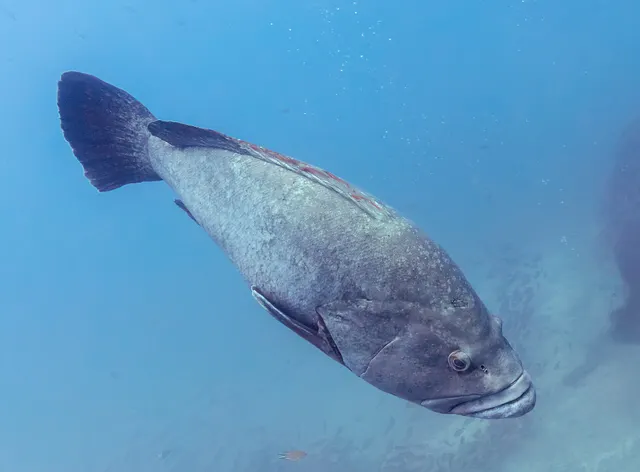 Dusky grouperThe Mediterranean's iconic reef predator: territorial, slow to mature, sex-changing, and the species whose decline made the case for marine protected areas there.
Diego Delso — CC BY-SA 4.0, via Wikimedia Commons
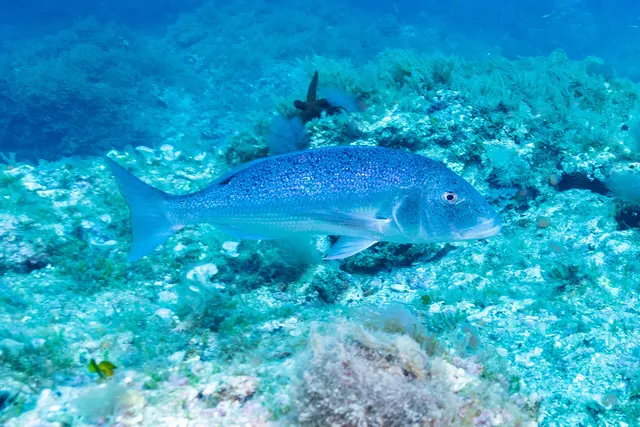 Common dentexThe Mediterranean's fastest and warriest inshore predator — a sea bream that hunts like a jack, and the fish spearfishers there rate above all others.
Diego Delso — CC BY-SA 4.0, via Wikimedia Commons
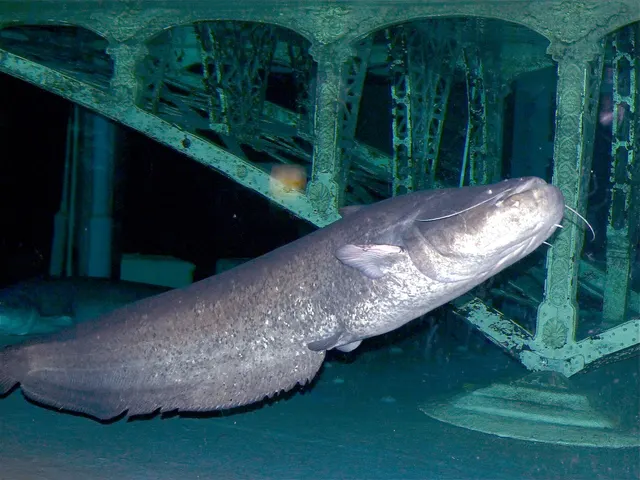 Wels catfishEurope's largest freshwater fish, reaching well over two metres, and an expanding introduced range that has made it one of the continent's most contested species.
Bernard DUPONT from FRANCE — CC BY-SA 2.0, via Wikimedia Commons
Places within this area
Publicly documented fishing geography. FishingHQ describes what the ground is; it does not say whether you may fish it, and every one of these sends that question to the body that holds the answer. Browse every place in this part of the world.
Who to ask before fishing any of these
FishingHQ does not know the current access position here. Recreational sea fishing in Italy is registered nationally rather than licensed in the British sense, with quantity and species measures on top and separate treatment for underwater fishing, which has its own minimum age, its own equipment rules and its own prohibitions near bathers and moored craft. Marine protected areas along this coast carry zone-by-zone rules. Everything changes. Check the current position with the national fisheries ministry and the local port captaincy before going.
FishingHQ does not know the current access position here. Recreational sea fishing in Italy is registered nationally rather than licensed in the British sense, with quantity and species measures on top and separate treatment for underwater fishing, which has its own minimum age, its own equipment rules and its own prohibitions near bathers and moored craft. Marine protected areas along this coast carry zone-by-zone rules. Everything changes. Check the current position with the national fisheries ministry and the local port captaincy before going. This water is tidal and transitional, so the freshwater regime may also apply above the tidal limit: FishingHQ does not know the current access position here. Inland fishing in Italy is administered by the region — and in some places by the province below it — so licences, seasons, methods and stocking arrangements differ across a boundary a visitor will not notice. Many waters additionally need a day permit from the managing association, and all of it changes. Check with the regional fisheries administration and the local association before going.
FishingHQ does not know the current access position here. Inland fishing in Italy is administered by the region — and in some places by the province below it — so licences, seasons, methods and stocking arrangements differ across a boundary a visitor will not notice. Many waters additionally need a day permit from the managing association, and all of it changes. Check with the regional fisheries administration and the local association before going.
The Portofino promontory
Headland · Salt water
A steep conglomerate headland projecting into the Ligurian Sea, cliffed on its seaward side, with vertical rock continuing far below the surface, coralligenous growth on the walls and deep water immediately off the point.
The southern face takes the libeccio from the south-west; the eastern side is sheltered from it, so the promontory offers a lee whichever way the wind blows.
Particular to this ground: drowning and immersion, boat traffic and being seen.
Severe hazards of Italy apply here: shallow water blackout and breath-hold loss of consciousness, moving water and currents, cold water shock.
Particular to this water: This ground lies in or beside a marine protected area whose zoning constrains fishing, diving, anchoring and collection independently of any licence, with rules that differ between zones and boundaries that are not visible from the water. Underwater fishing is licensed and regulated separately from rod fishing throughout this jurisdiction, with its own age, equipment and distance requirements, and holding a rod licence is not permission to spearfish.
The Venice lagoon
Estuary · Brackish water
The largest wetland in the Mediterranean: a shallow brackish lagoon behind a chain of barrier islands, with mud and sand flats, salt marsh, seagrass, dredged navigation channels and a network of enclosed fish-farming compartments of considerable antiquity.
Almost entirely sheltered from the Adriatic by the barrier, with the wind rather than the sea deciding conditions.
Severe hazards of Italy apply here: shallow water blackout and breath-hold loss of consciousness, boat traffic and being seen, moving water and currents, cold water shock.
Particular to this water: This is working water-management or navigation infrastructure, operated to a schedule set by its authority rather than by anything happening in the fishing, and access to it is that authority's decision. This ground lies in or beside a marine protected area whose zoning constrains fishing, diving, anchoring and collection independently of any licence, with rules that differ between zones and boundaries that are not visible from the water.
The Po delta
Estuary · Brackish water
The mouth of Italy's largest river, built out into the northern Adriatic as a low fan of distributary channels, reed, brackish lagoon and reclaimed farmland, carrying a heavy sediment and nutrient load into a shallow sea.
Severe hazards of Italy apply here: shallow water blackout and breath-hold loss of consciousness, boat traffic and being seen, moving water and currents, cold water shock.
Particular to this water: This ground lies in or beside a marine protected area whose zoning constrains fishing, diving, anchoring and collection independently of any licence, with rules that differ between zones and boundaries that are not visible from the water.
The Po at Mantua
River reach · Fresh water
A wide, slow, warm reach of the Po across the Lombard plain, with sand and silt bed, embanked and straightened over centuries, oxbows and side channels behind the levees, and the Mincio entering from the lakes above Mantua.
Severe hazards of Italy apply here: boat traffic and being seen, moving water and currents, cold water shock.
Particular to this water: This is working water-management or navigation infrastructure, operated to a schedule set by its authority rather than by anything happening in the fishing, and access to it is that authority's decision.
Lago di Garda
Lake · Fresh water
The largest of the Italian pre-Alpine lakes: a deep glacial trough with near-vertical rock walls and very deep water in the northern arm, opening into a wider shallower southern basin with gravel and weed margins.
The narrow northern arm channels a reliable diurnal wind system that gets up and drops on a daily cycle, and can build a steep short sea within minutes.
Particular to this ground: cold water shock, weather and lightning.
Severe hazards of Italy apply here: boat traffic and being seen, moving water and currents.
Safety
Shallow water blackout and breath-hold loss of consciousness is set out at the top of this page, where it cannot be missed.
Boat traffic and being seen — Can cause serious injury or death
Summer traffic on this coast is heavy and fast, and a diver, swimmer or small float is nearly invisible from a planing hull until it is too close to alter course.
What reduces it: Carry a surface marker buoy with a dive flag and keep it directly above the diver, work inside marked zones where they exist, and leave water where traffic is heavy rather than trying to be seen in it.
Moving water and currents — Can cause serious injury or death
The Strait of Messina exchanges water between two basins through a narrow gap, producing streams, overfalls and standing waves that are unusual for the Mediterranean and that commit a small craft that has misjudged the timing.
What reduces it: Plan any small-craft movement in the strait from tidal stream information rather than from the weather, and treat local pilotage knowledge as a requirement rather than an advantage.
Cold water shock — Can cause serious injury or death
Alpine and Apennine rivers and the deep subalpine lakes are cold year-round. Cold water shock removes breathing control and swimming ability within the first minute of immersion, long before hypothermia is relevant.
What reduces it: Wear a buoyancy aid rather than carry one, wade with a staff and within a depth you can retreat from, and treat a rising or discoloured Alpine river as a reason to get out rather than to move upstream.
Worse when:
- During snowmelt and after hydroelectric release, when a river can rise fast in clear weather.
Further safety reading
- Breath-hold blackout — The country with the deepest ambush-diving tradition in Europe is also the one where the discipline's defining risk most needs to be reachable from the geography.
- Surface markers and boat traffic — Heavy summer small-craft traffic in water where a diver or a float is nearly invisible from a planing hull, which is why the surface marker is standard practice here rather than an option.
Check the rules before you fish
Fishing laws, bylaws, access rules, seasons, bait restrictions and permitted methods vary by location and can change. Check the current rules from the relevant authority and the water you intend to fish before fishing.
Check with:
- Current national or regional law for where you are fishing
- Current local bylaws
- The relevant fisheries authority
- The landowner, club or fishery whose water it is
- Any restrictions specific to the species or the method you intend to use
Where to go next
What swims here
- Common dentexA fast, wary open-water sparid of Italian rock and reef ground, and one of the fish the country's ambush breath-hold technique was developed to approach.
- Dusky grouperThe Mediterranean's flagship reef predator and the species around which a great deal of Italian spearfishing ethic and regulation is organised, being long-lived, site-attached and easily over-harvested.
- SwordfishTaken in the Strait of Messina by a visually hunted harpoon fishery worked from high-masted boats, which is among the most distinctive traditional fisheries surviving in Europe.
- Wels catfishIntroduced to the Po system in the twentieth century and now the headline freshwater fish of northern Italy by size, supporting a specialist fishery that did not exist two generations ago.
How this compares
Rules and access
Sources and evidence
- ICES Advice on fishing opportunities, catch and effort — International Council for the Exploration of the Sea (Scientific institute)Relied on for: Ecoregion description, stock distribution and status, nursery function and the hydrography of the European sea areas assessed, including the Baltic, the North Sea, the Celtic Seas and the Iberian and Biscay shelf.States this directlyCitation checked — the work exists and is described correctly
- FAO Species Identification Guides for Fishery Purposes and the FAO Species Catalogues — Food and Agriculture Organization of the United Nations (Scientific institute)Relied on for: Identification, distribution and habitat association of the fishes and invertebrates of the Mediterranean, the Black Sea and the eastern central Atlantic.States this directlyCitation checked — the work exists and is described correctly
- FishBase: a global information system on fishes — Froese, R. and D. Pauly, eds. — FishBase Consortium (Scientific institute)Relied on for: Recorded distribution, depth range, habitat association, size and biology of the species named.States this directlyPassage read and verified
- The IUCN Red List of Threatened Species — International Union for Conservation of Nature (Conservation authority)Relied on for: Current global and regional conservation assessment for the species named, with the assessment date.Background and mechanism onlyCitation checked — the work exists and is described correctly
- Freshwater Fishes of the British Isles — HarperCollins (New Naturalist 75), 1992 (Reference work)Relied on for: Distribution, ecology, life history and conservation status of European freshwater fishes, including the migratory salmonids and the cyprinid and percid communities named.States this directlyCitation checked — the work exists and is described correctly
- FishBase: a global information system on fishes — Froese, R. and D. Pauly, eds. — FishBase Consortium (Scientific institute)Relied on for: Recorded distribution, habitat association and life history of the freshwater and migratory species named.States this directlyPassage read and verified
- Fishers' Craft and Lettered Art: Tracts on Fishing from the End of the Middle Ages — University of Toronto Press, 1997 (Scientific literature)Relied on for: That European fishing traditions develop around the water and fish available to them, and the historical method of reading such traditions.Background and mechanism onlyCitation checked — the work exists and is described correctly
- General angling website restatements of established technique — Various (Credible secondary source)Relied on for: Widely restated descriptions of regional angling practice, recorded as practitioner consensus rather than as scholarship.Background and mechanism onlyCitation checked — the work exists and is described correctly
Why the 10 connections on this page are here, and the sources
What swims here
Backed by research — 4 connections
Supported by peer-reviewed research or fisheries science. The sources are listed and can be checked.
Common dentex
That a species occurs in these waters, drawn from distribution science and stock assessment. It is a statement about where the animal lives and is not a statement that anybody will catch one, still less where.
- FAO Species Identification Guides for Fishery Purposes and the FAO Species Catalogues — Food and Agriculture Organization of the United Nations (Scientific institute)Relied on for: Identification, distribution and habitat association of the fishes and invertebrates of the Mediterranean and Black Sea.States this directlyCitation checked — the work exists and is described correctly
- FishBase: a global information system on fishes — Froese, R. and D. Pauly, eds. — FishBase Consortium (Scientific institute)Relied on for: Recorded distribution, depth range and habitat association of the species named.States this directlyPassage read and verified
Dusky grouper
That a species occurs in these waters, drawn from distribution science and stock assessment. It is a statement about where the animal lives and is not a statement that anybody will catch one, still less where.
- FAO Species Identification Guides for Fishery Purposes and the FAO Species Catalogues — Food and Agriculture Organization of the United Nations (Scientific institute)Relied on for: Identification, distribution and habitat association of the fishes and invertebrates of the Mediterranean and Black Sea.States this directlyCitation checked — the work exists and is described correctly
- FishBase: a global information system on fishes — Froese, R. and D. Pauly, eds. — FishBase Consortium (Scientific institute)Relied on for: Recorded distribution, depth range and habitat association of the species named.States this directlyPassage read and verified
Swordfish
That a species occurs in these waters, drawn from distribution science and stock assessment. It is a statement about where the animal lives and is not a statement that anybody will catch one, still less where.
- FishBase: a global information system on fishes — Froese, R. and D. Pauly, eds. — FishBase Consortium (Scientific institute)Relied on for: Recorded distribution, depth range and habitat association of the species named, including its occurrence in the waters of the jurisdiction named.States this directlyPassage read and verified
- ICES Advice on fishing opportunities, catch and effort — International Council for the Exploration of the Sea (Scientific institute)Relied on for: Stock distribution and assessment across the European ecoregions, which is the basis for stating that a species occurs in a given national sea area.States this directlyCitation checked — the work exists and is described correctly
Wels catfish
That a species occurs in these waters, drawn from distribution science and stock assessment. It is a statement about where the animal lives and is not a statement that anybody will catch one, still less where.
- Freshwater Fishes of the British Isles — HarperCollins (New Naturalist 75), 1992 (Reference work)Relied on for: Distribution, habitat requirement and life history of European freshwater fishes, including their occurrence across the continental range named.States this directlyCitation checked — the work exists and is described correctly
- FishBase: a global information system on fishes — Froese, R. and D. Pauly, eds. — FishBase Consortium (Scientific institute)Relied on for: Recorded distribution and habitat association of the freshwater and migratory species named.States this directlyPassage read and verified
How people fish here
What experienced anglers do — 2 connections
Widely and independently recommended by experienced anglers and specialist sources. This is real angling knowledge, not proof: controlled evidence for it is limited, and FishingHQ records it as convention rather than as a demonstrated effect.
Fly fishing
That a discipline is conventionally practised in these waters, drawn from published description of practice rather than from participation data, and labelled as consensus accordingly.
- Sea Angler — Bauer Media (Specialist angling publication)Relied on for: Long-running published description of European sea angling practice by region and destination, including where British anglers travel and what they fish for there.FishingHQ's interpretation of what it saysCitation checked — the work exists and is described correctly
- General angling website restatements of established technique — Various (Credible secondary source)Relied on for: Widely restated descriptions of which disciplines are conventionally practised in the waters named, recorded as practitioner consensus rather than as scholarship.Background and mechanism onlyCitation checked — the work exists and is described correctly
Spearfishing
That a discipline is conventionally practised in these waters, drawn from published description of practice rather than from participation data, and labelled as consensus accordingly.
- Sea Angler — Bauer Media (Specialist angling publication)Relied on for: Long-running published description of European sea angling practice by region and destination, including where British anglers travel and what they fish for there.FishingHQ's interpretation of what it saysCitation checked — the work exists and is described correctly
- General angling website restatements of established technique — Various (Credible secondary source)Relied on for: Widely restated descriptions of which disciplines are conventionally practised in the waters named, recorded as practitioner consensus rather than as scholarship.Background and mechanism onlyCitation checked — the work exists and is described correctly
How this compares
What experienced anglers do — 1 connection
Widely and independently recommended by experienced anglers and specialist sources. This is real angling knowledge, not proof: controlled evidence for it is limited, and FishingHQ records it as convention rather than as a demonstrated effect.
Greece
A navigational link between two places a reader is genuinely choosing between or reasoning across, offered as orientation rather than as a ranking.
- Sea Angler — Bauer Media (Specialist angling publication)Relied on for: Long-running published description of European sea angling practice by region and destination, including where British anglers travel and what they fish for there.FishingHQ's interpretation of what it saysCitation checked — the work exists and is described correctly
- General angling website restatements of established technique — Various (Credible secondary source)Relied on for: Widely restated descriptions of which disciplines are conventionally practised in the waters named, recorded as practitioner consensus rather than as scholarship.Background and mechanism onlyCitation checked — the work exists and is described correctly
Safety reading
Official guidance — 2 connections
Stated by a fisheries authority, scientific institute or recognised angling body. Authoritative, but summarising rather than demonstrating.
Breath-hold blackout
A link from the place to the substantial safety topic describing the mechanism that hurts people there, rather than a warning restated in prose on the record itself.
- DAN guidance on freediving safety, hypoxia and shallow-water blackout — Divers Alert Network (Water-safety or diver-training authority)Relied on for: Hypoxic blackout in breath-hold diving, its absence of warning symptoms, and the direct supervision practice that addresses it.States this directlyPassage read and verified
Surface markers and boat traffic
A link from the place to the substantial safety topic describing the mechanism that hurts people there, rather than a warning restated in prose on the record itself.
- RNLI water safety guidance: cold water shock and Float to Live — Royal National Lifeboat Institution (Water-safety or diver-training authority)Relied on for: Cold water shock and the immersion response, tidal cut-off, and water-safety guidance for shore anglers and small-craft users.States this directlyPassage read and verified
Rules and access
Official guidance — 1 connection
Stated by a fisheries authority, scientific institute or recognised angling body. Authoritative, but summarising rather than demonstrating.
Licences and permission
This points to the kind of rule that applies rather than to a rule itself. The same question is administered differently in each of these countries, so the page says that the answer is held elsewhere and changes.
- Code of Conduct for Responsible Fisheries — Food and Agriculture Organization of the United Nations, Rome, 1995 (Standards body)Relied on for: The international framework within which national and regional fisheries authorities set, revise and enforce measures, and the principle that the responsible authority rather than a third party holds the current position.Background and mechanism onlyCitation checked — the work exists and is described correctly
- ICES Advice on fishing opportunities, catch and effort — International Council for the Exploration of the Sea (Scientific institute)Relied on for: That the stock advice European measures are set against is produced internationally and revised annually, which is how a national measure changes without the national law changing.States this directlyCitation checked — the work exists and is described correctly
How FishingHQ labels evidence is explained in the evidence policy.