The Venice lagoon
Estuary · Brackish water · in Italy
The largest wetland in the Mediterranean: a shallow brackish lagoon behind a chain of barrier islands, with mud and sand flats, salt marsh, seagrass, dredged navigation channels and a network of enclosed fish-farming compartments of considerable antiquity.
Safety: shallow water blackout and breath-hold loss of consciousness — can cause serious injury or death. 3 more points apply here.
FishingHQ describes what this place is, not whether you may fish it. Access, permits and who to ask.
What you can catch here
Documented at this place, grouped by how you would be fishing, with how strongly the sources support each one. This is what has been written down, not a forecast, and being listed is never permission to fish.
From the shore · 4
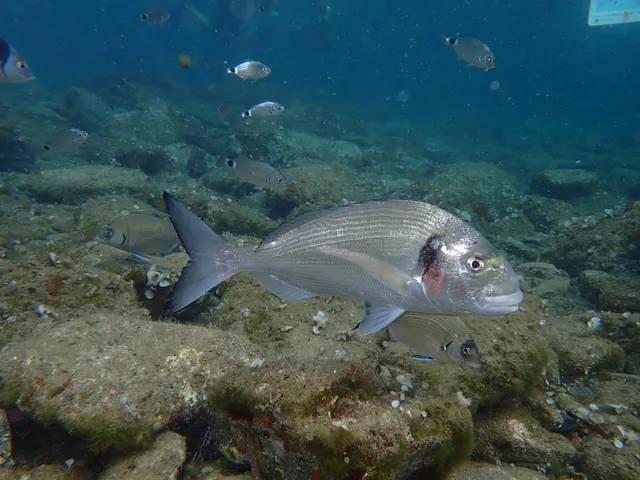 Gilthead breamCharacteristic of this water1 placeThe Venice lagoonOver estuary
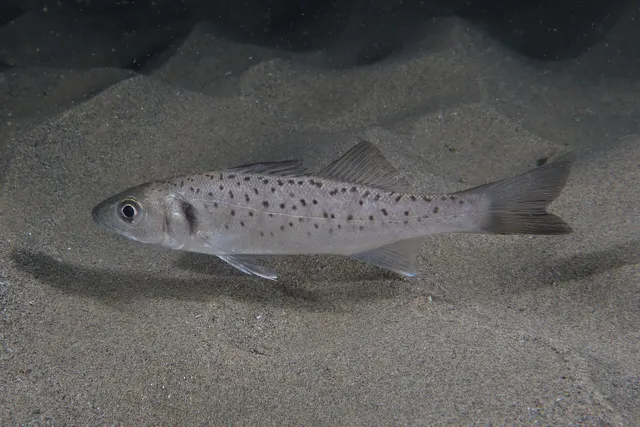 European sea bassRegular local target1 placeThe Venice lagoonOver estuary
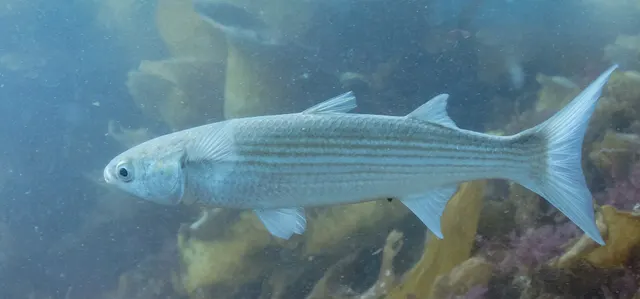 Flathead grey mulletRegular local target1 placeThe Venice lagoonOver estuary
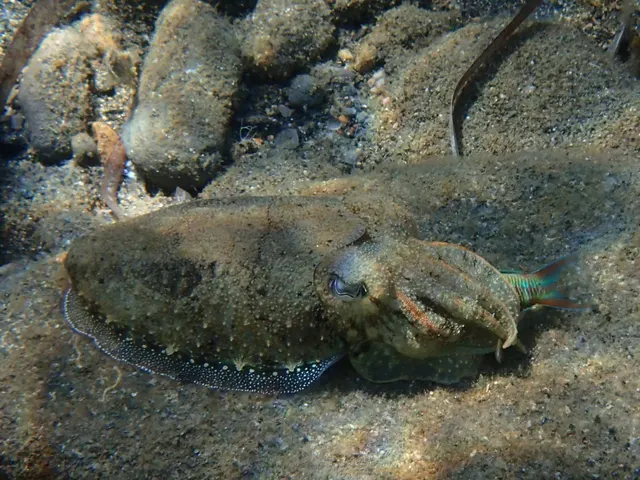 Common cuttlefishSeasonal1 placeThe Venice lagoonOver estuaryAround Mar–May, Oct–Nov
From a boat · 3
What these strengths mean
- Characteristic of this water
- This water is strongly identified with this species by the sources that cover it.
- Regular local target
- Fishing sources describe this as a normal local target here, not merely as caught.
- Seasonal
- Well supported, and concentrated in part of the year rather than spread through it.
- How breadth is counted
- A fish documented at six marks is shown as six marks: breadth never raises the strength on its own. A fishery account describes the fishing; a recorded catch reports one specific catch. How evidence is weighed.
Recorded here, but not a species to target
These are recorded here, but they are not fish to take. Each is either assessed as Critically Endangered or protected by statute in this jurisdiction, and taking one may be prohibited outright — elsewhere every rod-caught fish must be returned. Read the species page and check the current rules with the authority before fishing.
How people fish it
Practised here: Sea fishing.
Methods the sources name for this ground. Each one is explained in full on its own page.
- Float fishing
Suspending a bait at a controlled depth beneath a buoyant indicator — the most visual, most controllable and most widely applicable method in angling.
- Ledgering
Fishing a bait on the bottom held by a weight, with no float — the simplest way to fish at distance, in depth, or in wind.
- Spinning
Casting an artificial lure and retrieving it so that it moves like something alive — the most direct form of lure fishing.
- Kayak fishing
A platform rather than a technique: quiet, shallow-draught access to water no other craft reaches, bought at the price of exposure, and a discipline where the decision not to launch is part of the skill.
The ground and the water
- The ground
- The largest wetland in the Mediterranean: a shallow brackish lagoon behind a chain of barrier islands, with mud and sand flats, salt marsh, seagrass, dredged navigation channels and a network of enclosed fish-farming compartments of considerable antiquity.
- Exposure
- Almost entirely sheltered from the Adriatic by the barrier, with the wind rather than the sea deciding conditions.
- Depth
- Very shallow across most of its area with deep dredged channels through it, and the transition between them abrupt.
- Tide and flow
- One of the few parts of the Mediterranean with a tidal range worth planning around, exchanging through three inlets now fitted with mobile flood barriers, so the flats genuinely uncover and refill.
Through the year
The traditional lagoon fishery works the seasonal movements of eel, mullet and seabream between the lagoon and the sea, which is what the enclosed compartments were built to intercept.
Safety
Shallow water blackout and breath-hold loss of consciousness — Can cause serious injury or death
Hypoxic blackout gives no warning symptoms and takes a diver most often in the last few metres of the ascent. Without a partner watching that specific dive, a diver who blacks out does not surface.
What reduces it: Dive one-up-one-down with direct supervision of every dive, train with a qualified instructor rather than by self-progression, and treat solo diving as outside the discipline rather than as a risk to be managed.
Boat traffic and being seen — Can cause serious injury or death
Summer traffic on this coast is heavy and fast, and a diver, swimmer or small float is nearly invisible from a planing hull until it is too close to alter course.
What reduces it: Carry a surface marker buoy with a dive flag and keep it directly above the diver, work inside marked zones where they exist, and leave water where traffic is heavy rather than trying to be seen in it.
Moving water and currents — Can cause serious injury or death
The Strait of Messina exchanges water between two basins through a narrow gap, producing streams, overfalls and standing waves that are unusual for the Mediterranean and that commit a small craft that has misjudged the timing.
What reduces it: Plan any small-craft movement in the strait from tidal stream information rather than from the weather, and treat local pilotage knowledge as a requirement rather than an advantage.
Cold water shock — Can cause serious injury or death
Alpine and Apennine rivers and the deep subalpine lakes are cold year-round. Cold water shock removes breathing control and swimming ability within the first minute of immersion, long before hypothermia is relevant.
What reduces it: Wear a buoyancy aid rather than carry one, wade with a staff and within a depth you can retreat from, and treat a rising or discoloured Alpine river as a reason to get out rather than to move upstream.
Worse when:
- During snowmelt and after hydroelectric release, when a river can rise fast in clear weather.
Rules and access
FishingHQ does not know the current access position here. Recreational sea fishing in Italy is registered nationally rather than licensed in the British sense, with quantity and species measures on top and separate treatment for underwater fishing, which has its own minimum age, its own equipment rules and its own prohibitions near bathers and moored craft. Marine protected areas along this coast carry zone-by-zone rules. Everything changes. Check the current position with the national fisheries ministry and the local port captaincy before going. This water is tidal and transitional, so the freshwater regime may also apply above the tidal limit: FishingHQ does not know the current access position here. Inland fishing in Italy is administered by the region — and in some places by the province below it — so licences, seasons, methods and stocking arrangements differ across a boundary a visitor will not notice. Many waters additionally need a day permit from the managing association, and all of it changes. Check with the regional fisheries administration and the local association before going.
Particular to this water: This is working water-management or navigation infrastructure, operated to a schedule set by its authority rather than by anything happening in the fishing, and access to it is that authority's decision. This ground lies in or beside a marine protected area whose zoning constrains fishing, diving, anchoring and collection independently of any licence, with rules that differ between zones and boundaries that are not visible from the water.
Who holds the answer:
- The national ministry responsible for fisheries, for recreational sea fishing registration and national measures.
- The local port captaincy, for local measures, for structures and for what underwater fishing may do where.
- The marine protected area administration, where the water is inside one.
- The regional — and in some places provincial — fisheries administration, for licensing, seasons and methods.
- The association or consortium managing the water and issuing its permits.
- The national ministry responsible for agriculture and fisheries, for recreational sea fishing registration and national measures.
- The local port captaincy, which administers a great deal of what happens near structures, in harbours and in the water immediately off a beach.
- The regional — and in places provincial — fisheries administration, which licenses inland fishing and sets its seasons and methods.
- The association or consortium managing an inland water and issuing its day permits.
- The marine protected area administration, where the water is inside one and its zoning applies.
Sources for this place
- EMODnet — the European Marine Observation and Data Network — The European Commission, assembled from the national hydrographic offices, geological surveys and marine institutes of the member states (Scientific institute)Relied on for: Charted bathymetry, seabed substrate and seabed habitat for European sea areas, assembled from the national hydrographic and geological surveys, at the resolution the product publishes.States this directlyCitation checked — the work exists and is described correctly
- The European Environment Agency's assessments of Europe's waters, seas and coasts — European Environment Agency, Copenhagen (Conservation authority)Relied on for: Assessment of Europe's coasts and regional seas, including the condition of coastal water bodies, the pressures recorded on them and the coverage of designated sites.Background and mechanism onlyCitation checked — the work exists and is described correctly
- FAO Species Identification Guides for Fishery Purposes and the FAO Species Catalogues — Food and Agriculture Organization of the United Nations (Scientific institute)Relied on for: Identification, distribution and habitat association of the fishes and invertebrates of the Mediterranean and Black Sea.States this directlyCitation checked — the work exists and is described correctly
- FishBase: a global information system on fishes — Froese, R. and D. Pauly, eds. — FishBase Consortium (Scientific institute)Relied on for: Recorded distribution, depth range and habitat association of the species named for this ground.States this directlyPassage read and verified
How FishingHQ labels evidence is explained in the evidence policy. Last reviewed 2026-08-18.