The Danube basin
Fishing regions · Last reviewed 2026-08-14
Europe's most species-rich river system, running through ten countries, holding fish that exist nowhere else, and comprehensively rebuilt by dams and navigation works.
Being listed here is not permission to fish. What that meansClose
Access, fishing rights, seasons, licences, local bylaws and permitted methods vary and can change. Check current access, permission, local regulations, closures and restrictions before you travel or fish. FishingHQ describes what the ground is and names who holds the answer; it does not hold the answer itself.
Find the authority for a jurisdiction · What FishingHQ does and does not cover
The Danube is a system-tier record because it is one continuous river with one fauna and ten regulatory regimes, and the fishery only makes sense at the system level.
IT IS THE MOST BIOLOGICALLY DISTINCTIVE RIVER IN EUROPE. The Danube basin escaped the last glaciation more completely than the rivers draining north and west, and its fish fauna is correspondingly older and richer. It holds species found nowhere else — the huchen, the Danube's own large salmonid; several sturgeon species; and a number of endemic gudgeons, loaches and other small fishes — alongside the wels catfish, zander, asp, barbel and pike that reach their best development here.
THE STURGEON ARE THE SYSTEM'S GREAT LOSS. The Danube historically supported migratory sturgeon runs from the Black Sea, including beluga, and those runs reached far upstream. Dams, overfishing and habitat change have reduced them to a fraction of their range and abundance, and the surviving populations are among the most threatened fish in Europe. That is the single most consequential fact about the system's recent history.
THE RIVER HAS BEEN PHYSICALLY REBUILT. Navigation works, flood embankments, hydroelectric dams and the disconnection of the floodplain have altered the system profoundly. The Iron Gates dams in particular cut the river in two for migratory fish. A great deal of the Danube's ecology is now a story about connectivity that no longer exists.
BUT THE FISHERY REMAINS SUBSTANTIAL AND VARIED. The upper river and its Alpine tributaries hold grayling, brown trout and huchen; the middle river holds barbel, chub, asp, catfish and zander; the lower river and delta hold an enormous coarse and predator fishery, with the Danube Delta itself among the largest wetlands in Europe.
AND TEN COUNTRIES ADMINISTER IT. Nothing here states what any current rule is.
What fishing here is like
A single continuous river system running through ten countries, holding the richest and most distinctive freshwater fish fauna in Europe, and comprehensively altered by dams, navigation works and floodplain disconnection. The fishing changes completely along its length: Alpine salmonid and huchen water at the top, a large-river barbel, asp, catfish and zander fishery through the middle, and an enormous wetland coarse and predator fishery in the delta. Boat and bank fishing both feature heavily, and the wels catfish fishery of the middle and lower river is of international reputation.
Areas within this one
One coast, island group or system inside this area has a fishing guide of its own.
The Danube
Europe's second-longest river, crossing or bordering ten countries, holding the continent's largest freshwater predators and its most serious freshwater conservation failure — and the clearest possible demonstration that a river's rules change at every border.
What dominates
Large-river predator fishing for wels catfish by bait, lure and vertical methods, which is the system's best-known discipline internationally. Lure and fly fishing for asp on the surface in fast water. Zander fishing in the deeper turbid reaches. Barbel and chub fishing in the gravel reaches of the middle river. Fly fishing for grayling, brown trout and huchen in the upper river and its Alpine tributaries, huchen being a specialist winter pursuit. Extensive coarse fishing throughout. Boat-based fishing in the delta and the lower river, and a long-established bank fishing culture.
The water available
Cold, fast, clear Alpine headwaters and tributaries; a gravel-bedded middle river with braided sections, side channels and backwaters where these survive; long impounded reaches behind hydroelectric dams; a slow, turbid, deep lower river; the Danube Delta, one of the largest and least altered wetlands in Europe, with reed beds, lakes, channels and lagoons; disconnected floodplain lakes and oxbows along much of the length; and the Black Sea at its mouth, into which its migratory species once ran.
How the rules are structured
Ten countries border or contain parts of the basin and each administers its own recreational fishing rules, with licensing, seasons, size limits, bag limits and permitted methods differing across national and frequently regional boundaries. Several countries devolve administration further to regional authorities or to angling federations that hold and manage fishing rights, which is a different model from state licensing alone. European Union instruments apply to the member states among them, and the Danube's transboundary management is coordinated through an international commission for the protection of the river, which addresses water quality and ecology rather than issuing angling rules. Sturgeon are subject to specific national and international protection, including trade controls. FishingHQ does not state what any current rule is.
Who to ask
- The national fisheries or environmental authority of the country whose waters are being fished — the basin spans ten and their rules differ.
- The regional authority or angling federation that holds and administers fishing rights on the specific water, which in several Danube countries is the practical licensing body rather than the state.
- The International Commission for the Protection of the Danube River, for the transboundary environmental status of the system as a whole.
- The authority responsible for any protected area, including the Danube Delta biosphere reserve, in which fishing is proposed.
- National authorities administering sturgeon protection and the international trade controls attached to it.
Words you will meet
- Huchen / Danube salmon
- A very large salmonid endemic to the Danube basin, occupying cold fast upper reaches, long-lived, slow to mature and severely reduced by damming and habitat loss. Fished for as a specialist winter pursuit where permitted.
- The Iron Gates
- A gorge on the lower Danube, now the site of two large hydroelectric dams. They are the principal barrier that cut the river's migratory sturgeon off from the upper basin.
- The Delta
- The Danube Delta, where the river meets the Black Sea: one of the largest and least modified wetlands in Europe, a biosphere reserve, and an enormous fishery of reed-fringed lakes and channels.
- Clonk
- A shaped wooden tool struck on the water surface to attract or provoke wels catfish beneath a boat, used with a vertically fished bait. Long-established practice on the Danube and other large eastern European rivers.
Conditions and hazards
The Danube is a working navigation for much of its length and carries substantial commercial traffic, including large barges whose wash arrives well after the vessel has passed and whose stopping distance is measured in hundreds of metres. That is the hazard visiting anglers most often underestimate. Current in the main channel is strong and consistent, banks are frequently steep and engineered with rock armour that is slippery and difficult to climb out onto, and water levels can rise rapidly with upstream rainfall or dam releases. Impounded reaches behind dams can change level with little warning. In the delta, navigation among channels and reed beds is genuinely disorienting and getting lost is a real risk without local knowledge. Water quality varies along the length and swimming or immersion is not advisable in some reaches. Cold water applies in the upper river year-round.
A fauna the ice age spared, and the fish that live nowhere else
The Danube's distinctiveness as a fishery rests on a piece of geological history, and it is worth setting out because it explains why the species list looks unlike the rest of Europe.
THE BASIN WAS A REFUGE DURING GLACIATION. Rivers draining north and west across Europe were repeatedly scoured and depopulated by ice, and their faunas are correspondingly young, impoverished and recolonised. The Danube, draining south-east to the Black Sea, retained far more of its pre-glacial fauna. The result is that it holds more freshwater fish species than any other European river system, and a substantial number of them occur nowhere else.
THE HUCHEN IS THE EMBLEM. A very large salmonid confined to the basin's cold, fast, upper reaches — long-lived, slow to mature, a predator on other fish, and requiring long connected stretches of clean gravel-bedded river. It has no equivalent elsewhere in Europe and it has been reduced severely by damming, channelisation and habitat loss. Where it is fished for at all it is a specialist and heavily regulated winter pursuit.
THE STURGEON ARE THE GREATER LOSS AND THE HARDER STORY. The Danube once carried migratory sturgeon from the Black Sea far into the upper basin, including beluga, among the largest freshwater-entering fish in the world. Dams — the Iron Gates above all — cut those migrations, and overfishing and habitat change did the rest. Several Danube sturgeon species are now among the most threatened fish in Europe, subject to specific protection and international trade controls, and their historical range is a matter of record rather than of observation.
BEYOND THE ENDEMICS, THE FAMILIAR SPECIES REACH THEIR BEST HERE. Wels catfish, zander, asp, barbel, chub and pike all occur across Europe and all reach exceptional development in the Danube's large productive reaches. The system's international angling reputation rests substantially on that.
AND THE SMALL FISHES ARE WHERE THE DIVERSITY ACTUALLY SITS. Numerous gudgeons, loaches, bitterling and other small species — many endemic, many poorly known, several threatened — make up most of the basin's species count. They are invisible to angling and they are the reason the system matters biologically.
Backed by research — why, and the sources (2)
Supported by peer-reviewed research or fisheries science. The sources are listed and can be checked.
- Freshwater Fishes of the British Isles — HarperCollins (New Naturalist 75), 1992 (Reference work)Relied on for: Distribution, habitat association and ecology of European freshwater fishes, including position within a water body.States this directlyCitation checked — the work exists and is described correctly
- FishBase: a global information system on fishes — Froese, R. and D. Pauly, eds. — FishBase Consortium (Scientific institute)Relied on for: Distribution, habitat association and life history of the species occurring in the system.States this directlyPassage read and verified
One river, ten countries, and rights held by federations rather than states
The Danube's regulatory shape has a feature that visiting anglers from Britain or North America find genuinely unfamiliar, and it is worth explaining before the number of countries.
TEN COUNTRIES BORDER OR CONTAIN THE BASIN and each administers its own recreational fishing. Licensing, seasons, size limits, bag limits and permitted methods differ across national boundaries, and several of those boundaries run down the middle of the river — so the bank you fish from can decide which country's rules apply.
BUT THE MORE PRACTICAL COMPLICATION IS WHO HOLDS THE FISHING RIGHTS. In a number of Danube countries, fishing rights on particular waters are held and administered by angling associations or federations rather than being licensed directly by the state. Obtaining permission is therefore frequently a matter of joining or buying a permit from the association that holds the water, in addition to holding whatever state licence is required. A visitor who has obtained a national licence and assumes that is sufficient has completed one of two steps.
EUROPEAN UNION INSTRUMENTS APPLY TO SOME OF THE COUNTRIES AND NOT OTHERS, which adds a partial layer rather than a uniform one.
TRANSBOUNDARY COORDINATION EXISTS BUT NOT FOR ANGLING. An international commission coordinates the environmental protection and water quality of the river as a whole, and it is the right body to understand the system's ecological status. It does not issue rules an angler follows.
STURGEON CARRY A SEPARATE AND STRICTER REGIME, including national protection and international trade controls, and the position differs between basin countries.
AND PROTECTED AREAS ADD A FURTHER LAYER, the Danube Delta biosphere reserve most significantly, where fishing is administered by the reserve authority under arrangements of its own.
SO THE PRACTICAL POSITION IS THAT A LICENCE, A LOCAL PERMIT AND A PROTECTED-AREA PERMISSION MAY ALL BE REQUIRED for one day's fishing, and none of them implies the others. What applies anywhere is a matter for the competent authority and for the body holding the water, and FishingHQ does not state what any current rule is.
Official guidance — why, and the sources (2)
Stated by a fisheries authority, scientific institute or recognised angling body. Authoritative, but summarising rather than demonstrating.
- Freshwater Fishes of the British Isles — HarperCollins (New Naturalist 75), 1992 (Reference work)Relied on for: Distribution, habitat association and ecology of European freshwater fishes, including position within a water body.States this directlyCitation checked — the work exists and is described correctly
- FishBase: a global information system on fishes — Froese, R. and D. Pauly, eds. — FishBase Consortium (Scientific institute)Relied on for: Distribution, habitat association and life history of the species occurring in the system.States this directlyPassage read and verified
One river, four capitals and every kind of freshwater habitat
The Danube basin is Europe's most varied freshwater system and its habitats change completely along its length.
THE HEADWATERS ARE ALPINE. Cold, fast, clear tributaries rising in the Alps and the German uplands carry trout, grayling and, in a few systems, huchen — the Danube salmon. This is a different world from the lower river and it is where the basin's most specialised fishery is.
THE MIDDLE RIVER IS BROAD AND SLOW. Through the Hungarian plain the Danube becomes a large lowland river with side channels, oxbows, floodplain forest and gravel bars, and it is here that the classic continental predator and coarse fishery operates.
THE IRON GATES SECTION IS IMPOUNDED. Large dams built in the twentieth century converted a fast gorge reach into reservoir, and they are a barrier to migration as well as a change of habitat — the single most consequential engineering decision in the basin's fisheries history.
THE DELTA IS ONE OF EUROPE'S GREAT WETLANDS. Reedbed, lake, channel and lagoon over an enormous area, functioning as nursery, as fishery and as a biosphere reserve of international importance.
THE TRIBUTARIES ARE FISHERIES IN THEMSELVES. The Tisza, Sava, Drava, Morava and others carry their own populations and their own character, and some hold species the mainstem has largely lost.
AND FLOODPLAIN CONNECTIVITY IS THE THING THAT HAS BEEN LOST. Embankment, channelisation and drainage over two centuries disconnected the river from most of its floodplain, which removed the spawning and nursery habitat that the basin's fish evolved around. Restoring some of that connection is now the leading conservation objective in the basin.
Backed by research — why, and the sources (2)
Supported by peer-reviewed research or fisheries science. The sources are listed and can be checked.
- Freshwater Fishes of the British Isles — HarperCollins (New Naturalist 75), 1992 (Reference work)Relied on for: Distribution, habitat association, spawning requirements and ecology of European freshwater fishes.States this directlyCitation checked — the work exists and is described correctly
- FishBase: a global information system on fishes — Froese, R. and D. Pauly, eds. — FishBase Consortium (Scientific institute)Relied on for: Distribution, habitat association, size and life history recorded for the species.Background and mechanism onlyPassage read and verified
Catfish, huchen and a coarse fishery with continental habits
The Danube's disciplines are continental European ones and several have no British equivalent.
CATFISH FISHING IS THE BASIN'S SPECIALITY. Wels catfish reaching very large sizes support a dedicated fishery worked from bank and boat with heavy tackle, deadbaits, large lures and — distinctively — the clonk, a wooden tool struck on the water surface to produce a sound that draws catfish. That practice is genuinely local, genuinely old and genuinely effective, and it exists nowhere in British angling.
HUCHEN FISHING IS THE SPECIALIST GAME DISCIPLINE. The Danube salmon is a large predatory salmonid of the fast alpine tributaries, fished with large lures and flies in cold water, and the fishery is tightly regulated because the species is threatened.
PREDATOR LURE FISHING FOR ZANDER, PIKE AND PERCH is the mainstream sport on the middle river and its impoundments, with a strong technical culture around vertical jigging and soft plastics.
FEEDER AND MATCH FISHING ON THE LOWLAND RIVER for bream, barbel and carp is well developed, with a competitive structure across the basin's countries.
CARP FISHING HAS A LONG CENTRAL EUROPEAN HISTORY, and the basin is close to the carp's native range — a useful corrective to the assumption that carp are an English pond fish.
COMMERCIAL AND SUBSISTENCE NETTING PERSISTS in the delta and the lower river, and in the delta it is a substantial local economy.
AND FLY FISHING IN THE ALPINE HEADWATERS for trout and grayling is a serious tradition, with several tributary rivers internationally regarded.
What experienced anglers do — why, and the sources (2)
Widely and independently recommended by experienced anglers and specialist sources. This is real angling knowledge, not proof: controlled evidence for it is limited, and FishingHQ records it as convention rather than as a demonstrated effect.
- General angling website restatements of established technique — Various (Credible secondary source)Relied on for: Widely restated practice associating this discipline or technique with this place, recorded as practitioner consensus rather than as tested fact.Background and mechanism onlyCitation checked — the work exists and is described correctly
- Fishers' Craft and Lettered Art: Tracts on Fishing from the End of the Middle Ages — University of Toronto Press, 1997 (Scientific literature)Relied on for: That fishing traditions develop around the water and fish available to them, and the historical method of reading such traditions from their documentary record.States this directlyCitation checked — the work exists and is described correctly
A snowmelt river with a delta at the end of it
The Danube's seasonal cycle is driven by alpine snowmelt at one end and by a Black Sea delta at the other.
SPRING IS THE FLOOD SEASON. Alpine snowmelt combined with spring rain produces the annual high water, and the timing and size of it govern spawning success for the species that need floodplain or gravel access. Where the river is still connected to backwaters, this is the productive event of the year.
SPRING IS ALSO THE SPAWNING WINDOW for most of the basin's cyprinids and for pike and zander, and closed seasons across the riparian countries cluster here for that reason.
SUMMER IS THE CATFISH SEASON. Warm water brings wels catfish to peak activity, and the summer months are when the basin's signature fishery operates. Low clear water later in summer concentrates fish and makes them harder.
AUTUMN IS THE PREDATOR SEASON. Cooling water triggers hard feeding in zander, pike and perch, and it is the most productive period for the lure fishery on the middle river and the impoundments.
WINTER IS COLD AND, IN THE MIDDLE AND LOWER BASIN, SOMETIMES ICE-COVERED. Fish concentrate in deeper water and the fishery contracts, though zander fishing in cold clear water is a recognised winter pursuit.
THE HUCHEN SEASON IS SHORT AND SPECIFIC, opening in the colder months in the alpine tributaries where it is permitted at all, and it is tightly limited because of the species' status.
AND THE DELTA RUNS ITS OWN CALENDAR, with water levels driven by the whole basin's discharge arriving weeks after the rain that caused it, and with the reed and lake system responding on its own schedule.
Backed by research — why, and the sources (2)
Supported by peer-reviewed research or fisheries science. The sources are listed and can be checked.
- Freshwater Fishes of the British Isles — HarperCollins (New Naturalist 75), 1992 (Reference work)Relied on for: Distribution, habitat association, spawning requirements and ecology of European freshwater fishes.States this directlyCitation checked — the work exists and is described correctly
- FishBase: a global information system on fishes — Froese, R. and D. Pauly, eds. — FishBase Consortium (Scientific institute)Relied on for: Distribution, habitat association, size and life history recorded for the species.Background and mechanism onlyPassage read and verified
Clonk, huchen, sturgeon: words for a continental river
The Danube's vocabulary is drawn from many languages and several of the terms name things British angling has no word for.
THE CLONK NAMES A TOOL AND A TECHNIQUE. A shaped wooden implement struck on the water surface produces a distinctive sound used to draw wels catfish. The practice is documented across the eastern European catfish range, the sound's mechanism and effect have been studied, and it is one of the more genuinely unusual angling techniques in Europe.
HUCHEN NAMES THE DANUBE SALMON, Hucho hucho — a large predatory salmonid endemic to the basin, not a salmon in the Atlantic sense, and threatened throughout its range. The word is used in English because there is no English name for a fish that occurs nowhere English is spoken.
STURGEON NAMES A GROUP THAT DEFINED THIS RIVER AND HAS NEARLY GONE. Several sturgeon species migrated from the Black Sea far up the Danube to spawn; dams, overfishing and the caviar trade have reduced them to remnant populations, and the beluga in particular is critically endangered.
IRON GATES NAMES THE GORGE AND THE DAMS BUILT IN IT, and in fisheries conversation the name means the barrier rather than the landscape.
OXBOW AND BACKWATER NAME THE DISCONNECTED FLOODPLAIN FEATURES that were the basin's nursery habitat, and the extent to which a stretch of river still has them is the best single predictor of its fish community.
SOMN, HARCSA, WELS — the catfish has a name in every language along the river, and the fish's importance is reflected in how universally it is named.
AND THE DELTA HAS ITS OWN VOCABULARY of reed, channel and lake types, because a wetland that size needs distinctions that a single word cannot carry.
What experienced anglers do — why, and the sources (2)
Widely and independently recommended by experienced anglers and specialist sources. This is real angling knowledge, not proof: controlled evidence for it is limited, and FishingHQ records it as convention rather than as a demonstrated effect.
- General angling website restatements of established technique — Various (Credible secondary source)Relied on for: Widely restated practice associating this discipline or technique with this place, recorded as practitioner consensus rather than as tested fact.Background and mechanism onlyCitation checked — the work exists and is described correctly
- Fishers' Craft and Lettered Art: Tracts on Fishing from the End of the Middle Ages — University of Toronto Press, 1997 (Scientific literature)Relied on for: That fishing traditions develop around the water and fish available to them, and the historical method of reading such traditions from their documentary record.States this directlyCitation checked — the work exists and is described correctly
Caviar, canalisation and the loss of a migration
The Danube's fisheries history is dominated by one thing: the destruction of the sturgeon migration and the engineering that caused it.
STURGEON WERE THE RIVER'S GREAT FISHERY. Several species migrated from the Black Sea far upstream — historically as far as Germany — to spawn on gravel, and the fishery for them and for their roe was economically significant for centuries.
THE IRON GATES DAMS ENDED IT. Built in the twentieth century in the gorge between Serbia and Romania, they cut the migration route for species that had used the whole river. Populations above the dams disappeared; those below declined under continued fishing and the caviar trade.
SEVERAL SPECIES ARE NOW CRITICALLY ENDANGERED, and the beluga sturgeon's status is among the most serious of any European fish. Fishing bans, trade controls and restocking programmes are in place across the lower basin.
CANALISATION AND EMBANKMENT DISCONNECTED THE FLOODPLAIN over two centuries of river engineering for navigation, flood control and agriculture. The loss of connected backwaters and seasonally flooded ground removed the spawning and nursery habitat most of the basin's fish depend on, and it is the underlying cause of decline for many species that no fishing rule addresses.
THE DELTA WAS DRAINED AND THEN PARTLY RESTORED. Twentieth-century schemes converted large areas of the Danube delta to agriculture and fish farms; subsequent restoration has returned some of it, and the delta now holds biosphere reserve status.
POLLUTION EVENTS HAVE PUNCTUATED THE MODERN HISTORY, including major cyanide and heavy metal spills from mining that killed fish over long river reaches within recent decades.
AND THE INTERNATIONAL COMMISSION FOR THE RIVER'S PROTECTION is the modern institutional response, coordinating across the many countries the basin crosses on water quality, connectivity and migratory fish.
Official guidance — why, and the sources (2)
Stated by a fisheries authority, scientific institute or recognised angling body. Authoritative, but summarising rather than demonstrating.
- Fishers' Craft and Lettered Art: Tracts on Fishing from the End of the Middle Ages — University of Toronto Press, 1997 (Scientific literature)Relied on for: The historical development of European fishing practice, its transmission and its documentary record, including medieval and early modern fisheries.States this directlyCitation checked — the work exists and is described correctly
- Code of Conduct for Responsible Fisheries — Food and Agriculture Organization of the United Nations, Rome, 1995 (Standards body)Relied on for: Principles for fisheries management including the treatment of traditional, small-scale and shared fisheries, against which historical arrangements can be read.Background and mechanism onlyCitation checked — the work exists and is described correctly
A river of many nations and many angling cultures
The Danube crosses more countries than any other river in the world, and its angling cultures differ substantially along it.
CENTRAL EUROPEAN ANGLING IS ORGANISED AND ASSOCIATIVE. Across much of the basin, angling is administered through national and local associations with membership, permits, stocking programmes and management responsibilities, and the angler's relationship with the water is mediated by that structure rather than by private ownership.
EXAMINATIONS AND QUALIFICATIONS ARE COMMON. Several countries in the basin require a fishing examination or certificate before a licence is issued, covering species identification, closed seasons and handling. That is a materially different entry route from the British one and it is worth knowing before travelling.
CARP HAS DEEP CULTURAL ROOTS HERE. Carp ponds and carp culture in central Europe run back to the medieval period, and carp remains a traditional Christmas food across much of the basin, which is a food-culture fact with a direct fishery behind it.
CATFISH FISHING CARRIES REAL LOCAL PRIDE, with the clonk tradition and a specialist community around very large fish.
THE DELTA HAS A SUBSISTENCE AND SMALL-SCALE COMMERCIAL CULTURE quite unlike the sport angling upstream, with communities living in and from the wetland.
COMPETITIVE ANGLING IS STRONG across the basin, with a serious match and feeder scene and international representation.
AND THE CONSERVATION CONVERSATION IS ACTIVE. Sturgeon restoration, floodplain reconnection and the argument over navigation dredging are public issues in several of the basin's countries, and anglers are frequently participants in them rather than bystanders.
What experienced anglers do — why, and the sources (2)
Widely and independently recommended by experienced anglers and specialist sources. This is real angling knowledge, not proof: controlled evidence for it is limited, and FishingHQ records it as convention rather than as a demonstrated effect.
- General angling website restatements of established technique — Various (Credible secondary source)Relied on for: Widely restated practice associating this discipline or technique with this place, recorded as practitioner consensus rather than as tested fact.Background and mechanism onlyCitation checked — the work exists and is described correctly
- Fishers' Craft and Lettered Art: Tracts on Fishing from the End of the Middle Ages — University of Toronto Press, 1997 (Scientific literature)Relied on for: That fishing traditions develop around the water and fish available to them, and the historical method of reading such traditions from their documentary record.States this directlyCitation checked — the work exists and is described correctly
Some of what lives here
Fish recorded here that FishingHQ holds a reviewed photograph of. It is not a complete list of what The Danube basin holds, and it is not a prediction that you will catch any of them — it is a way in to the ones we can show you.
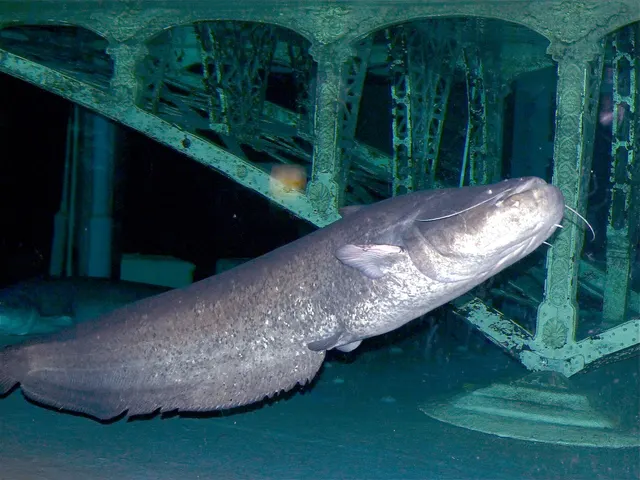 Wels catfishEurope's largest freshwater fish, reaching well over two metres, and an expanding introduced range that has made it one of the continent's most contested species.
Bernard DUPONT from FRANCE — CC BY-SA 2.0, via Wikimedia Commons
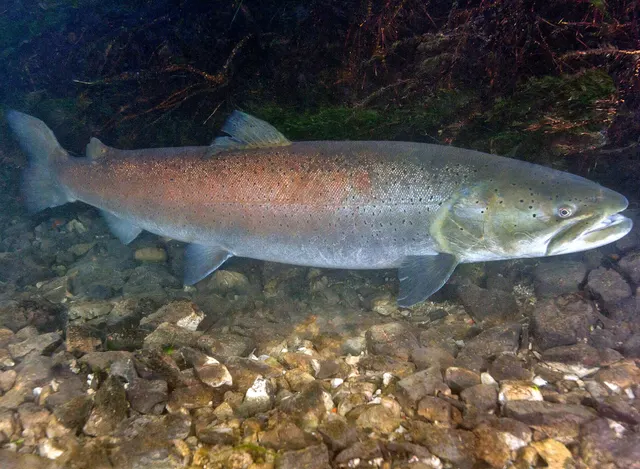 HuchenA very large predatory salmonid of the Danube basin, entirely freshwater, endangered through damming and habitat loss, and fished almost exclusively on a release basis.
Liquid Art — CC BY-SA 4.0, via Wikimedia Commons
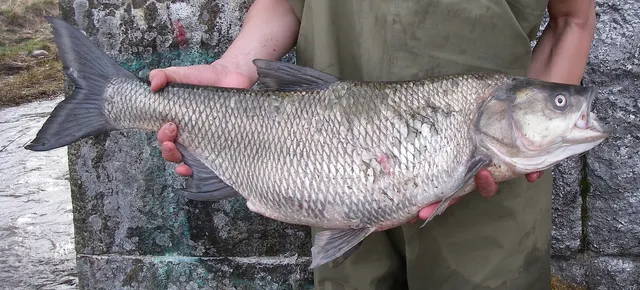 AspEurope's largest predatory cyprinid, a fast open-water hunter that smashes into baitfish shoals at the surface and is fished like a saltwater predator.
Jenny Glans — CC BY-SA 3.0, via Wikimedia Commons
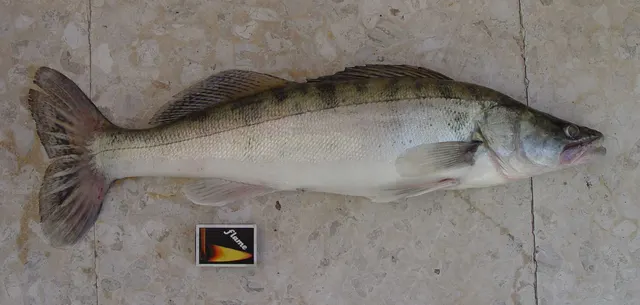 ZanderA shoaling freshwater predator built for hunting in low light and coloured water, and the fish that made a virtue of the conditions pike find difficult.
eLNuko — Public domain, via Wikimedia Commons
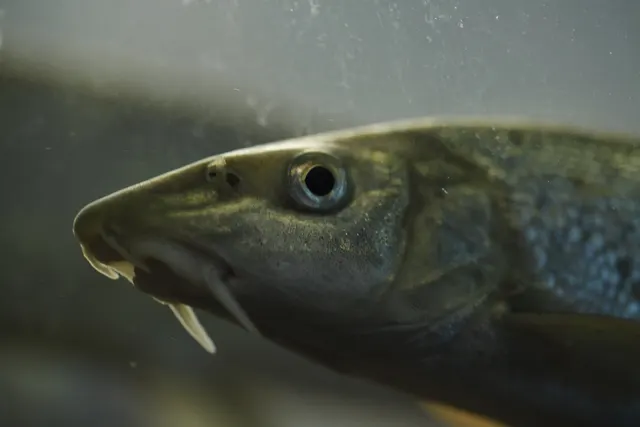 BarbelA powerful, streamlined river cyprinid built for holding station in fast water — and the hardest-fighting freshwater fish most British anglers will meet.
Pmau, CC BY-SA 4.0, via Wikimedia Commons
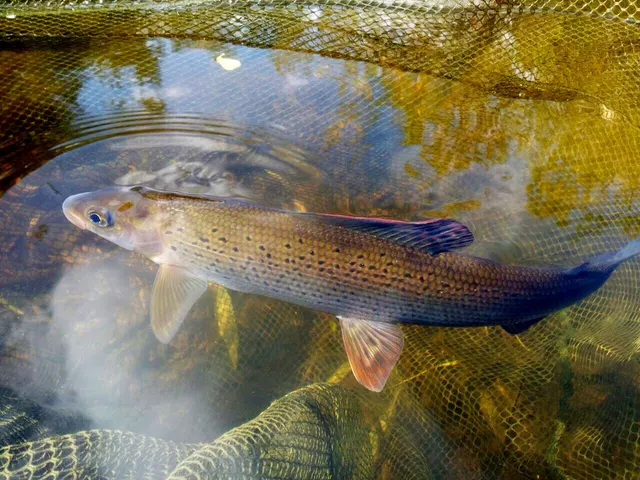 GraylingA salmonid with a sail for a dorsal fin that feeds hard through the winter — which makes it the game angler's season when the trout season has closed.
High Plains Grifter — CC BY-SA 4.0, via Wikimedia Commons
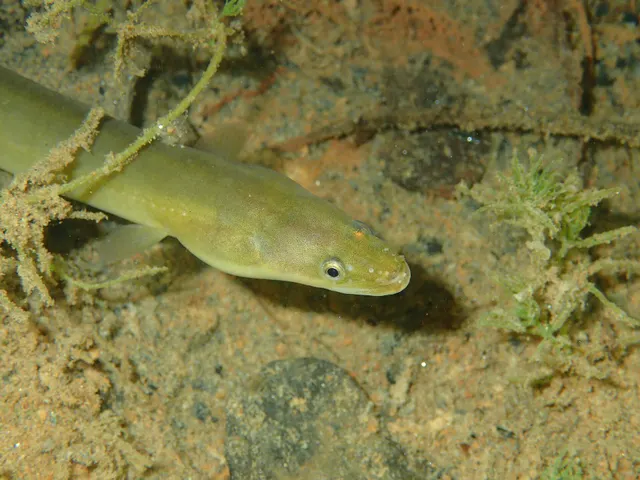 European eelA Critically Endangered fish that breeds in the Sargasso Sea, drifts to Europe as a transparent larva, lives decades in fresh water and returns once to spawn and die.
jujurenoult — CC BY 4.0, via Wikimedia Commons
Safety
Further safety reading
- Boat safety for anglers — The Danube is a working navigation carrying substantial commercial traffic whose wash arrives long after the vessel has passed and whose stopping distance is measured in hundreds of metres.
Check the rules before you fish
Fishing laws, bylaws, access rules, seasons, bait restrictions and permitted methods vary by location and can change. Check the current rules from the relevant authority and the water you intend to fish before fishing.
Check with:
- Current national or regional law for where you are fishing
- Current local bylaws
- The relevant fisheries authority
- The landowner, club or fishery whose water it is
- Any restrictions specific to the species or the method you intend to use
Where to go next
What swims here
- AspOccupies the faster open water of the middle river, hunting small fish at and near the surface in current.
- BarbelOccupies the gravel-bedded reaches of the middle river, where clean substrate and steady oxygenated flow remain.
- Beluga sturgeonThe river half, now confined to the reaches below the Iron Gates. That basin record already names this fish — 'the basin's sturgeons, beluga among them, historically the largest freshwater-entering fish in Europe' — and the name has long pointed at nothing here.
- European eelPresent in the basin's lower reaches and delta, at the extreme edge of a catadromous range whose reproduction takes place in the Atlantic.
- GraylingOccupies the cold clean upper river and its Alpine tributaries, sharing that water with brown trout and huchen.
- HuchenEndemic to the basin and confined to its cold, fast upper reaches, severely reduced by damming and channelisation.
- SterletThe sturgeon that never left the river, and the reason it survives where its relatives do not: it completes its whole life in fresh water, so the barrages that ended the migratory species did not end this one.
- Wels catfishReaches its best development in the deep, slow, turbid reaches of the middle and lower river, and the Danube catfish fishery is of international reputation.
1 more
- Zander Fish
How people fish here
How this compares
- Central and eastern European river fishingThe Danube is the defining system and the one whose sturgeons and huchen make the region's conservation picture so serious. The overview covers the Vistula, Oder, Elbe and Dnieper alongside it.
- The Black SeaThe two halves of one system, and the reason either is comprehensible. The Danube delivers the fresh water that dilutes the sea, the nutrients that eutrophied its shelf and the migratory fish that ran between them — and the sea is where those fish spent most of their lives. The basin record ends at the mouth and says the migratory species 'once ran' there; this is the water they ran into.
Environment and conservation
Sources and evidence
- Freshwater Fishes of the British Isles — HarperCollins (New Naturalist 75), 1992 (Reference work)Relied on for: Distribution, habitat association and ecology of European freshwater fishes, including position within a water body.States this directlyCitation checked — the work exists and is described correctly
- FishBase: a global information system on fishes — Froese, R. and D. Pauly, eds. — FishBase Consortium (Scientific institute)Relied on for: Distribution, habitat association and life history of the species occurring in the system.States this directlyPassage read and verified
Why the 14 connections on this page are here, and the sources
What swims here
Backed by research — 9 connections
Supported by peer-reviewed research or fisheries science. The sources are listed and can be checked.
Asp
A distribution association between an animal and a kind of water, rather than a claim about any named mark.
- Freshwater Fishes of the British Isles — HarperCollins (New Naturalist 75), 1992 (Reference work)Relied on for: Distribution and habitat association of European freshwater fishes, including occurrence in the river system concerned.States this directlyCitation checked — the work exists and is described correctly
- FishBase: a global information system on fishes — Froese, R. and D. Pauly, eds. — FishBase Consortium (Scientific institute)Relied on for: Distribution and habitat association recorded for the species.States this directlyPassage read and verified
Barbel
A distribution association between an animal and a kind of water, rather than a claim about any named mark.
- Freshwater Fishes of the British Isles — HarperCollins (New Naturalist 75), 1992 (Reference work)Relied on for: Distribution and habitat association of European freshwater fishes, including occurrence in the river system concerned.States this directlyCitation checked — the work exists and is described correctly
- FishBase: a global information system on fishes — Froese, R. and D. Pauly, eds. — FishBase Consortium (Scientific institute)Relied on for: Distribution and habitat association recorded for the species.States this directlyPassage read and verified
Beluga sturgeon
A distribution edge resting on published identification and distribution references rather than on angling report, written where the species is genuinely characteristic of the system rather than merely recorded in it once.
- FishBase: a global information system on fishes — Froese, R. and D. Pauly, eds. — FishBase Consortium (Scientific institute)Relied on for: Recorded environment, salinity tolerance, depth range, distribution and biology of the species named.States this directlyPassage read and verified
- FAO Species Identification Guides for Fishery Purposes and the FAO Species Catalogues — Food and Agriculture Organization of the United Nations (Scientific institute)Relied on for: Distribution, habitat association and identification of the fishes of the Mediterranean and Black Sea region.States this directlyCitation checked — the work exists and is described correctly
European eel
A distribution association between an animal and a kind of water, rather than a claim about any named mark.
- Freshwater Fishes of the British Isles — HarperCollins (New Naturalist 75), 1992 (Reference work)Relied on for: Distribution and habitat association of European freshwater fishes, including occurrence in the river system concerned.States this directlyCitation checked — the work exists and is described correctly
- FishBase: a global information system on fishes — Froese, R. and D. Pauly, eds. — FishBase Consortium (Scientific institute)Relied on for: Distribution and habitat association recorded for the species.States this directlyPassage read and verified
Grayling
A distribution association between an animal and a kind of water, rather than a claim about any named mark.
- Freshwater Fishes of the British Isles — HarperCollins (New Naturalist 75), 1992 (Reference work)Relied on for: Distribution and habitat association of European freshwater fishes, including occurrence in the river system concerned.States this directlyCitation checked — the work exists and is described correctly
- FishBase: a global information system on fishes — Froese, R. and D. Pauly, eds. — FishBase Consortium (Scientific institute)Relied on for: Distribution and habitat association recorded for the species.States this directlyPassage read and verified
Huchen
A distribution association between an animal and a kind of water, rather than a claim about any named mark.
- Freshwater Fishes of the British Isles — HarperCollins (New Naturalist 75), 1992 (Reference work)Relied on for: Distribution and habitat association of European freshwater fishes, including occurrence in the river system concerned.States this directlyCitation checked — the work exists and is described correctly
- FishBase: a global information system on fishes — Froese, R. and D. Pauly, eds. — FishBase Consortium (Scientific institute)Relied on for: Distribution and habitat association recorded for the species.States this directlyPassage read and verified
Sterlet
A distribution edge resting on published identification and distribution references rather than on angling report, written where the species is genuinely characteristic of the system rather than merely recorded in it once.
- FishBase: a global information system on fishes — Froese, R. and D. Pauly, eds. — FishBase Consortium (Scientific institute)Relied on for: Recorded environment, salinity tolerance, depth range, distribution and biology of the species named.States this directlyPassage read and verified
- FAO Species Identification Guides for Fishery Purposes and the FAO Species Catalogues — Food and Agriculture Organization of the United Nations (Scientific institute)Relied on for: Distribution, habitat association and identification of the fishes of the Mediterranean and Black Sea region.States this directlyCitation checked — the work exists and is described correctly
Wels catfish
A distribution association between an animal and a kind of water, rather than a claim about any named mark.
- Freshwater Fishes of the British Isles — HarperCollins (New Naturalist 75), 1992 (Reference work)Relied on for: Distribution and habitat association of European freshwater fishes, including occurrence in the river system concerned.States this directlyCitation checked — the work exists and is described correctly
- FishBase: a global information system on fishes — Froese, R. and D. Pauly, eds. — FishBase Consortium (Scientific institute)Relied on for: Distribution and habitat association recorded for the species.States this directlyPassage read and verified
Zander
A distribution association between an animal and a kind of water, rather than a claim about any named mark.
- Freshwater Fishes of the British Isles — HarperCollins (New Naturalist 75), 1992 (Reference work)Relied on for: Distribution and habitat association of European freshwater fishes, including occurrence in the river system concerned.States this directlyCitation checked — the work exists and is described correctly
- FishBase: a global information system on fishes — Froese, R. and D. Pauly, eds. — FishBase Consortium (Scientific institute)Relied on for: Distribution and habitat association recorded for the species.States this directlyPassage read and verified
How people fish here
What experienced anglers do — 1 connection
Widely and independently recommended by experienced anglers and specialist sources. This is real angling knowledge, not proof: controlled evidence for it is limited, and FishingHQ records it as convention rather than as a demonstrated effect.
Predator fishing
A discipline that is characteristic of the place rather than merely possible there, joined so a reader can move between the place and the practice.
- General angling website restatements of established technique — Various (Credible secondary source)Relied on for: Widely restated practice associating this discipline with this place, recorded as practitioner consensus rather than as tested fact.Background and mechanism onlyCitation checked — the work exists and is described correctly
- Fishers' Craft and Lettered Art: Tracts on Fishing from the End of the Middle Ages — University of Toronto Press, 1997 (Scientific literature)Relied on for: That fishing traditions develop around the water and fish available to them, and the historical method of reading such traditions.States this directlyCitation checked — the work exists and is described correctly
How this compares
What experienced anglers do — 1 connection
Widely and independently recommended by experienced anglers and specialist sources. This is real angling knowledge, not proof: controlled evidence for it is limited, and FishingHQ records it as convention rather than as a demonstrated effect.
Central and eastern European river fishing
A continental overview joined to a record it sits above, so that the synthesis and the detail are reachable from one another rather than duplicating each other.
- FAO fishing gear types and fishing technology information — Food and Agriculture Organization of the United Nations (Scientific institute)Relied on for: Classification and description of world fishing gears and the regions in which each is used.States this directlyCitation checked — the work exists and is described correctly
- General angling website restatements of established technique — Various (Credible secondary source)Relied on for: Widely restated descriptions of regional angling practice, recorded as consensus rather than as scholarship.Background and mechanism onlyCitation checked — the work exists and is described correctly
Backed by research — 1 connection
Supported by peer-reviewed research or fisheries science. The sources are listed and can be checked.
The Black Sea
A comparison written where a reader genuinely needs the two set side by side — either because they confuse them, or because the difference between them is the thing worth knowing.
- EMODnet — the European Marine Observation and Data Network — The European Commission, assembled from the national hydrographic offices, geological surveys and marine institutes of the member states (Scientific institute)Relied on for: Bathymetry, salinity and physical oceanography of European sea basins including the Black Sea.States this directlyCitation checked — the work exists and is described correctly
- The European Environment Agency's assessments of Europe's waters, seas and coasts — European Environment Agency, Copenhagen (Conservation authority)Relied on for: State-of-the-environment assessment of Europe's seas and surface waters, including eutrophication, nutrient loading and river continuity in the Danube and Black Sea catchment.States this directlyCitation checked — the work exists and is described correctly
Safety reading
Official guidance — 1 connection
Stated by a fisheries authority, scientific institute or recognised angling body. Authoritative, but summarising rather than demonstrating.
Boat safety for anglers
A place is joined to the safety topic that explains a hazard genuinely characteristic of it, so the mechanism is reachable rather than restated as a weak warning.
- RNLI water safety guidance: cold water shock and Float to Live — Royal National Lifeboat Institution (Water-safety or diver-training authority)Relied on for: Cold water shock and the immersion response, shore angling hazards, small-craft guidance and the circumstances in which water users are most often killed.States this directlyPassage read and verified
- RoSPA water safety information and UK accidental drowning statistics — Royal Society for the Prevention of Accidents (Water-safety or diver-training authority)Relied on for: Accidental drowning statistics and the circumstances in which recreational water users are most often killed.Background and mechanism onlyPassage read and verified
Environment and conservation
Backed by research — 1 connection
Supported by peer-reviewed research or fisheries science. The sources are listed and can be checked.
Fish stocks and sustainability
An environmental pressure that is specific to this place rather than general to fishing, joined so the issue is anchored to a real example.
- ICES Advice on fishing opportunities, catch and effort — International Council for the Exploration of the Sea (Scientific institute)Relied on for: Stock status, environmental pressures and the scientific basis for advice in the waters concerned.Background and mechanism onlyCitation checked — the work exists and is described correctly
- The IUCN Red List of Threatened Species — International Union for Conservation of Nature (Conservation authority)Relied on for: Assessment of the species and habitats affected, and the pressures acting on them.States this directlyCitation checked — the work exists and is described correctly
How FishingHQ labels evidence is explained in the evidence policy.