Huchen
Fish · Last reviewed 2026-08-10
A very large predatory salmonid of the Danube basin, entirely freshwater, endangered through damming and habitat loss, and fished almost exclusively on a release basis.
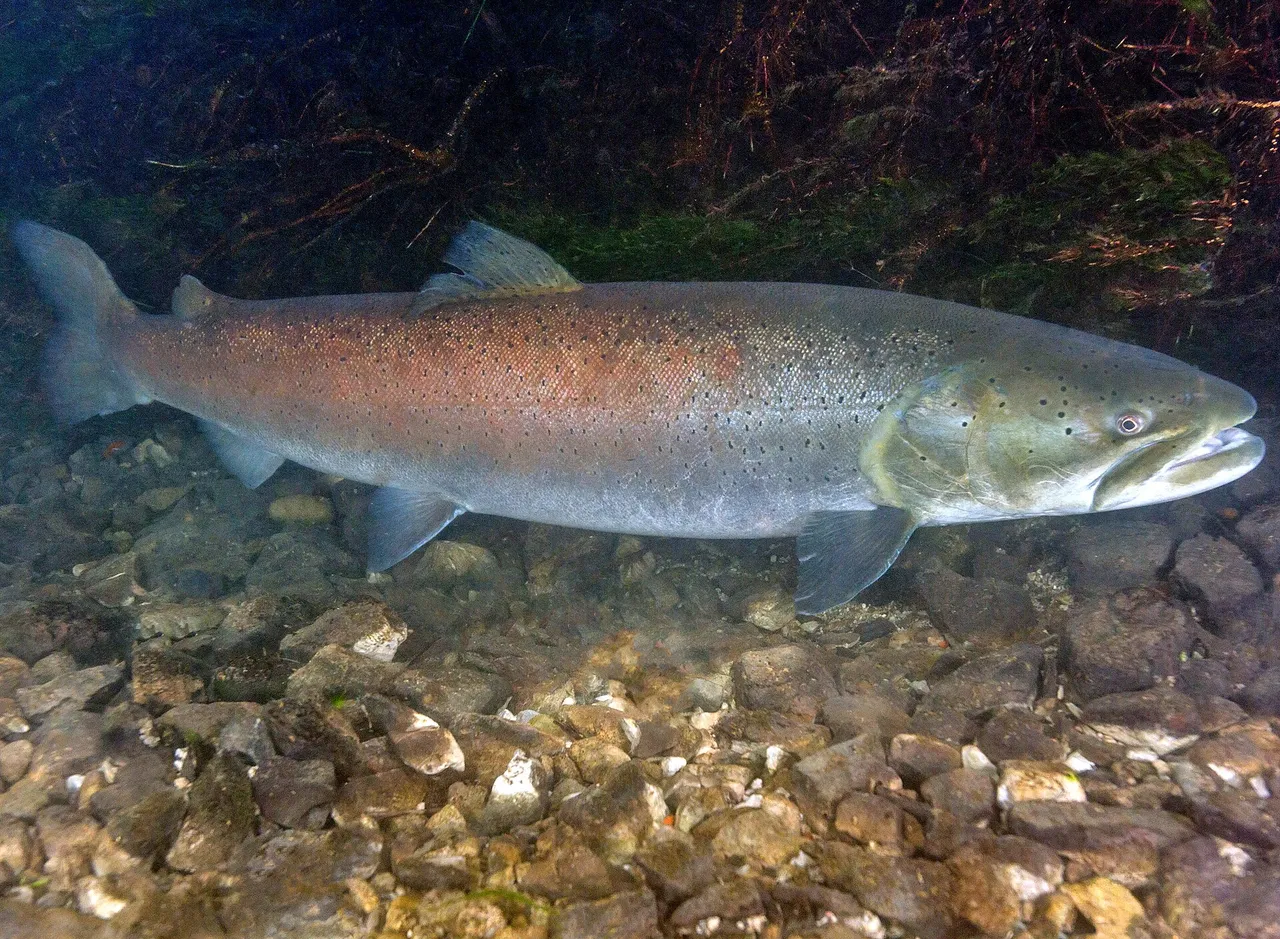
How this was identified, and who took it
Identified by: Identified on a combination: a small adipose fin, placing the fish among the salmonids; a long, almost cylindrical body unlike the deeper profile of a brown trout or salmon; a coppery-bronze flank covered in dense small dark spots rather than the sparse larger spots of Salmo salar; and a maxilla extending well back past the eye. Photographed alive in a gravel-bottomed river in the species' own basin. No other large Danube salmonid shares this body form and spotting.Liquid Art — CC BY-SA 4.0, via Wikimedia Commons — source, licence_(cropped).jpg)
Catching Huchen
Everything here on fishing for it. Each entry opens the page behind it.
Huchen is the great predatory salmonid of the Danube basin, and one of the largest entirely freshwater salmonids in the world. It is a long, powerful, coppery-flanked fish that hunts other fish in fast, cold, gravel-bottomed rivers, and it needs long connected stretches of exactly that habitat to complete its life cycle.
It has almost none left. The Danube system is among the most heavily dammed in Europe, and huchen populations have been fragmented, isolated and reduced across the basin. The species is assessed as Endangered, and many remaining populations depend on stocking.
Where fishing is permitted it is a specialist, short-season, low-numbers pursuit conducted with large lures and flies and, in most places, on a strictly catch-and-release basis.
How it is caught
Gear for this fish
- SpoonsHeavy spoons and large spinning lures are the traditional Danube approach, sized to the fish's preference for a single substantial prey item.
- StreamersHuchen are large river piscivores that feed on other cyprinids and salmonids, and the fly approach to them is a large streamer fished deep and slow in cold water.
Identification
- Scientific name
- Hucho hucho
- Family
- Salmonidae
- Water
- Freshwater
- Conservation status
- Vulnerable
- Regions
- Central & Eastern Europe
- Long, powerful, almost cylindrical body with a large head and a broad mouth full of strong teeth.
- Coppery-red to bronze flanks in mature fish, with fine dark x- or crescent-shaped speckling.
- Adipose fin present, and a small squared tail relative to the bulk of the body.
- Dorsal and anal fins set well back, giving a distinctly pike-like profile in the water.
Size
- Typical
- 3–8 kg (6.6–18 lb)
- Large
- 12–20 kg (26–44 lb)
Exceptional: FishBase records a maximum of 150 cm and 52 kg
Lifecycle and reproduction
Slow-growing, late-maturing and long-lived. Adults require long, connected, fast-flowing river reaches and move considerable distances to spawn, which is why fragmentation by dams is so damaging.
Spawns in spring in shallow fast gravel runs, with females cutting redds. Spawning migrations are substantial and are blocked outright by weirs and hydropower structures across much of the Danube basin.
Feeding and senses
A wholly piscivorous salmonid taking grayling, nase, barbel and other river fish, hunting in fast open water rather than from cover.
A visual hunter of clear fast water, most active in low light at dawn and dusk and in the coloured conditions that follow winter rain. It hunts in open current rather than from cover, which is unusual among large freshwater predators and is why it is fished with large moving lures.
Through the year
Spawns in spring; the angling season where one exists is generally short and set in the cold months, when the fish are most catchable and least stressed by handling.
Distribution
Europe: Danube drainage. Introduced into other European river basins when their numbers declined due to ecological changes in the Danube
This is a biological range — where the species occurs, not a prediction that you will catch one. To browse the fishing geography FishingHQ holds, start at fishing places.
Why anglers care
A specialist and heavily regulated target in Austria, Slovakia, Slovenia, Bosnia and neighbouring countries, fished with large lures, spinners and flies over short defined seasons. Its significance is disproportionate to the numbers caught: it is the symbolic fish of Danube river conservation, and the argument for river connectivity in central Europe is made largely in its name. FishingHQ does not state what any rule is; huchen fishing is tightly controlled and permits, seasons and release requirements vary by country and by river.
Handling and returning
Endangered, large and slow to replace. Keep the fish in the water, use barbless single hooks, support it horizontally with both hands if it must be lifted at all, and revive it fully in current. In most waters release is mandatory and photography should not delay it.
Where to go next
Where it lives
Where you will find it
- Central and eastern European river fishingThe Danube salmon: a wholly freshwater salmonid, historically widespread through the basin, now critically reduced and protected through most of its range.
- Czechia and SlovakiaThe Danube salmon holds on in Slovak tributaries under very tight separate management, and it is the single fish most responsible for the region's specialist reputation.
- The Danube basinEndemic to the basin and confined to its cold, fast upper reaches, severely reduced by damming and channelisation.
- The Western BalkansThe Danube salmon persists in a small number of Balkan tributaries, and it is one of the two reasons specialist anglers travel to this region at all.
Told apart from
Sources and evidence
- FishBase: a global information system on fishes — Froese, R. and D. Pauly, eds. — FishBase Consortium (Scientific institute)Relied on for: Family, maximum size, depth and environment, distribution and the IUCN assessment for Hucho hucho.States this directlyPassage read and verified
- The IUCN Red List of Threatened Species — International Union for Conservation of Nature (Conservation authority)Relied on for: The Vulnerable assessment for Hucho hucho, assessed 28 May 2024.States this directlyCitation checked — the work exists and is described correctly
Why the 10 connections on this page are here, and the sources
How it is caught
What experienced anglers do — 1 connection
Widely and independently recommended by experienced anglers and specialist sources. This is real angling knowledge, not proof: controlled evidence for it is limited, and FishingHQ records it as convention rather than as a demonstrated effect.
Spinning
A practitioner claim about how Hucho hucho is commonly fished, following from where and how it feeds.
- General angling website restatements of established technique — Various (Credible secondary source)Relied on for: Widely restated practitioner accounts of fishing for huchen.Citation checked — the work exists and is described correctly
- Sea Angler — Bauer Media (Specialist angling publication)Relied on for: Practitioner treatment of the methods used for huchen and comparable species.Citation checked — the work exists and is described correctly
Gear for this fish
What experienced anglers do — 2 connections
Widely and independently recommended by experienced anglers and specialist sources. This is real angling knowledge, not proof: controlled evidence for it is limited, and FishingHQ records it as convention rather than as a demonstrated effect.
Spoons
A practitioner claim about which lure family answers this species' feeding or holding behaviour.
- Freshwater Fishing — Macdonald & Jane's, 1975 (Specialist angling publication)Relied on for: Lure and spinning practice for freshwater predators in Britain and northern Europe.States this directlyCitation checked — the work exists and is described correctly
- Angling Times — Bauer Media (Specialist angling publication)Relied on for: Contemporary British and European lure practice for this species in the weekly angling press.Background and mechanism onlyCitation checked — the work exists and is described correctly
Streamers
A practitioner claim about which lure family answers this species' feeding or holding behaviour.
- Trout & Salmon — Bauer Media (Specialist angling publication)Relied on for: Fly categories and their application to salmonids in running and still water.States this directlyCitation checked — the work exists and is described correctly
- Still Water Fly-Fishing — Andre Deutsch, 1952 (Specialist angling publication)Relied on for: Still-water fly categories, and the feeding observations they are chosen from.Background and mechanism onlyCitation checked — the work exists and is described correctly
Where it lives
Backed by research — 2 connections
Supported by peer-reviewed research or fisheries science. The sources are listed and can be checked.
Lowland rivers
A habitat association for Hucho hucho taken from the environment and distribution data on its FishBase summary.
- FishBase: a global information system on fishes — Froese, R. and D. Pauly, eds. — FishBase Consortium (Scientific institute)Relied on for: The environment, depth range and habitat description recorded for Hucho hucho.States this directlyPassage read and verified
Spate rivers
A claim that the species uses rain-fed rivers on impermeable geology, resting on documented distribution and spawning habitat rather than on angling report.
- Freshwater Fishes of the British Isles — HarperCollins (New Naturalist 75), 1992 (Reference work)Relied on for: Distribution, habitat association, thermal requirements and life history of the freshwater fishes of the British Isles and north-west Europe.States this directlyCitation checked — the work exists and is described correctly
- FishBase: a global information system on fishes — Froese, R. and D. Pauly, eds. — FishBase Consortium (Scientific institute)Relied on for: Recorded depth range, temperature tolerance and habitat association for the species.States this directlyPassage read and verified
Where you will find it
Backed by research — 4 connections
Supported by peer-reviewed research or fisheries science. The sources are listed and can be checked.
Central and eastern European river fishing
A distributional claim taken from reference sources on the species rather than from angling report. It states presence and asserts nothing about a fishery.
- FishBase: a global information system on fishes — Froese, R. and D. Pauly, eds. — FishBase Consortium (Scientific institute)Relied on for: Distribution, habitat association, depth range and life history recorded for the species concerned.States this directlyPassage read and verified
- The IUCN Red List of Threatened Species — International Union for Conservation of Nature (Conservation authority)Relied on for: Global distribution, population trend and extinction-risk assessment for the species concerned.States this directlyCitation checked — the work exists and is described correctly
Czechia and Slovakia
That a species occurs in these waters, drawn from distribution science and stock assessment. It is a statement about where the animal lives and is not a statement that anybody will catch one, still less where.
- Freshwater Fishes of the British Isles — HarperCollins (New Naturalist 75), 1992 (Reference work)Relied on for: Distribution, habitat requirement and life history of European freshwater fishes, including their occurrence across the continental range named.States this directlyCitation checked — the work exists and is described correctly
- FishBase: a global information system on fishes — Froese, R. and D. Pauly, eds. — FishBase Consortium (Scientific institute)Relied on for: Recorded distribution and habitat association of the freshwater and migratory species named.States this directlyPassage read and verified
The Danube basin
A distribution association between an animal and a kind of water, rather than a claim about any named mark.
- Freshwater Fishes of the British Isles — HarperCollins (New Naturalist 75), 1992 (Reference work)Relied on for: Distribution and habitat association of European freshwater fishes, including occurrence in the river system concerned.States this directlyCitation checked — the work exists and is described correctly
- FishBase: a global information system on fishes — Froese, R. and D. Pauly, eds. — FishBase Consortium (Scientific institute)Relied on for: Distribution and habitat association recorded for the species.States this directlyPassage read and verified
The Western Balkans
That a species occurs in these waters, drawn from distribution science and stock assessment. It is a statement about where the animal lives and is not a statement that anybody will catch one, still less where.
- Freshwater Fishes of the British Isles — HarperCollins (New Naturalist 75), 1992 (Reference work)Relied on for: Distribution, habitat requirement and life history of European freshwater fishes, including their occurrence across the continental range named.States this directlyCitation checked — the work exists and is described correctly
- FishBase: a global information system on fishes — Froese, R. and D. Pauly, eds. — FishBase Consortium (Scientific institute)Relied on for: Recorded distribution and habitat association of the freshwater and migratory species named.States this directlyPassage read and verified
Told apart from
Backed by research — 1 connection
Supported by peer-reviewed research or fisheries science. The sources are listed and can be checked.
Taimen
An identification comparison naming both binomials: Hucho hucho and Hucho taimen.
- FishBase: a global information system on fishes — Froese, R. and D. Pauly, eds. — FishBase Consortium (Scientific institute)Relied on for: Morphological and distributional data for Hucho hucho and for Hucho taimen.States this directlyPassage read and verified
- The IUCN Red List of Threatened Species — International Union for Conservation of Nature (Conservation authority)Relied on for: Separate assessments treating Hucho hucho and Hucho taimen as distinct species.States this directlyCitation checked — the work exists and is described correctly
An identification link between two species readers genuinely mistake for one another, resting on published morphological characters rather than on angling lore, and naming the character that separates them.
- FishBase: a global information system on fishes — Froese, R. and D. Pauly, eds. — FishBase Consortium (Scientific institute)Relied on for: Morphological description, meristic counts, family placement, distribution and environment of the species named.States this directlyPassage read and verified
- FAO Species Identification Guides for Fishery Purposes and the FAO Species Catalogues — Food and Agriculture Organization of the United Nations (Scientific institute)Relied on for: Identification characters and distribution for inland and coastal fishes, from regional identification guides prepared for fishery purposes.States this directlyCitation checked — the work exists and is described correctly
How FishingHQ labels evidence is explained in the evidence policy.