Central and eastern European river fishing
Fishing regions · Last reviewed 2026-08-14
A continental interior of large slow rivers, engineered channels and reservoir chains, holding wels catfish, zander, asp and huchen — with a fishing culture organised around clubs and licences quite unlike the British or American models.
Safety: boat traffic and being seen — can cause serious injury or death. One more point applies here.
Being listed here is not permission to fish. What that meansClose
Access, fishing rights, seasons, licences, local bylaws and permitted methods vary and can change. Check current access, permission, local regulations, closures and restrictions before you travel or fish. FishingHQ describes what the ground is and names who holds the answer; it does not hold the answer itself.
Find the authority for a jurisdiction · What FishingHQ does and does not cover
Central and eastern Europe is the continent's freshwater heartland, and it is the part of European fishing that Anglophone readers know least.
THE RIVERS ARE LARGE, SLOW AND HEAVILY ENGINEERED. The Danube is the defining system — Europe's second longest river, draining nineteen countries, with a fish fauna including several species found nowhere else. The Vistula, Oder, Elbe, Dnieper, Volga and their tributaries carry comparable systems. Almost all have been canalised, dammed, dyked and straightened over centuries for navigation, power and flood control, and their fisheries reflect that as much as they reflect nature.
THE FISH ARE DIFFERENT FROM THE BRITISH SET. Wels catfish reaching genuinely enormous size; zander, which is the region's premier predator target; asp, a surface-feeding cyprinid predator with no British equivalent; huchen or Danube salmon, a large river salmonid that is critically threatened; sterlet and other sturgeons, most of them in serious trouble; plus barbel, chub, bream, carp, pike and perch in familiar form.
THE CULTURE IS CLUB-AND-LICENCE BASED. In most of the region, angling is organised through national and regional angling associations, which hold or administer fishing rights on large numbers of waters and issue permits to members. Buying an association permit is the normal route, catch reporting is frequently mandatory, and the whole arrangement sits between the British private-fishery model and the American public-licence model without resembling either.
AND THE CONSERVATION PICTURE IS SERIOUS. The Danube sturgeons are among the most endangered groups of fish in the world, huchen has lost most of its range, and dams and channelisation are the principal reason for both.
What fishing here is like
A continental freshwater region of large, slow, heavily engineered rivers and extensive reservoir chains, with a distinctive predator-focused angling culture organised through clubs and associations. Catfish, zander and asp are the characteristic species, and the scale of the water is unfamiliar to anglers used to smaller systems.
The culture is serious, technical and social: angling associations are large, permits are administered collectively, and catch reporting is normal rather than exceptional.
What dominates
Predator fishing for wels catfish, using large baits, boats and — distinctively — clonking, a traditional method of attracting catfish with a shaped wooden implement struck on the water. Lure and vertical fishing for zander from boats, which is highly developed here. Surface and lure fishing for asp, a genuinely distinctive fishery. Feeder and match fishing on the big slow rivers and canals, which is a strong competitive tradition. Carp fishing on lakes and reservoirs. Fly fishing for huchen on the Alpine Danube tributaries, a demanding cold-season specialism. Ice fishing across the eastern and northern parts of the region. Traditional and subsistence fishing on some systems, including trap and net methods under licence.
The water available
Large slow lowland rivers with side channels, backwaters and oxbows. Extensively canalised and dyked reaches with engineered banks. Reservoir chains built for power and navigation, some very large. Alpine and Carpathian headwaters, fast and cold, holding huchen and grayling. The Danube delta, an enormous wetland with a distinctive fishery. Extensive canal networks, particularly in Poland and Germany. Lowland lakes and pond systems, including historic carp pond cultures in Bohemia and Poland that date to the medieval period.
How the rules are structured
Regulation is national, and the region's countries differ. The characteristic structure is that angling associations — national and regional — hold or administer fishing rights on large numbers of waters and issue permits to members and visitors, on top of any state fishing licence. A visitor therefore usually needs two things: the state licence or equivalent qualification, and the association or water permit. In several countries an angling examination or qualification is required before a licence is issued, which surprises visitors from countries where none exists. Catch reporting and catch logs are frequently mandatory. Closed seasons for particular species, minimum sizes and daily limits are standard and vary by country and by water. Several species are protected outright, including sturgeons and, in many places, huchen. Cross-border rivers involve multiple jurisdictions with different rules on each bank. Danube delta and other protected wetlands carry their own arrangements. FishingHQ does not state what any current rule is: establish the position with the national fisheries authority and with the angling association administering the water.
Who to ask
- The national fisheries or environment authority of the country concerned, for the state licence and for protected species
- The national or regional angling association, which administers fishing rights on many waters and issues the permit that is the operative permission
- The local club or water manager, for water-specific rules, closed periods and catch limits
- The protected-area authority for wetlands such as the Danube delta and for Natura 2000 sites
- The relevant cross-border river commission, where a river forms or crosses a national boundary
Words you will meet
- Clonk
- A shaped wooden implement struck on the water surface to attract wels catfish, producing a distinctive sound. A traditional method of the region's big rivers and still in active use.
- Huchen or Danube salmon
- A large predatory salmonid of the Danube basin, entirely freshwater, historically widespread and now critically reduced. Fished in cold weather with very large flies and lures, under strict protection in most of its range.
- Asp
- A large predatory cyprinid that hunts small fish at the surface, often visibly and violently. It has no British equivalent and fishing for it is a distinct discipline.
- Fishing card or permit book
- The document — frequently a booklet requiring catch entries — that combines licence, permit and catch record. Carrying it and completing it correctly is part of the legal requirement in several countries.
Conditions and hazards
Large rivers with commercial navigation are the characteristic hazard: barge traffic on the Danube, Rhine, Oder and their connected systems is heavy, wash from a passing vessel is substantial and sudden, and small craft must understand the navigation rules and stay clear of the channel.
Engineered banks — dykes, revetments and rock armour — are steep, slippery and difficult to climb out onto.
Flow on regulated rivers can change quickly and without visible warning when dams and hydropower stations alter releases. This is a genuine and specific hazard on many systems and local knowledge of release patterns matters.
Winter fishing is widespread and ice conditions on lakes and slow reaches carry the usual serious and local hazards.
Wels catfish reach a size at which handling is a physical risk in itself, and a large fish in a small boat is a real problem.
And cross-border waters can mean that the far bank is a different jurisdiction with different rules and a different emergency service.
Big slow rivers, engineered banks and reservoir chains
THE DANUBE IS THE DEFINING SYSTEM: Europe's second longest river, draining nineteen countries, ending in one of the continent's great wetlands. Around it, the Vistula, Oder, Elbe, Dnieper and Volga systems carry comparable water.
ALMOST ALL OF IT HAS BEEN ENGINEERED. Centuries of canalisation, dyking, straightening and damming for navigation, power and flood control have altered these rivers profoundly. Side channels and backwaters — the habitats that made floodplain rivers productive — have been cut off in many reaches, and the fishery reflects that.
RESERVOIR CHAINS built on the main rivers are now major fisheries in their own right, some of them very large.
THE HEADWATERS in the Alps and Carpathians are a different world: fast, cold, clear, holding grayling and huchen.
CANAL NETWORKS, particularly in Poland and Germany, are extensive and heavily fished.
AND THE HISTORIC CARP POND SYSTEMS of Bohemia and Poland date to the medieval period and are still working fisheries — some of the oldest continuously managed aquaculture in Europe.
What experienced anglers do — why, and the sources (2)
Widely and independently recommended by experienced anglers and specialist sources. This is real angling knowledge, not proof: controlled evidence for it is limited, and FishingHQ records it as convention rather than as a demonstrated effect.
- Fishers' Craft and Lettered Art: Tracts on Fishing from the End of the Middle Ages — University of Toronto Press, 1997 (Scientific literature)Relied on for: Historical European fishing practice, river fishery organisation, gear and the legal arrangements governing them.States this directlyCitation checked — the work exists and is described correctly
- Freshwater Fishes of the British Isles — HarperCollins (New Naturalist 75), 1992 (Reference work)Relied on for: Biology, distribution and conservation of European freshwater fishes, including migratory species and the effects of barriers.States this directlyCitation checked — the work exists and is described correctly
A different fish list, and a season shaped by cold
WELS CATFISH is the region's headline fish, reaching genuinely enormous size in the big rivers and reservoirs, and supporting a specialist fishery with its own methods.
ZANDER is the premier predator target across most of the region, fished vertically and on lures from boats, with a technical culture around it that Britain is only now catching up with.
ASP is the distinctive one: a large predatory cyprinid that hunts at the surface, visibly and violently, with no British equivalent.
HUCHEN, the Danube salmon, is a large freshwater salmonid, historically widespread through the basin, now critically reduced and protected through most of its range.
STURGEONS — sterlet, beluga and their relatives — are among the most endangered fish groups in the world, and the Danube populations are in a serious state.
PLUS barbel, chub, bream, carp, pike, perch and roach in familiar form but frequently at greater size.
THE SEASON is shaped by a continental climate: hard winters with ice fishing in the east and north, a spring spawning period with widespread closed seasons, and a summer and autumn predator season. Huchen is a cold-weather fishery, fished in winter conditions.
Backed by research — why, and the sources (2)
Supported by peer-reviewed research or fisheries science. The sources are listed and can be checked.
- Freshwater Fishes of the British Isles — HarperCollins (New Naturalist 75), 1992 (Reference work)Relied on for: Biology, distribution and conservation of European freshwater fishes, including migratory species and the effects of barriers.States this directlyCitation checked — the work exists and is described correctly
- The IUCN Red List of Threatened Species — International Union for Conservation of Nature (Conservation authority)Relied on for: Global extinction-risk assessment, population trend and identified threats for the species concerned.States this directlyCitation checked — the work exists and is described correctly
How it is fished, including one method found almost nowhere else
CATFISH FISHING is the region's signature, using large baits, boats and heavy tackle — and CLONKING, a traditional method in which a shaped wooden implement is struck on the water to produce a sound that attracts catfish. It is old, it is still in active use, and it is one of the few genuinely distinctive angling methods left in Europe.
ZANDER FISHING from boats, vertically and on lures, developed to a high technical standard.
ASP FISHING on the surface with lures, a visual and specific discipline.
FEEDER AND MATCH FISHING on the big slow rivers and the canal networks, with a strong competitive tradition — several of these countries are consistently among the strongest in international match fishing.
CARP FISHING on lakes, reservoirs and the historic pond systems.
HUCHEN FISHING on the Alpine tributaries in winter, with very large flies and lures, which is a demanding specialism conducted under strict protection.
AND ICE FISHING across the east and north, which is an ordinary winter activity rather than a novelty.
What experienced anglers do — why, and the sources (2)
Widely and independently recommended by experienced anglers and specialist sources. This is real angling knowledge, not proof: controlled evidence for it is limited, and FishingHQ records it as convention rather than as a demonstrated effect.
- General angling website restatements of established technique — Various (Credible secondary source)Relied on for: Widely restated descriptions of regional angling practice, recorded as consensus rather than as scholarship.Background and mechanism onlyCitation checked — the work exists and is described correctly
- Fishers' Craft and Lettered Art: Tracts on Fishing from the End of the Middle Ages — University of Toronto Press, 1997 (Scientific literature)Relied on for: Historical European fishing practice, river fishery organisation, gear and the legal arrangements governing them.States this directlyCitation checked — the work exists and is described correctly
Ponds, associations, and rivers that were rebuilt
Two histories shape this region's fishing.
THE CARP POND CULTURE of Bohemia, Poland and neighbouring areas is one of Europe's great fisheries achievements. Systems of managed ponds built from the medieval period onward — some still in use — produced fish for a Christian calendar that required it, and they are the origin of European carp husbandry. The domesticated carp that Britain now fishes for is a product of this tradition.
THE ENGINEERING OF THE RIVERS is the other. Centuries of works for navigation, power and flood control rebuilt these systems physically. The consequences for fish are documented and severe: migration routes blocked, floodplain habitat disconnected, spawning gravels lost, and sediment transport altered. Danube sturgeons — which migrated from the Black Sea far up the river — are among the most endangered fish groups in the world largely because of it, and huchen has lost most of its range for related reasons.
THE ANGLING ASSOCIATIONS are the third distinctive institution. Large, organised, holding or administering fishing rights across many waters, issuing permits, running catch reporting and frequently doing the stocking and habitat work. It is a collective model that sits between the British private-fishery arrangement and the American public-licence one, and it gives ordinary anglers a degree of collective control over fisheries management that neither of the others does.
Official guidance — why, and the sources (2)
Stated by a fisheries authority, scientific institute or recognised angling body. Authoritative, but summarising rather than demonstrating.
- Fishers' Craft and Lettered Art: Tracts on Fishing from the End of the Middle Ages — University of Toronto Press, 1997 (Scientific literature)Relied on for: Historical European fishing practice, river fishery organisation, gear and the legal arrangements governing them.States this directlyCitation checked — the work exists and is described correctly
- The IUCN Red List of Threatened Species — International Union for Conservation of Nature (Conservation authority)Relied on for: Global extinction-risk assessment, population trend and identified threats for the species concerned.States this directlyCitation checked — the work exists and is described correctly
The vocabulary, and the document you must carry
CLONK names both the wooden implement used to attract catfish and the act of using it.
HUCHEN or DANUBE SALMON names the basin's great salmonid — a wholly freshwater fish despite the name, and protected through most of its range.
ASP names the surface-hunting predatory cyprinid that British anglers have no word for because Britain has no such fish.
AND THE FISHING CARD or PERMIT BOOK is the one to understand before travelling. In several countries the document combining licence, permit and catch record is a booklet in which catches must be entered, sometimes immediately and sometimes before moving on. Carrying it and completing it correctly is part of the legal requirement rather than an administrative nicety, and a visitor who treats it as paperwork can find themselves in difficulty with an entirely correct licence.
SEVERAL COUNTRIES ALSO REQUIRE AN ANGLING EXAMINATION or qualification before issuing a licence at all — a structural feature that has no British or American equivalent and that catches visitors out completely.
What experienced anglers do — why, and the sources (2)
Widely and independently recommended by experienced anglers and specialist sources. This is real angling knowledge, not proof: controlled evidence for it is limited, and FishingHQ records it as convention rather than as a demonstrated effect.
- General angling website restatements of established technique — Various (Credible secondary source)Relied on for: Widely restated descriptions of regional angling practice, recorded as consensus rather than as scholarship.Background and mechanism onlyCitation checked — the work exists and is described correctly
- Freshwater Fishes of the British Isles — HarperCollins (New Naturalist 75), 1992 (Reference work)Relied on for: Biology, distribution and conservation of European freshwater fishes, including migratory species and the effects of barriers.States this directlyCitation checked — the work exists and is described correctly
Who governs it, and why you probably need two permissions
The structural point for a visitor is that ONE DOCUMENT IS USUALLY NOT ENOUGH.
THE STATE LICENCE or its equivalent comes first, and in several countries requires an angling examination or qualification before it can be issued at all.
THE ASSOCIATION OR WATER PERMIT comes second, and is the operative permission for the specific water. National and regional angling associations hold or administer rights on very large numbers of waters, and their permits are the normal route for residents and visitors alike.
CATCH REPORTING is frequently mandatory, with entries made in the permit book at the time.
CLOSED SEASONS, MINIMUM SIZES AND DAILY LIMITS are standard and vary by country and by water.
PROTECTED SPECIES include sturgeons throughout and huchen in most of its range; these carry serious consequences.
CROSS-BORDER RIVERS mean the far bank may be a different jurisdiction with different rules, which is a genuine practical problem on several systems.
AND PROTECTED WETLANDS such as the Danube delta carry their own arrangements.
FishingHQ states no current rule. Establish the position with the national authority and with the association administering the water, before travelling rather than on arrival.
Official guidance — why, and the sources (2)
Stated by a fisheries authority, scientific institute or recognised angling body. Authoritative, but summarising rather than demonstrating.
- Code of Conduct for Responsible Fisheries — Food and Agriculture Organization of the United Nations, Rome, 1995 (Standards body)Relied on for: International principles for responsible fisheries, including small-scale and artisanal fisheries, and the role of national authorities.States this directlyCitation checked — the work exists and is described correctly
- Freshwater Fishes of the British Isles — HarperCollins (New Naturalist 75), 1992 (Reference work)Relied on for: Biology, distribution and conservation of European freshwater fishes, including migratory species and the effects of barriers.States this directlyCitation checked — the work exists and is described correctly
Some of what lives here
Fish recorded here that FishingHQ holds a reviewed photograph of. It is not a complete list of what Central and eastern European river fishing holds, and it is not a prediction that you will catch any of them — it is a way in to the ones we can show you.
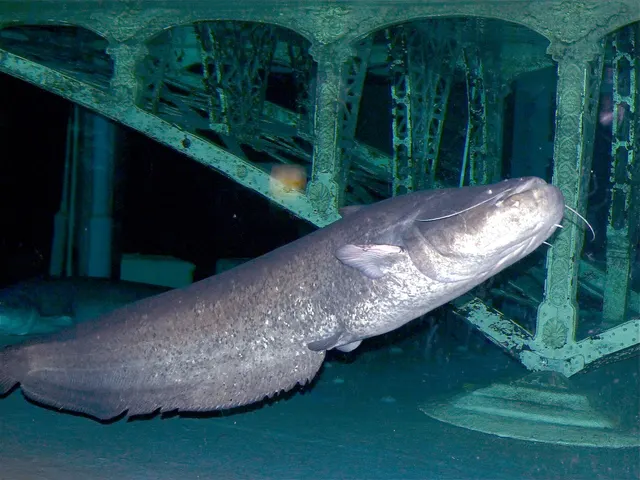 Wels catfishEurope's largest freshwater fish, reaching well over two metres, and an expanding introduced range that has made it one of the continent's most contested species.
Bernard DUPONT from FRANCE — CC BY-SA 2.0, via Wikimedia Commons
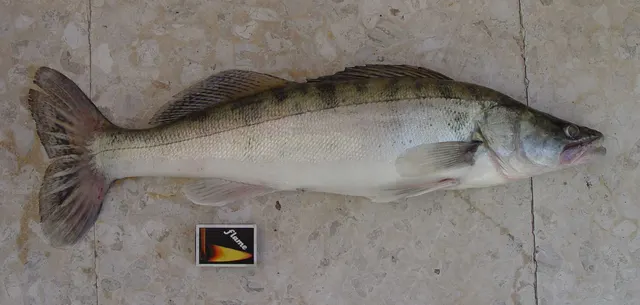 ZanderA shoaling freshwater predator built for hunting in low light and coloured water, and the fish that made a virtue of the conditions pike find difficult.
eLNuko — Public domain, via Wikimedia Commons
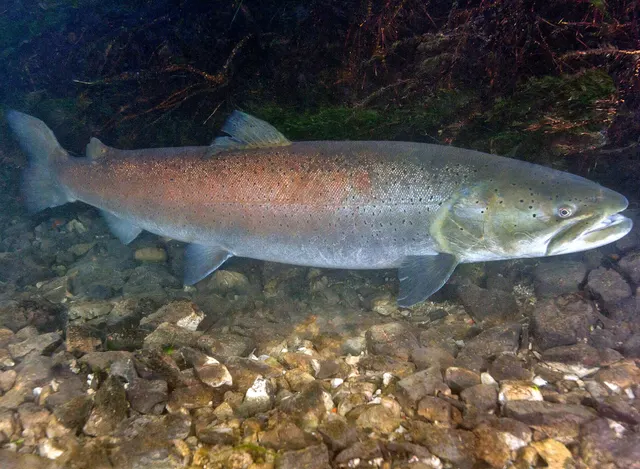 HuchenA very large predatory salmonid of the Danube basin, entirely freshwater, endangered through damming and habitat loss, and fished almost exclusively on a release basis.
Liquid Art — CC BY-SA 4.0, via Wikimedia Commons
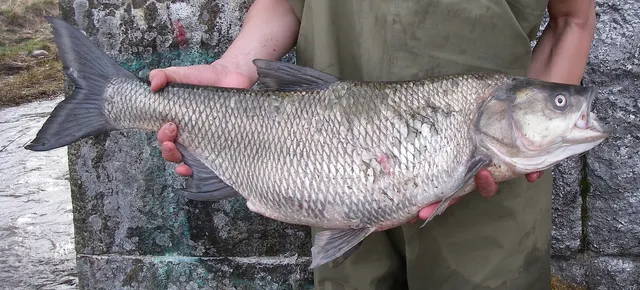 AspEurope's largest predatory cyprinid, a fast open-water hunter that smashes into baitfish shoals at the surface and is fished like a saltwater predator.
Jenny Glans — CC BY-SA 3.0, via Wikimedia Commons
Safety
Boat traffic and being seen — Can cause serious injury or death
Commercial barge traffic on the Danube, Rhine, Oder and connected systems is heavy and continuous. A loaded barge cannot manoeuvre or stop for a small boat, its wash arrives suddenly and is substantial, and the draw as it passes can pull a small craft towards it.
What reduces it: Understand the navigation rules before going afloat, stay clear of the marked channel, keep an engine that will start, make yourself visible, and treat approaching commercial traffic as something to be well clear of rather than something to pass.
Worse when:
- Narrow reaches and bends where the channel runs close to the bank
- Poor visibility, and darkness
Moving water and currents — Can cause serious injury or death
Flow on regulated rivers changes rapidly and without visible warning when dams and hydropower stations alter releases. Water can rise substantially in minutes on reaches below a station, stranding anglers on bars and islands or taking waders off their feet.
What reduces it: Learn the release pattern for the reach before fishing it, never wade below a hydropower station without that knowledge, watch for rising water and act on the first sign rather than the second, and treat local warnings and sirens as literal.
Check the rules before you fish
Fishing laws, bylaws, access rules, seasons, bait restrictions and permitted methods vary by location and can change. Check the current rules from the relevant authority and the water you intend to fish before fishing.
Check with:
- Current national or regional law for where you are fishing
- Current local bylaws
- The relevant fisheries authority
- The landowner, club or fishery whose water it is
- Any restrictions specific to the species or the method you intend to use
Where to go next
What swims here
- AspA large predatory cyprinid that hunts small fish visibly at the surface — a fishery with no British equivalent because Britain has no such fish.
- HuchenThe Danube salmon: a wholly freshwater salmonid, historically widespread through the basin, now critically reduced and protected through most of its range.
- Wels catfishThe region's headline fish, reaching genuinely enormous size in the big rivers and reservoirs, and the subject of a specialist fishery with methods found almost nowhere else.
- ZanderThe premier predator target across most of the region, and the species around which its boat lure fishing developed.
How people fish here
How this compares
Environment and conservation
Sources and evidence
- Freshwater Fishes of the British Isles — HarperCollins (New Naturalist 75), 1992 (Reference work)Relied on for: Biology, distribution and conservation of European freshwater fishes, including migratory species and the effects of barriers.States this directlyCitation checked — the work exists and is described correctly
- Fishers' Craft and Lettered Art: Tracts on Fishing from the End of the Middle Ages — University of Toronto Press, 1997 (Scientific literature)Relied on for: Historical European fishing practice, river fishery organisation, gear and the legal arrangements governing them.States this directlyCitation checked — the work exists and is described correctly
- The IUCN Red List of Threatened Species — International Union for Conservation of Nature (Conservation authority)Relied on for: Global extinction-risk assessment, population trend and identified threats for the species concerned.States this directlyCitation checked — the work exists and is described correctly
Why the 7 connections on this page are here, and the sources
What swims here
Backed by research — 4 connections
Supported by peer-reviewed research or fisheries science. The sources are listed and can be checked.
Asp
A distributional claim taken from reference sources on the species rather than from angling report. It states presence and asserts nothing about a fishery.
- FishBase: a global information system on fishes — Froese, R. and D. Pauly, eds. — FishBase Consortium (Scientific institute)Relied on for: Distribution, habitat association, depth range and life history recorded for the species concerned.States this directlyPassage read and verified
- The IUCN Red List of Threatened Species — International Union for Conservation of Nature (Conservation authority)Relied on for: Global distribution, population trend and extinction-risk assessment for the species concerned.States this directlyCitation checked — the work exists and is described correctly
Huchen
A distributional claim taken from reference sources on the species rather than from angling report. It states presence and asserts nothing about a fishery.
- FishBase: a global information system on fishes — Froese, R. and D. Pauly, eds. — FishBase Consortium (Scientific institute)Relied on for: Distribution, habitat association, depth range and life history recorded for the species concerned.States this directlyPassage read and verified
- The IUCN Red List of Threatened Species — International Union for Conservation of Nature (Conservation authority)Relied on for: Global distribution, population trend and extinction-risk assessment for the species concerned.States this directlyCitation checked — the work exists and is described correctly
Wels catfish
A distributional claim taken from reference sources on the species rather than from angling report. It states presence and asserts nothing about a fishery.
- FishBase: a global information system on fishes — Froese, R. and D. Pauly, eds. — FishBase Consortium (Scientific institute)Relied on for: Distribution, habitat association, depth range and life history recorded for the species concerned.States this directlyPassage read and verified
- The IUCN Red List of Threatened Species — International Union for Conservation of Nature (Conservation authority)Relied on for: Global distribution, population trend and extinction-risk assessment for the species concerned.States this directlyCitation checked — the work exists and is described correctly
Zander
A distributional claim taken from reference sources on the species rather than from angling report. It states presence and asserts nothing about a fishery.
- FishBase: a global information system on fishes — Froese, R. and D. Pauly, eds. — FishBase Consortium (Scientific institute)Relied on for: Distribution, habitat association, depth range and life history recorded for the species concerned.States this directlyPassage read and verified
- The IUCN Red List of Threatened Species — International Union for Conservation of Nature (Conservation authority)Relied on for: Global distribution, population trend and extinction-risk assessment for the species concerned.States this directlyCitation checked — the work exists and is described correctly
How people fish here
What experienced anglers do — 1 connection
Widely and independently recommended by experienced anglers and specialist sources. This is real angling knowledge, not proof: controlled evidence for it is limited, and FishingHQ records it as convention rather than as a demonstrated effect.
Predator fishing
Which branch of fishing dominates a region is a statement about practice rather than about the place, and is recorded as convention.
- FAO fishing gear types and fishing technology information — Food and Agriculture Organization of the United Nations (Scientific institute)Relied on for: Classification and description of world fishing gears and the regions in which each is used.States this directlyCitation checked — the work exists and is described correctly
- General angling website restatements of established technique — Various (Credible secondary source)Relied on for: Widely restated descriptions of regional angling practice, recorded as consensus rather than as scholarship.Background and mechanism onlyCitation checked — the work exists and is described correctly
How this compares
What experienced anglers do — 1 connection
Widely and independently recommended by experienced anglers and specialist sources. This is real angling knowledge, not proof: controlled evidence for it is limited, and FishingHQ records it as convention rather than as a demonstrated effect.
The Danube basin
A continental overview joined to a record it sits above, so that the synthesis and the detail are reachable from one another rather than duplicating each other.
- FAO fishing gear types and fishing technology information — Food and Agriculture Organization of the United Nations (Scientific institute)Relied on for: Classification and description of world fishing gears and the regions in which each is used.States this directlyCitation checked — the work exists and is described correctly
- General angling website restatements of established technique — Various (Credible secondary source)Relied on for: Widely restated descriptions of regional angling practice, recorded as consensus rather than as scholarship.Background and mechanism onlyCitation checked — the work exists and is described correctly
Environment and conservation
Official guidance — 1 connection
Stated by a fisheries authority, scientific institute or recognised angling body. Authoritative, but summarising rather than demonstrating.
Fish stocks and sustainability
An environmental claim about a region, limited to what the cited fisheries and conservation bodies set out.
- Code of Conduct for Responsible Fisheries — Food and Agriculture Organization of the United Nations, Rome, 1995 (Standards body)Relied on for: International principles for responsible fisheries, including small-scale fisheries and the role of national authorities.States this directlyCitation checked — the work exists and is described correctly
- Good Fish Guide — Marine Conservation Society (Conservation authority)Relied on for: Synthesis of stock and gear information relating fishing methods to their effects on stocks and habitats.Background and mechanism onlyCitation checked — the work exists and is described correctly
How FishingHQ labels evidence is explained in the evidence policy.