Czechia and Slovakia
Fishing regions · Last reviewed 2026-08-18
Two landlocked countries sharing one angling tradition, in which water is legally classified as trout or non-trout before anything else is decided — and where the licence, the permit and the catch book are three separate obligations.
Safety: moving water and currents — can cause serious injury or death. 3 more points apply here.
Being listed here is not permission to fish. What that meansClose
Access, fishing rights, seasons, licences, local bylaws and permitted methods vary and can change. Check current access, permission, local regulations, closures and restrictions before you travel or fish. FishingHQ describes what the ground is and names who holds the answer; it does not hold the answer itself.
Find the authority for a jurisdiction · What FishingHQ does and does not cover
Czechia and Slovakia are treated together here because their angling administration descends from a single tradition and still works the same way, while their water does not.
THE FIRST DIVISION IS NOT GEOGRAPHIC BUT LEGAL. Water is classified as TROUT WATER or NON-TROUT WATER, and that classification — not the species present on the day, not the altitude, not the reader's intention — determines the season, the permitted methods, the number of rods and the terms of the permit. A visitor who has not grasped this will buy the wrong permit and fish under the wrong rules with entirely honest intentions. It is the single most useful structural fact about fishing here.
THE SECOND IS THAT COMPETENCE IS EXAMINED. As across this belt of Europe, a licence follows a qualification: an examination on fish identification, close seasons, protected species and methods, taken through the anglers' union. A visitor's route is different and is set by the administration rather than by anything FishingHQ can state.
THE THIRD IS THE CATCH BOOK. The permit is issued with a record in which catches — and, on many waters, each visit — must be entered, frequently at the time and before moving on. It is a legal obligation rather than an administrative courtesy, and it is the part visitors most often treat casually. Returning it correctly at the end of its term is part of the same obligation.
THE WATER ITSELF SPLITS TWO WAYS. Bohemia and Moravia are a country of managed ponds and slow lowland rivers, with one of the oldest continuously worked pond aquaculture landscapes in Europe. Slovakia is mountainous, with fast Carpathian rivers, the Váh and the Hron, a large Danube frontage including a major hydro scheme, and huchen water of international significance.
AND THE COMPETITIVE TRADITION IS DISPROPORTIONATE. For countries of this size, Czech and Slovak anglers have had an outsized influence on modern technique — Czech nymphing is a named style in every fly-fishing country on earth, and it came from here for reasons to do with this water.
What fishing here is like
Two landlocked countries with no coast at all, whose fishing is entirely fresh water and entirely shaped by altitude. Bohemia is a basin ringed by uplands, drained by the Vltava and the Labe, and holds the great managed pond landscapes of southern Bohemia — hundreds of engineered fish ponds built from the medieval period and still worked. Moravia is lower and more agricultural, drained towards the Danube. Slovakia is mountainous through its middle and north — the Tatras and the wider Carpathians — with fast, cold, boulder-bedded rivers falling from them into the Váh, the Hron and the Danube plain, and a substantial Danube frontage including a large hydro scheme and its associated channels. Reservoirs are numerous in both countries and several are large. Winter is continental and hard, and ice forms on the ponds and reservoirs most years.
What dominates
Fly fishing in the mountain and foothill rivers, where the Czech and Slovak contribution to modern technique is substantial: short-line nymphing developed on exactly this fast, broken, cold water and is now practised worldwide under this region's name. Grayling and brown trout are the classic catch, with rainbow trout stocked widely. Huchen fishing on a small number of Slovak rivers, a demanding cold-season specialism under strict protection. Predator fishing for pike, zander, perch and wels catfish on the reservoirs, the lower rivers and the Danube. Carp fishing on the ponds and reservoirs, in a landscape where carp husbandry is a centuries-old industry rather than a sport-fishing import. Feeder and float fishing on the slower rivers and canals with a strong competitive tradition. Ice fishing on ponds and reservoirs where the season allows.
The water available
Fast, cold, clear boulder and gravel rivers falling out of the Tatras and the Bohemian uplands, with pocket water, riffles and short deep runs. Foothill rivers of moderate gradient holding grayling in numbers. Slow lowland rivers in the Moravian and Danube plains with weirs, side channels and impounded reaches. A very large number of managed carp ponds, particularly in southern Bohemia, forming an engineered landscape of dams, sluices and connecting channels that has been in continuous production for centuries. Numerous reservoirs, several large and deep enough to stratify. The Danube frontage in Slovakia, including a major hydro scheme with its headrace and tailrace channels, which fish quite differently from the natural river. Flooded gravel workings and mining lakes.
How the rules are structured
The structure is consistent across both countries and it has three parts that a visitor must hold in mind at once.
THE CLASSIFICATION OF THE WATER COMES FIRST. Waters are legally designated TROUT or NON-TROUT, and the designation governs the season, the permitted methods, the number of rods and the form of permit that applies. It is a legal category attached to the water, not a description of what swims in it, and the two do not always agree.
THE QUALIFICATION COMES SECOND. Angling requires a fishing licence issued on the strength of an examination covering identification, close seasons, protected species and methods, administered through the anglers' union. Arrangements for visitors are different and are set by the administration.
THE PERMIT AND ITS CATCH RECORD COME THIRD. The permit for the water is issued by the organisation that holds the fishing rights — overwhelmingly the national anglers' union and its local organisations, with some water held privately or by the state forestry and water bodies. It comes with a record in which catches and frequently visits must be entered, in many cases at the time and before moving on, and which must be returned at the end of its term. That record is a legal obligation.
PROTECTED SPECIES AND PROTECTED AREAS sit above all of it, and huchen in particular is managed very tightly wherever it survives.
FishingHQ does not state what any current rule is: no season, no size, no method rule and no quantity. Establish which classification applies to the water, which organisation holds the fishing, and what each requires — and do it before travelling, because the qualification layer can make a trip impossible to arrange on arrival.
Who to ask
- The national anglers' union and its local organisation, which holds the fishing rights on most water, administers the examination and issues both permit and catch record.
- The municipal or district authority that issues the fishing licence itself on the strength of the qualification.
- The state forestry, water management or national park body, where the water is held by one of them rather than by the union.
- The nature protection authority, for protected species — huchen above all — and for protected areas.
- The water management body operating a hydro scheme or reservoir, for access and for release patterns.
Words you will meet
- Pstruhová voda / mimopstruhová voda
- Trout water and non-trout water — the legal classification that determines season, methods, rod count and permit form. It attaches to the water rather than to what is caught in it, and getting it wrong is the standard visitor error.
- Povolenka
- The permit for a water or district, issued by the organisation holding the fishing rights, and supplied with the catch record that must be completed and returned.
- Rybářský lístek
- The fishing licence — the state-side document issued on the strength of the angling examination. It is separate from the permit and neither substitutes for the other.
- Czech nymphing
- A short-line, heavily weighted, close-range nymphing style developed on this region's fast broken rivers and now practised worldwide. The name is a geographic attribution made by other countries rather than a local term.
- Hlavátka / huchen
- The Danube salmon — a large, wholly freshwater salmonid of the Danube basin, historically widespread and now critically reduced. Slovak rivers hold some of the most significant remaining water for it and it is protected accordingly.
Conditions and hazards
These are landlocked countries and every hazard here is a freshwater one, which does not make them mild.
MOUNTAIN RIVERS ARE THE PRINCIPAL DANGER. Fast, cold, boulder-bedded water with uneven footing, strong pushing flow and deep pockets between rocks is the standard fly-fishing environment here, and wading it is the standard method. Foot entrapment in a boulder bed with current behind it is the specific mechanism that drowns waders, and it does not require deep water.
SNOWMELT AND STORM RESPONSE IS FAST. Catchments falling out of the Tatras respond to rain and to melt within hours, and a river can rise and colour while somebody is standing in it, from precipitation they never saw.
REGULATED FLOW CHANGES WITHOUT WEATHER. Slovakia's Danube hydro scheme and the numerous reservoir systems in both countries alter flow by release, with no upstream warning visible to somebody downstream.
WEIRS ARE THE OTHER SPECIFIC KILLER. Low-head weirs are abundant on these lowland rivers, they look trivial from the bank, and the recirculating hydraulic below one holds a person and a boat indefinitely. The danger is inversely related to how dangerous it looks.
POND AND RESERVOIR ICE forms most winters and carries the ordinary and serious problems of ice everywhere: variable thickness, no surface indication, and thinnest where the water moves.
AND COLD WATER SHOCK APPLIES TO ALL OF IT. Mountain water is cold in every season, and the first minute of an immersion is decided by the gasp response rather than by fitness or swimming ability.
Trout water and non-trout water: a legal category that decides everything
Almost every question a visitor asks about fishing here has the same first step, and it is not the one they expect.
BEFORE ANYTHING ELSE, ESTABLISH THE WATER'S CLASSIFICATION. Water is legally designated trout or non-trout. That designation determines the season, the methods that may be used, how many rods may be fished and which form of permit applies. It is not a description of the fish present — a designated trout water may hold plenty of other species, and a non-trout water may hold trout — and treating it as a description rather than as a category is the standard route into fishing correctly under the wrong rules.
THE PRACTICAL CONSEQUENCE IS THAT A PERMIT IS NOT GENERIC. Buying a permit without knowing which class of water it covers is buying an unknown. The organisation issuing it will know; the reader must ask.
THEN THERE IS THE QUALIFICATION LAYER. As across this part of Europe, a licence rests on an examination covering identification, close seasons, protected species and permitted methods, administered through the anglers' union. This is why arranging fishing here is something to do before travelling. A visitor arrangement exists and is set by the administration; what it is, and what it requires, is exactly the sort of thing that changes and that FishingHQ will not state.
AND THEN THE CATCH RECORD, WHICH IS A LEGAL DOCUMENT. The permit comes with a book. On many waters each visit is entered on arrival and each retained fish at the time of capture, before moving on. It is returned at the end of its term, and the return is itself an obligation. Visitors accustomed to a licence that asks nothing after purchase routinely treat this as paperwork, and it is not: an angler with a perfectly valid permit and an incorrectly kept book is not compliant.
WHY THE SYSTEM LOOKS LIKE THIS. Almost all the fishing is held by the anglers' union and its local organisations, which also do the stocking, the warden work and the habitat management. The catch record is how a collective fishery measures what is taken from it, which is the same reason it is mandatory rather than voluntary. It is a management instrument, not a bureaucratic one.
SOME WATER IS NOT UNION WATER. State forestry and water management bodies, national parks and private owners hold the rest, each with its own arrangements, and a national park will have conservation requirements the union does not.
AND HUCHEN IS MANAGED SEPARATELY AND TIGHTLY wherever it survives. It is a critically reduced species with a fragmentary range, Slovakia holds internationally significant water for it, and it is protected accordingly. Nothing about huchen should be inferred from what applies to other salmonids.
FishingHQ does not state what any current rule is: no season, no size, no limit and no permission. Establish the classification, identify the rights-holder, and ask.
Official guidance — why, and the sources (2)
Stated by a fisheries authority, scientific institute or recognised angling body. Authoritative, but summarising rather than demonstrating.
- Code of Conduct for Responsible Fisheries — Food and Agriculture Organization of the United Nations, Rome, 1995 (Standards body)Relied on for: The international framework within which national and regional fisheries authorities set, revise and enforce measures, and the principle that responsible fishing includes the safety of fishers.Background and mechanism onlyCitation checked — the work exists and is described correctly
- ICES Advice on fishing opportunities, catch and effort — International Council for the Exploration of the Sea (Scientific institute)Relied on for: That the stock advice European fisheries measures are set against is produced internationally and revised annually, which is the mechanism by which a national measure changes without the national law changing.States this directlyCitation checked — the work exists and is described correctly
Why short-line nymphing came from here, and what the water has to do with it
One region producing a technique that the whole world then adopts is worth understanding mechanically rather than nationally, because the mechanism transfers and the nationality does not.
THE WATER CAME FIRST. Rivers falling out of the Tatras and the Bohemian uplands are fast, broken, boulder-bedded and cold, with holding fish sitting tight to the bed in pockets a metre or two across, in current that would sweep a drifting fly past them in a second and drag any line lying on the surface. Long-line dry-fly presentation, developed on the smooth chalk and freestone rivers of western Europe, does not work well in that water, and the reason is drag.
SO THE ANSWER WAS TO REMOVE THE LINE FROM THE PROBLEM. Fish close. Use heavy flies that reach the bed inside the length of the pocket. Keep the line off the water entirely, leading the flies through the drift with the rod tip rather than mending a floating line behind them. Detect the take by watching a coloured section of leader, or by feel, rather than by watching a dry fly. Nothing in that is magic; it is a direct response to a hydraulic problem, and it works anywhere the same problem exists — which is why it spread.
WHAT IT CHANGED ELSEWHERE. Anglers on rivers in Britain, the Alps, the Rockies and New Zealand found the same constraints on the same kind of water and adopted the same solution, generally under this region's name. The tackle followed: longer, softer rods for close-range control, thin level leaders, and flies weighted to sink now rather than eventually.
WHAT IT DOES NOT DO is replace other approaches. It is a solution to fast broken water at short range. On a smooth glide, in still water, or where fish are looking up, it is the wrong tool and its practitioners say so.
THE OTHER HALF OF THE ANGLING CULTURE IS ENTIRELY DIFFERENT. Southern Bohemia's pond landscape is a working aquaculture industry centuries old — a network of engineered ponds, dams, sluices and channels built to raise carp, and still doing it. That is the reason carp husbandry in Europe traces back through this region, and it is the reason carp here are an agricultural animal with a sporting afterlife rather than the other way round.
AND SLOVAKIA'S DANUBE FRONTAGE IS A THIRD FISHERY AGAIN — big-river predator fishing for zander, catfish and pike, with the hydro scheme's headrace and tailrace channels fishing quite unlike the natural river beside them.
What experienced anglers do — why, and the sources (4)
Widely and independently recommended by experienced anglers and specialist sources. This is real angling knowledge, not proof: controlled evidence for it is limited, and FishingHQ records it as convention rather than as a demonstrated effect.
- Sea Angler — Bauer Media (Specialist angling publication)Relied on for: Long-running published description of European sea angling practice by region and by ground type, including the destinations British anglers travel to.FishingHQ's interpretation of what it saysCitation checked — the work exists and is described correctly
- General angling website restatements of established technique — Various (Credible secondary source)Relied on for: Widely restated descriptions of which practices are conventionally used in the waters named, recorded as practitioner consensus rather than as scholarship.Background and mechanism onlyCitation checked — the work exists and is described correctly
- Fishers' Craft and Lettered Art: Tracts on Fishing from the End of the Middle Ages — University of Toronto Press, 1997 (Scientific literature)Relied on for: That European fishing traditions develop around the water and fish available to them, and the historical method of reading such traditions.Background and mechanism onlyCitation checked — the work exists and is described correctly
- General angling website restatements of established technique — Various (Credible secondary source)Relied on for: Widely restated descriptions of regional angling practice, recorded as practitioner consensus rather than as scholarship.Background and mechanism onlyCitation checked — the work exists and is described correctly
Wading fast water, and the weir that does not look like anything
Landlocked does not mean safe, and the two mechanisms that kill anglers here are both ones people walk into deliberately.
FOOT ENTRAPMENT IN A BOULDER BED IS THE FIRST. Wading a fast, uneven, rocky river is the normal way to fish here. If a foot goes into a gap between boulders and the current is behind the body, the water does the rest: it folds the person downstream over the trapped foot and holds their face under. It does not need deep water and it does not need a strong current by any dramatic standard. What addresses it is a wading staff, moving one foot at a time with weight on the other, never wading where the water is pushing harder than a comfortable stand, a belt on the waders, and not wading alone in fast water.
THE LOW-HEAD WEIR IS THE SECOND, and it is the one that looks like nothing. These lowland rivers carry a great many small weirs, half a metre or a metre high, over which water falls into a recirculating hydraulic that runs back upstream along the bed. Anything floating in it — a person, a boat, a lifejacket-supported body — is held and cycled, and it is nearly impossible to swim out of downstream. From the bank it looks like a step in the river. Stay out of the water immediately below a weir and do not take a boat over one.
SNOWMELT AND STORM RESPONSE IS FAST IN THE MOUNTAINS. A Tatra catchment answers rain within hours. Rising water, dropping clarity and floating debris are the signals to leave, and they can appear under a blue sky because the rain fell high up and out of sight.
REGULATED FLOW CHANGES WITH NO WEATHER AT ALL. Hydro releases and reservoir management alter level and current downstream on a schedule the river does not display. Ask locally on any regulated reach.
COLD WATER SHOCK APPLIES ALL YEAR in mountain water. The first minute of an unexpected immersion is decided by the gasp response and the loss of breathing control, and neither is affected by fitness.
AND ICE ON PONDS AND RESERVOIRS carries the standard problem: thickness varies invisibly, it is thinnest where water moves, and no general rule substitutes for current local information about that specific water on that specific day.
Official guidance — why, and the sources (4)
Stated by a fisheries authority, scientific institute or recognised angling body. Authoritative, but summarising rather than demonstrating.
- RNLI water safety guidance: cold water shock and Float to Live — Royal National Lifeboat Institution (Water-safety or diver-training authority)Relied on for: Cold water shock and the immersion response, tidal cut-off, and water-safety guidance for shore anglers and small-craft users.States this directlyPassage read and verified
- Met Office shipping forecast, inshore waters forecast and marine warnings — Met Office, United Kingdom (Government fisheries body)Relied on for: That inshore waters forecasts, sea state and swell are the operative inputs for shore and small-craft decisions in north-west European waters.States this directlyCitation checked — the work exists and is described correctly
- Code of Conduct for Responsible Fisheries — Food and Agriculture Organization of the United Nations, Rome, 1995 (Standards body)Relied on for: The international framework within which national and regional fisheries authorities set, revise and enforce measures, and the principle that responsible fishing includes the safety of fishers.Background and mechanism onlyCitation checked — the work exists and is described correctly
- ICES Advice on fishing opportunities, catch and effort — International Council for the Exploration of the Sea (Scientific institute)Relied on for: That the stock advice European fisheries measures are set against is produced internationally and revised annually, which is the mechanism by which a national measure changes without the national law changing.States this directlyCitation checked — the work exists and is described correctly
Some of what lives here
Fish recorded here that FishingHQ holds a reviewed photograph of. It is not a complete list of what Czechia and Slovakia holds, and it is not a prediction that you will catch any of them — it is a way in to the ones we can show you.
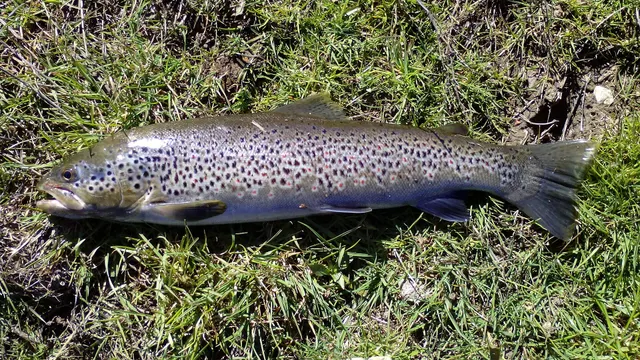 Brown troutA single, extraordinarily plastic species that appears as a tiny hill-stream fish, a deep-bodied loch trout and a silver sea-run migrant — all the same animal.
Robermix, CC0, via Wikimedia Commons
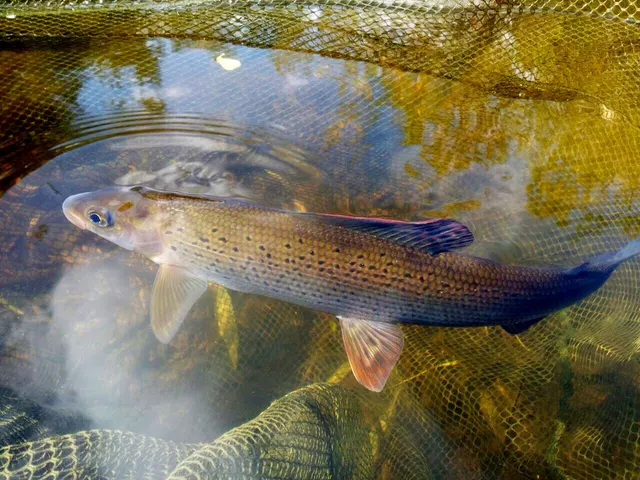 GraylingA salmonid with a sail for a dorsal fin that feeds hard through the winter — which makes it the game angler's season when the trout season has closed.
High Plains Grifter — CC BY-SA 4.0, via Wikimedia Commons
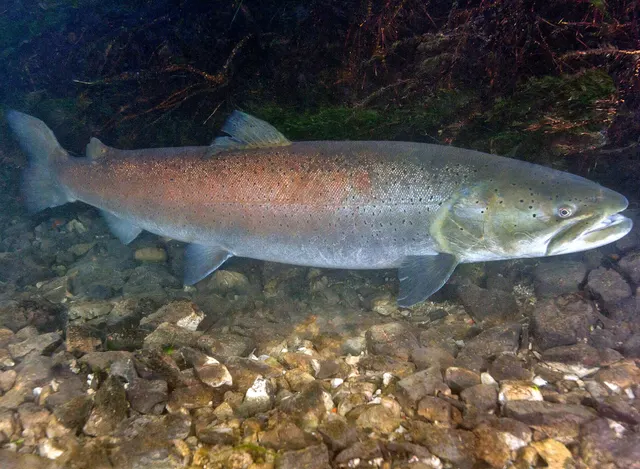 HuchenA very large predatory salmonid of the Danube basin, entirely freshwater, endangered through damming and habitat loss, and fished almost exclusively on a release basis.
Liquid Art — CC BY-SA 4.0, via Wikimedia Commons
Safety
Moving water and currents — Can cause serious injury or death
Wading fast, cold, boulder-bedded mountain rivers is the normal method here, and a foot trapped between boulders with current behind the body folds the wader downstream and holds their face underwater. It does not require deep water or dramatic flow.
What reduces it: Use a wading staff and move one foot at a time with weight on the other, wear a belt on chest waders, refuse water that pushes harder than a comfortable stand, and do not wade fast water alone.
Worse when:
- In rising or coloured water, when the bed cannot be read.
- On steep boulder beds, where gaps between rocks are deep and irregular.
Drowning and immersion — Can cause serious injury or death
Low-head weirs are abundant on the lowland rivers and create a recirculating hydraulic below them that holds a floating person or craft and cycles them. The hazard is invisible from the bank and looks like a small step in the river.
What reduces it: Stay out of the water immediately below any weir, do not take a craft over one, and treat the smallest and least dramatic-looking weirs as the most dangerous rather than the least.
Cold water shock — Can cause serious injury or death
Mountain and upland water is cold in every season, so an unexpected immersion produces an involuntary gasp and loss of breathing control in the first minute, before hypothermia is relevant and regardless of swimming ability.
What reduces it: Wear flotation rather than carry it, keep a means of calling for help on the person rather than in a bag on the bank, and treat every wading position as a place an immersion can start.
Weather and lightning — Can cause injury needing treatment
Carpathian and upland catchments respond to rain and snowmelt within hours, so a river can rise, colour and carry debris around somebody standing in it, from precipitation that fell out of sight upstream.
What reduces it: Treat rising level, falling clarity and floating debris as the signal to leave the water immediately, check the upstream forecast rather than the local sky, and identify the exit before wading rather than after.
Further safety reading
- Wading safely — Wading fast boulder-bedded mountain rivers is the normal method here, and foot entrapment in water short of waist deep is the mechanism that drowns waders.
Check the rules before you fish
Fishing laws, bylaws, access rules, seasons, bait restrictions and permitted methods vary by location and can change. Check the current rules from the relevant authority and the water you intend to fish before fishing.
Check with:
- Current national or regional law for where you are fishing
- Current local bylaws
- The relevant fisheries authority
- The landowner, club or fishery whose water it is
- Any restrictions specific to the species or the method you intend to use
Where to go next
What swims here
- Brown troutThe fish the legal water classification is built around: water designated trout water is managed for this species before any other consideration applies.
- GraylingPresent through the cold clean middle reaches and central to the fly tradition here, where it is a target in its own right rather than a by-catch of trout fishing.
- HuchenThe Danube salmon holds on in Slovak tributaries under very tight separate management, and it is the single fish most responsible for the region's specialist reputation.
How people fish here
Rules and access
- Close seasonsThe legal trout/non-trout classification of the water decides the season before anything about the fish present does, so the reader's first question is what the stretch is classified as.
- Licences and permissionThree documents at once — a state licence resting on an examination, a permit from the rights-holding organisation, and a catch record that must be kept and returned — which is a different structure from anything in western Europe.
Sources and evidence
- Freshwater Fishes of the British Isles — HarperCollins (New Naturalist 75), 1992 (Reference work)Relied on for: Distribution, ecology, life history and conservation status of European freshwater fishes, including the migratory salmonids and the cyprinid and percid communities named.States this directlyCitation checked — the work exists and is described correctly
- FishBase: a global information system on fishes — Froese, R. and D. Pauly, eds. — FishBase Consortium (Scientific institute)Relied on for: Recorded distribution, habitat association and life history of the freshwater and migratory species named.States this directlyPassage read and verified
- FishBase: a global information system on fishes — Froese, R. and D. Pauly, eds. — FishBase Consortium (Scientific institute)Relied on for: Recorded distribution, depth range, habitat association, size and biology of the species named.States this directlyPassage read and verified
- The IUCN Red List of Threatened Species — International Union for Conservation of Nature (Conservation authority)Relied on for: Current global and regional conservation assessment for the species named, with the assessment date.Background and mechanism onlyCitation checked — the work exists and is described correctly
- Fishers' Craft and Lettered Art: Tracts on Fishing from the End of the Middle Ages — University of Toronto Press, 1997 (Scientific literature)Relied on for: That European fishing traditions develop around the water and fish available to them, and the historical method of reading such traditions.Background and mechanism onlyCitation checked — the work exists and is described correctly
- General angling website restatements of established technique — Various (Credible secondary source)Relied on for: Widely restated descriptions of regional angling practice, recorded as practitioner consensus rather than as scholarship.Background and mechanism onlyCitation checked — the work exists and is described correctly
Why the 7 connections on this page are here, and the sources
What swims here
Backed by research — 3 connections
Supported by peer-reviewed research or fisheries science. The sources are listed and can be checked.
Brown trout
That a species occurs in these waters, drawn from distribution science and stock assessment. It is a statement about where the animal lives and is not a statement that anybody will catch one, still less where.
- Freshwater Fishes of the British Isles — HarperCollins (New Naturalist 75), 1992 (Reference work)Relied on for: Distribution, habitat requirement and life history of European freshwater fishes, including their occurrence across the continental range named.States this directlyCitation checked — the work exists and is described correctly
- FishBase: a global information system on fishes — Froese, R. and D. Pauly, eds. — FishBase Consortium (Scientific institute)Relied on for: Recorded distribution and habitat association of the freshwater and migratory species named.States this directlyPassage read and verified
Grayling
That a species occurs in these waters, drawn from distribution science and stock assessment. It is a statement about where the animal lives and is not a statement that anybody will catch one, still less where.
- Freshwater Fishes of the British Isles — HarperCollins (New Naturalist 75), 1992 (Reference work)Relied on for: Distribution, habitat requirement and life history of European freshwater fishes, including their occurrence across the continental range named.States this directlyCitation checked — the work exists and is described correctly
- FishBase: a global information system on fishes — Froese, R. and D. Pauly, eds. — FishBase Consortium (Scientific institute)Relied on for: Recorded distribution and habitat association of the freshwater and migratory species named.States this directlyPassage read and verified
Huchen
That a species occurs in these waters, drawn from distribution science and stock assessment. It is a statement about where the animal lives and is not a statement that anybody will catch one, still less where.
- Freshwater Fishes of the British Isles — HarperCollins (New Naturalist 75), 1992 (Reference work)Relied on for: Distribution, habitat requirement and life history of European freshwater fishes, including their occurrence across the continental range named.States this directlyCitation checked — the work exists and is described correctly
- FishBase: a global information system on fishes — Froese, R. and D. Pauly, eds. — FishBase Consortium (Scientific institute)Relied on for: Recorded distribution and habitat association of the freshwater and migratory species named.States this directlyPassage read and verified
How people fish here
What experienced anglers do — 1 connection
Widely and independently recommended by experienced anglers and specialist sources. This is real angling knowledge, not proof: controlled evidence for it is limited, and FishingHQ records it as convention rather than as a demonstrated effect.
Fly fishing
That a discipline is conventionally practised in these waters, drawn from published description of practice rather than from participation data, and labelled as consensus accordingly.
- Sea Angler — Bauer Media (Specialist angling publication)Relied on for: Long-running published description of European sea angling practice by region and destination, including where British anglers travel and what they fish for there.FishingHQ's interpretation of what it saysCitation checked — the work exists and is described correctly
- General angling website restatements of established technique — Various (Credible secondary source)Relied on for: Widely restated descriptions of which disciplines are conventionally practised in the waters named, recorded as practitioner consensus rather than as scholarship.Background and mechanism onlyCitation checked — the work exists and is described correctly
Safety reading
Official guidance — 1 connection
Stated by a fisheries authority, scientific institute or recognised angling body. Authoritative, but summarising rather than demonstrating.
Wading safely
A link from the place to the substantial safety topic describing the mechanism that hurts people there, rather than a warning restated in prose on the record itself.
- RNLI water safety guidance: cold water shock and Float to Live — Royal National Lifeboat Institution (Water-safety or diver-training authority)Relied on for: Cold water shock and the immersion response, tidal cut-off, and water-safety guidance for shore anglers and small-craft users.States this directlyPassage read and verified
Rules and access
Official guidance — 2 connections
Stated by a fisheries authority, scientific institute or recognised angling body. Authoritative, but summarising rather than demonstrating.
Close seasons
This points to the kind of rule that applies rather than to a rule itself. The same question is administered differently in each of these countries, so the page says that the answer is held elsewhere and changes.
- Code of Conduct for Responsible Fisheries — Food and Agriculture Organization of the United Nations, Rome, 1995 (Standards body)Relied on for: The international framework within which national and regional fisheries authorities set, revise and enforce measures, and the principle that the responsible authority rather than a third party holds the current position.Background and mechanism onlyCitation checked — the work exists and is described correctly
- ICES Advice on fishing opportunities, catch and effort — International Council for the Exploration of the Sea (Scientific institute)Relied on for: That the stock advice European measures are set against is produced internationally and revised annually, which is how a national measure changes without the national law changing.States this directlyCitation checked — the work exists and is described correctly
Licences and permission
This points to the kind of rule that applies rather than to a rule itself. The same question is administered differently in each of these countries, so the page says that the answer is held elsewhere and changes.
- Code of Conduct for Responsible Fisheries — Food and Agriculture Organization of the United Nations, Rome, 1995 (Standards body)Relied on for: The international framework within which national and regional fisheries authorities set, revise and enforce measures, and the principle that the responsible authority rather than a third party holds the current position.Background and mechanism onlyCitation checked — the work exists and is described correctly
- ICES Advice on fishing opportunities, catch and effort — International Council for the Exploration of the Sea (Scientific institute)Relied on for: That the stock advice European measures are set against is produced internationally and revised annually, which is how a national measure changes without the national law changing.States this directlyCitation checked — the work exists and is described correctly
How FishingHQ labels evidence is explained in the evidence policy.