Bleak
Fish · Last reviewed 2026-08-11
A small, silver, surface-shoaling cyprinid of European rivers and lakes, and the principal prey of asp, zander and pike where it occurs.
Background, not a fishing profile
This page is here so FishingHQ can describe a biological relationship accurately — usually because a fish covered elsewhere on the site feeds on this. It covers what it is, where it lives and the evidence behind that relationship, and deliberately nothing about methods, bait or tackle. Its presence here is not a statement that anybody fishes for it.
Bleak are small silver fish that shoal near the surface in open water, frequently in very large numbers, and their habit of feeding high in the water column is what makes them so available to predators.
In much of continental Europe bleak are the forage base of the open-water predator community. Asp are effectively a bleak specialist, hunting them at the surface in a spectacular smashing take; zander and pike take them heavily; and perch, chub and catfish all do.
They have a long history as a bait fish and, historically, an industrial use — bleak scales were the source of the pearl essence used to make artificial pearls, which supported a small European industry for a considerable time.
The species appears in the FishingHQ pipeline register as a supporting species for exactly the reason it is built here: several predator diets in FishingHQ name bleak specifically, and until now there was nothing for those edges to point at.
Identification
No photograph of Bleak has passed identity review yet, so none is shown. A photograph is published only once somebody has checked the animal in it against the diagnostic features described on this page.
- Scientific name
- Alburnus alburnus
- Family
- Leuciscidae
- Water
- Freshwater, Brackish
- Conservation status
- Least Concern
- Regions
- Western Europe, Central & Eastern Europe, Northern Europe
- Small, slender, laterally compressed fish with very bright silver flanks and a slightly upturned mouth.
- Upturned, superior mouth adapted for taking food from the surface film.
- Large, easily shed scales and a sharp keel along the belly behind the pelvic fins.
- Anal fin long, with substantially more branched rays than the similar-looking young of other cyprinids.
Size
- Typical
- 10–15 cm
- Large
- up to about 20 cm
Lifecycle and reproduction
Bleak mature at two to three years and rarely live beyond six. They grow quickly, breed prolifically and recover fast from predation pressure, which is what allows them to sustain the predator populations that depend on them.
Spawns in shoals in late spring and early summer over gravel, stones and vegetation in shallow water, with adhesive eggs. Spawning is prolonged and occurs in batches.
Feeding and senses
Feeds mainly at and near the surface on drifting and emerging invertebrates: aquatic insect larvae and pupae, terrestrial insects that fall in, and zooplankton. The upturned mouth is the adaptation to that.
Vision is dominant, which follows from surface feeding in daylight. Shoaling is coordinated through vision and the lateral line, and bleak shoals scatter visibly and abruptly under attack.
Through the year
Shoals in open water through the warmer months, frequently near the surface, and moves into deeper water in winter. The summer surface habit is what exposes it to asp and to surface-feeding predators.
Distribution
Widely distributed across Europe from France and the Low Countries east through central Europe to the Volga basin, in lowland rivers, canals and lakes, with brackish populations in the Baltic.
This is a biological range — where the species occurs, not a prediction that you will catch one. To browse the fishing geography FishingHQ holds, start at fishing places.
Why anglers care
Caught incidentally in enormous numbers by coarse anglers and occasionally targeted deliberately in match fishing, but not a target species in its own right in the sense FishingHQ uses. Its significance is as the food that concentrates predators, and as a live and dead bait where that is permitted.
Handling and returning
Scales are shed extremely easily and the fish is delicate; handle with wet hands and briefly. Movement of live bleak between waters is restricted or prohibited in many jurisdictions and should be checked locally.
Where to go next
Similar and related fish
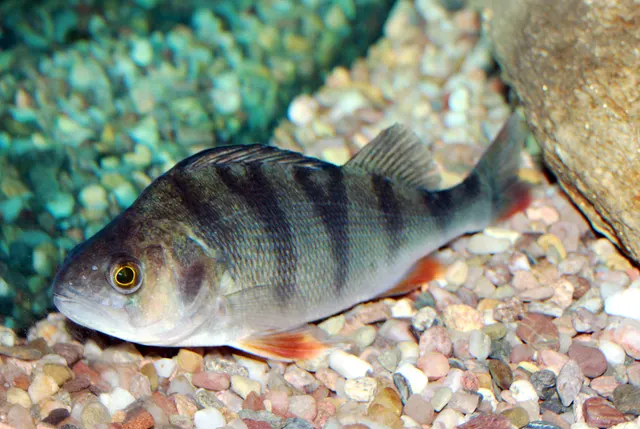 European perchBleak are taken heavily in open water, and perch shoals working bleak near the surface are a characteristic summer sight on European rivers and canals.
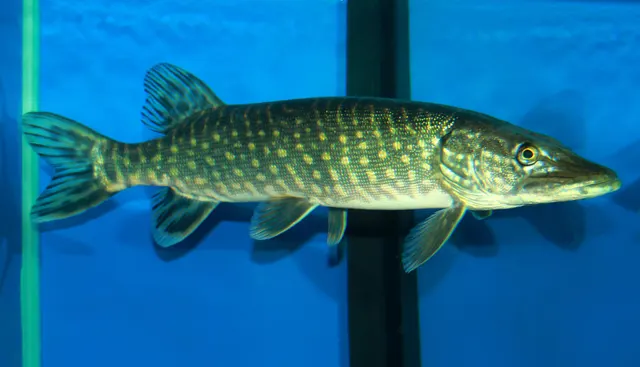 Northern pikeBleak are taken alongside roach in open water, particularly by smaller pike working surface shoals in summer.
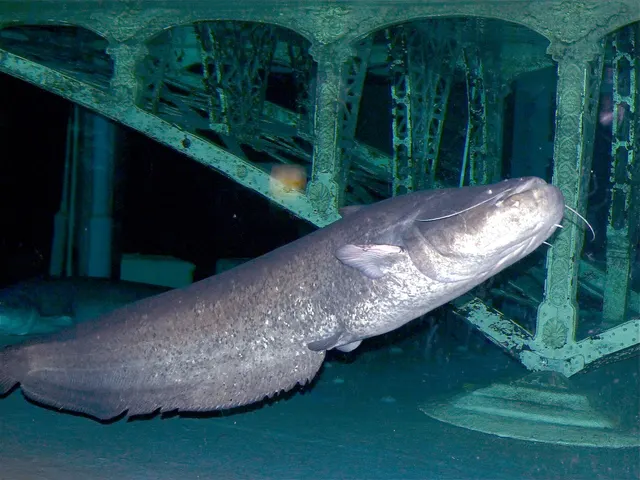 Wels catfishBleak shoaling near the surface at night are a regular item, which is one of the reasons wels are caught on surface-fished baits despite being bottom-associated animals.
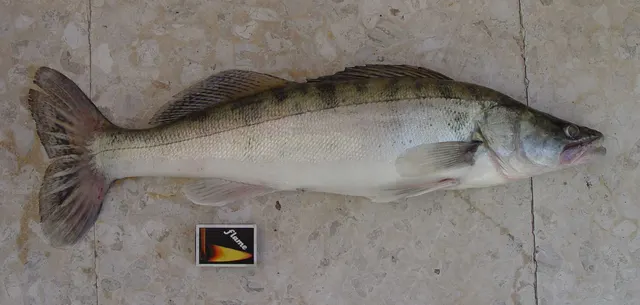 ZanderBleak are a principal zander prey in the open water of European rivers and reservoirs, taken in low light where the zander's tapetum gives it an advantage.
Where you will find it
Understanding this fish
Told apart from
Sources and evidence
- FishBase: a global information system on fishes — Froese, R. and D. Pauly, eds. — FishBase Consortium (Scientific institute)Relied on for: Species identity, binomial, family placement, size, distribution and recorded biology for this species.States this directlyPassage read and verified
- FAO Species Identification Guides for Fishery Purposes and the FAO Species Catalogues — Food and Agriculture Organization of the United Nations (Scientific institute)Relied on for: The regional species account describing identity, distribution and the role of this species in the fisheries and food webs it belongs to.States this directlyCitation checked — the work exists and is described correctly
Why the 7 connections on this page are here, and the sources
Similar and related fish
Backed by research — 4 connections
Supported by peer-reviewed research or fisheries science. The sources are listed and can be checked.
European perch
Recorded diet evidence identifies Alburnus alburnus as a food item of this predator at species level. The edge is written at that granularity and no further.
- FishBase: a global information system on fishes — Froese, R. and D. Pauly, eds. — FishBase Consortium (Scientific institute)Relied on for: Food items recorded for this predator, including Alburnus alburnus.States this directlyPassage read and verified
- FAO Species Identification Guides for Fishery Purposes and the FAO Species Catalogues — Food and Agriculture Organization of the United Nations (Scientific institute)Relied on for: Species account describing the diet of this predator in the region where Alburnus alburnus occurs.Background and mechanism onlyCitation checked — the work exists and is described correctly
Northern pike
Recorded diet evidence identifies Alburnus alburnus as a food item of this predator at species level. The edge is written at that granularity and no further.
- FishBase: a global information system on fishes — Froese, R. and D. Pauly, eds. — FishBase Consortium (Scientific institute)Relied on for: Food items recorded for this predator, including Alburnus alburnus.States this directlyPassage read and verified
- FAO Species Identification Guides for Fishery Purposes and the FAO Species Catalogues — Food and Agriculture Organization of the United Nations (Scientific institute)Relied on for: Species account describing the diet of this predator in the region where Alburnus alburnus occurs.Background and mechanism onlyCitation checked — the work exists and is described correctly
Wels catfish
Recorded diet evidence identifies Alburnus alburnus as a food item of this predator at species level. The edge is written at that granularity and no further.
- FishBase: a global information system on fishes — Froese, R. and D. Pauly, eds. — FishBase Consortium (Scientific institute)Relied on for: Food items recorded for this predator, including Alburnus alburnus.States this directlyPassage read and verified
- FAO Species Identification Guides for Fishery Purposes and the FAO Species Catalogues — Food and Agriculture Organization of the United Nations (Scientific institute)Relied on for: Species account describing the diet of this predator in the region where Alburnus alburnus occurs.Background and mechanism onlyCitation checked — the work exists and is described correctly
Zander
Recorded diet evidence identifies Alburnus alburnus as a food item of this predator at species level. The edge is written at that granularity and no further.
- FishBase: a global information system on fishes — Froese, R. and D. Pauly, eds. — FishBase Consortium (Scientific institute)Relied on for: Food items recorded for this predator, including Alburnus alburnus.States this directlyPassage read and verified
- FAO Species Identification Guides for Fishery Purposes and the FAO Species Catalogues — Food and Agriculture Organization of the United Nations (Scientific institute)Relied on for: Species account describing the diet of this predator in the region where Alburnus alburnus occurs.Background and mechanism onlyCitation checked — the work exists and is described correctly
Where you will find it
Backed by research — 1 connection
Supported by peer-reviewed research or fisheries science. The sources are listed and can be checked.
The English canal network
A claim that a place contains the ground, water and seasonal conditions the species is associated with. It is a distributional statement about the world, it rests on the regional reference literature, and it deliberately asserts nothing about access, permission or catch.
- Freshwater Fishes of the British Isles — HarperCollins (New Naturalist 75), 1992 (Reference work)Relied on for: Distribution, ecology and conservation status of the freshwater fishes of the British Isles, including in artificial and modified waters.States this directlyCitation checked — the work exists and is described correctly
- Environment Agency fisheries management, byelaws and rod licensing information — Environment Agency (Government fisheries body)Relied on for: Fisheries monitoring, water quality and species distribution in English rivers, canals and still waters.States this directlyCitation checked — the work exists and is described correctly
Understanding this fish
Backed by research — 1 connection
Supported by peer-reviewed research or fisheries science. The sources are listed and can be checked.
Why fish shoal
A link from a species to the mechanism that explains how it lives, written only where the species is a worked example of that mechanism rather than merely subject to it.
- Freshwater Fishes of the British Isles — HarperCollins (New Naturalist 75), 1992 (Reference work)Relied on for: Life history, habitat requirement, physiological tolerance and seasonal behaviour of European freshwater fishes.States this directlyCitation checked — the work exists and is described correctly
- FishBase: a global information system on fishes — Froese, R. and D. Pauly, eds. — FishBase Consortium (Scientific institute)Relied on for: Recorded environment, depth range, temperature and oxygen tolerance, feeding biology and distribution of the species named.States this directlyPassage read and verified
Told apart from
Backed by research — 1 connection
Supported by peer-reviewed research or fisheries science. The sources are listed and can be checked.
Dace
An identification link between two species readers genuinely mistake for one another, resting on published identification keys rather than on angling lore. It names the character that separates them, which is what makes it useful rather than merely adjacent.
- Freshwater Fishes of the British Isles — HarperCollins (New Naturalist 75), 1992 (Reference work)Relied on for: Identification, distinguishing features and confusable species among the freshwater fishes of the British Isles, together with their distribution and habitat.States this directlyCitation checked — the work exists and is described correctly
- The Fishes of the British Isles and North-West Europe — Macmillan, 1969 (Reference work)Relied on for: Morphological identification features and identification keys for the fishes of the British Isles and north-west Europe, including the characters separating confusable species.States this directlyCitation checked — the work exists and is described correctly
How FishingHQ labels evidence is explained in the evidence policy.