The Rhine
Fishing regions · Last reviewed 2026-08-16
Western Europe's most industrially important river: an Alpine torrent turned into a shipping canal, biologically destroyed by a single chemical spill in 1986, and deliberately rebuilt in one of the largest river restoration programmes ever attempted.
Safety: boat traffic and being seen — can cause serious injury or death. 3 more points apply here.
Being listed here is not permission to fish. What that meansClose
Access, fishing rights, seasons, licences, local bylaws and permitted methods vary and can change. Check current access, permission, local regulations, closures and restrictions before you travel or fish. FishingHQ describes what the ground is and names who holds the answer; it does not hold the answer itself.
Find the authority for a jurisdiction · What FishingHQ does and does not cover
The Rhine is a feature-tier record because it is one named river, and it is the clearest case anywhere of a great river being reduced to a drain and then deliberately brought back — which is the reason it belongs on FishingHQ at all.
WHAT IT PHYSICALLY IS NOW. From Alpine headwaters through Lake Constance, a gorge section, and then a very long, wide, deep, heavily engineered lowland river running through the industrial heart of Europe to a delta in the Netherlands. Most of the lowland river is canalised: straightened, embanked, dredged for shipping, with its floodplain cut off behind dykes. It carries an enormous volume of commercial barge traffic.
WHAT IT WAS. Before engineering, the upper Rhine was a braided, shifting, island-strewn river across a wide floodplain, and it carried one of the largest Atlantic salmon runs in Europe — a fishery of real commercial scale, with salmon so abundant in the delta that the familiar story about servants stipulating how often they could be made to eat it attaches here as it does to other great salmon rivers.
THEN IT WAS DESTROYED IN STAGES. Straightening and canalisation from the nineteenth century removed the spawning gravels and the floodplain. Dams and weirs blocked migration outright. Industrial and municipal discharge through the twentieth century degraded water quality severely. And in November 1986 a fire at a chemical warehouse near Basel put a very large quantity of agricultural chemicals into the river, killing essentially everything for hundreds of kilometres downstream. The eel population of the upper river was effectively annihilated.
THE RESPONSE WAS THE INTERESTING PART. That disaster produced an international political agreement to restore the river, with the return of salmon as the explicit and deliberately symbolic target — a programme of discharge control, fish passes at the barrages, gravel reinstatement and stocking, run jointly by the riparian states over decades.
AND IT HAS PARTLY WORKED, which is the honest formulation. Water quality recovered dramatically. Many species returned. Salmon do again ascend the Rhine, and there is natural reproduction in tributaries. The run is nevertheless small, it depends on continued stocking and on passage that is still incomplete at some barrages, and calling the restoration finished would be wrong.
WHAT AN ANGLER FINDS TODAY is a very large, powerful, busy coarse and predator river: zander, pike, perch, catfish, barbel, bream and chub in quantity, with a substantial and growing predator fishery, and grayling and trout in the upper river and tributaries.
What fishing here is like
A very large river running from Alpine headwaters through a deep pre-Alpine lake, a gorge section and then a long, wide, deep and heavily engineered lowland course through the industrial heart of Europe to a delta. Most of the lowland river is canalised — straightened, embanked, dredged and dammed — with the floodplain cut off behind dykes and a great deal of hard revetment along the banks. Flow is substantial and fast, water is generally coloured, and the river carries an enormous volume of commercial barge traffic. Groynes projecting into the channel create the slack water that most of the fishing depends on.
How people fish here
4 methods are recorded on the places documented here, counted from the records themselves rather than from what is practised in the country. Each opens a full guide to the technique.
Drop shotting
Recorded at 1 place here, over river reach.
A finesse rig with the weight below the hook, letting a small soft plastic be worked in place, off the bottom, without moving anywhere.
Feeder fishing
Recorded at 1 place here, over river reach.
Legering with a weight that also carries bait, so that free offerings arrive in exactly the same place as the hookbait, cast after cast.
Ledgering
Recorded at 1 place here, over river reach.
Fishing a bait on the bottom held by a weight, with no float — the simplest way to fish at distance, in depth, or in wind.
Spinning
Recorded at 1 place here, over river reach.
Casting an artificial lure and retrieving it so that it moves like something alive — the most direct form of lure fishing.
These are the methods documented at the places FishingHQ holds here. A species listed beside a method is documented on the same ground, which is not the same as being taken that way — where a source establishes the method a fish was caught on, it is stated on that place’s own page. All fishing methods.
What dominates
Predator fishing for zander, pike and perch, which is the river's principal modern rod fishery and which works the groyne fields, the harbour mouths and the structure. Lure and drop-shot fishing, which the groyne-field structure suits particularly well and which has a very large following along the German and Dutch reaches. Feeder and ledger fishing for barbel, bream and chub in the main flow. Catfish fishing, which has grown substantially as the species has spread and grown. Fly fishing for grayling and trout in the upper river and the tributaries. Boat fishing where navigation rules permit, which is constrained by the shipping. Almost all bank fishing is from hard engineered margin rather than natural bank.
The water available
Alpine headwaters and a deep pre-Alpine lake; a gorge section with fast water; a long canalised lowland river with hard revetment, groyne fields, harbour basins and barrages; cut-off oxbows and floodplain remnants behind the dykes; connected gravel pits and side waters; navigation locks and their pounds; a large distributary delta with tidal influence at the seaward end; and reinstated gravel and fish-pass structures built as part of the restoration programme.
How the rules are structured
The river runs through or alongside several countries and each administers its own fisheries framework, which is the practical complication. In Germany a state fishing licence normally requires a formal examination and is issued by the federal state, and a separate permit is needed for the specific water — an arrangement that surprises visitors from countries where a licence is simply purchased. In the Netherlands a national permit combined with membership of a federation is the usual route. Switzerland, France and Austria each have their own arrangements. Close seasons, minimum sizes and rules on live bait, night fishing and returning fish differ between states and countries along the same river. Migratory species are governed by the international restoration programme's framework and salmon in particular are protected. Navigation authority rules apply throughout. FishingHQ does not state what any current rule is, and on this river it differs within a few kilometres.
Who to ask
- The federal state or national fisheries authority of the country and region concerned, whose licensing and examination requirements differ substantially along the river.
- The angling association or club holding the fishing rights on the stretch, from which the water-specific permit comes.
- The International Commission for the Protection of the Rhine, which coordinates the restoration programme and publishes its assessment across the riparian states.
- The waterway and shipping authority for the reach, for navigation, bank access and safety.
Words you will meet
- Buhne
- A groyne — a stone or timber structure projecting from the bank into the channel to concentrate the flow and keep the navigation deep. The groyne fields are the Rhine's fishing: they create slack water, eddies and scour holes in an otherwise uniform canalised river, and almost all bank fishing here happens in or beside one.
- Sandoz
- The 1986 chemical warehouse fire near Basel whose firefighting water put a very large quantity of agricultural chemicals into the river, killing essentially everything for hundreds of kilometres. It is the reference point for the river's condition and the event that produced the political will to restore it.
- Lachs 2000
- The programme name under which the return of Atlantic salmon to the Rhine was adopted as the explicit and deliberately symbolic goal of the international restoration effort. The symbolism was the point: a measurable, publicly legible target that required everything else to be fixed first.
Conditions and hazards
This is a large, fast, cold, canalised river with heavy commercial traffic, and the hazards are those of engineered water rather than natural water. The banks are frequently hard revetment or stone groyne with no shallow margin and no easy exit, so a person in the water cannot wade out and cannot climb a smooth or riprap face. The flow is much stronger than the surface suggests and it is not uniform: the space between groynes carries strong eddies and back-currents, and the boundary between the slack and the main flow is abrupt. Commercial barges are the second hazard and they are exceptional in scale — a loaded vessel cannot stop or manoeuvre, its passage drops the water level between groynes momentarily and then returns it as a surge, and people are knocked off groynes and swept off banks by that surge rather than by the river itself. Cold water shock decides most immersions for most of the year. Levels rise substantially in flood and the floodplain is behind dykes rather than beside the water. And the stone of groynes and revetment is uneven, algae-covered and treacherous.
Killed in a night, rebuilt over forty years
The Rhine is the most instructive river in Europe for anybody who thinks a damaged water is finished, and the sequence is worth setting out in order.
WHAT WAS LOST FIRST WAS THE SHAPE. From the nineteenth century the upper Rhine was straightened, embanked and shortened to control flooding and improve navigation. That removed the braided channels, the shifting gravel bars and the connected floodplain that the river's ecology ran on. Barrages and weirs followed for navigation and power, and each one was a wall to a migratory fish. The salmon run — one of the largest in Europe — was gone by the middle of the twentieth century, and canalisation rather than pollution did most of that.
WHAT WAS LOST SECOND WAS THE WATER QUALITY. Municipal and industrial discharge through the twentieth century, along a river running through the most heavily industrialised region of Europe, degraded oxygen and loaded the water with contaminants. By the 1970s long reaches were in very poor condition.
AND THEN, IN NOVEMBER 1986, A FIRE AT A CHEMICAL WAREHOUSE NEAR BASEL. The water used to fight it carried a very large quantity of agricultural chemicals into the river. The resulting plume killed essentially everything for hundreds of kilometres downstream — invertebrates, fish, the lot — and the eel population of the upper river was effectively annihilated in days.
THE DISASTER IS WHAT PRODUCED THE RECOVERY, and that is the part worth remembering. The public and political reaction across the riparian states was severe enough to produce an international agreement to restore the river, with a target that was chosen because it was legible: bring the salmon back.
WHY SALMON AS THE TARGET WAS CLEVER. A salmon requires clean water, adequate oxygen, unobstructed passage from the sea to the headwaters and back, and clean spawning gravel with cold flowing water through it. You cannot deliver a salmon run by any partial measure. Adopting it as the goal committed the states to fixing discharge, building fish passes at every barrage, reinstating gravel and restoring tributary habitat — everything, in the right order, with a measurable outcome.
WHAT HAPPENED. Water quality recovered dramatically over the following decades — the river now supports a fish community that could not have lived in it in 1970. Fish passes were built at barrage after barrage. Tributaries were restored. Salmon were reintroduced by stocking, and salmon do now ascend the Rhine, with natural reproduction occurring in tributaries.
AND THE HONEST QUALIFICATION. The run is small. It depends on continued stocking. Passage is still incomplete at some barrages, particularly for fish moving downstream, where turbines are a serious mortality. The floodplain is still mostly behind dykes. This is a partial success on a forty-year horizon, and describing it as a completed restoration would misrepresent both the achievement and the remaining work — which is itself the most useful lesson in it.
Backed by research — why, and the sources (3)
Supported by peer-reviewed research or fisheries science. The sources are listed and can be checked.
- NASCO conservation and management of North Atlantic salmon — North Atlantic Salmon Conservation Organization (Government fisheries body)Relied on for: The status, conservation and restoration of North Atlantic salmon stocks and the international framework within which national bodies manage and restore them.States this directlyCitation checked — the work exists and is described correctly
- Freshwater Fishes of the British Isles — HarperCollins (New Naturalist 75), 1992 (Reference work)Relied on for: Distribution, ecology, life history and conservation status of European freshwater fishes, including the migratory species named.States this directlyCitation checked — the work exists and is described correctly
- FishBase: a global information system on fishes — Froese, R. and D. Pauly, eds. — FishBase Consortium (Scientific institute)Relied on for: Recorded distribution, habitat association and life history of the freshwater and migratory species named.States this directlyPassage read and verified
Fishing between the groynes: how a shipping canal became a predator river
The modern Rhine is one of the best predator fisheries in Europe, and it is so because of the engineering rather than in spite of it.
A CANALISED RIVER IS UNIFORM, WHICH IS THE PROBLEM. Straighten a river, embank it and dredge it for shipping and you remove the variety that fish depend on: no bends, no bars, no slack water, no depth change, no cover. A uniform fast channel is close to uninhabitable for most species.
THE GROYNES ARE WHAT PUT THE VARIETY BACK. Stone structures projecting from the bank into the channel, built to concentrate the flow and hold the navigation depth, they also create — entirely as a side effect — a repeating sequence of features: slack water in the pocket between each pair, a strong eddy where the main flow shears past the tip, a scour hole at the head where the current digs, and hard structure along the whole length.
THAT IS A PREDATOR'S SPECIFICATION. Zander sit on the edge of the flow where the eddy meets the main current and take disoriented prey. Perch work the stone. Pike hold in the slack. Catfish lie in the scour holes. And prey fish shelter in the pockets between groynes, which is why the predators are there.
SO ALMOST ALL BANK FISHING ON THE RHINE HAPPENS IN OR BESIDE A GROYNE FIELD, and the technique is built around reading a repeating pattern rather than finding a unique feature. Lure and drop-shot fishing suits it particularly well — the water is deep, the structure is hard and close, and the productive zone is a few metres wide.
ZANDER IS THE HEADLINE SPECIES. It suits coloured, deep, structured, current-swept water, it feeds in low light, and the Rhine holds it in quantity. A very large European lure-fishing culture has developed around exactly this water, and much of the drop-shot and vertical jigging technique used elsewhere in Europe was refined on rivers of this kind.
CATFISH HAVE CHANGED THE PICTURE SUBSTANTIALLY. Wels catfish have spread and grown in the Rhine system, and a river that had no very large predator now has one. That is a genuine ecological change with arguments attached, and it has also created a specialist fishery.
THE COARSE FISHERY IS SUBSTANTIAL TOO. Barbel in the fast gravel reaches, bream and roach in the slower water and harbour basins, chub throughout. And the upper river and the tributaries hold grayling and trout in water that is faster, colder and much less engineered.
WHAT AN ANGLER SHOULD NOT EXPECT is a natural river. This is a working waterway with commercial traffic, hard banks and managed levels, and the fishing is good because of a hundred and fifty years of engineering that was done for entirely other reasons.
What experienced anglers do — why, and the sources (4)
Widely and independently recommended by experienced anglers and specialist sources. This is real angling knowledge, not proof: controlled evidence for it is limited, and FishingHQ records it as convention rather than as a demonstrated effect.
- Sea Angler — Bauer Media (Specialist angling publication)Relied on for: Long-running published description of European sea angling practice by region and by ground type.FishingHQ's interpretation of what it saysCitation checked — the work exists and is described correctly
- General angling website restatements of established technique — Various (Credible secondary source)Relied on for: Widely restated descriptions of which practices are conventionally used in the waters named, recorded as practitioner consensus rather than as scholarship.Background and mechanism onlyCitation checked — the work exists and is described correctly
- Freshwater Fishes of the British Isles — HarperCollins (New Naturalist 75), 1992 (Reference work)Relied on for: Distribution, ecology, life history and conservation status of European freshwater fishes, including the migratory species named.States this directlyCitation checked — the work exists and is described correctly
- FishBase: a global information system on fishes — Froese, R. and D. Pauly, eds. — FishBase Consortium (Scientific institute)Relied on for: Recorded distribution, habitat association and life history of the freshwater and migratory species named.States this directlyPassage read and verified
A barge passing drops the water and then gives it back
The Rhine's specific hazard is one that does not exist on natural rivers at all, and anglers who have not met it do not see it coming.
A LOADED BARGE MOVES A GREAT DEAL OF WATER. A large commercial vessel in a confined channel displaces water forward and draws it in behind, and the effect on the margins is dramatic: as the vessel passes, the water level between the groynes DROPS — sometimes by a substantial amount, exposing stone that was submerged — and then returns as a surge that runs up the bank and back off it.
THAT SEQUENCE IS WHAT CATCHES PEOPLE. An angler standing on a groyne or a low bank sees the water fall away, which looks like nothing, and is then hit by the return. People are knocked off groynes and swept off banks by that surge rather than by the river's own current, and it happens with no change in the weather and no warning beyond the vessel itself.
SO THE RULE IS SIMPLE AND LOCAL. Watch the shipping, and move back off the low ground when a large vessel passes. Do not stand on the outer end of a groyne with a barge approaching. Keep tackle and bags above the surge line rather than at the water's edge.
THE SECOND HAZARD IS THE BANK ITSELF. This is an engineered river: hard revetment, riprap and stone groyne with no shallow margin. Somebody who goes in cannot wade out, cannot climb a smooth or loose stone face, and is in a strong current immediately. Cold water shock takes breathing control within seconds for most of the year, and the river is deeper and faster than its surface suggests.
AND THE FLOW IS NOT UNIFORM, which is the third. Between groynes the water is slack or running backwards in an eddy; a few metres out it is main flow at full speed; and the boundary between them is abrupt rather than gradual. A person or a craft crossing that shear line is pushed hard and unevenly. Wading here is not a normal activity and should not be treated as one.
THE STONE IS THE FOURTH AND THE MOST MUNDANE. Groyne and revetment stone is uneven, loose in places, and algae-covered below the waterline, and it is where almost all the fishing happens. Falls on it are the commonest actual injury, and a fall on a groyne puts a person in the water with the current alongside.
HIGH WATER IS THE FIFTH. This is a very large catchment reaching into the Alps, levels rise substantially, and when they do the groyne fields disappear and the bank becomes the water's edge. Published levels are the operative information, they are updated continuously, and a rise on this river is not a local matter.
WEAR A BUOYANCY AID on the groynes and in high water, do not fish the stone alone at night, carry a means of calling for help on the person, and check the current level and the navigation notices before going.
Official guidance — why, and the sources (3)
Stated by a fisheries authority, scientific institute or recognised angling body. Authoritative, but summarising rather than demonstrating.
- RNLI water safety guidance: cold water shock and Float to Live — Royal National Lifeboat Institution (Water-safety or diver-training authority)Relied on for: Cold water shock and the immersion response, tidal cut-off, and water-safety guidance for shore anglers and small-craft users.States this directlyPassage read and verified
- Met Office shipping forecast, inshore waters forecast and marine warnings — Met Office, United Kingdom (Government fisheries body)Relied on for: That inshore waters forecasts, sea state and swell are the operative inputs for shore and small-craft decisions in north-west European waters.States this directlyCitation checked — the work exists and is described correctly
- Code of Conduct for Responsible Fisheries — Food and Agriculture Organization of the United Nations, Rome, 1995 (Standards body)Relied on for: The international framework within which national and regional fisheries authorities set, revise and enforce measures, and the principle that responsible fishing includes the safety of fishers.Background and mechanism onlyCitation checked — the work exists and is described correctly
Some of what lives here
Fish recorded here that FishingHQ holds a reviewed photograph of. It is not a complete list of what The Rhine holds, and it is not a prediction that you will catch any of them — it is a way in to the ones we can show you.
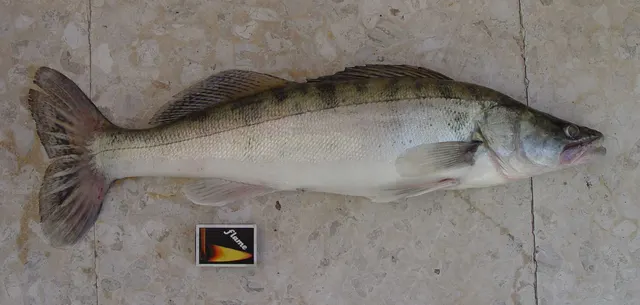 ZanderA shoaling freshwater predator built for hunting in low light and coloured water, and the fish that made a virtue of the conditions pike find difficult.
eLNuko — Public domain, via Wikimedia Commons
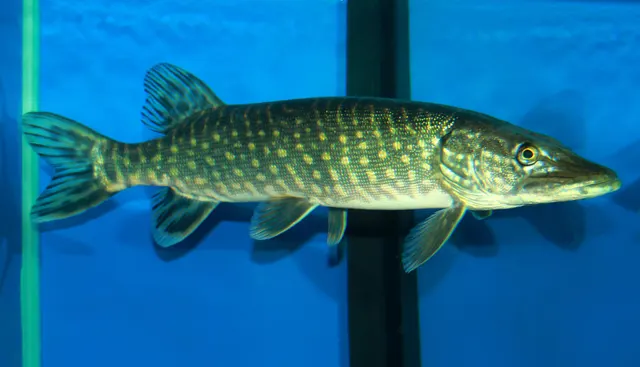 Northern pikeThe dominant freshwater ambush predator of the northern hemisphere: long, cryptic, and built for one violent acceleration rather than pursuit.
Karelj, Public domain, via Wikimedia Commons
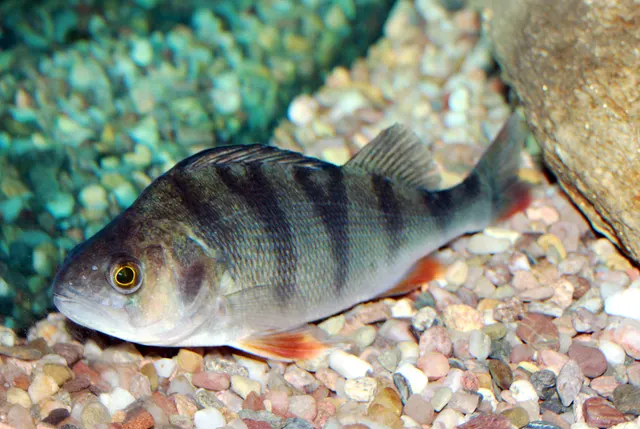 European perchA small, shoaling, spiny-finned predator that is both the most accessible predator to catch and the one most anglers first learn on.
Karelj, Public domain, via Wikimedia Commons
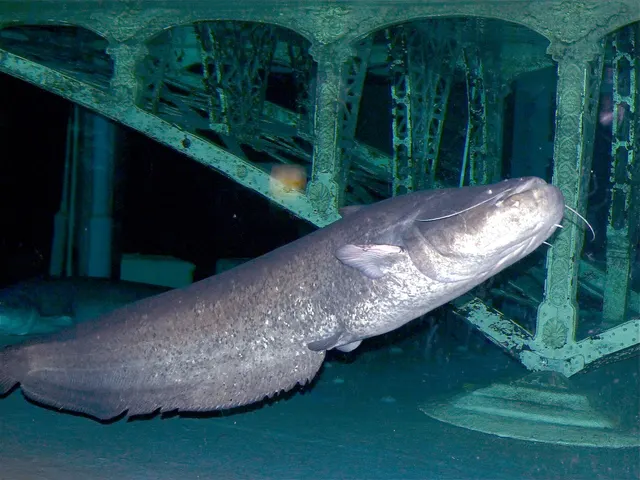 Wels catfishEurope's largest freshwater fish, reaching well over two metres, and an expanding introduced range that has made it one of the continent's most contested species.
Bernard DUPONT from FRANCE — CC BY-SA 2.0, via Wikimedia Commons
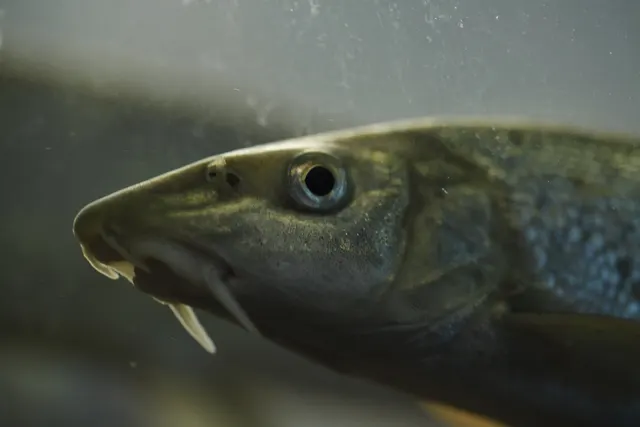 BarbelA powerful, streamlined river cyprinid built for holding station in fast water — and the hardest-fighting freshwater fish most British anglers will meet.
Pmau, CC BY-SA 4.0, via Wikimedia Commons
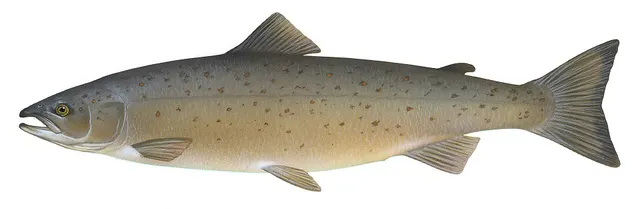 Atlantic salmonAn anadromous salmonid that migrates from its natal river to the North Atlantic and returns to spawn — and a species in serious, well-documented decline.
Knepp, Timothy, Public domain, via Wikimedia Commons
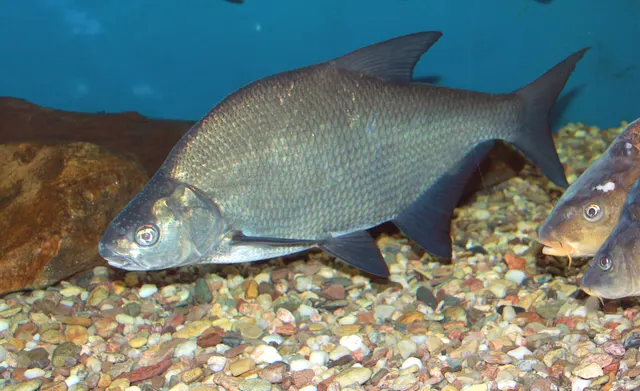 Common breamA deep-bodied, slow-moving shoal fish that feeds in large groups over soft bottoms and can transform a swim when it arrives.
Karelj, Public domain, via Wikimedia Commons
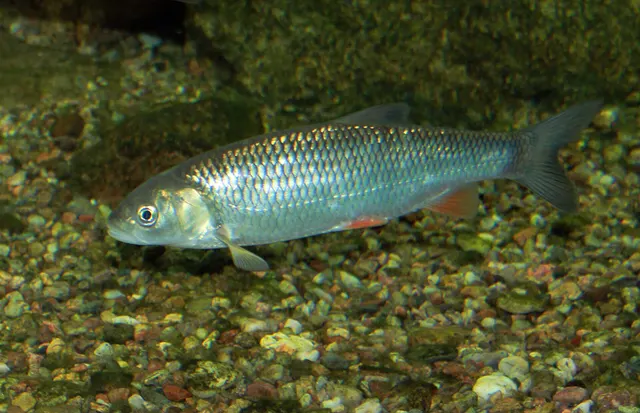 ChubA bold, omnivorous river fish that eats almost anything and grows large enough to be a predator — and the species most likely to be caught on a bait nobody expected to work.
Karelj, Public domain, via Wikimedia Commons
Places within this area
Publicly documented fishing geography. FishingHQ describes what the ground is; it does not say whether you may fish it, and every one of these sends that question to the body that holds the answer. Browse every place in this part of the world.
Who to ask before fishing any of these
FishingHQ does not know the current access position here. German inland angling needs two separate things: the state fishing licence, which in most states follows an examination, and a permit for the specific water, which is sold by whoever holds the fishing right — usually a club, a commune or a private owner. Neither substitutes for the other, both differ between the sixteen states, and both change. Check with the state fisheries authority and with the water's rights-holder before going.
The Rhine at Cologne
River reach · Fresh water
A heavily engineered reach of Europe's busiest commercial river as it passes through Cologne: a fast deep navigation channel confined by continuous groyne fields, with slack water and slower flow in the bays between the groynes and a hard revetted bank throughout.
Urban and sheltered from weather; the variable that matters is river level, which rises and falls substantially with rainfall in the Alps and the tributaries.
Particular to this ground: moving water and currents.
Severe hazards of The Rhine apply here: boat traffic and being seen, drowning and immersion.
Particular to this water: This is working water-management or navigation infrastructure, operated to a schedule set by its authority rather than by anything happening in the fishing, and access to it is that authority's decision.
Safety
Boat traffic and being seen — Can cause serious injury or death
A loaded barge passing in a confined channel drops the water level between the groynes and then returns it as a surge that runs up the bank and back. People are knocked off groynes and swept off banks by that surge rather than by the current, with no warning beyond the vessel itself.
What reduces it: Watch the shipping and move back off low ground when a large vessel passes, do not stand on the outer end of a groyne with a barge approaching, and keep tackle above the surge line.
Worse when:
- With large loaded vessels in narrow reaches, where the displacement effect is greatest.
- On the outer end of a groyne, which is where the drop and the return are largest.
Drowning and immersion — Can cause serious injury or death
The banks are hard revetment, riprap and stone groyne with no shallow margin. A person who goes in cannot wade out, cannot climb a smooth or loose stone face, and is in a strong current immediately, with cold water shock removing breathing control within seconds for most of the year.
What reduces it: Wear a buoyancy aid on the groynes and in high water, do not fish the stone alone at night, note the nearest exit before starting, and carry a means of calling for help on the person.
Moving water and currents — Can cause serious injury or death
Flow between groynes is slack or reversed in an eddy while the main channel a few metres out is at full speed, and the shear line between them is abrupt. Levels rise substantially from an Alpine-fed catchment and the groyne fields disappear entirely in high water.
What reduces it: Do not wade this river, keep clear of the shear line at the groyne tip, and check the published river level and navigation notices before going and again during the session.
Slips, trips and falls — Can cause injury needing treatment
Groyne and revetment stone is uneven, loose in places and algae-covered below the waterline, and it is where almost all the fishing happens. A fall there puts a person in the water beside a strong current.
What reduces it: Wear footwear with real grip, move deliberately on wet stone, keep a hand free when carrying tackle, and do not go out onto the outer stones in the dark.
Further safety reading
- Boat safety for anglers — A loaded barge in a confined channel drops the water level between the groynes and returns it as a surge, and people are knocked off groynes and swept off banks by that surge rather than by the current.
Check the rules before you fish
Fishing laws, bylaws, access rules, seasons, bait restrictions and permitted methods vary by location and can change. Check the current rules from the relevant authority and the water you intend to fish before fishing.
Check with:
- Current national or regional law for where you are fishing
- Current local bylaws
- The relevant fisheries authority
- The landowner, club or fishery whose water it is
- Any restrictions specific to the species or the method you intend to use
Where to go next
What swims here
- Atlantic salmonAscending again after an international restoration programme that adopted the species' return as its explicit and deliberately symbolic target. The run is small, depends on continued stocking and on passage that is still incomplete at some barrages, and natural reproduction occurs in tributaries.
- BarbelIn the faster gravel reaches and around the groyne heads where the current scours, which is the habitat the species needs and one of the few things canalisation did not remove.
- ChubThroughout the river against the stone and the structure, tolerant of current and of coloured water and one of the most widely distributed fish in the system.
- Common breamIn the slower water, the harbour basins and the pockets between groynes, which is where a canalised river's coarse fishery necessarily concentrates.
- European perchOn the groyne stone and around the harbour structure throughout, and one of the mainstays of the lure fishery alongside zander.
- Northern pikeIn the slack pockets between groynes, the harbour basins and the cut-off side waters, holding out of the main flow in a river that offers very little natural cover.
- Wels catfishIn the scour holes at the groyne heads and the deeper structure, having spread and grown substantially in this system — a genuine ecological change that gave a canalised river a very large predator it did not previously have.
- ZanderThe river's principal modern rod fishery. Coloured, deep, structured, current-swept water suits a low-light predator exactly, and a very large European lure-fishing culture developed around groyne-field zander on rivers of this kind.
How this compares
Environment and conservation
Sources and evidence
- Freshwater Fishes of the British Isles — HarperCollins (New Naturalist 75), 1992 (Reference work)Relied on for: Distribution, ecology, life history and conservation status of European freshwater fishes, including the migratory species named.States this directlyCitation checked — the work exists and is described correctly
- FishBase: a global information system on fishes — Froese, R. and D. Pauly, eds. — FishBase Consortium (Scientific institute)Relied on for: Recorded distribution, habitat association and life history of the freshwater and migratory species named.States this directlyPassage read and verified
- NASCO conservation and management of North Atlantic salmon — North Atlantic Salmon Conservation Organization (Government fisheries body)Relied on for: The status, conservation and restoration of North Atlantic salmon stocks and the international framework within which national bodies manage and restore them.States this directlyCitation checked — the work exists and is described correctly
- RNLI water safety guidance: cold water shock and Float to Live — Royal National Lifeboat Institution (Water-safety or diver-training authority)Relied on for: Cold water shock and the immersion response, tidal cut-off, and water-safety guidance for shore anglers and small-craft users.States this directlyPassage read and verified
- Met Office shipping forecast, inshore waters forecast and marine warnings — Met Office, United Kingdom (Government fisheries body)Relied on for: That inshore waters forecasts, sea state and swell are the operative inputs for shore and small-craft decisions in north-west European waters.States this directlyCitation checked — the work exists and is described correctly
Why the 13 connections on this page are here, and the sources
What swims here
Backed by research — 8 connections
Supported by peer-reviewed research or fisheries science. The sources are listed and can be checked.
Atlantic salmon
A claim that a place contains the ground, water and seasonal conditions the species is associated with. It is a distributional statement about the world, it rests on the regional reference literature, and it deliberately asserts nothing about access, permission or catch.
- Freshwater Fishes of the British Isles — HarperCollins (New Naturalist 75), 1992 (Reference work)Relied on for: Distribution, ecology and conservation status of European freshwater and migratory fishes, including in modified and artificial waters.States this directlyCitation checked — the work exists and is described correctly
- FishBase: a global information system on fishes — Froese, R. and D. Pauly, eds. — FishBase Consortium (Scientific institute)Relied on for: Recorded distribution, habitat association and life history for the freshwater and migratory species named.States this directlyPassage read and verified
Barbel
A claim that a place contains the ground, water and seasonal conditions the species is associated with. It is a distributional statement about the world, it rests on the regional reference literature, and it deliberately asserts nothing about access, permission or catch.
- Freshwater Fishes of the British Isles — HarperCollins (New Naturalist 75), 1992 (Reference work)Relied on for: Distribution, ecology and conservation status of European freshwater and migratory fishes, including in modified and artificial waters.States this directlyCitation checked — the work exists and is described correctly
- FishBase: a global information system on fishes — Froese, R. and D. Pauly, eds. — FishBase Consortium (Scientific institute)Relied on for: Recorded distribution, habitat association and life history for the freshwater and migratory species named.States this directlyPassage read and verified
Chub
A claim that a place contains the ground, water and seasonal conditions the species is associated with. It is a distributional statement about the world, it rests on the regional reference literature, and it deliberately asserts nothing about access, permission or catch.
- Freshwater Fishes of the British Isles — HarperCollins (New Naturalist 75), 1992 (Reference work)Relied on for: Distribution, ecology and conservation status of European freshwater and migratory fishes, including in modified and artificial waters.States this directlyCitation checked — the work exists and is described correctly
- FishBase: a global information system on fishes — Froese, R. and D. Pauly, eds. — FishBase Consortium (Scientific institute)Relied on for: Recorded distribution, habitat association and life history for the freshwater and migratory species named.States this directlyPassage read and verified
Common bream
A claim that a place contains the ground, water and seasonal conditions the species is associated with. It is a distributional statement about the world, it rests on the regional reference literature, and it deliberately asserts nothing about access, permission or catch.
- Freshwater Fishes of the British Isles — HarperCollins (New Naturalist 75), 1992 (Reference work)Relied on for: Distribution, ecology and conservation status of European freshwater and migratory fishes, including in modified and artificial waters.States this directlyCitation checked — the work exists and is described correctly
- FishBase: a global information system on fishes — Froese, R. and D. Pauly, eds. — FishBase Consortium (Scientific institute)Relied on for: Recorded distribution, habitat association and life history for the freshwater and migratory species named.States this directlyPassage read and verified
European perch
A claim that a place contains the ground, water and seasonal conditions the species is associated with. It is a distributional statement about the world, it rests on the regional reference literature, and it deliberately asserts nothing about access, permission or catch.
- Freshwater Fishes of the British Isles — HarperCollins (New Naturalist 75), 1992 (Reference work)Relied on for: Distribution, ecology and conservation status of European freshwater and migratory fishes, including in modified and artificial waters.States this directlyCitation checked — the work exists and is described correctly
- FishBase: a global information system on fishes — Froese, R. and D. Pauly, eds. — FishBase Consortium (Scientific institute)Relied on for: Recorded distribution, habitat association and life history for the freshwater and migratory species named.States this directlyPassage read and verified
Northern pike
A claim that a place contains the ground, water and seasonal conditions the species is associated with. It is a distributional statement about the world, it rests on the regional reference literature, and it deliberately asserts nothing about access, permission or catch.
- Freshwater Fishes of the British Isles — HarperCollins (New Naturalist 75), 1992 (Reference work)Relied on for: Distribution, ecology and conservation status of European freshwater and migratory fishes, including in modified and artificial waters.States this directlyCitation checked — the work exists and is described correctly
- FishBase: a global information system on fishes — Froese, R. and D. Pauly, eds. — FishBase Consortium (Scientific institute)Relied on for: Recorded distribution, habitat association and life history for the freshwater and migratory species named.States this directlyPassage read and verified
Wels catfish
A claim that a place contains the ground, water and seasonal conditions the species is associated with. It is a distributional statement about the world, it rests on the regional reference literature, and it deliberately asserts nothing about access, permission or catch.
- Freshwater Fishes of the British Isles — HarperCollins (New Naturalist 75), 1992 (Reference work)Relied on for: Distribution, ecology and conservation status of European freshwater and migratory fishes, including in modified and artificial waters.States this directlyCitation checked — the work exists and is described correctly
- FishBase: a global information system on fishes — Froese, R. and D. Pauly, eds. — FishBase Consortium (Scientific institute)Relied on for: Recorded distribution, habitat association and life history for the freshwater and migratory species named.States this directlyPassage read and verified
Zander
A claim that a place contains the ground, water and seasonal conditions the species is associated with. It is a distributional statement about the world, it rests on the regional reference literature, and it deliberately asserts nothing about access, permission or catch.
- Freshwater Fishes of the British Isles — HarperCollins (New Naturalist 75), 1992 (Reference work)Relied on for: Distribution, ecology and conservation status of European freshwater and migratory fishes, including in modified and artificial waters.States this directlyCitation checked — the work exists and is described correctly
- FishBase: a global information system on fishes — Froese, R. and D. Pauly, eds. — FishBase Consortium (Scientific institute)Relied on for: Recorded distribution, habitat association and life history for the freshwater and migratory species named.States this directlyPassage read and verified
How people fish here
What experienced anglers do — 2 connections
Widely and independently recommended by experienced anglers and specialist sources. This is real angling knowledge, not proof: controlled evidence for it is limited, and FishingHQ records it as convention rather than as a demonstrated effect.
Lure fishing
A claim about angling convention rather than about the world: that this place sits within this branch of fishing, which drives the information architecture as well as the page. It rests on independent practitioner description.
- General angling website restatements of established technique — Various (Credible secondary source)Relied on for: Widely restated descriptions of which practices are conventionally used on the waters named, recorded as practitioner consensus rather than as scholarship.Background and mechanism onlyCitation checked — the work exists and is described correctly
- Coarse Fishing — A. & C. Black, 1912 (Specialist angling publication)Relied on for: Established description of coarse and predator fishing practice on large rivers and still waters.FishingHQ's interpretation of what it saysCitation checked — the work exists and is described correctly
Predator fishing
A claim about angling convention rather than about the world: that this place sits within this branch of fishing, which drives the information architecture as well as the page. It rests on independent practitioner description.
- General angling website restatements of established technique — Various (Credible secondary source)Relied on for: Widely restated descriptions of which practices are conventionally used on the waters named, recorded as practitioner consensus rather than as scholarship.Background and mechanism onlyCitation checked — the work exists and is described correctly
- Coarse Fishing — A. & C. Black, 1912 (Specialist angling publication)Relied on for: Established description of coarse and predator fishing practice on large rivers and still waters.FishingHQ's interpretation of what it saysCitation checked — the work exists and is described correctly
How this compares
What experienced anglers do — 1 connection
Widely and independently recommended by experienced anglers and specialist sources. This is real angling knowledge, not proof: controlled evidence for it is limited, and FishingHQ records it as convention rather than as a demonstrated effect.
The River Trent
A claim that two places are worth reading against one another, because a reader choosing between them or generalising from one to the other needs to know how the underlying process differs.
- General angling website restatements of established technique — Various (Credible secondary source)Relied on for: Widely restated descriptions of which practices are conventionally used in the waters named, recorded as practitioner consensus rather than as scholarship.Background and mechanism onlyCitation checked — the work exists and is described correctly
- Sea Angler — Bauer Media (Specialist angling publication)Relied on for: Long-running published description of European sea angling practice by region and by ground type.FishingHQ's interpretation of what it saysCitation checked — the work exists and is described correctly
Safety reading
Official guidance — 1 connection
Stated by a fisheries authority, scientific institute or recognised angling body. Authoritative, but summarising rather than demonstrating.
Boat safety for anglers
A claim that a place presents a particular hazard strongly enough that the reader should be sent to the page dealing with it in full, rather than left with the short warning on the place itself.
- RNLI water safety guidance: cold water shock and Float to Live — Royal National Lifeboat Institution (Water-safety or diver-training authority)Relied on for: Cold water shock and the immersion response, tidal cut-off, and water-safety guidance for shore anglers and small-craft users.States this directlyPassage read and verified
Environment and conservation
Backed by research — 1 connection
Supported by peer-reviewed research or fisheries science. The sources are listed and can be checked.
Fish stocks and sustainability
A claim that a place raises a particular environmental question, resting on the scientific and conservation literature for the system rather than on angling practice.
- JNCC species and habitat conservation advice — Joint Nature Conservation Committee (Conservation authority)Relied on for: Habitat classification and description for the intertidal, coastal and freshwater habitats named, and the species characteristically associated with them.States this directlyCitation checked — the work exists and is described correctly
- ICES Advice on fishing opportunities, catch and effort — International Council for the Exploration of the Sea (Scientific institute)Relied on for: Ecoregion description, nursery function and the hydrography of the European sea areas assessed.States this directlyCitation checked — the work exists and is described correctly
How FishingHQ labels evidence is explained in the evidence policy.