Common bream
Fish · Last reviewed 2026-08-10
A deep-bodied, slow-moving shoal fish that feeds in large groups over soft bottoms and can transform a swim when it arrives.
Safety: standing precautions apply on this water.

Catching Common bream
Everything here on fishing for it. Each entry opens the page behind it.
- When
- Somewhere documents it in almost every month, so there is no season for the species as a whole — the season is a property of the ground, and each place states its own.
- Where
- 37 places FishingHQ documents — strongest claim anywhere: characteristic of this water · From the shore, From a boat
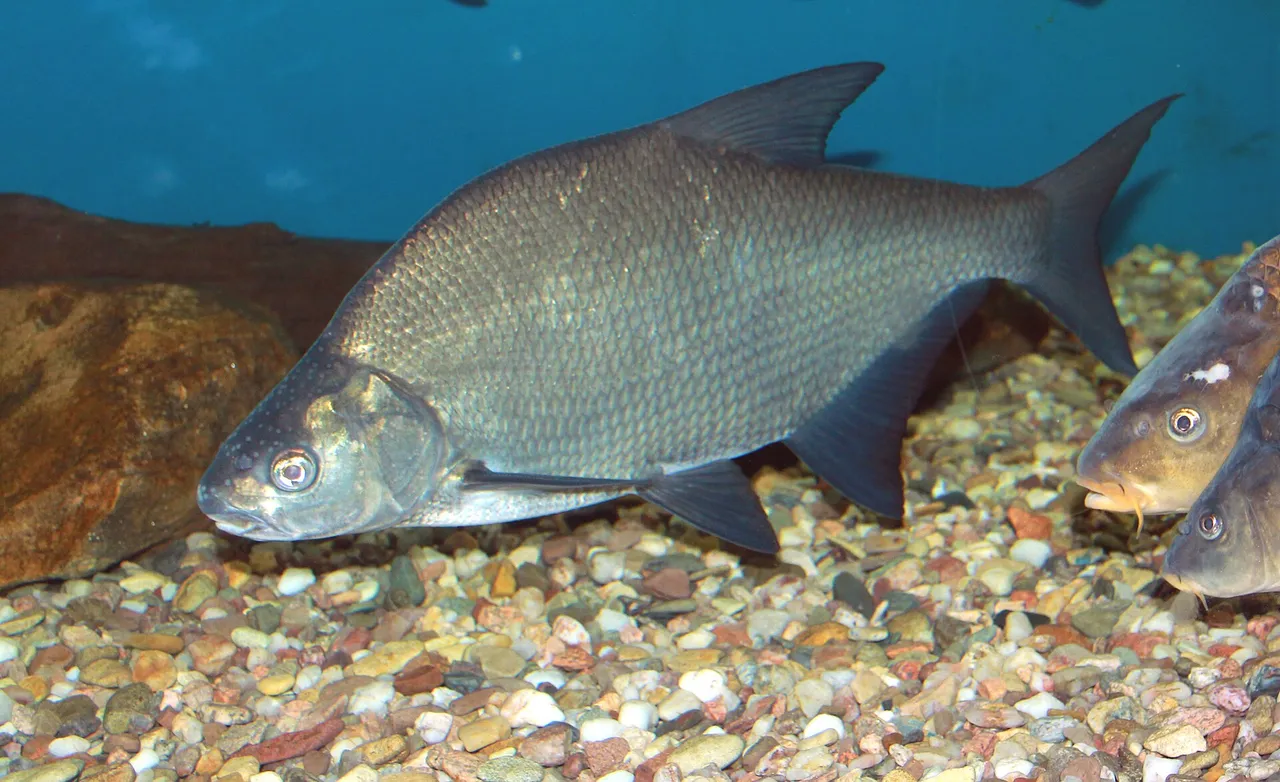
Bream are shaped like a dinner plate on its edge — extremely deep and extremely laterally compressed — and that shape is the practical fact about them. It suits a fish that hangs nose-down over soft ground, working methodically through silt with a protrusible tube of a mouth, and it does not suit fast water or sudden acceleration.
They shoal in large numbers and move around a water in a fairly predictable circuit, which produces the characteristic bream experience: nothing at all for hours, and then a shoal arrives and the swim produces fish after fish until it moves on. Locating that circuit, and holding a shoal with bait once it arrives, is the whole skill of bream fishing.
Bream are heavily mucus-coated — the slime is legendary and gets on everything — and they hybridise freely with roach, producing intermediate fish that confuse a great many anglers and a fair number of record claims.
How it is caught
Gear for this fish
- Method feeder rigBream feed heavily over a bed of loose feed and the feeder delivers the bed and the hookbait to the same spot, which is the whole argument for the arrangement.
- Pole rigBream shoals feeding on a baited spot are held and fished far more precisely on a pole than on a cast rig, which is why match anglers reach for it.
- Waggler float rigFished deeper and with the bait on or near the bottom, the same float arrangement is directed at bream on stillwaters.
Where Common bream is documented
Places where public sources describe this species as fished, with how it is fished and how strongly the evidence supports it. This is not a range map and it is not a recommendation — it is what has been written down about a fishery rather than a record of any individual catch, and being listed is never permission to fish.
The Norfolk Broads
3 documented places
Broad
Characteristic of this water
From the shore · From a boat
Around Jun, Jul, Aug, Sept
Broad
Regular local target
From the shore · From a boat
Around Jun, Jul, Aug, Sept
Broad
Recorded here
From the shore
Lough Erne
2 documented places
Lough
Regular local target
From the shore
River reach
Characteristic of this water
From the shore · From a boat
Around Mar, Apr, May, Jun, Jul, Aug, Sept, Oct
The Shannon system
2 documented places
Lough
Characteristic of this water
From a boat · From the shore
Around May, Jun, Jul, Aug, Sept
River reach
Regular local target
From the shore · From a boat
The English canal network
10 documented places
Canal section
Regular local target
From the shore
Canal section
Repeatedly reported
From the shore
Canal section
Regular local target
From the shore
Canal section
Regular local target
From the shore
Canal section
Regular local target
From the shore
Canal section
Regular local target
From the shore
The Gloucester and Sharpness Canal
Canal section
Regular local target
From the shore
Canal section
Regular local target
From the shore
Canal section
Recorded here
From the shore
The Fens and their drains
8 documented places
River reach
Regular local target
From the shore
Around May, Jun, Jul, Aug, Sept
River reach
Regular local target
From the shore
Around May, Jun, Jul, Aug, Sept
River reach
Regular local target
From the shore
Around May, Jun, Jul, Aug, Sept
Drain
Seasonal
From the shore
Around May, Jun, Jul, Aug, Sept
Drain
Seasonal
From the shore
Around May, Jun, Jul, Aug, Sept
Drain
Seasonal
From the shore
Around May, Jun, Jul, Aug, Sept
Drain
Seasonal
From the shore
Around May, Jun, Jul, Aug, Sept
Drain
Seasonal
From the shore
Around May, Jun, Jul, Aug, Sept
Northern Ireland
4 documented places
River reach
Regular local target
From the shore
River reach
Regular local target
From the shore
River reach
Regular local target
From the shore
Lough
Regular local target
From the shore
England and Wales
3 documented places
River reach
Seasonal
From the shore
Around May, Jun, Jul, Aug, Sept
River reach
Regular local target
From the shore
Around May, Jun, Jul, Aug, Sept
River reach
Regular local target
From the shore
Around May, Jun, Jul, Aug, Sept
Also documented on 3 more coasts
Fewer places each, or less strongly supported. Each one names its own marks.
The River Thames (2) · The River Trent (1) · The Republic of Ireland (1)
What these strengths mean
- Seasonal
- Well supported, and concentrated in part of the year rather than spread through it.
- Regular local target
- Fishing sources describe this as a normal local target here, not merely as caught.
- Characteristic of this water
- This water is strongly identified with this species by the sources that cover it.
- Recorded here
- At least one credible public account of this species being caught here. That is all it means.
- Repeatedly reported
- Several independent public accounts. Enough to say it happens more than once; not enough to call it a fishery.
Managed fisheries for common bream
These are private businesses rather than public water: you pay for a day, and the fishery sets its own rules on top of whatever the law requires. That is the opposite of the section above, where the places are public geography and being listed is never permission to fish. Nothing here is a recommendation, the order is alphabetical, and no price or opening hour is carried because both change faster than this page does.
Drennan Lindholme Lakes
Commercial coarse fishery · Epworth, near Doncaster, South Yorkshire
Purpose-built coarse pools, usually day ticket
Ten lakes and more than four hundred and fifty pegs on former farmland near Doncaster, a regular venue for national match series, with lodges and camping on the same site.
Named by the fishery as a species you can fish for. Also named here: Common carp, European perch, Roach.
How you get a day: Day tickets on arrival, Book in advance.
The fishery’s own conditions: Bait fishing permitted, Coarse tactics permitted, Catch and release only.
Season: Open through the year, with a match calendar and fishing festivals published by the fishery.
The rules this fishery sets, in its own terms
- The fishery's rules are published at the shop and cafe and apply across all ten waters.
- Anglers must supply their own insurance; the fishery states that it accepts no responsibility.
- Waters may be booked whole for matches, from small club events up to national championships.
Checked against the operator's own information. Last checked 2026-08-29.
Linear Fisheries
Carp and specimen water · Enslow, Kidlington, Oxfordshire
Managed for larger carp and specimen fish
A complex of carp and mixed coarse lakes in the Oxfordshire gravel-pit country, run on both day tickets and syndicates, with its own bait and tackle shop on site.
Named by the fishery as a species you can fish for. Also named here: Common carp, European perch, Northern pike, Roach, Tench, Wels catfish.
How you get a day: Book in advance, Membership or syndicate.
The fishery’s own conditions: Bait fishing permitted, Coarse tactics permitted, Night fishing permitted, Catch and release only.
Season: Open through the year, with individual waters occasionally closed and stated as such on the fishery's own booking platform.
The rules this fishery sets, in its own terms
- Rules are published per water and the fishery states that they are enforced, with sections on fish care, swim reservation and retention slings.
- Individual lakes are booked through the fishery's own platform rather than by turning up at every water.
- Under-sixteens fish free with a paying adult at weekends and during school holidays.
Checked against the operator's own information. Last checked 2026-08-29.
A fishery’s own conditions — barbless hooks, no keepnets, no night fishing — are conditions of that water and not law. The licences and close seasons a jurisdiction requires are a separate matter and are set out by the fisheries authority, never here. Telephone before travelling, and see every fishing business FishingHQ lists.
When to fish for common bream
Where the places here state a season for common bream, it clusters in May–Sep. This is a count of how many documented places name each month — evidence about when people fish for it, not a prediction of what any particular day will produce.
| Jan | Feb | Mar | Apr | May | Jun | Jul | Aug | Sep | Oct | Nov | Dec |
|---|---|---|---|---|---|---|---|---|---|---|---|
| January: 1 place names this month — few places. | February: 1 place names this month — few places. | March: 1 place names this month — few places. | April: 1 place names this month — few places. | May: 15 places name this month — most places. | June: 17 places name this month — most places. | July: 17 places name this month — most places. | August: 17 places name this month — most places. | September: 17 places name this month — most places. | October: 1 place names this month — few places. | November: 1 place names this month — few places. | December: 1 place names this month — few places. |
18 of the 37 places that record catches of common bream state which months. The other 19 name no season, so they are counted in neither direction: the shape above is what the dated records say, not the whole picture. The dated records span 7 separate areas.
Identification
- Scientific name
- Abramis brama
- Family
- Leuciscidae
- Water
- Freshwater, Brackish
- Conservation status
- Least Concern
- Regions
- Britain & Ireland, Northern Europe, Western Europe, Central & Eastern Europe
- Extremely deep, strongly laterally compressed body — much deeper in proportion than any other British freshwater fish of its kind.
- A long anal fin, considerably longer-based than the dorsal, running well back towards the tail.
- Small, protrusible, downward-extending mouth that forms a tube when feeding.
- Bronze to dark brown flanks in adults; young fish are notably silvery and are frequently mistaken for something else.
- Very heavy mucus coating.
- Roach–bream hybrids are common and show an intermediate body depth with a shorter anal fin than a true bream.
Size
- Typical
- 30–45 cm and 1–2.5 kg.
- Large
- Over 55 cm and 4 kg.
Exceptional: Fish over 8 kg are recorded from rich stillwaters and gravel pits and are exceptional. Large claimed specimens should be checked against the anal-fin and body-depth criteria, since hybrids account for a proportion of them.
A shoal that has to be fed, and why bream fishing happens in the dark
Bream are a fish whose season is best understood through the shoal rather than the individual, because almost everything distinctive about fishing for them is a consequence of how a large group of large fish feeds.
BREAM FEED BY WORKING A PATCH OF BOTTOM. They are benthic feeders that root through soft sediment for chironomid larvae, molluscs and other invertebrates, tilting head-down and moving slowly over ground. A shoal doing this covers an area methodically and then moves on, which is why bream fishing is about intercepting a shoal on its route or holding one over a bed of feed, and why it fails completely when the shoal is somewhere else.
THE SEASONAL SHAPE IS METABOLIC AND ORDINARY. Activity rises with water temperature from spring, is sustained through the warm months, and falls away in cold water — where the shoals become less mobile and much less inclined to feed. Winter bream are catchable and are hard work, and the reason is that a large, slow-moving shoal that is not travelling is a shoal that is very difficult to find.
THE PRE-SPAWNING PERIOD IS OFTEN THE MOST PRODUCTIVE OF THE YEAR, for the same reason it is in tench: capability and demand peak together as fish build eggs in warming water. And the same honesty applies — that period is productive because the fish are carrying spawn, and a fishery's best weeks are the population's most sensitive ones.
DARKNESS AND OVERCAST ARE THE OTHER HALF, and this is the part that is genuinely about the fish's biology rather than the angler's comfort. Bream are large, deep-bodied, silver, and slow — a conspicuous and comparatively vulnerable prey item — and they are notably reluctant to feed in shallow water under bright light. Warm, settled, overcast conditions and darkness both remove that constraint, which is why so much serious bream fishing is done at night and why a bright, still, sunny day over shallow water is the least likely condition of the year to produce them.
Backed by research — why, and the sources (2)
Supported by peer-reviewed research or fisheries science. The sources are listed and can be checked.
- Coarse Fishing — A. & C. Black, 1912 (Specialist angling publication)Relied on for: Seasonal patterns in British coarse angling and the conditions that drive them.States this directlyCitation checked — the work exists and is described correctly
- Freshwater Fishes of the British Isles — HarperCollins (New Naturalist 75), 1992 (Reference work)Relied on for: Seasonal behaviour and temperature response of British freshwater fishes.States this directlyCitation checked — the work exists and is described correctly
Big bream are old bream, and the shoal decides how big they get
Bream size is governed almost entirely by density, and density in bream is unusually self-reinforcing — which is why one gravel pit produces double-figure fish and the one next to it produces thousands of half-pounders.
BREAM SHOAL, AND A SHOAL EATS ITS OWN CEILING. Bream feed by sucking invertebrates from soft bottom sediment, working an area over in a group. A large shoal in a small water strips the benthos faster than it is replaced, growth slows for every fish in it, and the population stalls at a small size while remaining extremely numerous. The classic 'bream-bound' water holds an enormous biomass of fish that will never be large.
THE OPPOSITE CASE PRODUCES THE SPECIMENS. A low-density population in a rich water — typically a large gravel pit or reservoir with limited recruitment, sometimes because predators crop the fry hard — gives each fish far more food, and bream respond to that with genuinely fast growth. The waters that produce the largest bream are frequently the waters that produce the fewest.
WHICH MEANS THE SIZE OF THE FISH TELLS YOU ABOUT THE WATER, NOT ABOUT THE SPECIES. It also means bream fisheries change: a water that produced specimens for a decade will stop when a strong year class matures into it, and there is nothing wrong with the fish.
AGE IS SUBSTANTIAL EITHER WAY. Bream are long-lived, and a large one has usually been in the water for well over a decade. Slow-growing stunted populations contain fish that are old and small simultaneously, which is why 'small' should not be read as 'young'.
AND THE HYBRID PROBLEM IS REAL ENOUGH TO CHANGE THE ANSWER. Bream hybridise freely with roach, and roach × bream hybrids are common, grow well, and are routinely reported as bream. The record notes it directly: a large claimed specimen should be checked against the anal-fin ray count and body depth, because a proportion of exceptional 'bream' are hybrids and the hybrid is a different animal with a different growth trajectory.
FINALLY, CONDITION SWINGS WIDELY WITH SPAWNING. A pre-spawning bream in spring carries a great deal of gonad weight; the same fish a month later does not. Weights taken at either end of that window are not comparable.
Backed by research — why, and the sources (2)
Supported by peer-reviewed research or fisheries science. The sources are listed and can be checked.
- Freshwater Fishes of the British Isles — HarperCollins (New Naturalist 75), 1992 (Reference work)Relied on for: Growth, age structure, maximum sizes and regional variation in British and European freshwater fishes.States this directlyCitation checked — the work exists and is described correctly
- FishBase: a global information system on fishes — Froese, R. and D. Pauly, eds. — FishBase Consortium (Scientific institute)Relied on for: Maximum recorded length and weight and reported longevity for the species.Background and mechanism onlyPassage read and verified
Lifecycle and reproduction
Bream are long-lived and slow-growing, commonly exceeding fifteen years, and grow to a size largely determined by the richness of the water and the density of the shoal. Overcrowded populations produce large numbers of small, thin fish; lightly-stocked rich waters produce far fewer, far larger ones. Maturity comes at three to five years.
Bream spawn in late spring in dense, noisy shoals in shallow weedy margins, often at night and often over several days, scattering adhesive eggs over vegetation. The event is conspicuous enough to be audible from the bank. No parental care follows.
Feeding and senses
Bream feed nose-down over soft bottoms, extending the mouth into a tube and sucking bloodworm, small molluscs and other invertebrates from the silt. They feed as a shoal, working an area over methodically, which is why a feeding shoal produces a run of fish and why holding one with a steady supply of bait matters more than the individual bait does. The feeding posture also explains why bites are often slow, lifting affairs rather than sharp pulls.
Taste and touch dominate at the feeding face, backed by the acute hearing typical of the carp order. Vision is less important than in roach, consistent with a species that feeds face-down in silt, and bream will feed confidently in dark and coloured conditions — which is why night fishing for them is so effective.
Through the year
Bream feed most reliably from late spring through autumn, with warm, settled, overcast conditions and darkness both favouring them. They remain catchable in winter but shoals become less mobile and less inclined to feed. Pre-spawning early summer is often the most productive period of the year.
Distribution
Native across most of Europe east to the Caspian and Aral basins, absent from parts of the far north and the Mediterranean peninsulas. Tolerates brackish water, occurring in Baltic coastal areas.
This is a biological range — where the species occurs, not a prediction that you will catch one. To browse the fishing geography FishingHQ holds, start at fishing places.
Why anglers care
A mainstay of stillwater and slow-river coarse angling and of match fishing, where a bream shoal can decide a result. Bream fishing is unusually dependent on bait strategy rather than on tackle refinement, which makes it a good species for learning how feeding fish actually respond to introduced bait.
Handling and returning
The mucus layer is protective and easily stripped; wet hands and a wet mat are essential rather than advisable. Bream are otherwise easy to unhook. Support the body when lifting — a deep-bodied fish held by the jaw takes the same kind of damage a carp does.
Going further
- What does common bream eat? — feeding biology, kept separate from what anglers infer from it.
- Common bream vs Silver bream — how to tell them apart.
Safety
Precautions that always apply here
- Wet your hands before touching a fish. Dry hands strip the protective mucus layer that keeps infection out.
- Unhook fish on a wet mat or in the water, never on gravel, stone or a hard bank.
- Support the fish's weight along its body, keep it out of the water for as short a time as possible, and hold it over something soft.
Where to go next
Where it lives
- Commercial coarse fisheriesStocked widely as a mixed-fishery species and a major component of match weights on commercial waters.
- Floodplains, backwaters and oxbowsSlack water, backwaters and flooded margins are where bream shoals move when a lowland river rises, which is a practical fact British river anglers use constantly.
Where you will find it
- Lough ErneIn the sheltered weedy bays and channels of the upper lough, in the shoals that built this system's international reputation from the 1960s and that are a different composition now than they were.
- The Fens and their drainsThe species that built the region's twentieth-century reputation, in shoals whose recorded catches are part of British angling folklore, and whose decline reshaped what the Fens are fished for.
- The IJsselmeerPresent in very large quantities and supporting a major organised match and feeder culture across the connected polder waters as well as the open lake.
- The Moy and Lough ConnPresent on the slower and richer water of this catchment, which is the coarse half of a system better known for its game fishing.
- The Norfolk BroadsBream in quantity on the rivers and broads supported what was historically a major match and pleasure fishery.
- The Republic of IrelandAbundant in very large shoals on the midland loughs and the Shannon system, and the backbone of the visiting-angler coarse fishery.
- The RhineIn the slower water, the harbour basins and the pockets between groynes, which is where a canalised river's coarse fishery necessarily concentrates.
- The River TrentIn the slower, deeper reaches of the lower river and into the tideway, in the shoals that make the Trent a serious match river.
1 more
- The Shannon system Fishing regions
Understanding this fish
- Aquatic insect larvae as preyBream feed by sucking soft sediment and sorting out invertebrates, and chironomid larvae are the dominant item in most stillwaters — the reason a feeding bream shoal clouds the water.
- Coarse fish: a category that does not travelGrouped with pike and carp by a category that has no biological content.
Told apart from
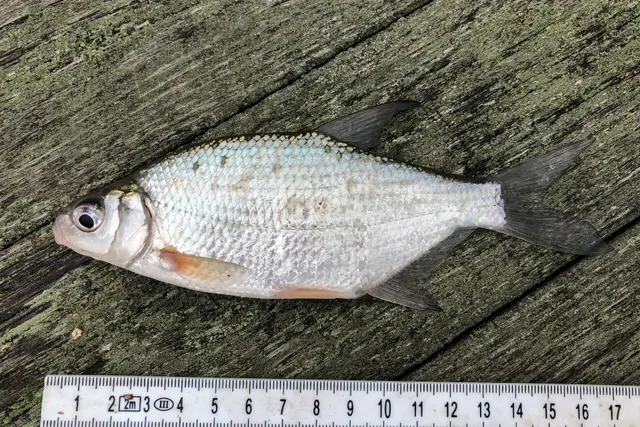 Silver breamA silver bream is not a young common bream, which is the assumption that produces the mistake. Silver bream keep their bright silver flanks at every size while common bream darken to bronze with age, and the eye is proportionally much larger in silver bream. Counting anal fin rays separates them in the hand.
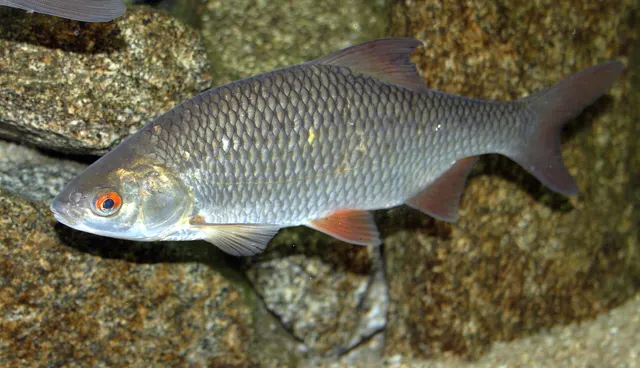 RoachThe two hybridise readily, and a proportion of large 'roach' turn out to be hybrids — the anal fin length is the check.
Sources and evidence
- Freshwater Fishes of the British Isles — HarperCollins (New Naturalist 75), 1992 (Reference work)Relied on for: Identification, hybridisation with roach, spawning behaviour and shoal feeding.States this directlyCitation checked — the work exists and is described correctly
- FishBase: a global information system on fishes — Froese, R. and D. Pauly, eds. — FishBase Consortium (Scientific institute)Relied on for: Taxonomy, family and size range.States this directlyPassage read and verified
- The IUCN Red List of Threatened Species — International Union for Conservation of Nature (Conservation authority)Relied on for: The global conservation assessment. Re-checked via FishBase's republication of the current category, because the Red List's own pages could not be read.States this directlyCitation checked — the work exists and is described correctly
Why the 20 connections on this page are here, and the sources
How it is caught
What experienced anglers do — 2 connections
Widely and independently recommended by experienced anglers and specialist sources. This is real angling knowledge, not proof: controlled evidence for it is limited, and FishingHQ records it as convention rather than as a demonstrated effect.
Feeder fishing
Established practice, independently described.
- Still-Water Angling — MacGibbon & Kee, 1953 (Specialist angling publication)Relied on for: Bream shoal feeding behaviour and the bait strategy that holds them.Citation checked — the work exists and is described correctly
- Angling Times — Bauer Media (Specialist angling publication)Relied on for: Contemporary feeder practice for bream.Citation checked — the work exists and is described correctly
Pole fishing
Established angling practice for this species, recorded as convention. The note states the property of the animal or its water that makes the method the answer.
- Coarse Fishing — A. & C. Black, 1912 (Specialist angling publication)Relied on for: Established coarse-angling technique and its application to the species.States this directlyCitation checked — the work exists and is described correctly
- Angling Times — Bauer Media (Specialist angling publication)Relied on for: Contemporary British coarse practice for this species.Background and mechanism onlyCitation checked — the work exists and is described correctly
Gear for this fish
What experienced anglers do — 3 connections
Widely and independently recommended by experienced anglers and specialist sources. This is real angling knowledge, not proof: controlled evidence for it is limited, and FishingHQ records it as convention rather than as a demonstrated effect.
Method feeder rig
Which species a terminal arrangement is directed at is established practitioner knowledge, converging across independent angling traditions and literatures, and is labelled as consensus rather than as tested result.
- Coarse Fishing — A. & C. Black, 1912 (Specialist angling publication)Relied on for: Classical coarse angling practice: terminal arrangements, shotting, bite registration and the species each is directed at.States this directlyCitation checked — the work exists and is described correctly
- Angling Times — Bauer Media (Specialist angling publication)Relied on for: Contemporary UK coarse and match angling practice as reported by practitioners, including which rigs are directed at which species.States this directlyCitation checked — the work exists and is described correctly
Pole rig
That anglers conventionally choose this arrangement when targeting this fish. It is a claim about practice rather than about the fish, and it does not assert that the arrangement is necessary or that it will succeed.
- Coarse Fishing — A. & C. Black, 1912 (Specialist angling publication)Relied on for: Classical coarse angling practice: terminal arrangements, shotting, float attachment and bite registration in still and running water.States this directlyCitation checked — the work exists and is described correctly
- Angling Times — Bauer Media (Specialist angling publication)Relied on for: Contemporary UK coarse and match angling practice as reported by practitioners, including pole, float and surface rig convention.States this directlyCitation checked — the work exists and is described correctly
Waggler float rig
Which species a terminal arrangement is directed at is established practitioner knowledge, converging across independent angling traditions and literatures, and is labelled as consensus rather than as tested result.
- Coarse Fishing — A. & C. Black, 1912 (Specialist angling publication)Relied on for: Classical coarse angling practice: terminal arrangements, shotting, bite registration and the species each is directed at.States this directlyCitation checked — the work exists and is described correctly
- Angling Times — Bauer Media (Specialist angling publication)Relied on for: Contemporary UK coarse and match angling practice as reported by practitioners, including which rigs are directed at which species.States this directlyCitation checked — the work exists and is described correctly
Where it lives
Backed by research — 2 connections
Supported by peer-reviewed research or fisheries science. The sources are listed and can be checked.
Commercial coarse fisheries
Habitat association recorded for the species, in an environment FishingHQ describes on its own page.
- Freshwater Fishes of the British Isles — HarperCollins (New Naturalist 75), 1992 (Reference work)Relied on for: Habitat association and distribution of European freshwater fishes, including occurrence in artificial and modified waters.States this directlyCitation checked — the work exists and is described correctly
- FishBase: a global information system on fishes — Froese, R. and D. Pauly, eds. — FishBase Consortium (Scientific institute)Relied on for: Habitat association, depth range and water-type tolerance recorded for the species.States this directlyPassage read and verified
Floodplains, backwaters and oxbows
A habitat association resting on the regional identification and fisheries literature rather than on angling report.
- The Flood Pulse Concept in River-Floodplain Systems — Canadian Special Publication of Fisheries and Aquatic Sciences 106, Department of Fisheries and Oceans, Ottawa, 1989 (Scientific literature)Relied on for: That fish move laterally onto the inundated floodplain to feed and breed and return to the channel as water falls, and that floodplain inundation drives production in large river systems.States this directlyCitation checked — the work exists and is described correctly
- FAO Species Identification Guides for Fishery Purposes and the FAO Species Catalogues — Food and Agriculture Organization of the United Nations (Scientific institute)Relied on for: Habitat association and distribution of the species concerned.States this directlyCitation checked — the work exists and is described correctly
Where you will find it
Backed by research — 9 connections
Supported by peer-reviewed research or fisheries science. The sources are listed and can be checked.
Lough Erne
A claim that a place contains the ground, water and seasonal conditions the species is associated with. It is a distributional statement about the world, it rests on the regional reference literature, and it deliberately asserts nothing about access, permission or catch.
- Freshwater Fishes of the British Isles — HarperCollins (New Naturalist 75), 1992 (Reference work)Relied on for: Distribution, ecology and conservation status of the freshwater fishes of the British Isles, including in artificial and modified waters.States this directlyCitation checked — the work exists and is described correctly
- Environment Agency fisheries management, byelaws and rod licensing information — Environment Agency (Government fisheries body)Relied on for: Fisheries monitoring, water quality and species distribution in English rivers, canals and still waters.States this directlyCitation checked — the work exists and is described correctly
The Fens and their drains
A distributional claim about where a species occurs, which is a claim about the world and rests on the reference literature rather than on angling report.
- Freshwater Fishes of the British Isles — HarperCollins (New Naturalist 75), 1992 (Reference work)Relied on for: Distribution, habitat association and ecology of the freshwater fishes of the British Isles.States this directlyCitation checked — the work exists and is described correctly
- FishBase: a global information system on fishes — Froese, R. and D. Pauly, eds. — FishBase Consortium (Scientific institute)Relied on for: Distribution, habitat association and life history recorded for the species.States this directlyPassage read and verified
The IJsselmeer
A distributional claim taken from reference works and databases on the fishes of the region rather than from angling report. It states presence and asserts nothing about a fishery.
- FishBase: a global information system on fishes — Froese, R. and D. Pauly, eds. — FishBase Consortium (Scientific institute)Relied on for: Distribution, habitat association, life history and size recorded for the species concerned.States this directlyPassage read and verified
- Freshwater Fishes of the British Isles — HarperCollins (New Naturalist 75), 1992 (Reference work)Relied on for: Biology, distribution, life history and conservation status of northern European freshwater and diadromous fishes.States this directlyCitation checked — the work exists and is described correctly
The Moy and Lough Conn
A claim that a coast contains the ground and conditions the species is associated with. It is a distributional statement about the world, it rests on the regional reference literature, and it deliberately asserts nothing about access, permission or catch.
- The Fishes of the British Isles and North-West Europe — Macmillan, 1969 (Reference work)Relied on for: Distribution and habitat association of the marine and estuarine fishes of the British Isles and north-west Europe, including which coasts and ground types a species occupies.States this directlyCitation checked — the work exists and is described correctly
- FishBase: a global information system on fishes — Froese, R. and D. Pauly, eds. — FishBase Consortium (Scientific institute)Relied on for: Recorded distribution, depth range and habitat association for the species named.States this directlyPassage read and verified
The Norfolk Broads
A distributional claim taken from reference works on the fishes of the region rather than from angling report. It states presence and asserts nothing about a fishery.
- FishBase: a global information system on fishes — Froese, R. and D. Pauly, eds. — FishBase Consortium (Scientific institute)Relied on for: Distribution, habitat association, life history and depth range recorded for the species concerned.States this directlyPassage read and verified
- Freshwater Fishes of the British Isles — HarperCollins (New Naturalist 75), 1992 (Reference work)Relied on for: Biology, distribution and conservation status of British and Irish freshwater and diadromous fishes.States this directlyCitation checked — the work exists and is described correctly
- The Fishes of the British Isles and North-West Europe — Macmillan, 1969 (Reference work)Relied on for: Distribution, habitat and biology of the fishes of the British Isles and north-west Europe.States this directlyCitation checked — the work exists and is described correctly
The Republic of Ireland
A distribution claim about the world, so it rests on the reference works rather than on angling report. FishingHQ's evidence policy requires it.
- FishBase: a global information system on fishes — Froese, R. and D. Pauly, eds. — FishBase Consortium (Scientific institute)Relied on for: Distribution, habitat association, water-type tolerance and occurrence records for the species, including its presence in the countries concerned.States this directlyPassage read and verified
- The IUCN Red List of Threatened Species — International Union for Conservation of Nature (Conservation authority)Relied on for: Assessment and range account for the species, including the countries and systems it occupies and its population trend within them.States this directlyCitation checked — the work exists and is described correctly
The Rhine
A claim that a place contains the ground, water and seasonal conditions the species is associated with. It is a distributional statement about the world, it rests on the regional reference literature, and it deliberately asserts nothing about access, permission or catch.
- Freshwater Fishes of the British Isles — HarperCollins (New Naturalist 75), 1992 (Reference work)Relied on for: Distribution, ecology and conservation status of European freshwater and migratory fishes, including in modified and artificial waters.States this directlyCitation checked — the work exists and is described correctly
- FishBase: a global information system on fishes — Froese, R. and D. Pauly, eds. — FishBase Consortium (Scientific institute)Relied on for: Recorded distribution, habitat association and life history for the freshwater and migratory species named.States this directlyPassage read and verified
The River Trent
A claim that a place contains the ground, water and seasonal conditions the species is associated with. It is a distributional statement about the world, it rests on the regional reference literature, and it deliberately asserts nothing about access, permission or catch.
- Freshwater Fishes of the British Isles — HarperCollins (New Naturalist 75), 1992 (Reference work)Relied on for: Distribution, habitat and conservation status of British freshwater fishes, including the isolated glacial-relict populations of northern England.States this directlyCitation checked — the work exists and is described correctly
- Environment Agency fisheries management, byelaws and rod licensing information — Environment Agency (Government fisheries body)Relied on for: Fisheries monitoring, water quality and species distribution in English rivers and still waters.States this directlyCitation checked — the work exists and is described correctly
The Shannon system
A claim that a place contains the ground, water and seasonal conditions the species is associated with. It is a distributional statement about the world, it rests on the regional reference literature, and it deliberately asserts nothing about access, permission or catch.
- Freshwater Fishes of the British Isles — HarperCollins (New Naturalist 75), 1992 (Reference work)Relied on for: Distribution, ecology and conservation status of the freshwater fishes of the British Isles, including in artificial and modified waters.States this directlyCitation checked — the work exists and is described correctly
- Environment Agency fisheries management, byelaws and rod licensing information — Environment Agency (Government fisheries body)Relied on for: Fisheries monitoring, water quality and species distribution in English rivers, canals and still waters.States this directlyCitation checked — the work exists and is described correctly
Understanding this fish
Backed by research — 1 connection
Supported by peer-reviewed research or fisheries science. The sources are listed and can be checked.
Aquatic insect larvae as prey
Recorded diet evidence identifies chironomid larvae and other aquatic insect larvae as a food item of this predator at group level rather than to species. The edge points at the taxon record for that reason, and encoding it as a species-level claim would assert something the source does not.
- FishBase: a global information system on fishes — Froese, R. and D. Pauly, eds. — FishBase Consortium (Scientific institute)Relied on for: Food items recorded for this predator, given as chironomid larvae and other aquatic insect larvae.States this directlyPassage read and verified
- FAO Species Identification Guides for Fishery Purposes and the FAO Species Catalogues — Food and Agriculture Organization of the United Nations (Scientific institute)Relied on for: Species account describing this predator's diet, recorded at the level of chironomid larvae and other aquatic insect larvae.Background and mechanism onlyCitation checked — the work exists and is described correctly
Official guidance — 1 connection
Stated by a fisheries authority, scientific institute or recognised angling body. Authoritative, but summarising rather than demonstrating.
Coarse fish: a category that does not travel
The grouping is social history rather than a property of the animals.
- Environment Agency fisheries management, byelaws and rod licensing information — Environment Agency (Government fisheries body)Relied on for: The regulatory categories used in England and Wales, within which the coarse and game distinction appears.States this directlyCitation checked — the work exists and is described correctly
Told apart from
Backed by research — 1 connection
Supported by peer-reviewed research or fisheries science. The sources are listed and can be checked.
Silver bream
An identification comparison naming both binomials: Blicca bjoerkna and Abramis brama.
- FishBase: a global information system on fishes — Froese, R. and D. Pauly, eds. — FishBase Consortium (Scientific institute)Relied on for: Morphological and distributional data for Blicca bjoerkna and for Abramis brama.States this directlyPassage read and verified
- The IUCN Red List of Threatened Species — International Union for Conservation of Nature (Conservation authority)Relied on for: Separate assessments treating Blicca bjoerkna and Abramis brama as distinct species.States this directlyCitation checked — the work exists and is described correctly
An identification link between two species readers genuinely mistake for one another, resting on published identification keys rather than on angling lore. It names the character that separates them, which is what makes it useful rather than merely adjacent.
- Freshwater Fishes of the British Isles — HarperCollins (New Naturalist 75), 1992 (Reference work)Relied on for: Identification, distinguishing features and confusable species among the freshwater fishes of the British Isles, together with their distribution and habitat.States this directlyCitation checked — the work exists and is described correctly
- The Fishes of the British Isles and North-West Europe — Macmillan, 1969 (Reference work)Relied on for: Morphological identification features and identification keys for the fishes of the British Isles and north-west Europe, including the characters separating confusable species.States this directlyCitation checked — the work exists and is described correctly
What experienced anglers do — 1 connection
Widely and independently recommended by experienced anglers and specialist sources. This is real angling knowledge, not proof: controlled evidence for it is limited, and FishingHQ records it as convention rather than as a demonstrated effect.
Roach
Hybridisation and the identification difficulty it creates are widely documented.
- Freshwater Fishing — Macdonald & Jane's, 1975 (Specialist angling publication)Relied on for: Roach and bream identification and hybridisation.Citation checked — the work exists and is described correctly
- Angling Times — Bauer Media (Specialist angling publication)Relied on for: Contemporary identification guidance for roach, bream and their hybrids.Citation checked — the work exists and is described correctly
How FishingHQ labels evidence is explained in the evidence policy.