Common bream vs Silver bream
How to tell them apart, and what follows from getting it right.
Why they get confused
A young common bream is silver, deep-bodied and about the size of an adult silver bream, and the two share the same slow lowland water, the same soft bottom and the same swim. Almost every match angler in England has weighed both in the same net without separating them. The confusion is genuinely hard rather than careless, and it is made worse by a third fish: roach hybridise with both, and a hybrid is intermediate in exactly the characters people use.
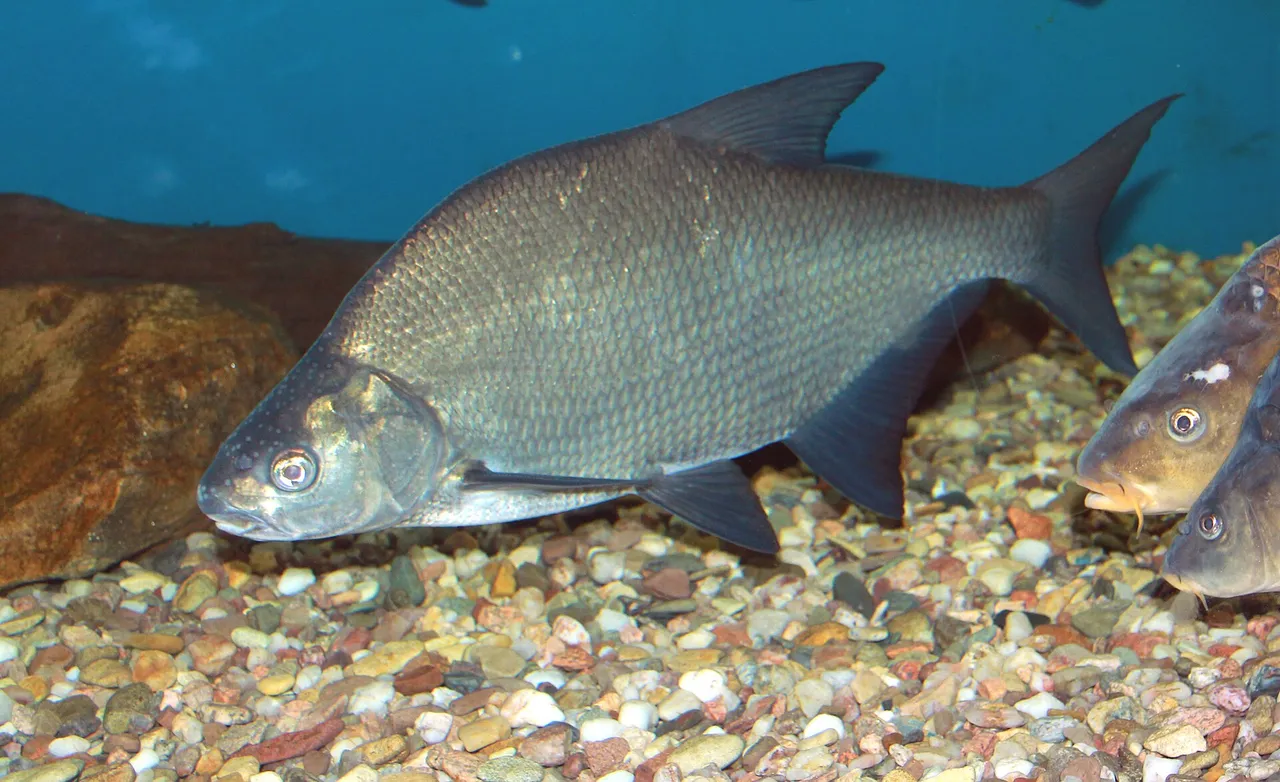

Silver bream
Blicca bjoerkna — Leuciscidae
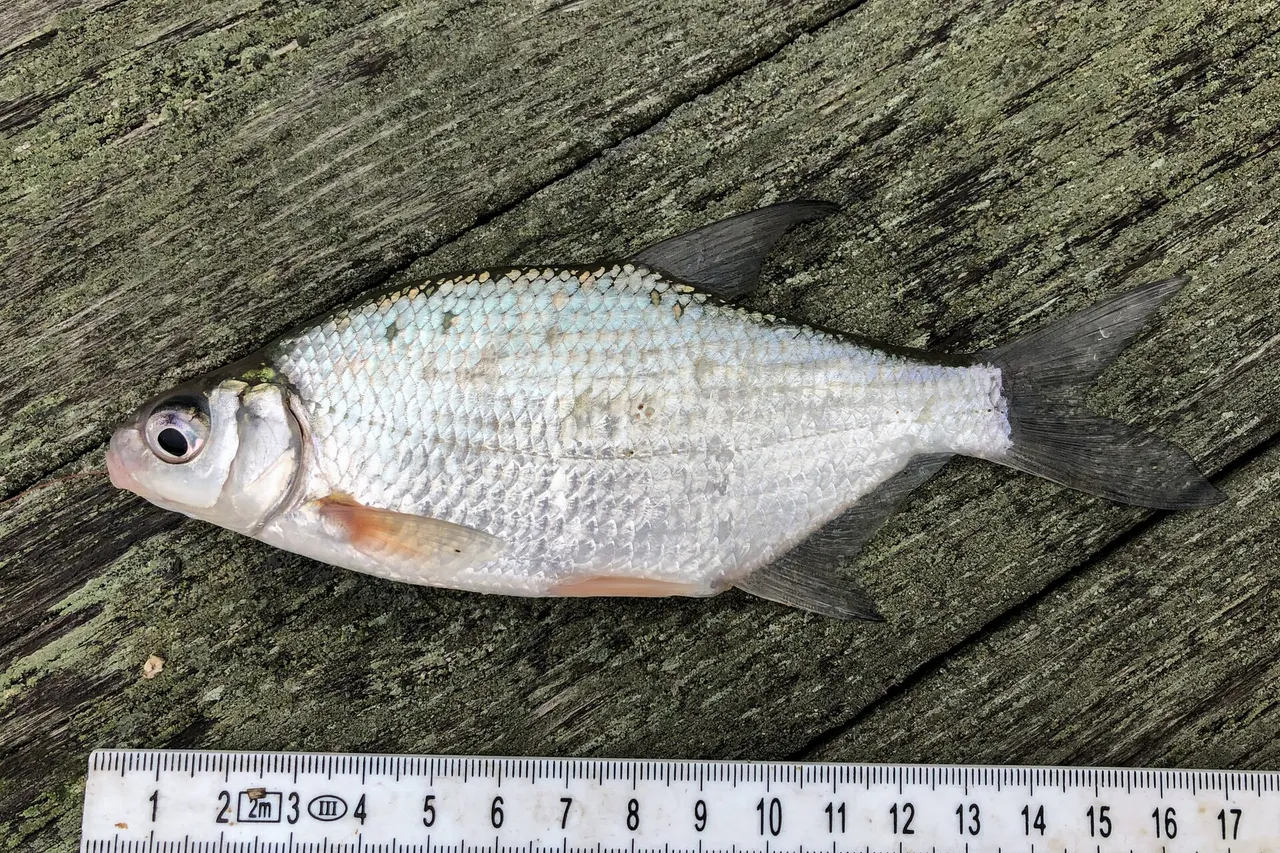

The differences
Each difference is marked with how far it can be trusted on its own. A single diagnostic character settles the identification; suggestive ones only narrow it.
| Character | Common bream | Silver bream | Reliability |
|---|---|---|---|
| How far back the anal fin runsIdentification | Long-based, considerably longer than the dorsal, running well back towards the tail. Laid against the fish it looks like a skirt rather than a fin. | Noticeably shorter, with fewer rays. This is the character to learn, because it holds on a fish of any size and does not depend on how bright the flank is. | Diagnostic on its own |
| The eye against the headIdentification | Small in proportion, and on a big bronze fish it looks almost lost in the head. | Large — noticeably larger than a common bream of the same length, which is the character that catches the eye first even though the anal fin is the better test. | Supporting — use with others |
| Colour at the base of the paired finsIdentification | Plain grey at the base of the pectoral and pelvic fins, with no warm tone anywhere on the fish. | An orange or reddish flush at the base of both, which is present on a fresh fish and is the reason silver bream get mistaken for roach as well as for bream. | Supporting — use with others |
| The size the fish reachesSize | Ordinary fish are 30–45 cm and 1–2.5 kg, over 55 cm and 4 kg is large, and fish over 8 kg are recorded from rich stillwaters and gravel pits. | Ordinary fish are 100–350 g, a good one is under a kilo, and FishBase records a maximum of 45.5 cm and 1 kg. A two-kilo fish is a common bream whatever colour it is. | Diagnostic on its own |
| How thick the mucus isHandling | Very heavily coated, to the point where the slime is one of the record's identification points and where a dry hand or a dry mat strips it. | Soft-scaled and easily damaged, handled with the care a roach needs rather than the care a big bream needs. It is a smaller, more fragile animal. | Suggestive only — varies |
| How each one feedsFeeding | Nose-down over soft bottoms, extending the mouth into a tube and sucking bloodworm and small molluscs from silt, working an area methodically as a shoal. | Sifting rather than hunting, taking insect larvae, small molluscs, crustaceans and plant material from soft substrate. Similar enough that it will not separate them at the bank. | Suggestive only — varies |
Why it matters
In match and specimen fishing the difference is the weight sheet and the record list, and both have been wrong for exactly this reason: a proportion of large claimed silver bream are hybrids, and a proportion of small claimed common bream are silver bream. The handling requirement also differs more than the size gap suggests, because a silver bream is a soft-scaled fish of a few hundred grammes and takes the damage a roach takes. And the third fish will not go away: roach–bream hybrids are common, show intermediate body depth and a shorter anal fin than a true bream, and cannot be named from either page. A fish that sits between the two descriptions is probably not either of them.
The full records
This page compares two species. Each of them has a complete record covering biology, behaviour, handling and the evidence behind all of it.
More about common bream
Where it lives, how it is caught, and what else it is confused with.
How it is caught
Gear for this fish
- Method feeder rigBream feed heavily over a bed of loose feed and the feeder delivers the bed and the hookbait to the same spot, which is the whole argument for the arrangement.
- Pole rigBream shoals feeding on a baited spot are held and fished far more precisely on a pole than on a cast rig, which is why match anglers reach for it.
- Waggler float rigFished deeper and with the bait on or near the bottom, the same float arrangement is directed at bream on stillwaters.
Where it lives
- Commercial coarse fisheriesStocked widely as a mixed-fishery species and a major component of match weights on commercial waters.
- Floodplains, backwaters and oxbowsSlack water, backwaters and flooded margins are where bream shoals move when a lowland river rises, which is a practical fact British river anglers use constantly.
Why the 7 connections on this page are here, and the sources
How it is caught
What experienced anglers do — 2 connections
Widely and independently recommended by experienced anglers and specialist sources. This is real angling knowledge, not proof: controlled evidence for it is limited, and FishingHQ records it as convention rather than as a demonstrated effect.
Feeder fishing
Established practice, independently described.
- Still-Water Angling — MacGibbon & Kee, 1953 (Specialist angling publication)Relied on for: Bream shoal feeding behaviour and the bait strategy that holds them.Citation checked — the work exists and is described correctly
- Angling Times — Bauer Media (Specialist angling publication)Relied on for: Contemporary feeder practice for bream.Citation checked — the work exists and is described correctly
Pole fishing
Established angling practice for this species, recorded as convention. The note states the property of the animal or its water that makes the method the answer.
- Coarse Fishing — A. & C. Black, 1912 (Specialist angling publication)Relied on for: Established coarse-angling technique and its application to the species.States this directlyCitation checked — the work exists and is described correctly
- Angling Times — Bauer Media (Specialist angling publication)Relied on for: Contemporary British coarse practice for this species.Background and mechanism onlyCitation checked — the work exists and is described correctly
Gear for this fish
What experienced anglers do — 3 connections
Widely and independently recommended by experienced anglers and specialist sources. This is real angling knowledge, not proof: controlled evidence for it is limited, and FishingHQ records it as convention rather than as a demonstrated effect.
Method feeder rig
Which species a terminal arrangement is directed at is established practitioner knowledge, converging across independent angling traditions and literatures, and is labelled as consensus rather than as tested result.
- Coarse Fishing — A. & C. Black, 1912 (Specialist angling publication)Relied on for: Classical coarse angling practice: terminal arrangements, shotting, bite registration and the species each is directed at.States this directlyCitation checked — the work exists and is described correctly
- Angling Times — Bauer Media (Specialist angling publication)Relied on for: Contemporary UK coarse and match angling practice as reported by practitioners, including which rigs are directed at which species.States this directlyCitation checked — the work exists and is described correctly
Pole rig
That anglers conventionally choose this arrangement when targeting this fish. It is a claim about practice rather than about the fish, and it does not assert that the arrangement is necessary or that it will succeed.
- Coarse Fishing — A. & C. Black, 1912 (Specialist angling publication)Relied on for: Classical coarse angling practice: terminal arrangements, shotting, float attachment and bite registration in still and running water.States this directlyCitation checked — the work exists and is described correctly
- Angling Times — Bauer Media (Specialist angling publication)Relied on for: Contemporary UK coarse and match angling practice as reported by practitioners, including pole, float and surface rig convention.States this directlyCitation checked — the work exists and is described correctly
Waggler float rig
Which species a terminal arrangement is directed at is established practitioner knowledge, converging across independent angling traditions and literatures, and is labelled as consensus rather than as tested result.
- Coarse Fishing — A. & C. Black, 1912 (Specialist angling publication)Relied on for: Classical coarse angling practice: terminal arrangements, shotting, bite registration and the species each is directed at.States this directlyCitation checked — the work exists and is described correctly
- Angling Times — Bauer Media (Specialist angling publication)Relied on for: Contemporary UK coarse and match angling practice as reported by practitioners, including which rigs are directed at which species.States this directlyCitation checked — the work exists and is described correctly
Where it lives
Backed by research — 2 connections
Supported by peer-reviewed research or fisheries science. The sources are listed and can be checked.
Commercial coarse fisheries
Habitat association recorded for the species, in an environment FishingHQ describes on its own page.
- Freshwater Fishes of the British Isles — HarperCollins (New Naturalist 75), 1992 (Reference work)Relied on for: Habitat association and distribution of European freshwater fishes, including occurrence in artificial and modified waters.States this directlyCitation checked — the work exists and is described correctly
- FishBase: a global information system on fishes — Froese, R. and D. Pauly, eds. — FishBase Consortium (Scientific institute)Relied on for: Habitat association, depth range and water-type tolerance recorded for the species.States this directlyPassage read and verified
Floodplains, backwaters and oxbows
A habitat association resting on the regional identification and fisheries literature rather than on angling report.
- The Flood Pulse Concept in River-Floodplain Systems — Canadian Special Publication of Fisheries and Aquatic Sciences 106, Department of Fisheries and Oceans, Ottawa, 1989 (Scientific literature)Relied on for: That fish move laterally onto the inundated floodplain to feed and breed and return to the channel as water falls, and that floodplain inundation drives production in large river systems.States this directlyCitation checked — the work exists and is described correctly
- FAO Species Identification Guides for Fishery Purposes and the FAO Species Catalogues — Food and Agriculture Organization of the United Nations (Scientific institute)Relied on for: Habitat association and distribution of the species concerned.States this directlyCitation checked — the work exists and is described correctly
Reviewed 2026-08-16. FishingHQ does not state what any rule is or where any rule applies. Where this page says the two species are managed differently, that is a reason to check the authority for the water you are on — not a statement of what it requires.