Method feeder rig
Rig · Last reviewed 2026-08-10
A moulded feeder with bait pressed around it and a very short hooklength, so the hookbait sits in the middle of its own small pile of feed.
Safety: fish welfare — can cause serious injury or death.
A method feeder, and the hooklength rule
Rig · Draft — not yet checked against an external reference
This drawing has not been checked against any reference outside FishingHQ. It shows how the components are arranged; it is not a certified tying sequence. Follow the written steps.
Describe this diagram in words
A feeder lying on the bottom, seen side on. The main line comes down from the rod to a heavy feeder frame with groundbait moulded around it. A deliberately short hooklength runs from the feeder to a hook lying in or against the feed. An arrow shows a fish moving off and hooking itself against the feeder's weight, which is the mechanism the rig depends on rather than a strike. A note records that many fisheries ban the method feeder outright or specify a minimum hooklength, and that this varies by water.
How this drawing was produced
Built during an earlier pass. The arrangement is short-hooklength-against-heavy-weight, and that proportion is the whole rig: it is why the fish hooks itself and it is why fisheries that permit the feeder commonly specify a minimum hooklength so a fish cannot be left towing it. The figure states the restriction rather than leaving it to the prose, because it is the rig most likely to be prohibited outright.
What it is for
To place a hookbait in the centre of a small compacted bed of feed, with a fixed or semi-fixed weight close enough that a fish lifting the bait hooks itself against it. It combines accurate feeding and self-hooking in one cast.
Components, from rod to hook
- Main line, threaded through the feeder body or attached to it with a quick-change link.
- A moulded flat-bottomed feeder frame, semi-fixed so it can detach under load.
- Groundbait, micro pellets or paste moulded around the frame using a mould.
- A very short hooklength — typically 6 to 12 cm.
- A wide-gape hook.
- A hair-rigged or banded hookbait, usually buried in or resting on the moulded feed.
What it does in the water
The feeder lands flat side down — the shape is designed to do that — and the compacted feed begins to break down within minutes, leaving a low mound with the hookbait in it. Fish arriving to feed on the loose material take the hookbait among the rest. The moment the fish lifts and turns, the short hooklength comes tight against the feeder's weight and the hook is set. Nothing needs to happen at the rod, which is why method fishing produces such violent, unmistakable takes.
When to use it
Commercial stillwaters and any water where carp, bream and tench feed confidently over a bed of loose feed. It is at its best in moderate depths and at moderate range, and less suited to very deep water — where the feed disperses on the way down — or to very silty bottoms, where the whole package can sink out of sight.
Common mistakes
- A hooklength long enough that the fish is not hooked against the feeder — the mechanism simply does not operate.
- A truly fixed feeder that cannot detach, which leaves a broken-off fish attached to it.
- Feed mixed too dry, which breaks up on impact, or too wet, which never breaks down at all.
- Casting to a different spot each time, so the feed is spread rather than concentrated.
- Striking at the take. The fish is already hooked; striking pulls it out.
How this rig behaves, and where it goes wrong
The method feeder combines two ideas that had previously been separate: a feeder that delivers loose feed accurately, and a bolt rig that hooks the fish against a fixed weight. The result is a self-contained package that lands, breaks down, and leaves the hookbait sitting in the middle of a small mound of feed with a heavy weight a few centimetres away.
A short hooklength is essential to the design, not a stylistic choice. When a fish takes the bait and lifts, it moves against the feeder's weight almost immediately, and that is what drives the hook home.
It is extremely effective and it has a corresponding responsibility. A semi-fixed feeder must be able to detach if the line parts, or a fish that breaks off is towing sixty grams of lead through weed.
When the method rather than an open-end or a cage feeder
All three arrangements deliver feed and hookbait to the same place. They differ in WHEN the feed is released and how the hookbait sits relative to it, and that decides which one is right.
A method feeder carries the feed moulded around the outside of a solid frame, with the hookbait buried in or laid against it. The feed comes off in a compact heap immediately around the hookbait and the hookbait is the most obvious item in it. That is the arrangement for a fish that arrives, feeds hard and confidently in one spot, and hooks itself against the weight as it moves off — commercial carp and bream above all.
An open-end feeder delivers a plug of groundbait that empties on the bottom and spreads. The hookbait is on a longer hooklength somewhere in that spread rather than sitting in the middle of a ball. That suits shy feeding and a fish moving over an area rather than attacking a spot.
A cage feeder releases on the way down, distributing feed through the water as well as on the bottom, which is right when fish are up in the water or when the bottom is deep silt that would bury a compact heap.
The method's weakness follows directly from its strength. Because it is a self-hooking arrangement built around a short hooklength and a heavy weight, it is very poor at presenting a bait delicately, and on hard-fished clear water in cold conditions it is often the arrangement producing the fewest indications rather than the most.
And it is the rig most likely to be BANNED. A great many fisheries prohibit it outright or specify how it may be used, and that varies between neighbouring waters and changes. Check the rules for the water you are fishing before you set one up.
What experienced anglers do — why, and the sources (2)
Widely and independently recommended by experienced anglers and specialist sources. This is real angling knowledge, not proof: controlled evidence for it is limited, and FishingHQ records it as convention rather than as a demonstrated effect.
- Angling Times — Bauer Media (Specialist angling publication)Relied on for: Contemporary UK coarse and match angling practice as reported by practitioners, including rig convention and fishery rules.States this directlyCitation checked — the work exists and is described correctly
- Still-Water Angling — MacGibbon & Kee, 1953 (Specialist angling publication)Relied on for: Stillwater angling practice including terminal arrangements, hook holds and the mechanics of playing fish.States this directlyCitation checked — the work exists and is described correctly
The hooklength rule, and the mechanism underneath it
Fisheries that permit the method feeder very commonly attach one condition to it: a MINIMUM hooklength, frequently expressed as being at least as long as the feeder itself. It is presented as a rule and it is worth understanding as a mechanism, because the mechanism is what carries to a water whose rule is written differently or not at all.
A method feeder is heavy and it is fished semi-fixed, which is what makes it hook fish. If the main line parts above the feeder — on a snag, on a crack-off, at a damaged length of line — the fish swims away attached to a substantial weight that it cannot shed. A hooklength long enough and weak enough to be the failure point instead means that when something breaks, it breaks at the hook end, and the fish leaves with a hook rather than with a hook and a lead.
The same logic explains the two connected requirements that usually appear alongside it. The feeder should be able to release from the line rather than being trapped by a bead or a jammed swivel, and the hooklength should be genuinely weaker than the main line rather than nominally so — a hooklength of the same breaking strain as the main line, or a worn main line, defeats the arrangement entirely.
This is one of the clearest cases in coarse fishing where a fishery rule is not arbitrary and not primarily about fairness. It is a fish-welfare requirement expressed as a tackle specification, and a rig tied to satisfy the letter of it while defeating the mechanism — a long hooklength in line stronger than the main line, say — complies and does not work.
Official guidance — why, and the sources (2)
Stated by a fisheries authority, scientific institute or recognised angling body. Authoritative, but summarising rather than demonstrating.
- Humane Harvesting of Fish: percussive stunning and percussive equipment — Humane Slaughter Association (Angling or fisheries organisation)Relied on for: Welfare consequences of capture, handling and terminal tackle, and the practices that reduce injury.States this directlyNot yet checked
- Angling Trust guidance for anglers — Angling Trust (Angling or fisheries organisation)Relied on for: Guidance to anglers on fishery rules, conditions of access and expected handling practice.States this directlyCitation checked — the work exists and is described correctly
Safety
Fish welfare — Can cause serious injury or death
A method feeder that cannot detach from the line leaves a fish that breaks off towing a substantial weight. In weeded or snaggy water that tethers the fish, and it dies.
What reduces it: Always use a semi-fixed arrangement that releases the feeder under sustained load, and check that it actually releases by pulling it by hand before you fish. Use a hooklength weaker than the main line so a break happens below the feeder.
Check the rules before you fish
Fishing laws, bylaws, access rules, seasons, bait restrictions and permitted methods vary by location and can change. Check the current rules from the relevant authority and the water you intend to fish before fishing.
Check with:
- Current national or regional law for where you are fishing
- Current local bylaws
- The relevant fisheries authority
- The landowner, club or fishery whose water it is
- Any restrictions specific to the species or the method you intend to use
Where to go next
Fish it is built for
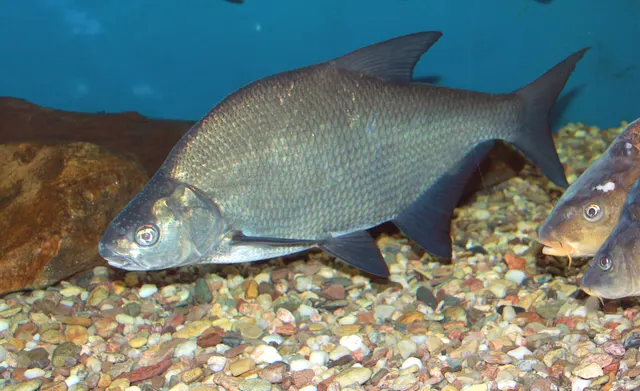 Common breamBream feed heavily over a bed of loose feed and the feeder delivers the bed and the hookbait to the same spot, which is the whole argument for the arrangement.
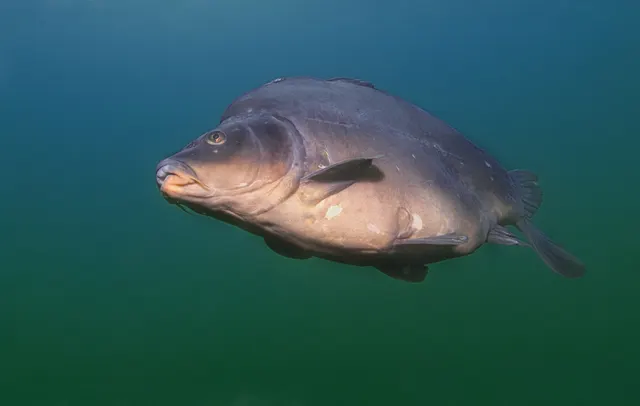 Common carpThe commercial-fishery carp is the fish this rig was built around: a short hooklength against a heavy feeder, so the fish hooks itself against the weight as it moves off.
How it is fished
- Coarse fishingA coarse and commercial-fishery rig rather than a general one, which is worth stating because the same bolt-rig principle appears in carp fishing under a different name and with heavier components.
- Feeder fishingA frame carrying groundbait with a short hooklength buried in it, which is the arrangement the method is named after.
What it is made of
- HooksA short, strong hooklength is structural to the rig rather than a preference: the whole arrangement works by the fish bolting against the weight of the feeder, and that force arrives at the hook hold immediately.
- PelletsThe method feeder and the pellet developed together: a compressed ball of groundbait or micro pellet around a frame, with a hook bait sitting in it, is a delivery system designed for this bait rather than adapted to it.
Worth understanding first
- Choosing a rig for the conditionsThe answer for clean ground at range with the rod in a rest, where a bite will never reach the angler in time unless the fish hooks itself against a fixed or semi-fixed weight.
- Rig safety: what happens if the line breaksThe heavier the fixed weight, the worse the consequence of a break above it, which makes the release mechanism the most important component on the rig rather than an accessory.
- Running and fixed rigs: where the resistance isA short hooklength against the weight of a loaded feeder is the fixed family in its most concentrated form: the fish hooks itself and the angler's timing plays almost no part.
Instead of this
Rules and access
Environment and conservation
History and culture
Sources and evidence
Why the 13 connections on this page are here, and the sources
Fish it is built for
What experienced anglers do — 2 connections
Widely and independently recommended by experienced anglers and specialist sources. This is real angling knowledge, not proof: controlled evidence for it is limited, and FishingHQ records it as convention rather than as a demonstrated effect.
Common bream
Which species a terminal arrangement is directed at is established practitioner knowledge, converging across independent angling traditions and literatures, and is labelled as consensus rather than as tested result.
- Coarse Fishing — A. & C. Black, 1912 (Specialist angling publication)Relied on for: Classical coarse angling practice: terminal arrangements, shotting, bite registration and the species each is directed at.States this directlyCitation checked — the work exists and is described correctly
- Angling Times — Bauer Media (Specialist angling publication)Relied on for: Contemporary UK coarse and match angling practice as reported by practitioners, including which rigs are directed at which species.States this directlyCitation checked — the work exists and is described correctly
Common carp
Which species a terminal arrangement is directed at is established practitioner knowledge, converging across independent angling traditions and literatures, and is labelled as consensus rather than as tested result.
- Carp Fever — Beekay Publishers, 1981 (Specialist angling publication)Relied on for: Carp angling practice including bolt and hair rigs, bait presentation off the hook, and the reasoning that produced them.States this directlyCitation checked — the work exists and is described correctly
- Angling Times — Bauer Media (Specialist angling publication)Relied on for: Contemporary UK carp and coarse angling practice as reported by practitioners, including rig convention.States this directlyCitation checked — the work exists and is described correctly
How it is fished
What experienced anglers do — 2 connections
Widely and independently recommended by experienced anglers and specialist sources. This is real angling knowledge, not proof: controlled evidence for it is limited, and FishingHQ records it as convention rather than as a demonstrated effect.
Coarse fishing
Which branch of fishing a rig sits in is a statement about practice rather than about the world, and is recorded as such.
- Coarse Fishing — A. & C. Black, 1912 (Specialist angling publication)Relied on for: Classical coarse angling practice: baits, presentation, swim selection and the reasoning behind them.States this directlyCitation checked — the work exists and is described correctly
- Angling Times — Bauer Media (Specialist angling publication)Relied on for: Contemporary UK coarse and match angling practice as reported by practitioners, including bait convention and rig use.Background and mechanism onlyCitation checked — the work exists and is described correctly
Feeder fishing
That a method is conventionally fished on a particular terminal arrangement, drawn from angling literature and from widely restated practitioner description rather than from testing.
- Angling Times — Bauer Media (Specialist angling publication)Relied on for: Contemporary UK lure and predator angling practice as reported by practitioners, including braid-to-lure connections and finesse rigging.States this directlyCitation checked — the work exists and is described correctly
- How to Tie Fishing Knots — uni, blood, improved blood, surgeon's and loop knots — Recreational Boating & Fishing Foundation (Take Me Fishing) (Angling or fisheries organisation)Relied on for: A contemporary national angling-participation body's knot guide, covering the connections used in modern lure fishing and the materials they are tied in.States this directlyPassage read and verified
What it is made of
What experienced anglers do — 2 connections
Widely and independently recommended by experienced anglers and specialist sources. This is real angling knowledge, not proof: controlled evidence for it is limited, and FishingHQ records it as convention rather than as a demonstrated effect.
Hooks
The equipment a rig depends on is angling convention, reported consistently by independent practitioner sources.
- Coarse Fishing — A. & C. Black, 1912 (Specialist angling publication)Relied on for: Classical coarse angling practice: baits, presentation, swim selection and the reasoning behind them.States this directlyCitation checked — the work exists and is described correctly
- Angling Times — Bauer Media (Specialist angling publication)Relied on for: Contemporary UK coarse and match angling practice as reported by practitioners, including bait convention and rig use.Background and mechanism onlyCitation checked — the work exists and is described correctly
Pellets
How a bait is attached and fished is angling convention, established by practice and reported consistently across independent practitioner sources rather than tested.
- Coarse Fishing — A. & C. Black, 1912 (Specialist angling publication)Relied on for: Classical coarse angling practice: baits, presentation, swim selection and the reasoning behind them.States this directlyCitation checked — the work exists and is described correctly
- Angling Times — Bauer Media (Specialist angling publication)Relied on for: Contemporary UK coarse and match angling practice as reported by practitioners, including bait convention and rig use.Background and mechanism onlyCitation checked — the work exists and is described correctly
Worth understanding first
What experienced anglers do — 3 connections
Widely and independently recommended by experienced anglers and specialist sources. This is real angling knowledge, not proof: controlled evidence for it is limited, and FishingHQ records it as convention rather than as a demonstrated effect.
Choosing a rig for the conditions
An arrangement joined to the guidance that selects it. That guidance names eleven rigs against four questions and pointed at none of them, so a reader following the procedure to its conclusion could not reach the answer.
- Sea Angler — Bauer Media (Specialist angling publication)Relied on for: British sea angling practice: how tide, wind, swell and water clarity change where and how a mark is fished.FishingHQ's interpretation of what it saysCitation checked — the work exists and is described correctly
- Freshwater Fishing — Macdonald & Jane's, 1975 (Specialist angling publication)Relied on for: Comprehensive angling practice across disciplines, including water reading, seasonal condition and the tackle each demands.States this directlyCitation checked — the work exists and is described correctly
Rig safety: what happens if the line breaks
Why it works. How knots and rigs behave is established practitioner knowledge converging across independent angling traditions, and is described as agreement between them rather than as a tested result.
- Angling Times — Bauer Media (Specialist angling publication)Relied on for: Contemporary UK coarse and match angling practice as reported by practitioners, including rig and knot convention.States this directlyCitation checked — the work exists and is described correctly
- Sea Angler — Bauer Media (Specialist angling publication)Relied on for: Contemporary UK sea angling practice as reported by practitioners, including rig construction, leaders and line choice.States this directlyCitation checked — the work exists and is described correctly
Running and fixed rigs: where the resistance is
Why it works. How knots and rigs behave is established practitioner knowledge converging across independent angling traditions, and is described as agreement between them rather than as a tested result.
- Angling Times — Bauer Media (Specialist angling publication)Relied on for: Contemporary UK coarse and match angling practice as reported by practitioners, including rig and knot convention.States this directlyCitation checked — the work exists and is described correctly
- Sea Angler — Bauer Media (Specialist angling publication)Relied on for: Contemporary UK sea angling practice as reported by practitioners, including rig construction, leaders and line choice.States this directlyCitation checked — the work exists and is described correctly
Instead of this
What experienced anglers do — 1 connection
Widely and independently recommended by experienced anglers and specialist sources. This is real angling knowledge, not proof: controlled evidence for it is limited, and FishingHQ records it as convention rather than as a demonstrated effect.
Running leger
The relationship between the two arrangements is described in contemporary practice.
- Angling Times — Bauer Media (Specialist angling publication)Relied on for: The relationship between fixed and running leger arrangements.Citation checked — the work exists and is described correctly
- Freshwater Fishing — Macdonald & Jane's, 1975 (Specialist angling publication)Relied on for: Leger rig construction and the running-versus-fixed decision.Citation checked — the work exists and is described correctly
Rules and access
Official guidance — 1 connection
Stated by a fisheries authority, scientific institute or recognised angling body. Authoritative, but summarising rather than demonstrating.
Method and bait restrictions
This points to the kind of rule that applies rather than to a rule itself. Rig restrictions are set by individual fisheries far more often than by statute, they differ between neighbouring waters, and they change — so the page points at the idea and tells you who to ask.
- Environment Agency fisheries management, byelaws and rod licensing information — Environment Agency (Government fisheries body)Relied on for: That fisheries authorities and fishery owners set restrictions on gear and terminal arrangements, and that these vary by water and change over time.States this directlyCitation checked — the work exists and is described correctly
- Angling Trust guidance for anglers — Angling Trust (Angling or fisheries organisation)Relied on for: Guidance to anglers on fishery rules and conditions of access, including gear and method restrictions set by individual waters.States this directlyCitation checked — the work exists and is described correctly
Environment and conservation
Official guidance — 1 connection
Stated by a fisheries authority, scientific institute or recognised angling body. Authoritative, but summarising rather than demonstrating.
Discarded line and lost tackle
An environmental claim attached to the arrangement that causes it, held to the authoritative standard this kind of claim requires because tackle loss and lead use are matters of regulation and of published conservation evidence rather than of preference.
- Angling Trust guidance for anglers — Angling Trust (Angling or fisheries organisation)Relied on for: Guidance to anglers treating lost and discarded line and terminal tackle as an avoidable environmental harm and an avoidable cause of access loss.States this directlyCitation checked — the work exists and is described correctly
- Good Fish Guide — Marine Conservation Society (Conservation authority)Relied on for: That lost fishing gear persists in the marine environment and continues to entangle, which is the mechanism the discarded-tackle page describes.Background and mechanism onlyCitation checked — the work exists and is described correctly
History and culture
What experienced anglers do — 1 connection
Widely and independently recommended by experienced anglers and specialist sources. This is real angling knowledge, not proof: controlled evidence for it is limited, and FishingHQ records it as convention rather than as a demonstrated effect.
The history of match fishing
Where a terminal arrangement came from and what it displaced, drawn from the angling literature and from widely restated practitioner accounts rather than from scholarship.
- Angling Times — Bauer Media (Specialist angling publication)Relied on for: Contemporary UK coarse and match angling practice as reported by practitioners, including when commercial-fishery techniques appeared and how they spread.States this directlyCitation checked — the work exists and is described correctly
- Angling Trust guidance for anglers — Angling Trust (Angling or fisheries organisation)Relied on for: The governing body's account of contemporary UK coarse and match angling, its formats and the fishery types those formats are held on.States this directlyCitation checked — the work exists and is described correctly
How FishingHQ labels evidence is explained in the evidence policy.