Running leger
Rig · Last reviewed 2026-08-10
A bottom rig in which the line runs freely through the weight, so a taking fish feels almost nothing.
Safety: fish welfare — can cause injury needing treatment.
A running leger, and why the lead runs
Rig · Draft — not yet checked against an external reference
This drawing has not been checked against any reference outside FishingHQ. It shows how the components are arranged; it is not a certified tying sequence. Follow the written steps.
Describe this diagram in words
A rig lying on the bottom, seen side on. The main line descends from the rod at the upper left and reaches the bottom, where it passes through a lead rather than being tied to it. Beyond the lead sit a small bead and then a swivel, which the lead runs up against; the bead keeps the lead from striking the knot. From the swivel a hooklength runs along the bottom to a hook. An arrow shows line being drawn through the lead as a fish moves off, which is the mechanism the rig is named for and the reason a taking fish feels little resistance. The hooklength is labelled as needing to be weaker than the main line, so that any breakage happens at the hook end rather than above the lead.
How this drawing was produced
Redrawn during an earlier pass. The previous figure drew the lead sitting ON the line like a fixed bead, so the one property the rig is named for — that the line runs through the lead — was not shown anywhere, and the page's own prose turns entirely on running versus fixed. An arrow and a label now state the mechanism, and the hooklength carries the weaker-than-main-line note that an earlier pass's rig sections identified as a welfare requirement rather than a preference.
What it is for
To present a bait on the bottom with the minimum possible resistance to a taking fish. Used where fish are cautious, where takes are deliberate rather than violent, and where the angler is present and watching so that the strike can be made.
Components, from rod to hook
- Main line from the reel.
- A running weight — a bored bullet, a lead on a run ring, or a leger boom — threaded onto the main line.
- A buffer bead below the weight, protecting the knot from impact during the cast.
- A swivel, which both joins the hooklength and stops the weight running down onto it.
- Hooklength of an appropriate length for how the fish are feeding.
- A hook sized to the bait rather than to the fish.
What it does in the water
The weight settles on the bottom; the hooklength extends away from it in the direction the tackle was travelling or in the direction of any flow, and the bait lies at the end of it. Line is drawn tight from the rod to the weight. When a fish picks the bait up and moves, it pulls line through the weight rather than dragging the weight, so the resistance it feels is only the friction of line through the bore plus whatever the rod and reel add. That resistance is not zero, and reducing it — a smooth bore, an appropriate rod angle, a slack bow rather than a tight line — is most of the craft in fishing this rig.
When to use it
Where fish are cautious and takes are deliberate: chub and barbel in rivers, tench and bream on stillwaters, and any situation where a fixed-lead take would be dropped. It is also the correct choice in snaggy ground, because a running arrangement can be set up so the weight is shed if the line parts.
Common mistakes
- Omitting the buffer bead, so the weight repeatedly strikes the swivel knot during casting until it fails.
- Fishing a line so tight that the fish feels the rod before it feels the lead.
- Using so heavy a weight that friction through the bore defeats the purpose.
- A hooklength so long that a bite is a metre of movement before anything registers.
- Setting it up so the weight cannot be shed in snags, which leaves a broken-off fish towing it.
How this rig behaves, and where it goes wrong
In a running leger the main line passes through the weight — through a bore, a ring, or a run ring on a boom — rather than being tied to it. The weight sits on the bottom and the line slides through it, which means a fish that picks up the bait and moves off draws line without having to shift the lead.
That is the entire design philosophy, and it is the opposite of a bolt rig. A running leger assumes the fish will feel resistance and drop the bait, so it removes as much resistance as possible and leaves the striking to the angler. A bolt rig assumes the opposite.
A bead between the weight and the swivel is not optional decoration: it stops the weight battering the knot during casting, which is a genuine and common cause of failure.
Running or bolt: the decision this rig is one half of
Almost every bottom arrangement in coarse fishing is one of two answers to a single question: WHEN DOES THE FISH FEEL THE WEIGHT? A running leger says as late as possible. A bolt setup says immediately and deliberately.
The running answer suits a fish that inspects a bait, moves a short distance with it, and drops it at the first resistance — a wary chub in clear water, a barbel that has been fished for all season, a tench mouthing a bait on a silty bottom. The line passes through the lead, so for the first part of the take the fish is towing nothing at all and the angler sees the movement before the fish feels anything.
The bolt answer suits a fish that takes confidently and turns away — the commercial-fishery carp being the standard case. There the resistance is the hooking mechanism, and a rig that lets the fish move freely simply produces dropped takes nobody sees.
The practical consequence is that the running leger asks something of the angler that the bolt setup does not: SOMEBODY HAS TO BE WATCHING. A running rig hooks very few fish by itself. It converts a delicate take into a visible indication and then relies on a person to do something about it. On a session where rods are left for hours, that is the wrong trade, and a great many running legers are fished by people who would catch more on a semi-fixed arrangement.
The third case is the one the choice is usually made badly in: heavy flow. In strong current a genuinely free-running lead pins the line to the bottom and every indication arrives late and blurred, which is the opposite of the reason for choosing it.
What experienced anglers do — why, and the sources (2)
Widely and independently recommended by experienced anglers and specialist sources. This is real angling knowledge, not proof: controlled evidence for it is limited, and FishingHQ records it as convention rather than as a demonstrated effect.
- Coarse Fishing — A. & C. Black, 1912 (Specialist angling publication)Relied on for: Classical coarse angling practice: terminal arrangements, shotting, bite registration and the reasoning behind each.States this directlyCitation checked — the work exists and is described correctly
- Freshwater Fishing — Macdonald & Jane's, 1975 (Specialist angling publication)Relied on for: Comprehensive freshwater angling practice including terminal tackle, leaders and the mechanics of hooking and playing fish.States this directlyCitation checked — the work exists and is described correctly
Reading the indication, and why a dropback is not a missed bite
The characteristic bite on a running leger is a steady pull that develops rather than a slam, and the characteristic mistake is striking at the first movement of it.
There is a second indication that is missed far more often, and it goes the wrong way. If a fish picks the bait up and moves TOWARDS the rod, or lifts the lead, the line goes slack and the indicator drops back. That is a take. It is a good take, frequently a better one than the pull, and it is routinely read as a fish knocking the bait or as a bit of weed coming through. On a river with any flow the dropback is the more common of the two.
What separates the two indications from debris is duration and direction. Debris arriving on the line produces a movement that continues in one direction and does not stop. A fish produces a movement that starts, changes, and then either builds or reverses.
The reason this is a rig section rather than a technique one is that the arrangement decides which indications are available. A lead that cannot pass line freely — a bead too tight, a swivel jammed against a lead clip, a tangle in the tail rubber — converts the whole rig into a fixed lead without telling anybody. The dropback disappears first, and its absence over a session is the most reliable sign that the rig is not doing what its diagram says.
What experienced anglers do — why, and the sources (2)
Widely and independently recommended by experienced anglers and specialist sources. This is real angling knowledge, not proof: controlled evidence for it is limited, and FishingHQ records it as convention rather than as a demonstrated effect.
- Angling Times — Bauer Media (Specialist angling publication)Relied on for: Contemporary UK coarse and match angling practice as reported by practitioners, including rig convention and fishery rules.States this directlyCitation checked — the work exists and is described correctly
- Still-Water Angling — MacGibbon & Kee, 1953 (Specialist angling publication)Relied on for: Stillwater angling practice including terminal arrangements, hook holds and the mechanics of playing fish.States this directlyCitation checked — the work exists and is described correctly
Safety
Fish welfare — Can cause injury needing treatment
A running leger set up so that the weight is trapped — by a bead too large to pass, or by a tangle — becomes a fixed lead. If the line then parts, the fish tows the weight and can be tethered in weed or snags.
What reduces it: Set the rig up so that the weight can pass off the line if the hooklength or main line fails, and use a hooklength weaker than the main line so a break happens at the fish end rather than above the lead.
Where to go next
Fish it is built for
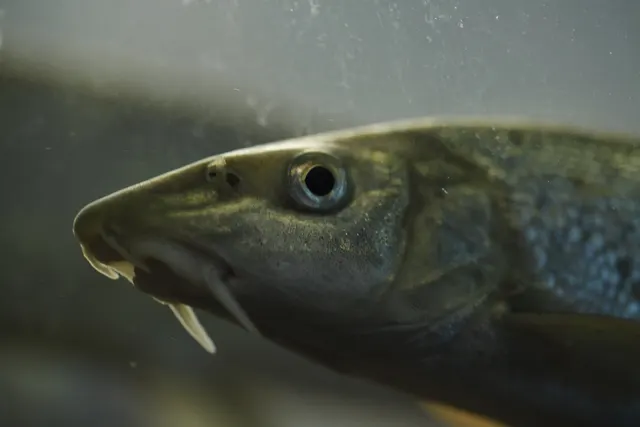 BarbelA river fish that takes a static bait on the bottom and runs hard with it — which is precisely the case the running arrangement exists for, because the fish feels the lead late or not at all.
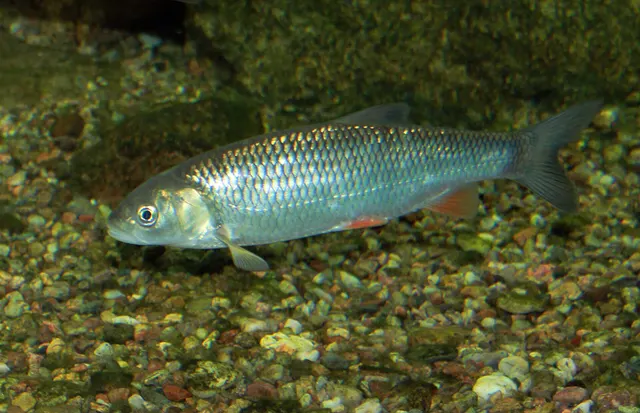 ChubA chub in flowing water takes a static bait cautiously and drops it the moment it feels resistance, which is the situation a running arrangement exists for.
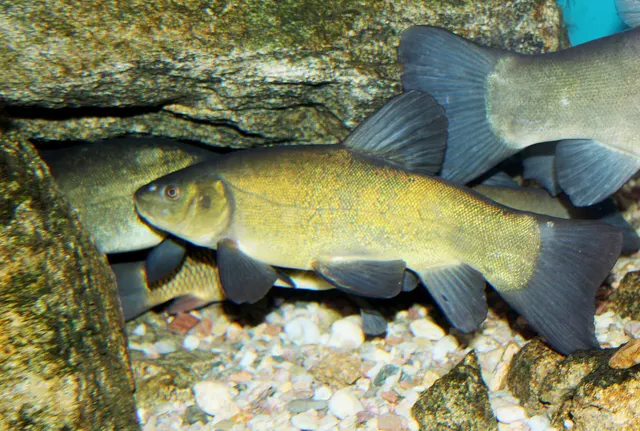 TenchUsed for tench on stillwaters where a bait must sit still on the bottom and the fish must be able to move off without immediate resistance.
How it is fished
What it is made of
- Saltwater luresMetal jigs and soft plastics are frequently fished on the same running arrangement as bait, which is the connection between the lure family and the terminal tackle a reader already knows.
- Uni knotA running leger needs a stop and a swivel connection, and the uni knot serves both without a second knot type.
Worth understanding first
- Choosing a rig for the conditionsThe answer to the spine's first case: clean ground, still or slow water, a cautious fish. The line runs through the weight so the fish takes without feeling it, which is the whole point of the arrangement and the reason it is the wrong answer at range with a rod in a rest.
- Running and fixed rigs: where the resistance isThe canonical running arrangement, and the clearest demonstration that a bite on this family is line moving rather than a rod wrenching round.
- Swivels, links and connectorsThe swivel in a running leger is a stop taking a direct pull rather than a rotating joint, which is a different load case from the one it is rated for.
- What a rig isThe running leger is the clearest instance of the running-versus-fixed distinction, which is the idea the general record is built around.
Instead of this
Environment and conservation
History and culture
Sources and evidence
Why the 13 connections on this page are here, and the sources
Fish it is built for
What experienced anglers do — 3 connections
Widely and independently recommended by experienced anglers and specialist sources. This is real angling knowledge, not proof: controlled evidence for it is limited, and FishingHQ records it as convention rather than as a demonstrated effect.
Barbel
Which species a terminal arrangement is directed at is established practitioner knowledge, converging across independent angling traditions and literatures, and is labelled as consensus rather than as tested result.
- Coarse Fishing — A. & C. Black, 1912 (Specialist angling publication)Relied on for: Classical coarse angling practice: terminal arrangements, shotting, bite registration and the species each is directed at.States this directlyCitation checked — the work exists and is described correctly
- Angling Times — Bauer Media (Specialist angling publication)Relied on for: Contemporary UK coarse and match angling practice as reported by practitioners, including which rigs are directed at which species.States this directlyCitation checked — the work exists and is described correctly
Chub
Terminal arrangement for a species is angling convention, reported consistently by independent practitioner sources across the classical and contemporary coarse literature.
- Coarse Fishing — A. & C. Black, 1912 (Specialist angling publication)Relied on for: Classical coarse angling practice: baits, terminal arrangements, presentation and swim selection for river species.States this directlyCitation checked — the work exists and is described correctly
- Angling Times — Bauer Media (Specialist angling publication)Relied on for: Contemporary UK coarse angling practice as reported by practitioners, including rig and tackle convention.States this directlyCitation checked — the work exists and is described correctly
Tench
Which species a terminal arrangement is directed at is established practitioner knowledge, converging across independent angling traditions and literatures, and is labelled as consensus rather than as tested result.
- Coarse Fishing — A. & C. Black, 1912 (Specialist angling publication)Relied on for: Classical coarse angling practice: terminal arrangements, shotting, bite registration and the species each is directed at.States this directlyCitation checked — the work exists and is described correctly
- Angling Times — Bauer Media (Specialist angling publication)Relied on for: Contemporary UK coarse and match angling practice as reported by practitioners, including which rigs are directed at which species.States this directlyCitation checked — the work exists and is described correctly
How it is fished
What experienced anglers do — 1 connection
Widely and independently recommended by experienced anglers and specialist sources. This is real angling knowledge, not proof: controlled evidence for it is limited, and FishingHQ records it as convention rather than as a demonstrated effect.
Ledgering
That a method is conventionally fished on a particular terminal arrangement, drawn from angling literature and from widely restated practitioner description rather than from testing.
- Freshwater Fishing — Macdonald & Jane's, 1975 (Specialist angling publication)Relied on for: Comprehensive British freshwater angling practice: terminal arrangements, leaders, droppers and the knots each is made with.States this directlyCitation checked — the work exists and is described correctly
- Coarse Fishing — A. & C. Black, 1912 (Specialist angling publication)Relied on for: Classical coarse angling practice, including hooklength attachment, loops and the shotting arrangements they carry.States this directlyCitation checked — the work exists and is described correctly
What it is made of
What experienced anglers do — 2 connections
Widely and independently recommended by experienced anglers and specialist sources. This is real angling knowledge, not proof: controlled evidence for it is limited, and FishingHQ records it as convention rather than as a demonstrated effect.
Saltwater lures
A practitioner claim about how the components are actually assembled.
- Sea Angler — Bauer Media (Specialist angling publication)Relied on for: Practitioner treatment of terminal arrangements for lure and bait fishing at sea.Citation checked — the work exists and is described correctly
- General angling website restatements of established technique — Various (Credible secondary source)Relied on for: Widely restated practitioner rig descriptions for sea lure fishing.Citation checked — the work exists and is described correctly
Uni knot
The rig and the general-purpose connection it depends on.
- Freshwater Fishing — Macdonald & Jane's, 1975 (Specialist angling publication)Relied on for: Knot selection for joining line to terminal tackle and line to line.States this directlyCitation checked — the work exists and is described correctly
- IGFA International Angling Rules and World Record Requirements — International Game Fish Association (Angling or fisheries organisation)Relied on for: The role of knots and connections in terminal tackle, and the line-class conventions that depend on them.States this directlyPassage read and verified
Worth understanding first
What experienced anglers do — 4 connections
Widely and independently recommended by experienced anglers and specialist sources. This is real angling knowledge, not proof: controlled evidence for it is limited, and FishingHQ records it as convention rather than as a demonstrated effect.
Choosing a rig for the conditions
An arrangement joined to the guidance that selects it. That guidance names eleven rigs against four questions and pointed at none of them, so a reader following the procedure to its conclusion could not reach the answer.
- Sea Angler — Bauer Media (Specialist angling publication)Relied on for: British sea angling practice: how tide, wind, swell and water clarity change where and how a mark is fished.FishingHQ's interpretation of what it saysCitation checked — the work exists and is described correctly
- Freshwater Fishing — Macdonald & Jane's, 1975 (Specialist angling publication)Relied on for: Comprehensive angling practice across disciplines, including water reading, seasonal condition and the tackle each demands.States this directlyCitation checked — the work exists and is described correctly
Running and fixed rigs: where the resistance is
Why it works. How knots and rigs behave is established practitioner knowledge converging across independent angling traditions, and is described as agreement between them rather than as a tested result.
- Sea Angler — Bauer Media (Specialist angling publication)Relied on for: Contemporary UK sea angling practice as reported by practitioners, including terminal arrangements and bait presentation.States this directlyCitation checked — the work exists and is described correctly
- Coarse Fishing — A. & C. Black, 1912 (Specialist angling publication)Relied on for: Classical coarse angling practice: terminal arrangements, shotting and bite registration.States this directlyCitation checked — the work exists and is described correctly
Swivels, links and connectors
The stop function and its loading are standard considerations in leger rig construction.
- IGFA International Angling Rules and World Record Requirements — International Game Fish Association (Angling or fisheries organisation)Relied on for: Tackle definitions and the dimensions by which tackle is specified.Background and mechanism onlyPassage read and verified
- Freshwater Fishing — Macdonald & Jane's, 1975 (Specialist angling publication)Relied on for: British freshwater practice on tackle selection and its reasoning.States this directlyCitation checked — the work exists and is described correctly
What a rig is
Why it works, and what that rests on. How tackle behaves is established practitioner knowledge reported consistently across independent traditions, and it is described that way rather than as a test that was never run.
- Sea Angler — Bauer Media (Specialist angling publication)Relied on for: Contemporary UK sea angling practice as reported by practitioners, including tackle convention and terminal arrangements.States this directlyCitation checked — the work exists and is described correctly
- Coarse Fishing — A. & C. Black, 1912 (Specialist angling publication)Relied on for: Classical coarse angling practice: float and ledger tackle, shotting, bite registration and the reasoning behind them.States this directlyCitation checked — the work exists and is described correctly
Instead of this
What experienced anglers do — 1 connection
Widely and independently recommended by experienced anglers and specialist sources. This is real angling knowledge, not proof: controlled evidence for it is limited, and FishingHQ records it as convention rather than as a demonstrated effect.
Method feeder rig
The relationship between the two arrangements is described in contemporary practice.
- Angling Times — Bauer Media (Specialist angling publication)Relied on for: The relationship between fixed and running leger arrangements.Citation checked — the work exists and is described correctly
- Freshwater Fishing — Macdonald & Jane's, 1975 (Specialist angling publication)Relied on for: Leger rig construction and the running-versus-fixed decision.Citation checked — the work exists and is described correctly
Environment and conservation
Official guidance — 1 connection
Stated by a fisheries authority, scientific institute or recognised angling body. Authoritative, but summarising rather than demonstrating.
Lead in angling
An environmental claim attached to the arrangement that causes it, held to the authoritative standard this kind of claim requires because tackle loss and lead use are matters of regulation and of published conservation evidence rather than of preference.
- The Control of Pollution (Anglers' Lead Weights) Regulations 1986 — The Stationery Office (UK statutory instrument), 1986 (Standards body)Relied on for: That lead fishing weights within specified size ranges have been made subject to regulatory restriction, so a shotting arrangement is a regulated choice rather than only a technical one.States this directlyPassage read and verified
- Regulation of lead fishing weights results in mute swan population recovery — Biological Conservation, 2019 (Scientific literature)Relied on for: The waterfowl poisoning evidence that produced the restriction, and the population recovery that followed it.States this directlyCitation checked — the work exists and is described correctly
History and culture
What experienced anglers do — 1 connection
Widely and independently recommended by experienced anglers and specialist sources. This is real angling knowledge, not proof: controlled evidence for it is limited, and FishingHQ records it as convention rather than as a demonstrated effect.
Nylon, and what synthetic line changed
Where a terminal arrangement came from and what it displaced, drawn from the angling literature and from widely restated practitioner accounts rather than from scholarship.
- Freshwater Fishing — Macdonald & Jane's, 1975 (Specialist angling publication)Relied on for: Comprehensive angling practice including terminal arrangements, leaders and knots, and the development of each within the sport.States this directlyCitation checked — the work exists and is described correctly
- Still-Water Angling — MacGibbon & Kee, 1953 (Specialist angling publication)Relied on for: Mid-twentieth-century angling practice written across the change to synthetic line, covering terminal arrangements and the materials they depend on.States this directlyCitation checked — the work exists and is described correctly
How FishingHQ labels evidence is explained in the evidence policy.