Tench
Fish · Last reviewed 2026-08-10
A thick-set, olive-green stillwater fish with tiny scales, a heavy mucus coat, and a strong association with warm, weedy, silty water.
Safety: standing precautions apply on this water.

Catching Tench
Everything here on fishing for it. Each entry opens the page behind it.
- When
- May–Sept — months recorded at the places that document it, not a season for the whole range.
- Where
- 7 places FishingHQ documents — strongest claim anywhere: seasonal · From the shore
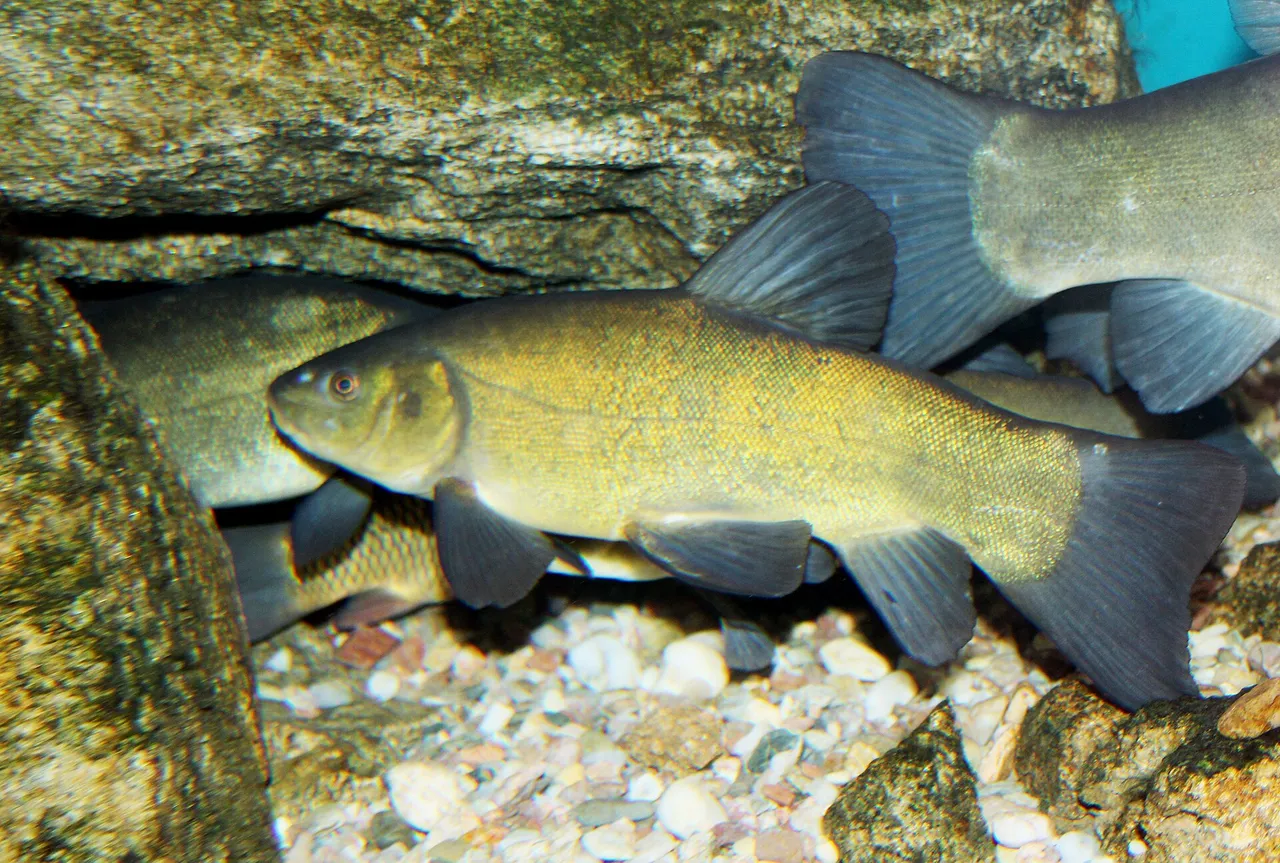
Tench are among the most distinctive-looking freshwater fish in Europe and among the least like their relatives in behaviour. The body is deep and muscular, the fins are rounded rather than pointed, the scales are so small and so deeply embedded that the fish feels smooth, and the whole animal is coated in a notably thick layer of mucus. The eye is small and a striking red-orange.
They are fish of still and slow water, strongly associated with silt, weed and warmth, and they are notorious for feeding in a way that gives themselves away: patches of small bubbles rising over a feeding tench are one of the classic pieces of watercraft in coarse angling, and one of the few reliable ways to locate a fish before catching it.
Tench are seasonal in a way few other coarse species are. Their feeding is tightly bound to water temperature, which historically made early-summer tench fishing at dawn one of the defining rituals of British angling — and which is why so much of the literature about them is about a specific few hours of a specific few weeks.
How it is caught
- Float fishingThe traditional dawn tench session on light float tackle is not nostalgia — it reflects overnight cooling, oxygen recovery and low disturbance.
- Pole fishingMargin pole fishing exploits tench working close in along a shelf, where the fish is within reach and a cast would land on top of it.
Gear for this fish
- Hair rigUsed where tench are large and pressured enough to reject a hooked bait, which is a smaller subset of tench fishing than of carp fishing.
- Pole rigA margin fish taken close in on a delicate presentation, where a pole places the bait without the disturbance a cast makes.
- Running legerUsed for tench on stillwaters where a bait must sit still on the bottom and the fish must be able to move off without immediate resistance.
Where Tench is documented
Places where public sources describe this species as fished, with how it is fished and how strongly the evidence supports it. This is not a range map and it is not a recommendation — it is what has been written down about a fishery rather than a record of any individual catch, and being listed is never permission to fish.
The Norfolk Broads
3 documented places
Broad
Seasonal
From the shore
Around Jun, Jul, Aug, Sept
Broad
Seasonal
From the shore
Around Jun, Jul, Aug, Sept
Broad
Seasonal
From the shore
Around Jun, Jul, Aug, Sept
The English canal network
3 documented places
Canal section
Seasonal
From the shore
Around May, Jun, Jul, Aug, Sept
Canal section
Seasonal
From the shore
Around May, Jun, Jul, Aug, Sept
Canal section
Seasonal
From the shore
Around May, Jun, Jul, Aug, Sept
What these strengths mean
- Seasonal
- Well supported, and concentrated in part of the year rather than spread through it.
- Recorded here
- At least one credible public account of this species being caught here. That is all it means.
Managed fisheries for tench
These are private businesses rather than public water: you pay for a day, and the fishery sets its own rules on top of whatever the law requires. That is the opposite of the section above, where the places are public geography and being listed is never permission to fish. Nothing here is a recommendation, the order is alphabetical, and no price or opening hour is carried because both change faster than this page does.
Linear Fisheries
Carp and specimen water · Enslow, Kidlington, Oxfordshire
Managed for larger carp and specimen fish
A complex of carp and mixed coarse lakes in the Oxfordshire gravel-pit country, run on both day tickets and syndicates, with its own bait and tackle shop on site.
Named by the fishery as a species you can fish for. Also named here: Common bream, Common carp, European perch, Northern pike, Roach, Wels catfish.
How you get a day: Book in advance, Membership or syndicate.
The fishery’s own conditions: Bait fishing permitted, Coarse tactics permitted, Night fishing permitted, Catch and release only.
Season: Open through the year, with individual waters occasionally closed and stated as such on the fishery's own booking platform.
The rules this fishery sets, in its own terms
- Rules are published per water and the fishery states that they are enforced, with sections on fish care, swim reservation and retention slings.
- Individual lakes are booked through the fishery's own platform rather than by turning up at every water.
- Under-sixteens fish free with a paying adult at weekends and during school holidays.
Checked against the operator's own information. Last checked 2026-08-29.
Partridge Lakes Fishery
Commercial coarse fishery · Culcheth, Warrington, Cheshire
Purpose-built coarse pools, usually day ticket
Seventy acres of purpose-built Cheshire coarse fishery with almost four hundred pegs across fifteen waters, long one of the north-west's best-known match venues and now turning towards day-ticket and family angling.
Stocked with this species. Also named here: Common carp, Crucian carp, European perch, Roach.
How you get a day: Book in advance, Day tickets on arrival, Membership or syndicate.
The fishery’s own conditions: Bait fishing permitted, Coarse tactics permitted, Barbless hooks only, No keepnets, No night fishing, Catch and release only.
Season: Open seven days a week through the year, with gate times that shift with the daylight.
The rules this fishery sets, in its own terms
- Night fishing is not permitted. The gates open and close, and fishing stops before they do.
- No keepnets.
- Barbless hooks to a maximum of size 14, and size 12 on Willow, Piper and Gold.
- No braided lines. In-line method feeders only. No elasticated methods except one named safety system. No fixed or floatless rigs.
- No nuts and no cat or dog food.
- Two rods per peg, never left unattended, and juniors under sixteen accompanied by an adult at all times.
Checked against the operator's own information. Last checked 2026-08-29.
A fishery’s own conditions — barbless hooks, no keepnets, no night fishing — are conditions of that water and not law. The licences and close seasons a jurisdiction requires are a separate matter and are set out by the fisheries authority, never here. Telephone before travelling, and see every fishing business FishingHQ lists.
When to fish for tench
Where the places here state a season for tench, it clusters in May–Sep. This is a count of how many documented places name each month — evidence about when people fish for it, not a prediction of what any particular day will produce.
| Jan | Feb | Mar | Apr | May | Jun | Jul | Aug | Sep | Oct | Nov | Dec |
|---|---|---|---|---|---|---|---|---|---|---|---|
| January: no place here names this month — no place names it. | February: no place here names this month — no place names it. | March: no place here names this month — no place names it. | April: no place here names this month — no place names it. | May: 3 places name this month — some places. | June: 6 places name this month — most places. | July: 6 places name this month — most places. | August: 6 places name this month — most places. | September: 6 places name this month — most places. | October: no place here names this month — no place names it. | November: no place here names this month — no place names it. | December: no place here names this month — no place names it. |
6 of the 7 places that record catches of tench state which months. The other 1 name no season, so they are counted in neither direction: the shape above is what the dated records say, not the whole picture. The dated records span 2 separate areas.
Identification
- Scientific name
- Tinca tinca
- Family
- Tincidae
- Water
- Freshwater
- Conservation status
- Least Concern
- Regions
- Britain & Ireland, Western Europe, Central & Eastern Europe, Northern Europe
- Very small, deeply embedded scales giving a smooth, almost scaleless feel under a thick mucus layer.
- Deep olive-green colouring, sometimes almost black, shading to a golden or bronze belly.
- Small, bright red-orange eye.
- All fins distinctly rounded, with no sharp points anywhere.
- A single short barbel at each corner of the mouth.
- Males have markedly larger, thicker, spoon-shaped pelvic fins than females — one of the clearest external sex differences in any British freshwater fish.
Size
- Typical
- 30–45 cm and 1–2.5 kg.
- Large
- Over 50 cm and 3.5 kg.
Exceptional: Fish over 6 kg are recorded from rich, lightly-fished stillwaters and are exceptional anywhere.
Why tench have a season when roach do not, and what the dawn spell actually is
Tench are among the most sharply seasonal fish in European fresh water, and the reason is a metabolic one that shows up more starkly in them than in the species they share a lake with.
A FISH'S METABOLIC RATE IS SET BY THE WATER. Being ectothermic, a tench's whole physiology — digestion, activity, the rate at which it can process food — scales with temperature. What varies between species is how steeply. Roach remain functional in cold water and go on feeding through it; tench do not. Below roughly ten degrees a tench's digestive capacity falls away to the point where feeding stops being worth the effort, and the fish becomes genuinely hard to catch rather than merely less obliging. Winter tench are a specialist's problem, not a matter of trying harder.
SO THE YEAR HAS A SHAPE. As water warms in spring the fish become active and begin feeding hard, and they do so while also building eggs — a period of high demand and rising capability at the same time. That combination is why the weeks before spawning are traditionally the most productive of the year, and it is worth being honest about what that means: the period an angler would choose is the period the fish is carrying next season's recruitment.
THE DAWN FEEDING SPELL IS NOT FOLKLORE AND IT IS NOT ABOUT LIGHT. Tench water is typically shallow, weedy and rich. Through a warm day, submerged plants photosynthesise and oxygen is abundant; overnight they respire instead, and dissolved oxygen falls to its daily minimum in the small hours. It then recovers rapidly once light returns. Add overnight cooling, which raises the water's capacity to hold oxygen, and the hour after first light is the point at which a warm, weedy, productive lake is best able to support a large fish doing hard work. The fish are feeding then because that is when the water lets them.
WHICH ALSO EXPLAINS WHY THE SPELL CLOSES. As the day warms and the fish have fed, both the driver and the appetite go, and a lake that produced fish at five o'clock is empty at nine — with nothing having changed except the water.
Backed by research — why, and the sources (2)
Supported by peer-reviewed research or fisheries science. The sources are listed and can be checked.
- Coarse Fishing — A. & C. Black, 1912 (Specialist angling publication)Relied on for: Seasonal patterns in British coarse angling and the conditions that drive them.States this directlyCitation checked — the work exists and is described correctly
- Freshwater Fishes of the British Isles — HarperCollins (New Naturalist 75), 1992 (Reference work)Relied on for: Seasonal behaviour and temperature response of British freshwater fishes.States this directlyCitation checked — the work exists and is described correctly
Fractional spawning as a hedge, and the northern recruitment problem
Tench reproduction is unusually late and unusually cautious, and both features are responses to the same problem: the fish needs more warmth than its range reliably provides.
THE TIMING IS LATE. Tench spawn well into summer and require sustained warm water to do it — considerably warmer than roach, bream or perch in the same lake. That is a real physiological requirement rather than a preference, and it puts the species at the edge of what a northern European summer delivers.
SO THE STRATEGY HEDGES. Tench spawn FRACTIONALLY: rather than releasing everything in one event as roach do, the female releases eggs in batches over several weeks. Sticky eggs are scattered over submerged weed each time. The effect is to spread the year's reproductive investment across multiple sets of conditions, so that a cold week, a sudden weather change or a poor plankton bloom removes one batch rather than the whole year.
THAT IS A DIFFERENT ANSWER TO THE SAME PROBLEM ROACH SOLVE BY SYNCHRONISING. Roach compress everything into a few days to swamp predators and accept the risk of a badly timed cold snap. Tench spread the risk and accept that they never swamp anything. Both are legitimate; which is better depends on how variable the environment is, and tench live at the cold edge of theirs.
AND IT STILL FAILS IN COOL SUMMERS. Where a summer does not deliver sustained warmth, tench spawning may fail entirely, which is why recruitment in the north of the range is patchy and why some populations are effectively maintained by stocking rather than by breeding. A lake with plenty of large tench and no small ones is a lake where the adults are surviving and the reproduction is not working.
WHICH CONNECTS DIRECTLY TO THE FISHING. The pre-spawning period is traditionally the most productive of the year, and the reason is that fish are feeding hard to build the reserves that fractional spawning will spend over the following weeks. That is the same statement as saying that the best fishing coincides with the fish carrying the year's recruitment, and on a species whose recruitment is this marginal it is worth knowing.
Backed by research — why, and the sources (2)
Supported by peer-reviewed research or fisheries science. The sources are listed and can be checked.
- Freshwater Fishes of the British Isles — HarperCollins (New Naturalist 75), 1992 (Reference work)Relied on for: Spawning habitat, timing, egg deposition and recruitment of European freshwater fishes.States this directlyCitation checked — the work exists and is described correctly
- FishBase: a global information system on fishes — Froese, R. and D. Pauly, eds. — FishBase Consortium (Scientific institute)Relied on for: Reproductive mode, spawning season and parental care recorded for the species.States this directlyPassage read and verified
Slow growth, long life, and a species that got bigger in living memory
Tench are one of the few coarse species where the honest answer to 'how big do they get' has changed materially within the span of a fishing lifetime, and the reason is instructive.
THE BASELINE IS SLOW AND STEADY. Tench grow slowly, mature late, and live a long time. They are warm-water fish that feed heavily through a fairly short summer window and effectively shut down through winter, so the growing season is a matter of months rather than a year, and a large tench has accumulated its weight over many of them.
WHAT CHANGED WAS THE WATERS, NOT THE FISH. Through the later twentieth century, tench in Britain increasingly found themselves in large, rich, deep, lightly-fished gravel pits — an artificial habitat that did not exist before mineral extraction created it, and one with far more food and far fewer competitors than the traditional weedy estate lake. Tench in those waters grew to sizes that older literature treats as barely credible, and the shift is a habitat effect rather than a genetic one.
SO THE SIZE EXPECTATION HAS TO NAME THE WATER. In a small, dense, traditional tench pond a two-pound fish is ordinary and a four-pounder is a good one. In a large gravel pit holding a sparse population, the same fish is unremarkable and the specimens are far heavier. Neither population is behaving abnormally.
FEMALES ARE THE LARGE FISH AND IT IS EASY TO CHECK. Tench are strongly sexually dimorphic: males have thickened, spoon-shaped pelvic fins with a heavy muscular pad at the base, females have small flat pelvic fins. Every very large tench is female. That is worth knowing before wondering why the biggest fish in a water are all built the same way.
AND SPAWNING CONDITION MATTERS MORE THAN IN MOST SPECIES. Tench spawn late, in genuinely warm water, and a female in early summer may be carrying a very large ovary indeed. The heaviest recorded weights for individual fish cluster in the weeks before spawning, and the same fish in autumn will weigh appreciably less. A weight taken in June and a weight taken in September describe the same animal in different states.
What experienced anglers do — why, and the sources (2)
Widely and independently recommended by experienced anglers and specialist sources. This is real angling knowledge, not proof: controlled evidence for it is limited, and FishingHQ records it as convention rather than as a demonstrated effect.
- Freshwater Fishes of the British Isles — HarperCollins (New Naturalist 75), 1992 (Reference work)Relied on for: Growth, age structure, maximum sizes and regional variation in British and European freshwater fishes.States this directlyCitation checked — the work exists and is described correctly
- FishBase: a global information system on fishes — Froese, R. and D. Pauly, eds. — FishBase Consortium (Scientific institute)Relied on for: Maximum recorded length and weight and reported longevity for the species.Background and mechanism onlyPassage read and verified
Soft bottom, thick weed and low oxygen: a fish built for the water nothing else wants
Tench occupy the part of a stillwater that most other species avoid, and every feature of the animal is an adaptation to it.
THE HABITAT IS WARM, SHALLOW, WEEDY, SOFT-BOTTOMED STILL OR SLOW WATER. Tench are fish of estate lakes, ponds, meres, canals, drains, gravel pits and the slow reaches and backwaters of lowland rivers. What they want is silt to root in, dense submerged and marginal vegetation to move through, and warmth. They are not a fish of clean gravel, current or open water, and where they occur in rivers it is in the slack margins rather than the flow.
OXYGEN TOLERANCE IS THE DEFINING ADAPTATION AND IT IS EXTREME. Tench tolerate dissolved oxygen levels that would kill most coarse fish, which lets them occupy the hot shallow silted margins in high summer, and it lets them survive in small waters that periodically deoxygenate. That tolerance is the reason a tench can be the only substantial fish in a farm pond, and it is why they are so often found in the weediest, most stagnant-looking corner of a lake.
THE WEED IS NOT INCIDENTAL, IT IS THE STRUCTURE. Tench feed among and beneath dense vegetation on invertebrates in the silt and on the plants themselves, and their whole body plan — small scales embedded in a thick slime coat, rounded fins, powerful low-speed manoeuvrability — is built for pushing through weed rather than for open-water speed. A cleared, weed-free water loses tench habitat even if nothing else changes.
WHICH IS WHY THE FEEDING SIGNS ARE THE HABITAT SIGNS. Tench working silt release fine bubbles in patches, and pinprick bubbling over a soft bottom at first light is the most reliable indication of the species there is. Reading the ground for tench means reading the bottom composition and the weed rather than the depth.
WINTER IS A DIFFERENT ANIMAL. Tench become largely inactive in cold water, hold in deeper or more sheltered water, and feed very little — which is a habitat shift as much as a behavioural one, and it is why tench waters seem empty for months.
AND THE ARTIFICIAL WATERS MATTER MORE THAN THE NATURAL ONES IN BRITAIN. Most tench fishing takes place in gravel pits and constructed stillwaters, and the largest fish come from them. Those environments — deep, clear, steep-sided, developing weed slowly over decades — are not what the species evolved in, and tench in them behave differently from tench in a shallow silted estate lake.
Backed by research — why, and the sources (2)
Supported by peer-reviewed research or fisheries science. The sources are listed and can be checked.
- Freshwater Fishes of the British Isles — HarperCollins (New Naturalist 75), 1992 (Reference work)Relied on for: Habitat association, distribution and ecology of European freshwater fishes, including position within a water body.States this directlyCitation checked — the work exists and is described correctly
- FishBase: a global information system on fishes — Froese, R. and D. Pauly, eds. — FishBase Consortium (Scientific institute)Relied on for: Habitat association, depth range and water-type tolerance recorded for the species.States this directlyPassage read and verified
Lifecycle and reproduction
Tench grow slowly and live long, commonly beyond fifteen years. Growth is very strongly linked to summer water temperature and to the productivity of the silt they feed over, so populations in cool northern waters look quite different from those in warm southern ones. They mature at three to four years.
Tench spawn late, usually well into summer, and require sustained warm water — considerably warmer than most other British coarse fish need. Spawning is fractional, released in batches over several weeks rather than in one event, which spreads the risk across variable conditions. Sticky eggs are scattered over submerged weed. In cool summers, spawning may fail entirely, which is why tench recruitment in the north of their range is patchy.
Feeding and senses
Tench root in soft silt for bloodworm, snails, small crustaceans and plant matter, working through the top few centimetres of the bed and disturbing gas from the sediment as they go — which is the origin of the characteristic pinprick bubbles. Feeding is heavily temperature-dependent and heavily dawn-weighted, and they are notably tolerant of low dissolved oxygen, which lets them feed in warm, weedy, silty margins that other species vacate.
Taste and touch dominate, delivered through the barbels and the sensitive lips as the fish works blind through silt. Like other members of the carp order, hearing is good via the Weberian apparatus, and tench feeding in shallow margins at dawn are unusually easy to spook with bankside movement — which is exactly why the traditional approach to them involves arriving before it is light and then staying still.
Through the year
Strongly seasonal. Tench feed hard from late spring as water warms, through a pre-spawning period that is traditionally the most productive of the year, and continue through summer. Activity falls away sharply in cold water and winter tench are genuinely difficult. The classic pattern of a dawn feeding spell in early summer is not folklore: it reflects overnight cooling, oxygen recovery in weedy water, and low disturbance.
Distribution
Native across most of Europe and into western Asia, absent from the far north. In Britain, widespread in stillwaters and slow rivers, with a natural distribution that has been extensively blurred by centuries of stocking.
This is a biological range — where the species occurs, not a prediction that you will catch one. To browse the fishing geography FishingHQ holds, start at fishing places.
Why anglers care
A traditional and much-loved stillwater catch, closely tied to a particular style of angling: light float or feeder tackle, natural baits, early mornings, and reading the water for bubbles. Tench fishing rewards watercraft more than tackle, which is part of its appeal.
Handling and returning
The thick mucus coat is the fish's principal defence against infection and is easily removed by dry hands or a dry surface. Wet everything before it touches the fish. Tench are otherwise robust and unhook easily; return them promptly, and watch that they do not bury into marginal weed while recovering.
Going further
- What does tench eat? — feeding biology, kept separate from what anglers infer from it.
Safety
Precautions that always apply here
- Wet your hands before touching a fish. Dry hands strip the protective mucus layer that keeps infection out.
- Unhook fish on a wet mat or in the water, never on gravel, stone or a hard bank.
- Support the fish's weight along its body, keep it out of the water for as short a time as possible, and hold it over something soft.
Where to go next
Where it lives
- Commercial coarse fisheriesA standard mixed-fishery stocking, thriving in the shallow, weedy, well-fed conditions commercials provide.
- Gravel pitsGravel bars and weed beds in clear water produce the largest tench in Britain, feeding over hard substrate rather than in silt.
- Lowland stillwatersEnclosed bodies of standing fresh water — lakes, ponds, reservoirs and worked-out gravel pits — where everything is decided by depth, weed and temperature.
Where you will find it
Understanding this fish
- Aquatic insect larvae as preyTench feed in and on soft sediment among weed, taking insect larvae and small crustaceans, and the tell-tale bubbling of feeding tench comes from that sediment disturbance.
- Coarse fish: a category that does not travelA species whose closed season in parts of Britain has been organised around the category rather than around its biology.
- Dissolved oxygen and fishTolerant of low oxygen and warm shallow water to a degree that shapes where they are found and when they feed — which is also why tench fishing concentrates in the first hours of daylight, when overnight respiration has drawn the margins down and the fish are moving.
Sources and evidence
- Freshwater Fishes of the British Isles — HarperCollins (New Naturalist 75), 1992 (Reference work)Relied on for: Identification including the pelvic fin sex difference, late fractional spawning, and habitat association.States this directlyCitation checked — the work exists and is described correctly
- FishBase: a global information system on fishes — Froese, R. and D. Pauly, eds. — FishBase Consortium (Scientific institute)Relied on for: Taxonomy, family and size range.States this directlyPassage read and verified
- The IUCN Red List of Threatened Species — International Union for Conservation of Nature (Conservation authority)Relied on for: The global conservation assessment. Re-checked via FishBase's republication of the current category, because the Red List's own pages could not be read.States this directlyCitation checked — the work exists and is described correctly
Why the 12 connections on this page are here, and the sources
How it is caught
What experienced anglers do — 2 connections
Widely and independently recommended by experienced anglers and specialist sources. This is real angling knowledge, not proof: controlled evidence for it is limited, and FishingHQ records it as convention rather than as a demonstrated effect.
Float fishing
Long-established and independently described.
- Still-Water Angling — MacGibbon & Kee, 1953 (Specialist angling publication)Relied on for: Tench method and the dawn feeding pattern in stillwater.Citation checked — the work exists and is described correctly
- Coarse Fishing — A. & C. Black, 1912 (Specialist angling publication)Relied on for: Tench practice from an earlier and independent tradition.Citation checked — the work exists and is described correctly
Pole fishing
Established angling practice for this species, recorded as convention. The note states the property of the animal or its water that makes the method the answer.
- Coarse Fishing — A. & C. Black, 1912 (Specialist angling publication)Relied on for: Established coarse-angling technique and its application to the species.States this directlyCitation checked — the work exists and is described correctly
- Angling Times — Bauer Media (Specialist angling publication)Relied on for: Contemporary British coarse practice for this species.Background and mechanism onlyCitation checked — the work exists and is described correctly
Gear for this fish
What experienced anglers do — 3 connections
Widely and independently recommended by experienced anglers and specialist sources. This is real angling knowledge, not proof: controlled evidence for it is limited, and FishingHQ records it as convention rather than as a demonstrated effect.
Hair rig
Which species a terminal arrangement is directed at is established practitioner knowledge, converging across independent angling traditions and literatures, and is labelled as consensus rather than as tested result.
- Coarse Fishing — A. & C. Black, 1912 (Specialist angling publication)Relied on for: Classical coarse angling practice: terminal arrangements, shotting, bite registration and the species each is directed at.States this directlyCitation checked — the work exists and is described correctly
- Angling Times — Bauer Media (Specialist angling publication)Relied on for: Contemporary UK coarse and match angling practice as reported by practitioners, including which rigs are directed at which species.States this directlyCitation checked — the work exists and is described correctly
Pole rig
That anglers conventionally choose this arrangement when targeting this fish. It is a claim about practice rather than about the fish, and it does not assert that the arrangement is necessary or that it will succeed.
- Coarse Fishing — A. & C. Black, 1912 (Specialist angling publication)Relied on for: Classical coarse angling practice: terminal arrangements, shotting, float attachment and bite registration in still and running water.States this directlyCitation checked — the work exists and is described correctly
- Angling Times — Bauer Media (Specialist angling publication)Relied on for: Contemporary UK coarse and match angling practice as reported by practitioners, including pole, float and surface rig convention.States this directlyCitation checked — the work exists and is described correctly
Running leger
Which species a terminal arrangement is directed at is established practitioner knowledge, converging across independent angling traditions and literatures, and is labelled as consensus rather than as tested result.
- Coarse Fishing — A. & C. Black, 1912 (Specialist angling publication)Relied on for: Classical coarse angling practice: terminal arrangements, shotting, bite registration and the species each is directed at.States this directlyCitation checked — the work exists and is described correctly
- Angling Times — Bauer Media (Specialist angling publication)Relied on for: Contemporary UK coarse and match angling practice as reported by practitioners, including which rigs are directed at which species.States this directlyCitation checked — the work exists and is described correctly
Where it lives
Backed by research — 3 connections
Supported by peer-reviewed research or fisheries science. The sources are listed and can be checked.
Commercial coarse fisheries
Habitat association recorded for the species, in an environment FishingHQ describes on its own page.
- Freshwater Fishes of the British Isles — HarperCollins (New Naturalist 75), 1992 (Reference work)Relied on for: Habitat association and distribution of European freshwater fishes, including occurrence in artificial and modified waters.States this directlyCitation checked — the work exists and is described correctly
- FishBase: a global information system on fishes — Froese, R. and D. Pauly, eds. — FishBase Consortium (Scientific institute)Relied on for: Habitat association, depth range and water-type tolerance recorded for the species.States this directlyPassage read and verified
Gravel pits
Habitat association recorded for the species, in an environment FishingHQ describes on its own page.
- Freshwater Fishes of the British Isles — HarperCollins (New Naturalist 75), 1992 (Reference work)Relied on for: Habitat association and distribution of European freshwater fishes, including occurrence in artificial and modified waters.States this directlyCitation checked — the work exists and is described correctly
- FishBase: a global information system on fishes — Froese, R. and D. Pauly, eds. — FishBase Consortium (Scientific institute)Relied on for: Habitat association, depth range and water-type tolerance recorded for the species.States this directlyPassage read and verified
Lowland stillwaters
Habitat and temperature association documented.
- FishBase: a global information system on fishes — Froese, R. and D. Pauly, eds. — FishBase Consortium (Scientific institute)Relied on for: Habitat and temperature requirements for Tinca tinca.States this directlyPassage read and verified
- Freshwater Fishes of the British Isles — HarperCollins (New Naturalist 75), 1992 (Reference work)Relied on for: Tench habitat association and late spawning requirements in British waters.FishingHQ's interpretation of what it saysCitation checked — the work exists and is described correctly
Where you will find it
Backed by research — 1 connection
Supported by peer-reviewed research or fisheries science. The sources are listed and can be checked.
The Shannon system
A claim that a place contains the ground, water and seasonal conditions the species is associated with. It is a distributional statement about the world, it rests on the regional reference literature, and it deliberately asserts nothing about access, permission or catch.
- Freshwater Fishes of the British Isles — HarperCollins (New Naturalist 75), 1992 (Reference work)Relied on for: Distribution, ecology and conservation status of the freshwater fishes of the British Isles, including in artificial and modified waters.States this directlyCitation checked — the work exists and is described correctly
- Environment Agency fisheries management, byelaws and rod licensing information — Environment Agency (Government fisheries body)Relied on for: Fisheries monitoring, water quality and species distribution in English rivers, canals and still waters.States this directlyCitation checked — the work exists and is described correctly
Understanding this fish
Backed by research — 2 connections
Supported by peer-reviewed research or fisheries science. The sources are listed and can be checked.
Aquatic insect larvae as prey
Recorded diet evidence identifies chironomid larvae and other aquatic insect larvae as a food item of this predator at group level rather than to species. The edge points at the taxon record for that reason, and encoding it as a species-level claim would assert something the source does not.
- FishBase: a global information system on fishes — Froese, R. and D. Pauly, eds. — FishBase Consortium (Scientific institute)Relied on for: Food items recorded for this predator, given as chironomid larvae and other aquatic insect larvae.States this directlyPassage read and verified
- FAO Species Identification Guides for Fishery Purposes and the FAO Species Catalogues — Food and Agriculture Organization of the United Nations (Scientific institute)Relied on for: Species account describing this predator's diet, recorded at the level of chironomid larvae and other aquatic insect larvae.Background and mechanism onlyCitation checked — the work exists and is described correctly
Dissolved oxygen and fish
A link from a species to the mechanism that explains how it lives, written only where the species is a worked example of that mechanism rather than merely subject to it.
- Freshwater Fishes of the British Isles — HarperCollins (New Naturalist 75), 1992 (Reference work)Relied on for: Life history, habitat requirement, physiological tolerance and seasonal behaviour of European freshwater fishes.States this directlyCitation checked — the work exists and is described correctly
- FishBase: a global information system on fishes — Froese, R. and D. Pauly, eds. — FishBase Consortium (Scientific institute)Relied on for: Recorded environment, depth range, temperature and oxygen tolerance, feeding biology and distribution of the species named.States this directlyPassage read and verified
Official guidance — 1 connection
Stated by a fisheries authority, scientific institute or recognised angling body. Authoritative, but summarising rather than demonstrating.
Coarse fish: a category that does not travel
Where the category is still regulatory rather than merely cultural.
- Environment Agency fisheries management, byelaws and rod licensing information — Environment Agency (Government fisheries body)Relied on for: The regulatory categories used in England and Wales, within which the coarse and game distinction appears.States this directlyCitation checked — the work exists and is described correctly
How FishingHQ labels evidence is explained in the evidence policy.