Northern Ireland
Fishing regions · Last reviewed 2026-08-14
A rod licence and a separate permit, two different fisheries authorities dividing one small country between them, and the largest lake in these islands sitting in the middle of it.
Being listed here is not permission to fish. What that meansClose
Access, fishing rights, seasons, licences, local bylaws and permitted methods vary and can change. Check current access, permission, local regulations, closures and restrictions before you travel or fish. FishingHQ describes what the ground is and names who holds the answer; it does not hold the answer itself.
Find the authority for a jurisdiction · What FishingHQ does and does not cover
Northern Ireland has the most administratively divided fisheries arrangement on FishingHQ, and it divides in a way that matters to anybody travelling more than an hour.
TWO INSTRUMENTS ARE NORMALLY NEEDED, AND THEY ARE DIFFERENT THINGS. A rod licence permits the act of angling. A separate permit is generally needed for the specific water, and much of the public fishery is administered by the department itself rather than by private clubs, which is a genuinely different model from England and Wales.
THE TERRITORY IS SPLIT BETWEEN TWO AUTHORITIES. Most of Northern Ireland falls under the departmental fisheries administration. The Foyle catchment in the north-west and the Carlingford area in the south-east fall instead under a cross-border body established to manage those systems as wholes, because the catchments themselves cross the frontier and the fish do not recognise it. A licence valid in one area is not necessarily valid in the other, and this is the single most important practical fact about fishing here.
LOUGH NEAGH DOMINATES THE FRESHWATER PICTURE. It is the largest lake by area in Britain and Ireland, it holds an eel fishery of international significance and long standing, and its ownership and management history is unlike anything else in these islands.
THE COAST IS SHORT AND VARIED. From the sheltered sea loughs of the east to the exposed north coast facing the Atlantic, with strong tidal streams through the narrows, and sea angling that is largely unlicensed in the freshwater sense and governed instead by size limits, protected species and area measures.
What fishing here is like
A small jurisdiction with a disproportionate amount of water, dominated by one very large lough and by the river systems feeding and draining it. Freshwater angling is a mixture of departmentally administered public fisheries, club waters and private beats, which makes access simpler in some respects than in England and more bureaucratic in others. Game fishing for salmon, sea trout and brown trout carries the reputation; coarse fishing, particularly for bream, roach and pike, is genuinely strong and has historically drawn visiting anglers from Britain and the continent. Sea angling is a modest but real shore and small-boat culture on a short and varied coast.
What you can target here
One entry per fish, grouped by how you would be fishing — because the answer is a different one from the rocks and from a boat. Each entry says how strongly the sources support it and how much evidence sits behind it. These are documented catches, not a forecast, and none of it is a statement that you may fish any particular ground.
From the shore · 28
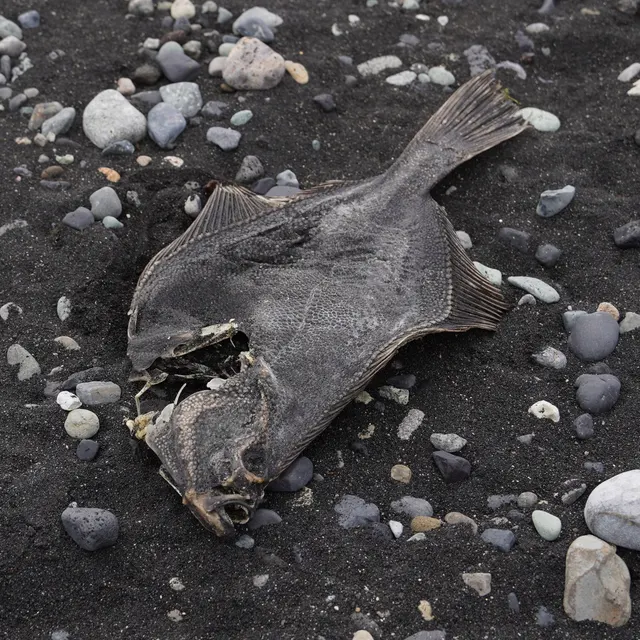 European flounderCharacteristic of this water16 places · 1 fishery account · 1 sourceBenone Strand and Magilligan, The Roe estuary, Cranfield and Carlingford Lough, Portstewart Strand and 12 moreOver bay, beach, estuary, harbour wall, rock mark, sea loch, surf beachAround Jan–Mar, Nov–Dec
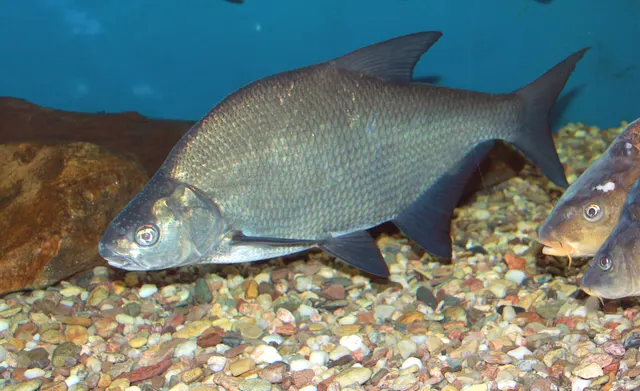 Common breamCharacteristic of this water6 placesThe Erne at Enniskillen, The Lower Bann, The Upper Bann, The Blackwater and 2 moreOver lough, river reachAround Mar–Oct
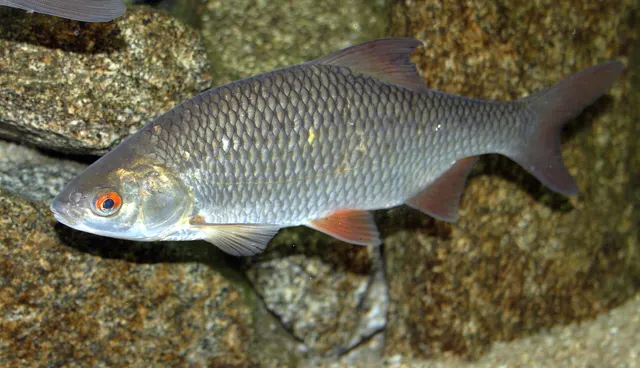 RoachCharacteristic of this water6 placesThe Lower Bann, The Erne at Enniskillen, The Upper Bann, The Blackwater and 2 moreOver lough, river reach
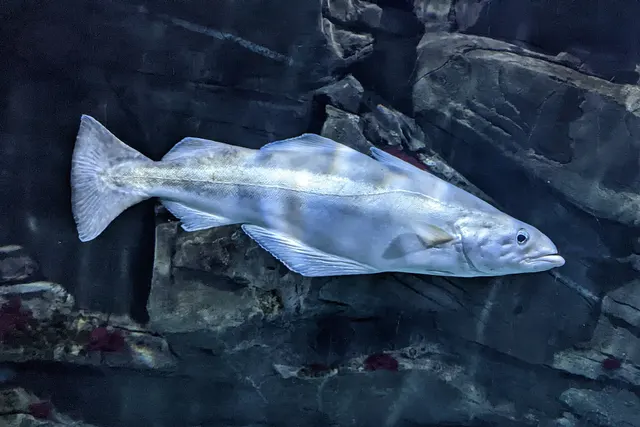 PollackRegular local target23 placesPortrush and Ramore Head, Rathlin Island and the Sound, The Strangford narrows, Donaghadee pier and 19 moreOver bay, beach, harbour wall, headland, island, pier, rock mark, tidal raceAround May–Oct
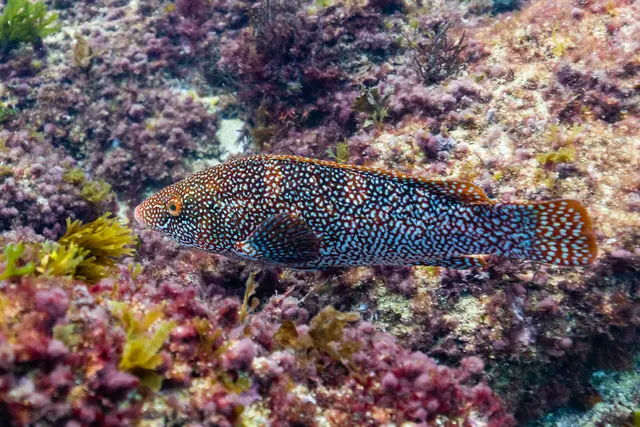 Ballan wrasseRegular local target20 placesPortrush and Ramore Head, The Strangford narrows, Donaghadee pier, Ballygalley and 16 moreOver bay, beach, harbour wall, headland, island, pier, promenade, rock mark, tidal raceAround May–Oct
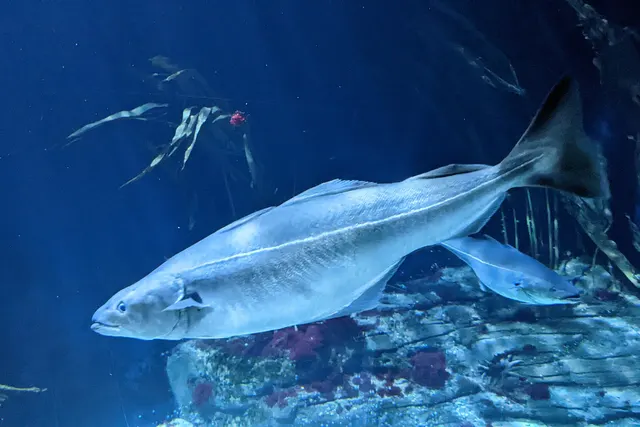 SaitheRegular local target20 placesThe Strangford narrows, Portballintrae, Ballycastle, Cushendun and Torr Head and 16 moreOver bay, beach, harbour wall, headland, pier, rock mark, tidal raceAround May–Sept
Also documented from the shore: European sea bass · Conger eel · Atlantic cod · Small-spotted catshark · Bull huss · Northern pike · Brown trout · Dab · European perch · European plaice · Pouting · European eel · Atlantic mackerel · Whiting · Thick-lipped grey mullet · Atlantic salmon · Cuckoo wrasse · Thornback ray · Rudd · Turbot · Ling · Tench
From a boat · 10
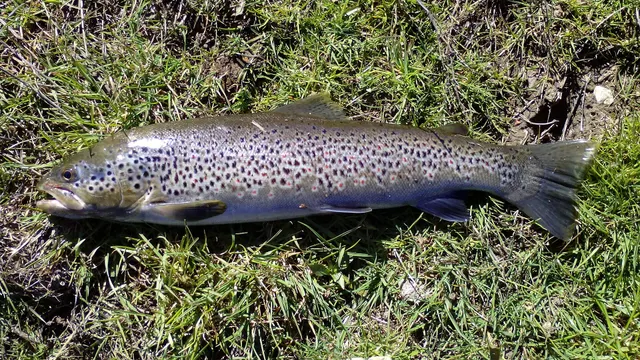 Brown troutCharacteristic of this water1 placeLough MelvinOver loughAround Mar–Sept
- Common breamCharacteristic of this water1 placeThe Erne at EnniskillenOver river reachAround Mar–Oct
- RoachCharacteristic of this water1 placeThe Erne at EnniskillenOver river reach
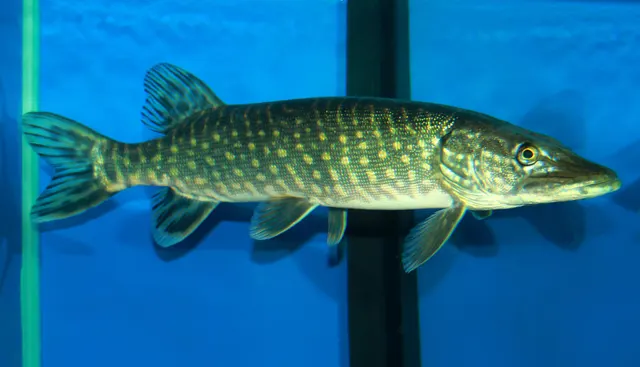 Northern pikeRegular local target4 placesThe Lower Bann, Lough Beg, Lough Macnean, The Erne at EnniskillenOver lough, river reach
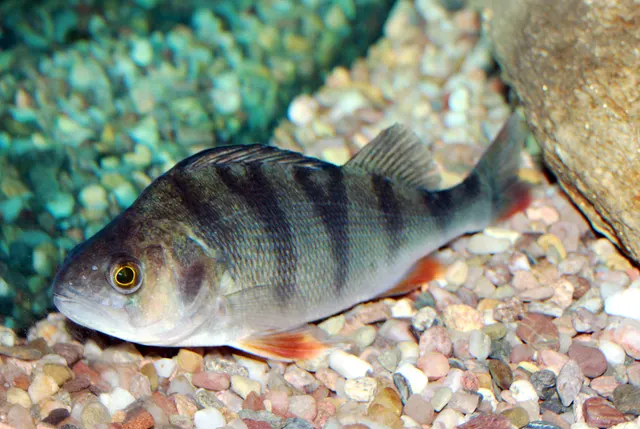 European perchRegular local target1 placeThe Erne at EnniskillenOver river reach
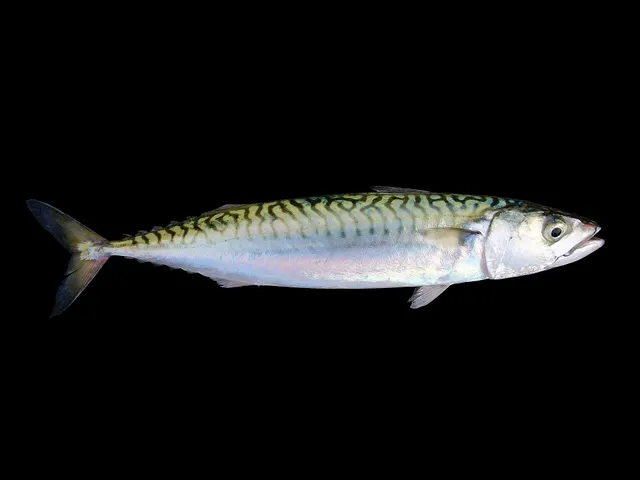 Atlantic mackerelSeasonal1 placeWaterfoot and Red BayOver bayAround Jun–Sept
Also documented from a boat: Atlantic salmon · Conger eel · Pollack · Arctic char
Spearfishing · 2
- Ballan wrasseRegular local target7 placesThe Black Arch, Larne, St John's Point, Ballintoy, Portmuck and Browns Bay and 3 moreOver harbour wall, headland, rock markAround May–Sept
- PollackRegular local target6 placesGarron Point, The Black Arch, Larne, St John's Point, Ballintoy and 2 moreOver harbour wall, headland, rock markAround May–Sept
Fly fishing · 2
What these strengths mean
- Characteristic of this water
- This water is strongly identified with this species by the sources that cover it.
- Regular local target
- Fishing sources describe this as a normal local target here, not merely as caught.
- Seasonal
- Well supported, and concentrated in part of the year rather than spread through it.
- Repeatedly reported
- Several independent public accounts. Enough to say it happens more than once; not enough to call it a fishery.
- Recorded here
- At least one credible public account of this species being caught here. That is all it means.
- How breadth is counted
- A fish documented at six marks is shown as six marks: breadth never raises the strength on its own. A fishery account describes the fishing; a recorded catch reports one specific catch. How evidence is weighed.
How people fish here
9 methods are recorded on the places documented here, counted from the records themselves rather than from what is practised in the country. Each opens a full guide to the technique.
Ledgering
Recorded at 41 places here, over harbour wall, rock mark, bay, beach.
Fishing a bait on the bottom held by a weight, with no float — the simplest way to fish at distance, in depth, or in wind.
Documented on the same ground: Common bream, European flounder, Roach, Atlantic cod, Ballan wrasse, Brown trout.
Float fishing
Recorded at 33 places here, over harbour wall, river reach, rock mark, headland.
Suspending a bait at a controlled depth beneath a buoyant indicator — the most visual, most controllable and most widely applicable method in angling.
Documented on the same ground: Common bream, Roach, Atlantic cod, Ballan wrasse, Brown trout, Bull huss.
Spinning
Recorded at 24 places here, over rock mark, bay, harbour wall, headland.
Casting an artificial lure and retrieving it so that it moves like something alive — the most direct form of lure fishing.
Documented on the same ground: Roach, Atlantic cod, Ballan wrasse, Brown trout, Bull huss, Common bream.
Kayak fishing
Recorded at 16 places here, over harbour wall, bay, sea loch, estuary.
A platform rather than a technique: quiet, shallow-draught access to water no other craft reaches, bought at the price of exposure, and a discipline where the decision not to launch is part of the skill.
Documented on the same ground: European flounder, Atlantic cod, Ballan wrasse, Brown trout, Bull huss, Conger eel.
Feeder fishing
Recorded at 5 places here, over river reach.
Legering with a weight that also carries bait, so that free offerings arrive in exactly the same place as the hookbait, cast after cast.
Documented on the same ground: Common bream, Roach, Brown trout, European perch, Northern pike, Atlantic salmon.
Deadbaiting
Recorded at 4 places here, over lough, river reach.
Presenting a dead fish as bait for predators — a method that works because scavenging is normal predator behaviour, not an exception.
Documented on the same ground: Roach, Brown trout, Common bream, Northern pike, Atlantic salmon, European perch.
Dry fly fishing
Recorded at 3 places here, over river reach, lough.
Presenting a floating artificial to a fish feeding at the surface, so that it drifts exactly as a natural insect would.
Documented on the same ground: Brown trout, Atlantic salmon, Arctic char.
Jigging
Recorded at 2 places here, over island, tidal race.
Working a weighted lure with a rising-and-falling motion, usually vertically, so it behaves like a wounded or fleeing baitfish.
Documented on the same ground: Ballan wrasse, Conger eel, Pollack, Saithe, Atlantic mackerel, Thick-lipped grey mullet.
Stillwater fly fishing
Recorded at 1 place here, over lough.
Fly fishing without current, where the angler supplies every movement and the problem becomes finding fish rather than presenting to them.
Documented on the same ground: Brown trout, Atlantic salmon, Arctic char.
These are the methods documented at the places FishingHQ holds here. A species listed beside a method is documented on the same ground, which is not the same as being taken that way — where a source establishes the method a fish was caught on, it is stated on that place’s own page. All fishing methods.
The fishing year here
The months the records under this area actually name, tightest season first. This is “observed in these months” rather than a season: a species whose months nobody recorded is not listed, because a gap in the evidence is not a year-round fishery.
- Conger eelAugust to September
- Atlantic mackerelJune to September
- Thick-lipped grey mulletJune to September
- European plaiceJune to September
- SaitheMay to September
- European flounderNovember to March
- Small-spotted catsharkJune to October
- PollackMay to October
- Ballan wrasseMay to October
- European sea bassMay to October
- WhitingOctober to March
- Atlantic salmonApril to September
Areas within this one
10 coasts, island groups and systems inside this area have fishing guides of their own.
Belfast Lough and the north Down shore
6 documented places
A broad, shallowing sea lough with a city at its head and a rock-and-bay shore along its southern side, ending at a point where the Irish Sea tide starts to run hard.
Documented here: Pollack, Saithe, Ballan wrasse, Conger eel, European flounder
Fished by: ledgering, float fishing, kayak fishing, spinning
Lough Erne
3 documented places
Two very different lakes with one name: a maze of drumlin islands and channels above, a deep open lough below, and between them the water that carried Ireland's coarse fishing reputation for half a century.
Documented here: Brown trout, Common bream, Roach, European perch, Northern pike
Fished by: float fishing, deadbaiting, dry fly fishing, feeder fishing
Lough Foyle and its rivers
2 documented places
A large shallow sea lough on the border, fed by a river system that runs deep into both jurisdictions, and administered for fishing by a cross-border agency that exists for no other water in these islands except one.
Documented here: European flounder, European eel, Brown trout, European sea bass, Thick-lipped grey mullet
Fished by: dry fly fishing, ledgering
Lough Neagh
1 documented place
The largest lake in Britain and Ireland by area, shallow and rich, carrying one of Europe's last great wild eel fisheries and one of its most severe recent algal bloom crises.
Fished by: feeder fishing, float fishing, ledgering
Strangford Lough and the Ards coast
2 documented places
A large, shallow, island-strewn sea lough fed through a narrows that runs one of the strongest and most reliable tidal streams in Europe — reliable enough that a commercial tidal turbine was tested in it.
Documented here: Ballan wrasse, Pollack, Saithe, Atlantic mackerel, Thick-lipped grey mullet
Fished by: float fishing, spinning, deadbaiting, jigging
The Causeway and Antrim coast
19 documented places
A basalt coast facing the North Channel, where the whole exchange between the Irish Sea and the Atlantic runs past headlands at speeds that make the tide the governing fact of every session.
Documented here: European flounder, Pollack, Saithe, Ballan wrasse, Atlantic cod
Fished by: ledgering, float fishing, spinning, kayak fishing
The East Antrim coast
3 documented places
The basalt coast at the mouth of Belfast Lough, where the Islandmagee peninsula encloses a shallow sea lough on one side and drops as a cliff into the North Channel on the other.
Documented here: Conger eel, Small-spotted catshark, European sea bass, Pollack, Pouting
Fished by: ledgering, float fishing, kayak fishing, spinning
The Lecale coast and Dundrum Bay
4 documented places
The stretch south of the Strangford narrows where a low reef coast of harbours and points turns west into a long sand bay under the Mourne Mountains.
Documented here: Atlantic cod, Ballan wrasse, Bull huss, Pollack, Saithe
Fished by: ledgering, float fishing, kayak fishing, spinning
The Mourne coast and Carlingford Lough
3 documented places
A short, steep granite coast where a mountain range comes down to the Irish Sea, ending at a deep fjord-like lough that is also an international border.
Documented here: Conger eel, European sea bass, Pollack, Bull huss, Dab
Fished by: ledgering, float fishing, kayak fishing, spinning
The outer Ards coast
3 documented places
The Irish Sea side of the peninsula that walls off Strangford Lough — low, hard, reef-fringed and fully exposed, and the opposite of the sheltered water a few kilometres behind it.
Documented here: European flounder, European sea bass, Pollack, Small-spotted catshark, Whiting
Fished by: float fishing, ledgering, spinning
What dominates
Game fishing for Atlantic salmon, sea trout and brown trout on the Foyle, Bann, Bush and Erne systems and on the loughs. Wild brown trout fishing on Lough Melvin, Lough Erne and the larger loughs, including traditional loch-style boat fishing with wet-fly teams and dapping. Coarse fishing for bream, roach, hybrids, tench and pike, which is a substantial visiting-angler fishery on the Erne and the lowland rivers. Pike fishing on the larger loughs is well established. Sea angling from shore and small boat on the north and east coasts, with charter work out of the sea loughs. Shellfish and crustacean gathering occurs on the coast under its own separate rules.
The water available
Lough Neagh, the largest lake by surface area in Britain and Ireland, shallow and highly productive; the Erne system of interconnected loughs and slow river, which crosses the frontier; the Foyle and Bann catchments; the Mourne rivers; upland streams in the Sperrins and Mournes; and a short coastline running from the sheltered sea loughs of the east — Strangford and Belfast — round to the exposed Atlantic-facing north coast. Strangford Lough is a large, near-enclosed tidal inlet with exceptionally strong flow through its narrows and internationally significant marine habitat.
How the rules are structured
Freshwater angling generally requires two separate things: a rod licence, and a permit or permission for the water being fished. The rod licence is issued by the relevant fisheries authority, and which authority that is depends on WHERE in Northern Ireland the water sits — the departmental fisheries administration covers most of the jurisdiction, while a separate cross-border body administers the Foyle catchment and the Carlingford area, and licences are not automatically interchangeable between the two areas. A large share of freshwater fishing is on publicly administered fisheries requiring a departmental permit, with club and private waters alongside them requiring their own permission. Salmon and sea trout are additionally subject to conservation measures, including catch reporting requirements and tagging arrangements on some systems, which are revised in response to stock assessment. Close seasons apply and differ by species and water. Lough Neagh's eel fishery operates under long-standing and distinctive management arrangements. At sea, angling is not licensed in the freshwater sense and is governed by minimum sizes, protected species, closed and restricted areas and gear rules, with separate provisions for shellfish and crustaceans, and with marine protected areas and designated sites — Strangford Lough prominently among them — overlaying general rules. FishingHQ does not state what any current rule is. Licences, permits, close seasons, size limits, bag limits, permitted methods and access arrangements all change, and they vary between waters as well as between jurisdictions. Before fishing, check the current position with the authority named above and with whoever controls the water itself.
Who to ask
- The Northern Ireland department responsible for agriculture, environment and rural affairs, for inland fisheries administration, rod licences and public angling permits across most of the jurisdiction.
- The cross-border loughs agency, which administers fisheries in the Foyle catchment and the Carlingford area across the frontier, and issues its own licences for those areas.
- The club, association, estate or private owner controlling the water, where the fishery is not publicly administered.
- The authority managing any marine protected area, area of special scientific interest or designated site, Strangford Lough in particular.
- The relevant marine and fisheries authority for sea angling measures, minimum sizes and restricted areas.
Words you will meet
- Lough
- A lake, or a sea inlet — the Irish spelling of the same double meaning Scotland has with 'loch'. Lough Neagh is fresh; Strangford Lough is a tidal sea inlet. The word alone does not tell you which.
- Dapping
- Fishing a natural or artificial fly on a long rod and light blow-line, letting the wind carry it to dance on the surface. A traditional lough method for trout and mayfly time, and one that is genuinely regional.
- Public angling estate
- Waters administered by the department and fished on a departmental permit. A model much closer to state-managed public fishing than the private-club arrangement that dominates England and Wales.
- Gillaroo and sonaghen
- Distinct forms of brown trout found in Lough Melvin, alongside the ordinary brown trout. Locally named, genetically distinguishable, and a real piece of biological heritage rather than folklore.
- Mayfly time
- The brief early-summer period when large mayflies hatch on the limestone loughs and trout feed on them at the surface. The most anticipated few weeks of the Irish angling year on both sides of the frontier.
Conditions and hazards
Cold water year-round, with cold water shock a realistic risk in every month. Lough Neagh is very large, very shallow and can build a short steep sea extremely quickly in wind — a combination that is more dangerous for small boats than its inland position suggests. Strangford Lough's narrows carry exceptionally strong tidal streams and are a serious matter for small craft. The north coast is exposed to full Atlantic swell and its rock marks carry the same swept-from-the-rocks hazard as every Atlantic coast on FishingHQ. Bogland and soft ground around upland waters is easy to underestimate. Remote upland fishing frequently has no mobile coverage.
Game reputation, coarse reality, and a very large lough
Northern Ireland's angling divides between what it is known for and what most rods actually do.
GAME FISHING CARRIES THE REPUTATION. Atlantic salmon and sea trout on the Foyle, Bann, Bush and Mourne systems, and brown trout on the loughs, are the fisheries that attract attention and visiting anglers.
LOUGH-STYLE BOAT FISHING IS THE CHARACTERISTIC TRADITION. Drifting broadside with a team of wet flies on a short line is the standard method on the big loughs, and dapping — a natural or artificial fly danced on the surface from a long rod and a blow-line — is a genuinely regional technique with a short and intense season.
MAYFLY TIME IS THE EVENT OF THE YEAR on the limestone loughs, a few weeks when large hatches bring trout to the surface and the fishing changes completely.
COARSE FISHING IS THE UNDER-REPORTED STRENGTH. Bream, roach, hybrids, tench and pike on the Erne system and the lowland rivers have drawn visiting anglers from Britain and the continent for decades, and the fishing is genuinely good rather than a consolation.
PIKE FISHING on the larger loughs is well established, with a strong fish-care culture around it.
SEA ANGLING IS MODEST AND VARIED, working a short coast that ranges from sheltered sea loughs to exposed Atlantic rock, with shore fishing, small boats and charter work all represented.
AND LOUGH NEAGH'S EEL FISHERY sits apart from all of it: a commercial fishery of international significance with a long history and distinctive management arrangements, and a reminder that the most important fish in a water is not always the one anglers pursue.
What experienced anglers do — why, and the sources (3)
Widely and independently recommended by experienced anglers and specialist sources. This is real angling knowledge, not proof: controlled evidence for it is limited, and FishingHQ records it as convention rather than as a demonstrated effect.
- Trout & Salmon — Bauer Media (Specialist angling publication)Relied on for: Contemporary game angling practice, salmon and sea trout fishing culture and the management debates around them.Background and mechanism onlyCitation checked — the work exists and is described correctly
- Angling Times — Bauer Media (Specialist angling publication)Relied on for: Contemporary coarse and match angling practice, participation and fishery culture as reported by practitioners.Background and mechanism onlyCitation checked — the work exists and is described correctly
- General angling website restatements of established technique — Various (Credible secondary source)Relied on for: Widely restated angling practice and belief, recorded as practitioner consensus rather than as tested fact.Background and mechanism onlyCitation checked — the work exists and is described correctly
One enormous shallow lough, and everything that drains into it
Northern Ireland's water is organised around a single dominant feature and the systems feeding it.
LOUGH NEAGH IS THE LARGEST LAKE BY SURFACE AREA IN BRITAIN AND IRELAND, and it is shallow for its size. That combination — very large, very shallow, highly enriched — makes it enormously productive and also makes it vulnerable: nutrient enrichment and algal blooms are a live and serious issue affecting the water and everything in it.
SHALLOWNESS ALSO MAKES IT DANGEROUS in a way an inland water is not expected to be. A short steep sea builds fast in wind over shallow water with a long fetch, and small boats get caught out.
THE ERNE SYSTEM is a chain of interconnected loughs and slow river crossing the frontier, and it is the heart of the coarse fishing. Slow, rich, weedy water holding large shoals of bream and roach.
THE FOYLE AND BANN CATCHMENTS carry the principal salmon and sea trout fishing, and the Foyle in particular is managed as a cross-border whole.
UPLAND STREAMS in the Mournes and Sperrins are small, steep and acidic, holding wild brown trout and receiving migratory fish in their lower reaches.
THE COAST IS SHORT AND SHARPLY VARIED. Strangford Lough is a large near-enclosed tidal inlet whose narrows carry exceptionally strong flow and whose seabed communities are internationally significant. Belfast Lough is sheltered and industrial. The north coast faces the open Atlantic with cliff, rock platform and exposed beach.
AND THE LIMESTONE INFLUENCE MATTERS. Where the geology is calcareous, the water is fertile and grows trout well — which is why the mayfly loughs are where they are and why the same latitude produces very different fishing a few miles apart.
Backed by research — why, and the sources (3)
Supported by peer-reviewed research or fisheries science. The sources are listed and can be checked.
- Freshwater Fishes of the British Isles — HarperCollins (New Naturalist 75), 1992 (Reference work)Relied on for: Distribution, biology and status of the freshwater fishes of the British Isles and Ireland, including the differences between catchments.States this directlyCitation checked — the work exists and is described correctly
- Cefas science, advice and data on marine and freshwater environments — Centre for Environment, Fisheries and Aquaculture Science (Government fisheries body)Relied on for: Marine and freshwater environmental science and the evidence base underpinning fisheries management advice.States this directlyCitation checked — the work exists and is described correctly
- The Fishes of the British Isles and North-West Europe — Macmillan, 1969 (Reference work)Relied on for: Distribution, habitat and biology of the fishes of the British Isles and north-west Europe.States this directlyCitation checked — the work exists and is described correctly
Salmon, trout with local names, and some very large bream
The species list here is Irish rather than British in character, and one lough contributes a genuine biological rarity.
ATLANTIC SALMON AND SEA TROUT run the Foyle, Bann, Bush and Mourne systems and are the fish the game fishing is built on. Both are subject to conservation measures that are revised, and both have declined over recent decades.
BROWN TROUT are widespread, and Lough Melvin holds something unusual: alongside ordinary brown trout, the locally named gillaroo and sonaghen are genetically distinguishable forms that have persisted in the same water. That is a real piece of evolutionary heritage rather than local colour, and it is one of the better-documented cases of its kind in Europe.
COARSE SPECIES ARE ABUNDANT AND UNDER-FISHED by British standards. Bream reach substantial size in the Erne system, roach are numerous, hybrids are common, and tench and rudd are present. Northern pike reach serious size on the larger loughs.
THE EUROPEAN EEL is central to Lough Neagh's fishery and is critically endangered across its range, which makes that fishery both internationally important and closely scrutinised.
IRELAND'S FRESHWATER FAUNA IS NATURALLY SPARSE. The island was recolonised after glaciation across a sea barrier, so its native freshwater species list is much shorter than Britain's, and several familiar coarse species are introductions. That history is worth knowing because it explains why the fishing feels different from an English river holding the same names.
AT SEA the list is the north-west European standard — cod, pollack, coalfish, whiting, mackerel, wrasse, flatfish, with conger, tope and rays on rougher ground — and Strangford's strong-flow habitats support communities that are protected rather than fished.
Backed by research — why, and the sources (3)
Supported by peer-reviewed research or fisheries science. The sources are listed and can be checked.
- Freshwater Fishes of the British Isles — HarperCollins (New Naturalist 75), 1992 (Reference work)Relied on for: Distribution, biology and status of the freshwater fishes of the British Isles and Ireland, including the differences between catchments.States this directlyCitation checked — the work exists and is described correctly
- The Fishes of the British Isles and North-West Europe — Macmillan, 1969 (Reference work)Relied on for: Distribution, habitat and biology of the fishes of the British Isles and north-west Europe.States this directlyCitation checked — the work exists and is described correctly
- JNCC species and habitat conservation advice — Joint Nature Conservation Committee (Conservation authority)Relied on for: Conservation designation and advice for species and habitats, including protected areas and the statutory framework behind them.Background and mechanism onlyCitation checked — the work exists and is described correctly
Mayfly, spate and a short intense summer
The angling year here is organised around a handful of short, sharply defined events rather than a smooth progression.
MAYFLY TIME IS THE FIXED POINT. For a few weeks in early summer, large mayflies hatch on the limestone loughs and trout that have been hard to catch feed visibly at the surface. Dapping and dry fly come into their own, and the whole angling year on those waters is described in relation to it.
SPRING BRINGS THE EARLY SALMON on the systems that have them, and the wild trout fishing as water warms.
SUMMER IS THE COARSE FISHING SEASON on the Erne and the lowland rivers, when bream and roach shoal and the visiting-angler fishery is at its height. It is also when warm shallow water makes handling and release genuinely consequential.
SEA TROUT ARE A SUMMER NIGHT FISHERY, and their timing depends on darkness as much as on the calendar.
AUTUMN carries the main salmon runs on several systems and is when much of the migratory fishing actually happens, subject to seasons that are set locally and revised.
SPATE GOVERNS THE RIVERS. Irish rivers rise and fall with rain, and the migratory fishing is organised around catching the water right rather than around a date. A dry spell can stop it entirely.
WINTER concentrates the specialists — pike on the loughs, and shore cod and whiting on the coast.
AND ALGAL BLOOMS have become a seasonal feature on the most enriched waters, particularly in warm still weather. They affect water quality, fish behaviour and the safety of contact with the water, and they are a live environmental issue rather than a background condition.
Backed by research — why, and the sources (3)
Supported by peer-reviewed research or fisheries science. The sources are listed and can be checked.
- Freshwater Fishes of the British Isles — HarperCollins (New Naturalist 75), 1992 (Reference work)Relied on for: Distribution, biology and status of the freshwater fishes of the British Isles and Ireland, including the differences between catchments.States this directlyCitation checked — the work exists and is described correctly
- NASCO conservation and management of North Atlantic salmon — North Atlantic Salmon Conservation Organization (Government fisheries body)Relied on for: Conservation and management of North Atlantic salmon, including national regulatory measures, stock status and the international framework states operate within.States this directlyCitation checked — the work exists and is described correctly
- Cefas science, advice and data on marine and freshwater environments — Centre for Environment, Fisheries and Aquaculture Science (Government fisheries body)Relied on for: Marine and freshwater environmental science and the evidence base underpinning fisheries management advice.States this directlyCitation checked — the work exists and is described correctly
Loughs, dapping and the words that cross the frontier
Northern Irish angling vocabulary is largely shared with the Republic and differs from British usage in ways worth flagging.
LOUGH is a lake or a sea inlet, exactly as 'loch' is in Scotland, and with exactly the same capacity to confuse. Lough Neagh is fresh; Strangford Lough is tidal salt water.
DAPPING is fishing a fly — natural or artificial — on a long rod and a light blow-line, letting the wind carry it out to dance on the surface. It is a genuinely regional technique, it has a short season built around specific hatches, and it does not resemble any other kind of fly fishing.
THE PUBLIC ANGLING ESTATE means the waters administered by the department and fished on a departmental permit. It is a state-managed public fishing model much closer to continental practice than to the English private-club arrangement.
GILLAROO AND SONAGHEN are the locally named forms of brown trout in Lough Melvin, and the names are old, specific and biologically meaningful.
MAYFLY TIME is not a general description of a season but a specific, short, named event.
WET-FLY TEAM and SHORT-LINING describe the standard lough boat method: several flies on a leader, worked in the wave on a short line as the boat drifts broadside.
AND THE CROSS-BORDER LANGUAGE MATTERS PRACTICALLY. The Foyle and Carlingford areas are administered separately from the rest of Northern Ireland, and the words for the licences differ accordingly. A reader planning a trip should establish which AREA they are fishing before establishing what they need.
What experienced anglers do — why, and the sources (2)
Widely and independently recommended by experienced anglers and specialist sources. This is real angling knowledge, not proof: controlled evidence for it is limited, and FishingHQ records it as convention rather than as a demonstrated effect.
- General angling website restatements of established technique — Various (Credible secondary source)Relied on for: Widely restated angling practice and belief, recorded as practitioner consensus rather than as tested fact.Background and mechanism onlyCitation checked — the work exists and is described correctly
- Trout & Salmon — Bauer Media (Specialist angling publication)Relied on for: Contemporary game angling practice, salmon and sea trout fishing culture and the management debates around them.Background and mechanism onlyCitation checked — the work exists and is described correctly
An eel fishery older than the border, and catchments that ignore it
Fishing history here is inseparable from the geography of a frontier drawn across working catchments.
THE LOUGH NEAGH EEL FISHERY IS VERY OLD. Eels have been taken from the lough and its outflow for centuries, and the fishery's ownership, organisation and long-standing cooperative arrangements are unlike anything else in these islands. It is a working commercial fishery of international significance rather than a heritage curiosity.
THE CATCHMENTS CROSS THE FRONTIER AND ALWAYS DID. The Foyle, the Erne and the Carlingford systems drain land on both sides of a border established in the twentieth century, and the fish move through them regardless. The cross-border management bodies exist because managing half a catchment is not managing a catchment.
THE PUBLIC FISHERY MODEL WAS A DELIBERATE CHOICE. The development of departmentally administered angling waters produced a more publicly accessible freshwater fishery than the private-rights model that dominates Britain, and it is one of the more distinctive features of angling here.
THE LOUGH BOAT TRADITION IS SHARED ACROSS THE ISLAND, and dapping in particular is an Irish technique rather than a Northern Irish one — a reminder that fishing culture here is organised by water and by island rather than by jurisdiction.
SEA FISHING GREW OUT OF WORKING COMMUNITIES on a short coast where the sea was industry — fishing, shipbuilding, trade — long before it was recreation.
AND THE ENVIRONMENTAL HISTORY IS NOW PART OF THE ANGLING HISTORY. The deterioration of water quality in Lough Neagh, and the algal blooms that have followed, are a defining contemporary chapter for a fishery that had been continuous for centuries, and any account written before it is describing a different water.
Official guidance — why, and the sources (3)
Stated by a fisheries authority, scientific institute or recognised angling body. Authoritative, but summarising rather than demonstrating.
- Fishers' Craft and Lettered Art: Tracts on Fishing from the End of the Middle Ages — University of Toronto Press, 1997 (Scientific literature)Relied on for: The medieval and early-modern development of angling in Europe, including the emergence of fishing rights and private fisheries.States this directlyCitation checked — the work exists and is described correctly
- General angling website restatements of established technique — Various (Credible secondary source)Relied on for: Widely restated angling practice and belief, recorded as practitioner consensus rather than as tested fact.Background and mechanism onlyCitation checked — the work exists and is described correctly
- Cefas science, advice and data on marine and freshwater environments — Centre for Environment, Fisheries and Aquaculture Science (Government fisheries body)Relied on for: Marine and freshwater environmental science and the evidence base underpinning fisheries management advice.States this directlyCitation checked — the work exists and is described correctly
Welcoming, boat-centred, and quietly serious about the water
Angling culture here is informal by British standards and organised around boats and loughs rather than banks and pegs.
VISITING ANGLERS ARE GENUINELY WELCOME AND HAVE BEEN FOR DECADES. The coarse fishing in particular was built partly on visiting anglers from Britain and the continent, and the infrastructure and attitude reflect that.
THE BOAT IS THE DEFAULT ON THE LOUGHS. Lough fishing means a boat, a drift and usually a companion, which makes the fishing more sociable and more weather-dependent than bank fishing.
GHILLIES AND BOATMEN ON THE BIG LOUGHS carry deep local knowledge of where fish will be in a given wind, and hiring one is normal rather than an indulgence — on a water the size of Neagh or Erne it is close to essential for a first visit.
THE PUBLIC FISHERY MODEL MAKES ACCESS SIMPLER than in England and Wales, and a visitor who has struggled with English club membership will find the departmental permit arrangement comparatively straightforward.
CONSERVATION IS A LIVE AND SOMETIMES ANGRY SUBJECT. Water quality in Lough Neagh, salmon decline, and eel status are all matters anglers here hold strong views about, and they are matters of livelihood as well as recreation.
CROSS-BORDER FISHING IS ORDINARY. Anglers routinely fish both jurisdictions, the culture is continuous across the frontier, and the administrative division is treated as a practical matter to be checked rather than a boundary in any other sense.
AND SAFETY CULTURE ON THE LOUGHS IS TAKEN SERIOUSLY, because large shallow water and sudden wind is a combination that has caused fatalities, and everybody who fishes them knows it.
What experienced anglers do — why, and the sources (3)
Widely and independently recommended by experienced anglers and specialist sources. This is real angling knowledge, not proof: controlled evidence for it is limited, and FishingHQ records it as convention rather than as a demonstrated effect.
- General angling website restatements of established technique — Various (Credible secondary source)Relied on for: Widely restated angling practice and belief, recorded as practitioner consensus rather than as tested fact.Background and mechanism onlyCitation checked — the work exists and is described correctly
- RNLI water safety guidance: cold water shock and Float to Live — Royal National Lifeboat Institution (Water-safety or diver-training authority)Relied on for: Water safety guidance including cold water shock, the immersion response and the circumstances in which recreational water users get into difficulty.States this directlyPassage read and verified
- Angling Times — Bauer Media (Specialist angling publication)Relied on for: Contemporary coarse and match angling practice, participation and fishery culture as reported by practitioners.Background and mechanism onlyCitation checked — the work exists and is described correctly
Some of what lives here
Fish recorded here that FishingHQ holds a reviewed photograph of. It is not a complete list of what Northern Ireland holds, and it is not a prediction that you will catch any of them — it is a way in to the ones we can show you.
- Northern pikeThe dominant freshwater ambush predator of the northern hemisphere: long, cryptic, and built for one violent acceleration rather than pursuit.
Karelj, Public domain, via Wikimedia Commons
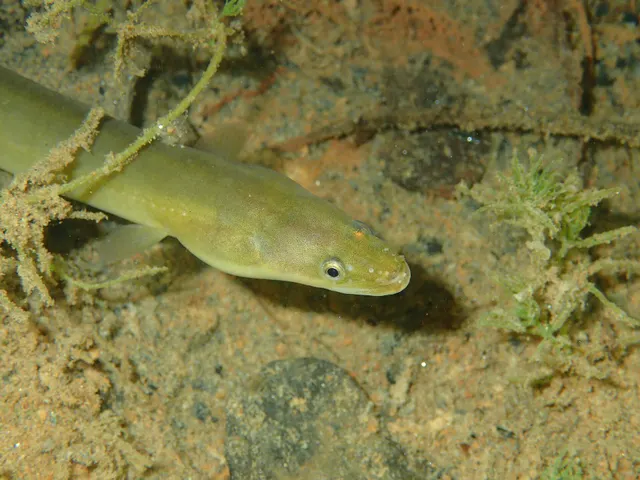 European eelA Critically Endangered fish that breeds in the Sargasso Sea, drifts to Europe as a transparent larva, lives decades in fresh water and returns once to spawn and die.
jujurenoult — CC BY 4.0, via Wikimedia Commons
Places within this area
Publicly documented fishing geography. FishingHQ describes what the ground is; it does not say whether you may fish it, and every one of these sends that question to the body that holds the answer. Browse every place in this part of the world.
Who to ask before fishing any of these
FishingHQ does not know the current access position here. Angling in Northern Ireland generally requires both a rod licence from the relevant fisheries body and a separate permit for the water, and the two are issued by different bodies. Rules, seasons and permit arrangements change. Check with the Department of Agriculture, Environment and Rural Affairs, the Loughs Agency where relevant, and the permit issuer before going.
The Lower Bann
River reach · Fresh water
The single outflow of Lough Neagh, running sixty kilometres north to the Atlantic at Castlerock: a wide, slow, canalised navigation with locks and weirs, soft bed, reed margins and substantial flow control structures.
Open lowland river with limited bankside cover in most reaches.
Particular to this ground: moving water and currents, drowning and immersion, cold water shock.
Particular to this water: This ground carries conservation designations that constrain access, vehicles, bait collection and disturbance independently of any fishing rule.
The Upper Bann
River reach · Fresh water
A slow, silt-bedded lowland river running north into Lough Neagh through drumlin country, with a well-known bream and roach fishery and a strong dollaghan run.
Severe hazards of Northern Ireland apply here: cold water shock.
The Blackwater
River reach · Fresh water
A slow, deep, silt-bedded river forming part of the border and entering Lough Neagh at its south-western corner, with a substantial coarse fishery and a dollaghan run.
Severe hazards of Northern Ireland apply here: cold water shock.
Lough Beg
Lough · Fresh water
A shallow, flooded, reed-fringed lough immediately north of Lough Neagh on the Lower Bann, with extensive seasonally flooded grassland and a soft silt bed.
Severe hazards of Northern Ireland apply here: cold water shock.
Check the rules before you fish
Fishing laws, bylaws, access rules, seasons, bait restrictions and permitted methods vary by location and can change. Check the current rules from the relevant authority and the water you intend to fish before fishing.
Check with:
- Current national or regional law for where you are fishing
- Current local bylaws
- The relevant fisheries authority
- The landowner, club or fishery whose water it is
- Any restrictions specific to the species or the method you intend to use
Where to go next
What swims here
How this compares
- Britain and IrelandThe most administratively divided jurisdiction on FishingHQ, and one whose internal division a single archipelago page cannot represent.
- England and WalesBoth require a licence and a separate permission, and they differ in who provides the second: much of Northern Ireland's freshwater fishing is publicly administered rather than held by private clubs.
- ScotlandTwo jurisdictions that both diverge from the English model in opposite directions — Scotland by removing the licence requirement, Northern Ireland by adding a second authority that divides its own territory.
- The Republic of IrelandOne island, two states, and shared catchments. The Foyle and Carlingford systems are administered across the frontier by a single cross-border body precisely because the fish do not recognise it.
Rules and access
Sources and evidence
- NASCO conservation and management of North Atlantic salmon — North Atlantic Salmon Conservation Organization (Government fisheries body)Relied on for: Conservation and management of North Atlantic salmon, including national regulatory measures, stock status and the international framework states operate within.States this directlyCitation checked — the work exists and is described correctly
- Angling Trust guidance for anglers — Angling Trust (Angling or fisheries organisation)Relied on for: Guidance for anglers on participation, licensing structure, access arrangements and getting started.Background and mechanism onlyCitation checked — the work exists and is described correctly
- Freshwater Fishes of the British Isles — HarperCollins (New Naturalist 75), 1992 (Reference work)Relied on for: Distribution, biology and status of the freshwater fishes of the British Isles and Ireland, including the differences between catchments.States this directlyCitation checked — the work exists and is described correctly
Why the 7 connections on this page are here, and the sources
What swims here
Backed by research — 2 connections
Supported by peer-reviewed research or fisheries science. The sources are listed and can be checked.
European eel
A distribution claim about the world, so it rests on the reference works rather than on angling report. FishingHQ's evidence policy requires it.
- FishBase: a global information system on fishes — Froese, R. and D. Pauly, eds. — FishBase Consortium (Scientific institute)Relied on for: Distribution, habitat association, water-type tolerance and occurrence records for the species, including its presence in the countries concerned.States this directlyPassage read and verified
- The IUCN Red List of Threatened Species — International Union for Conservation of Nature (Conservation authority)Relied on for: Assessment and range account for the species, including the countries and systems it occupies and its population trend within them.States this directlyCitation checked — the work exists and is described correctly
Northern pike
A distribution claim about the world, so it rests on the reference works rather than on angling report. FishingHQ's evidence policy requires it.
- FishBase: a global information system on fishes — Froese, R. and D. Pauly, eds. — FishBase Consortium (Scientific institute)Relied on for: Distribution, habitat association, water-type tolerance and occurrence records for the species, including its presence in the countries concerned.States this directlyPassage read and verified
- The IUCN Red List of Threatened Species — International Union for Conservation of Nature (Conservation authority)Relied on for: Assessment and range account for the species, including the countries and systems it occupies and its population trend within them.States this directlyCitation checked — the work exists and is described correctly
How this compares
What experienced anglers do — 4 connections
Widely and independently recommended by experienced anglers and specialist sources. This is real angling knowledge, not proof: controlled evidence for it is limited, and FishingHQ records it as convention rather than as a demonstrated effect.
Britain and Ireland
Two places a reader would reasonably weigh against one another, joined where the comparison teaches something about both. It is also how the larger geography is linked to what sits inside it.
- General angling website restatements of established technique — Various (Credible secondary source)Relied on for: Widely restated angling practice and belief, recorded as practitioner consensus rather than as tested fact.Background and mechanism onlyCitation checked — the work exists and is described correctly
- Angling Trust guidance for anglers — Angling Trust (Angling or fisheries organisation)Relied on for: Guidance for anglers on participation, licensing structure, access arrangements and getting started.Background and mechanism onlyCitation checked — the work exists and is described correctly
England and Wales
Two places a reader would reasonably weigh against one another, joined where the comparison teaches something about both. It is also how the larger geography is linked to what sits inside it.
- General angling website restatements of established technique — Various (Credible secondary source)Relied on for: Widely restated angling practice and belief, recorded as practitioner consensus rather than as tested fact.Background and mechanism onlyCitation checked — the work exists and is described correctly
- Angling Trust guidance for anglers — Angling Trust (Angling or fisheries organisation)Relied on for: Guidance for anglers on participation, licensing structure, access arrangements and getting started.Background and mechanism onlyCitation checked — the work exists and is described correctly
Scotland
Two places a reader would reasonably weigh against one another, joined where the comparison teaches something about both. It is also how the larger geography is linked to what sits inside it.
- General angling website restatements of established technique — Various (Credible secondary source)Relied on for: Widely restated angling practice and belief, recorded as practitioner consensus rather than as tested fact.Background and mechanism onlyCitation checked — the work exists and is described correctly
- Angling Trust guidance for anglers — Angling Trust (Angling or fisheries organisation)Relied on for: Guidance for anglers on participation, licensing structure, access arrangements and getting started.Background and mechanism onlyCitation checked — the work exists and is described correctly
The Republic of Ireland
Two places a reader would reasonably weigh against one another, joined where the comparison teaches something about both. It is also how the larger geography is linked to what sits inside it.
- General angling website restatements of established technique — Various (Credible secondary source)Relied on for: Widely restated angling practice and belief, recorded as practitioner consensus rather than as tested fact.Background and mechanism onlyCitation checked — the work exists and is described correctly
- Angling Trust guidance for anglers — Angling Trust (Angling or fisheries organisation)Relied on for: Guidance for anglers on participation, licensing structure, access arrangements and getting started.Background and mechanism onlyCitation checked — the work exists and is described correctly
Rules and access
Official guidance — 1 connection
Stated by a fisheries authority, scientific institute or recognised angling body. Authoritative, but summarising rather than demonstrating.
Licences and permission
A place joined to the regulatory concept whose structure it illustrates. The edge asserts that the concept applies here, never what any current rule says.
- Environment Agency fisheries management, byelaws and rod licensing information — Environment Agency (Government fisheries body)Relied on for: Fisheries management structure, licensing, byelaws and close seasons in England, and the shape of freshwater fisheries regulation.States this directlyCitation checked — the work exists and is described correctly
- NASCO conservation and management of North Atlantic salmon — North Atlantic Salmon Conservation Organization (Government fisheries body)Relied on for: Conservation and management of North Atlantic salmon, including the national regulatory measures and management structures states operate.States this directlyCitation checked — the work exists and is described correctly
How FishingHQ labels evidence is explained in the evidence policy.