Boilies
Bait · Last reviewed 2026-08-10
Boiled paste balls designed to survive small fish and stay on a hair rig — the bait that made modern carp fishing possible.
- How long it keeps
- Frozen: several months, and one to two days once thawed. Shelf-life: many months sealed at room temperature. Air-dried boilies keep longer again but are harder and release less.
A boilie is a ball of paste that has been boiled, which forms a skin and hardens it. That one step solved the problem that had limited carp baits for decades: a soft paste is stripped off a hook within minutes by roach, bream and every other small fish present, whereas a boiled bait survives long enough to be found by the fish it was intended for.
The composition is a base mix — typically milk proteins, semolina, soya, birdseed or fishmeal — bound with egg and flavoured. What varies between them is nutritional profile, digestibility, how quickly attractors leach out, and how hard they set.
Boilies are also where commercial claim and evidence diverge most sharply in angling. Some of the reasoning behind bait design is genuine food science; a great deal of what is asserted about specific flavours and additives is manufacturer claim, and FishingHQ labels it that way rather than repeating it as established.
What it is
A round bait, typically 10–20 mm in diameter, with a firm skin and a denser interior. Standard boilies sink; pop-ups are formulated or baked to float and are used to lift a hookbait off the bottom. Colour, density and hardness all vary by product, and hardness in particular is a deliberate design variable — a harder bait resists small fish for longer at the cost of releasing attractors more slowly.
Fish it catches
Finding and obtaining it
Bought ready-made — either frozen, which preserves fresher ingredients, or shelf-life, which is preserved for storage at room temperature — or rolled at home from a base mix, which is cheaper and allows complete control over the composition. Home rolling requires a base mix, eggs, a rolling table and a pan.
Keeping and storing it
Frozen boilies keep for months in a freezer and must be used within a day or two of thawing. Shelf-life boilies keep for months at room temperature in a sealed bag but should be kept out of direct sun and heat. Both go mouldy quickly once damp, and a bag of damp boilies left in a warm car is finished.
Preparing it
Nothing is required for a bought bait. Common preparations are glugging in a matching liquid to boost leakage, air-drying to harden a bait for long-range casting or heavy small-fish pressure, and chopping or crumbing to increase surface area and speed up attractor release in a baited area.
Using it
Boilies are designed for the hair rig and are almost always fished on one: the bait is threaded onto a short hair below the hook with a stop, so that the hook is free and the bait behaves exactly like a free offering when the fish sucks it in. A boilie fished directly on the hook loses most of its advantage. Pop-ups are balanced against the hook weight so the bait sits just off the bottom, which is used on soft or weedy bottoms where a sinking bait would be lost.
Disposing of what is left
Surplus boilies can be kept for the next session or frozen. They should not be tipped into the water at the end — it is uneaten feed, it is against the rules at many fisheries, and boilies are dense enough to sit on the bottom and decompose rather than being cleared. Domestic waste or compost otherwise.
Biosecurity
A manufactured bait carries no fish disease risk of its own. The risk is in the CONTAINERS: bait buckets, mixing bowls and cool bags carry water, groundbait residue and organic matter from one fishery to the next, and that is a transfer route for pathogens and invasive organisms exactly as a damp landing net is. Rinse and dry bait containers between waters.
What is actually known about bait flavours
Carp have a genuinely acute chemical sense — taste receptors on the barbels, lips and parts of the body surface as well as in the mouth — and there is real science behind the idea that soluble amino acids and other compounds are detected at very low concentrations and can attract fish. That much is not in question.
What is much less established is the specific claims made about particular flavours, additives and formulations, most of which originate with the companies selling them. There is very little independent, controlled comparison of one commercial bait against another under angling conditions, and the confounds — where the bait was fished, for how long, by whom, in what conditions — are severe enough that catch reports cannot substitute for it.
FishingHQ's position is to state the underlying mechanism as science, and to treat specific product claims as what they are. If a bait catches for you consistently, that is a real observation about your fishing. It is not evidence about the bait in general, and it should not be presented as though it were.
The maker's own claim — why, and the sources
Stated by a manufacturer. Useful technical detail, and commercially sourced — treat it as the maker's own description of their product.
Check the rules before you fish
Fishing laws, bylaws, access rules, seasons, bait restrictions and permitted methods vary by location and can change. Check the current rules from the relevant authority and the water you intend to fish before fishing.
Check with:
- Current national or regional law for where you are fishing
- Current local bylaws
- The relevant fisheries authority
- The landowner, club or fishery whose water it is
- Any restrictions specific to the species or the method you intend to use
Where to go next
How it is fished
What you present it on
Understanding it
- Bait scent, and what is actually knownThe flavoured boilie is where the attractant industry meets angling most directly, and it is the clearest case of a strong practitioner belief resting on very little independent testing.
- Bait size, and what it selects forThe boilie was invented to solve exactly this problem: a bait hard enough and large enough that nothing but the intended fish could deal with it.
Sources and evidence
Why the 6 connections on this page are here, and the sources
Fish it catches
What experienced anglers do — 2 connections
Widely and independently recommended by experienced anglers and specialist sources. This is real angling knowledge, not proof: controlled evidence for it is limited, and FishingHQ records it as convention rather than as a demonstrated effect.
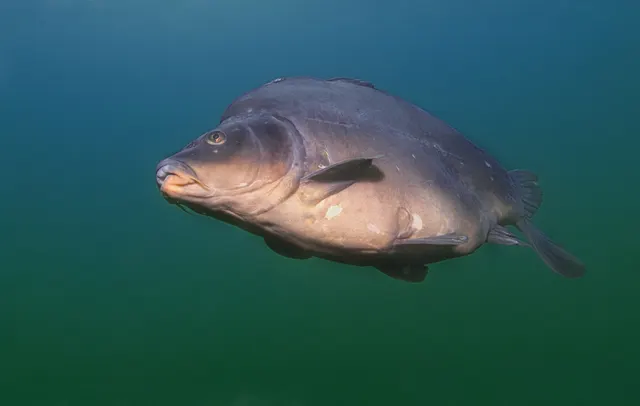
Common carp
The bait was developed for this species and its use is documented independently.
- Carp Fever — Beekay Publishers, 1981 (Specialist angling publication)Relied on for: The development and use of boiled paste baits for carp.Citation checked — the work exists and is described correctly
- Angling Times — Bauer Media (Specialist angling publication)Relied on for: Contemporary boilie practice from independent contributors.Citation checked — the work exists and is described correctly
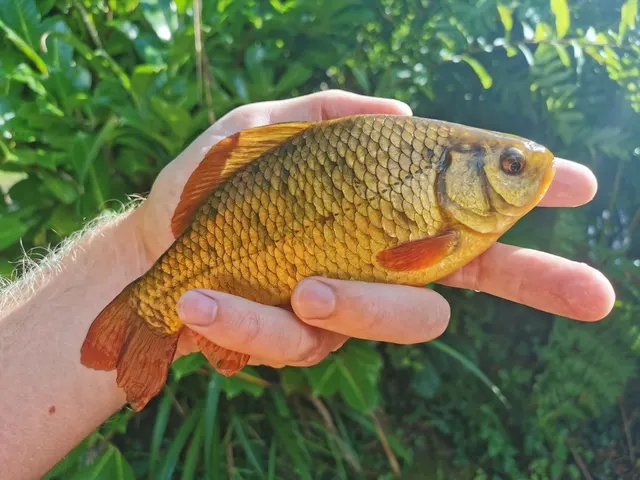
Crucian carp
A practitioner claim about tackle commonly used for Carassius carassius.
- General angling website restatements of established technique — Various (Credible secondary source)Relied on for: Widely restated practitioner accounts of this presentation for crucian carp.Citation checked — the work exists and is described correctly
- Angling Times — Bauer Media (Specialist angling publication)Relied on for: Practitioner treatment of comparable presentations for the species group.Citation checked — the work exists and is described correctly
How it is fished
What experienced anglers do — 1 connection
Widely and independently recommended by experienced anglers and specialist sources. This is real angling knowledge, not proof: controlled evidence for it is limited, and FishingHQ records it as convention rather than as a demonstrated effect.
Ledgering
The boilie record states that a boilie fished directly on the hook loses most of its advantage and is almost always fished on a hair. A hair rig is presented on the bottom on a ledger, so the bait and the presentation arrived together and are not separable.
- Carp Fever — Beekay Publishers, 1981 (Specialist angling publication)Relied on for: Specialist treatment of which bait or lure family this technique is fished with.States this directlyCitation checked — the work exists and is described correctly
- Angling Times — Bauer Media (Specialist angling publication)Relied on for: The independently restated practitioner pairing of this technique with this family.Background and mechanism onlyCitation checked — the work exists and is described correctly
What you present it on
What experienced anglers do — 1 connection
Widely and independently recommended by experienced anglers and specialist sources. This is real angling knowledge, not proof: controlled evidence for it is limited, and FishingHQ records it as convention rather than as a demonstrated effect.
Hair rig
The rig and the bait were developed as a system and are documented as such.
- Carp Fever — Beekay Publishers, 1981 (Specialist angling publication)Relied on for: The hair rig and boilie as a combined presentation.Citation checked — the work exists and is described correctly
- Angling Times — Bauer Media (Specialist angling publication)Relied on for: Contemporary hair rig and boilie practice.Citation checked — the work exists and is described correctly
Understanding it
What experienced anglers do — 2 connections
Widely and independently recommended by experienced anglers and specialist sources. This is real angling knowledge, not proof: controlled evidence for it is limited, and FishingHQ records it as convention rather than as a demonstrated effect.
Bait scent, and what is actually known
Why it works, resting on practice reported consistently across independent angling traditions rather than on experiment.
- Angling Times — Bauer Media (Specialist angling publication)Relied on for: Contemporary UK coarse, match and lure angling practice as reported by practitioners, including bait and lure convention.States this directlyCitation checked — the work exists and is described correctly
- Sea Angler — Bauer Media (Specialist angling publication)Relied on for: Contemporary UK sea angling practice as reported by practitioners, including lure and bait convention.States this directlyCitation checked — the work exists and is described correctly
Bait size, and what it selects for
Why it works, resting on practice reported consistently across independent angling traditions rather than on experiment.
- Angling Times — Bauer Media (Specialist angling publication)Relied on for: Contemporary UK coarse, match and lure angling practice as reported by practitioners, including bait and lure convention.States this directlyCitation checked — the work exists and is described correctly
- Sea Angler — Bauer Media (Specialist angling publication)Relied on for: Contemporary UK sea angling practice as reported by practitioners, including lure and bait convention.States this directlyCitation checked — the work exists and is described correctly
How FishingHQ labels evidence is explained in the evidence policy.