Hair rig
Rig · Last reviewed 2026-08-10
The bait mounted on a short link below the hook rather than on the hook — the single most consequential rig invention in modern coarse fishing.
Safety: fish welfare — can cause injury needing treatment.
A hair rig, with the hook left clear
Rig · Draft — not yet checked against an external reference
This drawing has not been checked against any reference outside FishingHQ. It shows how the components are arranged; it is not a certified tying sequence. Follow the written steps.
Describe this diagram in words
A hook seen side on with a hooklength running to its eye from the left. A fine link — the hair — runs from the eye down past the bend, and carries a bait on a small stop well below and clear of the hook. The hook itself is completely bare: nothing is mounted on the shank, the bend or the point, which is the arrangement the rig exists for. An arrow points at the bare hook. A note states that the hooking happens as the fish ejects what it does not want, dragging the hook across the bottom lip, rather than as the fish takes the bait.
How this drawing was produced
Kept from the previous version, which was the only one of the nine that drew its subject correctly, with two corrections made during an earlier pass: the BAIT label pointed at the hook bend rather than at the bait, and the figure said nothing about the ejection mechanism that the rig record identifies as the part which surprises people.
What it is for
To present a bait that behaves exactly like a free offering when a fish takes it into its mouth, while keeping the hook completely clear so that it can turn and take hold in the bottom lip as the fish ejects.
Components, from rod to hook
- Hooklength material, coated braid or fluorocarbon depending on the presentation.
- A hook — usually a wide-gape pattern, which gives the point room to turn.
- The hair: a short length of the hooklength material or a finer line, running from the eye or a knotless knot down past the bend.
- A small loop at the end of the hair.
- A bait stop passed through the loop, holding the bait on.
- The bait itself, threaded onto the hair with a baiting needle.
What it does in the water
The bait sits on the bottom with the hook lying beside or just above it, connected only by the hair. A feeding carp sucks in bait and water together; the hookbait travels in exactly as a free one would, and the bare hook is drawn in behind it. When the fish then blows out what it does not want, the hook is dragged across the bottom lip, the weight of the hook and the angle of the wide gape turn the point inwards, and it takes hold. Almost all of the hooking happens on the EJECTION rather than on the intake, which is the part that surprises people.
When to use it
Wherever fish are large enough and pressured enough to reject a hooked bait — which now means most carp fishing, and increasingly barbel, tench and bream fishing too. It is unnecessary for small fish and unsuitable for very soft baits that cannot be threaded, though bait bands solve that for pellets.
Common mistakes
- A hair so long that the bait tangles around the hook, or so short that the bait cannot behave freely.
- Burying the hook against the bait so the point cannot turn.
- A hook too small in the gape for the bait, so the point has no room to catch the lip.
- Leaving the hook point blunt after dragging the rig across gravel; the whole rig depends on the point turning and biting.
- Assuming the fish hooks itself on the take, and striking, which pulls the hook out of a mouth it has not yet caught.
How this rig behaves, and where it goes wrong
The hair rig separates the bait from the hook. A short length of fine line — the hair — runs from the hook eye or shank and carries the bait on a stop, so the bait hangs free below a completely bare hook.
It exists because carp can tell the difference. A bait mounted on a hook behaves differently when it is sucked into a mouth: it is tethered, it does not move freely, and a fish that has been caught before learns to detect and reject it. A bait on a hair moves exactly like a free offering, and the bare hook follows it in.
It was developed for carp in the late nineteen-seventies and it changed the discipline permanently. Its principle has since spread far beyond carp — banded pellets, hair-rigged corn on a feeder rig, and sea baits mounted the same way all use the same insight.
When the hair is doing nothing for you
The hair rig is close to universal in carp fishing and it is applied well beyond the cases that justify it. It is worth being clear about when it is not the answer, because tying one out of habit costs presentations that would work better.
IT DOES NOTHING FOR A FISH THAT DOES NOT SORT ITS FOOD. The rig exists because a large fish takes a mouthful of bait and water, assesses what is in it, and ejects what feels wrong. A roach, a small perch or a mackerel does not do this — it takes the bait and turns. Against those fish a hair adds a step and removes nothing, and a bait mounted straight on the hook is simply better.
IT IS WRONG FOR SOFT BAITS. Anything that cannot be threaded and held on a stop — bread flake, most worms, soft paste — cannot be hair rigged without falling off the cast. Bait bands solve this for pellets and solve nothing for the genuinely soft baits, and a hair-rigged worm is usually a worm arriving at the swim in two pieces.
IT IS WRONG WHERE THE HOOK MUST BE HIDDEN RATHER THAN FREE. A completely bare hook is highly visible in clear shallow water over a clean bottom. There are presentations built to disguise the hook rather than to free it, and where visibility rather than resistance is the problem the hair rig is solving the wrong half.
AND IT IS OFTEN OVERKILL ON UNPRESSURED WATER. The rejection behaviour the hair defeats is largely learned. On a water where fish have rarely been caught, the elaborate rig catches no better than a bait on a hook and takes longer to tie.
What experienced anglers do — why, and the sources (2)
Widely and independently recommended by experienced anglers and specialist sources. This is real angling knowledge, not proof: controlled evidence for it is limited, and FishingHQ records it as convention rather than as a demonstrated effect.
- Carp Fever — Beekay Publishers, 1981 (Specialist angling publication)Relied on for: Carp angling practice including bolt and hair rigs, bait presentation off the hook and the reasoning that produced them.States this directlyCitation checked — the work exists and is described correctly
- Angling Times — Bauer Media (Specialist angling publication)Relied on for: Contemporary UK carp and commercial-fishery angling practice as reported by practitioners, including rig and hooklength convention.States this directlyCitation checked — the work exists and is described correctly
Hair length, and the failure at each end of the range
The single adjustable number on the rig is the length of the hair between the bend of the hook and the bait, and it fails in a different way at each extreme. There is no correct figure, and any page that offers one is guessing about a bait, a hook pattern and a bottom it cannot see.
TOO SHORT and the bait sits hard against the hook. The two then behave as one object again, which is the exact condition the rig exists to avoid — and worse, the bait can mask the hook point so that it cannot turn and catch the lip on the ejection. A rig that hooks nothing all session despite confident takes is usually this.
TOO LONG and the bait can swing far enough to wrap the hooklength around the hook or around itself in the air. The rig then lands tangled and fishes as nothing at all, which produces no indications rather than dropped ones and is therefore much harder to diagnose. It also lets a fish take the bait and blow it out again while the hook is still too far away to be dragged across anything.
The practical test is not a measurement. It is to cast the rig into clear margin water, watch it settle, and then draw it slowly back: the bait should move freely and independently of the hook, and the point should stay clear. That check takes a minute and it answers a question no published length can.
One further consequence follows from the mechanism and is regularly forgotten. Since the hook is dragged across the bottom lip and turned by its own weight and gape, EVERYTHING depends on the point being sharp. A rig dragged across gravel two or three times is a blunt rig, and a blunt hook on a hair rig fails completely rather than partly.
What experienced anglers do — why, and the sources (2)
Widely and independently recommended by experienced anglers and specialist sources. This is real angling knowledge, not proof: controlled evidence for it is limited, and FishingHQ records it as convention rather than as a demonstrated effect.
- Carp Fever — Beekay Publishers, 1981 (Specialist angling publication)Relied on for: Carp angling practice including bolt and hair rigs, bait presentation off the hook and the reasoning that produced them.States this directlyCitation checked — the work exists and is described correctly
- Angling Times — Bauer Media (Specialist angling publication)Relied on for: Contemporary UK carp and commercial-fishery angling practice as reported by practitioners, including rig and hooklength convention.States this directlyCitation checked — the work exists and is described correctly
Safety
Fish welfare — Can cause injury needing treatment
The rig is normally fished against a semi-fixed lead, because the resistance is part of how it hooks. If the main line parts above the lead and the lead cannot pass off the line — a bead too large, a jammed lead clip, a tangle in the tail rubber — the fish swims away attached to a weight it cannot shed, and can be tethered in weed or snags.
What reduces it: Set the rig up so the lead can release from the line if anything above it fails, and use a hooklength genuinely weaker than the main line so a break happens at the hook end rather than above the lead. Check that the lead actually sheds by pulling the arrangement apart by hand rather than assuming the components do it.
Check the rules before you fish
Fishing laws, bylaws, access rules, seasons, bait restrictions and permitted methods vary by location and can change. Check the current rules from the relevant authority and the water you intend to fish before fishing.
Check with:
- Current national or regional law for where you are fishing
- Current local bylaws
- The relevant fisheries authority
- The landowner, club or fishery whose water it is
- Any restrictions specific to the species or the method you intend to use
Where to go next
Fish it is built for
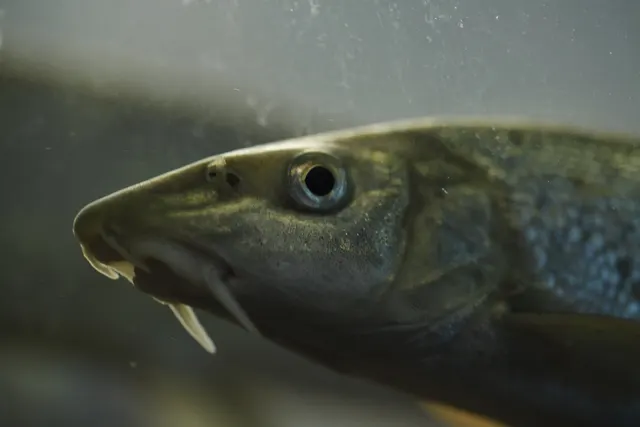 BarbelThe hair reached barbel fishing after carp and for the same reason — a bottom-feeding fish large enough to sort a bait in its mouth before committing to it.
 Common carpThe rig was invented for this species and for the specific problem this species creates: a carp that has been caught before learns to detect a tethered bait and eject it. Everything about the arrangement follows from that.
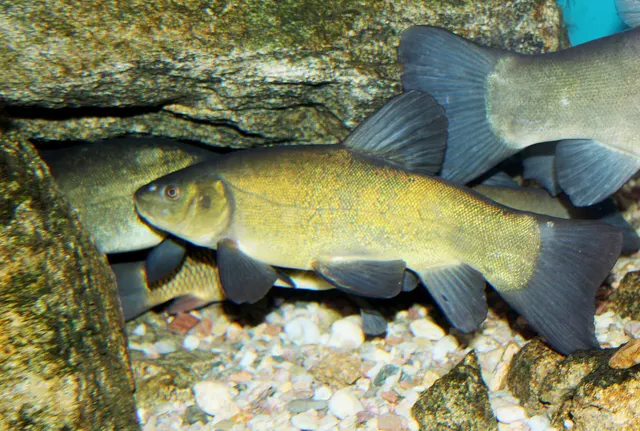 TenchUsed where tench are large and pressured enough to reject a hooked bait, which is a smaller subset of tench fishing than of carp fishing.
How it is fished
What it is made of
- BoiliesThe two were developed together and neither makes much sense without the other.
- HooksA wide gape matters here specifically, because the point has to turn and catch the bottom lip as the fish ejects.
- Palomar knotOne of several appropriate knots; the Palomar is chosen here because it is doubled throughout and holds in the coated braids hooklinks are made from.
- SweetcornTinned sweetcorn: cheap, bright, visible, and one of the most effective and most accessible coarse baits in existence.
Worth understanding first
- Choosing a rig for the conditionsThe answer where a bait is presented off the hook for a large cyprinid, paired with a lead arrangement that produces the hooking force and that the fish can shed if the line parts.
- Hair rigs, and presenting a bait off the hookThe rig page describes the arrangement. This is where the counter-intuitive mechanism is set out: the fish's rejection of the bait is what sets the hook.
- Rig safety: what happens if the line breaksA semi-fixed lead is a fixed lead until the release works, and a release that has swollen or jammed is a safety feature that only looks like one.
- Running and fixed rigs: where the resistance isThe hair rig's hooking mechanism depends on the fish moving off against resistance, which is why it is fished semi-fixed and why the two ideas developed together.
Rules and access
History and culture
Sources and evidence
- Carp Fever — Beekay Publishers, 1981 (Specialist angling publication)Relied on for: The origin and rationale of separating the hookbait from the hook on a short link, and its effect on carp angling.States this directlyCitation checked — the work exists and is described correctly
Why the 14 connections on this page are here, and the sources
Fish it is built for
What experienced anglers do — 3 connections
Widely and independently recommended by experienced anglers and specialist sources. This is real angling knowledge, not proof: controlled evidence for it is limited, and FishingHQ records it as convention rather than as a demonstrated effect.
Barbel
Which species a terminal arrangement is directed at is established practitioner knowledge, converging across independent angling traditions and literatures, and is labelled as consensus rather than as tested result.
- Carp Fever — Beekay Publishers, 1981 (Specialist angling publication)Relied on for: Carp angling practice including bolt and hair rigs, bait presentation off the hook, and the reasoning that produced them.States this directlyCitation checked — the work exists and is described correctly
- Angling Times — Bauer Media (Specialist angling publication)Relied on for: Contemporary UK carp and coarse angling practice as reported by practitioners, including rig convention.States this directlyCitation checked — the work exists and is described correctly
Common carp
Which species a terminal arrangement is directed at is established practitioner knowledge, converging across independent angling traditions and literatures, and is labelled as consensus rather than as tested result.
- Carp Fever — Beekay Publishers, 1981 (Specialist angling publication)Relied on for: Carp angling practice including bolt and hair rigs, bait presentation off the hook, and the reasoning that produced them.States this directlyCitation checked — the work exists and is described correctly
- Angling Times — Bauer Media (Specialist angling publication)Relied on for: Contemporary UK carp and coarse angling practice as reported by practitioners, including rig convention.States this directlyCitation checked — the work exists and is described correctly
Tench
Which species a terminal arrangement is directed at is established practitioner knowledge, converging across independent angling traditions and literatures, and is labelled as consensus rather than as tested result.
- Coarse Fishing — A. & C. Black, 1912 (Specialist angling publication)Relied on for: Classical coarse angling practice: terminal arrangements, shotting, bite registration and the species each is directed at.States this directlyCitation checked — the work exists and is described correctly
- Angling Times — Bauer Media (Specialist angling publication)Relied on for: Contemporary UK coarse and match angling practice as reported by practitioners, including which rigs are directed at which species.States this directlyCitation checked — the work exists and is described correctly
How it is fished
What experienced anglers do — 1 connection
Widely and independently recommended by experienced anglers and specialist sources. This is real angling knowledge, not proof: controlled evidence for it is limited, and FishingHQ records it as convention rather than as a demonstrated effect.
Carp fishing
Where it came from, and how it is classified.
- Carp Fever — Beekay Publishers, 1981 (Specialist angling publication)Relied on for: The hair rig's development within carp angling.Citation checked — the work exists and is described correctly
- Angling Times — Bauer Media (Specialist angling publication)Relied on for: Contemporary categorisation of the rig within carp practice.Citation checked — the work exists and is described correctly
What it is made of
What experienced anglers do — 4 connections
Widely and independently recommended by experienced anglers and specialist sources. This is real angling knowledge, not proof: controlled evidence for it is limited, and FishingHQ records it as convention rather than as a demonstrated effect.
Boilies
The rig and the bait were developed as a system and are documented as such.
- Carp Fever — Beekay Publishers, 1981 (Specialist angling publication)Relied on for: The hair rig and boilie as a combined presentation.Citation checked — the work exists and is described correctly
- Angling Times — Bauer Media (Specialist angling publication)Relied on for: Contemporary hair rig and boilie practice.Citation checked — the work exists and is described correctly
Hooks
Hook pattern selection for the rig is independently described.
- Carp Fever — Beekay Publishers, 1981 (Specialist angling publication)Relied on for: Hook selection for hair rig presentation.Citation checked — the work exists and is described correctly
- Angling Times — Bauer Media (Specialist angling publication)Relied on for: Contemporary hook pattern practice for hair rigs.Citation checked — the work exists and is described correctly
Palomar knot
Knot selection for hooklink attachment, independently described.
- Freshwater Fishing — Macdonald & Jane's, 1975 (Specialist angling publication)Relied on for: The Palomar for attaching hooks.Citation checked — the work exists and is described correctly
- Sea Angler — Bauer Media (Specialist angling publication)Relied on for: The same knot used for equivalent attachments in a separate tradition.Citation checked — the work exists and is described correctly
Sweetcorn
Standard presentation for particle baits on a hair.
- Angling Times — Bauer Media (Specialist angling publication)Relied on for: Hair-rigged particle bait presentation.Citation checked — the work exists and is described correctly
- Freshwater Fishing — Macdonald & Jane's, 1975 (Specialist angling publication)Relied on for: Particle bait presentation in British coarse practice.Citation checked — the work exists and is described correctly
Worth understanding first
What experienced anglers do — 4 connections
Widely and independently recommended by experienced anglers and specialist sources. This is real angling knowledge, not proof: controlled evidence for it is limited, and FishingHQ records it as convention rather than as a demonstrated effect.
Choosing a rig for the conditions
An arrangement joined to the guidance that selects it. That guidance names eleven rigs against four questions and pointed at none of them, so a reader following the procedure to its conclusion could not reach the answer.
- Sea Angler — Bauer Media (Specialist angling publication)Relied on for: British sea angling practice: how tide, wind, swell and water clarity change where and how a mark is fished.FishingHQ's interpretation of what it saysCitation checked — the work exists and is described correctly
- Freshwater Fishing — Macdonald & Jane's, 1975 (Specialist angling publication)Relied on for: Comprehensive angling practice across disciplines, including water reading, seasonal condition and the tackle each demands.States this directlyCitation checked — the work exists and is described correctly
Hair rigs, and presenting a bait off the hook
Why it works. How knots and rigs behave is established practitioner knowledge converging across independent angling traditions, and is described as agreement between them rather than as a tested result.
- Carp Fever — Beekay Publishers, 1981 (Specialist angling publication)Relied on for: Carp angling practice including bolt rigs, hair rigs, bait presentation off the hook and the reasoning that produced them.States this directlyCitation checked — the work exists and is described correctly
- Angling Times — Bauer Media (Specialist angling publication)Relied on for: Contemporary UK coarse angling practice as reported by practitioners, including rig convention and its later development.States this directlyCitation checked — the work exists and is described correctly
Rig safety: what happens if the line breaks
Why it works. How knots and rigs behave is established practitioner knowledge converging across independent angling traditions, and is described as agreement between them rather than as a tested result.
- Carp Fever — Beekay Publishers, 1981 (Specialist angling publication)Relied on for: Carp angling practice including bolt rigs, hair rigs, bait presentation off the hook and the reasoning that produced them.States this directlyCitation checked — the work exists and is described correctly
- Angling Times — Bauer Media (Specialist angling publication)Relied on for: Contemporary UK coarse angling practice as reported by practitioners, including rig convention and its later development.States this directlyCitation checked — the work exists and is described correctly
Running and fixed rigs: where the resistance is
Why it works. How knots and rigs behave is established practitioner knowledge converging across independent angling traditions, and is described as agreement between them rather than as a tested result.
- Carp Fever — Beekay Publishers, 1981 (Specialist angling publication)Relied on for: Carp angling practice including bolt rigs, hair rigs, bait presentation off the hook and the reasoning that produced them.States this directlyCitation checked — the work exists and is described correctly
- Angling Times — Bauer Media (Specialist angling publication)Relied on for: Contemporary UK coarse angling practice as reported by practitioners, including rig convention and its later development.States this directlyCitation checked — the work exists and is described correctly
Rules and access
Official guidance — 1 connection
Stated by a fisheries authority, scientific institute or recognised angling body. Authoritative, but summarising rather than demonstrating.
Method and bait restrictions
This points to the kind of rule that applies rather than to a rule itself. Rig restrictions are set by individual fisheries far more often than by statute, they differ between neighbouring waters, and they change — so the page points at the idea and tells you who to ask.
- Environment Agency fisheries management, byelaws and rod licensing information — Environment Agency (Government fisheries body)Relied on for: That fisheries authorities and fishery owners set restrictions on gear and terminal arrangements, and that these vary by water and change over time.States this directlyCitation checked — the work exists and is described correctly
- Angling Trust guidance for anglers — Angling Trust (Angling or fisheries organisation)Relied on for: Guidance to anglers on fishery rules and conditions of access, including gear and method restrictions set by individual waters.States this directlyCitation checked — the work exists and is described correctly
History and culture
What experienced anglers do — 1 connection
Widely and independently recommended by experienced anglers and specialist sources. This is real angling knowledge, not proof: controlled evidence for it is limited, and FishingHQ records it as convention rather than as a demonstrated effect.
The history of the fish hook
Where a terminal arrangement came from and what it displaced, drawn from the angling literature and from widely restated practitioner accounts rather than from scholarship.
- Carp Fever — Beekay Publishers, 1981 (Specialist angling publication)Relied on for: Carp angling practice including bolt and hair rigs, bait presentation off the hook, and the reasoning that produced them.States this directlyCitation checked — the work exists and is described correctly
- Angling Times — Bauer Media (Specialist angling publication)Relied on for: Contemporary UK carp and coarse angling practice as reported by practitioners, including rig convention.States this directlyCitation checked — the work exists and is described correctly
How FishingHQ labels evidence is explained in the evidence policy.