Britain and Ireland
Fishing regions · Last reviewed 2026-08-10
Where the modern sport was largely codified, and the origin of the coarse-and-game division that the rest of the world mostly does not use.
Safety: cold water shock — can cause serious injury or death. 5 more points apply here.
Being listed here is not permission to fish. What that meansClose
Access, fishing rights, seasons, licences, local bylaws and permitted methods vary and can change. Check current access, permission, local regulations, closures and restrictions before you travel or fish. FishingHQ describes what the ground is and names who holds the answer; it does not hold the answer itself.
Find the authority for a jurisdiction · What FishingHQ does and does not cover
Britain and Ireland occupy a peculiar position in fishing. They are a small, temperate, comprehensively fished archipelago whose freshwater species list is modest and whose sea fishing is good rather than spectacular — and they are also where an enormous amount of the sport's written tradition, terminology and technique was developed and exported.
That combination has a consequence FishingHQ has to handle carefully. A great deal of angling literature in English describes British conditions, uses British categories and assumes British water, and it is read worldwide as though it were general. The coarse-and-game division is the clearest example: it is a social and legal distinction that grew out of nineteenth-century Britain, and it does not describe how fishing works in North America, Australia, Japan or most of Africa.
This page exists partly to be useful to somebody fishing here and partly to be honest about that — to name the assumptions so that the rest of the site can avoid presenting them as universal.
What fishing here is like
Intensively fished, densely documented and highly organised. Almost all freshwater fishing rights are held privately or by clubs and fisheries rather than being publicly open, so access is arranged rather than assumed — which is a genuine shock to anglers arriving from countries with public fishing rights. The freshwater scene is dominated by still-water coarse fishing and by an old and formal game-fishing tradition, and the sea fishing is a strong shore and small-boat culture. Match fishing and specimen hunting are both well developed, with distinct cultures and equipment.
What is unusual is the density of written tradition. The sport here has been continuously written about since the fifteenth century, and much of its vocabulary — ledgering, trotting, float fishing, the terminology of fly fishing — was fixed here and travelled.
What you can target here
One entry per fish, grouped by how you would be fishing — because the answer is a different one from the rocks and from a boat. Each entry says how strongly the sources support it and how much evidence sits behind it. These are documented catches, not a forecast, and none of it is a statement that you may fish any particular ground.
From the shore · 67
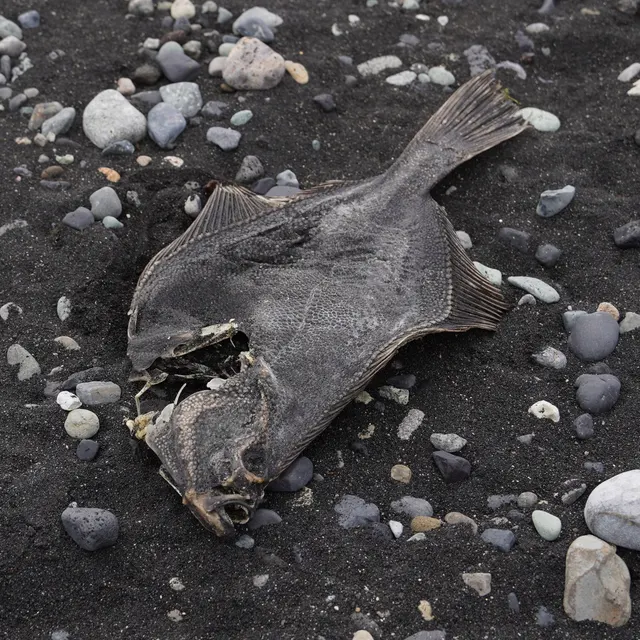 European flounderCharacteristic of this water229 places · 2 fishery accounts · 2 independent sourcesBenone Strand and Magilligan, The Roe estuary, Southend Pier, New Brighton and Perch Rock and 225 moreOver bay, beach, beach section, breakwater, cove, estuary, estuary mark, harbour wall, headland, island, jetty, pier, promenade, river reach, rock mark, rock platform, sandbank, sea loch, sound or strait, surf beach, tidal channelAround Jan–Dec
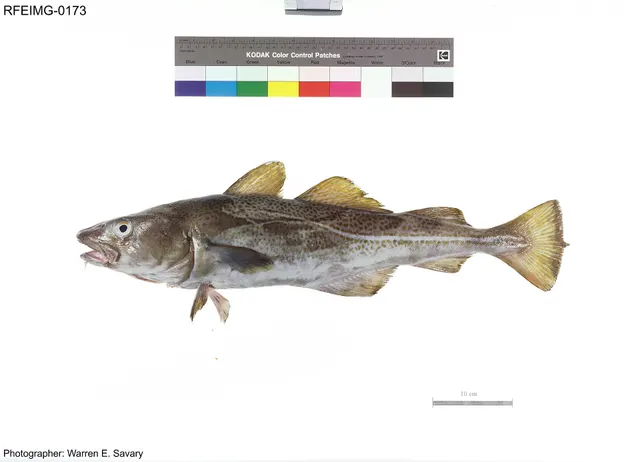 Atlantic codCharacteristic of this water175 places · 1 recorded catch · 1 fishery account · 2 independent sourcesAbbotsbury beach, Tynemouth North Pier, Hartlepool Headland, Filey Brigg and 171 moreOver bay, beach, beach section, breakwater, cove, estuary, estuary mark, harbour wall, headland, island, jetty, ledge, marina, pier, promenade, river reach, rock mark, sandbank, sea loch, shingle bank, surf beach, tidal channelSources name Ledgering with Peeler crabAround Jan–Apr, Aug–DecObserved April 2023
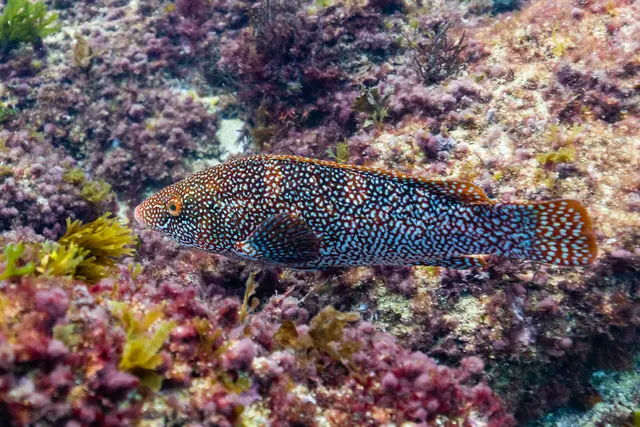 Ballan wrasseCharacteristic of this water154 places · 1 recorded catch · 1 sourceMorte Point, Peninnis Head, Filey Brigg, Flamborough Head and the North Landing and 150 moreOver bay, beach, beach section, breakwater, cliff coast, cove, estuary, harbour wall, headland, island, ledge, pier, promenade, rock mark, rock platform, sea loch, sound or strait, tidal channel, tidal raceAround May–OctObserved July 2026
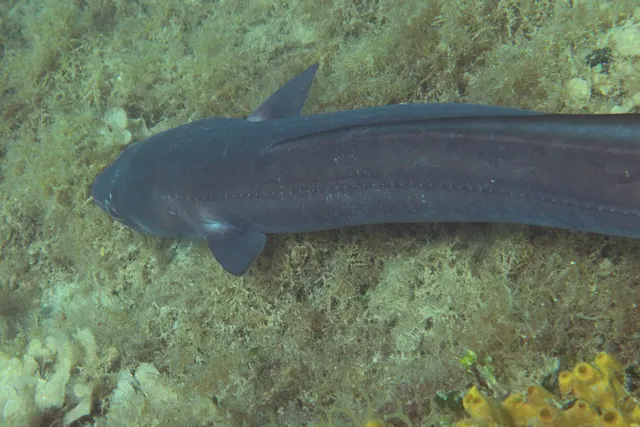 Conger eelCharacteristic of this water124 places · 2 recorded catches · 1 sourceThe Plymouth rock marks, Chesil Cove, Loch Broom and Ullapool, Loch Etive and 120 moreOver bay, beach, beach section, breakwater, cliff coast, cove, estuary, estuary mark, harbour wall, headland, island, jetty, ledge, pier, promenade, rock mark, rock platform, sea loch, sound or strait, surf beach, tidal channelAround Apr–OctObserved in 2026
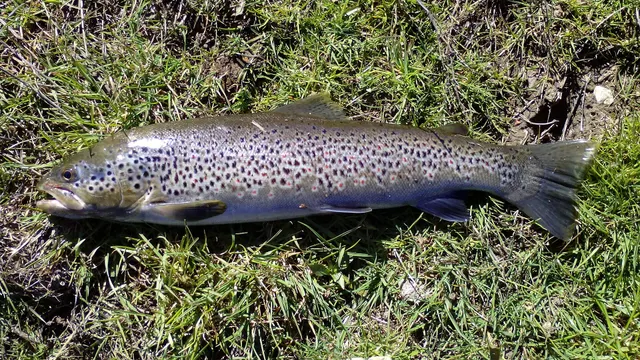 Brown troutCharacteristic of this water80 placesKielder Water, Rutland Water, Windermere, Loch Awe and 76 moreOver bay, beach, beach section, confluence, cove, estuary, harbour wall, headland, lake, loch, pier, reservoir, river reach, rock mark, sea loch, sound or strait, surf beach, tidal channel, tidal raceAround Feb–Oct
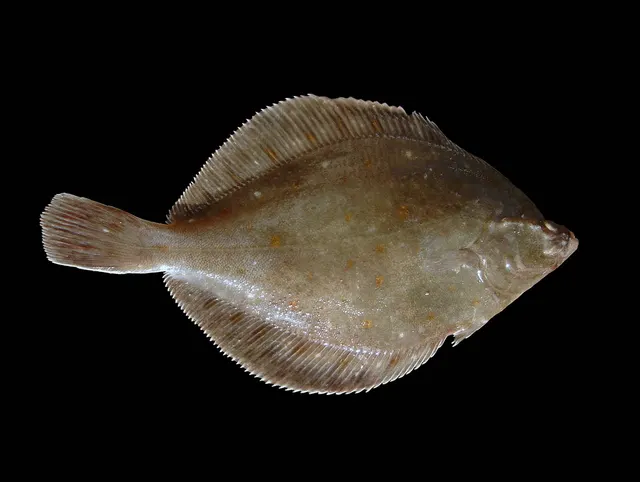 European plaiceCharacteristic of this water65 placesWest Bexington, Seahouses harbour, South Shields and the Tyne piers, Montrose and the South Esk and 61 moreOver bay, beach, beach section, estuary, estuary mark, harbour wall, headland, pier, promenade, rock mark, surf beachAround Mar–Sept
Also documented from the shore: Northern pike · Roach · Common bream · Rainbow trout · Chub · Atlantic salmon · Barbel · Edible crab · Grayling · Pollack · European sea bass · Starry smooth-hound · Atlantic mackerel · Small-spotted catshark · Thornback ray · Bull huss · Turbot · Gilthead bream · Whiting · Dab · Saithe · Thick-lipped grey mullet · European perch · Common sole · Garfish · Tope · Pouting · Zander · Black seabream · Small-eyed ray · European lobster · Common stingray · Blonde ray · European eel · Grey gurnard · Rudd · Spurdog · Three-bearded rockling · Atlantic horse mackerel · Corkwing wrasse · Cuckoo wrasse · Dace · Grey triggerfish · Thin-lipped grey mullet · Lesser sandeel · Lesser weever · Razor clam · Red gurnard · European squid · Tench · Tub gurnard · Striped red mullet · Spotted ray · Common carp · Gudgeon · Ling · Haddock · Curled octopus · Short-spined sea scorpion · Twaite shad · Flapper skate
From a boat · 25
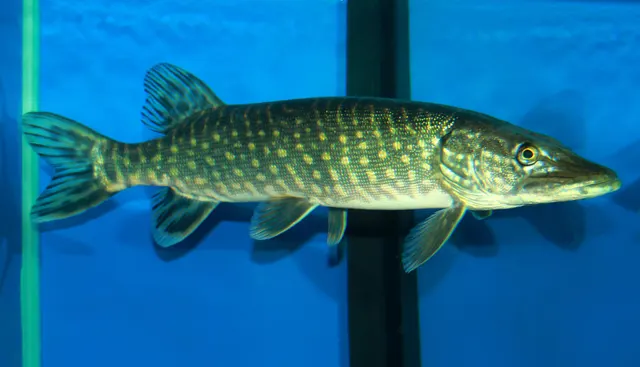 Northern pikeCharacteristic of this water33 placesWindermere, Loch Awe, Esthwaite Water, Loch Ken and 29 moreOver broad, lake, loch, lough, reservoir, river reach, sandbankAround Jan–Dec
- Brown troutCharacteristic of this water22 placesLoch Leven, Lough Melvin, Kielder Water, Lough Mask and 18 moreOver confluence, lake, loch, lough, reservoir, sandbankAround Mar–Oct
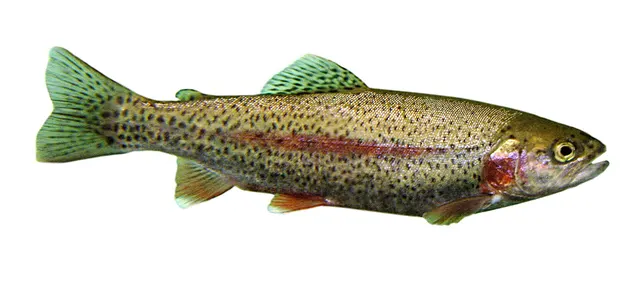 Rainbow troutCharacteristic of this water10 placesRutland Water, Grafham Water, Chew Valley Lake, Blagdon Lake and 6 moreOver lake, loch, reservoirAround Jan, Mar–Dec
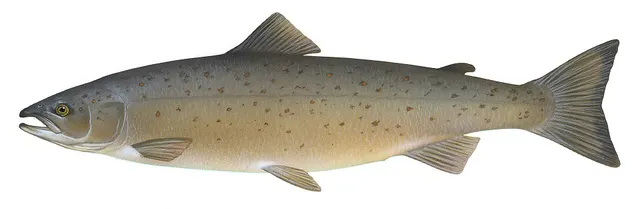 Atlantic salmonCharacteristic of this water9 placesThe Tay at Stanley, The Endrick Bank, The mouth of the Endrick Water, The Junction Pool and 5 moreOver confluence, lake, loch, lough, river reach, sandbankAround Jan–Oct
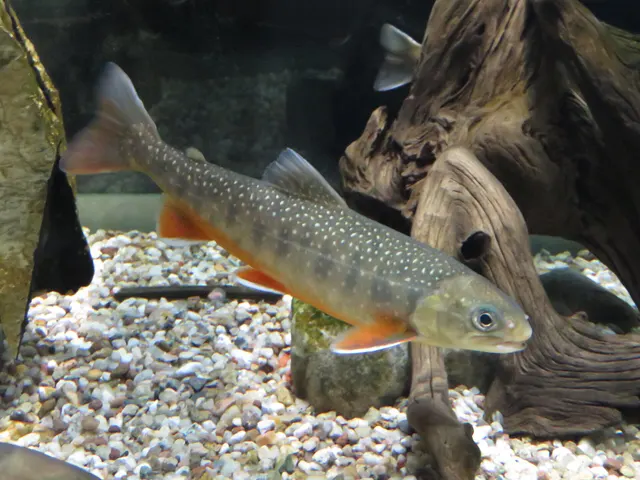 Arctic charCharacteristic of this water8 placesLoch Rannoch, Windermere, Loch Awe, Lough Melvin and 4 moreOver lake, loch, loughAround Apr–Jun
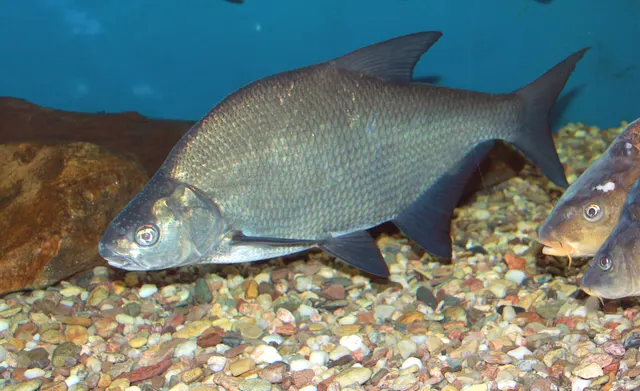 Common breamCharacteristic of this water5 placesBarton Broad, The Erne at Enniskillen, Lough Derg on the Shannon, Wroxham Broad and 1 moreOver broad, lough, river reachAround Mar–Oct
Also documented from a boat: Roach · Thornback ray · Ling · Whiting · Atlantic cod · Conger eel · European perch · Haddock · Small-spotted catshark · Pollack · Blue shark · Dab · European plaice · Atlantic mackerel · Saithe · Spurdog · Grey gurnard · Pouting · Cuckoo wrasse
On a charter · 11
- Blue sharkSeasonal1 place · 2 fishery accounts · 2 independent sourcesThe south-west approachesOver sea areaAround Jun–Sept
- Atlantic bluefin tunaSeasonal1 place · 1 fishery account · 1 sourceThe south-west approachesOver sea areaAround Aug–Dec
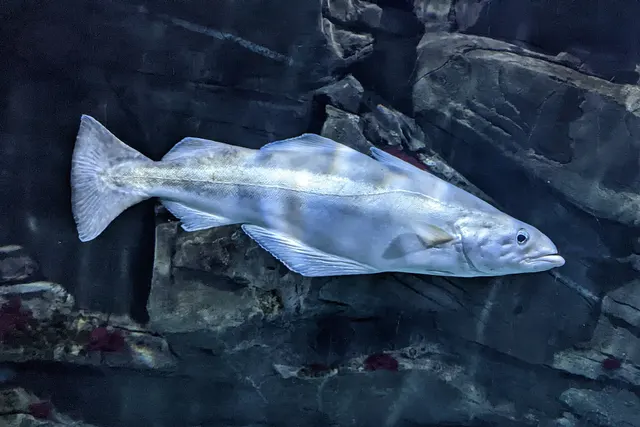 PollackRepeatedly reported2 places · 2 fishery accounts · 2 independent sourcesThe south-west approaches, Loop HeadOver headland, sea areaAround AugObserved August 2026
- Conger eelRepeatedly reported1 place · 1 fishery account · 1 sourceThe south-west approachesOver sea area
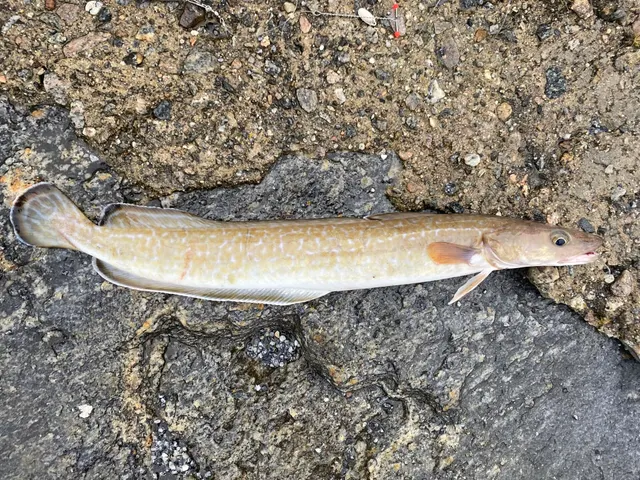 LingRepeatedly reported1 place · 1 fishery account · 1 sourceThe south-west approachesOver sea area
- Atlantic codRecorded here1 place · 1 fishery account · 1 sourceThe south-west approachesOver sea area
Also documented on a charter: Atlantic mackerel · Black seabream · Cuckoo wrasse · Spurdog · Tope
From a kayak · 30
- PollackRegular local target15 places · 2 recorded catches · 10 fishery accounts · 4 independent sourcesWhitesands Bay and St David's Head, Solva, Loch Etive, Lizard Point and 11 moreOver bay, beach section, estuary, estuary mark, harbour wall, headland, sea loch, surf beachSources name Drift fishing, Jigging, Kayak fishing with Metal jigs, Soft plasticsAround Jan–Jun, Aug, Nov–DecObserved 2020–2025
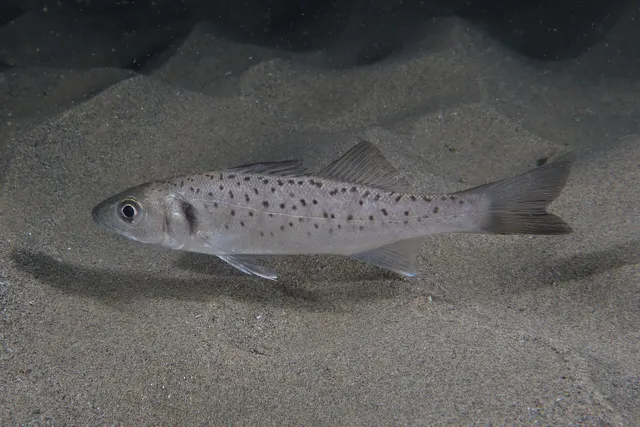 European sea bassRegular local target12 places · 2 fishery accounts · 2 independent sourcesWhitesands Bay and St David's Head, Solva, Lizard Point, Fowey and 8 moreOver bay, beach section, estuary, estuary mark, harbour wall, headland, surf beachSources name Kayak fishing with Metal jigsAround May–OctObserved July 2022
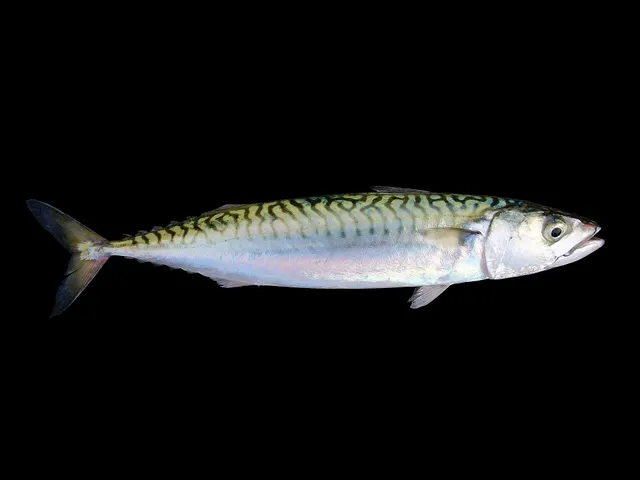 Atlantic mackerelSeasonal16 places · 6 fishery accounts · 2 independent sourcesLizard Point, Fowey, Falmouth and Castle Beach, Porthleven and 12 moreOver bay, beach section, estuary, estuary mark, harbour wall, headland, sea loch, surf beachSources name Feathering and multi-lure traces, Kayak fishing with Metal jigsAround Jun–SeptObserved 2022–2026
- Atlantic codSeasonal11 places · 4 fishery accounts · 1 sourceFowey, St Abbs Head, Portpatrick, Loch Leven at Ballachulish and 7 moreOver bay, estuary mark, harbour wall, headland, sea lochSources name Drift fishing, Kayak fishing with Metal jigs, Soft plasticsAround Jan–Mar, May–Jun, Aug, Nov–DecObserved 2020–2025
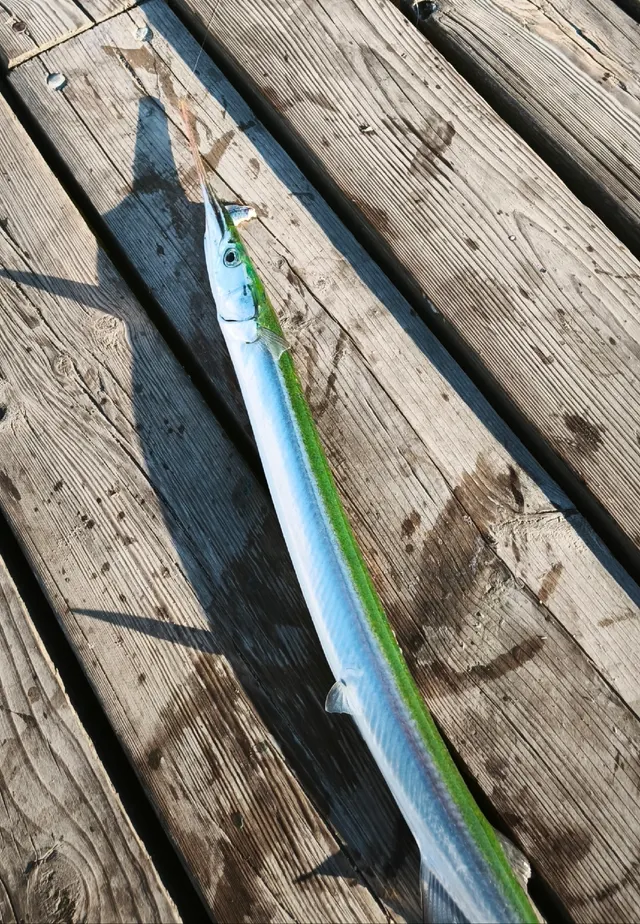 GarfishSeasonal11 placesLizard Point, Fowey, Falmouth and Castle Beach, Porthleven and 7 moreOver bay, beach section, estuary, estuary mark, harbour wall, headland, surf beachAround Jun–Sept
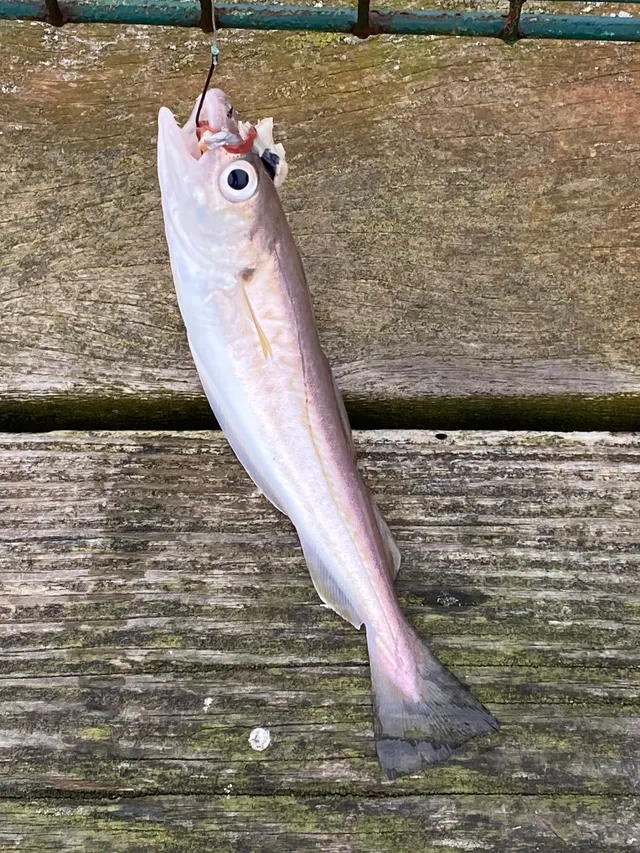 WhitingSeasonal5 placesFowey, Porthleven, Newquay and Towan Head, Gribbin Head and 1 moreOver estuary mark, harbour wall, headlandAround Jan–Feb, Nov–Dec
Also documented from a kayak: Atlantic horse mackerel · Ballan wrasse · Conger eel · Cuckoo wrasse · Saithe · Tope · Haddock · Spurdog · Bull huss · European plaice · Tub gurnard · Dab · European flounder · Gilthead bream · Small-eyed ray · Turbot · Small-spotted catshark · Thick-lipped grey mullet · Pouting · Thornback ray · Black seabream · Brill · Ling · Starry smooth-hound
Spearfishing · 2
- Ballan wrasseRegular local target7 placesThe Black Arch, Larne, St John's Point, Ballintoy, Portmuck and Browns Bay and 3 moreOver harbour wall, headland, rock markAround May–Sept
- PollackRegular local target6 placesGarron Point, The Black Arch, Larne, St John's Point, Ballintoy and 2 moreOver harbour wall, headland, rock markAround May–Sept
Fly fishing · 7
- Brown troutCharacteristic of this water67 placesThe Test at Stockbridge, Loch Leven, Lough Melvin, Kielder Water and 63 moreOver bay, beach, cove, lake, loch, lough, reservoir, river reach, sea loch, sound or strait, tidal channelAround Feb–Oct
- Rainbow troutCharacteristic of this water11 placesRutland Water, Grafham Water, Chew Valley Lake, Blagdon Lake and 7 moreOver lake, loch, reservoirAround Jan, Mar–Dec
- Atlantic salmonCharacteristic of this water8 placesThe Tay at Stanley, The Spey at Aberlour, The Lower Bann, Lough Melvin and 4 moreOver loch, lough, river reachAround Jan–Oct
- European sea bassRegular local target1 placeChichester HarbourOver estuary
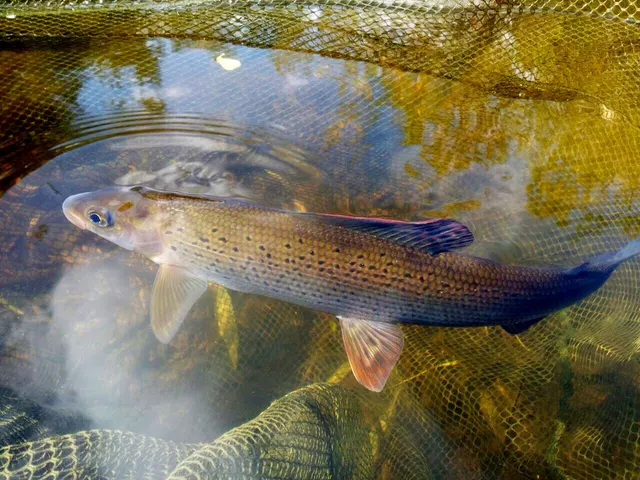 GraylingSeasonal4 placesThe Wye at Symonds Yat, The Test at Stockbridge, The Tay at Stanley, The Spey at AberlourOver river reachAround Jan–Mar, Oct–Dec
- Northern pikeSeasonal2 placesChew Valley Lake, Bewl WaterOver reservoirAround Jan–Dec
Also documented fly fishing: Pollack
What these strengths mean
- Characteristic of this water
- This water is strongly identified with this species by the sources that cover it.
- Regular local target
- Fishing sources describe this as a normal local target here, not merely as caught.
- Seasonal
- Well supported, and concentrated in part of the year rather than spread through it.
- Repeatedly reported
- Several independent public accounts. Enough to say it happens more than once; not enough to call it a fishery.
- Recorded here
- At least one credible public account of this species being caught here. That is all it means.
- Occasional
- Caught here, and described as unusual rather than normal. Do not plan a session around it.
- How breadth is counted
- A fish documented at six marks is shown as six marks: breadth never raises the strength on its own. A fishery account describes the fishing; a recorded catch reports one specific catch. How evidence is weighed.
How people fish here
21 methods are recorded on the places documented here, counted from the records themselves rather than from what is practised in the country. Each opens a full guide to the technique.
Ledgering
Recorded at 595 places here, over beach, headland, harbour wall, pier.
Fishing a bait on the bottom held by a weight, with no float — the simplest way to fish at distance, in depth, or in wind.
Documented on the same ground: Atlantic cod, Ballan wrasse, Barbel, Common bream, Conger eel, Edible crab.
Float fishing
Recorded at 410 places here, over harbour wall, headland, pier, rock mark.
Suspending a bait at a controlled depth beneath a buoyant indicator — the most visual, most controllable and most widely applicable method in angling.
Documented on the same ground: Atlantic salmon, Ballan wrasse, Barbel, Brown trout, Chub, Common bream.
Spinning
Recorded at 389 places here, over headland, rock mark, estuary, sea loch.
Casting an artificial lure and retrieving it so that it moves like something alive — the most direct form of lure fishing.
Documented on the same ground: Atlantic cod, Atlantic salmon, Ballan wrasse, Barbel, Common bream, Conger eel.
Kayak fishing
Recorded at 158 places here, over estuary, sea loch, harbour wall, bay.
A platform rather than a technique: quiet, shallow-draught access to water no other craft reaches, bought at the price of exposure, and a discipline where the decision not to launch is part of the skill.
Documented on the same ground: European flounder, Atlantic cod, Atlantic mackerel, Ballan wrasse, Brown trout, Bull huss.
Surfcasting
Recorded at 99 places here, over beach, surf beach, bay, estuary mark.
Casting heavy baited tackle from a beach into surf — a method defined by distance, by tide, and by reading water that all looks the same.
Documented on the same ground: Atlantic cod, European plaice, Atlantic mackerel, Ballan wrasse, Brown trout, Bull huss.
Stillwater fly fishing
Recorded at 54 places here, over loch, reservoir, lake, lough.
Fly fishing without current, where the angler supplies every movement and the problem becomes finding fish rather than presenting to them.
Documented on the same ground: Arctic char, Atlantic salmon, Brown trout, Northern pike, Rainbow trout, European perch.
Dry fly fishing
Recorded at 51 places here, over river reach, loch, confluence, lough.
Presenting a floating artificial to a fish feeding at the surface, so that it drifts exactly as a natural insect would.
Documented on the same ground: Atlantic salmon, Barbel, Brown trout, Chub, Grayling, Arctic char.
Feeder fishing
Recorded at 47 places here, over river reach, canal section, weir pool, broad.
Legering with a weight that also carries bait, so that free offerings arrive in exactly the same place as the hookbait, cast after cast.
Documented on the same ground: Barbel, Chub, Common bream, Northern pike, Roach, Brown trout.
Feathering and multi-lure traces
Recorded at 37 places here, over pier, harbour wall, headland, breakwater.
A string of small lures on droppers, worked in the water column — how most people in Britain and Ireland catch their first sea fish, and the method most likely to catch far more than anybody intended.
Documented on the same ground: Atlantic cod, Atlantic mackerel, Ballan wrasse, Brown trout, Bull huss, Common sole.
12 further methods are recorded at one or two places each: Jigging, Deadbaiting, Saltwater fly fishing, Pole fishing, Trolling, Light rock fishing, Crabbing with a line and a drop net, Shore diving, Drop shotting, Eging, Salmon fly fishing, Deep-drop fishing.
These are the methods documented at the places FishingHQ holds here. A species listed beside a method is documented on the same ground, which is not the same as being taken that way — where a source establishes the method a fish was caught on, it is stated on that place’s own page. All fishing methods.
The fishing year here
The months the records under this area actually name, tightest season first. This is “observed in these months” rather than a season: a species whose months nobody recorded is not listed, because a gap in the evidence is not a year-round fishery.
- Grey triggerfishAugust to September
- Arctic charApril to June
- Spotted rayMarch to May
- GarfishJune to September
- European perchOctober to January
- Gilthead breamJune to September
- European lobsterJune to September
- Common stingrayJune to September
- Blonde rayJune to September
- HaddockJune to September
- SpurdogJune to September
- Tub gurnardJune to September
Areas within this one
6 coasts, island groups and systems inside this area have fishing guides of their own.
England and Wales
417 documented places across 31 coasts
A rod licence for freshwater angling, almost no publicly open fresh water, a close season that survives on rivers and not on stillwaters, and sea angling that is largely unlicensed and heavily byelawed.
Documented here: Atlantic cod, Ballan wrasse, Conger eel, Northern pike, European plaice
Fished by: ledgering, float fishing, spinning, kayak fishing
Inside it: Anglesey · Cardigan Bay and the sarnau · Chesil Beach · Lyme Bay · Morecambe Bay and the north-west England coast · Pembrokeshire and the south-west Wales coast · Portland Bill and the Portland Race · The Channel shingle coasts · The Cornish and Devon coasts · The English canal network · The English trout reservoirs · The Fens and their drains · The Gower and Carmarthen Bay · The Hampshire chalk streams · The Isles of Scilly · The Lake District lakes · The Norfolk and Suffolk sandbank coast · The Norfolk Broads · The north-east England coast · The Purbeck coast and Poole Bay · The River Thames · The River Trent · The River Wye · The Severn Estuary · The Solent and the Hampshire coast · The Thames Estuary · The Wash and the Lincolnshire coast · The Welsh coast and Anglesey · The Welsh sewin rivers · The Yorkshire coast · Weymouth Bay
Northern Ireland
50 documented places across 10 coasts
A rod licence and a separate permit, two different fisheries authorities dividing one small country between them, and the largest lake in these islands sitting in the middle of it.
Documented here: European flounder, Common bream, Roach, Brown trout, Pollack
Fished by: ledgering, float fishing, spinning, kayak fishing
Inside it: Belfast Lough and the north Down shore · Lough Erne · Lough Foyle and its rivers · Lough Neagh · Strangford Lough and the Ards coast · The Causeway and Antrim coast · The East Antrim coast · The Lecale coast and Dundrum Bay · The Mourne coast and Carlingford Lough · The outer Ards coast
Scotland
185 documented places across 14 coasts
No rod licence for coarse fishing, a wholly separate statutory system for salmon and sea trout, a legal right of responsible access that England and Wales do not have, and a coastline with the strongest tidal streams in these islands.
Documented here: Brown trout, Atlantic salmon, Northern pike, Arctic char, Grayling
Fished by: spinning, float fishing, ledgering, kayak fishing
Inside it: Caithness and the north coast · East Lothian and the Firth of Forth coast · Loch Lomond · Orkney · Outer Hebrides · Scottish sea lochs · Shetland · Skye and the Inner Hebrides · The Fife, Angus and Mearns coast · The Firth of Clyde · The Moray Firth · The River Spey · The River Tay · The River Tweed
The Isle of Man
7 documented places
A self-governing Crown Dependency in the middle of the Irish Sea with its own parliament, its own fisheries law and its own territorial sea — which makes it the clearest illustration in these islands that a coast is a jurisdiction before it is a place.
Documented here: Ballan wrasse, Conger eel, European sea bass, Pollack, Saithe
Fished by: float fishing, ledgering, feathering and multi-lure traces, spinning
The Republic of Ireland
126 documented places across 9 coasts
No general coarse or trout rod licence, a separate state licence and share certificate for salmon and sea trout, a naturally sparse native fish fauna, and some of the most accessible pike and coarse fishing in western Europe.
Documented here: Northern pike, Brown trout, Common bream, Small-spotted catshark, Pollack
Fished by: ledgering, spinning, float fishing, surfcasting
Inside it: Cork Harbour and the east Cork coast · Dublin Bay and the Wicklow coast · Lough Corrib · The Atlantic coast of Ireland · The Louth and Meath coast · The Moy and Lough Conn · The Shannon system · The Waterford coast · The Wexford coast
The Solway Firth
15 documented places
A shallow funnel between Cumbria and Dumfries with one of the largest tidal ranges in Britain over miles of flat sand, where the flooding tide crosses the ground faster than a person can walk.
Documented here: European flounder, Conger eel, European plaice, Whiting, Dab
Fished by: ledgering, float fishing, kayak fishing, spinning
What dominates
Coarse fishing is the numerical majority: still-water carp fishing above all, along with match fishing, river coarse fishing and pike fishing. Game fishing for trout, salmon and sea trout carries disproportionate cultural weight relative to participation, and it is where the fly-fishing tradition sits. Sea fishing is largely shore-based — beach, rock, pier and estuary — with a well-developed small-boat and charter scene. Spearfishing exists but is a small minority activity compared with several other European countries, and it is subject to substantial restriction.
The water available
Everything a temperate maritime climate provides at small scale. Lowland still waters, from natural lakes to a very large number of managed commercial fisheries and former gravel pits. Rivers ranging from spate rivers off high ground to the chalk streams of southern England, which are a genuinely rare habitat type globally. Canals as a substantial fishery in their own right. A long, varied and strongly tidal coastline: surf beaches, rock marks, estuaries and harbours, with tidal ranges among the largest in the world in some places, and cool, kelp-dominated inshore reef.
How the rules are structured
The framework is layered, and the layers differ between the constituent countries — England, Wales, Scotland, Northern Ireland and the Republic of Ireland each administer fisheries separately, so a rule learned in one does not transfer to another. In broad terms there is a national licensing requirement for freshwater rod fishing in several of these jurisdictions, administered by a national agency; separately, a right to fish the water itself must be obtained from whoever holds it, usually a club, fishery or landowner. Sea fishing from the shore has historically been less restricted than freshwater fishing, though species and size rules apply. Close seasons, size limits and method restrictions exist at national, regional and local level. FishingHQ does not state what any of these currently are.
Who to ask
- The national fisheries agency for the country you are in — these differ between England and Wales, Scotland, Northern Ireland and the Republic of Ireland, and they are not interchangeable
- The club, fishery or landowner holding the fishing rights for the specific water
- Local byelaws, which are set below national level and change without wide announcement
- The relevant marine or sea fisheries authority for coastal and offshore rules
- Angling representative bodies, which publish plain-language explanations of current requirements
Words you will meet
- Coarse fishing
- Freshwater fishing for species other than trout, salmon and their relatives. A British social and legal category rather than a biological one, and largely meaningless outside these islands and parts of Europe.
- Game fishing
- Fishing for salmon, trout, sea trout and grayling — the counterpart of coarse fishing in the same local taxonomy.
- Ledgering
- Fishing a bait on the bottom with a weight. Called bottom fishing, and in sea contexts surfcasting, in most of the rest of the world.
- Trotting
- Running a float downstream at the pace of the current to present a bait naturally. Distinctively British in name and in the tackle it uses.
- Swim
- The area of water an angler is fishing. Not a verb here, and a source of genuine confusion for visitors.
- Commercial
- A managed still-water fishery stocked for day-ticket angling. Not a reference to commercial fishing in the industrial sense.
- Bivvy
- The shelter a carp angler sleeps in during a long session. An entire sub-culture is attached to the word.
Conditions and hazards
The dominant risk is immersion rather than anything to do with tackle, and the water is cold enough year-round for cold water shock to be a genuine hazard even in summer. Tidal ranges on parts of this coast are among the largest in the world, and tidal cut-off on estuaries, sandbanks and rock platforms is a recurring cause of incidents — the water frequently arrives from behind before it arrives in front. Rock marks in swell and steep shingle beaches are the coastal hazards; on rivers, spate conditions rise fast off high ground. There are no dangerous large animals in the water, which lulls visitors from elsewhere into treating the environment as benign; the cold and the tide do not require teeth to be dangerous.
Getting on the water: why access is arranged rather than assumed
This is the first thing that surprises visiting anglers, and it is worth stating before anything about tackle or species.
ALMOST NO FRESHWATER FISHING HERE IS OPEN. Fishing rights in rivers and lakes are property. They are owned by landowners, leased by clubs, or run as day-ticket fisheries, and the right to fish a particular piece of water is granted by whoever holds it. An angler arriving from Scandinavia, much of North America or Australia — where public waters are genuinely public — will look for the equivalent and not find one.
SO THERE ARE TWO SEPARATE PERMISSIONS, and conflating them is the commonest visitor mistake. A national rod licence, where one is required, is a licence to fish; it grants access to nothing. Permission to fish a specific water is a second thing entirely, obtained from the club, fishery or owner.
HOW PEOPLE ACTUALLY GET ON WATER. Day tickets on managed fisheries, which is the easy route and the reason commercial stillwaters exist in such numbers. Club membership, which is cheap by international standards and often has a waiting list for the most sought-after water. Hotel and estate beats on salmon and trout rivers, booked by the day or week. And syndicate rods on the most sought-after carp and specimen waters, which are effectively closed.
SEA FISHING IS DIFFERENT AND MUCH SIMPLER. The foreshore and the sea are broadly accessible in a way freshwater is not, which is why sea angling here has always been the democratic end of the sport and why so much of the beginner traffic starts there.
What any of this currently costs or requires is not something FishingHQ maintains. Ask the fishery, the club or the national agency for the country you are in — and note that those agencies differ between England and Wales, Scotland, Northern Ireland and the Republic.
The disciplines, and the divide that shapes all of them
British angling is organised around a division most of the world does not use, and understanding it explains the tackle shops, the magazines and the clubs.
COARSE FISHING covers everything freshwater that is not trout, salmon or grayling. Roach, bream, tench, carp, pike, perch, barbel, chub. Historically the working-class end of the sport, fished on canals, rivers and lakes, and the origin of match fishing.
GAME FISHING covers salmon, trout, sea trout and grayling — and grayling sits oddly on that side, which tells you the category is social rather than biological. Fly-dominated, associated with private beats and higher costs.
SEA ANGLING sits outside both and is the largest by participation.
WITHIN THOSE, THE SPECIALISMS ARE STRONG. Match fishing, where anglers draw pegs and weigh in against the clock, is a genuinely British invention and remains a serious competitive structure. Carp fishing became a discipline of its own from the 1980s and now has its own tackle industry, vocabulary and multi-night culture. Specimen hunting — targeting individual large fish of one species — is the third distinct approach.
WHY THIS MATTERS TO A READER FROM ELSEWHERE. A great deal of angling writing in English uses these categories as though they were universal. They are not. A North American reader looking for 'coarse fishing' will find nothing, because the category does not exist there; the same fish are panfish, rough fish or simply fish. FishingHQ names the division rather than assuming it, and the rest of FishingHQ is written to work without it.
What water is actually available, and at what scale
Everything a temperate maritime archipelago provides, at a small scale and heavily modified.
THE SCALE POINT COMES FIRST because it changes expectations. Nowhere in these islands is far from the sea, no river is long by continental standards, and there are no genuinely wild large lakes outside the Scottish and Irish north-west. What there is instead is density and access-by-arrangement: a very large number of small managed waters within reach of almost everybody.
STILLWATERS are dominated by made water. Former gravel pits, reservoirs, estate lakes and purpose-dug commercial fisheries far outnumber natural lakes in England in particular. That is why stillwater carp fishing became so large here: the venues were created for it.
RIVERS split by geology. Spate rivers off high ground in Wales, Scotland, the Pennines and much of Ireland rise and fall quickly with rain. Lowland rivers run slower and richer. And the chalk streams of southern England are a genuinely rare habitat type — clear, spring-fed, stable in temperature and flow — of which a large share of the world's total lies in one corner of one country.
CANALS are a fishing environment in their own right, and an unusual one: a national network of shallow, slow, narrow water, largely urban and largely accessible, which is where a great many British anglers learned.
THE COAST is where the scale objection disappears. Extremely varied for the length involved: surf beaches, shingle banks, estuaries with very large tidal ranges, rocky Atlantic coast, sheltered firths and sea lochs, and offshore ground including a great deal of wreck. The tidal range in the Bristol Channel is among the largest anywhere.
The species list, and why it is shorter than people expect
A modest freshwater list and a varied marine one, and both facts follow from the same event.
WHY FRESHWATER IS SHORT. These islands were under ice, and were then separated from the continent before many species could recolonise. The native freshwater fauna is correspondingly limited — and Ireland's is shorter still, which is why it has no native pike populations in some accounts and a very restricted coarse list generally.
WHAT IS ACTUALLY HERE. Roach, bream, tench, rudd, perch, pike and eels as the widespread natives; chub, barbel and dace in rivers; brown trout and salmon as the game species; grayling in some catchments and not others. Carp are introduced and are now the single most fished-for species in England. Several other familiar species are introductions of varying antiquity.
THE MARINE LIST IS MUCH LONGER and reflects a boundary position: cold northern species and warm-temperate southern species overlap around these coasts, which is why cod and bass are both ordinary catches and why the balance between them has been shifting.
WHAT AN ANGLER SHOULD TAKE FROM IT. A short list is not a poor one — it means the species that are here are extremely well understood, with two centuries of accumulated practice behind them, and it is part of why British angling literature is so detailed about so few fish.
Which species may currently be taken, at what size and in what numbers, differs between the four jurisdictions and changes. Bass in particular has been subject to repeated and significant change. Check the current position with the relevant marine or freshwater authority before keeping anything.
Words a visitor will meet and not recognise
British angling vocabulary is unusually dense, and a good deal of it is exported without explanation.
THE ONES THAT CAUSE REAL CONFUSION. A SWIM is the piece of water you are fishing, not an activity. A PEG is a numbered position in a match. LEDGERING is fishing a bait on the bottom, called bottom fishing almost everywhere else. TROTTING is running a float downstream at the pace of the current. A BIVVY is the shelter a carp angler sleeps in. A COMMERCIAL is a managed day-ticket stillwater, not an industrial fishery — which is a genuinely dangerous ambiguity in a sentence about conservation.
IN SEA ANGLING. A SNOOD is a hooklength. A ROTTEN BOTTOM is a deliberate weak link to the lead. UPTIDING is casting away from an anchored boat, which is a technique named for a specific type of shallow tidal ground. A MARK is a fishing position.
AND THE TWO BIG CATEGORIES — coarse and game — which are covered under disciplines and are the words most often mistaken for universal.
WHY FISHINGHQ RECORDS THIS RATHER THAN JUST USING IT. Because the platform is read internationally and a term used without explanation is a sentence that fails silently. Where a British word is the clearest available, FishingHQ uses it and says what it means; where the concept is universal and only the word is local — ledgering, bottom fishing — it explains both and does not pretend one is correct.
Why so much of the world's angling literature is British
The disproportion is real and it has consequences for anybody reading angling writing in English.
THE OUTLINE. A printed instructional tradition running from the fifteenth century, a seventeenth-century book that never went out of print, a nineteenth century in which railways put working people within reach of water and clubs and matches were organised around that, and a twentieth century in which tackle development, specialist magazines and a large publishing industry documented everything continuously.
WHAT THAT PRODUCED. An enormous, detailed, argumentative written record about a small number of species in a small area — and, because it was written in English and exported, a body of assumptions that read as general.
WHY IT MATTERS. Terminology, categories and technique from this tradition turn up in fishing writing worldwide, applied to water they do not describe. The coarse-and-game division is the clearest case. So is the assumption that fishing rights are privately held, which is normal here and unusual elsewhere.
AND THE PART THAT IS GENUINELY VALUABLE. Two centuries of documented trial and error on the same waters is real evidence of a real kind, and FishingHQ's `practitioner_consensus` category exists largely because of it. The tradition is worth taking seriously and worth labelling, and this platform tries to do both rather than choosing.
How the rules are structured, and who to ask
The structure is more complicated than most countries of this size, and knowing the shape is durable even though the content changes.
FOUR JURISDICTIONS, NOT ONE. England and Wales, Scotland, Northern Ireland and the Republic of Ireland each administer fisheries separately, with different agencies, different licensing and genuinely different rules. They are not interchangeable, and an answer found for one is not an answer for another.
THREE LAYERS ABOVE THAT. National rules set by the relevant agency. Regional or local byelaws set below them, which vary between catchments and inshore districts and change with little announcement. And protected-area conditions — of several different designations — which overlay both and are not uniform between sites.
FRESHWATER AND MARINE ARE SEPARATE SYSTEMS with separate bodies, and a person who has established the sea position has established nothing about a river.
AND PERMISSION IS A THIRD THING AGAIN. A licence is not access; the club, fishery or landowner controls that. Both are needed where both apply.
WHAT FISHINGHQ WILL NOT DO is state what any of those currently say. Close seasons, size limits, bag limits, licence requirements and byelaws all change, they differ between the four jurisdictions, and a stale statement here is the one failure mode with a legal consequence for a reader.
WHO TO ASK: the national fisheries agency for the country you are in; the club, fishery or landowner for the specific water; the inshore fisheries or marine authority for the coast; and the protected-area manager where a designation applies. Angling representative bodies publish plain-language summaries and are a good starting point.
How the fishing year is shaped
A temperate maritime climate with a small annual temperature range, which produces a fishing year with no dead months and no dramatic ones.
THE STRUCTURAL POINT. Water here rarely freezes hard and rarely gets very warm. So unlike continental interiors there is no long ice period and no summer shutdown, and unlike the tropics there is no wet-and-dry structure. What there is instead is a gradual cycle in which different species become sensible targets at different points.
THE GENERAL SHAPE. Cold water slows most freshwater fish and concentrates them, which suits pike, chub, grayling and roach. Warming water triggers spawning across most species, which is what close seasons exist to protect. Warm water suits carp, tench and barbel and is when most stillwater fishing happens. Cooling water is when predators feed hardest and when much of the most productive river fishing occurs.
AT SEA the cycle is driven by water temperature lagging behind air temperature by weeks — the sea is coldest well after the coldest air and warmest well after the warmest. That lag is why the inshore fishing calendar does not match the terrestrial seasons, and it is the single most useful piece of seasonal intelligence for a shore angler.
MIGRATORY SPECIES impose their own timing. Salmon and sea trout run rivers on schedules that vary by catchment; mackerel and other pelagic species arrive and leave inshore.
CLOSE SEASONS EXIST and they differ by jurisdiction, by water type and by species, and they are revised. This platform does not publish dates. Check the current position with the relevant agency before fishing anywhere in the spawning period.
Safety
Cold water shock — Can cause serious injury or death
Water around these islands stays cold enough all year to trigger cold water shock — involuntary gasping and hyperventilation on sudden immersion, which can cause somebody to inhale water in the first seconds regardless of swimming ability.
What reduces it: Wear a buoyancy aid where immersion is credible. If immersed, float on your back until the initial response passes rather than trying to swim immediately.
Tides and being cut off — Can cause serious injury or death
Large tidal ranges cut anglers off on estuary flats, sandbanks, causeways and rock platforms, often with water arriving behind them first.
What reduces it: Use a local tide table for the actual location, check height as well as time, identify the exit before committing, and leave on a set clock time.
Precautions that always apply here
- Wear a buoyancy aid or lifejacket. Cold water incapacitates strong swimmers within a minute, long before swimming ability matters.
- Check the tide before you go and know your exit route. Being cut off is the commonest way a shore session becomes a rescue.
- Tell somebody where you are going and when you expect to be back.
- Carry a charged phone in a waterproof case, or another means of calling for help.
Further safety reading
- Cold water shock and immersion — The water here is cold enough to trigger cold water shock all year, including in summer, and immersion rather than tackle is what kills anglers.
Check the rules before you fish
Fishing laws, bylaws, access rules, seasons, bait restrictions and permitted methods vary by location and can change. Check the current rules from the relevant authority and the water you intend to fish before fishing.
Check with:
- Current national or regional law for where you are fishing
- Current local bylaws
- The relevant fisheries authority
- The landowner, club or fishery whose water it is
- Any restrictions specific to the species or the method you intend to use
Where to go next
What swims here
How this compares
- England and WalesThe parent page explains what these islands share — the coarse-and-game vocabulary, the written tradition, the private-rights inheritance. This is one of the four jurisdictions that actually regulate.
- MediterraneanTwo European seas that could hardly be less alike to fish: one with a very large tidal range, cold turbid water and a kelp coast, the other nearly tideless, clear and warm. Almost every technique assumption differs between them.
- Northern IrelandThe most administratively divided jurisdiction on FishingHQ, and one whose internal division a single archipelago page cannot represent.
- Saltwater fly fishingCoastal fly fishing for bass and pollack is established and growing here, and was entirely absent from the UK sea-fishing discovery map.
- ScotlandThe jurisdiction that most clearly demonstrates why the parent page cannot answer a regulatory question on its own.
- The Republic of IrelandA separate state with its own agency, its own instrument and a naturally sparse fish fauna that is a fact about glaciation rather than management.
Rules and access
History and culture
Sources and evidence
- Environment Agency fisheries management, byelaws and rod licensing information — Environment Agency (Government fisheries body)Relied on for: That England and Wales operate a national rod-licensing framework for freshwater angling, administered by a national agency and separate from the permission a water's owner grants.States this directlyCitation checked — the work exists and is described correctly
- RoSPA water safety information and UK accidental drowning statistics — Royal Society for the Prevention of Accidents (Water-safety or diver-training authority)Relied on for: That immersion rather than tackle is the dominant cause of angling fatalities, and that angling is the leading recreational activity in the UK accidental drowning figures.States this directlyPassage read and verified
- RNLI water safety guidance: cold water shock and Float to Live — Royal National Lifeboat Institution (Water-safety or diver-training authority)Relied on for: Cold water shock and the float-to-live response, and tidal cut-off risk.States this directlyPassage read and verified
Why the 11 connections on this page are here, and the sources
What swims here
Backed by research — 1 connection
Supported by peer-reviewed research or fisheries science. The sources are listed and can be checked.
European sardine
A distribution claim about the world, so it rests on the reference works rather than on angling report. FishingHQ's evidence policy requires it.
- FishBase: a global information system on fishes — Froese, R. and D. Pauly, eds. — FishBase Consortium (Scientific institute)Relied on for: Distribution, habitat association and depth range recorded for the species, including its occurrence in the water body concerned.States this directlyPassage read and verified
- FAO Species Identification Guides for Fishery Purposes and the FAO Species Catalogues — Food and Agriculture Organization of the United Nations (Scientific institute)Relied on for: Distribution, habitat, depth and fishery accounts for the species of the eastern central Atlantic and Mediterranean.States this directlyCitation checked — the work exists and is described correctly
How people fish here
What experienced anglers do — 1 connection
Widely and independently recommended by experienced anglers and specialist sources. This is real angling knowledge, not proof: controlled evidence for it is limited, and FishingHQ records it as convention rather than as a demonstrated effect.
Coarse fishing
A claim about the origin and locality of a taxonomy, which is the substance of the internationalisation work rather than a decorative link.
- Coarse Fishing — A. & C. Black, 1912 (Specialist angling publication)Relied on for: The coarse fishing category as an established British division of the sport.Citation checked — the work exists and is described correctly
- Fishers' Craft and Lettered Art: Tracts on Fishing from the End of the Middle Ages — University of Toronto Press, 1997 (Scientific literature)Relied on for: That the social organisation of fishing differed historically between European regions.Citation checked — the work exists and is described correctly
How this compares
What experienced anglers do — 6 connections
Widely and independently recommended by experienced anglers and specialist sources. This is real angling knowledge, not proof: controlled evidence for it is limited, and FishingHQ records it as convention rather than as a demonstrated effect.
England and Wales
Two places a reader would reasonably weigh against one another, joined where the comparison teaches something about both. It is also how the larger geography is linked to what sits inside it.
- General angling website restatements of established technique — Various (Credible secondary source)Relied on for: Widely restated angling practice and belief, recorded as practitioner consensus rather than as tested fact.Background and mechanism onlyCitation checked — the work exists and is described correctly
- Angling Trust guidance for anglers — Angling Trust (Angling or fisheries organisation)Relied on for: Guidance for anglers on participation, licensing structure, access arrangements and getting started.Background and mechanism onlyCitation checked — the work exists and is described correctly
Mediterranean
A regional comparison that makes the internationalisation point concretely rather than in the abstract.
- Sea Angler — Bauer Media (Specialist angling publication)Relied on for: The tidal and environmental conditions characterising north-east Atlantic shore fishing.Citation checked — the work exists and is described correctly
- General angling website restatements of established technique — Various (Credible secondary source)Relied on for: General descriptions of Mediterranean inshore conditions and their contrast with Atlantic coasts.Citation checked — the work exists and is described correctly
Northern Ireland
Two places a reader would reasonably weigh against one another, joined where the comparison teaches something about both. It is also how the larger geography is linked to what sits inside it.
- General angling website restatements of established technique — Various (Credible secondary source)Relied on for: Widely restated angling practice and belief, recorded as practitioner consensus rather than as tested fact.Background and mechanism onlyCitation checked — the work exists and is described correctly
- Angling Trust guidance for anglers — Angling Trust (Angling or fisheries organisation)Relied on for: Guidance for anglers on participation, licensing structure, access arrangements and getting started.Background and mechanism onlyCitation checked — the work exists and is described correctly
Saltwater fly fishing
Two records a reader would reasonably weigh against one another, joined where the comparison teaches something about both.
- Sea Angler — Bauer Media (Specialist angling publication)Relied on for: Contemporary UK sea angling practice as reported and restated by practitioners, including shore technique, species behaviour and tackle convention.Background and mechanism onlyCitation checked — the work exists and is described correctly
- General angling website restatements of established technique — Various (Credible secondary source)Relied on for: Widely restated angling practice and belief, recorded as practitioner consensus rather than as tested fact.Background and mechanism onlyCitation checked — the work exists and is described correctly
Scotland
Two places a reader would reasonably weigh against one another, joined where the comparison teaches something about both. It is also how the larger geography is linked to what sits inside it.
- General angling website restatements of established technique — Various (Credible secondary source)Relied on for: Widely restated angling practice and belief, recorded as practitioner consensus rather than as tested fact.Background and mechanism onlyCitation checked — the work exists and is described correctly
- Angling Trust guidance for anglers — Angling Trust (Angling or fisheries organisation)Relied on for: Guidance for anglers on participation, licensing structure, access arrangements and getting started.Background and mechanism onlyCitation checked — the work exists and is described correctly
The Republic of Ireland
Two places a reader would reasonably weigh against one another, joined where the comparison teaches something about both. It is also how the larger geography is linked to what sits inside it.
- General angling website restatements of established technique — Various (Credible secondary source)Relied on for: Widely restated angling practice and belief, recorded as practitioner consensus rather than as tested fact.Background and mechanism onlyCitation checked — the work exists and is described correctly
- Angling Trust guidance for anglers — Angling Trust (Angling or fisheries organisation)Relied on for: Guidance for anglers on participation, licensing structure, access arrangements and getting started.Background and mechanism onlyCitation checked — the work exists and is described correctly
Safety reading
Official guidance — 1 connection
Stated by a fisheries authority, scientific institute or recognised angling body. Authoritative, but summarising rather than demonstrating.
Cold water shock and immersion
A regional safety claim, sourced to water safety authorities.
- RNLI water safety guidance: cold water shock and Float to Live — Royal National Lifeboat Institution (Water-safety or diver-training authority)Relied on for: Cold water shock and the float-to-live response.States this directlyPassage read and verified
- RoSPA water safety information and UK accidental drowning statistics — Royal Society for the Prevention of Accidents (Water-safety or diver-training authority)Relied on for: That angling is the leading recreational activity in the UK accidental drowning figures and that inland waters account for the majority.States this directlyPassage read and verified
Rules and access
Official guidance — 1 connection
Stated by a fisheries authority, scientific institute or recognised angling body. Authoritative, but summarising rather than demonstrating.
Licences and permission
A regulatory-structure claim held to an authoritative standard, and stated as structure rather than as current requirement.
- Environment Agency fisheries management, byelaws and rod licensing information — Environment Agency (Government fisheries body)Relied on for: That England and Wales require a national rod licence for freshwater angling, administered by a national agency, separately from the permission a water's owner grants.States this directlyCitation checked — the work exists and is described correctly
- Angling Trust guidance for anglers — Angling Trust (Angling or fisheries organisation)Relied on for: Plain-language explanation of the licensing and permission structure for anglers.FishingHQ's interpretation of what it saysCitation checked — the work exists and is described correctly
History and culture
What experienced anglers do — 1 connection
Widely and independently recommended by experienced anglers and specialist sources. This is real angling knowledge, not proof: controlled evidence for it is limited, and FishingHQ records it as convention rather than as a demonstrated effect.
Angling literature and the written tradition
A historical claim about where the written tradition originated and what it exported.
- Treatyse of Fysshynge with an Angle — Wynkyn de Worde, in the Boke of Saint Albans, 1496 (Reference work)Relied on for: The earliest printed English angling text.Citation checked — the work exists and is described correctly
- The Compleat Angler, or the Contemplative Man's Recreation — Richard Marriot, 1653 (Reference work)Relied on for: The seventeenth-century text that established the tradition's literary form.Passage read and verified
How FishingHQ labels evidence is explained in the evidence policy.