The English trout reservoirs
Fishing regions · Last reviewed 2026-08-16
Large water-supply reservoirs stocked with trout, on which an entire discipline of fly fishing was invented within living memory — and which now hold some of the largest pike and perch in England as well.
Safety: cold water shock — can cause serious injury or death. 3 more points apply here.
Overhead power lines — Can cause serious injury or death
Overhead electricity lines cross some reservoir approaches and margins. Carbon rods conduct and electricity arcs across a gap without contact, so raising a rod beneath a line kills instantly.
What reduces it: Look up before setting up and before moving with a rod raised, and do not fish a swim with a line over or near it.
Being listed here is not permission to fish. What that meansClose
Access, fishing rights, seasons, licences, local bylaws and permitted methods vary and can change. Check current access, permission, local regulations, closures and restrictions before you travel or fish. FishingHQ describes what the ground is and names who holds the answer; it does not hold the answer itself.
Find the authority for a jurisdiction · What FishingHQ does and does not cover
The great English supply reservoirs are a system-tier record because they were built to one purpose, they behave alike, and the fishing they produced is a distinct discipline that did not exist before they did.
WHAT THEY PHYSICALLY ARE. Large, deep, artificial lakes made by damming a valley or by embanking a shallow basin, built to store drinking water for cities. They are typically far larger and deeper than any natural lowland lake in England, they are nutrient-rich because their catchments are agricultural, and their levels rise and fall by many metres with demand and rainfall — drawdown is a defining feature and it exposes and covers enormous areas of margin.
THEY STRATIFY IN SUMMER, and that is the single most important thing about fishing them. A warm surface layer sits on cold deep water with a thermocline between, oxygen falls below it, and the trout are confined to a band whose depth changes through the season and through the day. Finding that band is most of what reservoir fly fishing consists of, and it is why sinking lines of graded densities became standard equipment.
THE FISHERY IS A STOCKED ONE and this page says so plainly. Rainbow and brown trout are introduced, in numbers, to water that would not naturally hold them at that density. That is not a criticism — it is what these fisheries are, it is why they can support the angling pressure they do, and it is why they are managed on a stocking-and-return basis rather than as wild populations.
WHAT MAKES THEM ECOLOGICALLY DISTINCTIVE ANYWAY is the food. Nutrient-rich water in a big deep lake produces enormous quantities of daphnia, buzzers, corixa, damselflies and fry, and the trout in these waters grow fast and fight hard on it. Fish that have been in for a season are a different animal from a stock fish.
AND THE PREDATORS ARRIVED ON THEIR OWN. Several of these reservoirs now hold pike and perch of exceptional size, feeding on a huge biomass of stocked and coarse fish in deep clear water. Some of the largest pike caught in England in recent decades have come from waters built to supply taps, which is a genuine and slightly absurd fact about English angling.
THE SOCIAL IMPORTANCE IS LARGE. These waters made fly fishing for trout available to people with no access to a chalk stream or a Highland loch — day tickets, boats, and a bank anybody could walk. That democratisation is the reason the discipline exists at the scale it does.
What fishing here is like
Large artificial supply lakes, deeper and bigger than any natural lowland English lake, formed by damming a valley or embanking a basin. Catchments are largely agricultural so the water is nutrient-rich and highly productive. Levels rise and fall substantially with demand and rainfall, exposing and covering large areas of margin. The larger waters stratify strongly in summer with a warm surface layer over cold deep water, and the trout occupy a band whose depth moves through the season. Banks range from engineered dam wall and rip-rap to natural shoreline, with extensive shallow bays and deep open water.
What you can target here
One entry per fish, grouped by how you would be fishing — because the answer is a different one from the rocks and from a boat. Each entry says how strongly the sources support it and how much evidence sits behind it. These are documented catches, not a forecast, and none of it is a statement that you may fish any particular ground.
From the shore · 4
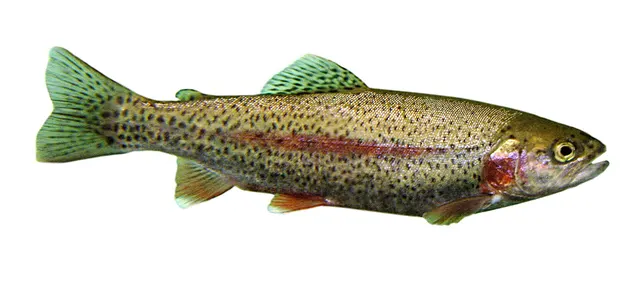 Rainbow troutCharacteristic of this water7 placesRutland Water, Grafham Water, Chew Valley Lake, Blagdon Lake and 3 moreOver reservoirAround Jan, Mar–Dec
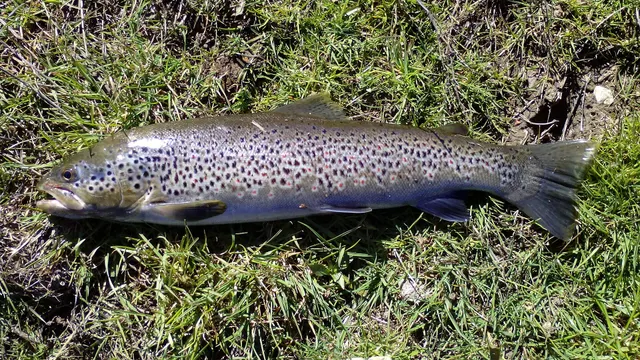 Brown troutRegular local target7 placesRutland Water, Chew Valley Lake, Blagdon Lake, Draycote Water and 3 moreOver reservoir
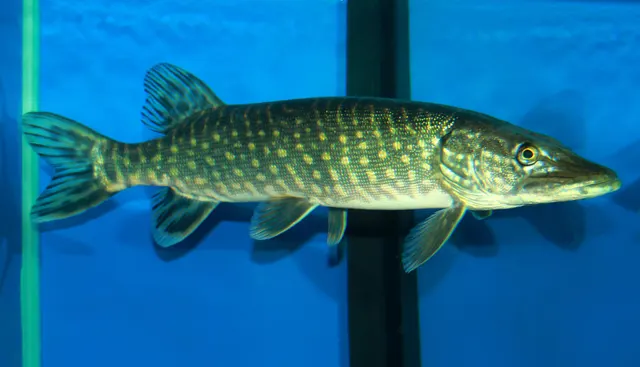 Northern pikeSeasonal1 placeBewl WaterOver reservoirAround Jan–Feb, Oct–Dec
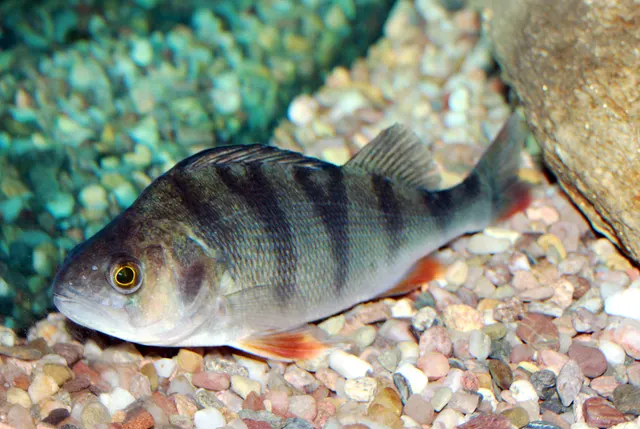 European perchRecorded here1 placeBlagdon LakeOver reservoir
From a boat · 4
- Rainbow troutCharacteristic of this water6 placesRutland Water, Grafham Water, Chew Valley Lake, Blagdon Lake and 2 moreOver reservoirAround Jan, Mar–Dec
- Northern pikeRegular local target7 placesGrafham Water, Pitsford Water, Draycote Water, Rutland Water and 3 moreOver reservoirAround Jan–Dec
- Brown troutRegular local target6 placesRutland Water, Chew Valley Lake, Blagdon Lake, Draycote Water and 2 moreOver reservoir
- European perchRegular local target6 placesGrafham Water, Pitsford Water, Rutland Water, Chew Valley Lake and 2 moreOver reservoirAround Jan, Oct–Dec
Fly fishing · 3
- Rainbow troutCharacteristic of this water7 placesRutland Water, Grafham Water, Chew Valley Lake, Blagdon Lake and 3 moreOver reservoirAround Jan, Mar–Dec
- Brown troutRegular local target7 placesRutland Water, Chew Valley Lake, Blagdon Lake, Draycote Water and 3 moreOver reservoir
- Northern pikeSeasonal2 placesChew Valley Lake, Bewl WaterOver reservoirAround Jan–Dec
What these strengths mean
- Characteristic of this water
- This water is strongly identified with this species by the sources that cover it.
- Regular local target
- Fishing sources describe this as a normal local target here, not merely as caught.
- Seasonal
- Well supported, and concentrated in part of the year rather than spread through it.
- Recorded here
- At least one credible public account of this species being caught here. That is all it means.
- How breadth is counted
- A fish documented at six marks is shown as six marks: breadth never raises the strength on its own. A fishery account describes the fishing; a recorded catch reports one specific catch. How evidence is weighed.
How people fish here
3 methods are recorded on the places documented here, counted from the records themselves rather than from what is practised in the country. Each opens a full guide to the technique.
Stillwater fly fishing
Recorded at 11 places here, over reservoir.
Fly fishing without current, where the angler supplies every movement and the problem becomes finding fish rather than presenting to them.
Documented on the same ground: Rainbow trout, Brown trout, European perch, Northern pike.
Deadbaiting
Recorded at 1 place here, over reservoir.
Presenting a dead fish as bait for predators — a method that works because scavenging is normal predator behaviour, not an exception.
Documented on the same ground: Rainbow trout, Brown trout, European perch, Northern pike.
Trolling
Recorded at 1 place here, over reservoir.
Towing lures or baits behind a moving boat to cover large volumes of water and locate scattered fish.
Documented on the same ground: Rainbow trout, Brown trout, European perch, Northern pike.
These are the methods documented at the places FishingHQ holds here. A species listed beside a method is documented on the same ground, which is not the same as being taken that way — where a source establishes the method a fish was caught on, it is stated on that place’s own page. All fishing methods.
The fishing year here
The months the records under this area actually name, tightest season first. This is “observed in these months” rather than a season: a species whose months nobody recorded is not listed, because a gap in the evidence is not a year-round fishery.
- European perchOctober to January
- Rainbow troutMarch to January
- Northern pikeall year
What dominates
Stillwater fly fishing for trout from bank and boat, which is the discipline these waters created and which remains their principal use. Boat fishing on the drift with teams of wet flies, loch style, adapted here to much larger water. Fishing at depth with graded sinking lines, which is the technique reservoir fishing invented and the reason line densities are classified as they are. Buzzer and nymph fishing on floating lines in the shallows. Lure and fry fishing in autumn when the trout switch to small coarse fish. Predator fishing for pike and perch, which several of these waters now support at exceptional size and which is usually seasonally restricted. Boat and bank day-ticket fishing generally, which is how these fisheries are structured.
The water available
Large deep artificial lakes with strong summer stratification; nutrient-rich productive water with very large invertebrate and fry populations; extensive drawdown margins that are exposed and covered by many metres of level change; engineered dam walls and rip-rap; drowned valley features, old hedge lines and submerged structure; shallow weedy bays; deep open basins; and inflow streams and their bays.
How the rules are structured
England's freshwater framework applies and here it is usually three layers rather than two. A rod licence from the national environment authority is required. The fishery itself is normally run by the water company or its concessionaire and requires a day ticket, season permit or boat booking, with its own rules on methods, bag limits, hook patterns, catch-and-release and boat handling that are set by the fishery rather than by statute and differ substantially between waters. Many of these reservoirs also carry conservation designation for their bird populations, which constrains access, disturbance and the timing of some activities. Predator fishing where permitted is usually seasonal and separately ticketed. Biosecurity requirements apply. FishingHQ does not state what any current rule is; these are fishery rules and they change annually.
Who to ask
- The Environment Agency, for rod licensing in England and for fisheries enforcement.
- The water company or fishery operator that runs the reservoir, whose own rules govern methods, bag limits, boats and access and are the operative constraint.
- Natural England and the site management body, where a reservoir carries a conservation designation affecting access, disturbance or timing.
- The fishery lodge or manager on the day, for boat safety requirements, buoyancy aid rules and any conditions in force.
Words you will meet
- Drawdown
- The fall in water level as a supply reservoir is drawn on. It can be many metres, it exposes large areas of bare margin, it moves the fishable bank a long way, and it concentrates fish and food in ways that change the fishing from month to month.
- The thermocline
- The sharp boundary between the warm surface layer and the cold deep water in a stratified lake. Trout hold above or around it in summer and oxygen falls below it, so finding its depth is the central problem of summer reservoir fishing.
- Loch style
- Fishing a team of wet flies from a boat drifting broadside to the wind, casting a short line ahead and retrieving as the boat comes on. Imported from Scottish and Irish lochs and adapted to much larger and deeper English water, where it became the standard competitive method.
- Fry feeding
- The autumn period when trout switch from insects to small coarse fish massing in the margins and around structure. It changes the flies, the retrieve and the location entirely, and it is when the largest fish of the season are usually taken.
Conditions and hazards
These are large, deep, cold, open waters and the hazards are lake hazards rather than river ones. Wind is the principal one: a big reservoir has a long fetch and no shelter, it builds a substantial and steep sea quickly, and a boat that could make ground an hour ago may not be able to now — the shore under the lee may be a bare drawdown bank with nowhere sensible to land. Deep water is cold all year regardless of surface temperature, so cold water shock decides an immersion in August as much as in February, and the involuntary gasp and loss of breathing control arrive in the first seconds. Drawdown margins are the specific local hazard: exposed reservoir bed is frequently deep soft silt or slippery rock, it is unstable, and a bank that looks walkable is not. Dam walls and rip-rap are steep with no easy exit from the water. Wading in a stratified lake puts a person a step from deep cold water. Fisheries impose buoyancy aid and boat rules for good reason and those rules are the operative safety framework here. And overhead lines cross some approaches and margins.
The thermocline, the drawdown, and a lake that is a different water each month
A supply reservoir is not a big pond. It is a managed body of water whose physical structure changes through the year in two large ways, and reservoir fishing is essentially the practice of tracking both.
STRATIFICATION IS THE FIRST. From late spring the sun warms the surface faster than mixing can distribute the heat, and because warm water is less dense than cold it floats. The lake separates into a warm upper layer, a cold lower one and a sharp transition between them — the thermocline — which can be a matter of a metre or two in depth and can be felt with a hand or found with a thermometer or a sounder.
WHAT THAT DOES TO THE FISH IS THE WHOLE PROBLEM. Below the thermocline, oxygen is progressively consumed and not replaced, because nothing mixes across it. So the deep water becomes uninhabitable through the summer even though it is the coolest water available, and trout are squeezed into a band between water that is too warm above and too poor in oxygen below. That band moves — deeper as the surface warms, shallower in cool weather, and up and down through the day.
SO THE CENTRAL SKILL IS FINDING A DEPTH RATHER THAN FINDING A PLACE. That is the specific problem reservoir fly fishing solved, and it is why the discipline produced graded sinking lines classified by sink rate, the countdown method, and a whole vocabulary of fishing a fly at a controlled depth on a controlled retrieve. None of that was needed on a river or a shallow loch.
AUTUMN OVERTURN ENDS IT. As the surface cools it becomes dense enough to sink, the layers mix, oxygen returns to the depths and the whole lake becomes available again. Fish redistribute completely and the fishing changes over a fortnight.
DRAWDOWN IS THE SECOND LARGE CHANGE and it is human rather than solar. These are working reservoirs, they are drawn on for supply, and levels fall through a dry summer and refill through the winter — sometimes by many metres. That exposes enormous areas of bare margin, moves the fishable bank hundreds of metres, drowns and uncovers old hedge lines and structure, and concentrates both food and fish as the water shrinks.
WHICH MEANS LOCAL KNOWLEDGE ON THESE WATERS HAS A SEASON RATHER THAN A LIFETIME. A bay that fished well in May may be dry in September. Submerged features that hold fish at full level are in the open air at low. And the margins exposed by drawdown are frequently deep soft silt rather than walkable ground.
AND THE PRODUCTIVITY IS THE REASON ANY OF IT IS WORTH DOING. Agricultural catchments deliver nutrients, nutrient-rich water grows daphnia, buzzers, corixa and coarse fish fry in enormous quantity, and trout in these waters put on weight and condition fast. A fish that has been in a season is a wild-behaving, hard-fighting animal that bears little resemblance to the one that went in.
Backed by research — why, and the sources (4)
Supported by peer-reviewed research or fisheries science. The sources are listed and can be checked.
- Freshwater Fishes of the British Isles — HarperCollins (New Naturalist 75), 1992 (Reference work)Relied on for: Distribution, ecology, life history and conservation status of the freshwater fishes of the British Isles named here, including in artificial and modified waters.States this directlyCitation checked — the work exists and is described correctly
- Environment Agency fisheries management, byelaws and rod licensing information — Environment Agency (Government fisheries body)Relied on for: Freshwater fisheries management, water quality, river and still-water monitoring, and the structure of the rod licensing framework in England.States this directlyCitation checked — the work exists and is described correctly
- Still Water Fly-Fishing — Andre Deutsch, 1952 (Specialist angling publication)Relied on for: The development and practice of still-water fly fishing for trout on English reservoirs, including method, tackle and the reasoning behind them.FishingHQ's interpretation of what it saysCitation checked — the work exists and is described correctly
- Still-Water Angling — MacGibbon & Kee, 1953 (Specialist angling publication)Relied on for: Mid-twentieth-century English still-water angling practice and the reasoning behind the techniques it established.FishingHQ's interpretation of what it saysCitation checked — the work exists and is described correctly
A discipline invented in one lifetime, on water built for taps
Stillwater fly fishing for trout as it is practised in England today is a twentieth-century invention, it happened on these reservoirs, and the people who did it are recent enough to have written it down.
BEFORE THE RESERVOIRS, TROUT FLY FISHING IN ENGLAND MEANT A RIVER. Chalk stream practice — upstream dry fly to a rising fish, imitating a specific insect — was the prestigious form, and it was available to a small number of people with access to a small number of rivers. Scottish and Irish loch fishing existed but was a different tradition on different water.
THEN LARGE SUPPLY RESERVOIRS WERE BUILT AND STOCKED, and a completely different problem appeared. The water was deep rather than shallow. There was no current to carry a fly. Fish were not rising to a visible hatch most of the time. And they were somewhere in an enormous volume rather than in a lie a reader of rivers could identify.
THE ANSWERS THAT EMERGED WERE NEW. Fishing at a controlled depth on sinking lines, with the countdown to reach it repeatably. Retrieve as a variable in its own right — speed, rhythm and pauses being the presentation rather than the drift. Lures and attractors rather than only imitations, which was contentious and remains so. Boat fishing loch-style adapted to much bigger water, with drogues to control the drift. And a fly repertoire built around what actually lives in a productive lake: buzzers, daphnia-feeding patterns, damsels, corixa and fry imitations.
THE LITERATURE FOLLOWED FAST, and it is unusually good. This is one of the few branches of angling whose foundational texts were written by the people who worked the technique out, in the decades when they were working it out, on named waters that are still there.
THE SOCIAL CONSEQUENCE WAS THE LARGER ONE. Reservoir fisheries sold day tickets. Anybody could turn up, walk a bank or take a boat, and fish for trout — with no estate, no beat, no introduction and no membership of anything. That opened trout fly fishing to a population that had been excluded from it, and the size of the modern British fly fishing market is a direct consequence.
COMPETITION FISHING GREW HERE TOO, with national and international stillwater competition built around loch-style boat fishing on exactly these waters, and its own arguments about what methods should be permitted.
AND THE PREDATOR FISHERY IS THE UNPLANNED SEQUEL. Nobody built these reservoirs to grow pike. But a very large, deep, clear, nutrient-rich lake containing a huge biomass of stocked trout and coarse fish is close to ideal pike habitat, and several of these waters have produced some of the largest pike caught in England in recent decades — along with perch of a size that would be a national event elsewhere. Where predator fishing is permitted it is usually seasonal, separately ticketed and closely managed, and the fish are old and require handling to match.
What experienced anglers do — why, and the sources (4)
Widely and independently recommended by experienced anglers and specialist sources. This is real angling knowledge, not proof: controlled evidence for it is limited, and FishingHQ records it as convention rather than as a demonstrated effect.
- Still Water Fly-Fishing — Andre Deutsch, 1952 (Specialist angling publication)Relied on for: The development and practice of still-water fly fishing for trout on English reservoirs, including method, tackle and the reasoning behind them.FishingHQ's interpretation of what it saysCitation checked — the work exists and is described correctly
- Still-Water Angling — MacGibbon & Kee, 1953 (Specialist angling publication)Relied on for: Mid-twentieth-century English still-water angling practice and the reasoning behind the techniques it established.FishingHQ's interpretation of what it saysCitation checked — the work exists and is described correctly
- Fishers' Craft and Lettered Art: Tracts on Fishing from the End of the Middle Ages — University of Toronto Press, 1997 (Scientific literature)Relied on for: That fishing traditions develop around the water and fish available to them, and the historical method of reading such traditions.Background and mechanism onlyCitation checked — the work exists and is described correctly
- General angling website restatements of established technique — Various (Credible secondary source)Relied on for: Widely restated descriptions of regional angling practice, recorded as practitioner consensus rather than as scholarship.Background and mechanism onlyCitation checked — the work exists and is described correctly
Warm at the top, cold underneath, and a bank made of soft silt
These are big cold deep lakes with engineered margins, and the two things that go wrong are the wind and the water temperature — both of which are disguised by how pleasant a reservoir looks on a summer evening.
THE WARM WATER IS A SKIN AND THAT IS THE SINGLE MOST IMPORTANT SAFETY FACT HERE. In summer these lakes stratify: a warm surface layer floats on cold deep water with a sharp boundary between. The surface can be genuinely comfortable. A metre or two down it is not, and off a steep margin or from a boat there is nothing shallow to stand up in.
SO A SUMMER IMMERSION IS A COLD-WATER IMMERSION. The involuntary gasp, the loss of breathing control, the inability to hold breath or swim in the first thirty seconds — all of it happens in August in these waters, to people who a moment earlier were in comfortable water. That mechanism is behind a large share of inland drownings in Britain and it is why the phrase “the water was lovely” recurs in accounts of them.
THE WIND IS THE SECOND AND THE FETCH IS THE REASON. A large reservoir is open, has no shelter, and gives a wind a long uninterrupted run at the water. A steep short sea builds far faster than on an enclosed water, a boat that could make ground half an hour ago may not now, and the shore under the lee may be a bare drawdown bank or a rip-rap dam face with nowhere sensible to land.
WHICH IS WHY FISHERY BOAT RULES ARE THE OPERATIVE SAFETY FRAMEWORK ON THESE WATERS. Buoyancy aid requirements, engine and drogue rules, wind limits and calling-in procedures are set by the fishery, they are based on that fishery's own history, and they are not advisory. Fix a turnaround time and a named landing shore before setting off, go in early when the wind starts rather than after it has built, and treat the lodge's judgement about conditions as better informed than a visitor's.
DRAWDOWN MARGINS ARE THE LOCAL HAZARD AND THEY CATCH PEOPLE OUT. Exposed reservoir bed is frequently deep soft silt, unconsolidated and slippery, and it looks like walkable ground from above. A person who steps onto it and sinks is between a bank they cannot climb and water they cannot swim in. Stay on ground you can see is firm, and treat freshly exposed margin as untested.
DAM WALLS AND RIP-RAP are steep, uneven, frequently algae-covered and offer no easy exit from the water. Wading anywhere on these lakes puts a person close to a drop-off, and the bed shelves unpredictably where drowned features lie.
AND OVERHEAD LINES cross some approaches and margins. Carbon rods conduct and electricity arcs without contact — look up before setting up.
WEAR THE BUOYANCY AID rather than carrying it, do not fish alone from a boat, tell the lodge or somebody ashore what you are doing, and treat these lakes as cold water in every month because below the surface they are.
Official guidance — why, and the sources (4)
Stated by a fisheries authority, scientific institute or recognised angling body. Authoritative, but summarising rather than demonstrating.
- RNLI water safety guidance: cold water shock and Float to Live — Royal National Lifeboat Institution (Water-safety or diver-training authority)Relied on for: Cold water shock and the immersion response, and water-safety guidance for anglers and small-craft users on inland water.States this directlyPassage read and verified
- RoSPA water safety information and UK accidental drowning statistics — Royal Society for the Prevention of Accidents (Water-safety or diver-training authority)Relied on for: UK accidental drowning statistics and inland water-safety guidance, including the proportion of drownings that begin with no intention of entering the water.States this directlyPassage read and verified
- Still Water Fly-Fishing — Andre Deutsch, 1952 (Specialist angling publication)Relied on for: The development and practice of still-water fly fishing for trout on English reservoirs, including method, tackle and the reasoning behind them.FishingHQ's interpretation of what it saysCitation checked — the work exists and is described correctly
- Still-Water Angling — MacGibbon & Kee, 1953 (Specialist angling publication)Relied on for: Mid-twentieth-century English still-water angling practice and the reasoning behind the techniques it established.FishingHQ's interpretation of what it saysCitation checked — the work exists and is described correctly
Some of what lives here
Fish recorded here that FishingHQ holds a reviewed photograph of. It is not a complete list of what The English trout reservoirs holds, and it is not a prediction that you will catch any of them — it is a way in to the ones we can show you.
- Rainbow troutThe most widely introduced sport fish on Earth — a Pacific salmonid now stocked on every continent except Antarctica, and the same species as the steelhead.
Jonathunder — CC BY-SA 3.0, via Wikimedia Commons
- Brown troutA single, extraordinarily plastic species that appears as a tiny hill-stream fish, a deep-bodied loch trout and a silver sea-run migrant — all the same animal.
Robermix, CC0, via Wikimedia Commons
- Northern pikeThe dominant freshwater ambush predator of the northern hemisphere: long, cryptic, and built for one violent acceleration rather than pursuit.
Karelj, Public domain, via Wikimedia Commons
- European perchA small, shoaling, spiny-finned predator that is both the most accessible predator to catch and the one most anglers first learn on.
Karelj, Public domain, via Wikimedia Commons
 RoachThe most numerous and most frequently caught coarse fish across much of Europe, and the prey species that underpins the whole freshwater predator food web.
Karelj, Public domain, via Wikimedia Commons
Places within this area
Publicly documented fishing geography. FishingHQ describes what the ground is; it does not say whether you may fish it, and every one of these sends that question to the body that holds the answer. Browse every place in this part of the world.
Who to ask before fishing any of these
FishingHQ does not know the current access position here. Freshwater rod fishing in England requires a current rod licence AND separate permission from whoever controls the fishing, which is frequently a club, riparian owner or navigation authority rather than a public body. Close seasons, byelaws and local rules apply and change. Check with the Environment Agency and with the controlling club or owner before going.
Rutland Water
Reservoir · Fresh water
One of the largest artificial lakes in western Europe: a pumped-storage reservoir filling a shallow valley, with two long arms, extensive shallow bays, deeper water near the dam and a bed of drowned farmland with the old hedge and field structure still present beneath it.
Very exposed. Reservoirs in low, open country make their own weather, and the fetch along the main basin is long enough to raise a genuine sea in a strong wind.
Particular to this ground: cold water shock, boat safety.
Severe hazards of The English trout reservoirs apply here: overhead power lines.
Grafham Water
Reservoir · Fresh water
A large pumped-storage reservoir in a shallow clay valley, with long open banks, a dam wall at one end and drowned hedge lines that still structure the fish population.
Severe hazards of The English trout reservoirs apply here: cold water shock, boat safety, overhead power lines.
Chew Valley Lake
Reservoir · Fresh water
A large, shallow, very fertile lowland reservoir in a limestone catchment, with extensive weed growth, a soft bed and a nationally known pike and trout fishery.
Severe hazards of The English trout reservoirs apply here: cold water shock, boat safety, overhead power lines.
Blagdon Lake
Reservoir · Fresh water
The oldest reservoir trout fishery in England, a narrow lake in a wooded Mendip valley with a marl bed, dense insect life and a strong fly-fishing tradition.
Severe hazards of The English trout reservoirs apply here: cold water shock, boat safety, overhead power lines.
Bewl Water
Reservoir · Fresh water
A long, branching, wooded reservoir on the Kent and Sussex border in a Wealden clay valley, with many arms, drowned hedgerows and a soft bed.
Severe hazards of The English trout reservoirs apply here: cold water shock, boat safety, overhead power lines.
Pitsford Water
Reservoir · Fresh water
A shallow, fertile Northamptonshire reservoir divided by a causeway, with a nature-reserve arm, extensive weed and a strong buzzer hatch that shapes its fishing.
Severe hazards of The English trout reservoirs apply here: cold water shock, boat safety, overhead power lines.
Draycote Water
Reservoir · Fresh water
An open, wind-exposed Warwickshire reservoir with a hard-edged dam and long shallow banks, in a low landscape that gives it a very long fetch.
Severe hazards of The English trout reservoirs apply here: cold water shock, boat safety, overhead power lines.
Farmoor Reservoir
Reservoir · Fresh water
Two concrete-banked basins beside the Thames in Oxfordshire, steep-sided and hard-edged with little natural margin, and a fishery shaped entirely by that engineering.
Severe hazards of The English trout reservoirs apply here: cold water shock, boat safety, overhead power lines.
3 more places in this area
Ladybower Reservoir
Reservoir · Fresh water
A deep upland reservoir in a steep gritstone valley in the Peak District, with acidic peaty inflow, steep drowned hillsides and clear cold water.
Severe hazards of The English trout reservoirs apply here: cold water shock, boat safety, overhead power lines.
Carsington Water
Reservoir · Fresh water
A pumped-storage reservoir in a limestone valley in Derbyshire, with a long dam, shallow bays and a level that varies substantially with the pumping cycle.
Severe hazards of The English trout reservoirs apply here: cold water shock, boat safety, overhead power lines.
Wimbleball Lake
Reservoir · Fresh water
A deep, steep-sided reservoir on Exmoor with a dam in a narrow gorge, cold clear acidic water and a fishery shaped by its altitude and depth.
Severe hazards of The English trout reservoirs apply here: cold water shock, boat safety, overhead power lines.
Safety
Overhead power lines is set out at the top of this page, where it cannot be missed.
Cold water shock — Can cause serious injury or death
A warm surface layer sits on cold deep water through the summer. Immersion in August is immersion in cold water, the involuntary gasp and loss of breathing control arrive in the first seconds, and off a steep margin or from a boat there is nothing shallow to stand up in.
What reduces it: Wear a buoyancy aid rather than carry one, do not fish alone from a boat, and treat these lakes as cold water in every month because below the surface they are.
Worse when:
- In summer, when the warm surface makes the lake feel safe.
- Off dam walls, rip-rap and steep drawdown margins, where there is no shallow water to recover into.
Boat safety — Can cause serious injury or death
A large open reservoir gives wind a long uninterrupted fetch, so a steep sea builds quickly and a boat that could make ground half an hour ago may not now. The shore under the lee may be bare drawdown bank or rip-rap with nowhere sensible to land.
What reduces it: Follow the fishery's boat and buoyancy aid rules, which are the operative framework. Fix a turnaround time and a named landing shore before setting off, and go in early when the wind starts rather than after it has built.
Slips, trips and falls — Can cause injury needing treatment
Exposed drawdown margin is frequently deep soft silt or slippery unconsolidated bed that looks like walkable ground from above, and dam walls and rip-rap are steep, uneven and algae-covered with no easy exit from the water.
What reduces it: Stay on ground you can see is firm, treat freshly exposed margin as untested, wear footwear with real grip on rip-rap, and do not wade near a drop-off you have not sounded.
Further safety reading
- Cold water shock and immersion — A warm surface layer sits on cold deep water through the summer, so an August immersion off a steep margin or from a boat is a cold-water immersion — which is behind a large share of inland drownings in Britain.
Check the rules before you fish
Fishing laws, bylaws, access rules, seasons, bait restrictions and permitted methods vary by location and can change. Check the current rules from the relevant authority and the water you intend to fish before fishing.
Check with:
- Current national or regional law for where you are fishing
- Current local bylaws
- The relevant fisheries authority
- The landowner, club or fishery whose water it is
- Any restrictions specific to the species or the method you intend to use
Where to go next
What swims here
- Brown troutStocked alongside rainbows and in several waters holding over and growing on for years, reaching sizes that a river of the same catchment could not support.
- European perchAt exceptional size in several of these reservoirs, feeding on fry in deep clear productive water, in a fishery that is usually seasonally restricted and separately ticketed.
- Northern pikeAn unplanned consequence of building large deep clear nutrient-rich lakes with a huge biomass of stocked and coarse fish in them: several of these waters have produced some of the largest pike caught in England in recent decades.
- Rainbow troutThe principal stocked species of these fisheries, growing fast on the enormous daphnia, buzzer and fry production of nutrient-rich water. A fish that has been in a season is a different animal from the one that went in.
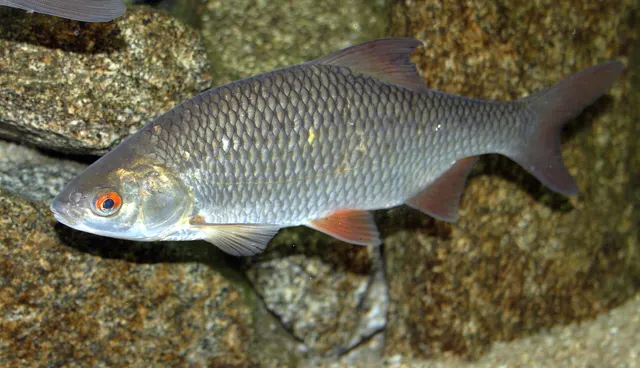
- RoachIn very large numbers as the prey base that supports both the trout's autumn fry feeding and the pike and perch fisheries, and the reason the whole predator layer exists.
How this compares
Environment and conservation
Sources and evidence
- Freshwater Fishes of the British Isles — HarperCollins (New Naturalist 75), 1992 (Reference work)Relied on for: Distribution, ecology, life history and conservation status of the freshwater fishes of the British Isles named here, including in artificial and modified waters.States this directlyCitation checked — the work exists and is described correctly
- Environment Agency fisheries management, byelaws and rod licensing information — Environment Agency (Government fisheries body)Relied on for: Freshwater fisheries management, water quality, river and still-water monitoring, and the structure of the rod licensing framework in England.States this directlyCitation checked — the work exists and is described correctly
- JNCC species and habitat conservation advice — Joint Nature Conservation Committee (Conservation authority)Relied on for: Designation, habitat description and conservation status of the freshwater and wetland habitats named, and the species characteristically associated with them.States this directlyCitation checked — the work exists and is described correctly
- The Fishes of the British Isles and North-West Europe — Macmillan, 1969 (Reference work)Relied on for: Distribution, habitat association and biology of the freshwater and migratory fishes of the British Isles named here.States this directlyCitation checked — the work exists and is described correctly
- RNLI water safety guidance: cold water shock and Float to Live — Royal National Lifeboat Institution (Water-safety or diver-training authority)Relied on for: Cold water shock and the immersion response, and water-safety guidance for anglers and small-craft users on inland water.States this directlyPassage read and verified
- RoSPA water safety information and UK accidental drowning statistics — Royal Society for the Prevention of Accidents (Water-safety or diver-training authority)Relied on for: UK accidental drowning statistics and inland water-safety guidance, including the proportion of drownings that begin with no intention of entering the water.States this directlyPassage read and verified
Why the 10 connections on this page are here, and the sources
What swims here
Backed by research — 5 connections
Supported by peer-reviewed research or fisheries science. The sources are listed and can be checked.
Brown trout
A claim that a place contains the ground, water and seasonal conditions the species is associated with. It is a distributional statement about the world, it rests on the regional reference literature, and it deliberately asserts nothing about access, permission or catch.
- Freshwater Fishes of the British Isles — HarperCollins (New Naturalist 75), 1992 (Reference work)Relied on for: Distribution, ecology and conservation status of the freshwater fishes of the British Isles, including in artificial and modified waters.States this directlyCitation checked — the work exists and is described correctly
- Environment Agency fisheries management, byelaws and rod licensing information — Environment Agency (Government fisheries body)Relied on for: Fisheries monitoring, water quality and species distribution in English rivers, canals and still waters.States this directlyCitation checked — the work exists and is described correctly
European perch
A claim that a place contains the ground, water and seasonal conditions the species is associated with. It is a distributional statement about the world, it rests on the regional reference literature, and it deliberately asserts nothing about access, permission or catch.
- Freshwater Fishes of the British Isles — HarperCollins (New Naturalist 75), 1992 (Reference work)Relied on for: Distribution, ecology and conservation status of the freshwater fishes of the British Isles, including in artificial and modified waters.States this directlyCitation checked — the work exists and is described correctly
- Environment Agency fisheries management, byelaws and rod licensing information — Environment Agency (Government fisheries body)Relied on for: Fisheries monitoring, water quality and species distribution in English rivers, canals and still waters.States this directlyCitation checked — the work exists and is described correctly
Northern pike
A claim that a place contains the ground, water and seasonal conditions the species is associated with. It is a distributional statement about the world, it rests on the regional reference literature, and it deliberately asserts nothing about access, permission or catch.
- Freshwater Fishes of the British Isles — HarperCollins (New Naturalist 75), 1992 (Reference work)Relied on for: Distribution, ecology and conservation status of the freshwater fishes of the British Isles, including in artificial and modified waters.States this directlyCitation checked — the work exists and is described correctly
- Environment Agency fisheries management, byelaws and rod licensing information — Environment Agency (Government fisheries body)Relied on for: Fisheries monitoring, water quality and species distribution in English rivers, canals and still waters.States this directlyCitation checked — the work exists and is described correctly
Rainbow trout
A claim that a place contains the ground, water and seasonal conditions the species is associated with. It is a distributional statement about the world, it rests on the regional reference literature, and it deliberately asserts nothing about access, permission or catch.
- Freshwater Fishes of the British Isles — HarperCollins (New Naturalist 75), 1992 (Reference work)Relied on for: Distribution, ecology and conservation status of the freshwater fishes of the British Isles, including in artificial and modified waters.States this directlyCitation checked — the work exists and is described correctly
- Environment Agency fisheries management, byelaws and rod licensing information — Environment Agency (Government fisheries body)Relied on for: Fisheries monitoring, water quality and species distribution in English rivers, canals and still waters.States this directlyCitation checked — the work exists and is described correctly
Roach
A claim that a place contains the ground, water and seasonal conditions the species is associated with. It is a distributional statement about the world, it rests on the regional reference literature, and it deliberately asserts nothing about access, permission or catch.
- Freshwater Fishes of the British Isles — HarperCollins (New Naturalist 75), 1992 (Reference work)Relied on for: Distribution, ecology and conservation status of the freshwater fishes of the British Isles, including in artificial and modified waters.States this directlyCitation checked — the work exists and is described correctly
- Environment Agency fisheries management, byelaws and rod licensing information — Environment Agency (Government fisheries body)Relied on for: Fisheries monitoring, water quality and species distribution in English rivers, canals and still waters.States this directlyCitation checked — the work exists and is described correctly
How people fish here
What experienced anglers do — 2 connections
Widely and independently recommended by experienced anglers and specialist sources. This is real angling knowledge, not proof: controlled evidence for it is limited, and FishingHQ records it as convention rather than as a demonstrated effect.
Fly fishing
A claim about angling convention rather than about the world: that this place sits within this branch of fishing, which drives the information architecture as well as the page. It rests on independent practitioner description.
- General angling website restatements of established technique — Various (Credible secondary source)Relied on for: Widely restated descriptions of which practices are conventionally used on the waters named, recorded as practitioner consensus rather than as scholarship.Background and mechanism onlyCitation checked — the work exists and is described correctly
- Coarse Fishing — A. & C. Black, 1912 (Specialist angling publication)Relied on for: Established description of English coarse and game fishing practice on rivers, canals and still waters.FishingHQ's interpretation of what it saysCitation checked — the work exists and is described correctly
Predator fishing
A claim about angling convention rather than about the world: that this place sits within this branch of fishing, which drives the information architecture as well as the page. It rests on independent practitioner description.
- General angling website restatements of established technique — Various (Credible secondary source)Relied on for: Widely restated descriptions of which practices are conventionally used on the waters named, recorded as practitioner consensus rather than as scholarship.Background and mechanism onlyCitation checked — the work exists and is described correctly
- Coarse Fishing — A. & C. Black, 1912 (Specialist angling publication)Relied on for: Established description of English coarse and game fishing practice on rivers, canals and still waters.FishingHQ's interpretation of what it saysCitation checked — the work exists and is described correctly
How this compares
What experienced anglers do — 1 connection
Widely and independently recommended by experienced anglers and specialist sources. This is real angling knowledge, not proof: controlled evidence for it is limited, and FishingHQ records it as convention rather than as a demonstrated effect.
The Lake District lakes
A claim that two places are worth reading against one another, because a reader choosing between them or generalising from one to the other needs to know how the underlying process differs.
- General angling website restatements of established technique — Various (Credible secondary source)Relied on for: Widely restated descriptions of which practices are conventionally used in the waters named, recorded as practitioner consensus rather than as scholarship.Background and mechanism onlyCitation checked — the work exists and is described correctly
- Sea Angler — Bauer Media (Specialist angling publication)Relied on for: Long-running published description of British and Irish sea angling practice by region and by ground type.FishingHQ's interpretation of what it saysCitation checked — the work exists and is described correctly
Safety reading
Official guidance — 1 connection
Stated by a fisheries authority, scientific institute or recognised angling body. Authoritative, but summarising rather than demonstrating.
Cold water shock and immersion
A claim that a place presents a particular hazard strongly enough that the reader should be sent to the page dealing with it in full, rather than left with the short warning on the place itself.
- RNLI water safety guidance: cold water shock and Float to Live — Royal National Lifeboat Institution (Water-safety or diver-training authority)Relied on for: Cold water shock and the immersion response, tidal cut-off, and water-safety guidance for shore anglers and small-craft users.States this directlyPassage read and verified
Environment and conservation
Backed by research — 1 connection
Supported by peer-reviewed research or fisheries science. The sources are listed and can be checked.
Stocking: what it does to a fishery
A claim that a place raises a particular environmental question, resting on the scientific and conservation literature for the system rather than on angling practice.
- JNCC species and habitat conservation advice — Joint Nature Conservation Committee (Conservation authority)Relied on for: Habitat classification and description for the intertidal, coastal, estuarine and freshwater habitats named, and the species characteristically associated with them.States this directlyCitation checked — the work exists and is described correctly
- Cefas science, advice and data on marine and freshwater environments — Centre for Environment, Fisheries and Aquaculture Science (Government fisheries body)Relied on for: Characterisation of UK inshore sediment, intertidal habitat, estuarine process and the shellfish beds associated with them.States this directlyCitation checked — the work exists and is described correctly
How FishingHQ labels evidence is explained in the evidence policy.