Dry flies
Lure · Last reviewed 2026-08-10
Flies that float in or on the surface film, imitating adult or emerging insects — the most visual fly fishing and the one where drift beats pattern.
A dry fly floats. That single property decides everything about how it is fished and what it can imitate: adult insects that have hatched and are drying their wings, spent insects that have laid and died, and terrestrials blown onto the water.
What keeps it up is surface tension acting on materials that resist wetting — traditionally stiff cock hackle fibres standing the fly on the film, more recently buoyant synthetics and floatant dressings. A fly that has absorbed water sits IN the film rather than on it, which is sometimes exactly what is wanted and sometimes the reason it stopped catching.
The governing constraint is drag. A trout judging a drifting insect expects it to travel at the speed of the water carrying it, and a fly attached to a line crossing faster or slower water does not. Drag is visible to the fish long before pattern is, which is why an experienced angler with the wrong fly and a good drift outfishes a beginner with the right fly and a dragging one.
At a glance
- Depth range
- The surface film only. A dry fly that sinks has stopped being a dry fly.
What it does in the water
None of its own. A dry fly sits in or on the surface film and travels with the current. Everything it communicates is silhouette, size and the way it deforms the film — which is why the footprint a fly leaves on the surface matters as much as what it looks like from above, and why the fish's view from beneath is the only one that counts.
How it is worked
Usually none. The fly is cast upstream or across and allowed to drift with the current at exactly the water's speed, with slack managed and line mended to delay drag. In stillwater it may be left static or twitched fractionally to imitate an insect struggling in the film.
Fish it catches
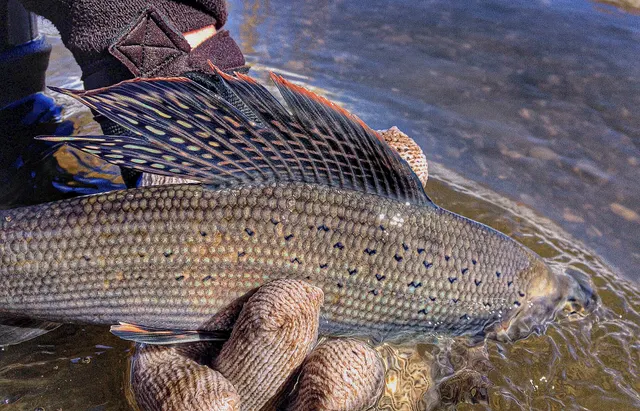 Arctic graylingDry flies to fish holding station and intercepting surface drift.
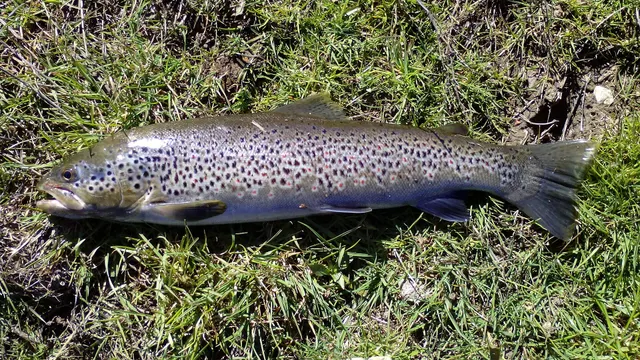 Brown troutThe dry fly exists because brown trout in rivers feed on emerging and egg-laying adult insects at the surface in numbers, in daylight, and visibly. The whole method is built on the fact that a feeding trout returns to a station and can be watched.
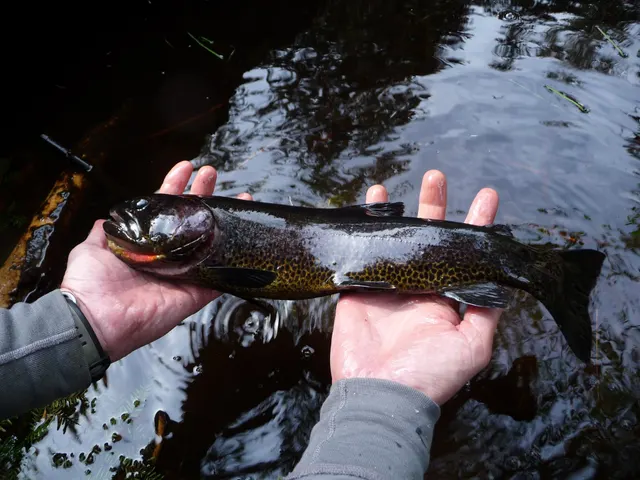 Cutthroat troutCutthroat are noted for rising freely and unselectively to a well-presented dry, which is why they are the species most western dry-fly fishing is learned on.
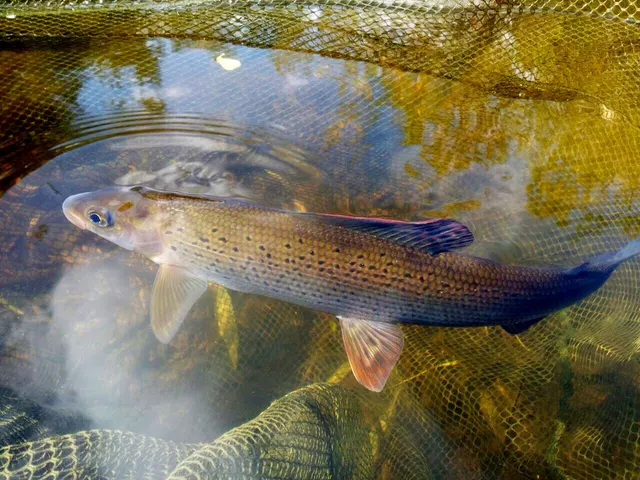 GraylingGrayling rise steadily to small surface insects and continue doing so in cold weather long after trout have stopped, which is why the grayling season is a dry-fly season in months nothing else is.
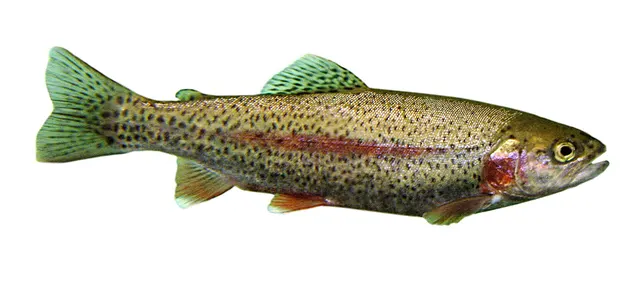 Rainbow troutRainbow trout rise freely and are the species most stillwater dry-fly fishing is conducted on, where the take is to a static or barely moving pattern on a surface the fish is cruising rather than holding in.
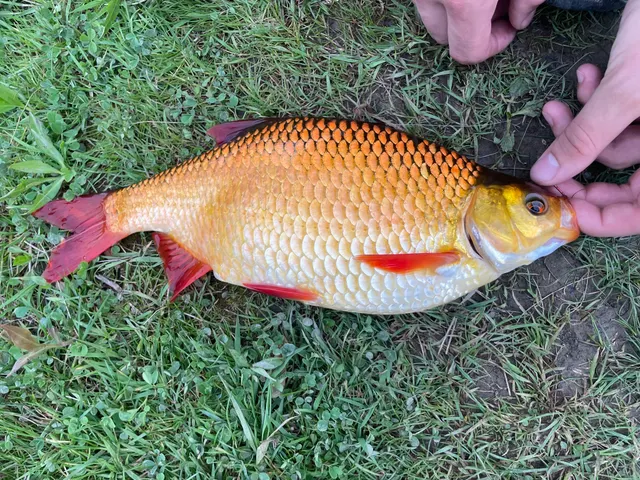 RuddSurface flies to fish feeding upward in weedy still water.
What it imitates
Adult and emerging aquatic insects, and terrestrials that have fallen in. Imitation works on size and silhouette first, on the position in the film second, and on colour a distant third. Matching the size of what is hatching is worth more than matching its exact pattern.
Where it stops working
- Only works when fish are looking up, which over a season is a minority of the time.
- Drag ruins the presentation before pattern is even relevant, and wind makes drag worse.
- A waterlogged fly stops fishing and needs drying and re-dressing.
- Useless in the coloured or broken water where a fish cannot see the surface clearly.
Where to go next
Understanding it
Instead of this
- Terrestrial fly patternsBoth are fished in the surface film and they imitate different things: an aquatic insect that emerged there, and a land insect that fell in by accident.
- Wet fliesThe traditional answer when fish are moving but not taking off the top, and historically the default rather than the exception.
More lures
Not related to this page — just the rest of the section. There is little else joined to this subject yet, and a short page should still lead somewhere.
Sources and evidence
Why the 12 connections on this page are here, and the sources
Fish it catches
What experienced anglers do — 6 connections
Widely and independently recommended by experienced anglers and specialist sources. This is real angling knowledge, not proof: controlled evidence for it is limited, and FishingHQ records it as convention rather than as a demonstrated effect.
Arctic grayling
A practitioner claim about tackle commonly used for Thymallus arcticus.
- General angling website restatements of established technique — Various (Credible secondary source)Relied on for: Widely restated practitioner accounts of this presentation for arctic grayling.Citation checked — the work exists and is described correctly
- Angling Times — Bauer Media (Specialist angling publication)Relied on for: Practitioner treatment of comparable presentations for the species group.Citation checked — the work exists and is described correctly
Brown trout
A practitioner claim about which lure family answers this species' feeding or holding behaviour.
- Trout & Salmon — Bauer Media (Specialist angling publication)Relied on for: Fly categories and their application to river salmonids.States this directlyCitation checked — the work exists and is described correctly
- The Compleat Angler, or the Contemplative Man's Recreation — Richard Marriot, 1653 (Reference work)Relied on for: The long documentary record of artificial-fly fishing for trout and grayling in English rivers.Background and mechanism onlyPassage read and verified
Cutthroat trout
A practitioner claim about which lure family answers this species' feeding or holding behaviour.
- Trout & Salmon — Bauer Media (Specialist angling publication)Relied on for: Fly categories and their application to salmonids in running and still water.States this directlyCitation checked — the work exists and is described correctly
- Still Water Fly-Fishing — Andre Deutsch, 1952 (Specialist angling publication)Relied on for: Still-water fly categories, and the feeding observations they are chosen from.Background and mechanism onlyCitation checked — the work exists and is described correctly
Grayling
A practitioner claim about which lure family answers this species' feeding or holding behaviour.
- Trout & Salmon — Bauer Media (Specialist angling publication)Relied on for: Fly categories and their application to river salmonids.States this directlyCitation checked — the work exists and is described correctly
- The Compleat Angler, or the Contemplative Man's Recreation — Richard Marriot, 1653 (Reference work)Relied on for: The long documentary record of artificial-fly fishing for trout and grayling in English rivers.Background and mechanism onlyPassage read and verified
Rainbow trout
A practitioner claim about which lure family answers this species' feeding or holding behaviour.
- Trout & Salmon — Bauer Media (Specialist angling publication)Relied on for: Fly categories and their application to salmonids in running and still water.States this directlyCitation checked — the work exists and is described correctly
- Still Water Fly-Fishing — Andre Deutsch, 1952 (Specialist angling publication)Relied on for: Still-water fly categories, and the feeding observations they are chosen from.Background and mechanism onlyCitation checked — the work exists and is described correctly
Rudd
A practitioner claim about tackle commonly used for Scardinius erythrophthalmus.
- General angling website restatements of established technique — Various (Credible secondary source)Relied on for: Widely restated practitioner accounts of this presentation for rudd.Citation checked — the work exists and is described correctly
- Angling Times — Bauer Media (Specialist angling publication)Relied on for: Practitioner treatment of comparable presentations for the species group.Citation checked — the work exists and is described correctly
How it is worked
What experienced anglers do — 3 connections
Widely and independently recommended by experienced anglers and specialist sources. This is real angling knowledge, not proof: controlled evidence for it is limited, and FishingHQ records it as convention rather than as a demonstrated effect.
Dry fly fishing
A dry fly is defined as one that floats in or on the film, and dry fly fishing is defined as presenting it there. The two definitions are the same sentence read from opposite ends.
- Still Water Fly-Fishing — Andre Deutsch, 1952 (Specialist angling publication)Relied on for: Specialist treatment of which bait or lure family this technique is fished with.States this directlyCitation checked — the work exists and is described correctly
- Trout & Salmon — Bauer Media (Specialist angling publication)Relied on for: The independently restated practitioner pairing of this technique with this family.Background and mechanism onlyCitation checked — the work exists and is described correctly
Fly fishing
The definitional relationship, with the historical tension noted because it is the interesting part.
- Freshwater Fishing — Macdonald & Jane's, 1975 (Specialist angling publication)Relied on for: The place of the dry fly in the British fly fishing tradition.Citation checked — the work exists and is described correctly
- Trout & Salmon — Bauer Media (Specialist angling publication)Relied on for: Contemporary treatment of the dry fly and of the purism argument that surrounds it.Citation checked — the work exists and is described correctly
Stillwater fly fishing
Stillwater fly fishing changes register completely during a hatch, and the dry fly is what it changes to. Both records treat that transition as part of the same outing rather than as different fishing.
- Still Water Fly-Fishing — Andre Deutsch, 1952 (Specialist angling publication)Relied on for: Specialist treatment of which bait or lure family this technique is fished with.States this directlyCitation checked — the work exists and is described correctly
- Trout & Salmon — Bauer Media (Specialist angling publication)Relied on for: The independently restated practitioner pairing of this technique with this family.Background and mechanism onlyCitation checked — the work exists and is described correctly
Understanding it
What experienced anglers do — 1 connection
Widely and independently recommended by experienced anglers and specialist sources. This is real angling knowledge, not proof: controlled evidence for it is limited, and FishingHQ records it as convention rather than as a demonstrated effect.
The insects fly fishing imitates
An imitation claim. The entomology it rests on is separately supported; the imitation itself is a practitioner judgement about what a pattern is for.
- Still Water Fly-Fishing — Andre Deutsch, 1952 (Specialist angling publication)Relied on for: Dry fly patterns as imitations of adult aquatic insects.Citation checked — the work exists and is described correctly
- Trout & Salmon — Bauer Media (Specialist angling publication)Relied on for: Contemporary matching of dry patterns to hatches.Citation checked — the work exists and is described correctly
Backed by research — 1 connection
Supported by peer-reviewed research or fisheries science. The sources are listed and can be checked.
The insects fly fishing imitates
Why dry fly fishing has seasons and hours rather than being always available.
- Freshwater Fishes of the British Isles — HarperCollins (New Naturalist 75), 1992 (Reference work)Relied on for: The freshwater invertebrate groups that dominate the diet of river and stillwater fish, and their life stages.Background and mechanism onlyCitation checked — the work exists and is described correctly
Instead of this
What experienced anglers do — 2 connections
Widely and independently recommended by experienced anglers and specialist sources. This is real angling knowledge, not proof: controlled evidence for it is limited, and FishingHQ records it as convention rather than as a demonstrated effect.
Terrestrial fly patterns
The distinction between emergence and accidental fall is the basis of choosing between the two.
- Still Water Fly-Fishing — Andre Deutsch, 1952 (Specialist angling publication)Relied on for: Game angling reasoning on presentation and terminal tackle.Background and mechanism onlyCitation checked — the work exists and is described correctly
- Trout & Salmon — Bauer Media (Specialist angling publication)Relied on for: Contemporary game angling practice.States this directlyCitation checked — the work exists and is described correctly
Wet flies
The substitution a fly angler actually makes on the water.
- Still Water Fly-Fishing — Andre Deutsch, 1952 (Specialist angling publication)Relied on for: Stillwater fly fishing practice, including line choice for depth and the role of retrieve.States this directlyCitation checked — the work exists and is described correctly
- Freshwater Fishing — Macdonald & Jane's, 1975 (Specialist angling publication)Relied on for: Fly fishing tackle and presentation practice described independently of the stillwater tradition.States this directlyCitation checked — the work exists and is described correctly
How FishingHQ labels evidence is explained in the evidence policy.