The insects fly fishing imitates
Explainer · Last reviewed 2026-08-10
Four groups of insect account for most of what a river trout eats, and knowing their life stages tells you what depth to fish at more reliably than any fly box does.
Fly fishing is applied entomology, and it needs less of it than people fear. Four groups cover most of what matters in European rivers.
UPWING FLIES (Ephemeroptera — mayflies, olives, duns) live for a year or more as nymphs on the bed, then swim to the surface, hatch into a winged dun, fly off to moult a second time into a spinner, mate, lay and die on the water. That is FOUR distinct stages a fish can eat: nymph, emerger in the film, dun on the surface, and spent spinner.
SEDGES (Trichoptera — caddis) live as larvae, many in cases built from sand or plant fragments, pupate, and swim actively to the surface to hatch. The pupa's active ascent is why a rising or swinging fly imitates them so well.
STONEFLIES (Plecoptera) crawl out onto rocks and banks to hatch rather than emerging through the surface, so the nymph matters far more than the adult.
MIDGES (Chironomidae — buzzers) matter most in stillwater, where their pupae hang in the surface film in enormous numbers and are the single most important trout food in many reservoirs.
The useful conclusion is not a list of patterns. It is that knowing WHICH STAGE is available tells you what depth to fish at, and depth is the variable that decides whether anything happens.
Why 'matching the hatch' is usually the wrong instruction
The phrase suggests the task is identification: work out which insect is hatching, find the fly that matches it, catch fish. In practice that is rarely where the difficulty lies.
What matters far more often is the STAGE and therefore the DEPTH. During a hatch, the great majority of the insects taken are not the adults on the surface — they are the nymphs ascending and the emergers stuck in the film, because those are the ones that cannot escape. A fish rising visibly is frequently taking emergers just under the surface while the angler casts duns over its head.
Size is the second thing, and it beats pattern comfortably. A roughly right fly of the right size, drifting properly, will out-fish an exactly right fly of the wrong size or a dragging one.
So the practical sequence is: what stage is available, at what depth, at roughly what size — and only then, which fly. FishingHQ labels this as practitioner consensus, because while the underlying entomology is well established, the ordering of those priorities is angling convention rather than a demonstrated hierarchy.
What experienced anglers do — why, and the sources (2)
Widely and independently recommended by experienced anglers and specialist sources. This is real angling knowledge, not proof: controlled evidence for it is limited, and FishingHQ records it as convention rather than as a demonstrated effect.
- Still Water Fly-Fishing — Andre Deutsch, 1952 (Specialist angling publication)Relied on for: The reasoning that fly selection follows from what stage of the insect is available and at what depth, rather than from exact pattern matching.Citation checked — the work exists and is described correctly
- Trout & Salmon — Bauer Media (Specialist angling publication)Relied on for: Contemporary game angling instruction giving the same ordering of priorities, from a separate authorial community.Citation checked — the work exists and is described correctly
Where to go next
Fish this applies to
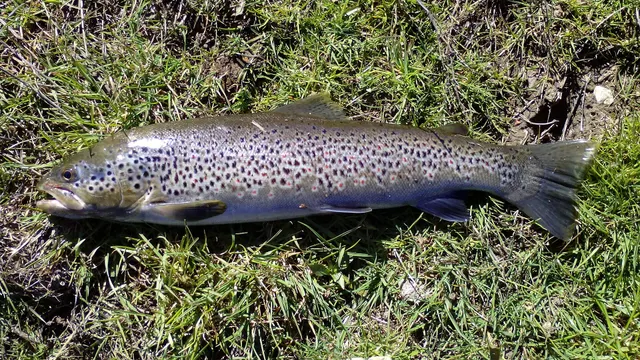 Brown troutThe fish that makes insect knowledge worth having, because it is a visual, selective, drift-feeding predator that holds station and lets the current bring food to it. A brown trout in a hatch is not eating insects generally; it is eating one species at one life stage, and the entomology is what makes that legible rather than mysterious.
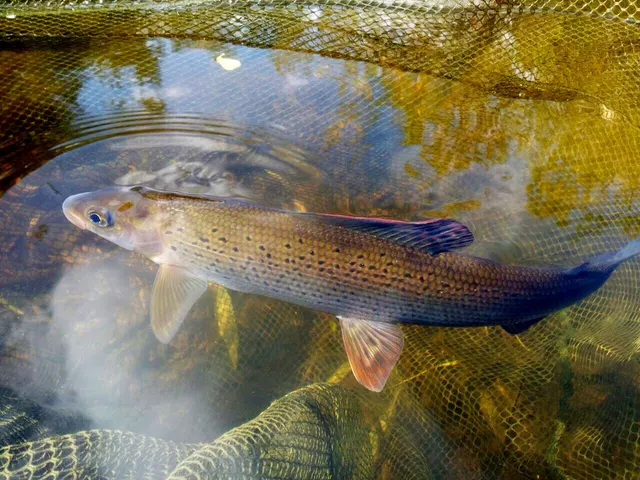 GraylingA worked example with a different emphasis from trout. Grayling feed heavily on nymphs and larvae taken close to the bed rather than off the surface, and they go on doing so through winter when the surface activity trout are famous for has stopped — which is why grayling fishing is where sub-surface entomology earns its place.
Gear this affects
- Dry fliesAdults and emergers are a brief and predictable part of an insect's life, which is why surface feeding is episodic rather than constant.
- NymphsNymphs imitate the subsurface larval stages, which is where the overwhelming majority of a trout's diet actually comes from — the fact that made nymphing unavoidable however unfashionable it was.
- Wet fliesSoft-hackled flies fished on a swing imitate drowned adults and rising emergers — the stages between nymph and dry.
Water and ground
Where this applies
Related reading
- Matching the hatch: what it means and when it is wrongThe entomology record identifies the insects. This page is about when identifying them is the right thing to be doing, which is less often than the phrase implies.
- The four fly types, and what each imitatesThe entomology record covers what freshwater flies imitate. This page covers the categories themselves, including the saltwater case the entomology explicitly does not reach.
- Water temperature and fish activityHatches are temperature-driven, which is why the same water produces different insects in April and August and why a hatch chart is a temperature chart in disguise.
- What a saltwater fly imitatesThe entomology record is explicitly about insects and stops at the tideline. Naming that boundary from the saltwater side is what stops a reader assuming the vocabulary carries over.
History and culture
Sources and evidence
Why the 12 connections on this page are here, and the sources
Fish this applies to
What experienced anglers do — 2 connections
Widely and independently recommended by experienced anglers and specialist sources. This is real angling knowledge, not proof: controlled evidence for it is limited, and FishingHQ records it as convention rather than as a demonstrated effect.
Brown trout
A fish or a water joined to the fly-fishing mechanism it is a worked example of, written only where the subject's own behaviour or physical character is what this page explains. The direction is the one FishingHQ writes this kind of connection in, and the one it already uses 176 times, and it is also the semantically correct one: the mechanism explains the fish, not the reverse.
- Freshwater Fishes of the British Isles — HarperCollins (New Naturalist 75), 1992 (Reference work)Relied on for: Life history, feeding biology, habitat requirement and seasonal behaviour of the freshwater fishes of the British Isles.States this directlyCitation checked — the work exists and is described correctly
- FishBase: a global information system on fishes — Froese, R. and D. Pauly, eds. — FishBase Consortium (Scientific institute)Relied on for: Recorded environment, depth range, feeding biology and distribution of the species named.States this directlyPassage read and verified
- Still Water Fly-Fishing — Andre Deutsch, 1952 (Specialist angling publication)Relied on for: Stillwater fly practice: line density and depth, leader construction, fly selection against the food present, and the behaviour of stocked and wild trout in still water.States this directlyCitation checked — the work exists and is described correctly
- Trout & Salmon — Bauer Media (Specialist angling publication)Relied on for: Long-running published description of British game angling practice: river and stillwater trout, grayling and salmon fishing, and the presentation each demands.States this directlyCitation checked — the work exists and is described correctly
Grayling
A fish or a water joined to the fly-fishing mechanism it is a worked example of, written only where the subject's own behaviour or physical character is what this page explains. The direction is the one FishingHQ writes this kind of connection in, and the one it already uses 176 times, and it is also the semantically correct one: the mechanism explains the fish, not the reverse.
- Freshwater Fishes of the British Isles — HarperCollins (New Naturalist 75), 1992 (Reference work)Relied on for: Life history, feeding biology, habitat requirement and seasonal behaviour of the freshwater fishes of the British Isles.States this directlyCitation checked — the work exists and is described correctly
- FishBase: a global information system on fishes — Froese, R. and D. Pauly, eds. — FishBase Consortium (Scientific institute)Relied on for: Recorded environment, depth range, feeding biology and distribution of the species named.States this directlyPassage read and verified
- Still Water Fly-Fishing — Andre Deutsch, 1952 (Specialist angling publication)Relied on for: Stillwater fly practice: line density and depth, leader construction, fly selection against the food present, and the behaviour of stocked and wild trout in still water.States this directlyCitation checked — the work exists and is described correctly
- Trout & Salmon — Bauer Media (Specialist angling publication)Relied on for: Long-running published description of British game angling practice: river and stillwater trout, grayling and salmon fishing, and the presentation each demands.States this directlyCitation checked — the work exists and is described correctly
Gear this affects
What experienced anglers do — 2 connections
Widely and independently recommended by experienced anglers and specialist sources. This is real angling knowledge, not proof: controlled evidence for it is limited, and FishingHQ records it as convention rather than as a demonstrated effect.
Dry flies
An imitation claim. The entomology it rests on is separately supported; the imitation itself is a practitioner judgement about what a pattern is for.
- Still Water Fly-Fishing — Andre Deutsch, 1952 (Specialist angling publication)Relied on for: Dry fly patterns as imitations of adult aquatic insects.Citation checked — the work exists and is described correctly
- Trout & Salmon — Bauer Media (Specialist angling publication)Relied on for: Contemporary matching of dry patterns to hatches.Citation checked — the work exists and is described correctly
Nymphs
An imitation claim resting on the underlying entomology, which is supported separately.
- Still Water Fly-Fishing — Andre Deutsch, 1952 (Specialist angling publication)Relied on for: Nymph patterns as imitations of subsurface larval stages.Citation checked — the work exists and is described correctly
- Freshwater Fishing — Macdonald & Jane's, 1975 (Specialist angling publication)Relied on for: The proportion of trout diet taken subsurface.Citation checked — the work exists and is described correctly
Backed by research — 3 connections
Supported by peer-reviewed research or fisheries science. The sources are listed and can be checked.
Dry flies
Why dry fly fishing has seasons and hours rather than being always available.
- Freshwater Fishes of the British Isles — HarperCollins (New Naturalist 75), 1992 (Reference work)Relied on for: The freshwater invertebrate groups that dominate the diet of river and stillwater fish, and their life stages.Background and mechanism onlyCitation checked — the work exists and is described correctly
Nymphs
The imitation and the animal it imitates.
- Freshwater Fishes of the British Isles — HarperCollins (New Naturalist 75), 1992 (Reference work)Relied on for: The freshwater invertebrate groups that dominate the diet of river and stillwater fish, and their life stages.Background and mechanism onlyCitation checked — the work exists and is described correctly
Wet flies
The oldest fly method, explained by the life stage it covers.
- Freshwater Fishes of the British Isles — HarperCollins (New Naturalist 75), 1992 (Reference work)Relied on for: The freshwater invertebrate groups that dominate the diet of river and stillwater fish, and their life stages.Background and mechanism onlyCitation checked — the work exists and is described correctly
Water and ground
What experienced anglers do — 1 connection
Widely and independently recommended by experienced anglers and specialist sources. This is real angling knowledge, not proof: controlled evidence for it is limited, and FishingHQ records it as convention rather than as a demonstrated effect.
Chalk streams
A fish or a water joined to the fly-fishing mechanism it is a worked example of, written only where the subject's own behaviour or physical character is what this page explains. The direction is the one FishingHQ writes this kind of connection in, and the one it already uses 176 times, and it is also the semantically correct one: the mechanism explains the fish, not the reverse.
- Still Water Fly-Fishing — Andre Deutsch, 1952 (Specialist angling publication)Relied on for: Stillwater fly practice: line density and depth, leader construction, fly selection against the food present, and the behaviour of stocked and wild trout in still water.States this directlyCitation checked — the work exists and is described correctly
- Trout & Salmon — Bauer Media (Specialist angling publication)Relied on for: Long-running published description of British game angling practice: river and stillwater trout, grayling and salmon fishing, and the presentation each demands.States this directlyCitation checked — the work exists and is described correctly
Where this applies
What experienced anglers do — 1 connection
Widely and independently recommended by experienced anglers and specialist sources. This is real angling knowledge, not proof: controlled evidence for it is limited, and FishingHQ records it as convention rather than as a demonstrated effect.
The Hampshire chalk streams
A place joined to the mechanism that explains what is distinctive about fishing there, which is what makes a location page transferable rather than local colour.
- Trout & Salmon — Bauer Media (Specialist angling publication)Relied on for: Contemporary British game angling practice as reported by practitioners, including river condition and technique.States this directlyCitation checked — the work exists and is described correctly
- Freshwater Fishing — Macdonald & Jane's, 1975 (Specialist angling publication)Relied on for: Comprehensive British freshwater angling practice including river craft and the reasoning behind method choices.States this directlyCitation checked — the work exists and is described correctly
Related reading
What experienced anglers do — 3 connections
Widely and independently recommended by experienced anglers and specialist sources. This is real angling knowledge, not proof: controlled evidence for it is limited, and FishingHQ records it as convention rather than as a demonstrated effect.
Matching the hatch: what it means and when it is wrong
Why it works, and what that rests on. Fly tackle and technique rest on established practitioner craft rather than on experiment, and the strength shown says so rather than borrowing an authority the subject does not have.
- Still Water Fly-Fishing — Andre Deutsch, 1952 (Specialist angling publication)Relied on for: Stillwater fly fishing technique, including line choice, depth control, retrieve and the imitation of stillwater food forms.States this directlyCitation checked — the work exists and is described correctly
- Freshwater Fishing — Macdonald & Jane's, 1975 (Specialist angling publication)Relied on for: Comprehensive freshwater angling practice including fly tackle, casting, presentation and the reasoning behind terminal tackle choices.States this directlyCitation checked — the work exists and is described correctly
The four fly types, and what each imitates
Why it works, and what that rests on. Fly tackle and technique rest on established practitioner craft rather than on experiment, and the strength shown says so rather than borrowing an authority the subject does not have.
- Still Water Fly-Fishing — Andre Deutsch, 1952 (Specialist angling publication)Relied on for: Stillwater fly fishing technique, including line choice, depth control, retrieve and the imitation of stillwater food forms.States this directlyCitation checked — the work exists and is described correctly
- Freshwater Fishing — Macdonald & Jane's, 1975 (Specialist angling publication)Relied on for: Comprehensive freshwater angling practice including fly tackle, casting, presentation and the reasoning behind terminal tackle choices.States this directlyCitation checked — the work exists and is described correctly
What a saltwater fly imitates
Why it works, and what that rests on. Fly craft rests on established practitioner knowledge rather than on experiment, and the strength shown says so rather than borrowing an authority it does not have.
- Freshwater Fishing — Macdonald & Jane's, 1975 (Specialist angling publication)Relied on for: Comprehensive angling practice including fly tackle, casting, presentation and the reasoning behind terminal tackle choices.States this directlyCitation checked — the work exists and is described correctly
- Trout & Salmon — Bauer Media (Specialist angling publication)Relied on for: Contemporary game and fly angling practice as reported and restated by practitioners, including tackle convention and technique.Background and mechanism onlyCitation checked — the work exists and is described correctly
Backed by research — 1 connection
Supported by peer-reviewed research or fisheries science. The sources are listed and can be checked.
Water temperature and fish activity
An ecological claim about the drivers of insect emergence, held to a scientific standard because it is a statement about the world rather than about technique.
- Freshwater Fishes of the British Isles — HarperCollins (New Naturalist 75), 1992 (Reference work)Relied on for: Temperature as a driver of invertebrate emergence and of fish feeding activity in fresh water.FishingHQ's interpretation of what it saysCitation checked — the work exists and is described correctly
- Cefas science, advice and data on marine and freshwater environments — Centre for Environment, Fisheries and Aquaculture Science (Government fisheries body)Relied on for: Water temperature as a controlling variable for freshwater ecological processes.Background and mechanism onlyCitation checked — the work exists and is described correctly
History and culture
What experienced anglers do — 1 connection
Widely and independently recommended by experienced anglers and specialist sources. This is real angling knowledge, not proof: controlled evidence for it is limited, and FishingHQ records it as convention rather than as a demonstrated effect.
Angling literature and the written tradition
Written for the six fly records whose subject IS a documented tradition — the dry-fly and nymph literature, the development of the artificial fly, the British three-way split, the rod and reel lineage — and refused for the twenty-three where the only claim would be that fly fishing is old.
- The Compleat Angler, or the Contemplative Man's Recreation — Richard Marriot, 1653 (Reference work)Relied on for: Seventeenth-century English angling practice including artificial flies, their dressing and the fishing they were used for.States this directlyPassage read and verified
- Treatyse of Fysshynge with an Angle — Wynkyn de Worde, in the Boke of Saint Albans, 1496 (Reference work)Relied on for: The earliest printed English account of angling, including dressed artificial flies listed by season.States this directlyCitation checked — the work exists and is described correctly
How FishingHQ labels evidence is explained in the evidence policy.