The Hampshire chalk streams
Fishing regions · Last reviewed 2026-08-14
Clear, cold, spring-fed rivers running off chalk at almost constant temperature and flow — a rare habitat globally, the birthplace of modern dry-fly fishing, and among the most closely managed fisheries anywhere.
Safety: moving water and currents — can cause injury needing treatment. One more point applies here.
Being listed here is not permission to fish. What that meansClose
Access, fishing rights, seasons, licences, local bylaws and permitted methods vary and can change. Check current access, permission, local regulations, closures and restrictions before you travel or fish. FishingHQ describes what the ground is and names who holds the answer; it does not hold the answer itself.
Find the authority for a jurisdiction · What FishingHQ does and does not cover
A chalk stream is a river fed principally by groundwater emerging from a chalk aquifer rather than by surface run-off, and the consequences are unlike any other river type.
THE WATER IS ALKALINE, CLEAR, COLD AND EXTRAORDINARILY STABLE. Rainfall enters the chalk, filters slowly through it, and emerges through springs weeks or months later — so flow and temperature vary far less through the year than in a rain-fed river. That stability supports dense invertebrate populations, abundant rooted weed, and gravel that stays clean enough to spawn on.
THEY ARE GLOBALLY RARE. The great majority of the world's chalk streams are in southern England, with a small number in northern France, which makes this a habitat Britain is genuinely custodian of rather than merely fond of.
THE FISHING TRADITION IS THE MOST INFLUENTIAL IN THE WORLD. Modern dry-fly fishing — the upstream cast to a rising fish with a floating imitation — was codified on these rivers in the nineteenth century, and the doctrines argued out here about dry fly against nymph shaped fly fishing everywhere. The Test and the Itchen in particular carry a weight of angling literature no other rivers approach.
THEY ARE ALSO AMONG THE MOST INTENSIVELY MANAGED FISHERIES IN EXISTENCE. Weed cutting, bank work, gravel cleaning, stocking and beat rotation are normal. Access is almost entirely private and let by beat, and it is expensive. That is a fact about the fishery rather than a complaint about it, and it is why a visitor should settle access long before travelling.
AND THEY ARE UNDER PRESSURE. Abstraction from the aquifer, nutrient enrichment from agriculture and sewage, siltation, and low flows in dry years are all documented problems, and the condition of these rivers is an active conservation question rather than a settled one.
What fishing here is like
Clear, cold, spring-fed rivers of exceptional stability, running over clean gravel through managed water meadow. Dense weed growth, abundant invertebrate life and highly visible fish. The fishing is close-range, visual and technical, and it is conducted almost entirely on private, managed and let water.
The culture is the most formalised in British angling: beats, rods, ghillies, rules about method and frequently about which fly may be used. That formality is part of what a visitor is paying for and part of what has preserved the rivers.
What you can target here
One entry per fish, grouped by how you would be fishing — because the answer is a different one from the rocks and from a boat. Each entry says how strongly the sources support it and how much evidence sits behind it. These are documented catches, not a forecast, and none of it is a statement that you may fish any particular ground.
Fly fishing · 3
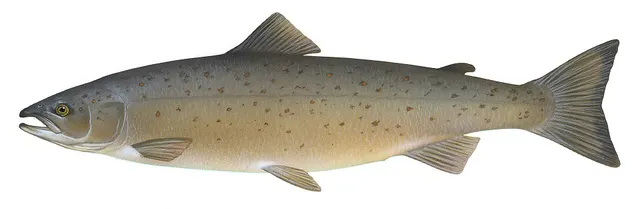
What these strengths mean
- Characteristic of this water
- This water is strongly identified with this species by the sources that cover it.
- Seasonal
- Well supported, and concentrated in part of the year rather than spread through it.
- Recorded here
- At least one credible public account of this species being caught here. That is all it means.
- How breadth is counted
- A fish documented at six marks is shown as six marks: breadth never raises the strength on its own. A fishery account describes the fishing; a recorded catch reports one specific catch. How evidence is weighed.
How people fish here
4 methods are recorded on the places documented here, counted from the records themselves rather than from what is practised in the country. Each opens a full guide to the technique.
Dry fly fishing
Recorded at 2 places here, over river reach.
Presenting a floating artificial to a fish feeding at the surface, so that it drifts exactly as a natural insect would.
Documented on the same ground: Brown trout, Grayling, Atlantic salmon.
Feeder fishing
Recorded at 2 places here, over river reach.
Legering with a weight that also carries bait, so that free offerings arrive in exactly the same place as the hookbait, cast after cast.
Float fishing
Recorded at 2 places here, over river reach.
Suspending a bait at a controlled depth beneath a buoyant indicator — the most visual, most controllable and most widely applicable method in angling.
Ledgering
Recorded at 2 places here, over river reach.
Fishing a bait on the bottom held by a weight, with no float — the simplest way to fish at distance, in depth, or in wind.
These are the methods documented at the places FishingHQ holds here. A species listed beside a method is documented on the same ground, which is not the same as being taken that way — where a source establishes the method a fish was caught on, it is stated on that place’s own page. All fishing methods.
What dominates
Dry-fly fishing to visible rising trout, which is the tradition these rivers created and the method their rules frequently prescribe. Upstream nymphing where permitted, which was itself the subject of the most famous argument in British angling. Fishing for grayling, which extends the season into winter on many beats and is treated very differently from trout. Salmon fishing on the lower reaches of the larger rivers, much reduced from its historic level. Sea trout fishing at night on the lower rivers, which is a distinct and demanding specialism.
The water available
Spring-fed main rivers running over clean flint gravel, with dense ranunculus weed growth in summer. Carriers and side channels, many of them dug historically for water meadow irrigation and now fisheries in their own right. Water meadow and floodplain, much of it managed for conservation. Hatch pools and mill pools at former water-management structures. Lower reaches grading into tidal water on the larger systems.
How the rules are structured
Two permissions are needed and they come from different places. A national rod licence for England is required for freshwater fishing and is obtained from the national authority. Permission to fish any particular water is separate and is granted by the owner or the fishery — on these rivers almost invariably by beat, by day or by season, frequently through an agent, and frequently booked far in advance. Close seasons apply and differ between trout, grayling and coarse fish, and individual fisheries commonly impose stricter dates and stricter rules than the statutory ones. Method restrictions are normal here in a way they are not elsewhere: dry fly only, upstream only, barbless, single hook, and catch-and-release requirements are all common beat rules. Several stretches carry conservation designations that add further constraints. Salmon fishing is subject to specific and repeatedly revised measures in response to stock decline. FishingHQ does not state what any current rule is: obtain the national licence from the relevant authority and the fishing permission from the fishery, and read that fishery's own rules before fishing.
Who to ask
- The national fisheries authority for England, for the rod licence, close seasons and statutory rules
- The owner, syndicate, estate or letting agent for the specific beat, who grants the fishing permission and sets the beat rules
- The river keeper or ghillie, who is the operative source of what is permitted and expected on the day
- The statutory nature conservation body, where a stretch carries a conservation designation
- The local rivers trust or catchment partnership, for the current condition of the water and any advisory restriction
Words you will meet
- Beat
- A defined stretch of river let as a fishing unit, usually with a stated number of rods. The unit in which chalk stream fishing is bought, described and regulated.
- Carrier
- A side channel, frequently dug historically to irrigate water meadows, now often a fishery in its own right and typically narrower, more intimate and more difficult than the main river.
- Ranunculus
- The water crowfoot that forms the characteristic weed beds. It oxygenates, shelters invertebrates, concentrates flow into clean gravel runs, and is cut on a managed schedule that changes the river within a day.
- Ghillie and keeper
- The person managing the beat. On a chalk stream the keeper's weed cutting, bank work and stocking decisions shape the fishing more than any angler's tackle does.
Conditions and hazards
These are not dangerous rivers by British standards, and the hazards are correspondingly ordinary and easy to underestimate.
Wading on clean gravel is generally straightforward; wading into soft silt at the margins, or over cut weed, is not, and a chalk stream bed is frequently softer than its clarity suggests.
Banks are frequently undercut beneath dense marginal growth, and a bank that looks solid can be an overhang above deep water.
Hatches, sluices and mill structures create fast water and drops in otherwise placid rivers, and are the one place these systems become genuinely dangerous.
Weil's disease is present in British fresh water and is a real if uncommon risk, addressed by covering cuts and washing hands before eating.
And the practical hazard for most visitors is trespass rather than injury: the banks are private, and knowing exactly where a beat begins and ends is a condition of being there.
What a chalk stream actually is
The defining property is the aquifer. Rain falling on chalk downland soaks in rather than running off, filters slowly through the rock, and emerges through springs weeks or months later.
THAT PRODUCES A RIVER UNLIKE A RAIN-FED ONE. Flow varies far less through the year. Temperature varies far less, staying cool in summer and comparatively warm in winter. The water is alkaline, mineral-rich and exceptionally clear. Fine sediment is low, so gravel stays clean.
THE ECOLOGY FOLLOWS. Dense rooted weed — principally ranunculus — grows through the summer, oxygenating the water, sheltering invertebrates and concentrating the flow into clean runs between the beds. Invertebrate densities are among the highest of any river type, which is why the fish are so well fed and so selective.
AND THE HABITAT IS GLOBALLY RARE. Most of the world's chalk streams are in southern England, with a handful in northern France. That is the fact that turns a local fishery into an international responsibility.
Backed by research — why, and the sources (2)
Supported by peer-reviewed research or fisheries science. The sources are listed and can be checked.
- Freshwater Fishes of the British Isles — HarperCollins (New Naturalist 75), 1992 (Reference work)Relied on for: Biology, distribution, life history and conservation status of British and Irish freshwater and diadromous fishes.States this directlyCitation checked — the work exists and is described correctly
- JNCC species and habitat conservation advice — Joint Nature Conservation Committee (Conservation authority)Relied on for: Conservation status, designation and monitoring of species and habitats in the United Kingdom, including protected river and lake systems.States this directlyCitation checked — the work exists and is described correctly
The fish, and a season shaped by the hatch
BROWN TROUT are the principal target and the reason the tradition exists. Wild fish are present throughout, and stocked fish are added on many beats, which is itself a live argument.
GRAYLING are abundant and are fished through the winter after the trout season closes, which effectively extends chalk stream fishing to most of the year. They were historically regarded as vermin on trout beats and are now valued.
SALMON run the larger systems and are much reduced from their historic numbers, in line with the wider North Atlantic picture.
SEA TROUT run the lower rivers and are fished at night.
COARSE FISH — pike, roach, dace, chub, barbel on some systems — are present and are fished on stretches that permit it.
THE SEASON IS SET BY THE HATCH. The spring olives, the mayfly period in late spring — which on these rivers is an event rather than a hatch — and the summer sedges and smaller olives each define a period of the year, and the fishing is planned around them.
Backed by research — why, and the sources (2)
Supported by peer-reviewed research or fisheries science. The sources are listed and can be checked.
- Freshwater Fishes of the British Isles — HarperCollins (New Naturalist 75), 1992 (Reference work)Relied on for: Biology, distribution, life history and conservation status of British and Irish freshwater and diadromous fishes.States this directlyCitation checked — the work exists and is described correctly
- Trout & Salmon — Bauer Media (Specialist angling publication)Relied on for: Contemporary British game angling practice as reported by practitioners, including river condition, run timing and technique.States this directlyCitation checked — the work exists and is described correctly
How they are fished, and why the rules are part of the method
The fishing is close-range, visual and technical. Fish are located by sight, the cast is short and accurate, and the presentation matters far more than the distance.
DRY FLY to a visible rising fish, upstream, is the classic method and on many beats the required one.
NYMPHING where permitted, upstream and usually to a seen fish rather than fished blind.
GRAYLING FISHING through the winter, with nymphs and small dries, on beats that stay open.
SEA TROUT AT NIGHT on the lower rivers, which is a completely different discipline requiring the water to be learned in daylight first.
THE BEAT RULES ARE NOT ETIQUETTE. Dry fly only, upstream only, single barbless hook, catch and release, a limit on rods, and a required fly size are all normal, and they are conditions of the permission rather than suggestions. On a chalk stream the rules are part of the method, and a visitor who has not read them before arriving has not prepared.
What experienced anglers do — why, and the sources (2)
Widely and independently recommended by experienced anglers and specialist sources. This is real angling knowledge, not proof: controlled evidence for it is limited, and FishingHQ records it as convention rather than as a demonstrated effect.
- Trout & Salmon — Bauer Media (Specialist angling publication)Relied on for: Contemporary British game angling practice as reported by practitioners, including river condition, run timing and technique.States this directlyCitation checked — the work exists and is described correctly
- Freshwater Fishing — Macdonald & Jane's, 1975 (Specialist angling publication)Relied on for: Comprehensive British freshwater angling practice including river craft, tackle and the reasoning behind method choices.States this directlyCitation checked — the work exists and is described correctly
Where dry-fly fishing was invented, and the argument that followed
The Test and the Itchen are where modern fly fishing was codified, and the influence is out of all proportion to the rivers' size.
Through the nineteenth century a body of technique and doctrine developed on these waters around the upstream dry fly cast to a rising fish — a method that suited clear, weeded, stable rivers with visible feeding trout, and which was then written up with enormous authority.
THE FAMOUS ARGUMENT followed at the turn of the twentieth century, when the case for fishing the nymph — imitating the sub-surface stage rather than the adult on the surface — was made and was resisted as a departure from the purist position. That dispute, conducted in print between named individuals on these rivers, shaped fly fishing internationally for a century, and traces of it survive in beat rules that still specify dry fly only.
THE WATER MEADOW SYSTEM is the other history. The carriers, hatches and channels that make these rivers what they are were substantially engineered from the seventeenth century onward to flood meadows for early grass. The fishery a visitor sees is a working landscape, and its most cherished features are agricultural infrastructure.
What experienced anglers do — why, and the sources (2)
Widely and independently recommended by experienced anglers and specialist sources. This is real angling knowledge, not proof: controlled evidence for it is limited, and FishingHQ records it as convention rather than as a demonstrated effect.
- The Compleat Angler, or the Contemplative Man's Recreation — Richard Marriot, 1653 (Reference work)Relied on for: Seventeenth-century English angling practice, the waters it was conducted on and the literary tradition it founded.States this directlyPassage read and verified
- Fishers' Craft and Lettered Art: Tracts on Fishing from the End of the Middle Ages — University of Toronto Press, 1997 (Scientific literature)Relied on for: Medieval and early-modern European fishing practice, fishery organisation and the legal arrangements governing rivers and ponds.States this directlyCitation checked — the work exists and is described correctly
The words a visitor needs before arriving
BEAT is the unit: a defined stretch let as a fishing unit, usually with a stated number of rods. Everything about access, price and rules is expressed in beats.
CARRIER is a side channel, often dug for water meadow irrigation, now frequently a fishery of its own and usually harder than the main river.
RANUNCULUS is the water crowfoot forming the weed beds. Its cutting schedule changes the river within a day, and a beat fished the week after a cut is a different beat.
GHILLIE and KEEPER name the person managing the water, whose decisions shape the fishing more than any tackle choice.
HATCH is used two ways here and both matter: a structure controlling water level, and the emergence of insects. Context distinguishes them and a misunderstanding is embarrassing rather than dangerous.
AND ROD means a person's fishing entitlement rather than a piece of tackle — 'a two-rod beat' takes two anglers.
What experienced anglers do — why, and the sources (2)
Widely and independently recommended by experienced anglers and specialist sources. This is real angling knowledge, not proof: controlled evidence for it is limited, and FishingHQ records it as convention rather than as a demonstrated effect.
- Trout & Salmon — Bauer Media (Specialist angling publication)Relied on for: Contemporary British game angling practice as reported by practitioners, including river condition, run timing and technique.States this directlyCitation checked — the work exists and is described correctly
- Freshwater Fishing — Macdonald & Jane's, 1975 (Specialist angling publication)Relied on for: Comprehensive British freshwater angling practice including river craft, tackle and the reasoning behind method choices.States this directlyCitation checked — the work exists and is described correctly
Two permissions, and a habitat under pressure
A NATIONAL ROD LICENCE for England is required and comes from the national fisheries authority. PERMISSION TO FISH THE WATER is entirely separate and comes from the owner or fishery — here almost always by beat, frequently through an agent, and frequently booked well in advance. Holding the first without the second is not permission to fish.
CLOSE SEASONS apply and differ between trout, grayling and coarse fish, and individual fisheries commonly impose stricter dates than the statutory ones.
METHOD RESTRICTIONS are normal and are conditions of the permission.
CONSERVATION DESIGNATIONS cover several stretches and add constraints.
SALMON MEASURES have been repeatedly revised in response to stock decline and should be treated as current-only information.
AND THE HABITAT ITSELF IS UNDER DOCUMENTED PRESSURE: abstraction from the aquifer reducing flows, nutrient enrichment from agriculture and sewage driving algal growth over the gravel, and siltation smothering it. The condition of these rivers is an active question, catchment partnerships and rivers trusts publish on it, and a visitor is entitled to ask what the water has been doing lately. FishingHQ states no current rule.
Official guidance — why, and the sources (2)
Stated by a fisheries authority, scientific institute or recognised angling body. Authoritative, but summarising rather than demonstrating.
- Environment Agency fisheries management, byelaws and rod licensing information — Environment Agency (Government fisheries body)Relied on for: The structure of freshwater fisheries management in England, including licensing, close seasons, water quality monitoring and fishery regulation.States this directlyCitation checked — the work exists and is described correctly
- JNCC species and habitat conservation advice — Joint Nature Conservation Committee (Conservation authority)Relied on for: Conservation status, designation and monitoring of species and habitats in the United Kingdom, including protected river and lake systems.States this directlyCitation checked — the work exists and is described correctly
Some of what lives here
Fish recorded here that FishingHQ holds a reviewed photograph of. It is not a complete list of what The Hampshire chalk streams holds, and it is not a prediction that you will catch any of them — it is a way in to the ones we can show you.
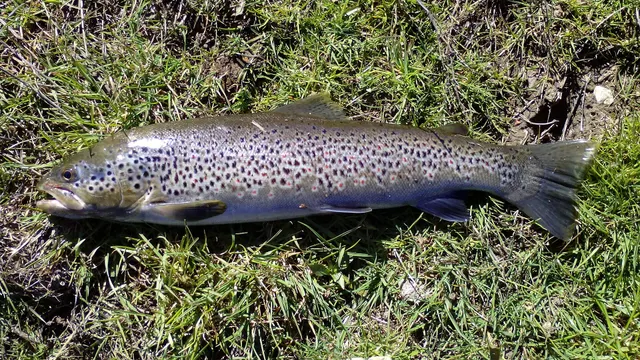 Brown troutA single, extraordinarily plastic species that appears as a tiny hill-stream fish, a deep-bodied loch trout and a silver sea-run migrant — all the same animal.
Robermix, CC0, via Wikimedia Commons
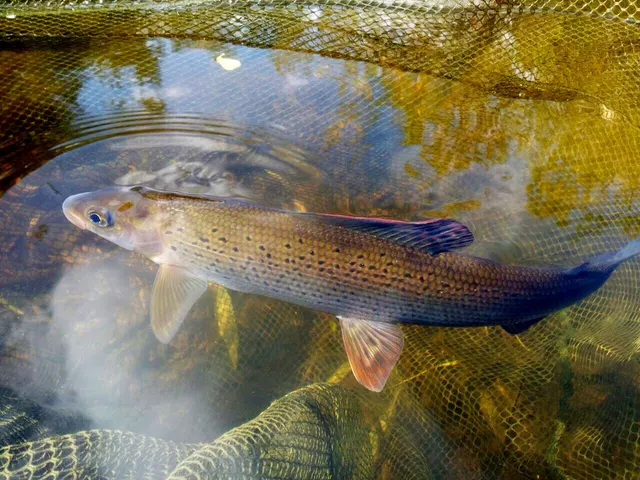 GraylingA salmonid with a sail for a dorsal fin that feeds hard through the winter — which makes it the game angler's season when the trout season has closed.
High Plains Grifter — CC BY-SA 4.0, via Wikimedia Commons
Places within this area
Publicly documented fishing geography. FishingHQ describes what the ground is; it does not say whether you may fish it, and every one of these sends that question to the body that holds the answer. Browse every place in this part of the world.
Who to ask before fishing any of these
FishingHQ does not know the current access position here. Freshwater rod fishing in England requires a current rod licence AND separate permission from whoever controls the fishing, which is frequently a club, riparian owner or navigation authority rather than a public body. Close seasons, byelaws and local rules apply and change. Check with the Environment Agency and with the controlling club or owner before going.
The Test at Stockbridge
River reach · Fresh water
The archetypal chalk stream: a shallow, clear, gravel-bedded river braided into multiple carriers through a wide flood meadow, with dense ranunculus growth, marl and silt margins and hatch pools at the old mill structures.
Open valley with managed bankside vegetation; the river is small enough that wind matters for casting rather than for safety.
Particular to this ground: drowning and immersion, biosecurity and disease transfer.
Particular to this water: This ground carries conservation designations that constrain access, vehicles, bait collection and disturbance independently of any fishing rule.
The Kennet at Newbury
River reach · Fresh water
A chalk-fed river braided with the canal navigation, giving clear gravel runs, weedy glides and slower canalised sections within the same reach.
The Itchen at Winchester
River reach · Fresh water
A classic chalk stream through a cathedral city, running clear and even over gravel with dense ranunculus, braided into carriers and hatch pools among the water meadows.
The Hampshire Avon at Ringwood
River reach · Fresh water
A chalk-fed river that behaves like a big coarse river in its lower reaches: wide, gravel-bedded, weedy and fast, with a legendary specimen-fishing history.
Safety
Moving water and currents — Can cause injury needing treatment
Hatches, sluices and mill structures create fast water, drops and undertow in rivers that are otherwise placid, and are the one place a chalk stream becomes genuinely dangerous. Banks are frequently undercut beneath dense marginal growth, so ground that looks solid can be an overhang above deep water.
What reduces it: Stay well clear of hatches and sluice structures, test the bank before committing weight to it near dense marginal growth, and wade on clean gravel rather than into soft silt at the margins.
Biosecurity and disease transfer — Can cause injury needing treatment
Weil's disease is present in British fresh water, contracted through contact with water contaminated by rat urine entering cuts, eyes or mouth. It is uncommon and can be serious.
What reduces it: Cover cuts before fishing, wash hands before eating, avoid touching your face with wet hands, and tell a doctor you have been in fresh water if you develop flu-like symptoms afterwards.
Check the rules before you fish
Fishing laws, bylaws, access rules, seasons, bait restrictions and permitted methods vary by location and can change. Check the current rules from the relevant authority and the water you intend to fish before fishing.
Check with:
- Current national or regional law for where you are fishing
- Current local bylaws
- The relevant fisheries authority
- The landowner, club or fishery whose water it is
- Any restrictions specific to the species or the method you intend to use
Where to go next
What swims here
- Brown troutWild and stocked brown trout are the principal target, and the stability of a spring-fed river supports densities and selectivity a rain-fed river cannot.
- GraylingGrayling extend chalk stream fishing through the winter after the trout season closes, and were historically treated as vermin on trout beats before being valued.
Local knowledge
How this compares
Environment and conservation
Sources and evidence
- Freshwater Fishes of the British Isles — HarperCollins (New Naturalist 75), 1992 (Reference work)Relied on for: Biology, distribution, life history and conservation status of British and Irish freshwater and diadromous fishes.States this directlyCitation checked — the work exists and is described correctly
- JNCC species and habitat conservation advice — Joint Nature Conservation Committee (Conservation authority)Relied on for: Conservation status, designation and monitoring of species and habitats in the United Kingdom, including protected river and lake systems.States this directlyCitation checked — the work exists and is described correctly
- Trout & Salmon — Bauer Media (Specialist angling publication)Relied on for: Contemporary British game angling practice as reported by practitioners, including river condition, run timing and technique.States this directlyCitation checked — the work exists and is described correctly
Why the 6 connections on this page are here, and the sources
What swims here
Backed by research — 2 connections
Supported by peer-reviewed research or fisheries science. The sources are listed and can be checked.
Brown trout
A distributional claim taken from reference works on the fishes of the region rather than from angling report. It states presence and asserts nothing about a fishery.
- FishBase: a global information system on fishes — Froese, R. and D. Pauly, eds. — FishBase Consortium (Scientific institute)Relied on for: Distribution, habitat association, life history and depth range recorded for the species concerned.States this directlyPassage read and verified
- Freshwater Fishes of the British Isles — HarperCollins (New Naturalist 75), 1992 (Reference work)Relied on for: Biology, distribution and conservation status of British and Irish freshwater and diadromous fishes.States this directlyCitation checked — the work exists and is described correctly
- The Fishes of the British Isles and North-West Europe — Macmillan, 1969 (Reference work)Relied on for: Distribution, habitat and biology of the fishes of the British Isles and north-west Europe.States this directlyCitation checked — the work exists and is described correctly
Grayling
A distributional claim taken from reference works on the fishes of the region rather than from angling report. It states presence and asserts nothing about a fishery.
- FishBase: a global information system on fishes — Froese, R. and D. Pauly, eds. — FishBase Consortium (Scientific institute)Relied on for: Distribution, habitat association, life history and depth range recorded for the species concerned.States this directlyPassage read and verified
- Freshwater Fishes of the British Isles — HarperCollins (New Naturalist 75), 1992 (Reference work)Relied on for: Biology, distribution and conservation status of British and Irish freshwater and diadromous fishes.States this directlyCitation checked — the work exists and is described correctly
- The Fishes of the British Isles and North-West Europe — Macmillan, 1969 (Reference work)Relied on for: Distribution, habitat and biology of the fishes of the British Isles and north-west Europe.States this directlyCitation checked — the work exists and is described correctly
How people fish here
What experienced anglers do — 1 connection
Widely and independently recommended by experienced anglers and specialist sources. This is real angling knowledge, not proof: controlled evidence for it is limited, and FishingHQ records it as convention rather than as a demonstrated effect.
Fly fishing
Which branch of fishing dominates a water is a statement about practice rather than about the place, and is recorded as convention.
- Trout & Salmon — Bauer Media (Specialist angling publication)Relied on for: Contemporary British game angling practice as reported by practitioners, including river condition and technique.States this directlyCitation checked — the work exists and is described correctly
- Freshwater Fishing — Macdonald & Jane's, 1975 (Specialist angling publication)Relied on for: Comprehensive British freshwater angling practice including river craft and the reasoning behind method choices.States this directlyCitation checked — the work exists and is described correctly
Local knowledge
What experienced anglers do — 1 connection
Widely and independently recommended by experienced anglers and specialist sources. This is real angling knowledge, not proof: controlled evidence for it is limited, and FishingHQ records it as convention rather than as a demonstrated effect.
The insects fly fishing imitates
A place joined to the mechanism that explains what is distinctive about fishing there, which is what makes a location page transferable rather than local colour.
- Trout & Salmon — Bauer Media (Specialist angling publication)Relied on for: Contemporary British game angling practice as reported by practitioners, including river condition and technique.States this directlyCitation checked — the work exists and is described correctly
- Freshwater Fishing — Macdonald & Jane's, 1975 (Specialist angling publication)Relied on for: Comprehensive British freshwater angling practice including river craft and the reasoning behind method choices.States this directlyCitation checked — the work exists and is described correctly
How this compares
What experienced anglers do — 1 connection
Widely and independently recommended by experienced anglers and specialist sources. This is real angling knowledge, not proof: controlled evidence for it is limited, and FishingHQ records it as convention rather than as a demonstrated effect.
Chalk streams
Two places or records a reader will hold together, joined where the comparison teaches something neither states alone.
- Trout & Salmon — Bauer Media (Specialist angling publication)Relied on for: Contemporary British game angling practice as reported by practitioners, including river condition and technique.States this directlyCitation checked — the work exists and is described correctly
- Freshwater Fishing — Macdonald & Jane's, 1975 (Specialist angling publication)Relied on for: Comprehensive British freshwater angling practice including river craft and the reasoning behind method choices.States this directlyCitation checked — the work exists and is described correctly
Environment and conservation
Official guidance — 1 connection
Stated by a fisheries authority, scientific institute or recognised angling body. Authoritative, but summarising rather than demonstrating.
Fish stocks and sustainability
An environmental claim about a named water, limited to what the cited monitoring and conservation bodies set out.
- JNCC species and habitat conservation advice — Joint Nature Conservation Committee (Conservation authority)Relied on for: Conservation status, designation and monitoring of species and habitats in the United Kingdom.States this directlyCitation checked — the work exists and is described correctly
- Environment Agency fisheries management, byelaws and rod licensing information — Environment Agency (Government fisheries body)Relied on for: The structure of freshwater fisheries management in England, including water quality monitoring and fishery regulation.States this directlyCitation checked — the work exists and is described correctly
How FishingHQ labels evidence is explained in the evidence policy.