Feeder fishing
Method · Last reviewed 2026-08-10
Legering with a weight that also carries bait, so that free offerings arrive in exactly the same place as the hookbait, cast after cast.
A swimfeeder is a leger weight with a job. Instead of simply anchoring the terminal tackle, it carries loose bait — maggots, groundbait, pellets — and releases it on the bottom within centimetres of the hookbait. That solves the central problem of bottom fishing at distance: getting free bait and hookbait into the same place repeatedly, which throwing by hand cannot do at forty metres.
The consequence is a method that builds a feeding area with every cast rather than by a separate feeding operation. Accuracy therefore matters enormously — a feeder cast to a different spot each time spreads bait over a wide area and disperses the fish rather than concentrating them.
The method feeder is the modern refinement: a moulded weight with the bait pressed around it and a short hooklink, so that the hookbait ends up on top of a small pile of feed with the weight acting as a bolt-rig anchor.
What it is
Bottom fishing in which the terminal weight is a container that carries loose feed to the fishing position and releases it there. Forms include open-end and cage feeders for groundbait, blockend feeders for maggots, and moulded method feeders with bait compressed around the frame.
What it is for
To concentrate feed and hookbait in one small area at a distance beyond what can be fed accurately by hand, and to keep doing so consistently. It is the standard approach to bream, tench, carp and roach on larger stillwaters and slower rivers, and to barbel and chub in flowing water.
Setting it up
- Pick one spot and cast to it every time — line up a far-bank marker and clip the line at the reel so every cast lands at the same distance.
- Match feeder type to bait: cage or open-end for groundbait, blockend for maggots, method feeder for pellet and paste.
- Match feeder weight to flow and distance, using the lightest that holds position.
- Set hooklink length by how the fish are feeding: short for confident bolt-style hooking, longer for a more natural fall.
- Recast on a regular rhythm early in the session to build the feed area, then slow down once fish arrive.
What it catches
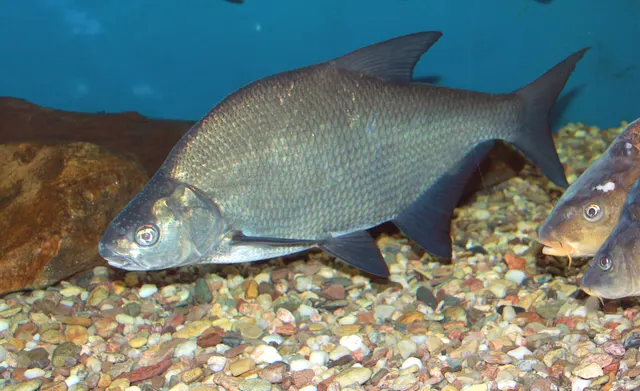 Common breamBream arrive as a shoal and feed methodically, which is exactly what a feeder's steady, accurate feeding suits.
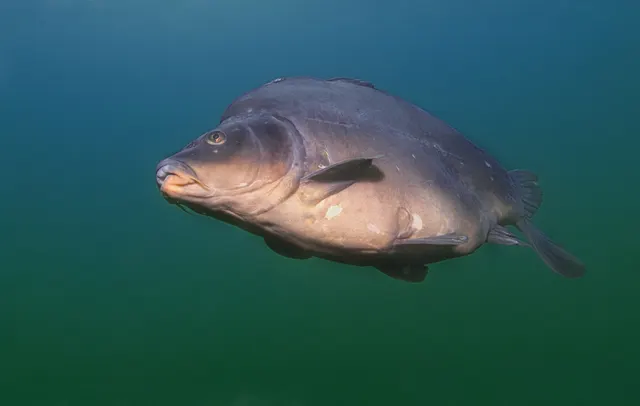 Common carpThe method feeder in particular combines accurate feeding with a self-hooking arrangement, which suits carp exactly.
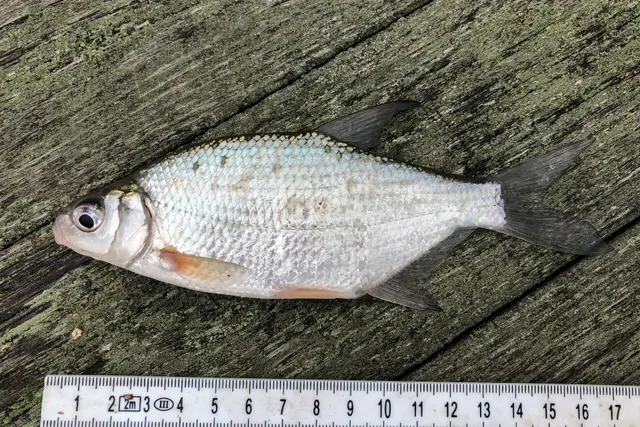 Silver breamFloat and feeder tackle with small baits, usually alongside common bream.
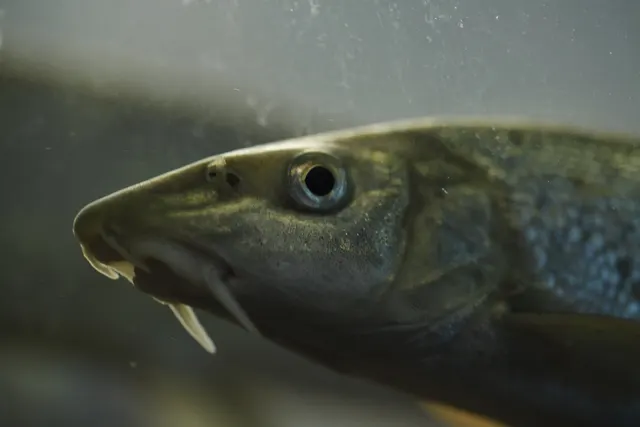 BarbelA powerful, streamlined river cyprinid built for holding station in fast water — and the hardest-fighting freshwater fish most British anglers will meet.
What you fish it with
- Bite alarms and indicatorsA quiver tip is an indicator built into the rod, chosen by test curve so that small bites register and the current does not.
- CastersLoaded into the feeder with the maggots, and fished on the hook when the better fish arrive.
- Double overhand loopThe hooklength is a separate length joined to the mainline or to a swivel by a loop, so that a break loses the hooklength and not the feeder — which is a fish-welfare arrangement as much as a tackle-saving one.
- MaggotsThe feeder carries the loose feed and the hook carries the same thing — that correspondence is the method.
- Method feeder rigA frame carrying groundbait with a short hooklength buried in it, which is the arrangement the method is named after.
- PelletsThe bait the method feeder was designed to carry, moulded around the frame rather than dropped from it.
- SweetcornVisible on the bottom beside the feeder in the colour a feeder swim usually has.
How it works
The feeder is cast to a chosen spot, sinks, and releases its contents on the bottom. A short hooklink puts the hookbait within a few centimetres of the released feed. Bites are registered by the rod tip — a fine quivertip that bends under a small pull — or, on method and bolt-style setups, by the fish hooking itself against the feeder's weight and running.
Conditions
Feeder fishing comes into its own where a float will not cope: distance, depth, wind, and coloured water. In flowing water the feeder must be heavy enough to hold on the bottom without rolling, and that requirement rises sharply as the river does. It is less suited to very shallow, very clear water where the disturbance of repeated casting outweighs the benefit.
Common mistakes
- Casting to a slightly different spot each time, which spreads the feed over a wide area and never concentrates fish.
- Using far more feed than the fish will eat, so that the hookbait is one item among thousands.
- Using a feeder too light for the flow, so it rolls downstream and takes the bait out of the baited area.
- Leaving the rod at an angle that lets flow bow the line, which kills bite indication.
- Sitting on an unproductive spot because the feed has been introduced there, rather than accepting the fish are elsewhere.
Advantages
- Delivers feed accurately at distances hand feeding cannot reach.
- Builds and maintains a concentrated feeding area automatically.
- Copes with wind and surface drift far better than float tackle.
- Works in a wide range of depths and flows.
Limitations
- Presentation is on or very near the bottom only.
- Repeated casting disturbs shallow or clear water.
- Bites can be less obvious than a float, particularly from small fish.
- It is easy to overfeed and hold fish without ever getting them to take the hookbait.
Where people fish it
48 places FishingHQ holds name this among the ways they are fished, across 13 coasts and systems. Being named here describes what sources report, not that the method is permitted — check the local rules before you fish.
The Ancholme, The Clwyd, The Dorset Stour at Blandford, The Great Ouse at Bedford and 8 more
The Bridgewater Canal, The Gloucester and Sharpness Canal, The Kennet and Avon Canal, The Leeds and Liverpool Canal and 5 more
Gunthorpe weir pool, River Trent, The tidal Trent at Dunham, The Trent at Burton Joyce, The Trent at Collingham and 1 more
The Counter Drain, The Great Ouse at Ely, The Nene at Peterborough, The Welland at Spalding
Marlow weir pool, River Thames, The Thames at Caversham, The Thames at Teddington, The Thames at Windsor
The Wye at Hereford, The Wye at Monmouth, The Wye at Symonds Yat
The Hampshire Avon at Ringwood, The Kennet at Newbury
5 further coasts and systems are not listed here. Browse every place FishingHQ holds.
One spot, every cast: why accuracy is the whole method
A swimfeeder solves one problem — getting free bait and hookbait into the same place at a distance — and it only solves it if every cast lands in the same place.
THINK ABOUT WHAT HAPPENS OTHERWISE. Twenty feeder casts spread over a twenty-metre area introduce the same quantity of bait as twenty casts to one spot, and produce the opposite result: the fish spread out to eat it, they encounter the hookbait rarely, and the angler concludes there are no fish. Feeding accurately CONCENTRATES fish; feeding inaccurately DISPERSES them, using the same bait.
TWO SIMPLE CONTROLS FIX IT. Clip the line at the reel so that every cast stops at the same distance, and pick a fixed mark on the far bank — a tree, a post, a gap in a hedge — and cast at it every time. Distance and direction, controlled separately, put the feeder in a circle rather than a field.
FEATHER THE CAST AND LET THE FEEDER SETTLE. Slowing the line just before the feeder lands stops it crashing down and drags the terminal tackle out straight, so the hooklink lies away from the feeder rather than tangled round it.
AND KNOW WHAT THE BOTTOM IS BEFORE YOU FEED IT. A few casts with a bare feeder, dragged slowly back, tell you through the rod whether the bottom is gravel, silt or weed and whether it shelves. Building a feed area on a silt bed that swallows the bait is a session's work for nothing, and it is discoverable in five minutes.
THIS IS WHY FEEDER FISHING REWARDS A RHYTHM. Cast regularly at first, to put feed in and build the area; slow down once fish arrive, so that the hookbait is among the feed rather than under a fresh load of it. The rhythm is the feeding strategy, and the rod is only how it is delivered.
How much feed, and the trap of holding fish you never catch
The most expensive mistake in feeder fishing is not underfeeding. It is overfeeding, because it produces a swim full of fish and an empty net, and everything about it looks like success.
THE HOOKBAIT COMPETES WITH THE FEED. If a fish is eating from a carpet of a thousand identical items, the chance that the one it takes next is the one on a hook is one in a thousand. Reduce the feed and the odds change; the fish are still there, and the hookbait is now a larger share of what is available.
SO THE QUESTION IS NEVER "HOW MUCH BAIT SHOULD I USE". It is "how much will these fish eat, at this temperature, in this water, right now" — and the answer in cold water is a fraction of the answer in summer. Cold fish digest slowly and eat little; a summer bream shoal can absorb an amount that would ruin a February swim.
FEED TO THE RESPONSE, NOT TO THE PLAN. Bites slowing while fish are clearly present usually means too much feed. Bites stopping and not returning usually means the fish have gone. The two look similar for the first twenty minutes and they call for opposite actions, which is why the response matters more than any schedule.
MAKE THE HOOKBAIT DIFFERENT. Where the feed is small and uniform, something larger, brighter, buoyant or simply doubled stands out and is picked out. This is the standard answer to a swim that is full of fish and quiet, and it works because it addresses the arithmetic rather than the fishing.
AND ACCEPT THE OTHER ANSWER. A swim fed hard and producing nothing may be a swim the fish never came to, and the temptation to stay because of the bait already introduced is a sunk cost. The feed is spent either way; the session is not.
Which feeder, and what the flow decides
Feeder types are not variations on a theme. Each releases bait differently and the release is the point.
AN OPEN-END FEEDER is a tube plugged at each end with groundbait, which breaks down where it lands and leaves a small pile. It is the general-purpose stillwater and slow-river tool.
A CAGE FEEDER is a mesh cylinder that releases groundbait faster and higher in the water, which suits shallower water and fish that come up in the layers — and is exactly wrong in deep water, where the feed disperses before it arrives.
A BLOCKEND FEEDER is closed at both ends with holes in the side, so live bait crawls out over time rather than arriving at once. That makes it the tool where a trickle beats a pile: cold water, wary fish, long waits.
A METHOD FEEDER is a moulded weight with feed pressed around the frame and a very short hooklink, so the hookbait finishes on top of the feed and the frame's own weight bolts the fish. It is a feeder and a bolt rig in one object, which is why it hooks fish without an angler touching the rod.
FLOW DECIDES THE WEIGHT AND THEN DECIDES EVERYTHING. A feeder that rolls is not fishing your spot; it is dragging bait downstream and putting the hookbait outside the area you built. As a river rises the weight needed rises sharply, and there is a point at which the honest answer is that a feeder will not hold and the swim is not fishable with one.
AND SHALLOW CLEAR WATER IS THE CASE AGAINST THE WHOLE METHOD. Repeated casting into two feet of gin-clear water disturbs more than the feed attracts. A float, a waggler cast, or moving somewhere deeper is the better answer, and knowing when the method is wrong is part of knowing the method.
Where to go next
Related techniques
Skills behind it
- Getting bait where you want itA feeder is a delivery method with a hook attached: it puts a measured amount of bait in the same place as the hookbait on every cast, which is the accuracy problem solved mechanically.
- How weights and sinkers workA feeder is a weight that also carries bait, which makes both of its jobs a function of its mass and its shape.
- Ledgering, bottom fishing and legering: one idea, three wordsA feeder is a ledger weight that also carries bait, which is why the two families of technique overlap.
Sources and evidence
Why the 15 connections on this page are here, and the sources
What it catches
What experienced anglers do — 4 connections
Widely and independently recommended by experienced anglers and specialist sources. This is real angling knowledge, not proof: controlled evidence for it is limited, and FishingHQ records it as convention rather than as a demonstrated effect.
Common bream
Established practice, independently described.
- Still-Water Angling — MacGibbon & Kee, 1953 (Specialist angling publication)Relied on for: Bream shoal feeding behaviour and the bait strategy that holds them.Citation checked — the work exists and is described correctly
- Angling Times — Bauer Media (Specialist angling publication)Relied on for: Contemporary feeder practice for bream.Citation checked — the work exists and is described correctly
Common carp
Widely established on commercial stillwaters, independently described.
- Angling Times — Bauer Media (Specialist angling publication)Relied on for: Contemporary method feeder practice for carp on commercial fisheries.Citation checked — the work exists and is described correctly
- Carp Fever — Beekay Publishers, 1981 (Specialist angling publication)Relied on for: Feeding strategy and bolt-rig principles for carp.Citation checked — the work exists and is described correctly
Silver bream
A practitioner claim about how Blicca bjoerkna is commonly fished, following from where and how it feeds.
- General angling website restatements of established technique — Various (Credible secondary source)Relied on for: Widely restated practitioner accounts of fishing for silver bream.Citation checked — the work exists and is described correctly
- Sea Angler — Bauer Media (Specialist angling publication)Relied on for: Practitioner treatment of the methods used for silver bream and comparable species.Citation checked — the work exists and is described correctly
Barbel
Established river practice, independently described.
- Freshwater Fishing — Macdonald & Jane's, 1975 (Specialist angling publication)Relied on for: Feeder and leger practice for barbel.Citation checked — the work exists and is described correctly
- Angling Times — Bauer Media (Specialist angling publication)Relied on for: Contemporary barbel feeder practice.Citation checked — the work exists and is described correctly
Related techniques
What experienced anglers do — 1 connection
Widely and independently recommended by experienced anglers and specialist sources. This is real angling knowledge, not proof: controlled evidence for it is limited, and FishingHQ records it as convention rather than as a demonstrated effect.
Coarse fishing
How the discipline classifies it, rather than a claim about how it is fished.
- Freshwater Fishing — Macdonald & Jane's, 1975 (Specialist angling publication)Relied on for: Feeder fishing within British coarse practice.Citation checked — the work exists and is described correctly
- Angling Times — Bauer Media (Specialist angling publication)Relied on for: Contemporary categorisation of feeder methods.Citation checked — the work exists and is described correctly
What you fish it with
What experienced anglers do — 7 connections
Widely and independently recommended by experienced anglers and specialist sources. This is real angling knowledge, not proof: controlled evidence for it is limited, and FishingHQ records it as convention rather than as a demonstrated effect.
Bite alarms and indicators
That a practice conventionally depends on a piece of equipment, drawn from published description of practice rather than from testing.
- Angling Times — Bauer Media (Specialist angling publication)Relied on for: Contemporary UK coarse, match, carp and predator practice as reported by practitioners, including equipment convention and fishery rules on it.FishingHQ's interpretation of what it saysCitation checked — the work exists and is described correctly
- Coarse Fishing — A. & C. Black, 1912 (Specialist angling publication)Relied on for: Classical coarse angling practice: poles, floats, retention and the conventions around them.States this directlyCitation checked — the work exists and is described correctly
Casters
Casters are used as feeder loose feed precisely because they sink faster than maggots and hold fish lower in the water — the depth a bottom-fished feeder rig is presenting at.
- Coarse Fishing — A. & C. Black, 1912 (Specialist angling publication)Relied on for: Specialist treatment of which bait or lure family this technique is fished with.States this directlyCitation checked — the work exists and is described correctly
- Angling Times — Bauer Media (Specialist angling publication)Relied on for: The independently restated practitioner pairing of this technique with this family.Background and mechanism onlyCitation checked — the work exists and is described correctly
Double overhand loop
Which knot a kind of fishing conventionally uses is established practitioner knowledge that converges across independent traditions and independent state agency guides, and it is labelled as consensus rather than as tested result. Nothing here ranks knots by strength: see `why-knot-strength-tables-disagree` for why that number does not exist.
- Freshwater Fishing — Macdonald & Jane's, 1975 (Specialist angling publication)Relied on for: Comprehensive British freshwater angling practice: terminal arrangements, leaders, droppers and the knots each is made with.States this directlyCitation checked — the work exists and is described correctly
- Coarse Fishing — A. & C. Black, 1912 (Specialist angling publication)Relied on for: Classical coarse angling practice, including hooklength attachment, loops and the shotting arrangements they carry.States this directlyCitation checked — the work exists and is described correctly
Maggots
A feeder deposits bait at the hook rather than near it, and the technique depends on the hook bait being indistinguishable from what the feeder released. Maggots are the bait that is both the feed and the hookbait without alteration.
- Coarse Fishing — A. & C. Black, 1912 (Specialist angling publication)Relied on for: Specialist treatment of which bait or lure family this technique is fished with.States this directlyCitation checked — the work exists and is described correctly
- Angling Times — Bauer Media (Specialist angling publication)Relied on for: The independently restated practitioner pairing of this technique with this family.Background and mechanism onlyCitation checked — the work exists and is described correctly
Method feeder rig
That a method is conventionally fished on a particular terminal arrangement, drawn from angling literature and from widely restated practitioner description rather than from testing.
- Angling Times — Bauer Media (Specialist angling publication)Relied on for: Contemporary UK lure and predator angling practice as reported by practitioners, including braid-to-lure connections and finesse rigging.States this directlyCitation checked — the work exists and is described correctly
- How to Tie Fishing Knots — uni, blood, improved blood, surgeon's and loop knots — Recreational Boating & Fishing Foundation (Take Me Fishing) (Angling or fisheries organisation)Relied on for: A contemporary national angling-participation body's knot guide, covering the connections used in modern lure fishing and the materials they are tied in.States this directlyPassage read and verified
Pellets
The pellet page describes micro pellets used as feeder loading and hard pellets on a band as the hookbait. The method feeder exists to present a hookbait inside a compacted mound of exactly that feed.
- Coarse Fishing — A. & C. Black, 1912 (Specialist angling publication)Relied on for: Specialist treatment of which bait or lure family this technique is fished with.States this directlyCitation checked — the work exists and is described correctly
- Angling Times — Bauer Media (Specialist angling publication)Relied on for: The independently restated practitioner pairing of this technique with this family.Background and mechanism onlyCitation checked — the work exists and is described correctly
Sweetcorn
A feeder concentrates fish in a small area of bottom that is often coloured by the feed itself. Sweetcorn is the standard hookbait there because it is found by sight in water the feeder has clouded.
- Coarse Fishing — A. & C. Black, 1912 (Specialist angling publication)Relied on for: Specialist treatment of which bait or lure family this technique is fished with.States this directlyCitation checked — the work exists and is described correctly
- Angling Times — Bauer Media (Specialist angling publication)Relied on for: The independently restated practitioner pairing of this technique with this family.Background and mechanism onlyCitation checked — the work exists and is described correctly
Skills behind it
What experienced anglers do — 2 connections
Widely and independently recommended by experienced anglers and specialist sources. This is real angling knowledge, not proof: controlled evidence for it is limited, and FishingHQ records it as convention rather than as a demonstrated effect.
Getting bait where you want it
A link from a practice or a piece of equipment to the mechanism or explanation it rests on.
- Angling Times — Bauer Media (Specialist angling publication)Relied on for: Contemporary UK coarse, match, carp and specimen practice as reported by practitioners, including bait delivery, surface tactics and river float work.FishingHQ's interpretation of what it saysCitation checked — the work exists and is described correctly
- General angling website restatements of established technique — Various (Credible secondary source)Relied on for: Widely restated descriptions of contemporary freshwater technique and equipment convention, recorded as practitioner consensus rather than as scholarship.Background and mechanism onlyCitation checked — the work exists and is described correctly
How weights and sinkers work
A link from a practice or a piece of equipment to the explanation of what it is for. The two records are halves of one answer and the edge is what lets a reader arriving at either find the other.
- Angling Times — Bauer Media (Specialist angling publication)Relied on for: Contemporary UK coarse, match and predator practice as reported by practitioners, including lure and line convention.FishingHQ's interpretation of what it saysCitation checked — the work exists and is described correctly
- General angling website restatements of established technique — Various (Credible secondary source)Relied on for: Widely restated descriptions of contemporary tackle convention, recorded as practitioner consensus rather than as scholarship.Background and mechanism onlyCitation checked — the work exists and is described correctly
Official guidance — 1 connection
Stated by a fisheries authority, scientific institute or recognised angling body. Authoritative, but summarising rather than demonstrating.
Ledgering, bottom fishing and legering: one idea, three words
The relationship is obscured by treating the two as separate methods.
- FAO fishing gear types and fishing technology information — Food and Agriculture Organization of the United Nations (Scientific institute)Relied on for: Bottom-fishing gear configurations and terminology.States this directlyCitation checked — the work exists and is described correctly
How FishingHQ labels evidence is explained in the evidence policy.