The River Trent
Fishing regions · Last reviewed 2026-08-16
A big lowland river that industry effectively killed and water treatment brought back, and now one of the most productive coarse rivers in England. The recovery is the story.
Safety: moving water and currents — can cause serious injury or death. 2 more points apply here.
Being listed here is not permission to fish. What that meansClose
Access, fishing rights, seasons, licences, local bylaws and permitted methods vary and can change. Check current access, permission, local regulations, closures and restrictions before you travel or fish. FishingHQ describes what the ground is and names who holds the answer; it does not hold the answer itself.
Find the authority for a jurisdiction · What FishingHQ does and does not cover
The Trent is a feature-tier record because it demonstrates something no other river in the British catalogue does: what happens to a fishery when the water quality that destroyed it is fixed.
IT IS A BIG RIVER BY ENGLISH STANDARDS. The Trent rises in the Staffordshire moorlands and runs north and east for about 300 km through the Midlands to join the Ouse and form the Humber. It drains an enormous industrial and agricultural catchment, and for most of its length below the Potteries it is a wide, deep, powerful lowland river rather than the intimate water most English coarse fishing happens on.
IT WAS EFFECTIVELY DEAD. Through the nineteenth century and much of the twentieth, untreated sewage, industrial effluent and warm water from coal-fired power stations along its banks combined to strip oxygen out of long reaches. Fish populations in the middle and lower river collapsed. Migratory salmon, which the Trent historically carried, disappeared from it entirely.
WATER TREATMENT AND DEINDUSTRIALISATION REVERSED IT. Sewage treatment improved through the second half of the twentieth century, heavy industry contracted, and the coal-fired stations that warmed the river closed. Oxygen returned; fish followed. The recovery is documented rather than anecdotal, and it is one of the clearest examples in Britain of a river fishery being rebuilt by fixing the water rather than by stocking.
WHAT IT IS NOW is one of the most productive coarse rivers in England, and specifically one of the great barbel rivers, along with very large heads of chub, bream, roach and dace, and a growing predator fishery. Salmon have begun to be recorded again in small numbers, and passage improvements have been made for them, though nobody honest calls it a salmon river.
AND ITS LOWER END DOES SOMETHING NO OTHER ENGLISH COARSE RIVER DOES. Below Cromwell Weir the Trent is tidal, and on the largest spring tides it carries a bore — the Aegir — that runs upstream as a visible wave. That makes the lower river a genuinely tidal coarse fishery, with the fish moving on the tide and the fishing organised around it.
What fishing here is like
A large, powerful lowland river running roughly 300 km through the English Midlands to the Humber. Below its upland head it is wide, deep and pushy, with long straight engineered reaches, weirs and locks, gravel and sand bed in the middle river, and increasingly soft silt as it approaches the tideway. Flow is heavily influenced by the catchment's rainfall and responds fast to it. Water is generally coloured. Below Cromwell Weir it is tidal, with a substantial range, reversing flow, and a bore on the largest springs. Banks are a mix of engineered flood defence, agricultural pasture and urban frontage.
What you can target here
One entry per fish, grouped by how you would be fishing — because the answer is a different one from the rocks and from a boat. Each entry says how strongly the sources support it and how much evidence sits behind it. These are documented catches, not a forecast, and none of it is a statement that you may fish any particular ground.
From the shore · 6
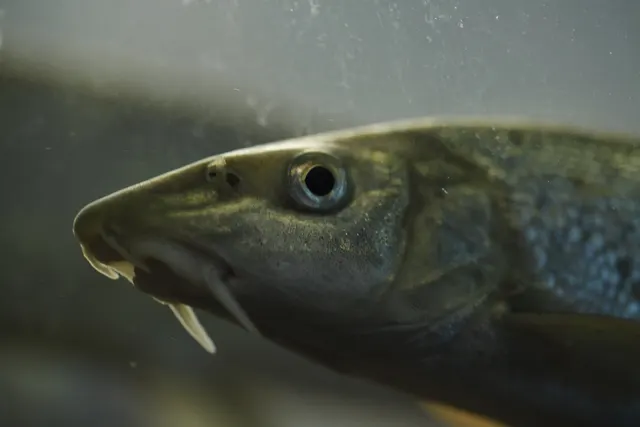 BarbelCharacteristic of this water2 placesThe Trent at Collingham, Gunthorpe weir pool, River TrentOver river reach, weir poolAround Jun–Oct
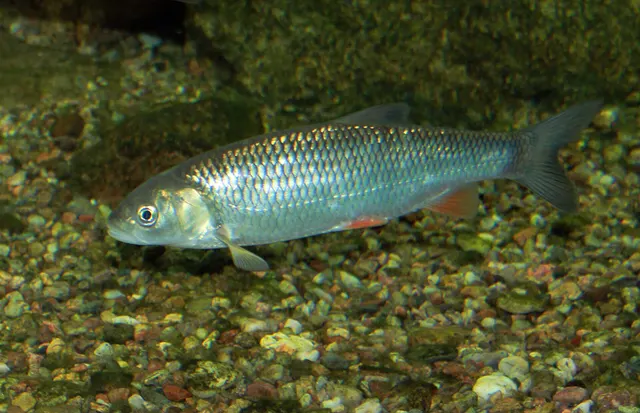 ChubRegular local target2 placesThe Trent at Collingham, Gunthorpe weir pool, River TrentOver river reach, weir pool
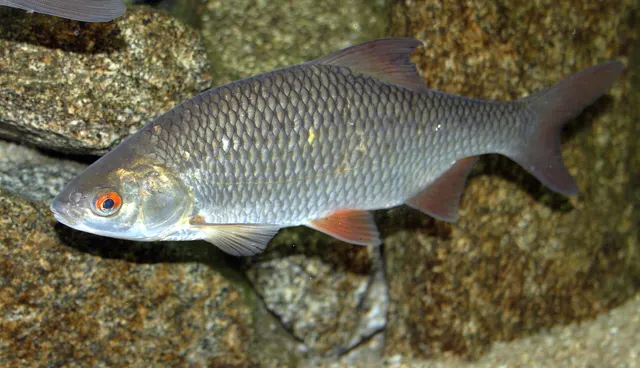 RoachRegular local target1 placeThe Trent at CollinghamOver river reach
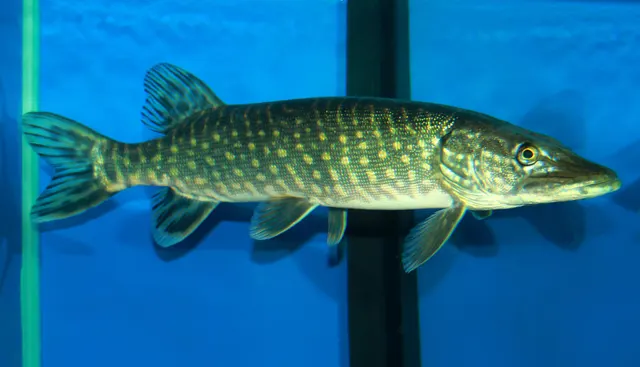 Northern pikeSeasonal2 placesThe Trent at Collingham, Gunthorpe weir pool, River TrentOver river reach, weir poolAround Jan–Feb, Oct–Dec
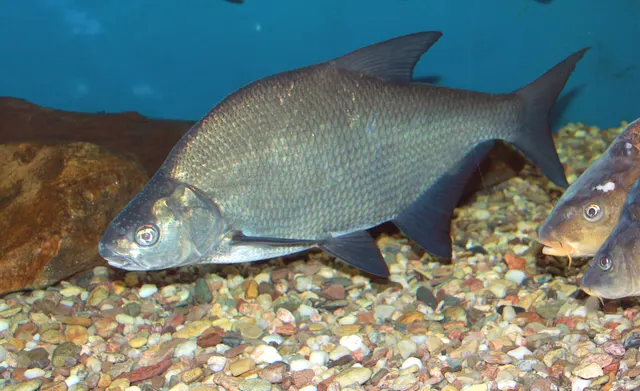 Common breamSeasonal1 placeThe Trent at CollinghamOver river reachAround May–Sept
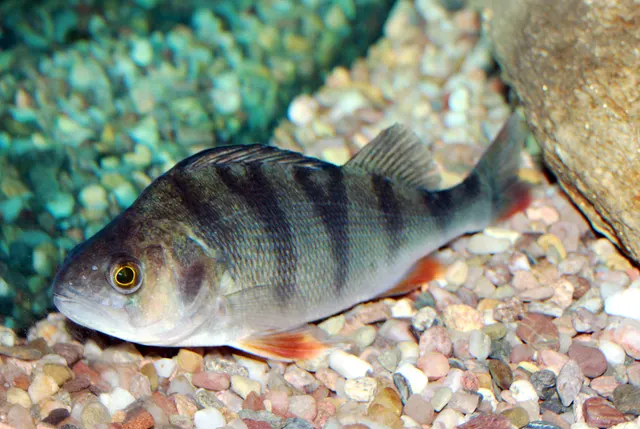 European perchRepeatedly reported2 placesThe Trent at Collingham, Gunthorpe weir pool, River TrentOver river reach, weir pool
What these strengths mean
- Characteristic of this water
- This water is strongly identified with this species by the sources that cover it.
- Regular local target
- Fishing sources describe this as a normal local target here, not merely as caught.
- Seasonal
- Well supported, and concentrated in part of the year rather than spread through it.
- Repeatedly reported
- Several independent public accounts. Enough to say it happens more than once; not enough to call it a fishery.
- How breadth is counted
- A fish documented at six marks is shown as six marks: breadth never raises the strength on its own. A fishery account describes the fishing; a recorded catch reports one specific catch. How evidence is weighed.
How people fish here
4 methods are recorded on the places documented here, counted from the records themselves rather than from what is practised in the country. Each opens a full guide to the technique.
Feeder fishing
Recorded at 5 places here, over river reach, weir pool.
Legering with a weight that also carries bait, so that free offerings arrive in exactly the same place as the hookbait, cast after cast.
Documented on the same ground: Barbel, Chub, Roach, Common bream, Northern pike, European perch.
Float fishing
Recorded at 5 places here, over river reach, weir pool.
Suspending a bait at a controlled depth beneath a buoyant indicator — the most visual, most controllable and most widely applicable method in angling.
Documented on the same ground: Barbel, Chub, Roach, Common bream, Northern pike, European perch.
Ledgering
Recorded at 5 places here, over river reach, weir pool.
Fishing a bait on the bottom held by a weight, with no float — the simplest way to fish at distance, in depth, or in wind.
Documented on the same ground: Barbel, Chub, Roach, Common bream, Northern pike, European perch.
Spinning
Recorded at 1 place here, over river reach.
Casting an artificial lure and retrieving it so that it moves like something alive — the most direct form of lure fishing.
Documented on the same ground: Barbel, Chub, Roach, Common bream, Northern pike, European perch.
These are the methods documented at the places FishingHQ holds here. A species listed beside a method is documented on the same ground, which is not the same as being taken that way — where a source establishes the method a fish was caught on, it is stated on that place’s own page. All fishing methods.
The fishing year here
The months the records under this area actually name, tightest season first. This is “observed in these months” rather than a season: a species whose months nobody recorded is not listed, because a gap in the evidence is not a year-round fishery.
- BarbelJune to October
- Northern pikeOctober to February
- Common breamMay to September
What dominates
Big-river ledgering and feeder fishing, which is what the Trent's pace and depth demand and what it is best known for — barbel and chub in particular. Match fishing, in which the Trent has a long and serious tradition and which its heads of roach, bream and dace support. Float fishing on the slower and shallower reaches. Predator fishing for pike and, increasingly, zander, which have spread into the system. Lure fishing for the same. Tidal fishing below Cromwell, which is a specialism of its own and runs on the state of the tide rather than on the time of day.
The water available
A large lowland river with gravel, sand and silt bed; weir pools and engineered channel; slack margins and creases behind structure; a tidal reach with reversing flow, a tidal bore and soft silt banks; connected canal and drainage systems; flooded gravel pits along the valley; and the confluence into the Humber estuary.
How the rules are structured
Freshwater angling in England requires a current rod licence from the Environment Agency for anybody of the relevant age, and that is separate from permission to fish, which comes from whoever holds the fishing rights — a club, a syndicate, a landowner or a day-ticket fishery. A statutory close season applies on rivers in England, and its dates and its application have been the subject of consultation and change. Byelaws govern methods, bait, size limits and the retention of fish, and they differ by region. The Trent's connected still waters and canals may sit under different arrangements again. Biosecurity obligations apply to anybody moving between waters, because this catchment carries established invasive species. FishingHQ does not state what any current rule is, including close season dates and licence requirements; these change, and the Environment Agency and the fishery holder are the sources.
Who to ask
- The Environment Agency, for rod licences, byelaws, the statutory close season and fisheries enforcement in England.
- The club, syndicate, landowner or day-ticket fishery that holds the fishing rights on a given stretch, which is a separate permission from the licence.
- The Canal & River Trust, where fishing is on connected navigations and canals.
- The GB Non-Native Species Secretariat, for biosecurity guidance on moving between waters in a catchment holding invasive species.
Words you will meet
- The Aegir
- The Trent's tidal bore, which runs upstream on the largest spring tides as a visible wave. It is named from the Norse sea giant. It is a genuine hazard to anybody on the bank or in the water when it arrives, and it also stirs the river and changes the fishing for hours afterwards.
- Crease
- The seam between fast water and slow water, most obvious downstream of a bend, a bridge pier or a weir. On a river with this much pace the crease is where fish hold, because it delivers food from the fast water while costing almost nothing to sit in.
- Cromwell
- The weir that marks the tidal limit of the Trent. Above it the river is a conventional flowing coarse river; below it the flow reverses twice a day and the fishing is organised around the tide. It is a real dividing line and not a nominal one.
- Coloured
- The Trent's normal condition. Sediment from a large agricultural catchment keeps it turbid most of the time, which suits barbel and chub, favours bait and scent over sight, and means a rare clear spell fishes quite differently.
Conditions and hazards
The Trent kills people and it does so quietly. It is deep, powerful and cold, its banks are frequently steep and engineered with no easy exit, and the flow after rain is far stronger than the surface suggests — a river that looks placid can be moving fast enough that a person in it cannot swim across it. Weir pools are the specific hazard: the recirculating flow below a weir can hold a person under and will not release them, and this is not survivable by swimming. The tidal reach below Cromwell adds several mechanisms at once: reversing flow, soft silt banks that will not carry weight, a rising tide that covers bankside ground, and the Aegir, which arrives as a wave on the largest springs and has taken people off banks and out of small craft. Cold water shock decides most immersions in a British river for most of the year. Flooding on this catchment is fast and serious, and bankside ground that is safe in normal flow becomes an active floodplain. A buoyancy aid on a tidal or high-water bank, not fishing weirs or the tideway alone, knowing where the exit points are before dark, and treating a rising river as a reason to leave rather than a reason to fish harder are the measures that address it.
The river that came back, and what actually fixed it
The Trent is the best British example of a large river fishery destroyed by water quality and rebuilt by water quality, and the mechanism is worth understanding because it applies everywhere.
WHAT KILLED IT WAS OXYGEN. Untreated sewage and industrial effluent entering a river are consumed by bacteria, and that consumption uses dissolved oxygen. Load enough organic matter into a river and the oxygen goes; without oxygen, fish do not merely struggle, they cannot be there at all. Warm water from the coal-fired power stations along the Trent made it worse, because warm water holds less dissolved oxygen than cold water does.
THE COLLAPSE WAS COMPLETE IN PLACES. Long reaches of the middle and lower Trent held effectively no fish through much of the twentieth century. The salmon run the river had historically carried disappeared entirely. This was not a decline; it was an absence.
WHAT REVERSED IT WAS TREATMENT AND CLOSURE. Sewage treatment improved progressively through the second half of the century. Heavy industry along the valley contracted. The coal-fired stations closed. Each of those removed load or removed heat, oxygen recovered, and the river became habitable again.
FISH RETURNED LARGELY ON THEIR OWN. This is the part that matters most. The recovery of the Trent's coarse fishery was overwhelmingly a matter of fish recolonising water that had become liveable, from refuges and tributaries, rather than of stocking. A river with clean enough water and connected habitat repopulates itself.
WHAT IS STILL NOT FIXED. Diffuse pollution from agriculture — nutrients and sediment washing off land across the whole catchment — is a harder problem than a pipe, because there is no single outfall to treat. Physical modification is another: weirs, engineered channel and flood defence have simplified the habitat and blocked migration, and passage improvements are a recent and partial answer. Salmon are recorded again in small numbers and the honest description is a river with returning fish rather than a salmon river.
AND THE LESSON GENERALISES. The single most effective fishery management intervention available on a damaged river is to stop damaging it. The Trent demonstrates that at a scale that is difficult to argue with.
Official guidance — why, and the sources (4)
Stated by a fisheries authority, scientific institute or recognised angling body. Authoritative, but summarising rather than demonstrating.
- Freshwater Fishes of the British Isles — HarperCollins (New Naturalist 75), 1992 (Reference work)Relied on for: Distribution, ecology and conservation status of British freshwater fishes, including the glacial-relict populations named.States this directlyCitation checked — the work exists and is described correctly
- Environment Agency fisheries management, byelaws and rod licensing information — Environment Agency (Government fisheries body)Relied on for: Freshwater fisheries management, water quality recovery, licensing structure and the monitoring of English rivers and still waters.States this directlyCitation checked — the work exists and is described correctly
- JNCC species and habitat conservation advice — Joint Nature Conservation Committee (Conservation authority)Relied on for: Designation, habitat description and conservation status of the marine, coastal and freshwater habitats named.States this directlyCitation checked — the work exists and is described correctly
- The Fishes of the British Isles and North-West Europe — Macmillan, 1969 (Reference work)Relied on for: Distribution, habitat association and biology of the fishes of the British Isles named here.States this directlyCitation checked — the work exists and is described correctly
Fishing a big pushy river: creases, structure and the weight of water
The Trent's practical difficulty is that it is bigger and faster than most English coarse anglers are used to, and the answer is to read the flow rather than to fight it.
THE FISH ARE NOT IN THE FLOW, THEY ARE BESIDE IT. A barbel or a chub in a river moving this fast cannot afford to hold in the main push. They sit in the slack behind and beside it — downstream of a bridge pier, inside a bend, in the seam below a weir, in the deeper slot along the far bank — and let the current bring food to them. The seam between fast and slow water, the crease, is the single most productive feature on this river.
STRUCTURE MATTERS DISPROPORTIONATELY on a river whose bed is otherwise fairly uniform over long engineered reaches. Bridges, weirs, outfalls, moored boats, fallen timber and the mouths of tributaries all produce local changes in flow, and all of them concentrate fish.
DEPTH AND PACE CHANGE WHAT HOLDS BOTTOM. This is a river where the practical constraint on the fishing is frequently whether the terminal tackle stays where it is put, and after rain that constraint tightens considerably. Reading the river's state before choosing a swim matters more here than on a small river where the whole thing is fishable in all conditions.
COLOUR IS NORMAL AND IT SHAPES METHOD. The Trent is turbid most of the time. That favours scent, vibration and bait over visual presentation, it lets fish be approached closely, and it is why this is a bait river first and a lure river second — although the growth of the zander and pike fishery has changed that balance.
FLOODS RESET IT. A big rise moves gravel, scours out silt, moves fish, and changes which swims work. A reach that fished well in September may be a different shape by March. The Trent rewards anglers who look at the river rather than returning to remembered spots.
AND THE SPECIES SHIFT ALONG ITS LENGTH. The upper river is small and holds trout and grayling in places. The middle river is the barbel and chub water. The lower river adds bream and roach in numbers and a stronger predator element, and the tidal reach below Cromwell is a different fishery again.
What experienced anglers do — why, and the sources (4)
Widely and independently recommended by experienced anglers and specialist sources. This is real angling knowledge, not proof: controlled evidence for it is limited, and FishingHQ records it as convention rather than as a demonstrated effect.
- Fishers' Craft and Lettered Art: Tracts on Fishing from the End of the Middle Ages — University of Toronto Press, 1997 (Scientific literature)Relied on for: That fishing traditions develop around the water and fish available to them, and the historical method of reading such traditions.States this directlyCitation checked — the work exists and is described correctly
- General angling website restatements of established technique — Various (Credible secondary source)Relied on for: Widely restated descriptions of regional angling practice, recorded as practitioner consensus rather than as scholarship.Background and mechanism onlyCitation checked — the work exists and is described correctly
- Freshwater Fishes of the British Isles — HarperCollins (New Naturalist 75), 1992 (Reference work)Relied on for: Distribution, ecology and conservation status of British freshwater fishes, including the glacial-relict populations named.States this directlyCitation checked — the work exists and is described correctly
- Environment Agency fisheries management, byelaws and rod licensing information — Environment Agency (Government fisheries body)Relied on for: Freshwater fisheries management, water quality recovery, licensing structure and the monitoring of English rivers and still waters.States this directlyCitation checked — the work exists and is described correctly
Below Cromwell: a coarse river with a tide and a wave
The tidal Trent is the most unusual thing about this river and it is genuinely a separate fishery.
THE FLOW REVERSES. Below Cromwell Weir the river is tidal, and on the flood the water actually runs upstream. That means the fishing is organised around the state of the tide rather than around the time of day, that a swim which is fishable at one state is unfishable at another, and that fish move up and down the reach with the water rather than holding station.
THE FISH FOLLOW IT. Bream, roach and, in the lower reaches, flounder and the occasional estuarine visitor move with the tide. The productive periods are around the turn and during specific parts of the run, and they shift with the tide table exactly as they would on a coast.
THE AEGIR IS THE FAMOUS PART. On the largest spring tides a bore forms and runs upstream as a visible wave, sometimes a substantial one. It is a genuine tidal bore, one of the few in Britain, and it is a real hazard: it arrives faster than a person can move off soft banks, it can take a small craft, and it can catch anybody standing on the tideline. Its timing is predictable from the tides and its size varies with them.
AFTER IT PASSES, THE RIVER IS CHANGED. The bore and the flood behind it stir sediment through the whole reach, and the fishing for some hours afterwards is different from the fishing before it.
THE BANKS ARE THE HAZARD RATHER THAN THE WATER. Tidal Trent banks are soft silt. They will carry weight on the way down and not on the way back, they are steep in places, and a rising tide covers the ground a person walked in on. That combination — soft ground, rising water, no easy exit, cold water — is the mechanism that makes this reach more dangerous than the river above it.
WHICH IS WHY THE STANDING ADVICE HERE IS SPECIFIC. Know the tide before going down the bank. Know where the exit is. Do not fish the tideway alone. Wear a buoyancy aid. And treat the Aegir's published timing as information to act on rather than a spectacle to stand close to.
What experienced anglers do — why, and the sources (4)
Widely and independently recommended by experienced anglers and specialist sources. This is real angling knowledge, not proof: controlled evidence for it is limited, and FishingHQ records it as convention rather than as a demonstrated effect.
- Fishers' Craft and Lettered Art: Tracts on Fishing from the End of the Middle Ages — University of Toronto Press, 1997 (Scientific literature)Relied on for: That fishing traditions develop around the water and fish available to them, and the historical method of reading such traditions.States this directlyCitation checked — the work exists and is described correctly
- General angling website restatements of established technique — Various (Credible secondary source)Relied on for: Widely restated descriptions of regional angling practice, recorded as practitioner consensus rather than as scholarship.Background and mechanism onlyCitation checked — the work exists and is described correctly
- RNLI water safety guidance: cold water shock and Float to Live — Royal National Lifeboat Institution (Water-safety or diver-training authority)Relied on for: Cold water shock and the immersion response, tidal cut-off, and water-safety guidance for shore anglers and small-craft users.States this directlyPassage read and verified
- Met Office shipping forecast, inshore waters forecast and marine warnings — Met Office, United Kingdom (Government fisheries body)Relied on for: That inshore waters forecasts, sea state and swell are the operative inputs for shore and small-craft decisions in these waters.States this directlyCitation checked — the work exists and is described correctly
A weir is a machine, and the Aegir keeps a timetable
The Trent's dangers are not the ones a river is expected to have. It is not fast-looking, it has no waterfalls, and most of its bank is flat farmland or engineered defence. It kills people quietly, and the two specific mechanisms are worth understanding rather than being warned about.
A WEIR IS NOT A DROP, IT IS A RECIRCULATION. Water going over a weir sill plunges, hits the bed, and part of it turns back upstream along the surface towards the face of the weir. That produces a horizontal roller downstream of the sill that continuously pulls floating objects back into the falling water. A person in it is not being carried away — they are being held, cycled, and re-submerged, and swimming will not get them out because the surface flow they are swimming on is going the wrong way. This is a machine, and it does not tire.
WHICH IS WHY THE ADVICE ABOUT WEIRS IS DIFFERENT IN KIND from the advice about the rest of the river. Not "be careful" — do not fish a weir pool alone, and understand that the water below a weir face is not survivable by ordinary swimming competence. Weir pools hold fish, which is exactly why anglers stand where they do.
THE SECOND MECHANISM IS THE TIDEWAY. Below Cromwell the river is tidal, which imports the sea's hazards into a coarse fishery inland. Flow reverses. Soft silt banks that carried weight on the way down will not on the way back. The ground walked in on covers. And on the largest springs, the AEGIR — the Trent's tidal bore — comes upstream as a wave, at a published time on a published date, faster than a person can get off a soft bank.
THAT IS THE UNUSUAL THING ABOUT IT, AND THE USEFUL THING. Almost nothing else on FishingHQ is a hazard with a timetable. The bore is predicted; a person who has looked it up is not going to be surprised by it. So the bore is not really the tideway's danger — the ordinary big spring on an ordinary afternoon is, because it does everything the bore does apart from being announced.
AND THE RIVER RISES FAST. This catchment responds quickly to rain, the water pushes far harder than the surface suggests, and a rising river makes the banks the problem: steep, engineered, frequently with no exit for a long stretch, and slick. Cold water shock decides most British river immersions for most of the year, and it takes breathing control in seconds.
WHAT ACTUALLY HELPS. Identify the exit points on the bank before dark, not after. Wear a buoyancy aid on the tideway and in high water. Do not fish weirs or the tideway alone. Know the state of the tide and the timing of any bore before going down a tidal bank, and keep well back from the tideline when one is due. Treat a rising river as a reason to leave rather than a reason to fish harder — the fishing does often improve as it rises, which is the whole difficulty. Check current river levels and tidal predictions before going; both are published and both change.
Official guidance — why, and the sources (3)
Stated by a fisheries authority, scientific institute or recognised angling body. Authoritative, but summarising rather than demonstrating.
- Environment Agency fisheries management, byelaws and rod licensing information — Environment Agency (Government fisheries body)Relied on for: Freshwater fisheries and river management in England, including flood response, river level monitoring and the structures that control flow.States this directlyCitation checked — the work exists and is described correctly
- RNLI water safety guidance: cold water shock and Float to Live — Royal National Lifeboat Institution (Water-safety or diver-training authority)Relied on for: Cold water shock and the immersion response, tidal cut-off, and water-safety guidance for shore anglers and small-craft users.States this directlyPassage read and verified
- RoSPA water safety information and UK accidental drowning statistics — Royal Society for the Prevention of Accidents (Water-safety or diver-training authority)Relied on for: UK accidental drowning statistics and water-safety guidance, including the proportion of drownings that begin with no intention of entering the water.States this directlyPassage read and verified
Some of what lives here
Fish recorded here that FishingHQ holds a reviewed photograph of. It is not a complete list of what The River Trent holds, and it is not a prediction that you will catch any of them — it is a way in to the ones we can show you.
- BarbelA powerful, streamlined river cyprinid built for holding station in fast water — and the hardest-fighting freshwater fish most British anglers will meet.
Pmau, CC BY-SA 4.0, via Wikimedia Commons
- ChubA bold, omnivorous river fish that eats almost anything and grows large enough to be a predator — and the species most likely to be caught on a bait nobody expected to work.
Karelj, Public domain, via Wikimedia Commons
- Common breamA deep-bodied, slow-moving shoal fish that feeds in large groups over soft bottoms and can transform a swim when it arrives.
Karelj, Public domain, via Wikimedia Commons
- RoachThe most numerous and most frequently caught coarse fish across much of Europe, and the prey species that underpins the whole freshwater predator food web.
Karelj, Public domain, via Wikimedia Commons
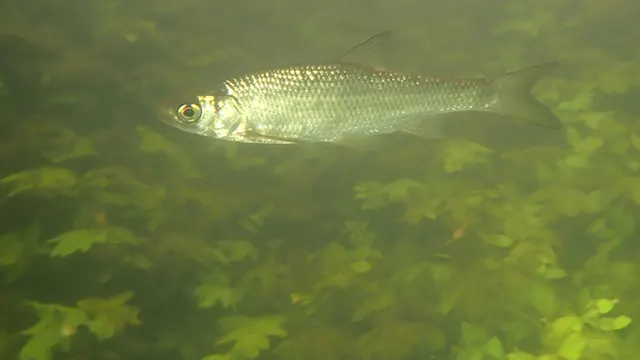 DaceA small, quick, silver river cyprinid separated from chub by the shape of one fin — the anal fin is concave in a dace and convex in a chub, and nothing else settles it as reliably.
Nicola Crockford — CC BY, via iNaturalist
- Northern pikeThe dominant freshwater ambush predator of the northern hemisphere: long, cryptic, and built for one violent acceleration rather than pursuit.
Karelj, Public domain, via Wikimedia Commons
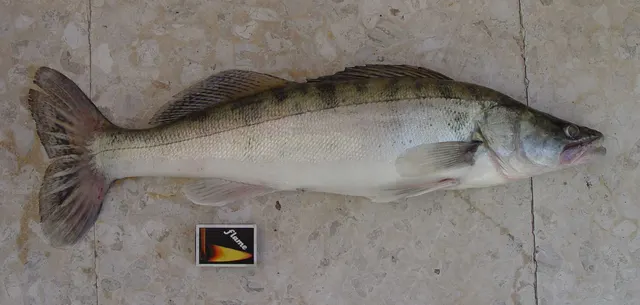 ZanderA shoaling freshwater predator built for hunting in low light and coloured water, and the fish that made a virtue of the conditions pike find difficult.
eLNuko — Public domain, via Wikimedia Commons
- European perchA small, shoaling, spiny-finned predator that is both the most accessible predator to catch and the one most anglers first learn on.
Karelj, Public domain, via Wikimedia Commons
Places within this area
Publicly documented fishing geography. FishingHQ describes what the ground is; it does not say whether you may fish it, and every one of these sends that question to the body that holds the answer. Browse every place in this part of the world.
Who to ask before fishing any of these
FishingHQ does not know the current access position here. Freshwater rod fishing in England requires a current rod licence AND separate permission from whoever controls the fishing, which is frequently a club, riparian owner or navigation authority rather than a public body. Close seasons, byelaws and local rules apply and change. Check with the Environment Agency and with the controlling club or owner before going.
FishingHQ does not know the current access position here. Shore angling in England is not rod-licensed, but access rights, landowner permission, local authority and harbour byelaws, national and inshore fisheries measures, and site designations all apply and all change. Check the current position with the relevant inshore fisheries and conservation authority, the harbour or local authority, and the landowner before going. This water is tidal and transitional, so the freshwater regime may also apply above the tidal limit: FishingHQ does not know the current access position here. Freshwater rod fishing in England requires a current rod licence AND separate permission from whoever controls the fishing, which is frequently a club, riparian owner or navigation authority rather than a public body. Close seasons, byelaws and local rules apply and change. Check with the Environment Agency and with the controlling club or owner before going.
The Trent at Collingham
River reach · Fresh water
A wide, powerful, gravel-and-sand-bedded reach of the lower non-tidal Trent between Newark and Cromwell weir, with hard gravel runs, deeper slacks against the far bank and a heavily engineered flood channel.
Open agricultural floodplain with little bankside cover, so the reach is fully exposed to wind, which matters more here than on a sheltered river because the flow is already strong.
Particular to this ground: drowning and immersion, moving water and currents, cold water shock.
Gunthorpe weir pool, River Trent
Weir pool · Fresh water
A navigation weir and lock on the middle Trent, with a scoured pool beneath the sill, a fast broken tongue of water, hard gravel and stone in the pool and a slower tail below it.
Partially sheltered by bankside trees and the weir structure itself.
Particular to this ground: moving water and currents, drowning and immersion, cold water shock.
The Trent at Burton Joyce
River reach · Fresh water
A wide gravel-and-sand reach of the middle Trent below Nottingham, with hard gravel runs, defined creases against the far bank and a heavily engineered flood channel behind both banks.
Severe hazards of The River Trent apply here: moving water and currents.
The Trent at Newark Dyke
River reach · Fresh water
The navigation cut and the natural channel dividing round Newark, giving two very different waters within a few hundred metres: a deep slow dyke and a faster gravel river.
Severe hazards of The River Trent apply here: moving water and currents.
The tidal Trent at Dunham
River reach · Brackish water
The tidal Trent below Cromwell weir, running brown and fast over sand and silt between high flood banks, with a genuine tidal bore — the aegir — on the largest spring tides.
Particular to this ground: moving water and currents.
Severe hazards of The River Trent apply here: tides and being cut off.
Safety
Moving water and currents — Can cause serious injury or death
The Trent is deep, powerful and colder than it looks, and after rain it runs far faster than the surface suggests. Weir pools recirculate and can hold a person under; that is not survivable by swimming out of it.
What reduces it: Do not fish weir pools or high water alone. Wear a buoyancy aid on the tideway and in high water. Identify the exit points on the bank before dark. Treat a rising river as a reason to leave rather than a reason to fish harder.
Worse when:
- After heavy rain across the catchment, when the river rises fast.
- Below weirs, where the recirculating flow is the specific killer.
Tides and being cut off — Can cause serious injury or death
Below Cromwell Weir the river is tidal. Soft silt banks that carry weight on the way down will not on the way back, the rising tide covers the ground walked in on, and on the largest springs the Aegir arrives upstream as a wave faster than a person can move off a soft bank.
What reduces it: Know the state of the tide and the timing of any bore before going down the bank, know where the exit is, do not fish the tideway alone, wear a buoyancy aid, and keep well back from the tideline when a bore is due.
Worse when:
- On the largest spring tides, when the bore forms and is biggest.
- In the dark, when the state of the bank and the rising water cannot be judged.
Cold water shock — Can cause injury needing treatment
British river water is cold enough for most of the year that an immersion produces an involuntary gasp and loss of breathing control in the first seconds, which is what decides the outcome rather than swimming ability — and the Trent's banks frequently offer no easy exit.
What reduces it: Wear a buoyancy aid where the bank is steep, engineered or tidal, do not fish alone at night, and carry a means of calling for help on the person.
Check the rules before you fish
Fishing laws, bylaws, access rules, seasons, bait restrictions and permitted methods vary by location and can change. Check the current rules from the relevant authority and the water you intend to fish before fishing.
Check with:
- Current national or regional law for where you are fishing
- Current local bylaws
- The relevant fisheries authority
- The landowner, club or fishery whose water it is
- Any restrictions specific to the species or the method you intend to use
Where to go next
What swims here
- BarbelThe middle river's gravel and pace is textbook barbel water, and the Trent is now one of the principal barbel rivers in England — a status it could not have held while the water quality was what it was.
- ChubThroughout the middle and lower river, holding in the creases and behind structure where the pace is manageable.
- Common breamIn the slower, deeper reaches of the lower river and into the tideway, in the shoals that make the Trent a serious match river.
- DaceIn the faster, shallower and cleaner reaches of the middle river, where the flow suits them.
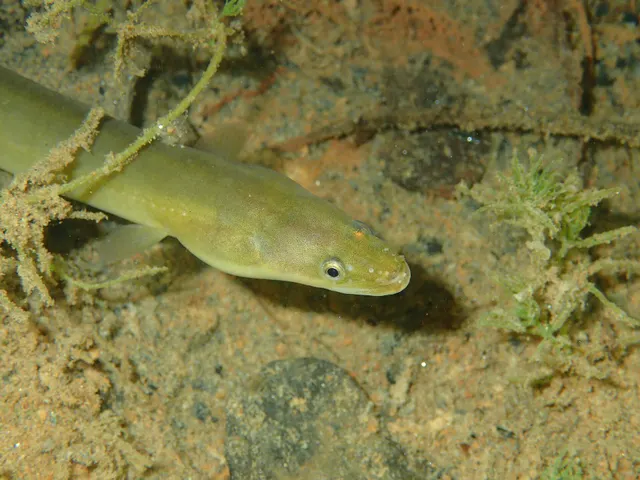 European eelPresent through the system, and a species whose passage up and down it is one of the reasons weir and barrier improvement on this river matters beyond salmon.
- European perchThroughout, and particularly around structure, weirs and the mouths of tributaries and drains.
- Northern pikeThroughout the middle and lower river and into the tidal reach, holding in the slacks and off the creases where the prey shoals are.
- RoachThroughout, and one of the clearest measures of the river's recovery: roach returned to reaches that held nothing at all within living memory.
1 more
- Zander Fish
How this compares
- The RhineTwo large lowland rivers killed by industry and brought back by treatment, at completely different scales and with different endings: the Trent is a recovered coarse river with a natural channel, and the Rhine is a shipping canal whose recovery was an international programme with a salmon as its target.
- The River ThamesTwo large English lowland rivers with tidal reaches and recovery histories. The Thames page is the estuary and the return of fish to a dead tideway; the Trent is the freshwater river and what fixing the oxygen did to it.
Sources and evidence
- Freshwater Fishes of the British Isles — HarperCollins (New Naturalist 75), 1992 (Reference work)Relied on for: Distribution, ecology and conservation status of British freshwater fishes, including the glacial-relict populations named.States this directlyCitation checked — the work exists and is described correctly
- Environment Agency fisheries management, byelaws and rod licensing information — Environment Agency (Government fisheries body)Relied on for: Freshwater fisheries management, water quality recovery, licensing structure and the monitoring of English rivers and still waters.States this directlyCitation checked — the work exists and is described correctly
- JNCC species and habitat conservation advice — Joint Nature Conservation Committee (Conservation authority)Relied on for: Designation, habitat description and conservation status of the marine, coastal and freshwater habitats named.States this directlyCitation checked — the work exists and is described correctly
- The Fishes of the British Isles and North-West Europe — Macmillan, 1969 (Reference work)Relied on for: Distribution, habitat association and biology of the fishes of the British Isles named here.States this directlyCitation checked — the work exists and is described correctly
- RNLI water safety guidance: cold water shock and Float to Live — Royal National Lifeboat Institution (Water-safety or diver-training authority)Relied on for: Cold water shock and the immersion response, tidal cut-off, and water-safety guidance for shore anglers and small-craft users.States this directlyPassage read and verified
- Met Office shipping forecast, inshore waters forecast and marine warnings — Met Office, United Kingdom (Government fisheries body)Relied on for: That inshore waters forecasts, sea state and swell are the operative inputs for shore and small-craft decisions in these waters.States this directlyCitation checked — the work exists and is described correctly
Why the 14 connections on this page are here, and the sources
What swims here
Backed by research — 9 connections
Supported by peer-reviewed research or fisheries science. The sources are listed and can be checked.
Barbel
A claim that a place contains the ground, water and seasonal conditions the species is associated with. It is a distributional statement about the world, it rests on the regional reference literature, and it deliberately asserts nothing about access, permission or catch.
- Freshwater Fishes of the British Isles — HarperCollins (New Naturalist 75), 1992 (Reference work)Relied on for: Distribution, habitat and conservation status of British freshwater fishes, including the isolated glacial-relict populations of northern England.States this directlyCitation checked — the work exists and is described correctly
- Environment Agency fisheries management, byelaws and rod licensing information — Environment Agency (Government fisheries body)Relied on for: Fisheries monitoring, water quality and species distribution in English rivers and still waters.States this directlyCitation checked — the work exists and is described correctly
Chub
A claim that a place contains the ground, water and seasonal conditions the species is associated with. It is a distributional statement about the world, it rests on the regional reference literature, and it deliberately asserts nothing about access, permission or catch.
- Freshwater Fishes of the British Isles — HarperCollins (New Naturalist 75), 1992 (Reference work)Relied on for: Distribution, habitat and conservation status of British freshwater fishes, including the isolated glacial-relict populations of northern England.States this directlyCitation checked — the work exists and is described correctly
- Environment Agency fisheries management, byelaws and rod licensing information — Environment Agency (Government fisheries body)Relied on for: Fisheries monitoring, water quality and species distribution in English rivers and still waters.States this directlyCitation checked — the work exists and is described correctly
Common bream
A claim that a place contains the ground, water and seasonal conditions the species is associated with. It is a distributional statement about the world, it rests on the regional reference literature, and it deliberately asserts nothing about access, permission or catch.
- Freshwater Fishes of the British Isles — HarperCollins (New Naturalist 75), 1992 (Reference work)Relied on for: Distribution, habitat and conservation status of British freshwater fishes, including the isolated glacial-relict populations of northern England.States this directlyCitation checked — the work exists and is described correctly
- Environment Agency fisheries management, byelaws and rod licensing information — Environment Agency (Government fisheries body)Relied on for: Fisheries monitoring, water quality and species distribution in English rivers and still waters.States this directlyCitation checked — the work exists and is described correctly
Dace
A claim that a place contains the ground, water and seasonal conditions the species is associated with. It is a distributional statement about the world, it rests on the regional reference literature, and it deliberately asserts nothing about access, permission or catch.
- Freshwater Fishes of the British Isles — HarperCollins (New Naturalist 75), 1992 (Reference work)Relied on for: Distribution, habitat and conservation status of British freshwater fishes, including the isolated glacial-relict populations of northern England.States this directlyCitation checked — the work exists and is described correctly
- Environment Agency fisheries management, byelaws and rod licensing information — Environment Agency (Government fisheries body)Relied on for: Fisheries monitoring, water quality and species distribution in English rivers and still waters.States this directlyCitation checked — the work exists and is described correctly
European eel
A claim that a place contains the ground, water and seasonal conditions the species is associated with. It is a distributional statement about the world, it rests on the regional reference literature, and it deliberately asserts nothing about access, permission or catch.
- Freshwater Fishes of the British Isles — HarperCollins (New Naturalist 75), 1992 (Reference work)Relied on for: Distribution, habitat and conservation status of British freshwater fishes, including the isolated glacial-relict populations of northern England.States this directlyCitation checked — the work exists and is described correctly
- Environment Agency fisheries management, byelaws and rod licensing information — Environment Agency (Government fisheries body)Relied on for: Fisheries monitoring, water quality and species distribution in English rivers and still waters.States this directlyCitation checked — the work exists and is described correctly
European perch
A claim that a place contains the ground, water and seasonal conditions the species is associated with. It is a distributional statement about the world, it rests on the regional reference literature, and it deliberately asserts nothing about access, permission or catch.
- Freshwater Fishes of the British Isles — HarperCollins (New Naturalist 75), 1992 (Reference work)Relied on for: Distribution, habitat and conservation status of British freshwater fishes, including the isolated glacial-relict populations of northern England.States this directlyCitation checked — the work exists and is described correctly
- Environment Agency fisheries management, byelaws and rod licensing information — Environment Agency (Government fisheries body)Relied on for: Fisheries monitoring, water quality and species distribution in English rivers and still waters.States this directlyCitation checked — the work exists and is described correctly
Northern pike
A claim that a place contains the ground, water and seasonal conditions the species is associated with. It is a distributional statement about the world, it rests on the regional reference literature, and it deliberately asserts nothing about access, permission or catch.
- Freshwater Fishes of the British Isles — HarperCollins (New Naturalist 75), 1992 (Reference work)Relied on for: Distribution, habitat and conservation status of British freshwater fishes, including the isolated glacial-relict populations of northern England.States this directlyCitation checked — the work exists and is described correctly
- Environment Agency fisheries management, byelaws and rod licensing information — Environment Agency (Government fisheries body)Relied on for: Fisheries monitoring, water quality and species distribution in English rivers and still waters.States this directlyCitation checked — the work exists and is described correctly
Roach
A claim that a place contains the ground, water and seasonal conditions the species is associated with. It is a distributional statement about the world, it rests on the regional reference literature, and it deliberately asserts nothing about access, permission or catch.
- Freshwater Fishes of the British Isles — HarperCollins (New Naturalist 75), 1992 (Reference work)Relied on for: Distribution, habitat and conservation status of British freshwater fishes, including the isolated glacial-relict populations of northern England.States this directlyCitation checked — the work exists and is described correctly
- Environment Agency fisheries management, byelaws and rod licensing information — Environment Agency (Government fisheries body)Relied on for: Fisheries monitoring, water quality and species distribution in English rivers and still waters.States this directlyCitation checked — the work exists and is described correctly
Zander
A claim that a place contains the ground, water and seasonal conditions the species is associated with. It is a distributional statement about the world, it rests on the regional reference literature, and it deliberately asserts nothing about access, permission or catch.
- Freshwater Fishes of the British Isles — HarperCollins (New Naturalist 75), 1992 (Reference work)Relied on for: Distribution, habitat and conservation status of British freshwater fishes, including the isolated glacial-relict populations of northern England.States this directlyCitation checked — the work exists and is described correctly
- Environment Agency fisheries management, byelaws and rod licensing information — Environment Agency (Government fisheries body)Relied on for: Fisheries monitoring, water quality and species distribution in English rivers and still waters.States this directlyCitation checked — the work exists and is described correctly
How people fish here
What experienced anglers do — 3 connections
Widely and independently recommended by experienced anglers and specialist sources. This is real angling knowledge, not proof: controlled evidence for it is limited, and FishingHQ records it as convention rather than as a demonstrated effect.
Coarse fishing
A claim about angling convention rather than about the world: that this place sits within this branch of fishing, which drives the information architecture as well as the page. It rests on independent practitioner description.
- General angling website restatements of established technique — Various (Credible secondary source)Relied on for: Widely restated descriptions of which practices are conventionally used on the waters named, recorded as practitioner consensus rather than as scholarship.Background and mechanism onlyCitation checked — the work exists and is described correctly
- Coarse Fishing — A. & C. Black, 1912 (Specialist angling publication)Relied on for: Established description of English coarse fishing practice on large lowland rivers and still waters.FishingHQ's interpretation of what it saysCitation checked — the work exists and is described correctly
Match fishing
A claim about angling convention rather than about the world: that this place sits within this branch of fishing, which drives the information architecture as well as the page. It rests on independent practitioner description.
- General angling website restatements of established technique — Various (Credible secondary source)Relied on for: Widely restated descriptions of which practices are conventionally used on the waters named, recorded as practitioner consensus rather than as scholarship.Background and mechanism onlyCitation checked — the work exists and is described correctly
- Coarse Fishing — A. & C. Black, 1912 (Specialist angling publication)Relied on for: Established description of English coarse fishing practice on large lowland rivers and still waters.FishingHQ's interpretation of what it saysCitation checked — the work exists and is described correctly
Predator fishing
A claim about angling convention rather than about the world: that this place sits within this branch of fishing, which drives the information architecture as well as the page. It rests on independent practitioner description.
- General angling website restatements of established technique — Various (Credible secondary source)Relied on for: Widely restated descriptions of which practices are conventionally used on the waters named, recorded as practitioner consensus rather than as scholarship.Background and mechanism onlyCitation checked — the work exists and is described correctly
- Coarse Fishing — A. & C. Black, 1912 (Specialist angling publication)Relied on for: Established description of English coarse fishing practice on large lowland rivers and still waters.FishingHQ's interpretation of what it saysCitation checked — the work exists and is described correctly
How this compares
What experienced anglers do — 2 connections
Widely and independently recommended by experienced anglers and specialist sources. This is real angling knowledge, not proof: controlled evidence for it is limited, and FishingHQ records it as convention rather than as a demonstrated effect.
The Rhine
A claim that two places are worth reading against one another, because a reader choosing between them or generalising from one to the other needs to know how the underlying process differs.
- General angling website restatements of established technique — Various (Credible secondary source)Relied on for: Widely restated descriptions of which practices are conventionally used in the waters named, recorded as practitioner consensus rather than as scholarship.Background and mechanism onlyCitation checked — the work exists and is described correctly
- Sea Angler — Bauer Media (Specialist angling publication)Relied on for: Long-running published description of European sea angling practice by region and by ground type.FishingHQ's interpretation of what it saysCitation checked — the work exists and is described correctly
The River Thames
A claim that two places are worth reading against one another, because a reader choosing between them or generalising from one to the other needs to know how the underlying process differs.
- General angling website restatements of established technique — Various (Credible secondary source)Relied on for: Widely restated descriptions of which practices are conventionally used in the waters named, recorded as practitioner consensus rather than as scholarship.Background and mechanism onlyCitation checked — the work exists and is described correctly
- Sea Angler — Bauer Media (Specialist angling publication)Relied on for: Long-running published description of British sea angling practice by region and by ground type.FishingHQ's interpretation of what it saysCitation checked — the work exists and is described correctly
How FishingHQ labels evidence is explained in the evidence policy.