Chew Valley Lake
Reservoir · Fresh water · in The English trout reservoirs
A large, shallow, very fertile lowland reservoir in a limestone catchment, with extensive weed growth, a soft bed and a nationally known pike and trout fishery.
Safety: cold water shock — can cause serious injury or death (general advice, not specific to this place). 2 more points apply here.
FishingHQ describes what this place is, not whether you may fish it. Access, permits and who to ask.
What you can catch here
Documented at this place, grouped by how you would be fishing, with how strongly the sources support each one. This is what has been written down, not a forecast, and being listed is never permission to fish.
From the shore · 2
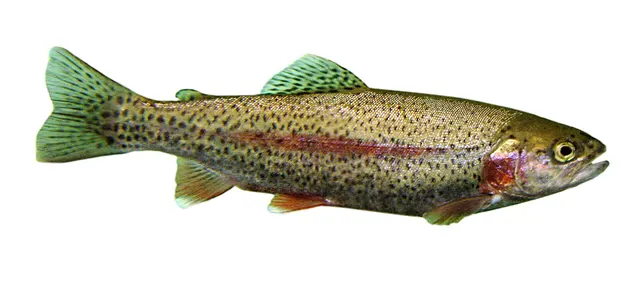 Rainbow troutCharacteristic of this water1 placeChew Valley LakeOver reservoir
Photo: Jonathunder, via Wikimedia Commons, CC BY-SA 3.0; resized and trimmed to fit; shared under the same licence
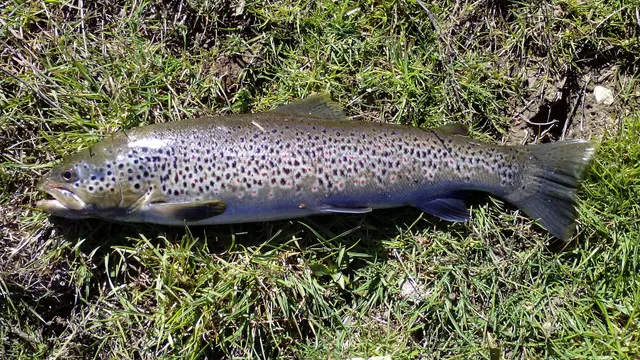 Brown troutRegular local target1 placeChew Valley LakeOver reservoir
Photo: Robermix, via Wikimedia Commons, CC0; resized and trimmed to fit


From a boat · 4
- Rainbow troutCharacteristic of this water1 placeChew Valley LakeOver reservoir
Photo: Jonathunder, via Wikimedia Commons, CC BY-SA 3.0; resized and trimmed to fit; shared under the same licence
- Brown troutRegular local target1 placeChew Valley LakeOver reservoir
Photo: Robermix, via Wikimedia Commons, CC0; resized and trimmed to fit
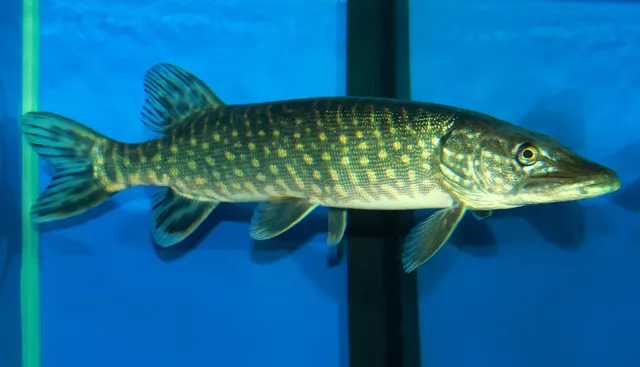 Northern pikeSeasonal1 placeChew Valley LakeOver reservoirAround Mar–Oct
Photo: Karelj, via Wikimedia Commons, public domain; resized and trimmed to fit
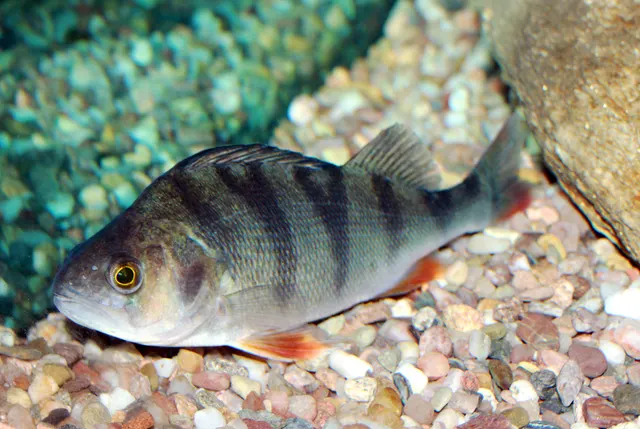 European perchRepeatedly reported1 placeChew Valley LakeOver reservoir
Photo: Karelj, via Wikimedia Commons, public domain; resized and trimmed to fit


Fly fishing · 3
- Rainbow troutCharacteristic of this water1 placeChew Valley LakeOver reservoir
Photo: Jonathunder, via Wikimedia Commons, CC BY-SA 3.0; resized and trimmed to fit; shared under the same licence
- Brown troutRegular local target1 placeChew Valley LakeOver reservoir
Photo: Robermix, via Wikimedia Commons, CC0; resized and trimmed to fit
- Northern pikeSeasonal1 placeChew Valley LakeOver reservoirAround Mar–Oct
Photo: Karelj, via Wikimedia Commons, public domain; resized and trimmed to fit
What these strengths mean
- Characteristic of this water
- This water is strongly identified with this species by the sources that cover it.
- Regular local target
- Fishing sources describe this as a normal local target here, not merely as caught.
- Seasonal
- Well supported, and concentrated in part of the year rather than spread through it.
- Repeatedly reported
- Several independent public accounts. Enough to say it happens more than once; not enough to call it a fishery.
- How breadth is counted
- A fish documented at six marks is shown as six marks: breadth never raises the strength on its own. A fishery account describes the fishing; a recorded catch reports one specific catch. How evidence is weighed.
Also associated with this ground
Recorded as present here without a documented method or strength behind them.
How people fish it
Practised here: Coarse fishing, Fly fishing.
Methods the sources name for this ground. Each one is explained in full on its own page.
- Stillwater fly fishing
Fly fishing without current, where the angler supplies every movement and the problem becomes finding fish rather than presenting to them.
Baits and lures for these fish
The baits and lures each of the fish above is commonly taken on, from that fish’s own page. This is what works for the fish, not a report of what people use on this particular water — local knowledge and the conditions on the day still decide.
Baits
- Maggots — for Brown trout, European perch
- Lobworms and worms — for European perch
- Sea deadbaits — for Northern pike
Lures
- Crankbaits — for Northern pike, European perch
- Dry flies — for Rainbow trout, Brown trout
- Nymphs — for Rainbow trout, Brown trout
- Soft plastics — for Northern pike, European perch
- Spinners — for Rainbow trout, European perch
- Streamers — for Rainbow trout, Brown trout
- Jerkbaits — for Northern pike
- Jigs and jig heads — for European perch
Also: Spinnerbaits and bladed jigs · Spoons · Terrestrial fly patterns · Wet flies
How to catch them: Brown trout fishing · Pike fishing · Perch fishing
Rods, reels and rigs for them: Brown trout · Northern pike · European perch
The ground and the water
- The ground
- A large, shallow, very fertile lowland reservoir in a limestone catchment, with extensive weed growth, a soft bed and a nationally known pike and trout fishery.
Getting there
What public sources describe, last checked 2026-10-23. Car parks fill, services change and a path existing is not a path anybody may use — none of this is a guarantee of availability and none of it is permission to be anywhere.
- Getting to it
- A Bristol Water fishery fished on the company's permit, with its lodge at Woodford. Bank anglers may not be at the lakeside until an hour before sunrise, and must not fish the dam, the nature reserve, the causeways at Herons Green and Herriots, the sailing club, in front of the picnic areas or the landing stages.
Parking
Bristol Water car parks
Harbour or operator parking · Charging not established
Permit holders must use the company's car parks, not grass verges or hay meadows, the regulations say.
Where this access information comes from
- Bristol Water Fisheries General Fishing Regulations 2024 — Bristol Water (Local authority, harbour or protected-area body)Relied on for: The lodges, the company car parks, the prohibited areas and the boat rules.States this directlyPassage read and verified
What is there
Public rescue equipment recorded
Lifejackets are lent at Woodford Lodge to boat anglers who do not bring their own, the regulations say.
Safety
Cold water shock — Can cause serious injury or death
General safety for this kind of ground, not a finding about this place.
A warm surface layer sits on cold deep water through the summer. Immersion in August is immersion in cold water, the involuntary gasp and loss of breathing control arrive in the first seconds, and off a steep margin or from a boat there is nothing shallow to stand up in.
What reduces it: Wear a buoyancy aid rather than carry one, do not fish alone from a boat, and treat these lakes as cold water in every month because below the surface they are.
Worse when:
- In summer, when the warm surface makes the lake feel safe.
- Off dam walls, rip-rap and steep drawdown margins, where there is no shallow water to recover into.
Boat safety — Can cause serious injury or death
General safety for this kind of ground, not a finding about this place.
A large open reservoir gives wind a long uninterrupted fetch, so a steep sea builds quickly and a boat that could make ground half an hour ago may not now. The shore under the lee may be bare drawdown bank or rip-rap with nowhere sensible to land.
What reduces it: Follow the fishery's boat and buoyancy aid rules, which are the operative framework. Fix a turnaround time and a named landing shore before setting off, and go in early when the wind starts rather than after it has built.
Overhead power lines — Can cause serious injury or death
General safety for this kind of ground, not a finding about this place.
Overhead electricity lines cross some reservoir approaches and margins. Carbon rods conduct and electricity arcs across a gap without contact, so raising a rod beneath a line kills instantly.
What reduces it: Look up before setting up and before moving with a rod raised, and do not fish a swim with a line over or near it.
Rules and access
Licence
A rod licence is required for freshwater rod fishing in England, issued by the Environment Agency — except on the River Tweed, which the licence does not cover even in England. Children under 13 do not need one.
Permission to fish
Separate. Almost all fishing rights are held by a club, association, riparian owner or navigation authority, and the licence does not grant access to any of them.
Particular to this water: Bristol Water's 2024 fishing regulations, read on 23 October 2026: no fishing without the company's permit; fly fishing only, one rod, no bait, spinning or trolling; pike fly fishing is allowed here and at no other Bristol Water lake. Eight trout on a full-day ticket and four on a half-day; no brown trout may be taken and all coarse fish are returned. Fishing from an hour before sunrise to an hour after sunset. Wade no deeper than the tops of the thighs. Every boat angler wears a lifejacket.
Beyond what is stated above, FishingHQ does not know the current access position here. Freshwater rod fishing in England requires a current rod licence AND separate permission from whoever controls the fishing, which is frequently a club, riparian owner or navigation authority rather than a public body. Close seasons, byelaws and local rules apply and change. Check with the Environment Agency and with the controlling club or owner before going.
Who holds the answer:
- The Environment Agency, for rod licensing, close seasons and fisheries byelaws in England.
- The club, association, riparian owner or navigation authority that controls the fishing.
- The Environment Agency, for rod licensing in England and for fisheries enforcement.
- The water company or fishery operator that runs the reservoir, whose own rules govern methods, bag limits, boats and access and are the operative constraint.
- Natural England and the site management body, where a reservoir carries a conservation designation affecting access, disturbance or timing.
- The fishery lodge or manager on the day, for boat safety requirements, buoyancy aid rules and any conditions in force.
- Bristol Water, which owns the lake and runs the fishery; a rod licence is needed as well as the company's permit.
The fishery on this water
This water is public geography and is also somebody’s business. What follows is the operator’s own account of the fishery that runs on it: what they stock, how you get a day, and the conditions they set.
These are the operator’s rules, not the law. A fishery can require barbless hooks, refuse a method, close a water or ask you to leave, and none of that is a legal requirement. The licence and the close season are set by the fisheries authority and are the section above. Being listed here is not a recommendation and it is not permission — telephone before travelling.
Chew Valley Lake
Stocked trout stillwater · Chew Stoke, Somerset
A stillwater stocked with trout, fished on a ticket
A large Somerset supply reservoir run as a fly-only trout fishery, and the one water in its operator's system where fishing for pike is permitted.
Named by the fishery as fishable: Brown trout, Northern pike, Rainbow trout.
How you get a day: Book in advance, Day tickets on arrival.
The fishery’s own conditions: Fly fishing permitted, Lure fishing permitted, Bait fishing permitted, No night fishing, Limited take, on the fishery's own terms.
Season: Trout through the fly season; deadbait and lure pike fishing on published dates in February and from October to early December only.
The rules this fishery sets, in its own terms
- Only fly fishing, using traditional fly tackle, with one rod in use at a time. Bait, spinning, trolling and trailing are prohibited.
- No brown trout may be taken, and all coarse fish must be returned.
- Pike fly fishing is permitted here and at no other water the operator runs, on a ten-inch wire trace of forty-pound breaking strain.
- Deadbait and lure pike fishing runs only on published dates, booked as a boat for two anglers or a pair of bank permits.
- For pike: only one prong of a deadbait treble may carry a barb, all other hooks barbless, minimum twenty-pound mono or forty-pound braid, and a means of unhooking carried.
- Anglers must not wade deeper than the tops of thigh waders, and several stretches including the dam and the nature reserve are closed to fishing.
Checked against the operator's own information. Last checked 2026-08-29.
Nearby fishing
Other publicly documented places within about 40 km, by distance. Positions are approximate public geography and are never exact marks.
- Blagdon Lake — 5–10 km · Reservoir
- Portishead — 10–25 km · Estuary mark
- Clevedon Pier — 10–25 km · Pier
- Weston-super-Mare — 25–40 km · Beach
- Severn Beach — 25–40 km · Estuary mark
- Sand Point — 25–40 km · Headland
- Brean Down — 25–40 km · Headland
- Burnham-on-Sea and Berrow — 25–40 km · Beach
Sources for this place
- Environment Agency fisheries management, byelaws and rod licensing information — Environment Agency (Government fisheries body)Relied on for: Freshwater and transitional-water fisheries management in England, the structure of rod licensing, close seasons and byelaws, and the monitoring of rivers and stillwaters.States this directlyCitation checked — the work exists and is described correctly
- Angling Times — Bauer Media (Specialist angling publication)Relied on for: Long-running published description of British coarse and match angling practice by water and by named reach.FishingHQ's interpretation of what it saysCitation checked — the work exists and is described correctly
- General angling website restatements of established technique — Various (Credible secondary source)Relied on for: Widely restated public descriptions of which waters are conventionally fished and how, recorded as practitioner consensus rather than as scholarship, and not relied on for access, permission or any current rule.Background and mechanism onlyCitation checked — the work exists and is described correctly
- Bristol Water Fisheries General Fishing Regulations 2024 — Bristol Water (Local authority, harbour or protected-area body)Relied on for: The regulations.States this directlyPassage read and verified
How FishingHQ labels evidence is explained in the evidence policy. Last reviewed 2026-08-16.
Something wrong or out of date?
If something on this page has changed, email us from your own account using the link that fits, with a link to where you saw the change if you can. Every report is checked by a person before anything is changed, and a report never appears on the site by itself. Please don’t send exact private marks.
Before you go
- Fish documented here
- 9 at this place itself. See them.
- Getting there
- Described from public sources, last checked 2026-10-23. Getting there.
- Rules particular to this water
- Bristol Water's 2024 fishing regulations, read on 23 October 2026: no fishing without the company's permit; fly fishing only, one rod, no bait, spinning or trolling; pike fly fishing is allowed here and at no other Bristol Water lake. Eight trout on a full-day ticket and four on a half-day; no brown trout may be taken and all coarse fish are returned. Fishing from an hour before sunrise to an hour after sunset. Wade no deeper than the tops of the thighs. Every boat angler wears a lifejacket. Dated: Bristol Water. Whether it still applies is not established. Applies to: place-chew-valley-lake.
Nothing here is watched for change. Sources and who to ask.
- Hazards particular to this place
- None recorded for this place; the hazards of the wider coast or water still apply.
Check before you travel
- Whether you may fish here, and whether a licence or permit is needed — start with the Environment Agency.
- Who holds the fishing right on the water you mean to fish.
- Anything recorded here was true when it was read; it is not watched for change.