Black seabream
Fish · Last reviewed 2026-08-15
A deep-bodied silver bream that builds and guards nests on gravel — a hard-fighting south-coast summer species whose spawning aggregations are unusually easy to damage.
Safety: venomous and spined species — minor injury. 3 more points apply here.
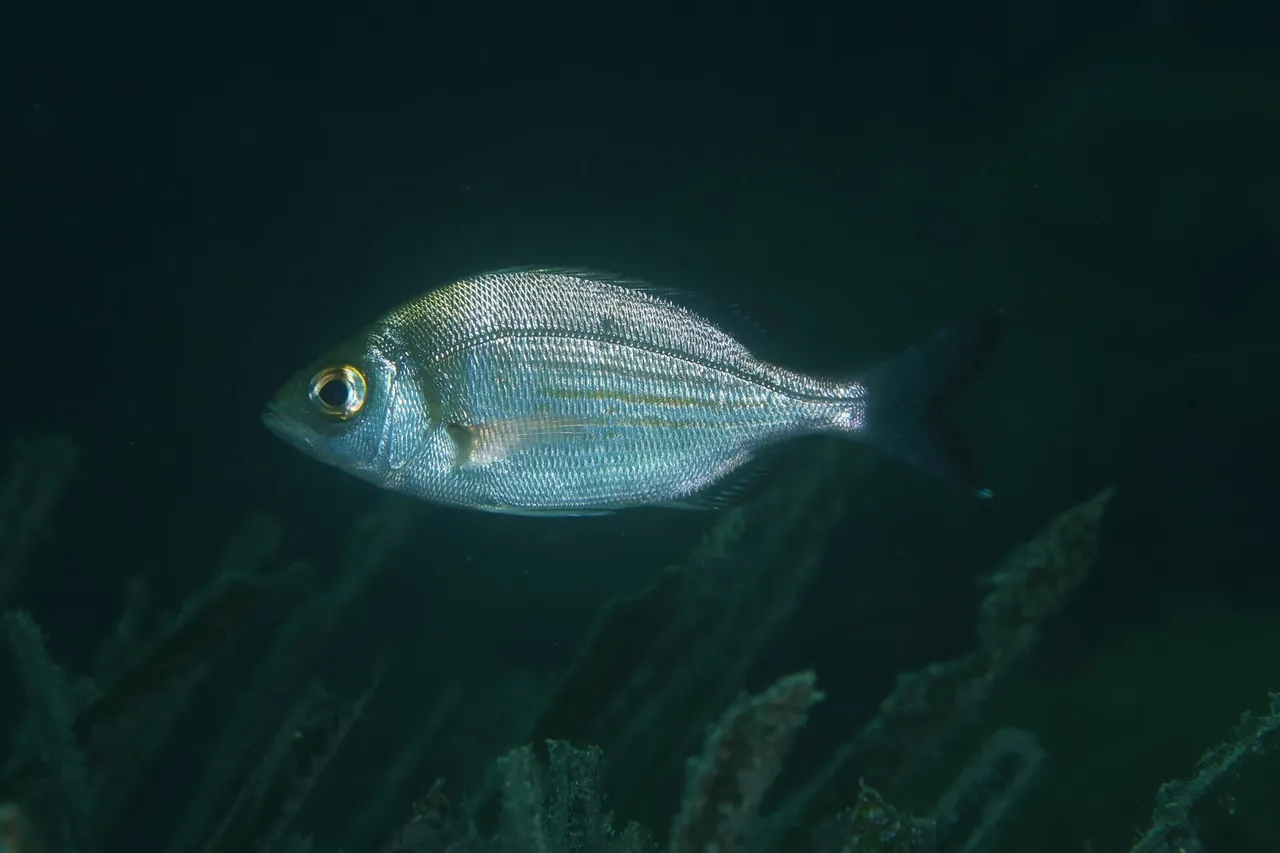
How this was identified, and who took it
Identified by: A deep strongly compressed oval body carrying a single long dorsal whose spiny portion runs continuously into the soft portion, with faint golden longitudinal lines over silver, a small mouth and a gold-ringed eye. The bold vertical bars and dark caudal saddle that would make it a white seabream are absent. Three agreeing identifications.Julien Renoult — CC BY, via iNaturalist — source, licenceCatching Black seabream
Everything here on fishing for it. Each entry opens the page behind it.
- When
- May–Oct — months recorded at the places that document it, not a season for the whole range.
- Where
- 15 places FishingHQ documents — strongest claim anywhere: regular local target · From the shore, From a kayak, On a charter
Black bream are the species that turns British bream fishing from an afterthought into a specialism. They arrive on the southern and western coasts in spring, they fight far harder than their size suggests, and they do something almost nothing else in British seas does: they build nests.
A MALE SWEEPS A DEPRESSION IN GRAVEL AND DEFENDS IT. Using his tail he clears a saucer-shaped hollow on coarse sand or gravel ground, a female lays adhesive eggs in it, and the male then guards them until they hatch — actively, aggressively, and without feeding much. Colonies of these nests form on the same grounds year after year.
THAT BEHAVIOUR IS THE KEY TO BOTH THE FISHING AND THE PROBLEM. It concentrates fish predictably in known places at a known time, which is exactly why the spring fishing is so good and exactly why it is so easy to do harm. A guarding male removed from a nest is not just one fish; it is the brood he was defending.
BLACK BREAM ALSO CHANGE SEX. They are protogynous hermaphrodites — individuals typically function as females first and some later become males — which means the larger fish in a population are disproportionately male, and removing large fish removes breeding males specifically.
How it is caught
- Drift fishingDrifting small baits over known gravel grounds, which is how most boat-caught black bream are taken.
- Float fishingFished on light float tackle from piers and rock marks where bream come within range, a method borrowed almost unchanged from freshwater.
- LedgeringLight bottom fishing over gravel and reef edges with small baits, which is the standard south-coast approach.
Gear for this fish
Where Black seabream is documented
Places where public sources describe this species as fished, with how it is fished and how strongly the evidence supports it. This is not a range map and it is not a recommendation — it is what has been written down about a fishery rather than a record of any individual catch, and being listed is never permission to fish.
The Cornish and Devon coasts
6 documented places
Headland
Recorded here
From the shore
Beach section
Recorded here
From the shore
Headland
Occasional
From a kayak
Seaton beach and the Axe mouth
Beach
Repeatedly reported
From the shore
Around May, Jun, Jul, Aug
Headland
Seasonal
From the shore
Around Jun, Jul, Aug, Sept
Estuary
Seasonal
From the shore
Around Jun, Jul, Aug, Sept
The Channel shingle coasts
1 documented place
Marina
Seasonal
From the shore
Around May, Jun, Jul, Aug, Sept, Oct
Chesil Beach
1 documented place
Beach section
Seasonal
From the shore
Around May, Jun, Jul, Aug, Sept, Oct
Pembrokeshire and the south-west Wales coast
1 documented place
Surf beach
Seasonal
From the shore
Around Jun, Jul, Aug, Sept
Portland Bill and the Portland Race
1 documented place
Headland
Seasonal
From the shore
Around Jun, Jul, Aug, Sept
The Welsh coast and Anglesey
1 documented place
Caernarfon and the Menai south entrance
Tidal channel
Recorded here
From the shore
Dublin Bay and the Wicklow coast
1 documented place
Headland
Recorded here
On a charter
Around Jul
Observed July 2026
Also documented on 2 more coasts
Fewer places each, or less strongly supported. Each one names its own marks.
Lanzarote (1) · Weymouth Bay (1)
What these strengths mean
- Seasonal
- Well supported, and concentrated in part of the year rather than spread through it.
- Recorded here
- At least one credible public account of this species being caught here. That is all it means.
- Occasional
- Caught here, and described as unusual rather than normal. Do not plan a session around it.
- Repeatedly reported
- Several independent public accounts. Enough to say it happens more than once; not enough to call it a fishery.
- Regular local target
- Fishing sources describe this as a normal local target here, not merely as caught.
When to fish for black seabream
Where the places here state a season for black seabream, it clusters in May–Sep. This is a count of how many documented places name each month — evidence about when people fish for it, not a prediction of what any particular day will produce.
| Jan | Feb | Mar | Apr | May | Jun | Jul | Aug | Sep | Oct | Nov | Dec |
|---|---|---|---|---|---|---|---|---|---|---|---|
| January: no place here names this month — no place names it. | February: no place here names this month — no place names it. | March: no place here names this month — no place names it. | April: no place here names this month — no place names it. | May: 4 places name this month — some places. | June: 7 places name this month — most places. | July: 7 places name this month — most places. | August: 8 places name this month — most places. | September: 7 places name this month — most places. | October: 2 places name this month — few places. | November: no place here names this month — no place names it. | December: no place here names this month — no place names it. |
9 of the 14 places that record catches of black seabream state which months. The other 5 name no season, so they are counted in neither direction: the shape above is what the dated records say, not the whole picture. The dated records span 7 separate areas.
Identification
- Scientific name
- Spondyliosoma cantharus
- Family
- Sparidae
- Water
- Saltwater
- Conservation status
- Least Concern
- Regions
- Britain & Ireland, Western Europe, Mediterranean, North Africa, West Africa
- A deep, laterally compressed oval body — much deeper for its length than any British cod-family or flatfish species, and the outline alone identifies a bream at distance.
- Silvery grey to bluish, usually with a series of faint darker vertical bars that come and go with mood and can vanish entirely on a dead fish.
- A single long dorsal fin running most of the back, with the spiny front portion continuous with the soft rear portion rather than separated.
- Small mouth with rows of small, close-set teeth at the front — no canines, no cutting teeth, and nothing that will hurt a hand.
- Breeding males darken markedly and can look almost black over the back with a pale band, which is where the name comes from.
- Distinguished from gilthead bream by the absence of the gilthead's gold bar between the eyes and dark shoulder blotch, and from red seabreams by colour and by the eye, which is smaller here.
Size
- Typical
- 25–35 cm and 0.5–1 kg for rod-caught fish.
- Large
- Over 40 cm and 1.5 kg is a very good black bream.
Exceptional: Around 50 cm and something over 2 kg is the reported upper end for the species. Fish at that size are old and, given the sex-change biology, are very likely to be males.
Gravel, reef and a spring arrival: where and when black bream are catchable
Black bream fishing in Britain is a season and a ground type, and both are narrow enough to state plainly.
THE GROUND IS STRUCTURE PLUS GRAVEL. Adults live over rock, reef, wreck and coarse ground, browsing invertebrates off structure. But the spawning ground is specifically coarse sand and gravel — a male needs a substrate he can sweep into a saucer with his tail, and neither bare rock nor soft mud will do. That combination, hard structure to live over and gravel to breed on, is why the good bream marks are where they are and why they are the same places every year.
DEPTH IS MODERATE. The species occurs from a few metres to several hundred, but the fishing happens between roughly five and a hundred metres, and the spring inshore fishing is often shallower than people expect.
THE SEASON IS SPRING TO AUTUMN AND THE ARRIVAL IS THE EVENT. Fish move inshore from deeper water as the sea warms, typically through spring, spawn in late spring and early summer, feed over reef and wreck through the summer, and withdraw offshore and southward through autumn. Timing shifts between years with sea temperature, and the arrival can be a fortnight early or late.
THE RANGE HAS BEEN MOVING. Black bream have become steadily more abundant and more widely caught in British waters as inshore sea temperatures have risen, which makes this one of the clearer local examples of a distribution shift an angler can actually observe within a career.
AND THE BEST FISHING COINCIDES WITH THE MOST VULNERABLE MOMENT. This is the uncomfortable part and it should be said rather than left implied. Fish are concentrated, aggressive and easy to catch precisely because males are holding nests on known grounds. A guarding male taken off a nest is not one fish removed; the brood he was defending goes with him. Some anglers avoid the spawning grounds during the peak, some limit what they keep, and some do neither. FishingHQ's position is that the biology should be known before the choice is made.
WHAT IS PERMITTED IS NOT STATED HERE. Minimum sizes, seasonal restrictions and protected-area conditions differ between administrations and inshore authorities and are revised — several bream spawning grounds sit inside designated sites with their own rules. Ask the relevant inshore fisheries authority.
What experienced anglers do — why, and the sources (3)
Widely and independently recommended by experienced anglers and specialist sources. This is real angling knowledge, not proof: controlled evidence for it is limited, and FishingHQ records it as convention rather than as a demonstrated effect.
- The Fishes of the British Isles and North-West Europe — Macmillan, 1969 (Reference work)Relied on for: Distribution, habitat, identification characters and biology of the fishes of the British Isles and north-west Europe.States this directlyCitation checked — the work exists and is described correctly
- Sea Angler — Bauer Media (Specialist angling publication)Relied on for: Contemporary UK and European sea angling practice as reported by practitioners, including regional ground, seasonal timing and species behaviour.States this directlyCitation checked — the work exists and is described correctly
- Good Fish Guide — Marine Conservation Society (Conservation authority)Relied on for: Sustainability ratings for commercially caught species and the stock and gear considerations behind them.Background and mechanism onlyCitation checked — the work exists and is described correctly
Size, sex change, and why bream bites are so hard to hit
Two things about black bream size are worth knowing, and the second one is not obvious.
THE ORDINARY NUMBERS. Most rod-caught black bream are 25 to 35 centimetres and half a kilogram to a kilogram. Over 40 centimetres and 1.5 kilograms is a very good fish anywhere in Britain, and the reported upper end is around 50 centimetres and a little over two kilograms.
BUT SIZE IS ALSO SEX. Black bream are protogynous hermaphrodites — individuals generally function as females first and some later become males. So the large fish in a population are disproportionately male, and a decision to keep only the biggest fish is, in this species specifically, a decision to remove breeding males. That is a genuinely different situation from a species where size simply means age, and it is why the usual angling instinct to return the small ones needs thinking about here.
THE MOUTH EXPLAINS THE FISHING. A black bream has a small mouth with rows of small, close-set teeth at the front, suited to picking, nipping and browsing invertebrates off structure. It does not engulf prey. What it does to a bait is take repeated small bites out of it.
WHICH IS WHY THE BITES ARE INFAMOUS. A bream bite is a series of rattles and plucks as the fish dismantles the bait, and striking at the first of them usually pulls the hook away from a fish that has not got it yet. Small baits on small hooks, so that the first proper bite includes the hook, is the answer that experienced bream anglers converge on, and it works far better than heavier gear.
SIGHT LEADS, SO FINE TACKLE PAYS. These are daylight fish over structure in generally clear summer water, and they are wary in it. Fine traces, small hooks and a natural drift in the tide matter more than strong scent — the opposite emphasis from flounder or dab fishing, and a good illustration of why a species page has to say which sense is in charge rather than repeating generic advice.
SQUID STRIP AND RAGWORM ARE THE STANDARDS, cut small. A large bait produces more rattles and fewer hooked fish.
What experienced anglers do — why, and the sources (3)
Widely and independently recommended by experienced anglers and specialist sources. This is real angling knowledge, not proof: controlled evidence for it is limited, and FishingHQ records it as convention rather than as a demonstrated effect.
- The Fishes of the British Isles and North-West Europe — Macmillan, 1969 (Reference work)Relied on for: Distribution, habitat, identification characters and biology of the fishes of the British Isles and north-west Europe.States this directlyCitation checked — the work exists and is described correctly
- Sea Angler — Bauer Media (Specialist angling publication)Relied on for: Contemporary UK and European sea angling practice as reported by practitioners, including regional ground, seasonal timing and species behaviour.States this directlyCitation checked — the work exists and is described correctly
- FAO Species Identification Guides for Fishery Purposes and the FAO Species Catalogues — Food and Agriculture Organization of the United Nations (Scientific institute)Relied on for: Diagnostic identification characters, family placement and distribution as set out in the FAO species identification sheets for the eastern Atlantic and Mediterranean.States this directlyCitation checked — the work exists and is described correctly
Nest building, guarded eggs, and returning a fish that has a job to do
Almost every fish in British seas spawns by releasing eggs into the water and leaving. Black bream do not, and the difference matters.
THE MALE BUILDS A NEST. He sweeps a saucer-shaped depression in coarse sand or gravel with his tail, clearing it of silt and debris. A female then deposits adhesive eggs into the hollow, and the male fertilises them and stays.
THEN HE GUARDS AND FANS THEM. For the whole incubation he defends the nest against anything that approaches, fans the eggs to keep them oxygenated and free of silt, and feeds little. His colour darkens dramatically over the back — the source of the name — and his behaviour becomes aggressive rather than cautious.
NESTS OCCUR IN COLONIES, on the same grounds year after year. Whole areas of gravel can carry them, and those areas are known and predictable.
THIS IS WHY THE SPECIES IS EASY TO DAMAGE. Broadcast spawners scatter their eggs across the sea and no individual adult's removal costs a brood. A nest-guarding species concentrates its reproduction into defended points on the seabed, at a known season, in known places, with the guarding parent unusually willing to attack a bait. Every one of those facts increases catchability at exactly the moment the population can least afford it. The same gravel is also vulnerable to towed gear and to anchoring.
AND THE SEX-CHANGE BIOLOGY COMPOUNDS IT, because the guarding males are the large fish, and large fish are what most people keep.
HANDLING IS STRAIGHTFORWARD AND SPEED IS THE POINT. There are sharp dorsal spines that will prick a hand and no venom and no dangerous teeth: wet hands, a grip across the body clear of the dorsal, unhook and return. During the spawning period a fish returned within seconds may resume guarding its nest; one held out of water for a photograph and a measurement will not get back in time, and the eggs will be eaten while it is away.
BAROTRAUMA APPLIES AT DEPTH. Bream brought up quickly from deeper marks suffer swim-bladder expansion and may not be returnable alive. If fish are not going to survive release from a particular depth, the honest options are to keep what you catch within whatever the local rules permit, or to fish shallower ground.
Backed by research — why, and the sources (3)
Supported by peer-reviewed research or fisheries science. The sources are listed and can be checked.
- The Fishes of the British Isles and North-West Europe — Macmillan, 1969 (Reference work)Relied on for: Distribution, habitat, identification characters and biology of the fishes of the British Isles and north-west Europe.States this directlyCitation checked — the work exists and is described correctly
- Cefas science, advice and data on marine and freshwater environments — Centre for Environment, Fisheries and Aquaculture Science (Government fisheries body)Relied on for: UK marine fisheries science: stock monitoring, survey data and the biological basis of management advice for the species concerned.States this directlyCitation checked — the work exists and is described correctly
- FAO Species Identification Guides for Fishery Purposes and the FAO Species Catalogues — Food and Agriculture Organization of the United Nations (Scientific institute)Relied on for: Diagnostic identification characters, family placement and distribution as set out in the FAO species identification sheets for the eastern Atlantic and Mediterranean.States this directlyCitation checked — the work exists and is described correctly
How black seabream are caught
Black seabream are caught in a way that has almost nothing in common with the rest of British sea fishing, because the fish is structurally different from the species around it.
THEY ARE A STRUCTURE FISH IN MIDWATER. Bream hold over reef, rough ground and wreck, frequently well up off the bottom rather than on it, and they shoal. Fishing a bait hard on the seabed over bream ground is the commonest error and the reason people conclude the fish have not arrived.
BOAT FISHING AT ANCHOR OVER MARK IS THE PRINCIPAL METHOD. A light flowing trace, a modest lead, and small hooks — bream have small mouths and hard, crushing jaws, and a size 1/0 intended for cod is far too big. Sizes 2 to 6 hook far more of them.
SMALL BAITS, PRESENTED SMALL. Strips of squid, mackerel or ragworm cut to the size of a thumbnail. Bream inspect a bait rather than engulfing it, and a large bait produces the endless rattling bites that never develop.
GROUNDBAIT AND A STEADY TRICKLE OF FEED WORK, which is unusual in British sea fishing and is directly borrowed from continental practice. A slick of crushed mackerel or a mesh bag of chopped bait pulls a shoal up in the water and holds it, and once bream are up and competing they are far easier to catch.
SHORE FISHING FOR THEM IS REAL BUT LOCAL, from deep-water marks along the south coast where reef comes close in — Chesil, Portland, and the deeper Sussex and Devon marks. Light float tackle fished over kelp and rock is the method, and it is closer to mullet fishing than to bass fishing.
AND THE TIMING IS SHARP. Black seabream are summer visitors to British waters, arriving in late spring and leaving in autumn, with the fishing concentrated into a few months. The nest-building spawning aggregation is a specific and vulnerable period, and several areas restrict fishing over known nesting ground for exactly that reason.
What experienced anglers do — why, and the sources (2)
Widely and independently recommended by experienced anglers and specialist sources. This is real angling knowledge, not proof: controlled evidence for it is limited, and FishingHQ records it as convention rather than as a demonstrated effect.
- Sea Angler — Bauer Media (Specialist angling publication)Relied on for: Contemporary UK and European sea angling practice as reported by practitioners, including ground, seasonal timing, bait and method convention.States this directlyCitation checked — the work exists and is described correctly
- General angling website restatements of established technique — Various (Credible secondary source)Relied on for: Widely restated descriptions of species behaviour and regional angling practice, recorded as consensus rather than as scholarship.Background and mechanism onlyCitation checked — the work exists and is described correctly
Lifecycle and reproduction
Black bream are protogynous hermaphrodites: individuals generally mature and function as females first, and some subsequently change sex and function as males. The consequence is that the large fish in a population are disproportionately male, and the size distribution is not simply a matter of age. Growth is moderate and fish are reasonably long-lived, so a large bream represents many years of accumulated growth in a fish that may also be a breeding male.
Spawning is in spring and early summer. The male excavates a saucer-shaped nest by sweeping gravel or coarse sand with his tail, a female deposits adhesive eggs into it, and the male guards the nest and fans the eggs until they hatch, defending it aggressively and feeding little while doing so. Nests occur in colonies on the same grounds in successive years. This is demersal, guarded spawning of a kind that is rare in British seas and it makes the species far easier to disrupt than a broadcast spawner.
Feeding and senses
Black bream take small crustaceans, worms, molluscs, hydroids and weed-associated invertebrates, browsing over reef, wreck and gravel rather than chasing prey. The small mouth and close-set teeth suit picking and nipping, which is why bream bites are notoriously fiddly: the fish is nibbling a bait apart rather than engulfing it. Squid strip, ragworm and small fish baits all work, and the practitioner consensus is that small baits on small hooks do consistently better than large ones.
Vision is the leading sense — these are daylight fish over structure in generally clear water — and black bream are noticeably wary in the clear, calm conditions the south-coast season provides. That places the emphasis on fine traces and small hooks rather than on scent. Because the fish browses rather than hunts, a bait that behaves naturally in the tide matters more than one that leaks strongly.
Through the year
A seasonal visitor to British and Irish waters. Fish arrive inshore from deeper water in spring, spawn through late spring and early summer, remain through the summer feeding over reef and wreck, and move back offshore and southward as water cools in autumn. Numbers and timing vary with sea temperature between years, and the species' range in British waters has been extending as inshore temperatures have risen.
Distribution
Eastern Atlantic from Norway and the British Isles south to Angola, including the Mediterranean and the Black Sea. Occurs over rock, reef, wreck and gravel from a few metres down to around 300 m, most commonly in 5 to 100 m. In British waters it is most abundant along the south and south-west coasts and in the Irish Sea. The global assessment is Least Concern, which says nothing about the state of any local spawning colony.
This is a biological range — where the species occurs, not a prediction that you will catch one. To browse the fishing geography FishingHQ holds, start at fishing places.
Why anglers care
A prized inshore boat and shore species along the English south coast, and one of the best light-tackle fish in British seas — a black bream on balanced gear fights with a dogged, circling power out of all proportion to its weight. The spring arrival is one of the fixed points of the southern sea angling year. It is also the British species where an angler's own restraint matters most directly, because the fish are catchable precisely when they are guarding nests.
Handling and returning
Black bream carry sharp dorsal spines that will prick a careless hand, but they have no venom and no dangerous teeth. Wet hands, a grip across the body avoiding the dorsal, and prompt return. The species suffers barotrauma when brought up from depth, so fish taken from deeper marks may need venting or, better, should simply not be targeted at depths from which they cannot be returned alive. During the spawning period a fish returned quickly can resume guarding a nest; one kept in a bucket for a photograph cannot.
Going further
- What does black seabream eat? — feeding biology, kept separate from what anglers infer from it.
Safety
Venomous and spined species — Minor injury
The spiny front portion of the dorsal fin is sharp and will prick a hand that grips a struggling fish carelessly. There is no venom; the injury is a puncture, and the risk is infection rather than envenomation.
What reduces it: Hold the fish across the body with the dorsal folded down and away from the palm, use wet hands, and wash and cover any puncture. Marine puncture wounds infect readily and should be watched.
Precautions that always apply here
- Wet your hands before touching a fish. Dry hands strip the protective mucus layer that keeps infection out.
- Handle spined and venomous species with the spines controlled. Know which local species have them before you fish, not afterwards.
- Support the fish's weight along its body, keep it out of the water for as short a time as possible, and hold it over something soft.
Check the rules before you fish
Fishing laws, bylaws, access rules, seasons, bait restrictions and permitted methods vary by location and can change. Check the current rules from the relevant authority and the water you intend to fish before fishing.
Check with:
- Current national or regional law for where you are fishing
- Current local bylaws
- The relevant fisheries authority
- The landowner, club or fishery whose water it is
- Any restrictions specific to the species or the method you intend to use
Where to go next
Where it lives
- Inshore groundAdults browse invertebrates off reef, wreck and coarse ground, and spawn specifically on the coarse sand and gravel a male can sweep into a nest.
- Kelp forestWeed-associated invertebrates are a significant part of the diet, and bream browse the edges of kelp ground.
- Rocky shores and reefsReef and rough ground hold the invertebrate life black bream feed on, and the shore fishing happens where that ground comes close in.
Where you will find it
- Lyme BayLyme Bay's offshore reef systems hold one of the better-known black bream fisheries on the English south coast, and the species' nest-building on soft ground beside reef is what the bay's bottom supplies.
- The Solent and the Hampshire coastOver the gravel, shell and mixed ground of the strait and the approaches through the warmer months, where the species nests on suitable ground.
Understanding this fish
- Bivalve and gastropod molluscs as preySmall molluscs browsed from structure, part of a diet gathered rather than hunted.
- Decapod crustaceans as preySmall crustaceans picked off reef, wreck and weed. The small mouth and close-set front teeth suit nipping rather than engulfing.
- Polychaete worms as preyWorms taken from coarse ground and from among weed-associated growth.
- Spawning triggersBlack bream spawn on the same gravel grounds year after year at a predictable season, which is precisely what makes the fishing good and the population easy to damage.
- Swim bladders, buoyancy and barotraumaBream brought up quickly from deeper marks suffer swim-bladder expansion and may not be returnable alive, which is a decision to make before fishing deep ground rather than after.
Told apart from
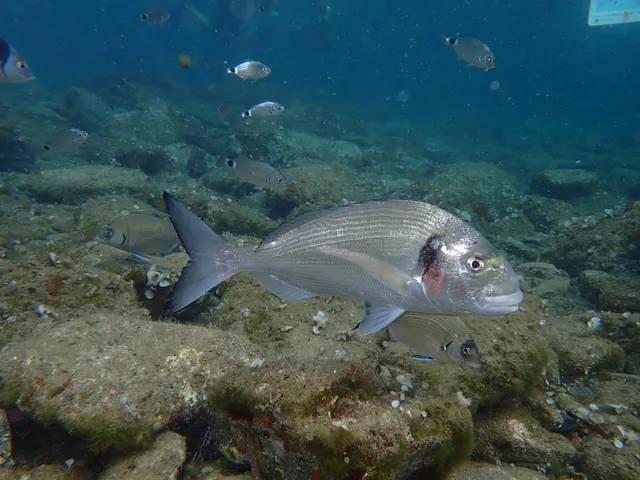 Gilthead breamBoth deep silver sparids taken on southern British and European coasts. The gilthead carries a gold bar between the eyes and a dark shoulder blotch; the black bream has neither and shows faint vertical barring instead.
- John DoryBoth are deep-bodied fish taken over the same southern reef and wreck ground, and a silhouette glimpsed in the water can be either. The dory is far thinner edge-on, carries the ringed flank blotch and has trailing dorsal filaments; the bream has none of those.
Sources and evidence
- The Fishes of the British Isles and North-West Europe — Macmillan, 1969 (Reference work)Relied on for: Distribution, habitat, identification characters and biology of the fishes of the British Isles and north-west Europe.States this directlyCitation checked — the work exists and is described correctly
- FAO Species Identification Guides for Fishery Purposes and the FAO Species Catalogues — Food and Agriculture Organization of the United Nations (Scientific institute)Relied on for: Diagnostic identification characters, family placement and distribution as set out in the FAO species identification sheets for the eastern Atlantic and Mediterranean.States this directlyCitation checked — the work exists and is described correctly
- Cefas science, advice and data on marine and freshwater environments — Centre for Environment, Fisheries and Aquaculture Science (Government fisheries body)Relied on for: UK marine fisheries science: stock monitoring, survey data and the biological basis of management advice for the species concerned.States this directlyCitation checked — the work exists and is described correctly
- Sea Angler — Bauer Media (Specialist angling publication)Relied on for: Contemporary UK and European sea angling practice as reported by practitioners, including regional ground, seasonal timing and species behaviour.States this directlyCitation checked — the work exists and is described correctly
- Good Fish Guide — Marine Conservation Society (Conservation authority)Relied on for: Sustainability ratings for commercially caught species and the stock and gear considerations behind them.Background and mechanism onlyCitation checked — the work exists and is described correctly
Why the 17 connections on this page are here, and the sources
How it is caught
What experienced anglers do — 3 connections
Widely and independently recommended by experienced anglers and specialist sources. This is real angling knowledge, not proof: controlled evidence for it is limited, and FishingHQ records it as convention rather than as a demonstrated effect.
Drift fishing
A statement about how a species is fished, which is angling convention rather than biology and is labelled as such.
- Sea Angler — Bauer Media (Specialist angling publication)Relied on for: Contemporary UK and European sea angling practice as reported by practitioners, including ground, seasonal timing, bait and method convention.States this directlyCitation checked — the work exists and is described correctly
- General angling website restatements of established technique — Various (Credible secondary source)Relied on for: Widely restated descriptions of species behaviour and regional angling practice, recorded as consensus rather than as scholarship.Background and mechanism onlyCitation checked — the work exists and is described correctly
Float fishing
A statement about how a species is fished, which is angling convention rather than biology and is labelled as such.
- Sea Angler — Bauer Media (Specialist angling publication)Relied on for: Contemporary UK and European sea angling practice as reported by practitioners, including ground, seasonal timing, bait and method convention.States this directlyCitation checked — the work exists and is described correctly
- General angling website restatements of established technique — Various (Credible secondary source)Relied on for: Widely restated descriptions of species behaviour and regional angling practice, recorded as consensus rather than as scholarship.Background and mechanism onlyCitation checked — the work exists and is described correctly
Ledgering
A statement about how a species is fished, which is angling convention rather than biology and is labelled as such.
- Sea Angler — Bauer Media (Specialist angling publication)Relied on for: Contemporary UK and European sea angling practice as reported by practitioners, including ground, seasonal timing, bait and method convention.States this directlyCitation checked — the work exists and is described correctly
- General angling website restatements of established technique — Various (Credible secondary source)Relied on for: Widely restated descriptions of species behaviour and regional angling practice, recorded as consensus rather than as scholarship.Background and mechanism onlyCitation checked — the work exists and is described correctly
Gear for this fish
What experienced anglers do — 2 connections
Widely and independently recommended by experienced anglers and specialist sources. This is real angling knowledge, not proof: controlled evidence for it is limited, and FishingHQ records it as convention rather than as a demonstrated effect.
Ragworm
A bait joined to the fish it is conventionally used for. Convention, recorded as convention.
- Sea Angler — Bauer Media (Specialist angling publication)Relied on for: Contemporary UK and European sea angling practice as reported by practitioners, including ground, seasonal timing, bait and method convention.States this directlyCitation checked — the work exists and is described correctly
- General angling website restatements of established technique — Various (Credible secondary source)Relied on for: Widely restated descriptions of species behaviour and regional angling practice, recorded as consensus rather than as scholarship.Background and mechanism onlyCitation checked — the work exists and is described correctly
Squid and cuttlefish
A bait joined to the fish it is conventionally used for. Convention, recorded as convention.
- Sea Angler — Bauer Media (Specialist angling publication)Relied on for: Contemporary UK and European sea angling practice as reported by practitioners, including ground, seasonal timing, bait and method convention.States this directlyCitation checked — the work exists and is described correctly
- General angling website restatements of established technique — Various (Credible secondary source)Relied on for: Widely restated descriptions of species behaviour and regional angling practice, recorded as consensus rather than as scholarship.Background and mechanism onlyCitation checked — the work exists and is described correctly
Where it lives
Backed by research — 3 connections
Supported by peer-reviewed research or fisheries science. The sources are listed and can be checked.
Inshore ground
A distributional claim about where a species is found, which is a claim about the world and rests on the standard regional reference works rather than on angling report.
- The Fishes of the British Isles and North-West Europe — Macmillan, 1969 (Reference work)Relied on for: Distribution, habitat association, identification and biology of the fishes of the British Isles and north-west Europe.States this directlyCitation checked — the work exists and is described correctly
- FAO Species Identification Guides for Fishery Purposes and the FAO Species Catalogues — Food and Agriculture Organization of the United Nations (Scientific institute)Relied on for: Diagnostic characters, habitat and depth range as set out in the FAO species identification sheets for the eastern Atlantic and Mediterranean.States this directlyCitation checked — the work exists and is described correctly
Kelp forest
A distributional claim about where a species is found, which is a claim about the world and rests on the standard regional reference works rather than on angling report.
- The Fishes of the British Isles and North-West Europe — Macmillan, 1969 (Reference work)Relied on for: Distribution, habitat association, identification and biology of the fishes of the British Isles and north-west Europe.States this directlyCitation checked — the work exists and is described correctly
- FAO Species Identification Guides for Fishery Purposes and the FAO Species Catalogues — Food and Agriculture Organization of the United Nations (Scientific institute)Relied on for: Diagnostic characters, habitat and depth range as set out in the FAO species identification sheets for the eastern Atlantic and Mediterranean.States this directlyCitation checked — the work exists and is described correctly
Rocky shores and reefs
A distributional claim about where a species is found, which is a claim about the world and rests on the standard regional reference works rather than on angling report.
- The Fishes of the British Isles and North-West Europe — Macmillan, 1969 (Reference work)Relied on for: Distribution, habitat association, identification and biology of the fishes of the British Isles and north-west Europe.States this directlyCitation checked — the work exists and is described correctly
- FAO Species Identification Guides for Fishery Purposes and the FAO Species Catalogues — Food and Agriculture Organization of the United Nations (Scientific institute)Relied on for: Diagnostic characters, habitat and depth range as set out in the FAO species identification sheets for the eastern Atlantic and Mediterranean.States this directlyCitation checked — the work exists and is described correctly
Where you will find it
Backed by research — 2 connections
Supported by peer-reviewed research or fisheries science. The sources are listed and can be checked.
Lyme Bay
A claim that a coast or region contains the ground and conditions this species is associated with. It is a distributional statement about the world, it rests on the reference literature and on the institute that surveyed it, and it deliberately asserts nothing about access, permission or catch.
- The Fishes of the British Isles and North-West Europe — Macmillan, 1969 (Reference work)Relied on for: Distribution and habitat association of the marine fishes of the British Isles and north-west Europe, including which coasts and ground types a species occupies.States this directlyCitation checked — the work exists and is described correctly
- FishBase: a global information system on fishes — Froese, R. and D. Pauly, eds. — FishBase Consortium (Scientific institute)Relied on for: Recorded distribution, depth range and habitat association for the species named.States this directlyPassage read and verified
The Solent and the Hampshire coast
A claim that a place contains the ground, water and seasonal conditions the species is associated with. It is a distributional statement about the world, it rests on the regional reference literature, and it deliberately asserts nothing about access, permission or catch.
- The Fishes of the British Isles and North-West Europe — Macmillan, 1969 (Reference work)Relied on for: Distribution and habitat association of the marine, estuarine and freshwater fishes of the British Isles, including which coasts, estuaries and ground types a species occupies.States this directlyCitation checked — the work exists and is described correctly
- FishBase: a global information system on fishes — Froese, R. and D. Pauly, eds. — FishBase Consortium (Scientific institute)Relied on for: Recorded distribution, depth range and habitat association for the species named.States this directlyPassage read and verified
Understanding this fish
Backed by research — 3 connections
Supported by peer-reviewed research or fisheries science. The sources are listed and can be checked.
Bivalve and gastropod molluscs as prey
A dietary claim recorded at GROUP level against a modelled prey concept, because the sources describe the prey as a group and inventing a species to point at would be the fabrication the precision audit exists to prevent.
- Cefas science, advice and data on marine and freshwater environments — Centre for Environment, Fisheries and Aquaculture Science (Government fisheries body)Relied on for: UK marine fisheries science: survey data, distribution and the biological basis of management advice for the species concerned.States this directlyCitation checked — the work exists and is described correctly
- The Fishes of the British Isles and North-West Europe — Macmillan, 1969 (Reference work)Relied on for: Distribution, habitat and biology of the fishes of the British Isles and north-west Europe.States this directlyCitation checked — the work exists and is described correctly
Decapod crustaceans as prey
A dietary claim recorded at GROUP level against a modelled prey concept, because the sources describe the prey as a group and inventing a species to point at would be the fabrication the precision audit exists to prevent.
- Cefas science, advice and data on marine and freshwater environments — Centre for Environment, Fisheries and Aquaculture Science (Government fisheries body)Relied on for: UK marine fisheries science: survey data, distribution and the biological basis of management advice for the species concerned.States this directlyCitation checked — the work exists and is described correctly
- The Fishes of the British Isles and North-West Europe — Macmillan, 1969 (Reference work)Relied on for: Distribution, habitat and biology of the fishes of the British Isles and north-west Europe.States this directlyCitation checked — the work exists and is described correctly
Polychaete worms as prey
A dietary claim recorded at GROUP level against a modelled prey concept, because the sources describe the prey as a group and inventing a species to point at would be the fabrication the precision audit exists to prevent.
- Cefas science, advice and data on marine and freshwater environments — Centre for Environment, Fisheries and Aquaculture Science (Government fisheries body)Relied on for: UK marine fisheries science: survey data, distribution and the biological basis of management advice for the species concerned.States this directlyCitation checked — the work exists and is described correctly
- The Fishes of the British Isles and North-West Europe — Macmillan, 1969 (Reference work)Relied on for: Distribution, habitat and biology of the fishes of the British Isles and north-west Europe.States this directlyCitation checked — the work exists and is described correctly
What experienced anglers do — 2 connections
Widely and independently recommended by experienced anglers and specialist sources. This is real angling knowledge, not proof: controlled evidence for it is limited, and FishingHQ records it as convention rather than as a demonstrated effect.
Spawning triggers
A record joined to the mechanism that explains it, which is what makes a species page transferable rather than a list of facts.
- Sea Angler — Bauer Media (Specialist angling publication)Relied on for: Contemporary UK and European sea angling practice as reported by practitioners, including ground, seasonal timing, bait and method convention.States this directlyCitation checked — the work exists and is described correctly
- General angling website restatements of established technique — Various (Credible secondary source)Relied on for: Widely restated descriptions of species behaviour and regional angling practice, recorded as consensus rather than as scholarship.Background and mechanism onlyCitation checked — the work exists and is described correctly
Swim bladders, buoyancy and barotrauma
A record joined to the mechanism that explains it, which is what makes a species page transferable rather than a list of facts.
- Sea Angler — Bauer Media (Specialist angling publication)Relied on for: Contemporary UK and European sea angling practice as reported by practitioners, including ground, seasonal timing, bait and method convention.States this directlyCitation checked — the work exists and is described correctly
- General angling website restatements of established technique — Various (Credible secondary source)Relied on for: Widely restated descriptions of species behaviour and regional angling practice, recorded as consensus rather than as scholarship.Background and mechanism onlyCitation checked — the work exists and is described correctly
Told apart from
What experienced anglers do — 2 connections
Widely and independently recommended by experienced anglers and specialist sources. This is real angling knowledge, not proof: controlled evidence for it is limited, and FishingHQ records it as convention rather than as a demonstrated effect.
Gilthead bream
Two records a reader will hold together — here because the fish are confused with one another in the hand, which is an identification problem rather than a preference.
- The Fishes of the British Isles and North-West Europe — Macmillan, 1969 (Reference work)Relied on for: Distribution, habitat association, identification and biology of the fishes of the British Isles and north-west Europe.States this directlyCitation checked — the work exists and is described correctly
- FAO Species Identification Guides for Fishery Purposes and the FAO Species Catalogues — Food and Agriculture Organization of the United Nations (Scientific institute)Relied on for: Diagnostic characters, habitat and depth range as set out in the FAO species identification sheets for the eastern Atlantic and Mediterranean.States this directlyCitation checked — the work exists and is described correctly
John Dory
Two records a reader will hold together — here because the fish are confused with one another in the hand, which is an identification problem rather than a preference.
- The Fishes of the British Isles and North-West Europe — Macmillan, 1969 (Reference work)Relied on for: Distribution, habitat association, identification and biology of the fishes of the British Isles and north-west Europe.States this directlyCitation checked — the work exists and is described correctly
- FAO Species Identification Guides for Fishery Purposes and the FAO Species Catalogues — Food and Agriculture Organization of the United Nations (Scientific institute)Relied on for: Diagnostic characters, habitat and depth range as set out in the FAO species identification sheets for the eastern Atlantic and Mediterranean.States this directlyCitation checked — the work exists and is described correctly
How FishingHQ labels evidence is explained in the evidence policy.