Kelp forest
Habitat · Last reviewed 2026-08-10
Dense stands of large brown algae over hard ground — the richest temperate inshore habitat, and a genuine entanglement environment for a diver.
Safety: entanglement — can cause serious injury or death. 3 more points apply here.
- Water
- Saltwater
Kelp forest is what grows on rock in cool, clear, moving water: large brown algae anchored by holdfasts, with stipes running up to a canopy at or near the surface. It is a forest in the structural sense — a canopy, an understorey and a floor, each with different species living in it.
For a spearfisher it is the most productive temperate ground and the most demanding. Fish hold in it because it is food and cover; visibility inside it is a fraction of the visibility outside it; and the canopy overhead changes the light and, more importantly, the route to the surface.
That last point is the one that matters. Kelp is an overhead environment. A diver who has swum in under a canopy has to swim back out, and doing that on a diminishing breath-hold, in poor light, with a gun and a fish and a float line, is a genuinely different proposition from ascending through open water.
What characterises it
Large brown algae — Laminaria and relatives in the north-east Atlantic, giant kelp elsewhere — anchored to hard substrate by holdfasts, with stipes and fronds forming a canopy. Requires cool, clear, moving water and hard ground to attach to. Density varies from scattered plants to stands dense enough that a diver moves through them rather than over them, and seasonal growth means the same ground is a different environment in August from in February.
What lives there
Kelp is a habitat-forming species: it supports an entire community that could not exist on bare rock. Invertebrates live on the holdfasts and stipes, small fish shelter in the understorey, and larger predators work the edges. Wrasse are the characteristic resident. The structural complexity is the point — it is why the ground holds fish and why it holds them in specific, learnable places.
Through the year
Kelp grows through spring and summer and is stripped back by winter storms, so the same ground is far more open in late winter than in late summer. Visibility follows the same cycle in reverse: winter storms reduce it, settled summer conditions improve it while the kelp is thickest. Fish move to the edges and into gaps as the canopy thickens.
Fishing kelp without losing everything in it
Kelp is the most productive inshore ground most shore anglers have access to and the most expensive to fish, and the two facts are the same fact.
WHY THE FISH ARE THERE. A kelp forest is structure, shelter and a food web in one. The holdfasts and stipes hold crustaceans, molluscs and small fish; the canopy provides cover; and the whole thing sits on the rock that produced it. Wrasse, pollack, bass, conger and codling all use it, and they use it at different depths within it.
WHY IT COSTS TACKLE. Kelp is not a snag in the way a rock is. It is flexible, it moves with the swell, and a lead that dropped into open water thirty seconds ago is now inside a plant. The loss usually happens on the retrieve rather than the cast, and it happens because the rig sank into the canopy while nothing was happening.
SO THE ANSWER IS BUOYANCY AND ANGLE, NOT STRENGTH. Fishing above the canopy rather than in it — a float, a buoyant lure, a paternoster with the bait held up, a weedless soft plastic worked over the top — removes most losses. Where the bait must be on the bottom, a rotten-bottom link means losing the lead rather than the rig. And retrieving high and fast, with the rod up, lifts the terminal tackle over the canopy instead of dragging it through.
THE STATE OF TIDE CHANGES THE PROBLEM. At low water the canopy lies flat on the surface and is nearly unfishable; as the tide floods the plants stand up and open water appears between them. The same mark is a different proposition two hours apart.
AND THE LIMITS OF THIS ADVICE. Kelp grows on rock, rock marks take swell, and weed underfoot on a kelp-fringed platform is the classic mechanism for a fall. No amount of rig design makes a dangerous platform safe, and a mark that can only be fished by standing where the sea reaches is a mark to leave.
RELATED INTELLIGENCE. Rough-ground rigs and the rotten-bottom principle; wrasse and pollack, both of which relate to this ground specifically; and the rock-fishing safety material, which is the part of this that actually hurts people.
What experienced anglers do — why, and the sources (2)
Widely and independently recommended by experienced anglers and specialist sources. This is real angling knowledge, not proof: controlled evidence for it is limited, and FishingHQ records it as convention rather than as a demonstrated effect.
- Sea Angler — Bauer Media (Specialist angling publication)Relied on for: Shore and boat practice in north-west European sea angling for the ground, method or species described, presented across multiple independent contributors.States this directlyCitation checked — the work exists and is described correctly
- The Fishes of the British Isles and North-West Europe — Macmillan, 1969 (Reference work)Relied on for: Habitat association, distribution and life history of the north-west European inshore fish community that uses this ground.States this directlyCitation checked — the work exists and is described correctly
Some of what lives here
Fish recorded here that FishingHQ holds a reviewed photograph of. It is not a complete list of what Kelp forest holds, and it is not a prediction that you will catch any of them — it is a way in to the ones we can show you.
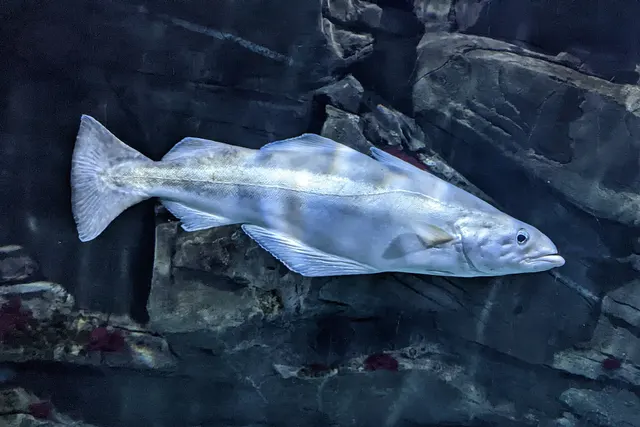 PollackA fast gadoid that hunts up off reefs and wrecks and takes a lure on the drop — and the sea fish most likely to convert a bait angler to lure fishing.
Wilhelm Thomas Fiege — CC BY-SA 4.0, via Wikimedia Commons
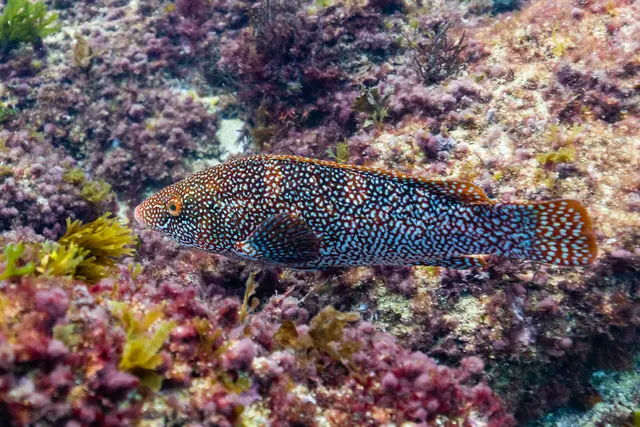 Ballan wrasseA long-lived rocky-ground resident that begins life female and may change sex — and the species that turned rock marks into a lure fishery.
Diego Delso — CC BY-SA 4.0, via Wikimedia Commons
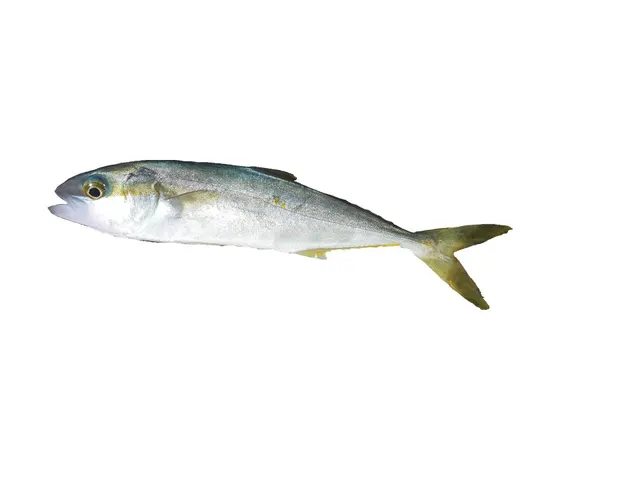 Yellowtail kingfishA circumglobal subtropical jack of kelp edges and rocky reef that fights harder than almost anything of its size and heads straight for structure.
Hugues Evano (IFREMER, Délégation océan Indien (DOI), Département Ressources Biologiques et Environnement (RBE), F-97420 Le Port, France) — CC BY 4.0, via Wikimedia Commons
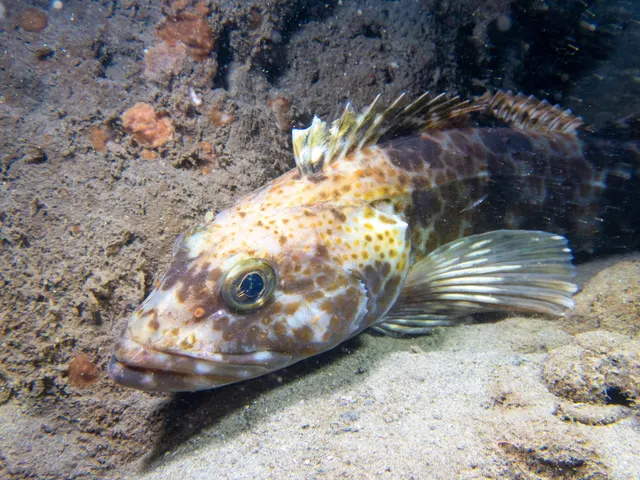 LingcodA large ambush predator of Pacific rocky reefs with an enormous toothed mouth, no relation to true cod, and a serious barotrauma problem on release.
Mike Carr — CC BY, via iNaturalist
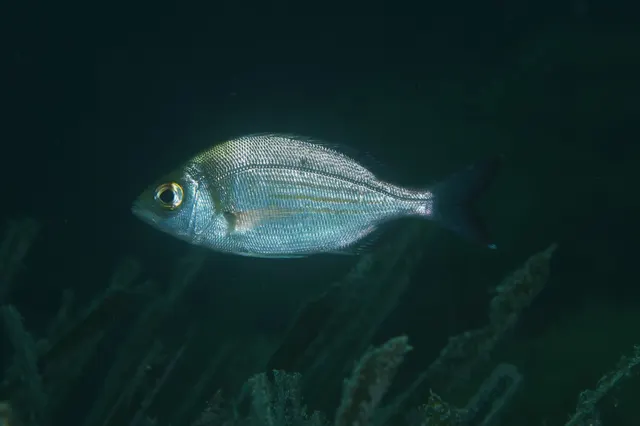 Black seabreamA deep-bodied silver bream that builds and guards nests on gravel — a hard-fighting south-coast summer species whose spawning aggregations are unusually easy to damage.
Julien Renoult — CC BY, via iNaturalist
Safety
Entanglement — Can cause serious injury or death
Kelp is an overhead environment. A diver, a gun, a shooting line and a float line moving through dense stipes can snag, and a snag on a breath-hold is a time-limited emergency. Discarded fishing line and netting collect in kelp and are far worse than the kelp itself.
What reduces it: Keep the float line short in kelp and never let it trail. Carry a cutting tool reachable with either hand and know where it is by feel. Enter and exit by the same route, so the way out is known. Do not swim under a canopy you have not looked at from above. Dive one up, one down, positioned so the surface diver can actually reach you.
Worse when:
- Dense summer growth, when the canopy is thickest
- Swell, which moves the whole forest and closes gaps
- Where discarded line and netting have accumulated
Drowning and immersion — Can cause injury needing treatment
Visibility inside a kelp stand is far lower than outside it, and a diver who has become disoriented in poor light under a canopy may not have an obvious route up.
What reduces it: Treat kelp as overhead cover and plan the exit before the entry. Stay within sight of open water where possible, and surface through a gap you have identified rather than through the canopy.
Precautions that always apply here
- Never spearfish or freedive alone.
- Dive one up, one down: one diver down, one on the surface actively watching, every single dive.
Further safety reading
- Entanglement while breath-hold diving — Kelp is an overhead environment, and discarded line and netting collect in exactly the structure that holds fish.
Where to go next
Fish found here
- Ballan wrasseBallan wrasse are the characteristic resident of temperate kelp and rough ground, strongly site-attached and often spending their whole adult life on a small area of reef.
- Black rockfishSchools over shallow reef, kelp and jetty structure well within reach of the shore.
- Black seabreamWeed-associated invertebrates are a significant part of the diet, and bream browse the edges of kelp ground.
- Bull hussKelp and algal-covered rock, where the species both feeds and anchors its egg cases — which ties its reproduction directly to the condition of that habitat.
- Common octopusAlgal-covered rock and the structure it provides, used for shelter and for hunting crustaceans.
- Corkwing wrasseWeed and kelp provide both the nest material and the cover this species depends on.
- John DoryStructure that holds small fish is dory habitat, and kelp edges qualify.
- LingcodSits on rocky reef, pinnacle and boulder ground where it ambushes reef fish.
6 more
- Long-spined sea scorpion Fish
- Pollack Fish
- Short-spined sea scorpion Fish
- Three-bearded rockling Fish
- Velvet swimming crab Fish
- Yellowtail kingfish Fish
Reading this water
- Reef and kelp diving comparedKelp catches line, floats, guns and divers, which is why line management is stricter here and why a cutting tool reachable with either hand is not optional.
- Reef fish territory, and where a species holdsKelp is three-dimensional structure, and fish use it vertically as well as horizontally.
- Spearfishing in North American watersGiant kelp forms a canopy from seabed to surface, and a diver descends through layers rather than swimming over ground.
- Spearfishing in UK and Irish watersLaminaria over rock is the signature ground here, and diving it is closer to hunting through woodland than to reef diving.
- Weed, and what to do when it is runningWeed in the water is kelp and wrack torn off reef by swell, which is why the unfishable day is usually the calm one two days after a gale rather than the gale itself.
- Why rigs snag, and how to reduce itKelp stipes catch leads and wrap line, and the ground beneath them is usually the roughest available.
How this compares
- Coral reefBoth are habitat-forming structures on hard ground that hold fish because of their complexity — one built by an animal in warm nutrient-poor water, one grown by an alga in cold rich water.
- MangroveTwo forests that do the same job in different water: three-dimensional structure that gives small animals somewhere large ones cannot follow, one built of trees in the intertidal and one of algae below it.
- Seagrass bedsThe two vegetated marine habitats a European angler meets, and they are not the same kind of thing: kelp is algae anchored to rock, seagrass is a flowering plant rooted in sediment it stabilises.
Environment and conservation
Sources and evidence
- JNCC species and habitat conservation advice — Joint Nature Conservation Committee (Conservation authority)Relied on for: The characterisation of kelp as a habitat-forming species supporting an associated community on hard substrate.FishingHQ's interpretation of what it saysCitation checked — the work exists and is described correctly
Why the 25 connections on this page are here, and the sources
Fish found here
Backed by research — 14 connections
Supported by peer-reviewed research or fisheries science. The sources are listed and can be checked.
Ballan wrasse
A habitat and site-fidelity claim held to a scientific standard, because the site-attachment is what makes the conservation argument on the species page work.
- The Fishes of the British Isles and North-West Europe — Macmillan, 1969 (Reference work)Relied on for: Habitat and site association of Labrus bergylta with rocky and weed-covered ground.States this directlyCitation checked — the work exists and is described correctly
- FishBase: a global information system on fishes — Froese, R. and D. Pauly, eds. — FishBase Consortium (Scientific institute)Relied on for: Recorded habitat, site fidelity and protogynous sex change for Labrus bergylta.States this directlyPassage read and verified
Black rockfish
A habitat association for Sebastes melanops taken from the environment and distribution data on its FishBase summary.
- FishBase: a global information system on fishes — Froese, R. and D. Pauly, eds. — FishBase Consortium (Scientific institute)Relied on for: The environment, depth range and habitat description recorded for Sebastes melanops.States this directlyPassage read and verified
Black seabream
A distributional claim about where a species is found, which is a claim about the world and rests on the standard regional reference works rather than on angling report.
- The Fishes of the British Isles and North-West Europe — Macmillan, 1969 (Reference work)Relied on for: Distribution, habitat association, identification and biology of the fishes of the British Isles and north-west Europe.States this directlyCitation checked — the work exists and is described correctly
- FAO Species Identification Guides for Fishery Purposes and the FAO Species Catalogues — Food and Agriculture Organization of the United Nations (Scientific institute)Relied on for: Diagnostic characters, habitat and depth range as set out in the FAO species identification sheets for the eastern Atlantic and Mediterranean.States this directlyCitation checked — the work exists and is described correctly
Bull huss
A distributional claim about where a species is found, which rests on the standard regional reference works rather than on angling report.
- The Fishes of the British Isles and North-West Europe — Macmillan, 1969 (Reference work)Relied on for: Distribution, habitat association, identification and biology of the sharks, skates and rays of the British Isles and north-west Europe.States this directlyCitation checked — the work exists and is described correctly
- FAO Species Identification Guides for Fishery Purposes and the FAO Species Catalogues — Food and Agriculture Organization of the United Nations (Scientific institute)Relied on for: Diagnostic characters, habitat and depth range as set out in the FAO species identification sheets for the eastern Atlantic and Mediterranean.States this directlyCitation checked — the work exists and is described correctly
Common octopus
A distributional claim about where a species is found, resting on the standard identification and compilation sources rather than on fishing report.
- FAO Species Identification Guides for Fishery Purposes and the FAO Species Catalogues — Food and Agriculture Organization of the United Nations (Scientific institute)Relied on for: Diagnostic characters, habitat association, depth range and distribution as set out in the FAO species identification guides for fishery purposes.States this directlyCitation checked — the work exists and is described correctly
- FishBase: a global information system on fishes — Froese, R. and D. Pauly, eds. — FishBase Consortium (Scientific institute)Relied on for: Distribution, maximum size, depth range, habitat association and biology as compiled for the species.States this directlyPassage read and verified
Corkwing wrasse
A distributional claim about where a species is found, resting on the standard regional reference works rather than on angling report.
- The Fishes of the British Isles and North-West Europe — Macmillan, 1969 (Reference work)Relied on for: Distribution, habitat association, identification and biology of the fishes and inshore fauna of the British Isles and north-west Europe.States this directlyCitation checked — the work exists and is described correctly
- FAO Species Identification Guides for Fishery Purposes and the FAO Species Catalogues — Food and Agriculture Organization of the United Nations (Scientific institute)Relied on for: Diagnostic characters, family placement, habitat and depth range as set out in the FAO species identification sheets for the eastern Atlantic and Mediterranean.States this directlyCitation checked — the work exists and is described correctly
John Dory
A distributional claim about where a species is found, which is a claim about the world and rests on the standard regional reference works rather than on angling report.
- The Fishes of the British Isles and North-West Europe — Macmillan, 1969 (Reference work)Relied on for: Distribution, habitat association, identification and biology of the fishes of the British Isles and north-west Europe.States this directlyCitation checked — the work exists and is described correctly
- FAO Species Identification Guides for Fishery Purposes and the FAO Species Catalogues — Food and Agriculture Organization of the United Nations (Scientific institute)Relied on for: Diagnostic characters, habitat and depth range as set out in the FAO species identification sheets for the eastern Atlantic and Mediterranean.States this directlyCitation checked — the work exists and is described correctly
Lingcod
A habitat association for Ophiodon elongatus taken from the environment and distribution data on its FishBase summary.
- FishBase: a global information system on fishes — Froese, R. and D. Pauly, eds. — FishBase Consortium (Scientific institute)Relied on for: The environment, depth range and habitat description recorded for Ophiodon elongatus.States this directlyPassage read and verified
Long-spined sea scorpion
A habitat association resting on the standard regional reference works rather than on angling report.
- The Fishes of the British Isles and North-West Europe — Macmillan, 1969 (Reference work)Relied on for: Distribution, habitat association, identification and biology of the fishes and inshore fauna of the British Isles and north-west Europe.States this directlyCitation checked — the work exists and is described correctly
- FAO Species Identification Guides for Fishery Purposes and the FAO Species Catalogues — Food and Agriculture Organization of the United Nations (Scientific institute)Relied on for: Diagnostic characters, family placement, habitat and depth range as set out in the FAO species identification sheets for the region concerned.States this directlyCitation checked — the work exists and is described correctly
Pollack
A habitat claim about where the species is found, held to a scientific standard.
- The Fishes of the British Isles and North-West Europe — Macmillan, 1969 (Reference work)Relied on for: Habitat association of Pollachius pollachius with rough and weed-covered ground.States this directlyCitation checked — the work exists and is described correctly
- FishBase: a global information system on fishes — Froese, R. and D. Pauly, eds. — FishBase Consortium (Scientific institute)Relied on for: Recorded habitat for Pollachius pollachius.States this directlyPassage read and verified
Short-spined sea scorpion
A habitat association resting on the standard regional reference works rather than on angling report.
- The Fishes of the British Isles and North-West Europe — Macmillan, 1969 (Reference work)Relied on for: Distribution, habitat association, identification and biology of the fishes of the British Isles and north-west Europe.States this directlyCitation checked — the work exists and is described correctly
- FAO Species Identification Guides for Fishery Purposes and the FAO Species Catalogues — Food and Agriculture Organization of the United Nations (Scientific institute)Relied on for: Diagnostic characters, family placement, habitat and depth range as set out in the FAO species identification sheets for the north-east Atlantic.States this directlyCitation checked — the work exists and is described correctly
Three-bearded rockling
A habitat association resting on the standard regional reference works rather than on angling report.
- The Fishes of the British Isles and North-West Europe — Macmillan, 1969 (Reference work)Relied on for: Distribution, habitat association, identification and biology of the fishes of the British Isles and north-west Europe.States this directlyCitation checked — the work exists and is described correctly
- FAO Species Identification Guides for Fishery Purposes and the FAO Species Catalogues — Food and Agriculture Organization of the United Nations (Scientific institute)Relied on for: Diagnostic characters, family placement, habitat and depth range as set out in the FAO species identification sheets for the north-east Atlantic.States this directlyCitation checked — the work exists and is described correctly
Velvet swimming crab
A habitat association resting on the standard regional reference works rather than on angling report.
- The Fishes of the British Isles and North-West Europe — Macmillan, 1969 (Reference work)Relied on for: Distribution, habitat association, identification and biology of the fishes and inshore fauna of the British Isles and north-west Europe.States this directlyCitation checked — the work exists and is described correctly
- FAO Species Identification Guides for Fishery Purposes and the FAO Species Catalogues — Food and Agriculture Organization of the United Nations (Scientific institute)Relied on for: Diagnostic characters, family placement, habitat and depth range as set out in the FAO species identification sheets for the region concerned.States this directlyCitation checked — the work exists and is described correctly
Yellowtail kingfish
A habitat claim held to a scientific standard.
- FishBase: a global information system on fishes — Froese, R. and D. Pauly, eds. — FishBase Consortium (Scientific institute)Relied on for: That Seriola lalandi is found in coastal and oceanic waters off kelp beds and rocky areas at depths from 3 to 825 m in water of 18 to 24 degrees.States this directlyPassage read and verified
Reading this water
What experienced anglers do — 3 connections
Widely and independently recommended by experienced anglers and specialist sources. This is real angling knowledge, not proof: controlled evidence for it is limited, and FishingHQ records it as convention rather than as a demonstrated effect.
Reef and kelp diving compared
Why it works, resting on practice reported consistently across independent sources rather than on experiment.
- BlueWater Hunting and Freediving — BlueWater Freedivers, Ventura, California, 1995 (Practitioner report)Relied on for: Spearfishing practice including equipment selection, rigging, technique and the reasoning behind gear choices.States this directlyCitation checked — the work exists and is described correctly
- CMAS technical and sporting standards for underwater activities — Confédération Mondiale des Activités Subaquatiques (Standards body)Relied on for: International underwater federation standards for training, competition and the safe conduct of underwater activities.States this directlyCitation checked — the work exists and is described correctly
Weed, and what to do when it is running
Why it works, resting on shore-fishing practice reported consistently across independent practitioner sources rather than on experiment.
- Sea Angler — Bauer Media (Specialist angling publication)Relied on for: Contemporary UK sea angling practice as reported by practitioners, including shore technique, terminal tackle, regional ground and species behaviour.States this directlyCitation checked — the work exists and is described correctly
- Freshwater Fishing — Macdonald & Jane's, 1975 (Specialist angling publication)Relied on for: Comprehensive angling practice including terminal tackle, casting, leaders and the reasoning behind the choices.States this directlyCitation checked — the work exists and is described correctly
Why rigs snag, and how to reduce it
The habitat and the tackle cost of fishing it.
- Freshwater Fishing — Macdonald & Jane's, 1975 (Specialist angling publication)Relied on for: Terminal tackle behaviour, line drag in flow, bait presentation and rig geometry.States this directlyCitation checked — the work exists and is described correctly
- Pike and the Pike Angler — Stanley Paul, 1981 (Specialist angling publication)Relied on for: Rig and terminal-tackle mechanics described independently of the sea-angling tradition.States this directlyCitation checked — the work exists and is described correctly
Backed by research — 3 connections
Supported by peer-reviewed research or fisheries science. The sources are listed and can be checked.
Reef fish territory, and where a species holds
The same positional logic applied to the habitat where a diver moves through it rather than over it.
- FishBase: a global information system on fishes — Froese, R. and D. Pauly, eds. — FishBase Consortium (Scientific institute)Relied on for: Species habitat association, depth range and feeding ecology across marine fishes.Background and mechanism onlyPassage read and verified
Spearfishing in North American waters
The habitat's fullest expression, and the diving built around it.
- FishBase: a global information system on fishes — Froese, R. and D. Pauly, eds. — FishBase Consortium (Scientific institute)Relied on for: Species habitat association, depth range and feeding ecology across marine fishes.Background and mechanism onlyPassage read and verified
Spearfishing in UK and Irish waters
The habitat and the regional practice built around it.
- FishBase: a global information system on fishes — Froese, R. and D. Pauly, eds. — FishBase Consortium (Scientific institute)Relied on for: Species habitat association, depth range and feeding ecology across marine fishes.Background and mechanism onlyPassage read and verified
How this compares
Backed by research — 1 connection
Supported by peer-reviewed research or fisheries science. The sources are listed and can be checked.
Coral reef
A structural-ecology comparison, held to a scientific standard because the claim is about how the habitats function rather than about how to fish them.
- JNCC species and habitat conservation advice — Joint Nature Conservation Committee (Conservation authority)Relied on for: The characterisation of kelp as a habitat-forming species supporting an associated community.States this directlyCitation checked — the work exists and is described correctly
- FAO fishing gear types and fishing technology information — Food and Agriculture Organization of the United Nations (Scientific institute)Relied on for: The characterisation of structurally complex marine habitats in relation to gear and selectivity.Background and mechanism onlyCitation checked — the work exists and is described correctly
What experienced anglers do — 2 connections
Widely and independently recommended by experienced anglers and specialist sources. This is real angling knowledge, not proof: controlled evidence for it is limited, and FishingHQ records it as convention rather than as a demonstrated effect.
Mangrove
A comparison a reader trying to understand one of these systems genuinely needs, joining two records that resolve one another.
- FAO Species Identification Guides for Fishery Purposes and the FAO Species Catalogues — Food and Agriculture Organization of the United Nations (Scientific institute)Relied on for: Habitat association, depth range and distribution of the species concerned as set out in the FAO species identification sheets for the region.States this directlyCitation checked — the work exists and is described correctly
- The World's Mangroves and their Fisheries — FAO Forestry and Fisheries assessments — Food and Agriculture Organization of the United Nations, Rome (Standards body)Relied on for: The dependence of tropical coastal fisheries species on mangrove and estuarine habitat, including the nursery function.States this directlyCitation checked — the work exists and is described correctly
Seagrass beds
A comparison a reader trying to understand one of these systems genuinely needs, joining two records that resolve one another.
- JNCC species and habitat conservation advice — Joint Nature Conservation Committee (Conservation authority)Relied on for: UK and European habitat classification and the conservation status of seagrass beds, including the species associated with them.States this directlyCitation checked — the work exists and is described correctly
- FAO Species Identification Guides for Fishery Purposes and the FAO Species Catalogues — Food and Agriculture Organization of the United Nations (Scientific institute)Relied on for: Habitat association and distribution of the species concerned.States this directlyCitation checked — the work exists and is described correctly
Safety reading
Official guidance — 1 connection
Stated by a fisheries authority, scientific institute or recognised angling body. Authoritative, but summarising rather than demonstrating.
Entanglement while breath-hold diving
A hazard claim about a specific habitat, sourced to diving safety guidance.
- BSAC diving safety guidance and annual incident report — British Sub-Aqua Club (Water-safety or diver-training authority)Relied on for: Entanglement as a recognised diving hazard including in vegetation and on structure.States this directlyCitation checked — the work exists and is described correctly
- JNCC species and habitat conservation advice — Joint Nature Conservation Committee (Conservation authority)Relied on for: The structural character of kelp habitat.Background and mechanism onlyCitation checked — the work exists and is described correctly
Environment and conservation
Official guidance — 1 connection
Stated by a fisheries authority, scientific institute or recognised angling body. Authoritative, but summarising rather than demonstrating.
Discarded line and lost tackle
An environmental claim held to an authoritative standard because it concerns persistent gear in the marine environment rather than an angler's preference.
- FAO fishing gear types and fishing technology information — Food and Agriculture Organization of the United Nations (Scientific institute)Relied on for: That lost and abandoned gear persists and continues to fish.States this directlyCitation checked — the work exists and is described correctly
- JNCC species and habitat conservation advice — Joint Nature Conservation Committee (Conservation authority)Relied on for: The vulnerability of structurally complex habitats to accumulated debris.FishingHQ's interpretation of what it saysCitation checked — the work exists and is described correctly
How FishingHQ labels evidence is explained in the evidence policy.