Seagrass beds
Habitat · Last reviewed 2026-08-17
Flowering plants growing in the sea. A nursery for a long list of species, ground a spearfisher and a flats angler both hunt, and the one marine habitat a travelling boat angler is likely to meet an actual anchoring restriction over.
Safety: entanglement — can cause injury needing treatment.
- Water
- Saltwater, Brackish
Seagrasses are not seaweed. They are flowering plants — with roots, rhizomes, leaves and pollination — that returned to the sea, and the difference matters because it is what lets them stabilise sediment and form persistent beds in soft ground where algae cannot.
WHERE THEY ARE. Shallow, sheltered, sunlit soft bottoms across most of the world: Zostera in the temperate North Atlantic and Pacific, Posidonia through the Mediterranean, and a range of species across the tropics, frequently between mangrove and reef.
WHAT THEY DO FOR FISHING. Three things at once. They are nursery habitat for a long list of species — the temperate list includes bass, plaice, pollack, cuttlefish and pipefish; the tropical one includes juvenile snappers, emperors and rabbitfish. They hold prey, so they are hunting ground for the predators that patrol their edges. And they trap sediment and slow water, which changes the ground around them.
AND THEY CARRY A RESTRICTION. Mediterranean Posidonia in particular is protected across much of its range, and anchoring over it is restricted or prohibited in a great many places — the meadows are extremely slow-growing and an anchor and chain dragging across one leaves a scar that persists for years. For a travelling angler who hires or charters a boat, this is one of very few marine rules they will actually encounter in practice, and FishingHQ names it as a thing to check rather than stating what it says.
What characterises it
Flowering marine plants rooted in soft sediment in shallow, sheltered, well-lit water — typically from the low intertidal down to the depth light reaches, which in clear Mediterranean water can be forty metres and in turbid temperate estuaries a couple.
The structure is a meadow: leaves in the water column, a dense rhizome and root mat below, and sediment held together by both. That mat is what distinguishes seagrass from weed. It stabilises the seabed, raises it over time, damps wave energy and traps fine sediment, so the ground inside a bed is quite different from the ground beside it.
Light is the limiting factor and it is why seagrass is so sensitive to water quality: anything that reduces light — suspended sediment, algal growth driven by nutrient enrichment, dredging plumes — kills a meadow from the deep edge inward.
Growth is slow. Posidonia meadows in particular expand at centimetres a year, and a physical scar takes many years to close.
What lives there
Nursery, larder and shelter. The leaf canopy holds epiphytic algae and an enormous invertebrate community — amphipods, shrimps, small crustaceans, snails — and that supports small fish, which supports larger ones.
In temperate Atlantic and Mediterranean beds the associated list includes juvenile bass, plaice and other flatfish, pollack, wrasse, pipefish and seahorses, cuttlefish laying eggs on the leaves, and cephalopods hunting the edges. In tropical beds it includes juvenile snappers, emperors, rabbitfish and parrotfish moving between mangrove, seagrass and reef as they grow — which is why the three habitats function as one system rather than three.
The predators are the fishing. Bass, pollack, jacks and barracuda patrol seagrass edges; bonefish and permit feed over tropical seagrass flats; cuttlefish and squid hunt in it. The edge — where meadow meets sand or rock — is consistently the productive line, because it is where prey has cover on one side and nowhere to go on the other.
Seagrass is also globally in decline, from nutrient enrichment, sediment, disease, dredging and physical damage, and it is the subject of active restoration in Britain, the Mediterranean and elsewhere.
Through the year
Temperate beds are strongly seasonal: leaf growth through spring and summer, dieback in autumn, and winter storms stripping leaf material and moving what is left. The associated fish community follows, with juveniles occupying beds through the growing season and dispersing as it ends.
Mediterranean Posidonia is more persistent through the year, shedding leaves in autumn — the banquettes of dead leaf that pile on beaches are a natural and protective feature rather than a mess — and growing slowly year-round.
Tropical beds are the least seasonal and the most continuously occupied, functioning as a permanent stage between mangrove and reef for species that move through all three as they grow.
Fishing the edge, and why the edge is where it happens
The consistent practical fact about seagrass is that the productive water is the boundary rather than the middle.
INSIDE THE MEADOW the prey has cover in three dimensions and a predator cannot work it efficiently. It is also, for an angler, close to unfishable with anything that has a treble on it: leaves foul a lure within a metre.
AT THE EDGE the prey has to cross open ground. Predators patrol that line, and it is where bass, pollack, jacks, barracuda and cephalopods are found. The same is true of sand holes and channels within a meadow, which function as small edges.
SO THE TACKLE FOLLOWS. Weedless-rigged soft plastics, single hooks, surface lures worked over the canopy and flies fished on the boundary all solve the fouling problem in different ways. Bait fished on sand beside a bed will out-fish bait fished in it.
FOR A SPEARFISHER a seagrass bed is a hunting ground with a specific character: fish hold low in the canopy and are visible only from directly above or at the edge, and the bed damps sound and movement. It also holds cuttlefish and octopus.
AND FOR A FLATS ANGLER tropical seagrass is a large part of what bonefish and permit are actually feeding over — the crustaceans and molluscs that a crab fly imitates live in the sediment the meadow holds together.
ONE THING NOT TO DO: dragging a lead or an anchor through a meadow to free a snag rips rhizome, and rhizome is what the whole bed is made of.
What experienced anglers do — why, and the sources (3)
Widely and independently recommended by experienced anglers and specialist sources. This is real angling knowledge, not proof: controlled evidence for it is limited, and FishingHQ records it as convention rather than as a demonstrated effect.
- General angling website restatements of established technique — Various (Credible secondary source)Relied on for: Widely restated descriptions of technique, fish behaviour and regional practice, recorded as consensus rather than as scholarship.Background and mechanism onlyCitation checked — the work exists and is described correctly
- JNCC species and habitat conservation advice — Joint Nature Conservation Committee (Conservation authority)Relied on for: UK and European habitat classification and conservation designation, including the status of seagrass beds and the designations that apply to them.States this directlyCitation checked — the work exists and is described correctly
- FAO Species Identification Guides for Fishery Purposes and the FAO Species Catalogues — Food and Agriculture Organization of the United Nations (Scientific institute)Relied on for: Habitat association, depth range and distribution of the species concerned, as set out in the FAO species identification sheets for the region.States this directlyCitation checked — the work exists and is described correctly
Anchoring, scars and the rule you will actually meet
Most of FishingHQ's regulatory content is about rules a reader should check. This is one they are likely to run into in person.
ANCHORING OVER SEAGRASS IS RESTRICTED IN A GREAT MANY PLACES, and Mediterranean Posidonia is the clearest case: it is protected across much of its range, the meadows grow at centimetres a year, and an anchor with chain sweeping an arc across one leaves a bare scar that takes years to close. Several Mediterranean jurisdictions now restrict or prohibit anchoring over it, mark permitted anchorages, or provide eco-moorings, and enforcement has increased.
FISHINGHQ DOES NOT STATE WHAT ANY OF THOSE RULES SAY. They differ by country, by region within a country, by marine protected area and by year. What this page says is that the rule exists, that it is one a hired or chartered boat will meet, and that the authority for the water is the place to find out — which is exactly the posture the rest of the site takes and is more useful here than usual, because a reader who does not know the category exists will not think to ask.
WHAT REDUCES DAMAGE REGARDLESS OF THE RULE. Anchor on sand rather than in the meadow — the difference is visible from the surface in clear water and on a sounder as a change in bottom character. Use a mooring where one is provided. Motor slowly in shallow water over beds, because propeller scarring in shallow tropical seagrass is a documented and long-lasting form of damage. Do not drag gear free through a bed.
AND THE RESTORATION CONTEXT IS WORTH KNOWING. Seagrass is in global decline and is being actively restored in Britain, the Mediterranean and elsewhere, frequently by seeding and planting into ground where it used to be. Restoration sites are sometimes marked and sometimes not, which is another reason to ask locally rather than assume.
WHAT MAY BE DONE HERE IS NOT ON THIS PAGE. Access, permitted methods, protected areas, closed seasons and what may be taken differ between administrations and are revised. Check the current position with the fisheries or environmental authority for the water concerned.
Official guidance — why, and the sources (3)
Stated by a fisheries authority, scientific institute or recognised angling body. Authoritative, but summarising rather than demonstrating.
- JNCC species and habitat conservation advice — Joint Nature Conservation Committee (Conservation authority)Relied on for: UK and European habitat classification and conservation designation, including the status of seagrass beds and the designations that apply to them.States this directlyCitation checked — the work exists and is described correctly
- The IUCN Red List of Threatened Species — International Union for Conservation of Nature (Conservation authority)Relied on for: Global assessments and habitat associations for the species and habitats concerned, including the status of seagrass-dependent and mangrove-dependent taxa.States this directlyCitation checked — the work exists and is described correctly
- Code of Conduct for Responsible Fisheries — Food and Agriculture Organization of the United Nations, Rome, 1995 (Standards body)Relied on for: International principles for responsible fisheries, including the protection of critical habitat and nursery areas and the management of small-scale fisheries.Background and mechanism onlyCitation checked — the work exists and is described correctly
Some of what lives here
Fish recorded here that FishingHQ holds a reviewed photograph of. It is not a complete list of what Seagrass beds holds, and it is not a prediction that you will catch any of them — it is a way in to the ones we can show you.
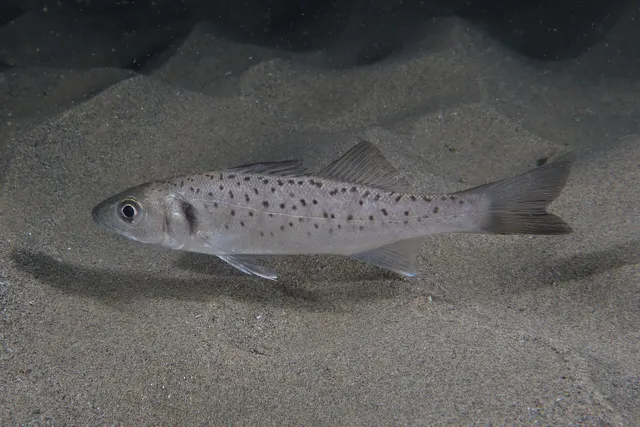 European sea bassA fast, predatory inshore fish that hunts in broken water and surf, and one of the most closely managed recreational species in European seas.
Julien Renoult — CC BY 4.0, via Wikimedia Commons
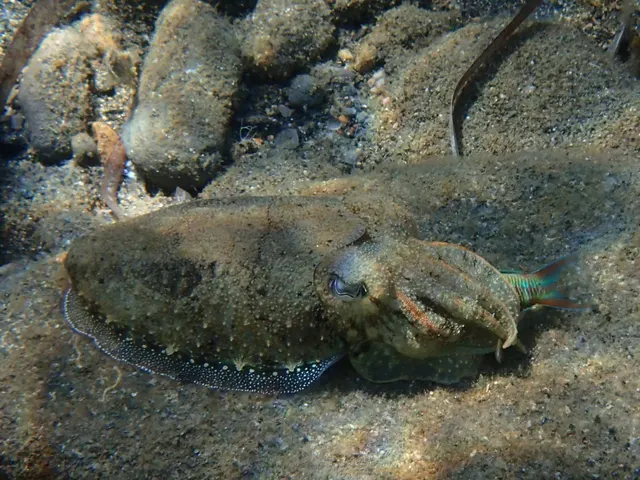 Common cuttlefishA bottom-oriented cephalopod with an internal buoyancy shell, the best-studied invertebrate mind in the sea, and a fishery that works quite differently from squid.
Katerina Kalogerini — CC BY, via iNaturalist
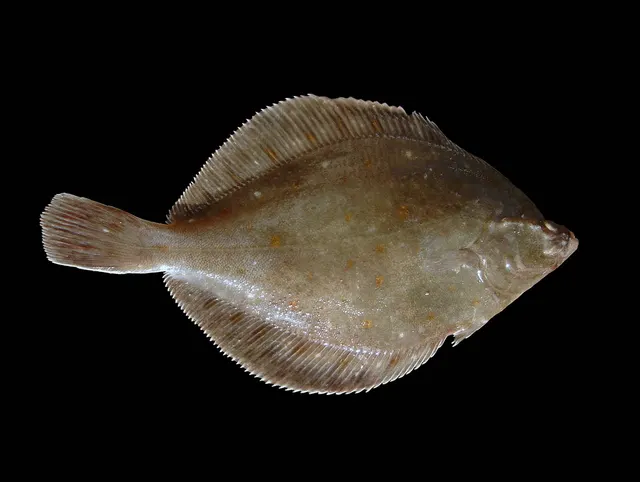 European plaiceA right-eyed flatfish with orange spots and a remarkable lifespan, and the representative flatfish for a body plan nothing else on FishingHQ shares.
Hans Hillewaert — CC BY-SA 4.0, via Wikimedia Commons
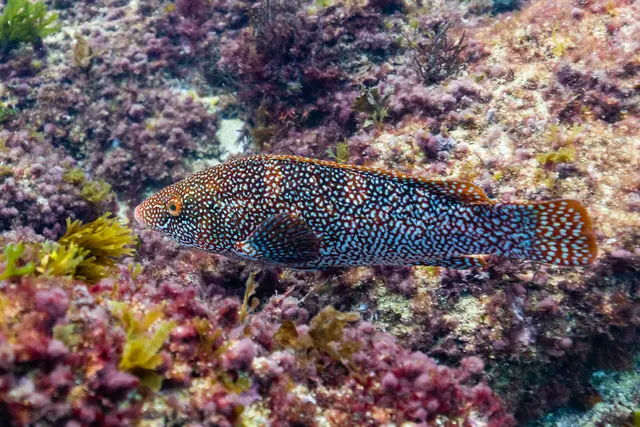 Ballan wrasseA long-lived rocky-ground resident that begins life female and may change sex — and the species that turned rock marks into a lure fishery.
Diego Delso — CC BY-SA 4.0, via Wikimedia Commons
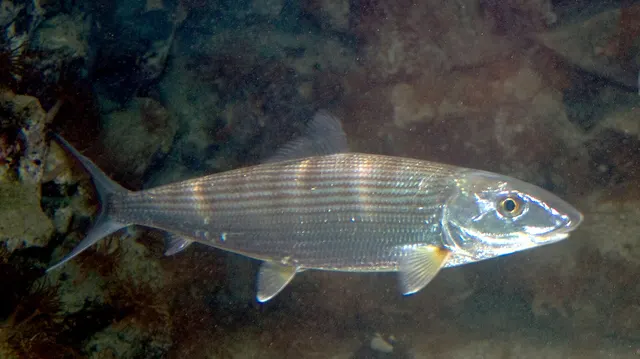 BonefishA silver bottom-feeder of tropical shallows, hunted on sight in knee-deep water, that runs further than anything of its size.
Brian Gratwicke — CC BY 2.0, via Wikimedia Commons
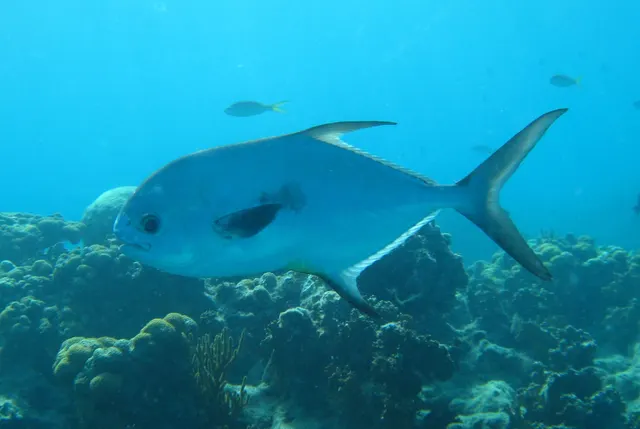 PermitA large, deep-bodied jack of tropical flats and wrecks, famously difficult on fly and the third fish of the flats grand slam.
Robert Webster — CC BY-SA, via iNaturalist
Safety
Entanglement — Can cause injury needing treatment
Seagrass beds accumulate lost line, nets and gear in the leaf and rhizome mat, and a swimmer, snorkeller or freediver working a bed can meet monofilament that is invisible against the canopy.
What reduces it: Carry a cutting tool reachable with either hand when diving over vegetated ground. Do not leave line in a bed — retrieve snagged gear where it can be done without ripping rhizome, and cut close and take the line home where it cannot.
Worse when:
- Beds near popular shore marks
- Poor visibility
- Working alone
Check the rules before you fish
Fishing laws, bylaws, access rules, seasons, bait restrictions and permitted methods vary by location and can change. Check the current rules from the relevant authority and the water you intend to fish before fishing.
Check with:
- Current national or regional law for where you are fishing
- Current local bylaws
- The relevant fisheries authority
- The landowner, club or fishery whose water it is
- Any restrictions specific to the species or the method you intend to use
Where to go next
Fish found here
- Ballan wrasseWorks the boundary between seagrass and rock, where the invertebrate community of the meadow meets the structure wrasse need.
- Blue swimmer crabSand and seagrass in the shallows, which is why it is raked and scooped rather than potted.
- BonefishTropical seagrass flats are a large part of what bonefish feed over: the crustaceans and molluscs a crab fly imitates live in sediment the meadow holds together.
- Common cuttlefishCuttlefish lay their eggs attached to seagrass leaves and other structure, and hunt over and along the beds. A damaged meadow is a lost spawning substrate.
- European plaiceJuvenile plaice use shallow vegetated soft ground as nursery habitat before moving to open sand.
- European sea bassSeagrass is nursery habitat for juvenile bass and hunting ground for adults working the edges, which is why an eelgrass bed in an estuary is worth more to the fishery than its area suggests.
- European squidHunts over and along seagrass edges in shallow water, and attaches egg masses to weed and structure.
- Ornate wrasseThe other half of the habitat FishBase names for it.
3 more
- Permit Fish
- Salema porgy Fish
- Spangled emperor Fish
Reading this water
- Bottom type, and what lives on itWhere seagrass was previously named — inside a broader bottom-type record, which is why it counted as a passing mention rather than as covered.
- Margins, features, and why fish use edgesThe edge of a meadow against sand or rock holds a concentration neither habitat has alone, and in clear water it is one of the easiest edges in Europe to read from the surface.
How this compares
- Kelp forestThe two vegetated marine habitats a European angler meets, and they are not the same kind of thing: kelp is algae anchored to rock, seagrass is a flowering plant rooted in sediment it stabilises.
- Malta and GozoPosidonia meadows on the sand between the limestone, which are protected and which carry the anchoring restriction a visiting boat angler is most likely to meet in person.
- Mudflats and intertidal sandflatsSoft ground with and without a plant holding it together. The difference in what lives there, and in how much a dragged anchor costs, is almost entirely the rhizome mat.
- Saltwater fly fishingThe productive line on a seagrass flat is the edge, and it is where a fly angler works — inside the meadow a fly fouls within a metre.
- The Egyptian Red Sea coastThe sheltered bays and lagoons hold seagrass, which on a coast with no estuaries is the nursery habitat doing the job an estuary would.
Environment and conservation
- Habitat damage from bank and shore accessAnchor and chain sweeping an arc across a slow-growing meadow leaves a scar that takes years to close, and propeller scarring in shallow tropical seagrass is documented and long-lasting.
- Marine protected areas and spearfishingSeagrass is among the habitats most often carrying a designation a travelling boat angler will actually meet, and Mediterranean Posidonia anchoring restriction is the standing example.
Sources and evidence
- JNCC species and habitat conservation advice — Joint Nature Conservation Committee (Conservation authority)Relied on for: UK and European habitat classification and conservation designation, including the status of seagrass beds and the designations that apply to them.States this directlyCitation checked — the work exists and is described correctly
- The IUCN Red List of Threatened Species — International Union for Conservation of Nature (Conservation authority)Relied on for: Global assessments and habitat associations for the species and habitats concerned, including the status of seagrass-dependent and mangrove-dependent taxa.States this directlyCitation checked — the work exists and is described correctly
- FAO Species Identification Guides for Fishery Purposes and the FAO Species Catalogues — Food and Agriculture Organization of the United Nations (Scientific institute)Relied on for: Habitat association, depth range and distribution of the species concerned, as set out in the FAO species identification sheets for the region.States this directlyCitation checked — the work exists and is described correctly
- Code of Conduct for Responsible Fisheries — Food and Agriculture Organization of the United Nations, Rome, 1995 (Standards body)Relied on for: International principles for responsible fisheries, including the protection of critical habitat and nursery areas and the management of small-scale fisheries.Background and mechanism onlyCitation checked — the work exists and is described correctly
Why the 20 connections on this page are here, and the sources
Fish found here
Backed by research — 11 connections
Supported by peer-reviewed research or fisheries science. The sources are listed and can be checked.
Ballan wrasse
A habitat association resting on the regional identification and fisheries literature rather than on angling report.
- JNCC species and habitat conservation advice — Joint Nature Conservation Committee (Conservation authority)Relied on for: UK and European habitat classification and the conservation status of seagrass beds, including the species associated with them.States this directlyCitation checked — the work exists and is described correctly
- FAO Species Identification Guides for Fishery Purposes and the FAO Species Catalogues — Food and Agriculture Organization of the United Nations (Scientific institute)Relied on for: Habitat association and distribution of the species concerned.States this directlyCitation checked — the work exists and is described correctly
Blue swimmer crab
Portunus armatus lives over sand, seagrass and estuarine bottoms from the shallows into moderate depth. Shallow ground is what makes hand gathering, raking and scoop-netting possible at all.
- FAO Species Identification Guides for Fishery Purposes and the FAO Species Catalogues — Food and Agriculture Organization of the United Nations (Scientific institute)Relied on for: Identification, distribution, habitat and fishery description for the crustacean and reef species named here.States this directlyCitation checked — the work exists and is described correctly
Bonefish
A habitat association resting on the regional identification and fisheries literature rather than on angling report.
- JNCC species and habitat conservation advice — Joint Nature Conservation Committee (Conservation authority)Relied on for: UK and European habitat classification and the conservation status of seagrass beds, including the species associated with them.States this directlyCitation checked — the work exists and is described correctly
- FAO Species Identification Guides for Fishery Purposes and the FAO Species Catalogues — Food and Agriculture Organization of the United Nations (Scientific institute)Relied on for: Habitat association and distribution of the species concerned.States this directlyCitation checked — the work exists and is described correctly
Common cuttlefish
A habitat association resting on the regional identification and fisheries literature rather than on angling report.
- JNCC species and habitat conservation advice — Joint Nature Conservation Committee (Conservation authority)Relied on for: UK and European habitat classification and the conservation status of seagrass beds, including the species associated with them.States this directlyCitation checked — the work exists and is described correctly
- FAO Species Identification Guides for Fishery Purposes and the FAO Species Catalogues — Food and Agriculture Organization of the United Nations (Scientific institute)Relied on for: Habitat association and distribution of the species concerned.States this directlyCitation checked — the work exists and is described correctly
European plaice
A habitat association resting on the regional identification and fisheries literature rather than on angling report.
- JNCC species and habitat conservation advice — Joint Nature Conservation Committee (Conservation authority)Relied on for: UK and European habitat classification and the conservation status of seagrass beds, including the species associated with them.States this directlyCitation checked — the work exists and is described correctly
- FAO Species Identification Guides for Fishery Purposes and the FAO Species Catalogues — Food and Agriculture Organization of the United Nations (Scientific institute)Relied on for: Habitat association and distribution of the species concerned.States this directlyCitation checked — the work exists and is described correctly
European sea bass
A habitat association resting on the regional identification and fisheries literature rather than on angling report.
- JNCC species and habitat conservation advice — Joint Nature Conservation Committee (Conservation authority)Relied on for: UK and European habitat classification and the conservation status of seagrass beds, including the species associated with them.States this directlyCitation checked — the work exists and is described correctly
- FAO Species Identification Guides for Fishery Purposes and the FAO Species Catalogues — Food and Agriculture Organization of the United Nations (Scientific institute)Relied on for: Habitat association and distribution of the species concerned.States this directlyCitation checked — the work exists and is described correctly
European squid
A habitat association resting on the regional identification and fisheries literature rather than on angling report.
- JNCC species and habitat conservation advice — Joint Nature Conservation Committee (Conservation authority)Relied on for: UK and European habitat classification and the conservation status of seagrass beds, including the species associated with them.States this directlyCitation checked — the work exists and is described correctly
- FAO Species Identification Guides for Fishery Purposes and the FAO Species Catalogues — Food and Agriculture Organization of the United Nations (Scientific institute)Relied on for: Habitat association and distribution of the species concerned.States this directlyCitation checked — the work exists and is described correctly
Ornate wrasse
FishBase records it inhabiting coastal waters near rocks AND eel-grass beds, and the seagrass association is a real second habitat rather than incidental proximity to the rock.
- FishBase: a global information system on fishes — Froese, R. and D. Pauly, eds. — FishBase Consortium (Scientific institute)Relied on for: Environment, depth range, habitat association and distribution for Thalassoma pavo.States this directlyPassage read and verified
Permit
A habitat association resting on the regional identification and fisheries literature rather than on angling report.
- JNCC species and habitat conservation advice — Joint Nature Conservation Committee (Conservation authority)Relied on for: UK and European habitat classification and the conservation status of seagrass beds, including the species associated with them.States this directlyCitation checked — the work exists and is described correctly
- FAO Species Identification Guides for Fishery Purposes and the FAO Species Catalogues — Food and Agriculture Organization of the United Nations (Scientific institute)Relied on for: Habitat association and distribution of the species concerned.States this directlyCitation checked — the work exists and is described correctly
Salema porgy
Sarpa salpa is recorded as benthopelagic from about 5 to 70 m and as a grazer as an adult; the seagrass and shallow algal rock it feeds on is what determines where it shoals.
- FishBase: a global information system on fishes — Froese, R. and D. Pauly, eds. — FishBase Consortium (Scientific institute)Relied on for: Environment, depth range, habitat association and distribution for Sarpa salpa.States this directlyPassage read and verified
Spangled emperor
Recorded over sand flats and seagrass as well as coral, which is what makes it reachable on foot rather than only from a boat over reef.
- FishBase: a global information system on fishes — Froese, R. and D. Pauly, eds. — FishBase Consortium (Scientific institute)Relied on for: Environment, depth range, habitat association and distribution for Lethrinus nebulosus.States this directlyPassage read and verified
Reading this water
What experienced anglers do — 1 connection
Widely and independently recommended by experienced anglers and specialist sources. This is real angling knowledge, not proof: controlled evidence for it is limited, and FishingHQ records it as convention rather than as a demonstrated effect.
Bottom type, and what lives on it
An explainer that carries a mechanism the subject record depends on.
- General angling website restatements of established technique — Various (Credible secondary source)Relied on for: Widely restated descriptions of technique, ground and fish behaviour, recorded as consensus rather than as scholarship.Background and mechanism onlyCitation checked — the work exists and is described correctly
- Sea Angler — Bauer Media (Specialist angling publication)Relied on for: Contemporary angling practice as reported by practitioners: ground, tackle, presentation and seasonal timing.States this directlyCitation checked — the work exists and is described correctly
Backed by research — 1 connection
Supported by peer-reviewed research or fisheries science. The sources are listed and can be checked.
Margins, features, and why fish use edges
A link from a practice, an environment or a geography to the mechanism it rests on. It asserts that the mechanism is load-bearing here rather than merely relevant, which is the test applied throughout this file.
- ICES Advice on fishing opportunities, catch and effort — International Council for the Exploration of the Sea (Scientific institute)Relied on for: Hydrography, stratification, salinity structure and stock distribution across the European sea areas assessed, which is the physical basis for the mechanism named.States this directlyCitation checked — the work exists and is described correctly
- NOAA National Ocean Service education on estuaries and the National Estuarine Research Reserve System — National Oceanic and Atmospheric Administration, United States (Government fisheries body)Relied on for: Estuarine and coastal process: salt wedges, stratification, tidal exchange and the way water of different densities behaves where it meets.States this directlyCitation checked — the work exists and is described correctly
How this compares
What experienced anglers do — 5 connections
Widely and independently recommended by experienced anglers and specialist sources. This is real angling knowledge, not proof: controlled evidence for it is limited, and FishingHQ records it as convention rather than as a demonstrated effect.
Kelp forest
A comparison a reader trying to understand one of these systems genuinely needs, joining two records that resolve one another.
- JNCC species and habitat conservation advice — Joint Nature Conservation Committee (Conservation authority)Relied on for: UK and European habitat classification and the conservation status of seagrass beds, including the species associated with them.States this directlyCitation checked — the work exists and is described correctly
- FAO Species Identification Guides for Fishery Purposes and the FAO Species Catalogues — Food and Agriculture Organization of the United Nations (Scientific institute)Relied on for: Habitat association and distribution of the species concerned.States this directlyCitation checked — the work exists and is described correctly
Malta and Gozo
A destination joined to the ground it is made of, so a reader can follow from the place to how the habitat behaves.
- General angling website restatements of established technique — Various (Credible secondary source)Relied on for: Widely restated descriptions of regional practice, ground and species, recorded as consensus rather than as scholarship.Background and mechanism onlyCitation checked — the work exists and is described correctly
- Code of Conduct for Responsible Fisheries — Food and Agriculture Organization of the United Nations, Rome, 1995 (Standards body)Relied on for: International principles for responsible fisheries, including the management of small-scale and artisanal fisheries.Background and mechanism onlyCitation checked — the work exists and is described correctly
Mudflats and intertidal sandflats
A comparison a reader trying to understand one of these systems genuinely needs, joining two records that resolve one another.
- JNCC species and habitat conservation advice — Joint Nature Conservation Committee (Conservation authority)Relied on for: UK and European habitat classification and the conservation status of seagrass beds, including the species associated with them.States this directlyCitation checked — the work exists and is described correctly
- FAO Species Identification Guides for Fishery Purposes and the FAO Species Catalogues — Food and Agriculture Organization of the United Nations (Scientific institute)Relied on for: Habitat association and distribution of the species concerned.States this directlyCitation checked — the work exists and is described correctly
Saltwater fly fishing
A comparison a reader making this decision genuinely needs.
- Still Water Fly-Fishing — Andre Deutsch, 1952 (Specialist angling publication)Relied on for: Fly-fishing practice from a practitioner tradition: line control, depth management, retrieve and the reading of water.States this directlyCitation checked — the work exists and is described correctly
- Sea Angler — Bauer Media (Specialist angling publication)Relied on for: Contemporary UK sea angling practice as reported by practitioners: ground, tackle, presentation and seasonal timing.States this directlyCitation checked — the work exists and is described correctly
The Egyptian Red Sea coast
A destination joined to the ground it is made of, so a reader can follow from the place to how the habitat behaves.
- General angling website restatements of established technique — Various (Credible secondary source)Relied on for: Widely restated descriptions of regional practice, ground and species, recorded as consensus rather than as scholarship.Background and mechanism onlyCitation checked — the work exists and is described correctly
- Code of Conduct for Responsible Fisheries — Food and Agriculture Organization of the United Nations, Rome, 1995 (Standards body)Relied on for: International principles for responsible fisheries, including the management of small-scale and artisanal fisheries.Background and mechanism onlyCitation checked — the work exists and is described correctly
Environment and conservation
Backed by research — 2 connections
Supported by peer-reviewed research or fisheries science. The sources are listed and can be checked.
Habitat damage from bank and shore access
An environmental effect attached to the habitat it happens to, resting on an authoritative source rather than on advocacy.
- The World's Mangroves and their Fisheries — FAO Forestry and Fisheries assessments — Food and Agriculture Organization of the United Nations, Rome (Standards body)Relied on for: The direction and principal causes of mangrove loss, and the dependence of coastal fisheries on the habitat being lost.States this directlyCitation checked — the work exists and is described correctly
- Code of Conduct for Responsible Fisheries — Food and Agriculture Organization of the United Nations, Rome, 1995 (Standards body)Relied on for: International principles on the protection of critical habitat and nursery areas within responsible fisheries management.Background and mechanism onlyCitation checked — the work exists and is described correctly
Marine protected areas and spearfishing
An environmental effect attached to the habitat it happens to, resting on an authoritative source rather than on advocacy.
- The World's Mangroves and their Fisheries — FAO Forestry and Fisheries assessments — Food and Agriculture Organization of the United Nations, Rome (Standards body)Relied on for: The direction and principal causes of mangrove loss, and the dependence of coastal fisheries on the habitat being lost.States this directlyCitation checked — the work exists and is described correctly
- Code of Conduct for Responsible Fisheries — Food and Agriculture Organization of the United Nations, Rome, 1995 (Standards body)Relied on for: International principles on the protection of critical habitat and nursery areas within responsible fisheries management.Background and mechanism onlyCitation checked — the work exists and is described correctly
How FishingHQ labels evidence is explained in the evidence policy.