European sardine
Fish · Last reviewed 2026-08-14
The small silver fish that upwelling coasts produce in millions — the same species as a Cornish pilchard, the foundation of the Moroccan and Iberian fisheries, and the forage base almost every predator on those coasts depends on.
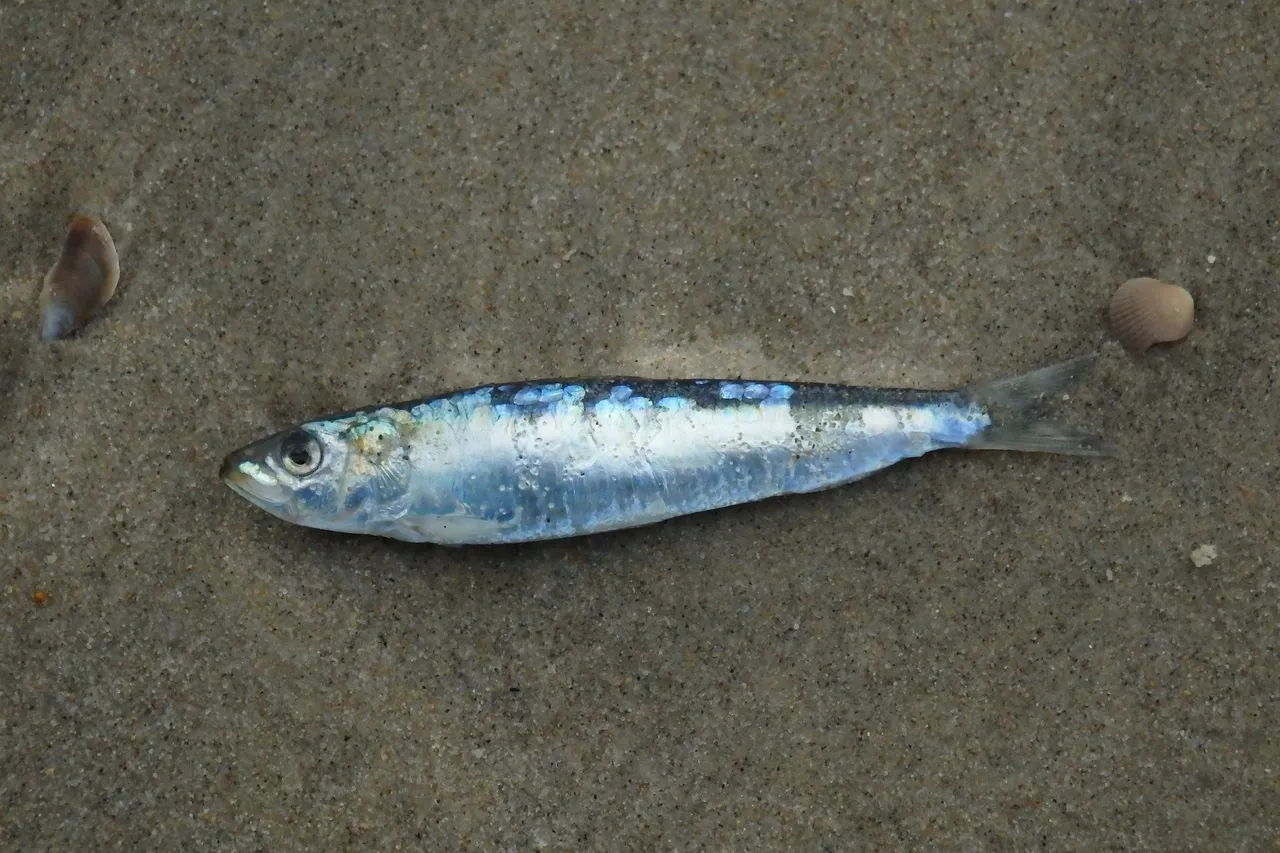
How this was identified, and who took it
Identified by: A row of dark spots along the upper flank behind the gill cover, and a sharp demarcation between blue-green back and bright silver flank. Said explicitly: the radiating bony opercular ridges that are the record's most reliable separation from herring and sprat are only faintly discernible at this resolution, so they did not carry this identification — the spot row, the body form and the Portuguese locality did.Duarte Frade — CC BY, via iNaturalist — source, licenceCatching European sardine
Everything here on fishing for it. Each entry opens the page behind it.
The European sardine is one of the most abundant fish in the eastern Atlantic and the Mediterranean, and it matters to angling far more as a food source and a bait than as a target.
SARDINE AND PILCHARD ARE THE SAME FISH. In British usage a small one is a sardine and a large one is a pilchard, which is a marketing distinction rather than a biological one and has caused a great deal of confusion. The Cornish pilchard fishery and the Portuguese and Moroccan sardine fisheries are the same species.
IT IS A PLANKTON FEEDER, WHICH IS WHY IT IS SO ABUNDANT. Sardines filter and pick plankton directly, sitting one step from the base of the food web. That short chain is why upwelling coasts produce them in such extraordinary quantity, and why sardine abundance tracks the strength of the upwelling rather than anything anglers do.
THEY SHOAL DENSELY AND MOVE CONSTANTLY, forming enormous schools that migrate with water temperature and food, inshore and offshore and along the coast through the year. A shoal is visible from a distance by the birds and the predators working it, and that is how most anglers encounter them.
FOR AN ANGLER THEY ARE THREE THINGS. They are a bait — fresh or frozen, whole or as flapper and strip, one of the most widely used sea baits there is. They are an indicator, because sardine shoals mark where bass, bonito, tuna and larger predators are feeding. And they are occasionally a target in their own right, taken on small feathers or sabiki traces where shoals come within reach, principally for the table.
THEY ARE EXCELLENT EATING AND VERY PERISHABLE. Oily flesh spoils fast, and sardines are one of the species associated with histamine formation, so the same immediate-chilling discipline that applies to mackerel applies here.
AND THE STOCK IS GENUINELY VARIABLE. Sardine populations fluctuate over decades in response to ocean conditions, with well-documented collapses and recoveries that are only partly explained by fishing. Management measures on the Iberian and north-west African stocks change in response to scientific advice, and what is currently permitted, and in what quantity, is a matter for the relevant fisheries authority rather than for a general account.
How it is caught
Identification
- Scientific name
- Sardina pilchardus
- Family
- Clupeidae
- Water
- Saltwater
- Conservation status
- Least Concern
- Regions
- Britain & Ireland, Western Europe, Mediterranean, North Africa, West Africa, Northern Europe
- Slender, laterally compressed silver fish with a distinctly blue-green back and a sharp demarcation to bright silver flanks and belly.
- A row of dark spots frequently runs along the upper flank behind the gill cover, variable in number and sometimes absent.
- Radiating bony ridges on the gill cover are the reliable character separating it from herring and sprat, which lack them.
- The single dorsal fin sits forward of the midpoint of the body, and the pelvic fins originate beneath or behind it rather than in front.
- Belly is rounded rather than sharply keeled, which separates it from sprat, whose belly scutes form a distinct saw edge.
Size
- Typical
- 15–20 cm, which is the size the fishery and the tin are built around
- Large
- 22–25 cm, the size traditionally sold as a pilchard rather than a sardine
Exceptional: Around 27–28 cm is the maximum length recorded in the scientific literature; larger claims should be treated with caution.
Where sardines are, and why the shoal is never in one place
A sardine's habitat is a water mass rather than a piece of ground, and that is the single most useful thing to understand about finding them.
THEY LIVE IN THE OPEN WATER COLUMN, typically over the continental shelf, from the surface down to a few tens of metres. They are not associated with reef, wreck, weed or bottom structure in the way most angling species are, because their food is not either.
WHAT THEY FOLLOW IS PLANKTON, and plankton concentrates where physical processes put it: at upwelling cells, along fronts where two water masses meet, at the edges of eddies, and in the tide-driven convergences that form near headlands and banks. A sardine shoal sits where the water is productive, and when that water moves the shoal moves with it.
DEPTH CHANGES THROUGH THE DAY. Shoals commonly rise towards the surface at night as the plankton they feed on migrates upward, and drop deeper during daylight — the same vertical migration that governs much of the open ocean, and one reason that a shoal marking on a sounder at dawn may be unreachable by mid-morning.
INSHORE OCCURRENCE IS SEASONAL AND PATCHY, which is why shore anglers encounter them irregularly. Where upwelling or a productive front comes close to the coast, sardines can be within reach of a pier or a small boat; where it does not, they may be many kilometres offshore all year.
AND THE PRACTICAL CONSEQUENCE for an angler is that sardines are found by watching rather than by returning to a mark. Working birds, surface disturbance, predators showing, and bait registering on a sounder are the signals; a spot that held them last week carries no promise at all.
Backed by research — why, and the sources (2)
Supported by peer-reviewed research or fisheries science. The sources are listed and can be checked.
- FishBase: a global information system on fishes — Froese, R. and D. Pauly, eds. — FishBase Consortium (Scientific institute)Relied on for: Distribution, habitat association, depth range, diet, growth and reproductive parameters recorded for the species concerned.States this directlyPassage read and verified
- FAO Species Identification Guides for Fishery Purposes and the FAO Species Catalogues — Food and Agriculture Organization of the United Nations (Scientific institute)Relied on for: Identification, distribution, habitat and fishery accounts for the species of the eastern central Atlantic and Mediterranean.States this directlyCitation checked — the work exists and is described correctly
How big a sardine gets, and why the tin is not the whole story
Sardine size is unusually consequential for a small fish, because the name changes with it and so does the use.
THE ORDINARY RUN IS 15 TO 20 CENTIMETRES. That is the size the commercial fishery is built around, the size that goes into a tin, and the size most anglers meet either as bait or in a shoal taken on feathers.
AROUND 22 TO 25 CENTIMETRES the fish is large enough to be sold and described differently. In British usage that larger fish is a pilchard and the smaller one a sardine, which is a commercial convention rather than a biological distinction — the Cornish pilchard and the Portuguese sardine are the same species at different ages.
THE MAXIMUM RECORDED IN THE SCIENTIFIC LITERATURE is around 27 to 28 centimetres, and figures beyond that should be treated with caution: sardines are rarely measured individually outside a survey, and larger claims usually rest on somebody's recollection rather than on a record.
GROWTH IS FAST AND LIFE IS SHORT. A sardine reaches usable size within its first year or two and lives a handful of years rather than decades, so the size of the fish in a shoal is mostly a statement about which year class is dominant. A run of large sardines usually means a strong cohort from a good recruitment year rather than exceptional individuals.
FOR BAIT THE SIZE DECIDES THE PRESENTATION. A whole small sardine suits a modest bait for bass or smoothhound; a large one is usually cut, either as fillet or as a head-and-guts section for conger and bigger ground. Matching the bait to the mouth is the ordinary discipline, and a sardine gives a usefully wide range without changing species.
Backed by research — why, and the sources (2)
Supported by peer-reviewed research or fisheries science. The sources are listed and can be checked.
- FishBase: a global information system on fishes — Froese, R. and D. Pauly, eds. — FishBase Consortium (Scientific institute)Relied on for: Distribution, habitat association, depth range, diet, growth and reproductive parameters recorded for the species concerned.States this directlyPassage read and verified
- The Fishes of the British Isles and North-West Europe — Macmillan, 1969 (Reference work)Relied on for: Distribution, habitat and biology of the fishes of the British Isles and north-west Europe.States this directlyCitation checked — the work exists and is described correctly
Spawning in open water, and why the year class matters more than the parents
Sardine reproduction is a broadcast strategy taken to its logical conclusion, and understanding it explains why the stock swings the way it does.
SPAWNING HAPPENS IN OPEN WATER with no nest, no site and no parental care. Eggs are released into the water column, fertilised there, and float. Nothing about the process is tied to a piece of ground, which is why sardines have no spawning site an angler can identify or avoid.
THE SEASON IS LONG RATHER THAN SHARP. Rather than a concentrated spawning period, sardines spawn in batches over an extended part of the year, and the timing shifts with latitude and temperature: broadly the cooler months in the warmer parts of the range and the warmer months further north. That spread is itself a strategy — it hedges against any single batch meeting bad conditions.
EGGS AND LARVAE DRIFT, AND THAT IS WHERE THE FISHERY IS DECIDED. Survival depends almost entirely on whether the currents carry the larvae somewhere with enough plankton to eat and few enough predators to escape. Good years and bad years differ by orders of magnitude, and the difference is physical oceanography rather than the number of adults that spawned.
THAT IS WHY RECRUITMENT DOMINATES THE STOCK. A single strong year class can carry a fishery for several seasons, and a run of poor ones can collapse it while the spawning population still looks adequate. It is also why sardine stocks fluctuate on decadal cycles that fishing alone does not explain, and why management measures on these stocks change in response to scientific advice rather than staying fixed.
FECUNDITY IS HIGH BECAUSE MORTALITY IS ENORMOUS. Releasing very large numbers of small eggs is the correct answer when almost none of them will survive, and it is the same answer most open-water shoaling fish have arrived at.
Backed by research — why, and the sources (2)
Supported by peer-reviewed research or fisheries science. The sources are listed and can be checked.
- FishBase: a global information system on fishes — Froese, R. and D. Pauly, eds. — FishBase Consortium (Scientific institute)Relied on for: Distribution, habitat association, depth range, diet, growth and reproductive parameters recorded for the species concerned.States this directlyPassage read and verified
- ICES Advice on fishing opportunities, catch and effort — International Council for the Exploration of the Sea (Scientific institute)Relied on for: Stock assessment and management advice for north-east Atlantic stocks, including the small pelagic complex and the environmental drivers of recruitment.States this directlyCitation checked — the work exists and is described correctly
The sardine year, and what actually changes
The sardine year is organised by water temperature and by the productivity that drives their food, not by a calendar an angler can carry between coasts.
IN THE WARMER MONTHS shoals generally move closer inshore and nearer the surface across much of the range, which is what brings them within reach of piers, small boats and shore marks at all. This is when most anglers encounter them, and when the predators that follow them — bass, bonito, mackerel and larger fish — are most accessible as a consequence.
IN COLD WATER they move deeper, further offshore, or both. The shoals do not disperse; they relocate, and a coast that was full of bait in August can have none within reach in February while the same fish are a few miles out.
UPWELLING SEASONALITY DOMINATES ON THE PRODUCTIVE COASTS. Where the fishery rests on wind-driven upwelling, the sardine season is effectively the upwelling season: the shoals concentrate while the wind drives the system and disperse when it relaxes. That makes the fishing calendar a wind calendar, and it varies between years in a way a month table cannot capture.
SPAWNING SHIFTS THE PICTURE AGAIN, because the extended batch-spawning season overlaps with feeding movements rather than replacing them, and fish in spawning condition behave and feed differently from fish that are not.
AND THE LONG-TERM TREND IS PART OF THE SEASONALITY NOW. Northern occurrence around the British Isles has varied considerably over the past century with sea temperature, and the fishery that supported Cornish pilchard cellars is not the same fishery as the one there today. Anybody reading a historical account of when sardines appear on a coast should treat the dates as evidence about that period rather than as a forecast.
Backed by research — why, and the sources (3)
Supported by peer-reviewed research or fisheries science. The sources are listed and can be checked.
- FishBase: a global information system on fishes — Froese, R. and D. Pauly, eds. — FishBase Consortium (Scientific institute)Relied on for: Distribution, habitat association, depth range, diet, growth and reproductive parameters recorded for the species concerned.States this directlyPassage read and verified
- ICES Advice on fishing opportunities, catch and effort — International Council for the Exploration of the Sea (Scientific institute)Relied on for: Stock assessment and management advice for north-east Atlantic stocks, including the small pelagic complex and the environmental drivers of recruitment.States this directlyCitation checked — the work exists and is described correctly
- The Fishes of the British Isles and North-West Europe — Macmillan, 1969 (Reference work)Relied on for: Distribution, habitat and biology of the fishes of the British Isles and north-west Europe.States this directlyCitation checked — the work exists and is described correctly
How big a sardine gets, and why the name changes with it
European sardine size is the subject of a naming convention that confuses a great many people, and it is worth settling.
A SARDINE AND A PILCHARD ARE THE SAME FISH. Sardina pilchardus is called a sardine when small and a pilchard when large, and the boundary is commercial convention rather than biology. The Cornish pilchard fishery and the Portuguese sardine fishery were fishing the same species at different sizes.
A TYPICAL FISH IS 15 TO 22 CENTIMETRES. Over 25 centimetres is large, and the reported maximum for the species is around 27 centimetres.
THEY ARE FAST-GROWING AND SHORT-LIVED, maturing at one to two years and rarely exceeding eight. That short life is why sardine stocks fluctuate so sharply: a population dominated by one or two year classes responds to a good or bad spawning year within a season or two, with none of the buffering a long-lived species has.
WHICH IS THE MECHANISM BEHIND THE HISTORICAL COLLAPSES. The Cornish pilchard fishery, at its height one of the largest in Britain, declined for reasons that combined fishing pressure with the natural volatility of a short-lived pelagic stock — and the same pattern of boom and collapse has recurred in sardine and anchovy fisheries worldwide.
FOR AN ANGLER THE SIZE MATTERS IN TWO WAYS. Sardines are taken on very small feathers and sabiki rigs, and hook size is the entire limitation — a fish this small cannot take a mackerel feather. And a sardine is one of the most effective baits available for larger species, fresh or frozen, which is what a great many are caught for.
Backed by research — why, and the sources (3)
Supported by peer-reviewed research or fisheries science. The sources are listed and can be checked.
- The Fishes of the British Isles and North-West Europe — Macmillan, 1969 (Reference work)Relied on for: Distribution, habitat, identification and biology of the fishes of the British Isles and north-west Europe.States this directlyCitation checked — the work exists and is described correctly
- FishBase: a global information system on fishes — Froese, R. and D. Pauly, eds. — FishBase Consortium (Scientific institute)Relied on for: Distribution, habitat association, depth range, growth, maximum size and reproductive parameters recorded for the species.States this directlyPassage read and verified
- Cefas science, advice and data on marine and freshwater environments — Centre for Environment, Fisheries and Aquaculture Science (Government fisheries body)Relied on for: UK marine fisheries science: survey data, distribution, growth and the biological basis of management advice.States this directlyCitation checked — the work exists and is described correctly
Handling sardines, and the reason it is urgent
Sardines deteriorate faster than almost any fish a shore angler will catch, and the two reasons compound.
THEY ARE SMALL AND OILY. A small fish warms through instantly and has no thermal mass to buy time, and an oily fish has a high proportion of fats that begin oxidising at death. Together those mean a sardine goes from excellent to poor within an hour or two on a warm day.
AND THEY BELONG TO THE HISTAMINE GROUP. Sardines are among the fish the FDA guidance associates with scombrotoxin formation, on the strength of the same dark-muscle chemistry that puts mackerel in it. That means the deterioration is not only a quality question: a sardine left warm can accumulate histamine, which no amount of cooking removes.
SO THE HANDLING IS SIMPLE AND IT IS NOT OPTIONAL. Into an ice slurry immediately, not into a bucket and not into a bag. Where sardines are being caught in numbers on feathers or sabikis, the ice needs to be there before the fishing starts, because there is no version of this that works retrospectively.
THE BAIT CASE IS THE SAME CASE. A sardine intended as bait is worth far more if it was chilled hard the moment it was caught: it stays intact on a hook, it leaks the oils that make it effective, and it does not go soft. Anglers who treat bait fish carelessly and then wonder why frozen shop sardines out-fish their own fresh ones have usually answered their own question.
AND THE SPINES AND SCALES ARE A MINOR NUISANCE RATHER THAN A HAZARD — sardine scales are deciduous and come off on everything, which is cosmetic, and the fish is otherwise harmless to handle.
Official guidance — why, and the sources (3)
Stated by a fisheries authority, scientific institute or recognised angling body. Authoritative, but summarising rather than demonstrating.
- Fish and Fishery Products Hazards and Controls Guidance — US Food and Drug Administration, Center for Food Safety and Applied Nutrition, 2022 (Standards body)Relied on for: Hazards and controls for fish and fishery products, including scombrotoxin formation and the species groups associated with it.States this directlyPassage read and verified
- Sea Angler — Bauer Media (Specialist angling publication)Relied on for: Contemporary UK and European sea angling practice as reported by practitioners, including ground, seasonal timing, bait and method convention.States this directlyCitation checked — the work exists and is described correctly
- General angling website restatements of established technique — Various (Credible secondary source)Relied on for: Widely restated descriptions of species behaviour and regional angling practice, recorded as consensus rather than as scholarship.Background and mechanism onlyCitation checked — the work exists and is described correctly
Lifecycle and reproduction
Fast-growing and short-lived by the standards of most sea fish, typically maturing within the first year or two and living for a handful of years rather than decades. Eggs and larvae are planktonic and drift with the current, so recruitment depends heavily on where the currents take them and what they find to eat when they arrive — which is why year-class strength varies so widely and why a strong year can dominate a fishery for several seasons afterwards.
Spawns in open water, releasing buoyant eggs that develop in the plankton with no parental care. Spawning is protracted rather than concentrated in a short season, and its timing shifts with latitude and water temperature: broadly in the cooler part of the year in the warmer parts of the range and in the warmer part of the year further north. Fecundity is high, which is the strategy that goes with planktonic eggs and heavy predation.
Feeding and senses
Feeds on plankton, taking both by filtering while swimming with the mouth open and by picking individual larger items, and switching between the two according to what is available. This places it one step from the base of the food web, which is the mechanism behind the enormous biomass upwelling coasts support. Feeding is concentrated where plankton concentrates, so the shoals track water masses rather than ground.
Vision and the lateral line dominate, and both are organised around shoaling. Sardines maintain position relative to their neighbours by sensing the flow those neighbours generate, which is what allows a shoal of thousands to turn as one unit and is a large part of its defence against predators. Sensitivity to sudden shadow and vibration is high, which is why a shoal reacts to a boat or a bird before it reacts to a lure.
Through the year
Moves inshore and offshore and along the coast through the year with temperature and plankton, generally closer inshore and nearer the surface in warmer months and deeper or further offshore in cold. Shoals concentrate strongly where upwelling is active, and disperse when it collapses. In several parts of the range the summer inshore movement is what brings the species within reach of shore and small-boat anglers at all.
Distribution
The eastern Atlantic from the North Sea and the British Isles south along the European and north-west African coasts, and throughout the Mediterranean, with the largest concentrations on the upwelling-influenced coasts of Iberia and north-west Africa. Northern occurrence has varied over the past century with sea temperature.
This is a biological range — where the species occurs, not a prediction that you will catch one. To browse the fishing geography FishingHQ holds, start at fishing places.
Why anglers care
Primarily important as bait and as an indicator rather than as a target. Fresh sardine is among the most effective sea baits available for a wide range of predators, and frozen sardine is a staple wherever it can be bought. A working sardine shoal marks feeding predators — bass, bonito, mackerel, tuna and larger fish — which is often more useful to an angler than the sardines themselves. They are taken directly on small feathers and sabiki traces where shoals come within reach of a pier, a shore mark or a small boat, usually for the table.
Handling and returning
Very delicate and easily damaged: scales come away at a touch and the flesh bruises readily, so a sardine handled roughly is worth little as bait and less as food. Oily flesh spoils quickly, and the species is among those associated with histamine formation, so anything intended for the table should be chilled immediately rather than left in a bag. Sardines taken as bait are best kept cold and used fresh, and freezing changes the texture enough that frozen bait behaves differently from fresh on the hook.
Check the rules before you fish
Fishing laws, bylaws, access rules, seasons, bait restrictions and permitted methods vary by location and can change. Check the current rules from the relevant authority and the water you intend to fish before fishing.
Check with:
- Current national or regional law for where you are fishing
- Current local bylaws
- The relevant fisheries authority
- The landowner, club or fishery whose water it is
- Any restrictions specific to the species or the method you intend to use
Where to go next
Similar and related fish
Where you will find it
- Britain and IrelandPresent around the south-western approaches, where the same species is landed as the Cornish pilchard, and where northern occurrence has shifted with sea temperature over the past century.
- Galicia and the Iberian ria coastA mainstay of the Galician fishery and of the food culture built around it, supported by the same upwelling system that works the Moroccan coast.
- PortugalCulturally and economically central, and the fish the Portuguese summer is organised around.
- The Moroccan Atlantic coastThe foundation of the coast's fisheries and of its canning industry, and among the largest sardine landings in the world.
- The Moroccan Mediterranean coastPart of the forage base here as on the Atlantic side, though without the industrial scale the upwelling coast supports.
Understanding this fish
- How histamine forms in a fish, and why the enzyme is the problemSardines are among the unrelated fish the guidance associates with histamine formation, on the strength of the same dark-muscle chemistry. They are also small, oily and usually caught in numbers in warm water.
- Scombroid poisoning, and why some fish must be chilled immediatelyNot a scombrid, but among the species associated with histamine formation, and one caught in quantity in hot places and frequently left unchilled.
- Upwelling, and the coasts it makesThe reason there are so many of them. A plankton feeder one step from the base of the food web, on coasts where upwelling fertilises that base at a scale nothing else matches.
Told apart from
- European anchovyThe two small pelagic fish the eastern Atlantic and Mediterranean fisheries alternate between, whose relative abundance swings over decades with ocean conditions.
- Squid and cuttlefishTwo of the most widely used sea baits, differing in exactly the way that matters on a hook: one is oily and soft and leaks scent, the other is tough and stays on.
Sources and evidence
- FishBase: a global information system on fishes — Froese, R. and D. Pauly, eds. — FishBase Consortium (Scientific institute)Relied on for: Distribution, habitat association, depth range, diet, growth and reproductive parameters recorded for the species concerned.States this directlyPassage read and verified
- FAO Species Identification Guides for Fishery Purposes and the FAO Species Catalogues — Food and Agriculture Organization of the United Nations (Scientific institute)Relied on for: Identification, distribution, habitat and fishery accounts for the species of the eastern central Atlantic and Mediterranean.States this directlyCitation checked — the work exists and is described correctly
- The Fishes of the British Isles and North-West Europe — Macmillan, 1969 (Reference work)Relied on for: Distribution, habitat and biology of the fishes of the British Isles and north-west Europe.States this directlyCitation checked — the work exists and is described correctly
- ICES Advice on fishing opportunities, catch and effort — International Council for the Exploration of the Sea (Scientific institute)Relied on for: Stock assessment and management advice for north-east Atlantic stocks, including the small pelagic complex and the environmental drivers of recruitment.States this directlyCitation checked — the work exists and is described correctly
Why the 12 connections on this page are here, and the sources
Similar and related fish
Backed by research — 1 connection
Supported by peer-reviewed research or fisheries science. The sources are listed and can be checked.
Madeiran sardinella
Sardina pilchardus is common in Madeiran waters, appears in the same catch table at 0.13%, and is one of the two fish the survey names as standard natural bait there. Sardinella maderensis is a West African shelf fish that FishBase does not record from Madeira. The sardine carries rows of dark spots along the flank and distinct radiating ridges on the gill cover; the sardinella is brassier, unspotted, and has the last two anal rays enlarged.
- FishBase: a global information system on fishes — Froese, R. and D. Pauly, eds. — FishBase Consortium (Scientific institute)Relied on for: The morphology, size, depth range and distribution that separate these two species from one another.States this directlyPassage read and verified
How it is caught
What experienced anglers do — 1 connection
Widely and independently recommended by experienced anglers and specialist sources. This is real angling knowledge, not proof: controlled evidence for it is limited, and FishingHQ records it as convention rather than as a demonstrated effect.
Feathering and multi-lure traces
The page names the technique precisely and says it is usually for the table. It also notes the species matters more as bait and as an indicator of feeding predators than as a target, which is why this is its only edge.
- Sea Angler — Bauer Media (Specialist angling publication)Relied on for: Documents which fishery and which technique takes this species.States this directlyCitation checked — the work exists and is described correctly
- FishBase: a global information system on fishes — Froese, R. and D. Pauly, eds. — FishBase Consortium (Scientific institute)Relied on for: Independently corroborates the species' recreational capture and range.Background and mechanism onlyPassage read and verified
Where you will find it
Backed by research — 5 connections
Supported by peer-reviewed research or fisheries science. The sources are listed and can be checked.
Britain and Ireland
A distribution claim about the world, so it rests on the reference works rather than on angling report. FishingHQ's evidence policy requires it.
- FishBase: a global information system on fishes — Froese, R. and D. Pauly, eds. — FishBase Consortium (Scientific institute)Relied on for: Distribution, habitat association and depth range recorded for the species, including its occurrence in the water body concerned.States this directlyPassage read and verified
- FAO Species Identification Guides for Fishery Purposes and the FAO Species Catalogues — Food and Agriculture Organization of the United Nations (Scientific institute)Relied on for: Distribution, habitat, depth and fishery accounts for the species of the eastern central Atlantic and Mediterranean.States this directlyCitation checked — the work exists and is described correctly
Galicia and the Iberian ria coast
A distribution claim about the world, so it rests on the reference works rather than on angling report. FishingHQ's evidence policy requires it.
- FishBase: a global information system on fishes — Froese, R. and D. Pauly, eds. — FishBase Consortium (Scientific institute)Relied on for: Distribution, habitat association and depth range recorded for the species, including its occurrence in the water body concerned.States this directlyPassage read and verified
- FAO Species Identification Guides for Fishery Purposes and the FAO Species Catalogues — Food and Agriculture Organization of the United Nations (Scientific institute)Relied on for: Distribution, habitat, depth and fishery accounts for the species of the eastern central Atlantic and Mediterranean.States this directlyCitation checked — the work exists and is described correctly
Portugal
A distribution claim about the world, so it rests on the reference works rather than on angling report. FishingHQ's evidence policy requires it.
- FishBase: a global information system on fishes — Froese, R. and D. Pauly, eds. — FishBase Consortium (Scientific institute)Relied on for: Distribution, habitat association and depth range recorded for the species, including its occurrence in the water body concerned.States this directlyPassage read and verified
- FAO Species Identification Guides for Fishery Purposes and the FAO Species Catalogues — Food and Agriculture Organization of the United Nations (Scientific institute)Relied on for: Distribution, habitat, depth and fishery accounts for the species of the eastern central Atlantic and Mediterranean.States this directlyCitation checked — the work exists and is described correctly
The Moroccan Atlantic coast
A distribution claim about the world, so it rests on the reference works rather than on angling report. FishingHQ's evidence policy requires it.
- FishBase: a global information system on fishes — Froese, R. and D. Pauly, eds. — FishBase Consortium (Scientific institute)Relied on for: Distribution, habitat association and depth range recorded for the species, including its occurrence in the water body concerned.States this directlyPassage read and verified
- FAO Species Identification Guides for Fishery Purposes and the FAO Species Catalogues — Food and Agriculture Organization of the United Nations (Scientific institute)Relied on for: Distribution, habitat, depth and fishery accounts for the species of the eastern central Atlantic and Mediterranean.States this directlyCitation checked — the work exists and is described correctly
The Moroccan Mediterranean coast
A distribution claim about the world, so it rests on the reference datasets rather than on angling report. FishingHQ's evidence policy requires it.
- FishBase: a global information system on fishes — Froese, R. and D. Pauly, eds. — FishBase Consortium (Scientific institute)Relied on for: Distribution, habitat association and depth range recorded for the species, including its occurrence in the water body concerned.States this directlyPassage read and verified
- FAO Species Identification Guides for Fishery Purposes and the FAO Species Catalogues — Food and Agriculture Organization of the United Nations (Scientific institute)Relied on for: Distribution, habitat, depth and fishery accounts for the species of the eastern central Atlantic and Mediterranean.States this directlyCitation checked — the work exists and is described correctly
Understanding this fish
Official guidance — 2 connections
Stated by a fisheries authority, scientific institute or recognised angling body. Authoritative, but summarising rather than demonstrating.
How histamine forms in a fish, and why the enzyme is the problem
A claim that a species belongs to the group in which histamine formation is a recognised hazard. That is a statement about the fish's muscle chemistry and about a named regulatory guidance's own species listing, not about angling practice, so it rests on the guidance rather than on report.
- Fish and Fishery Products Hazards and Controls Guidance — US Food and Drug Administration, Center for Food Safety and Applied Nutrition, 2022 (Standards body)Relied on for: Hazards and controls for fish and fishery products: scombrotoxin formation and the species groups associated with it, seafood parasites, and natural toxins.States this directlyPassage read and verified
Scombroid poisoning, and why some fish must be chilled immediately
A place that describes a physical process in prose and cannot point at it is restating something FishingHQ should explain once. This is the link that turns the restatement into a reference.
- Fish and Fishery Products Hazards and Controls Guidance — US Food and Drug Administration, Center for Food Safety and Applied Nutrition, 2022 (Standards body)Relied on for: Hazards and controls for fish and fishery products, including scombrotoxin formation, the species associated with it and the time-and-temperature controls that prevent it.States this directlyPassage read and verified
- FishBase: a global information system on fishes — Froese, R. and D. Pauly, eds. — FishBase Consortium (Scientific institute)Relied on for: Family placement, biology and flesh characteristics recorded for the species.Background and mechanism onlyPassage read and verified
Backed by research — 1 connection
Supported by peer-reviewed research or fisheries science. The sources are listed and can be checked.
Upwelling, and the coasts it makes
A place that describes a physical process in prose and cannot point at it is restating something FishingHQ should explain once. This is the link that turns the restatement into a reference.
- ICES Advice on fishing opportunities, catch and effort — International Council for the Exploration of the Sea (Scientific institute)Relied on for: Stock assessment and advice for north-east Atlantic stocks, including the environmental drivers of small pelagic productivity and recruitment.States this directlyCitation checked — the work exists and is described correctly
- Cefas science, advice and data on marine and freshwater environments — Centre for Environment, Fisheries and Aquaculture Science (Government fisheries body)Relied on for: Marine environmental science including coastal physical processes, productivity and the monitoring behind them.States this directlyCitation checked — the work exists and is described correctly
Told apart from
What experienced anglers do — 2 connections
Widely and independently recommended by experienced anglers and specialist sources. This is real angling knowledge, not proof: controlled evidence for it is limited, and FishingHQ records it as convention rather than as a demonstrated effect.
European anchovy
Two records a reader would reasonably weigh against one another, joined where the comparison teaches something about both. A navigation claim rather than a claim about the world.
- General angling website restatements of established technique — Various (Credible secondary source)Relied on for: Widely restated angling practice and belief, recorded as practitioner consensus rather than as tested fact.Background and mechanism onlyCitation checked — the work exists and is described correctly
- Sea Angler — Bauer Media (Specialist angling publication)Relied on for: Contemporary UK sea angling practice as reported and restated by practitioners, including technique and tackle convention.Background and mechanism onlyCitation checked — the work exists and is described correctly
Squid and cuttlefish
Two records a reader would reasonably weigh against one another, joined where the comparison teaches something about both. A navigation claim rather than a claim about the world.
- General angling website restatements of established technique — Various (Credible secondary source)Relied on for: Widely restated angling practice and belief, recorded as practitioner consensus rather than as tested fact.Background and mechanism onlyCitation checked — the work exists and is described correctly
- Sea Angler — Bauer Media (Specialist angling publication)Relied on for: Contemporary UK sea angling practice as reported and restated by practitioners, including technique and tackle convention.Background and mechanism onlyCitation checked — the work exists and is described correctly
How FishingHQ labels evidence is explained in the evidence policy.