Galicia and the Iberian ria coast
Fishing regions · Last reviewed 2026-08-13
Drowned river valleys open to the Atlantic, flushed by one of the world's strongest upwelling systems, producing a coast whose shellfish culture is unmatched in Europe and whose exposure is easily underestimated.
Safety: moving water and currents — can cause serious injury or death.
Being listed here is not permission to fish. What that meansClose
Access, fishing rights, seasons, licences, local bylaws and permitted methods vary and can change. Check current access, permission, local regulations, closures and restrictions before you travel or fish. FishingHQ describes what the ground is and names who holds the answer; it does not hold the answer itself.
Find the authority for a jurisdiction · What FishingHQ does and does not cover
The Galician coast is a coast-tier case because a single landform, repeated along it, explains the fishery, the food culture and the hazards together.
A RIA IS A DROWNED RIVER VALLEY. When sea level rose after the last glaciation it flooded valleys that rivers had cut, producing deep, sheltered, funnel-shaped inlets open to the sea at one end and fed by a river at the other. They are not fjords — no glacier carved them, and their profiles are V-shaped rather than U-shaped — and the distinction matters, because a ria retains the graded sediment and the gentle intertidal slopes that a fjord does not.
WHICH MAKES THEM EXTRAORDINARY SHELLFISH GROUND. A ria combines sheltered water, a large intertidal area of sand and mud, freshwater and nutrient input from the river, and — critically — flushing by nutrient-rich Atlantic water from outside. That is close to an optimal arrangement for filter feeders, and Galicia's mussel, cockle, clam, razor clam, scallop and goose barnacle production is on a scale and of a reputation that has no European equal.
THE UPWELLING IS WHAT LOADS THE SYSTEM. The north-west Iberian coast sits at the northern end of a major eastern boundary upwelling system. Northerly winds in the warmer months push surface water offshore and cold, nutrient-rich deep water rises to replace it. That water is drawn into the rias, drives very high primary production, and feeds everything above it. The same process supports the sardine, mackerel and horse mackerel fisheries offshore.
AND THE HUMAN SYSTEM BUILT ON IT IS DISTINCTIVE. The mariscadoras — shellfish gatherers, historically and predominantly women — work the intertidal flats on foot under a licensed, quota-managed, community-organised system that is one of the more successful examples of small-scale fisheries co-management anywhere. Mussel cultivation on suspended rafts, the bateas, occupies large areas of the sheltered ria water. And the percebeiros harvest goose barnacles from wave-exposed rock in genuinely dangerous conditions, which is why the product commands the price it does.
OUTSIDE THE RIAS THE COAST IS ANYTHING BUT SHELTERED. The exposed headlands and open Atlantic shore take the full force of North Atlantic swell, and the stretch around Cape Finisterre is known as the Costa da Morte for reasons rooted in centuries of shipwrecks. The contrast between the calm inside of a ria and the water a few kilometres beyond its mouth is extreme, and it is where people are caught out.
What fishing here is like
A deeply indented Atlantic coast of drowned river valleys, sheltered inside and severely exposed outside, with exceptional shellfish productivity and a food and fishing culture built entirely on it. Recreational fishing includes shore and rock angling, small-boat fishing inside and outside the rias, spearfishing on the rocky shore, and shore gathering — the last being culturally central and tightly regulated. Squid and octopus are of particular importance both commercially and recreationally.
How people fish here
5 methods are recorded on the places documented here, counted from the records themselves rather than from what is practised in the country. Each opens a full guide to the technique.
Spinning
Recorded at 3 places here, over estuary, headland.
Casting an artificial lure and retrieving it so that it moves like something alive — the most direct form of lure fishing.
Eging
Recorded at 2 places here, over estuary.
Jigging for squid and cuttlefish with a barbed, weighted lure worked in lifts and pauses — a Japanese discipline with its own tackle, vocabulary and competitive scene.
Float fishing
Recorded at 2 places here, over estuary, headland.
Suspending a bait at a controlled depth beneath a buoyant indicator — the most visual, most controllable and most widely applicable method in angling.
Kayak fishing
Recorded at 2 places here, over estuary.
A platform rather than a technique: quiet, shallow-draught access to water no other craft reaches, bought at the price of exposure, and a discipline where the decision not to launch is part of the skill.
Shore diving
Recorded at 2 places here, over estuary, headland.
Entering and leaving the water from land under your own power — the most accessible spearfishing and the one where the entry and exit are the dangerous part.
These are the methods documented at the places FishingHQ holds here. A species listed beside a method is documented on the same ground, which is not the same as being taken that way — where a source establishes the method a fish was caught on, it is stated on that place’s own page. All fishing methods.
What dominates
Rock and shore angling from the exposed coast and from within the rias, principally for seabream species, bass, wrasse and mullet. Small-boat fishing inside the rias and offshore over the shelf. Squid and cuttlefish fishing, and octopus fishing, both of which are of major cultural significance here. Spearfishing on the rocky shore, which is well established and separately licensed. Shore gathering of shellfish on foot, which is a licensed, quota-managed occupation rather than an informal activity, and which recreational gatherers must not confuse with a free-for-all.
The water available
Drowned river valleys with deep sheltered water, extensive intertidal sand and mud flats, and river input at their heads; exposed rocky headlands, cliffs and wave-swept platforms between them; offshore shelf water strongly influenced by seasonal upwelling; and extensive areas of suspended mussel cultivation occupying sheltered ria water.
How the rules are structured
Recreational sea fishing in Galicia is administered by the autonomous community government rather than by the Spanish state, and requires a licence issued at that level, with separate licences for shore fishing, boat fishing and spearfishing. Shellfish gathering is licensed and quota-managed separately again, distinguishes sharply between professional and recreational gathering, and is subject to closure of specific grounds on biotoxin and sanitary grounds. Marine protected areas and reserves of fishing interest exist along the coast with their own rules. Rules differ from the neighbouring autonomous communities and from the Spanish national position for offshore waters. FishingHQ does not state what any current rule is.
Who to ask
- The Xunta de Galicia's fisheries department, which administers recreational sea fishing licensing, shellfish gathering and marine protected areas in Galician waters.
- The confraría de pescadores — the local fishermen's guild — which administers gathering grounds and quotas at community level and is the practical authority on any given stretch of shore.
- The Galician food safety and biotoxin monitoring service, whose closures determine whether a shellfish ground may be harvested at all.
- The Spanish national fisheries administration for offshore waters and for matters reserved to it.
- ICES, for stock assessment and scientific advice on the Iberian stocks.
Words you will meet
- Ría
- A drowned river valley: a deep, funnel-shaped coastal inlet formed by post-glacial sea-level rise flooding a river-cut valley. Distinct from a fjord, which is glacially carved and U-shaped.
- Batea
- A large floating raft from which ropes of cultivated mussels are suspended into the water column. Bateas occupy substantial areas of sheltered ria water and are a defining feature of the seascape.
- Mariscadora
- A licensed shellfish gatherer working the intertidal flats on foot, historically and predominantly women, operating under a community-managed quota system administered through the local guild.
- Percebeiro
- A gatherer of goose barnacles from wave-exposed rock. The work is done in the surge zone on exposed coast and is among the most dangerous forms of shore harvesting anywhere, which is reflected in the price the product commands.
- Costa da Morte
- The Coast of Death: the exposed Atlantic shore around Cape Finisterre, named for its long history of shipwrecks and a plain statement about the conditions on that stretch.
Conditions and hazards
The defining hazard is the contrast between inside and outside a ria. Water within an inlet can be sheltered and benign while the open coast a short distance away is taking the full force of North Atlantic ground swell, and a small boat leaving the shelter meets the change abruptly. On the exposed rocky shore, being swept from a low platform by a set wave is the characteristic accident, and it happens on days that appear calm because long-period swell arrives independently of local wind. Goose barnacle gathering on wave-exposed rock is genuinely lethal work and should not be treated as an activity a visitor tries. Shellfish gathered from unclassified ground or during a biotoxin closure carry risks that cooking does not remove and inspection cannot detect, which makes checking current closures a safety matter rather than a formality. Water temperature is cool enough that immersion is serious year-round.
Why upwelling makes a coast rich, and what it costs
The productivity of the Galician coast is not an accident of geography but the output of a specific and seasonal physical process, and it is worth understanding because the same process explains several of the world's great fisheries.
EASTERN BOUNDARY UPWELLING IS THE MECHANISM. Along the eastern edges of ocean basins, winds blowing along the coast toward the equator interact with the earth's rotation to push surface water offshore. Water has to replace it, and the water that rises is deep water: cold, dark, and loaded with the nutrients that have been sinking out of the sunlit layer for years. Brought into the light, those nutrients drive an enormous phytoplankton bloom.
EVERYTHING ABOVE FOLLOWS. Zooplankton graze the bloom; sardine, mackerel, horse mackerel and anchovy graze the zooplankton; and larger predators and the shellfish beds of the rias feed on the whole assemblage. The four great eastern boundary upwelling systems — off north-west Africa and Iberia, off south-west Africa, off Peru and Chile, and off California — together produce a share of the world's fish catch out of all proportion to their area.
GALICIA SITS AT THE NORTHERN END OF THE IBERIAN–CANARY SYSTEM, and its upwelling is strongly seasonal: driven by northerly winds in the warmer months and largely absent when the wind reverses. The rias act as collectors, drawing that enriched water inside where it feeds the shellfish grounds and the cultivated mussel rafts.
AND THE COST IS VARIABILITY AND VULNERABILITY. Upwelling systems are wind-driven, so a season with the wrong wind pattern produces less production, and the effects propagate up the food chain within a year rather than over decades. They are also prone to harmful algal blooms: exceptional nutrient availability favours some dinoflagellates as readily as it favours diatoms, and the resulting biotoxins accumulate in filter-feeding shellfish. That is why Galicia has one of the most developed shellfish biotoxin monitoring programmes anywhere and why ground closures are routine rather than exceptional — the same process that makes the coast productive is what makes the monitoring necessary.
Backed by research — why, and the sources (4)
Supported by peer-reviewed research or fisheries science. The sources are listed and can be checked.
- Cefas science, advice and data on marine and freshwater environments — Centre for Environment, Fisheries and Aquaculture Science (Government fisheries body)Relied on for: Marine and freshwater environmental science, including the physical characterisation of shelf seas and the monitoring programmes that describe them.States this directlyCitation checked — the work exists and is described correctly
- ICES Advice on fishing opportunities, catch and effort — International Council for the Exploration of the Sea (Scientific institute)Relied on for: Ecoregion description, stock distribution and the hydrography of the area assessed.States this directlyCitation checked — the work exists and is described correctly
- Fish and Fishery Products Hazards and Controls Guidance — US Food and Drug Administration, Center for Food Safety and Applied Nutrition, 2022 (Standards body)Relied on for: That bivalve molluscs concentrate pathogens and algal biotoxins, that biotoxins survive cooking and cannot be detected by inspection, and that harvest area classification and biotoxin monitoring are the controls.States this directlyPassage read and verified
- Good Fish Guide — Marine Conservation Society (Conservation authority)Relied on for: Stock and method assessment for commercially and recreationally taken shellfish and the management measures applied.Background and mechanism onlyCitation checked — the work exists and is described correctly
Gathering on foot, and why it is an occupation rather than an activity
Shore gathering in Galicia is not the informal beachcombing it resembles elsewhere, and treating it as such is the single most common visitor error on this coast.
THE SYSTEM IS LICENSED, QUOTA-MANAGED AND COMMUNITY-ADMINISTERED. Professional gatherers hold permits tied to specific grounds, work to daily quotas, observe minimum sizes, and are organised through the confraría — the local fishermen's guild — which allocates access, manages the ground as a common resource, and enforces the arrangements. Grounds are actively managed: seeded, cleaned, rested and monitored. This is a co-managed fishery with several centuries of institutional history behind it and it is studied internationally as an example of small-scale management that works.
RECREATIONAL GATHERING EXISTS AND IS SEPARATE. Where it is permitted it is licensed separately, limited by species, quantity, size and area, and excluded from professionally managed ground. The distinction between the two is enforced, and the assumption that an intertidal flat is open to anybody with a bucket is both wrong and locally resented.
BIOTOXIN CLOSURE OVERRIDES EVERYTHING. Grounds are closed when monitoring detects biotoxin levels above threshold, and those closures are frequent, specific to particular rias and species, and change on a timescale of days. The toxins responsible for paralytic, diarrhetic and amnesic shellfish poisoning accumulate in filter feeders, are not destroyed by cooking, and cannot be detected by looking, smelling or tasting the animal. A closure is therefore not advice; it is the only information standing between a gatherer and a serious illness.
FISHINGHQ DOES NOT STATE WHAT IS OPEN, WHAT IS CLOSED, WHAT IS PERMITTED OR WHAT MAY BE TAKEN. Those change constantly and are held by the Galician authorities and the local guild. What generalises is the structure: on this coast, ground is owned in the sense that matters, access is administered locally, and the health status of any particular bed is a live piece of information that has to be checked rather than assumed.
AND THE PERCEBEIROS ARE A SEPARATE MATTER ENTIRELY. Goose barnacle gathering is conducted in the surge zone of exposed Atlantic rock, roped, timed against sets, and it kills people regularly. It is skilled, licensed professional work and it is not something to attempt.
Official guidance — why, and the sources (4)
Stated by a fisheries authority, scientific institute or recognised angling body. Authoritative, but summarising rather than demonstrating.
- Fish and Fishery Products Hazards and Controls Guidance — US Food and Drug Administration, Center for Food Safety and Applied Nutrition, 2022 (Standards body)Relied on for: That bivalve molluscs concentrate pathogens and algal biotoxins, that biotoxins survive cooking and cannot be detected by inspection, and that harvest area classification and biotoxin monitoring are the controls.States this directlyPassage read and verified
- Good Fish Guide — Marine Conservation Society (Conservation authority)Relied on for: Stock and method assessment for commercially and recreationally taken shellfish and the management measures applied.Background and mechanism onlyCitation checked — the work exists and is described correctly
- Fishers' Craft and Lettered Art: Tracts on Fishing from the End of the Middle Ages — University of Toronto Press, 1997 (Scientific literature)Relied on for: That fishing traditions develop around the water and fish available to them, and the historical method of reading such traditions.States this directlyCitation checked — the work exists and is described correctly
- Words of the Lagoon: Fishing and Marine Lore in the Palau District of Micronesia — University of California Press, Berkeley, 1981 (Reference work)Relied on for: That local fishing practice encodes detailed knowledge of fish and conditions, and that the practice is frequently the record of the ecology.Background and mechanism onlyCitation checked — the work exists and is described correctly
Drowned valleys and cold water rising: how a ria coast works
Galicia's coast is unlike anything else in Europe, and two mechanisms account for it.
THE RIAS ARE DROWNED RIVER VALLEYS. Rising sea level after the last glaciation flooded a landscape of river valleys cut into hard rock, producing deep, branching, sheltered inlets that reach far inland. They are not fjords — no glacier cut them — and they are not estuaries in the shallow silty sense either. They are sheltered marine inlets with rock sides, freshwater input at the head and full salinity at the mouth.
THAT SHAPE PRODUCES A CIRCULATION. Fresh water flowing out at the surface draws salt water in along the bottom, so a ria continuously pulls oceanic water inward at depth. When that incoming water is nutrient-rich, the ria becomes a nutrient trap.
UPWELLING SUPPLIES THE NUTRIENTS. Galicia sits on an eastern boundary upwelling system: northerly winds in the warmer months drive surface water offshore and cold, nutrient-rich water rises to replace it. The same mechanism the Humboldt, Benguela and Canary systems run on, operating seasonally at the corner of Iberia.
COMBINE THE TWO AND YOU GET EXTRAORDINARY PRODUCTION. Upwelled nutrients drawn into sheltered inlets and held there is why the Galician rias are among the most productive coastal waters in Europe, and why the mussel raft industry there is one of the largest bivalve fisheries in the world.
THE OUTER COAST IS A DIFFERENT ENVIRONMENT ENTIRELY — exposed granite headlands, heavy Atlantic swell and a coastline whose reputation for wrecks is earned.
AND THE WATER IS COLD FOR THE LATITUDE, which is the upwelling's other consequence and the reason the fauna here is north-Atlantic rather than Mediterranean despite sitting further south than much of France.
Backed by research — why, and the sources (2)
Supported by peer-reviewed research or fisheries science. The sources are listed and can be checked.
- ICES Advice on fishing opportunities, catch and effort — International Council for the Exploration of the Sea (Scientific institute)Relied on for: Stock assessment, the environmental drivers of stock distribution and abundance, and the scientific basis for advice in the sea areas concerned.States this directlyCitation checked — the work exists and is described correctly
- FishBase: a global information system on fishes — Froese, R. and D. Pauly, eds. — FishBase Consortium (Scientific institute)Relied on for: Distribution, temperature tolerance, migratory behaviour and habitat association of the species concerned.Background and mechanism onlyPassage read and verified
Shellfish first, and the finfish that live in the same water
Galicia is the clearest case in Europe of a coast whose most important catch is not a fish.
SHELLFISH ARE THE FISHERY. Mussels grown on suspended rafts in the rias are produced at a scale that makes this one of the largest bivalve-producing regions in the world. Cockles, clams and razor shells are harvested from the intertidal flats by hand. Goose barnacles are gathered from wave-washed rock on the exposed coast. Octopus is taken in pots and is a defining regional food.
THE OCTOPUS FISHERY IS CULTURALLY CENTRAL. Pulpo á feira is the regional dish, the pot fishery that supplies it is a substantial small-boat industry, and the animal's habit of occupying any dark enclosed space is what makes an unbaited pot work — a direct translation of behaviour into method.
SEA BASS, POLLACK AND WRASSE occupy the rock and kelp of the outer coast and the ria mouths, and bass in particular are the principal recreational target.
SEABREAM AND MEAGRE work the sandy and mixed ground, with meagre in the ria mouths and estuaries hunting by sound in turbid water.
SARDINE, MACKEREL, HORSE MACKEREL AND ANCHOVY are the small pelagic biomass the upwelling supports, and they are the base of both the commercial fishery and the food culture.
CONGER, LING AND RAYS occupy the harder and deeper ground offshore.
AND THE RIVERS HOLD SALMON AND SEA TROUT at the southern edge of their Atlantic range, in systems that have declined substantially and are now the subject of conservation attention rather than a significant fishery.
Backed by research — why, and the sources (2)
Supported by peer-reviewed research or fisheries science. The sources are listed and can be checked.
- The Fishes of the British Isles and North-West Europe — Macmillan, 1969 (Reference work)Relied on for: Distribution, habitat association, depth and ground preference of fishes in north-west European and eastern Atlantic waters.States this directlyCitation checked — the work exists and is described correctly
- FishBase: a global information system on fishes — Froese, R. and D. Pauly, eds. — FishBase Consortium (Scientific institute)Relied on for: Distribution, habitat association and depth range recorded for the species.Background and mechanism onlyPassage read and verified
Gathering, potting and a shore fishery on granite
The disciplines here divide sharply between an enormous shellfish sector and a smaller finfish one.
SHELLFISH GATHERING IS A LICENSED PROFESSION HERE, NOT A PASTIME. Mariscadoras working the intertidal flats for clams and cockles operate under a licensing and quota system, with defined grounds, seasons and daily limits, and the sector is organised through fishermen's guilds. It is one of the more formalised small-scale shellfish fisheries in Europe and it is predominantly worked by women.
RAFT MUSSEL CULTURE IS THE INDUSTRIAL DISCIPLINE, with thousands of platforms in the rias growing mussels on suspended ropes, harvested and processed at scale.
OCTOPUS POTTING IS THE CHARACTERISTIC SMALL-BOAT FISHERY, worked over hard ground with pots and traps.
PERCEBES GATHERING IS THE MOST DANGEROUS WORK ON THE COAST. Goose barnacles grow in the surge zone on wave-exposed rock, they are extremely valuable, and gathering them kills people regularly. It is licensed professional work and is not something a visitor should attempt.
SHORE ANGLING WORKS THE GRANITE — rock ledges, headlands and ria mouths — for bass, pollack, wrasse and seabream, with lure fishing growing strongly.
SMALL-BOAT AND KAYAK FISHING IS VIABLE INSIDE THE RIAS in a way it is not on the exposed coast, which is one of the ria's practical advantages.
AND SPEARFISHING HAS A LOCAL FOLLOWING on the rocky coast, separately licensed as it is throughout Spain.
What experienced anglers do — why, and the sources (2)
Widely and independently recommended by experienced anglers and specialist sources. This is real angling knowledge, not proof: controlled evidence for it is limited, and FishingHQ records it as convention rather than as a demonstrated effect.
- General angling website restatements of established technique — Various (Credible secondary source)Relied on for: Widely restated practice associating this discipline or technique with this place, recorded as practitioner consensus rather than as tested fact.Background and mechanism onlyCitation checked — the work exists and is described correctly
- Fishers' Craft and Lettered Art: Tracts on Fishing from the End of the Middle Ages — University of Toronto Press, 1997 (Scientific literature)Relied on for: That fishing traditions develop around the water and fish available to them, and the historical method of reading such traditions from their documentary record.States this directlyCitation checked — the work exists and is described correctly
An upwelling season and a shellfish calendar
Galicia's year has two overlapping cycles: the physical one that drives production and the regulatory one that governs the shellfish harvest.
THE UPWELLING SEASON RUNS THROUGH THE WARMER MONTHS. Northerly winds drive the offshore transport that brings cold nutrient-rich water to the surface, and production peaks accordingly. Counterintuitively, this makes summer the cold-water season inshore, and swimmers notice it before anglers do.
WINTER BRINGS DOWNWELLING AND STORMS. Southerly winds reverse the pattern, the sea is warmer relative to the air, and Atlantic depressions bring very heavy swell onto the exposed coast.
THE SHELLFISH CALENDAR IS PARTLY BIOLOGICAL AND PARTLY REGULATORY. Clam and cockle harvesting operates under seasons and quotas; the Christmas market drives an intense seasonal peak in demand for shellfish generally; and grounds close at short notice on biotoxin results, which is a public health decision and can happen at any time of year.
BIOTOXIN CLOSURES ARE THE SEASONAL FACT AN OUTSIDER MISSES. Harmful algal blooms in these productive waters produce toxins that accumulate in filter feeders, and monitoring closes and reopens grounds through the year. It is the most consequential recurring event in the coast's fishing calendar and it has nothing to do with fish abundance.
BASS AND SEABREAM FISHING FOLLOWS THE GENERAL ATLANTIC PATTERN, improving through summer into autumn, with autumn the most productive general period.
AND THE SWELL SEASON GOVERNS THE EXPOSED COAST. From autumn through spring the outer granite receives Atlantic ground swell that makes shore fishing and percebes gathering dangerous, and the local judgement about when the rock is workable is precise and hard-won.
Backed by research — why, and the sources (2)
Supported by peer-reviewed research or fisheries science. The sources are listed and can be checked.
- ICES Advice on fishing opportunities, catch and effort — International Council for the Exploration of the Sea (Scientific institute)Relied on for: Stock assessment, the environmental drivers of stock distribution and abundance, and the scientific basis for advice in the sea areas concerned.States this directlyCitation checked — the work exists and is described correctly
- FishBase: a global information system on fishes — Froese, R. and D. Pauly, eds. — FishBase Consortium (Scientific institute)Relied on for: Distribution, temperature tolerance, migratory behaviour and habitat association of the species concerned.Background and mechanism onlyPassage read and verified
Guilds, licences and a shellfish regime that governs by ground
Galicia has one of the more distinctive small-scale fisheries governance systems in Europe and it is worth understanding structurally.
THE COFRADÍA IS THE CENTRAL INSTITUTION. Fishermen's guilds with medieval origins are public-law bodies today, managing local fisheries, allocating access, running first-sale auctions and administering shellfish grounds under regional oversight. They are not trade associations; they hold real management functions.
SHELLFISH GATHERING IS LICENSED BY PERSON, GROUND AND SPECIES, with quotas, seasons and defined harvesting areas, and holders are registered professionals. That is a rights-based system applied to an intertidal resource, and it is unusually formalised.
THE REGIONAL GOVERNMENT ADMINISTERS FISHERIES, with the autonomous community holding substantial competence over inshore fisheries and shellfish, and national and European measures applying above that.
RECREATIONAL SEA FISHING REQUIRES A LICENCE FROM THE REGIONAL GOVERNMENT, with separate categories for shore, boat and underwater fishing, and with catch limits and species restrictions attached. This is a materially different starting point from Britain, where sea angling is unlicensed.
BIOTOXIN AND SANITARY CLASSIFICATION IS A PUBLIC HEALTH REGIME administered separately from fisheries, and it can close a ground overnight regardless of quota.
MARINE PROTECTED AREAS AND A NATIONAL PARK cover parts of the coast and islands, with their own restrictions.
AND FISHINGHQ DOES NOT STATE WHAT ANY OF THIS CURRENTLY PERMITS. On a coast where the operative body may be a guild, a regional ministry or a food safety laboratory, naming the bodies is the durable answer.
Official guidance — why, and the sources (2)
Stated by a fisheries authority, scientific institute or recognised angling body. Authoritative, but summarising rather than demonstrating.
- Code of Conduct for Responsible Fisheries — Food and Agriculture Organization of the United Nations, Rome, 1995 (Standards body)Relied on for: Principles for the management of fisheries, including licensing, closed seasons, size limits and the treatment of small-scale and shared stocks.States this directlyCitation checked — the work exists and is described correctly
- Good Fish Guide — Marine Conservation Society (Conservation authority)Relied on for: Assessment of fisheries and the management measures applied to them, including the instruments used and their purpose.Background and mechanism onlyCitation checked — the work exists and is described correctly
Ria, marisqueo, percebes: the vocabulary of a shellfish coast
Galicia's fishing vocabulary is dominated by shellfish, which is itself the most useful thing it tells a visitor.
RIA NAMES THE LANDFORM and has entered international geomorphology from this coast. It is a drowned river valley flooded by rising sea level — not a fjord, not a shallow estuary — and the word carries the sheltered, deep, branching character with it.
MARISQUEO NAMES SHELLFISH GATHERING as a licensed occupation, and mariscadora names the person who does it. That the activity has an occupational noun rather than a descriptive phrase indicates how formalised it is here.
PERCEBES NAMES GOOSE BARNACLES, gathered from the surge zone on wave-exposed rock. The word carries the danger with it locally: percebeiros work in breaking water and the fatality record is real.
PULPO NAMES OCTOPUS, and pulpo á feira — the regional preparation — is a cultural marker rather than a menu item. A coast whose signature dish is a cephalopod is telling you what its fishery is.
COFRADÍA NAMES THE FISHERMEN'S GUILD, a public-law body with real management functions over local fisheries and shellfish grounds. It is the institution to ask about a ground, and it has no direct British equivalent.
BATEA NAMES THE MUSSEL RAFT, the floating platform from which ropes are suspended. Thousands of them fill the rias and they are the most visible feature of the coast from the water.
AND LONXA NAMES THE FIRST-SALE AUCTION HALL where catch is landed and sold, which is where the guild's economic function is most visible.
What experienced anglers do — why, and the sources (2)
Widely and independently recommended by experienced anglers and specialist sources. This is real angling knowledge, not proof: controlled evidence for it is limited, and FishingHQ records it as convention rather than as a demonstrated effect.
- General angling website restatements of established technique — Various (Credible secondary source)Relied on for: Widely restated practice associating this discipline or technique with this place, recorded as practitioner consensus rather than as tested fact.Background and mechanism onlyCitation checked — the work exists and is described correctly
- Fishers' Craft and Lettered Art: Tracts on Fishing from the End of the Middle Ages — University of Toronto Press, 1997 (Scientific literature)Relied on for: That fishing traditions develop around the water and fish available to them, and the historical method of reading such traditions from their documentary record.States this directlyCitation checked — the work exists and is described correctly
Medieval guilds, an oil spill and a coast that rebuilt itself
Galicia's fishing history is long, institutionally continuous and marked by one modern catastrophe.
THE GUILDS ARE MEDIEVAL. Cofradías of fishermen and mariners date from the medieval period and have persisted, adapting from religious and mutual-aid brotherhoods into modern public-law fisheries management bodies. Very few fisheries institutions anywhere have that continuity.
THE SHELLFISH FISHERY IS ANCIENT AND THE SHELL MIDDENS PROVE IT. Coastal occupation and intertidal harvesting on this coast run back into prehistory, and the modern licensed marisqueo is the formalisation of a very old practice.
THE SARDINE AND CANNING INDUSTRY BUILT THE MODERN ECONOMY. Nineteenth and twentieth-century canning of sardines and other small pelagics, supported by the upwelling's productivity, industrialised the coast and created the port towns.
DISTANT-WATER FISHING MADE GALICIA A GLOBAL FISHING POWER. The region's fleets fished the Grand Banks, the South Atlantic and elsewhere, and Vigo became one of Europe's largest fishing ports. That outward orientation is part of the regional identity.
THE PRESTIGE OIL SPILL IN 2002 WAS THE MODERN CATASTROPHE. A tanker broke up off the coast and coated hundreds of kilometres of shore in heavy fuel oil, closing the shellfish fishery, devastating the intertidal grounds and mobilising an enormous volunteer clean-up. The recovery of the grounds and of the fishery took years and the event remains a defining regional memory.
AND THE MUSSEL RAFT INDUSTRY IS A TWENTIETH-CENTURY INVENTION that turned the rias' natural productivity into an industrial system, and it now dominates the coast's fishery economics.
Official guidance — why, and the sources (2)
Stated by a fisheries authority, scientific institute or recognised angling body. Authoritative, but summarising rather than demonstrating.
- Fishers' Craft and Lettered Art: Tracts on Fishing from the End of the Middle Ages — University of Toronto Press, 1997 (Scientific literature)Relied on for: The historical development of European fishing practice, its transmission and its documentary record, including medieval and early modern fisheries.States this directlyCitation checked — the work exists and is described correctly
- Code of Conduct for Responsible Fisheries — Food and Agriculture Organization of the United Nations, Rome, 1995 (Standards body)Relied on for: Principles for fisheries management including the treatment of traditional, small-scale and shared fisheries, against which historical arrangements can be read.Background and mechanism onlyCitation checked — the work exists and is described correctly
A working coast where shellfish is identity
Galician fishing culture is unusually visible and unusually shellfish-centred, and both facts shape what a visitor encounters.
SHELLFISH IS THE REGIONAL IDENTITY. Octopus, mussels, clams, cockles, razor shells, goose barnacles and crab are central to the food culture to a degree that no British region approaches, and the seasonal shellfish markets are civic events. Anyone treating catch as only finfish would find the clearest European illustration to the contrary here.
THE MARISCADORAS ARE A VISIBLE OCCUPATIONAL GROUP. Licensed shellfish gatherers, predominantly women, working the flats at low water in organised groups under guild administration, are a defining sight of the rias and a genuine profession with its own representation.
THE PERCEBEIROS OCCUPY A PLACE IN LOCAL IMAGINATION comparable to any dangerous trade. Working breaking water on exposed granite for a high-value product, with a real fatality record, they are both admired and mourned locally, and the record states that without romanticising it.
RECREATIONAL SEA ANGLING IS ESTABLISHED AND LICENSED, with a strong shore and rock fishing following and a growing lure fishing scene, and it sits alongside a professional fishery rather than dominating the water.
THE FIRST-SALE AUCTION IS A PUBLIC INSTITUTION, and the transparency of landing and pricing through the lonxa is part of how the guild system works.
FOOD AND FISHERY ARE NOT SEPARATE HERE. Which species are prized, how they are handled, and when they are eaten are decided by a food culture that is directly continuous with the fishery, and a visitor understands the fishing better after understanding the menu.
AND THE SEA IS TREATED WITH RESPECT for a documented reason: this is the Costa da Morte, and the name was earned by the wrecks.
What experienced anglers do — why, and the sources (2)
Widely and independently recommended by experienced anglers and specialist sources. This is real angling knowledge, not proof: controlled evidence for it is limited, and FishingHQ records it as convention rather than as a demonstrated effect.
- General angling website restatements of established technique — Various (Credible secondary source)Relied on for: Widely restated practice associating this discipline or technique with this place, recorded as practitioner consensus rather than as tested fact.Background and mechanism onlyCitation checked — the work exists and is described correctly
- Fishers' Craft and Lettered Art: Tracts on Fishing from the End of the Middle Ages — University of Toronto Press, 1997 (Scientific literature)Relied on for: That fishing traditions develop around the water and fish available to them, and the historical method of reading such traditions from their documentary record.States this directlyCitation checked — the work exists and is described correctly
Some of what lives here
Fish recorded here that FishingHQ holds a reviewed photograph of. It is not a complete list of what Galicia and the Iberian ria coast holds, and it is not a prediction that you will catch any of them — it is a way in to the ones we can show you.
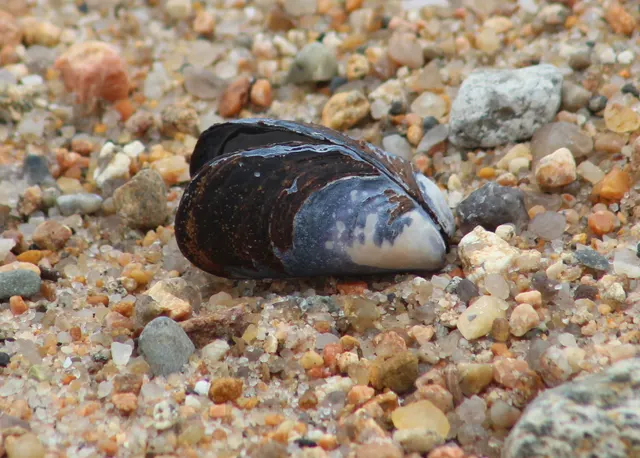 Blue musselThe commonest gathered shellfish on Atlantic European shores, attached to rock by threads it spins itself, and an animal whose safety is decided entirely by the water it grew in.
Steven Lamonde — CC BY, via iNaturalist
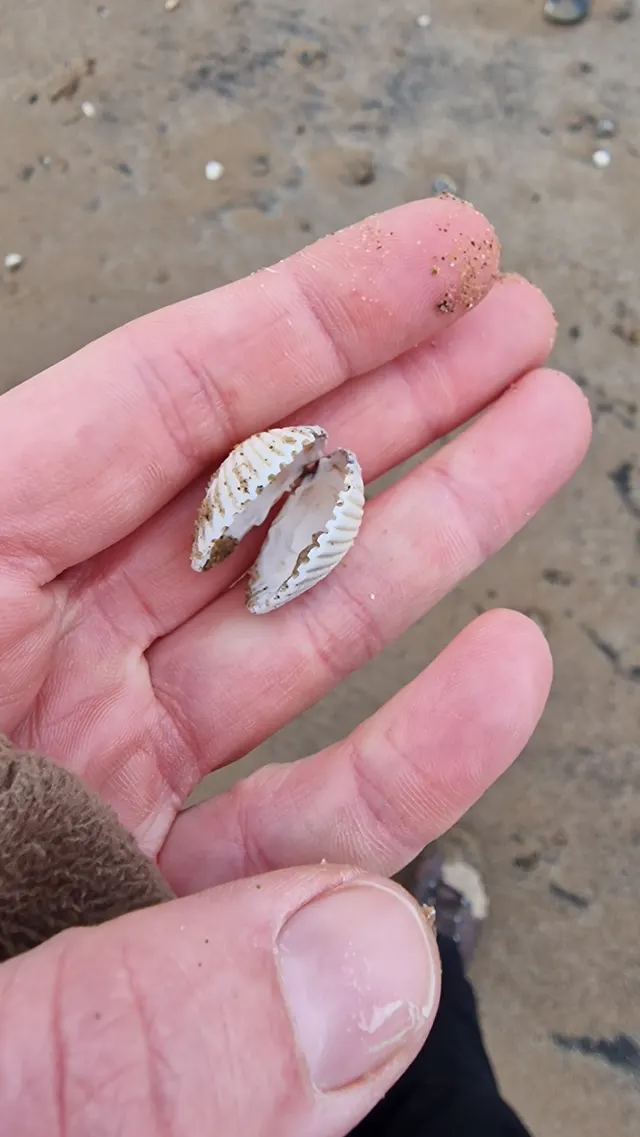 Common cockleA ribbed bivalve living just under the surface of intertidal sand and mud, gathered by rake and by foot, and the animal behind one of the most dangerous gathering fisheries there is.
bitsandbugs — CC0, via iNaturalist
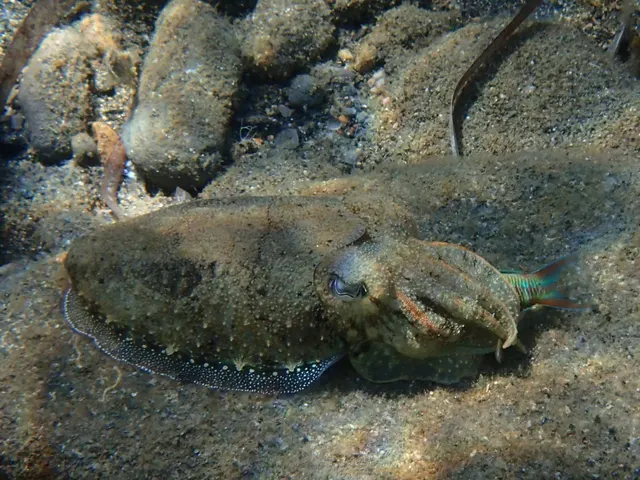 Common cuttlefishA bottom-oriented cephalopod with an internal buoyancy shell, the best-studied invertebrate mind in the sea, and a fishery that works quite differently from squid.
Katerina Kalogerini — CC BY, via iNaturalist
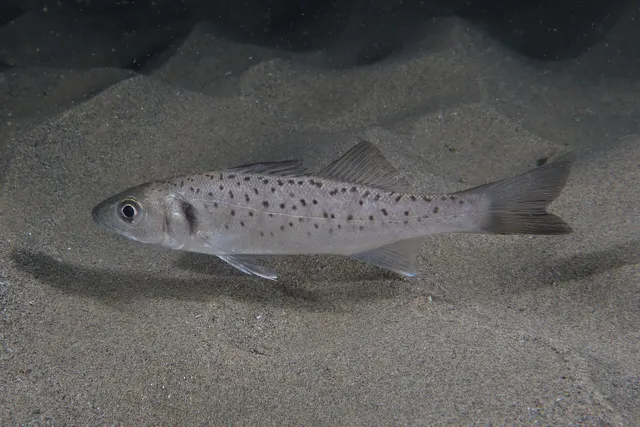 European sea bassA fast, predatory inshore fish that hunts in broken water and surf, and one of the most closely managed recreational species in European seas.
Julien Renoult — CC BY 4.0, via Wikimedia Commons
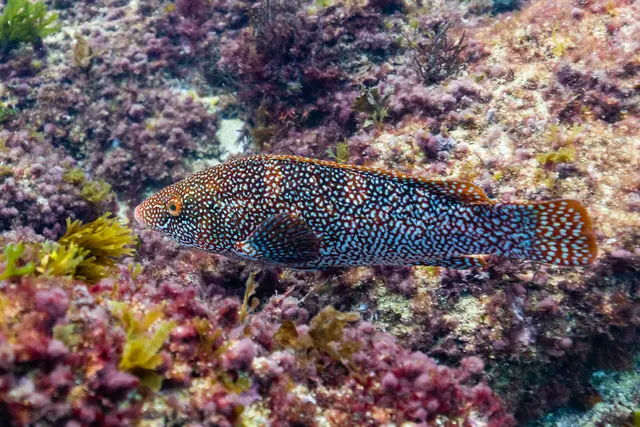 Ballan wrasseA long-lived rocky-ground resident that begins life female and may change sex — and the species that turned rock marks into a lure fishery.
Diego Delso — CC BY-SA 4.0, via Wikimedia Commons
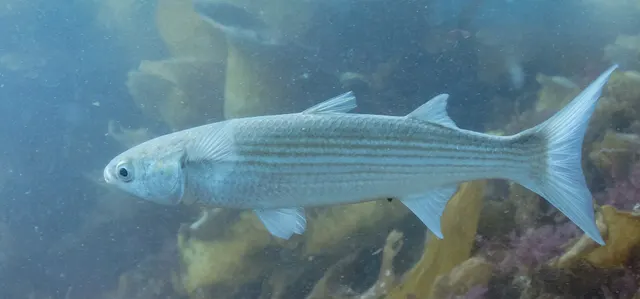 Flathead grey mulletThe most widely distributed mullet in the world, found on almost every warm and temperate coast, and a detritus feeder with a gizzard-like stomach.
Diego Delso, CC BY-SA 4.0, via Wikimedia Commons
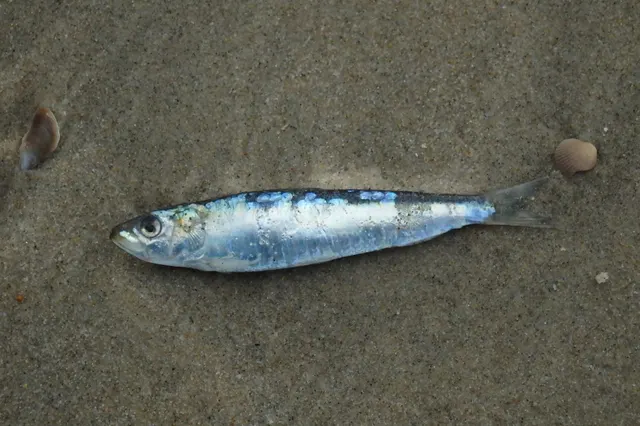 European sardineThe small silver fish that upwelling coasts produce in millions — the same species as a Cornish pilchard, the foundation of the Moroccan and Iberian fisheries, and the forage base almost every predator on those coasts depends on.
Duarte Frade — CC BY, via iNaturalist
Places within this area
Publicly documented fishing geography. FishingHQ describes what the ground is; it does not say whether you may fish it, and every one of these sends that question to the body that holds the answer. Browse every place in this part of the world.
Who to ask before fishing any of these
FishingHQ does not know the current access position here. Recreational sea fishing in Galicia is licensed by the autonomous community, separately from the Spanish state, with distinct licences for shore, boat and underwater fishing, and with shellfish gathering regulated separately again. Measures, seasons and closures apply and change. Check the current position with the Xunta de Galicia's fisheries administration before going. This water is tidal and transitional, so the freshwater regime may also apply above the tidal limit: FishingHQ does not know the current access position here. Inland fishing in Galicia is licensed by the autonomous community, and many waters additionally require a separate permit issued per water and per day. Seasons, sizes and methods are set regionally and change. Check with the Xunta de Galicia's inland fisheries administration before going.
FishingHQ does not know the current access position here. Recreational sea fishing in Galicia is licensed by the autonomous community, separately from the Spanish state, with distinct licences for shore, boat and underwater fishing, and with shellfish gathering regulated separately again. Measures, seasons and closures apply and change. Check the current position with the Xunta de Galicia's fisheries administration before going.
The Ría de Arousa
Estuary · Brackish water
The largest of the Galician rías: a drowned river valley some twenty-five kilometres long, sheltered behind the island of A Illa de Arousa, with sand and mud in the inner reaches, rock along the flanks, and shellfish beds and raft culture across much of its area.
Substantially sheltered from Atlantic swell by its own shape and by the islands across the mouth, which is why the shellfish culture exists here at all.
Severe hazards of Galicia and the Iberian ria coast apply here: moving water and currents.
Particular to this water: Shellfish harvesting areas are classified for food safety and are opened and closed on monitoring results a gatherer cannot see. Neither cooking nor appearance removes a biotoxin. Check the current classification with the responsible authority before taking anything.
The Ría de Vigo
Estuary · Brackish water
A deep drowned valley behind the Cíes islands, with a major commercial port and quay walls on the southern shore, rock and kelp on the flanks, sand beaches in the bays and deep water through the middle.
Sheltered by the Cíes across the mouth, with the islands themselves taking the full Atlantic on their western side.
Severe hazards of Galicia and the Iberian ria coast apply here: moving water and currents.
Particular to this water: This ground lies in or beside a marine protected area whose zoning constrains fishing, diving, anchoring and collection independently of any licence, with rules that differ between zones and boundaries that are not visible from the water. Underwater fishing is licensed and regulated separately from rod fishing throughout this jurisdiction, with its own age, equipment and distance requirements, and holding a rod licence is not permission to spearfish.
Cabo Fisterra and the Costa da Morte
Headland · Salt water
A granite headland at the western end of Galicia with stepped rock platforms and boulder ground below, deep water immediately offshore, and a coast either side of it made of reef, stack and exposed sand beach.
Among the most exposed positions in Europe, taking full Atlantic swell with a fetch of thousands of kilometres. The coast's name records its shipping casualty history and the exposure is the reason for it.
Particular to this ground: cliffs and rock platforms, cold water shock.
Severe hazards of Galicia and the Iberian ria coast apply here: moving water and currents.
Particular to this water: Underwater fishing is licensed and regulated separately from rod fishing throughout this jurisdiction, with its own age, equipment and distance requirements, and holding a rod licence is not permission to spearfish.
Safety
Moving water and currents — Can cause serious injury or death
The sheltered water inside a ria gives no indication of the North Atlantic swell running on the open coast a short distance outside. Anglers on exposed rock platforms are swept off by set waves on days that appear calm, and small boats leaving a ria meet the change abruptly at the mouth.
What reduces it: Read a swell forecast rather than a wind forecast, and treat the conditions inside an inlet as no guide at all to those outside it. Watch a full set before committing to a low platform, never fish exposed rock alone, and plan the return into the ria rather than only the passage out.
Worse when:
- Long-period Atlantic ground swell, which arrives with no local wind to signal it.
- The exposed headlands and the Costa da Morte stretch, where the coast takes the swell full on.
Further safety reading
- Cold water shock and immersion — Atlantic water on this coast is cool enough year-round that immersion is serious, and the exposure of the outer coast compounds it.
- Rock platform and cliff safety — The sheltered water inside a ria gives no indication of the North Atlantic swell on the open coast outside, and being swept from a low platform by a set wave on an apparently calm day is the characteristic accident here.
Check the rules before you fish
Fishing laws, bylaws, access rules, seasons, bait restrictions and permitted methods vary by location and can change. Check the current rules from the relevant authority and the water you intend to fish before fishing.
Check with:
- Current national or regional law for where you are fishing
- Current local bylaws
- The relevant fisheries authority
- The landowner, club or fishery whose water it is
- Any restrictions specific to the species or the method you intend to use
Where to go next
What swims here
- Ballan wrasseOccupies the rocky reef and kelp ground of the exposed coast, at the southern part of the species' Atlantic range.
- Blue musselCultivated on suspended ropes from floating rafts across large areas of sheltered ria water, in a production system whose scale and reputation has no European equal.
- Common cockleWorked on the extensive intertidal flats of the rias under the licensed, quota-managed, community-administered gathering system that defines this coast.
- Common cuttlefishUses the sheltered sandy ground inside the rias for feeding and for spawning, attaching egg clusters to weed, rope and structure in shallow water.
- European sardineA mainstay of the Galician fishery and of the food culture built around it, supported by the same upwelling system that works the Moroccan coast.
- European sea bassPresent throughout, using the rocky exposed shore and the sheltered ria water alike, and a major recreational target.
- European squidOf major commercial and recreational importance, taken inshore in the rias and from harbours and quaysides, principally after dark.
- Flathead grey mulletUses the harbours, ria heads and river mouths in numbers, feeding on fine material in exactly the sheltered productive water the rias provide.
2 more
- Razor clam Fish
- White seabream Fish
How this compares
- Fly fishing for pollack over rough ground and kelpDeep water close inshore, reef and kelp along a ria coast is the ground this fishery works, on an Atlantic margin comparable to the British south-west.
- PortugalThe ria coast continues south into northern Portugal, where the same drowned-valley landform and the same upwelling operate under a different national framework.
Environment and conservation
Sources and evidence
- Cefas science, advice and data on marine and freshwater environments — Centre for Environment, Fisheries and Aquaculture Science (Government fisheries body)Relied on for: Marine and freshwater environmental science, including the physical characterisation of shelf seas and the monitoring programmes that describe them.States this directlyCitation checked — the work exists and is described correctly
- ICES Advice on fishing opportunities, catch and effort — International Council for the Exploration of the Sea (Scientific institute)Relied on for: Ecoregion description, stock distribution and the hydrography of the area assessed.States this directlyCitation checked — the work exists and is described correctly
- Fishers' Craft and Lettered Art: Tracts on Fishing from the End of the Middle Ages — University of Toronto Press, 1997 (Scientific literature)Relied on for: That fishing traditions develop around the water and fish available to them, and the historical method of reading such traditions.States this directlyCitation checked — the work exists and is described correctly
- Words of the Lagoon: Fishing and Marine Lore in the Palau District of Micronesia — University of California Press, Berkeley, 1981 (Reference work)Relied on for: That local fishing practice encodes detailed knowledge of fish and conditions, and that the practice is frequently the record of the ecology.Background and mechanism onlyCitation checked — the work exists and is described correctly
Why the 18 connections on this page are here, and the sources
What swims here
Backed by research — 10 connections
Supported by peer-reviewed research or fisheries science. The sources are listed and can be checked.
Ballan wrasse
Occurrence of the species in this system or along this coast: a statement about the animal's distribution, not a venue recommendation.
- The Fishes of the British Isles and North-West Europe — Macmillan, 1969 (Reference work)Relied on for: Distribution and habitat association of fishes in British and north-west European waters.States this directlyCitation checked — the work exists and is described correctly
- FishBase: a global information system on fishes — Froese, R. and D. Pauly, eds. — FishBase Consortium (Scientific institute)Relied on for: Distribution, depth range and habitat association recorded for the species.States this directlyPassage read and verified
Blue mussel
Occurrence of the species in this system or along this coast: a statement about the animal's distribution, not a venue recommendation.
- FishBase: a global information system on fishes — Froese, R. and D. Pauly, eds. — FishBase Consortium (Scientific institute)Relied on for: Distribution, salinity tolerance and habitat association recorded for the species, including its occurrence in this system.States this directlyPassage read and verified
- The IUCN Red List of Threatened Species — International Union for Conservation of Nature (Conservation authority)Relied on for: Assessment and range description for the species, including the waters in which it occurs.Background and mechanism onlyCitation checked — the work exists and is described correctly
Common cockle
Occurrence of the species in this system or along this coast: a statement about the animal's distribution, not a venue recommendation.
- FishBase: a global information system on fishes — Froese, R. and D. Pauly, eds. — FishBase Consortium (Scientific institute)Relied on for: Distribution, salinity tolerance and habitat association recorded for the species, including its occurrence in this system.States this directlyPassage read and verified
- The IUCN Red List of Threatened Species — International Union for Conservation of Nature (Conservation authority)Relied on for: Assessment and range description for the species, including the waters in which it occurs.Background and mechanism onlyCitation checked — the work exists and is described correctly
Common cuttlefish
Occurrence of the species in this system or along this coast: a statement about the animal's distribution, not a venue recommendation.
- The Fishes of the British Isles and North-West Europe — Macmillan, 1969 (Reference work)Relied on for: Distribution and habitat association of fishes in British and north-west European waters.States this directlyCitation checked — the work exists and is described correctly
- FishBase: a global information system on fishes — Froese, R. and D. Pauly, eds. — FishBase Consortium (Scientific institute)Relied on for: Distribution, depth range and habitat association recorded for the species.States this directlyPassage read and verified
European sardine
A distribution claim about the world, so it rests on the reference works rather than on angling report. FishingHQ's evidence policy requires it.
- FishBase: a global information system on fishes — Froese, R. and D. Pauly, eds. — FishBase Consortium (Scientific institute)Relied on for: Distribution, habitat association and depth range recorded for the species, including its occurrence in the water body concerned.States this directlyPassage read and verified
- FAO Species Identification Guides for Fishery Purposes and the FAO Species Catalogues — Food and Agriculture Organization of the United Nations (Scientific institute)Relied on for: Distribution, habitat, depth and fishery accounts for the species of the eastern central Atlantic and Mediterranean.States this directlyCitation checked — the work exists and is described correctly
European sea bass
Occurrence of the species in this system or along this coast: a statement about the animal's distribution, not a venue recommendation.
- The Fishes of the British Isles and North-West Europe — Macmillan, 1969 (Reference work)Relied on for: Distribution and habitat association of fishes in British and north-west European waters.States this directlyCitation checked — the work exists and is described correctly
- FishBase: a global information system on fishes — Froese, R. and D. Pauly, eds. — FishBase Consortium (Scientific institute)Relied on for: Distribution, depth range and habitat association recorded for the species.States this directlyPassage read and verified
European squid
Occurrence of the species in this system or along this coast: a statement about the animal's distribution, not a venue recommendation.
- The Fishes of the British Isles and North-West Europe — Macmillan, 1969 (Reference work)Relied on for: Distribution and habitat association of fishes in British and north-west European waters.States this directlyCitation checked — the work exists and is described correctly
- FishBase: a global information system on fishes — Froese, R. and D. Pauly, eds. — FishBase Consortium (Scientific institute)Relied on for: Distribution, depth range and habitat association recorded for the species.States this directlyPassage read and verified
Flathead grey mullet
Occurrence of the species in this system or along this coast: a statement about the animal's distribution, not a venue recommendation.
- The Fishes of the British Isles and North-West Europe — Macmillan, 1969 (Reference work)Relied on for: Distribution and habitat association of fishes in British and north-west European waters.States this directlyCitation checked — the work exists and is described correctly
- FishBase: a global information system on fishes — Froese, R. and D. Pauly, eds. — FishBase Consortium (Scientific institute)Relied on for: Distribution, depth range and habitat association recorded for the species.States this directlyPassage read and verified
Razor clam
Occurrence of the species in this system or along this coast: a statement about the animal's distribution, not a venue recommendation.
- FishBase: a global information system on fishes — Froese, R. and D. Pauly, eds. — FishBase Consortium (Scientific institute)Relied on for: Distribution, salinity tolerance and habitat association recorded for the species, including its occurrence in this system.States this directlyPassage read and verified
- The IUCN Red List of Threatened Species — International Union for Conservation of Nature (Conservation authority)Relied on for: Assessment and range description for the species, including the waters in which it occurs.Background and mechanism onlyCitation checked — the work exists and is described correctly
White seabream
Occurrence of the species in this system or along this coast: a statement about the animal's distribution, not a venue recommendation.
- The Fishes of the British Isles and North-West Europe — Macmillan, 1969 (Reference work)Relied on for: Distribution and habitat association of fishes in British and north-west European waters.States this directlyCitation checked — the work exists and is described correctly
- FishBase: a global information system on fishes — Froese, R. and D. Pauly, eds. — FishBase Consortium (Scientific institute)Relied on for: Distribution, depth range and habitat association recorded for the species.States this directlyPassage read and verified
How people fish here
What experienced anglers do — 3 connections
Widely and independently recommended by experienced anglers and specialist sources. This is real angling knowledge, not proof: controlled evidence for it is limited, and FishingHQ records it as convention rather than as a demonstrated effect.
Sea fishing
The discipline that dominates fishing in this place, recorded as established practice rather than as a ranking.
- General angling website restatements of established technique — Various (Credible secondary source)Relied on for: Widely restated practice associating this discipline with this coast or system, recorded as practitioner consensus rather than as tested fact.Background and mechanism onlyCitation checked — the work exists and is described correctly
- Fishers' Craft and Lettered Art: Tracts on Fishing from the End of the Middle Ages — University of Toronto Press, 1997 (Scientific literature)Relied on for: That fishing traditions develop around the water and fish available to them, and the historical method of reading such traditions.States this directlyCitation checked — the work exists and is described correctly
Spearfishing
The discipline that dominates fishing in this place, recorded as established practice rather than as a ranking.
- General angling website restatements of established technique — Various (Credible secondary source)Relied on for: Widely restated practice associating this discipline with this coast or system, recorded as practitioner consensus rather than as tested fact.Background and mechanism onlyCitation checked — the work exists and is described correctly
- Fishers' Craft and Lettered Art: Tracts on Fishing from the End of the Middle Ages — University of Toronto Press, 1997 (Scientific literature)Relied on for: That fishing traditions develop around the water and fish available to them, and the historical method of reading such traditions.States this directlyCitation checked — the work exists and is described correctly
Traps and pots
The discipline that dominates fishing in this place, recorded as established practice rather than as a ranking.
- General angling website restatements of established technique — Various (Credible secondary source)Relied on for: Widely restated practice associating this discipline with this coast or system, recorded as practitioner consensus rather than as tested fact.Background and mechanism onlyCitation checked — the work exists and is described correctly
- Fishers' Craft and Lettered Art: Tracts on Fishing from the End of the Middle Ages — University of Toronto Press, 1997 (Scientific literature)Relied on for: That fishing traditions develop around the water and fish available to them, and the historical method of reading such traditions.States this directlyCitation checked — the work exists and is described correctly
How this compares
What experienced anglers do — 2 connections
Widely and independently recommended by experienced anglers and specialist sources. This is real angling knowledge, not proof: controlled evidence for it is limited, and FishingHQ records it as convention rather than as a demonstrated effect.
Fly fishing for pollack over rough ground and kelp
Two records a reader would reasonably weigh against one another, joined where the comparison teaches something about both.
- Sea Angler — Bauer Media (Specialist angling publication)Relied on for: Contemporary UK sea angling practice as reported and restated by practitioners, including shore technique, species behaviour and tackle convention.Background and mechanism onlyCitation checked — the work exists and is described correctly
- General angling website restatements of established technique — Various (Credible secondary source)Relied on for: Widely restated angling practice and belief, recorded as practitioner consensus rather than as tested fact.Background and mechanism onlyCitation checked — the work exists and is described correctly
Portugal
One of these areas contains the other, so the conditions described in the larger are the conditions the smaller inherits — which makes the comparison a matter of geography rather than of opinion.
- General angling website restatements of established technique — Various (Credible secondary source)Relied on for: Widely restated practice associating this discipline with this place, recorded as practitioner consensus rather than as tested fact.Background and mechanism onlyCitation checked — the work exists and is described correctly
- Fishers' Craft and Lettered Art: Tracts on Fishing from the End of the Middle Ages — University of Toronto Press, 1997 (Scientific literature)Relied on for: That fishing traditions develop around the water and fish available to them, and the historical method of reading such traditions.States this directlyCitation checked — the work exists and is described correctly
Safety reading
Official guidance — 2 connections
Stated by a fisheries authority, scientific institute or recognised angling body. Authoritative, but summarising rather than demonstrating.
Cold water shock and immersion
A hazard characteristic of this place, connected to the safety topic that explains the mechanism.
- RNLI water safety guidance: cold water shock and Float to Live — Royal National Lifeboat Institution (Water-safety or diver-training authority)Relied on for: Cold water shock and the immersion response, tidal cut-off, shore angling hazards and small-craft guidance.States this directlyPassage read and verified
- RoSPA water safety information and UK accidental drowning statistics — Royal Society for the Prevention of Accidents (Water-safety or diver-training authority)Relied on for: Accidental drowning statistics and the circumstances in which recreational water users are most often killed.States this directlyPassage read and verified
Rock platform and cliff safety
A hazard characteristic of this place, connected to the safety topic that explains the mechanism.
- United States Lifesaving Association public education on rip currents and the surf zone — United States Lifesaving Association (Water-safety or diver-training authority)Relied on for: Surf zone hazards, rip current formation, shore-break and steep-beach hazards, and public guidance on them.States this directlyCitation checked — the work exists and is described correctly
- RNLI water safety guidance: cold water shock and Float to Live — Royal National Lifeboat Institution (Water-safety or diver-training authority)Relied on for: Shore angling hazards including shore-break, cold water shock and being swept in.States this directlyPassage read and verified
Environment and conservation
Official guidance — 1 connection
Stated by a fisheries authority, scientific institute or recognised angling body. Authoritative, but summarising rather than demonstrating.
Fish stocks and sustainability
An environmental pressure operating in this system, recorded rather than adjudicated.
- ICES Advice on fishing opportunities, catch and effort — International Council for the Exploration of the Sea (Scientific institute)Relied on for: Stock status, environmental pressures and the scientific basis for advice in the sea area concerned.States this directlyCitation checked — the work exists and is described correctly
- Good Fish Guide — Marine Conservation Society (Conservation authority)Relied on for: Stock and method assessment and the conservation measures applied to the fisheries.Background and mechanism onlyCitation checked — the work exists and is described correctly
How FishingHQ labels evidence is explained in the evidence policy.