The Moroccan Atlantic coast
Fishing regions · Last reviewed 2026-08-14
The northern end of one of the four great upwelling systems on earth, producing an enormous sardine fishery, an octopus fishery of international weight, and a surf coast with almost no shelter.
Safety: cliffs and rock platforms — can cause serious injury or death. 2 more points apply here.
Being listed here is not permission to fish. What that meansClose
Access, fishing rights, seasons, licences, local bylaws and permitted methods vary and can change. Check current access, permission, local regulations, closures and restrictions before you travel or fish. FishingHQ describes what the ground is and names who holds the answer; it does not hold the answer itself.
Find the authority for a jurisdiction · What FishingHQ does and does not cover
Morocco's Atlantic coast is a coast-tier record because a single physical system explains the whole of it, and because it is the last of FishingHQ's nineteen world regions to acquire fishing geography of its own.
THE CANARY CURRENT UPWELLING IS THE ENGINE. Cool water flows south along the north-west African margin, and persistent northerly winds drive surface water offshore so that cold, nutrient-rich water rises to replace it. This is one of the four great eastern boundary upwelling systems, alongside the Humboldt, Benguela and California systems, and it is why a coast at this latitude is cold, foggy in places and extraordinarily productive.
THE PRODUCTION GOES INTO SARDINE. Morocco lands one of the largest sardine catches in the world, and the small pelagic complex — sardine, anchovy, horse mackerel, mackerel — is the foundation of the country's fisheries economy and of a substantial canning industry.
OCTOPUS IS THE HIGH-VALUE FISHERY. The Atlantic Saharan grounds support one of the most important octopus fisheries anywhere, managed with closed seasons and quotas, and it is economically central in a way that a finfish-first account would miss entirely.
THE SHORE IS SURF AND ROCK WITH ALMOST NO SHELTER. Long Atlantic beaches, cliff and rock platform, few natural harbours, and a swell that arrives from the North Atlantic regardless of local wind.
AND THE COAST CONNECTS DIRECTLY TO RECORDS FISHINGHQ ALREADY HOLDS. The Canarian fleet fished these grounds for generations, and the loss of that access in the later twentieth century is part of the Canary Islands' economic history.
What fishing here is like
A long, exposed, largely harbourless Atlantic coast fed by one of the world's great upwelling systems, producing enormous small-pelagic abundance and a cold sea at a warm latitude. The fisheries are a sardine and small-pelagic industry, a high-value octopus and cephalopod fishery, a coastal artisanal sector working from beaches and small ports, and an industrial fleet including foreign vessels under access agreements. Shore angling from surf and rock is established, and a small offshore sport fishery works the deeper water.
What dominates
Purse seining for sardine and other small pelagics, the volume fishery. Octopus and cephalopod fishing with pots, traps and trawl, which is the highest-value sector. Artisanal small-boat fishing with lines, gillnets and pots from beach landings and small ports. Surfcasting from the long Atlantic beaches for bass, seabream, meagre and flatfish. Rock and cliff fishing on the exposed platforms, a serious local practice. Shore and boat fishing for cephalopods, ordinary rather than specialist here. Offshore trolling and bottom fishing from a small number of ports. Shellfish gathering on the rock, including limpets and mussels.
The water available
A long, straight, exposed Atlantic coast of surf beaches, dunes and cliff, with very few natural harbours and heavy North Atlantic swell; cold upwelled water inshore during the upwelling season, which keeps sea temperature well below what the latitude suggests; a productive continental shelf widening southward towards the Saharan banks; rocky platforms and reef where older rock reaches the sea; a small number of lagoon and estuarine systems including internationally designated wetlands; and, further south, the Saharan bank grounds that are among the most productive fishing areas in the Atlantic.
How the rules are structured
Fisheries are administered nationally by the ministry responsible for maritime fisheries, with a national research institute providing stock advice and with regional delegations implementing measures along the coast. The framework is unusually interventionist by regional standards: the octopus fishery in particular is managed with defined closed seasons, quotas allocated between industrial, coastal and artisanal segments, and biological rest periods, and those measures are revised on scientific advice. Small pelagic fisheries carry their own quota and effort arrangements. Foreign fleet access is governed by negotiated agreements, and those agreements — their terms, their coverage and the waters they extend to — are a matter of continuing international attention. Artisanal fishing is organised around designated landing sites with associated facilities and registration. Marine protected areas and internationally designated coastal wetlands cover parts of the coast. Recreational sea fishing is subject to national rules on gear, species and, for underwater fishing, separate authorisation. FishingHQ does not state what any current rule is.
Who to ask
- The national ministry responsible for maritime fisheries, for licensing, quotas, closed seasons and the allocation between fleet segments.
- The national fisheries research institute, whose stock assessments underpin the octopus and small pelagic measures.
- The regional maritime fisheries delegation for the stretch of coast concerned, which implements measures locally.
- The authority managing any marine protected area or designated coastal wetland where the fishing takes place.
- The maritime authority or port administration for the landing site or harbour, and for small-craft safety requirements.
Words you will meet
- Upwelling
- Wind-driven rise of cold nutrient-rich water to the surface as surface water is pushed offshore. The mechanism behind this coast's productivity, and the reason the sea is cold at a subtropical latitude.
- Sardine
- The small pelagic fish the coast's fisheries and canning industry rest on. Morocco is among the largest producers in the world, and sardine abundance tracks upwelling strength between years.
- Poulpe
- Octopus, the coast's highest-value catch. The Atlantic Saharan octopus fishery is managed with closed seasons and quotas, and it is economically central in a way an account written from the finfish outward would miss.
- Barque
- The small open artisanal boat of the coastal fishery, worked from beach landings and small ports with lines, nets and pots. The vessel on which the coastal sector runs.
- Repos biologique
- The biological rest period — a closed season imposed to protect a stock during spawning or recruitment. Applied notably to the octopus fishery, and one of the more visible management instruments on this coast.
Conditions and hazards
This is an exposed Atlantic coast and swell is the dominant hazard. Long-period ground swell generated by North Atlantic depressions arrives independently of local wind, so a calm sunny day can carry heavy breaking sets onto the beaches and rock platforms that shore anglers use. Being swept from rock is the characteristic fatal accident here as on every Atlantic coast on FishingHQ. Rip currents on the long surf beaches are strong and persistent. Water temperature is cool year-round because of the upwelling, which surprises visitors expecting warmth and makes immersion more serious than the latitude suggests. Harbours are widely spaced, so a small boat in difficulty may be a long way from shelter. Fog occurs where cold upwelled water meets warm air. Sun exposure is severe despite the cool sea.
Why a subtropical coast has cold water and enormous fish stocks
Everything distinctive about this coast follows from one physical process, and it is worth setting out properly.
THE MECHANISM IS WIND-DRIVEN UPWELLING. Persistent northerly winds blow along a coast that runs roughly north to south. The rotation of the earth deflects the wind-driven surface flow offshore, and water rises from depth to replace it. Because the water below is cold and rich in nitrate and phosphate, bringing it into the sunlit layer produces an enormous bloom of phytoplankton.
THE GEOMETRY IS FAVOURABLE, which is why this system is one of only four of its kind. The coast is oriented correctly relative to the prevailing wind, the shelf is suitable, and the wind is persistent rather than episodic.
THE FOOD CHAIN IS SHORT, WHICH IS THE SECOND REASON FOR THE YIELD. Sardines and anchovies feed close to the base of the food web, so very little of the bloom is lost to intermediate steps before it becomes harvestable fish.
THE SEA IS THEREFORE COLD FOR THE LATITUDE. Surface temperatures off this coast are well below what a subtropical position would suggest, and the contrast between cold water and warm land produces the fog that is characteristic of parts of the coast.
THE SHELF WIDENS SOUTHWARD towards the Saharan banks, which are among the most productive fishing grounds in the Atlantic and have been fished by fleets from several nations for a century.
AND THE UPWELLING IS SEASONAL AND VARIABLE, strengthening and weakening with the wind, so the fishery's productivity varies between years in a way that tracks a physical measurement rather than fishing effort.
Backed by research — why, and the sources (2)
Supported by peer-reviewed research or fisheries science. The sources are listed and can be checked.
- ICES Advice on fishing opportunities, catch and effort — International Council for the Exploration of the Sea (Scientific institute)Relied on for: Stock assessment, the environmental drivers of stock distribution and abundance, and the scientific basis for advice in the sea areas concerned.States this directlyCitation checked — the work exists and is described correctly
- FishBase: a global information system on fishes — Froese, R. and D. Pauly, eds. — FishBase Consortium (Scientific institute)Relied on for: Distribution, temperature tolerance, migratory behaviour and habitat association of the species concerned.Background and mechanism onlyPassage read and verified
Sardine by the million, octopus by the kilo, and what a shore angler meets
The species picture divides sharply between what the industry lands and what an angler encounters.
SARDINE IS THE COAST'S FISH. Morocco is among the world's largest sardine producers, and the small pelagic complex — sardine, anchovy, horse mackerel, chub mackerel — is the foundation of both the fishing economy and the canning industry.
OCTOPUS IS THE VALUE. The Atlantic Saharan octopus fishery is one of the most important anywhere, supporting industrial, coastal and artisanal segments and exported at high value, and it is the fishery the management framework is built around.
CUTTLEFISH AND SQUID COMPLETE THE CEPHALOPOD PICTURE and are taken both commercially and recreationally.
EUROPEAN SEA BASS, GILTHEAD BREAM AND MEAGRE occupy the surf and the estuarine systems and are the principal shore angling targets, with meagre in particular associated with turbid inshore water and river mouths.
SEABREAMS, CONGER AND WRASSE hold the rocky platforms and reef, and the rock fishery is built on them.
COMMON SOLE AND FLATFISH occupy the clean sand offshore of the beaches.
ATLANTIC BONITO, HORSE MACKEREL AND SMALL TUNAS work the productive water offshore, and bluefin tuna pass through on migration.
LING AND DEEPER GROUND SPECIES occur on the harder offshore bottom.
AND SHELLFISH ARE GATHERED FROM THE ROCK — limpets, mussels and urchins — under the same broad public health considerations that apply anywhere, and the practice is ordinary rather than specialist.
Backed by research — why, and the sources (2)
Supported by peer-reviewed research or fisheries science. The sources are listed and can be checked.
- FAO Species Identification Guides for Fishery Purposes and the FAO Species Catalogues — Food and Agriculture Organization of the United Nations (Scientific institute)Relied on for: Distribution, habitat, depth and fishery accounts for the species of the eastern central Atlantic and Mediterranean in the FAO regional identification guides.States this directlyCitation checked — the work exists and is described correctly
- FishBase: a global information system on fishes — Froese, R. and D. Pauly, eds. — FishBase Consortium (Scientific institute)Relied on for: Distribution, habitat association and depth range recorded for the species.States this directlyPassage read and verified
Purse seine, pot and a rod on a rock platform
The disciplines here span an industrial fishery of global scale and a shore fishery conducted on genuinely hazardous ground.
PURSE SEINING IS THE VOLUME FISHERY, working the small pelagic shoals the upwelling supports, landing into ports along the coast for canning, freezing and reduction.
OCTOPUS FISHING IS THE HIGH-VALUE DISCIPLINE, worked with pots, traps and trawl depending on the segment, and it is the fishery around which the coast's management framework is organised.
ARTISANAL SMALL-BOAT FISHING IS THE LARGEST SECTOR BY PARTICIPATION. Open boats worked from beach landings and small ports with lines, gillnets and pots supply local markets, and the designated landing site with its facilities is the organising unit of that sector.
SURFCASTING IS THE PRINCIPAL SHORE DISCIPLINE. Long exposed beaches demand distance, heavy leads and strong tackle, and the targets — bass, seabream, meagre and flatfish — reward it.
ROCK AND CLIFF FISHING IS THE OTHER HALF, worked from wave-cut platforms with deep water close in, and it is where the coast's fatal accidents happen.
CEPHALOPOD FISHING FROM SHORE is ordinary practice, worked from harbour walls and rock with jigs, mostly after dark.
OFFSHORE SPORT FISHING OPERATES FROM A SMALL NUMBER OF PORTS for tuna, bonito and bottom species.
AND SHELLFISH GATHERING ON THE ROCK is a long-standing local practice, conducted in the same surge zone that makes the rock fishing dangerous.
What experienced anglers do — why, and the sources (2)
Widely and independently recommended by experienced anglers and specialist sources. This is real angling knowledge, not proof: controlled evidence for it is limited, and FishingHQ records it as convention rather than as a demonstrated effect.
- General angling website restatements of established technique — Various (Credible secondary source)Relied on for: Widely restated practice associating this discipline or technique with this place, recorded as practitioner consensus rather than as tested fact.Background and mechanism onlyCitation checked — the work exists and is described correctly
- Fishers' Craft and Lettered Art: Tracts on Fishing from the End of the Middle Ages — University of Toronto Press, 1997 (Scientific literature)Relied on for: That fishing traditions develop around the water and fish available to them, and the historical method of reading such traditions from their documentary record.States this directlyCitation checked — the work exists and is described correctly
An upwelling season, a swell season and a biological rest period
Three cycles govern the fishing year on this coast and only one of them is about temperature.
THE UPWELLING SEASON DRIVES PRODUCTION. Northerly winds strengthen seasonally, driving the upwelling that supports the small pelagic fishery, so the coast's productivity has an annual rhythm keyed to wind rather than to warmth. Counterintuitively, the strongest upwelling makes the inshore water coldest at the time of year a visitor expects it warmest.
THE SWELL SEASON GOVERNS THE SHORE. From autumn through spring, North Atlantic depressions send long-period ground swell onto a coast with almost no shelter, and rock and beach fishing become dangerous or impossible for days at a time. This is the constraint that decides whether a shore session happens.
THE BIOLOGICAL REST PERIOD IS THE REGULATORY SEASON. Closed periods applied to the octopus fishery, timed around spawning and recruitment, are among the most consequential management events on the coast, and they are set on scientific advice and revised.
CEPHALOPOD AVAILABILITY SHIFTS WITH WATER TEMPERATURE rather than with a calendar, and cuttlefish come into shallow water to spawn in the warmer part of the year.
BLUEFIN TUNA PASS SEASONALLY on their migration between the Atlantic and the Mediterranean, which links this coast to the Strait of Gibraltar's traps.
AND SARDINE ABUNDANCE VARIES BETWEEN YEARS WITH THE UPWELLING, so a strong or weak season is a statement about the wind as much as about the fishery.
Backed by research — why, and the sources (2)
Supported by peer-reviewed research or fisheries science. The sources are listed and can be checked.
- ICES Advice on fishing opportunities, catch and effort — International Council for the Exploration of the Sea (Scientific institute)Relied on for: Stock assessment, the environmental drivers of stock distribution and abundance, and the scientific basis for advice in the sea areas concerned.States this directlyCitation checked — the work exists and is described correctly
- FishBase: a global information system on fishes — Froese, R. and D. Pauly, eds. — FishBase Consortium (Scientific institute)Relied on for: Distribution, temperature tolerance, migratory behaviour and habitat association of the species concerned.Background and mechanism onlyPassage read and verified
Quotas, rest periods and an access question that is international
Fisheries governance here is more interventionist than the region's reputation suggests, and it has one dimension that is genuinely international.
THE NATIONAL MINISTRY ADMINISTERS FISHERIES, advised by a national research institute whose stock assessments underpin the measures, with regional delegations implementing along the coast.
THE OCTOPUS FISHERY IS THE MANAGEMENT SHOWCASE. Closed seasons, quotas allocated between industrial, coastal and artisanal segments, and biological rest periods timed to spawning are applied and revised on scientific advice. It is one of the more actively managed cephalopod fisheries in the world, and the reason is that the resource is both extremely valuable and easily depleted.
SMALL PELAGIC FISHERIES CARRY THEIR OWN QUOTA AND EFFORT ARRANGEMENTS, reflecting the scale of the landings.
THE ARTISANAL SECTOR IS ORGANISED AROUND DESIGNATED LANDING SITES with registration and facilities, which is a deliberate formalisation of a sector that elsewhere in the region operates informally.
FOREIGN FLEET ACCESS IS NEGOTIATED AND CONTESTED. Access agreements govern which foreign vessels may fish and where, and the terms and geographic coverage of those agreements have been the subject of sustained international legal and political attention. That is a fact about how this coast is governed and it is stated here as such.
RECREATIONAL FISHING IS SUBJECT TO NATIONAL RULES on gear and species, with underwater fishing separately authorised.
AND FISHINGHQ DOES NOT STATE WHAT ANY OF THIS CURRENTLY PERMITS. Quotas and rest periods here are revised annually.
Official guidance — why, and the sources (2)
Stated by a fisheries authority, scientific institute or recognised angling body. Authoritative, but summarising rather than demonstrating.
- Code of Conduct for Responsible Fisheries — Food and Agriculture Organization of the United Nations, Rome, 1995 (Standards body)Relied on for: Principles for the management of fisheries, including licensing, closed seasons, size limits and the treatment of small-scale and shared stocks.States this directlyCitation checked — the work exists and is described correctly
- Good Fish Guide — Marine Conservation Society (Conservation authority)Relied on for: Assessment of fisheries and the management measures applied to them, including the instruments used and their purpose.Background and mechanism onlyCitation checked — the work exists and is described correctly
Upwelling, poulpe, repos biologique
The working vocabulary of this coast is French and Arabic in layers, with a scientific overlay that explains the fishery.
UPWELLING IS THE TERM THAT EXPLAINS EVERYTHING ELSE. Once a reader understands that cold nutrient-rich water is being drawn to the surface by wind, the cold sea, the fog, the sardine abundance and the fishery's variability all follow from one idea.
POULPE NAMES OCTOPUS and it is the word that carries the coast's economics. A visitor who understands that the highest-value fishery here is a cephalopod has understood something a finfish-first account would never convey.
REPOS BIOLOGIQUE NAMES THE CLOSED SEASON — literally the biological rest — imposed to protect a stock during spawning or recruitment. It is the instrument the octopus fishery is managed with and the term appears constantly in any account of this coast's fisheries.
BARQUE NAMES THE SMALL OPEN ARTISANAL BOAT, and the coastal sector is a barque sector: beach and small-port landings, lines, nets and pots, supplying local markets.
SARDINE NEEDS NO TRANSLATION BUT DOES NEED SCALE. Morocco's sardine landings are among the largest in the world, and the word means an industry here rather than a fish.
POINT DE DÉBARQUEMENT AMÉNAGÉ NAMES THE DESIGNATED LANDING SITE, the formalised beach or small-port facility through which the artisanal sector operates, and it is the institution that distinguishes this coast's small-scale fishery from its neighbours'.
AND THE SAHARAN BANKS ARE NAMED IN EVERY ACCOUNT of the region's fisheries, because they are the ground the international access question is ultimately about.
What experienced anglers do — why, and the sources (2)
Widely and independently recommended by experienced anglers and specialist sources. This is real angling knowledge, not proof: controlled evidence for it is limited, and FishingHQ records it as convention rather than as a demonstrated effect.
- General angling website restatements of established technique — Various (Credible secondary source)Relied on for: Widely restated practice associating this discipline or technique with this place, recorded as practitioner consensus rather than as tested fact.Background and mechanism onlyCitation checked — the work exists and is described correctly
- Fishers' Craft and Lettered Art: Tracts on Fishing from the End of the Middle Ages — University of Toronto Press, 1997 (Scientific literature)Relied on for: That fishing traditions develop around the water and fish available to them, and the historical method of reading such traditions from their documentary record.States this directlyCitation checked — the work exists and is described correctly
Canneries, distant fleets and a fishery that became a policy
The modern history of this coast is a history of an extraordinarily productive sea and of who has been allowed to fish it.
THE COASTAL FISHERY IS OLD AND CONTINUOUS, worked from beaches and small ports with lines, nets and traps, and the artisanal sector remains the largest by participation.
THE SARDINE CANNING INDUSTRY BUILT THE MODERN COASTAL ECONOMY. From the early twentieth century, canneries processing the upwelling's small pelagic abundance industrialised the ports and created the coastal towns as they now are.
DISTANT-WATER FLEETS FISHED THESE GROUNDS FOR A CENTURY. European and other fleets worked the Saharan banks in numbers, and the Canarian fleet in particular depended on them — which is why the loss of that access in the later twentieth century was a substantial economic event in the Canary Islands as well as here.
THE OCTOPUS FISHERY GREW INTO THE HIGH-VALUE SECTOR, and its serial depletion and subsequent management with quotas and rest periods is one of the better-documented cephalopod management stories anywhere.
ACCESS AGREEMENTS BECAME THE CENTRAL POLICY QUESTION, governing which foreign vessels may fish these waters and on what terms, and the geographic scope of those agreements has been the subject of sustained international legal attention. Any honest account of this coast's fisheries has to record that the access question is unresolved rather than settled.
AQUACULTURE AND PORT DEVELOPMENT have expanded within recent decades as part of national fisheries strategy.
AND THE UPWELLING ITSELF IS NOW A CLIMATE QUESTION, with changes in wind strength and timing under study for their consequences for a fishery that depends entirely on them.
Official guidance — why, and the sources (2)
Stated by a fisheries authority, scientific institute or recognised angling body. Authoritative, but summarising rather than demonstrating.
- Fishers' Craft and Lettered Art: Tracts on Fishing from the End of the Middle Ages — University of Toronto Press, 1997 (Scientific literature)Relied on for: The historical development of fishing practice and its transmission, and the method of reading a fishing tradition from its documentary record.States this directlyCitation checked — the work exists and is described correctly
- Code of Conduct for Responsible Fisheries — Food and Agriculture Organization of the United Nations, Rome, 1995 (Standards body)Relied on for: Principles for fisheries management including the treatment of traditional, small-scale and shared fisheries, against which historical arrangements can be read.Background and mechanism onlyCitation checked — the work exists and is described correctly
A working coast where fish is food and the shore is respected
The fishing culture here is a working culture with a small recreational layer, and the balance is worth stating.
FISHING IS AN OCCUPATION FIRST. The artisanal sector employs very large numbers of people along the coast, and the designated landing site — with its boats, ice, market and registration — is the social and economic centre of a fishing community rather than a facility.
FISH IS AN EVERYDAY FOOD. Sardine in particular is a staple, cheap, and central to the coastal diet, and the grilled-sardine culture of the port towns is a genuine food tradition rather than a tourist offering.
CEPHALOPODS ARE VALUED AND EXPORTED, which produces the slightly uncomfortable pattern common to high-value fisheries everywhere: the most valuable thing landed is largely not eaten locally.
SHORE ANGLING IS ESTABLISHED AND LOCAL, practised from beach and rock, and the rock fishing in particular is a serious pursuit with real local knowledge attached about which platforms are workable at which swell.
THE SWELL IS TREATED WITH RESPECT for the usual reason. An exposed Atlantic coast with a fatality record produces a local caution that a visitor should adopt rather than test, and the most dangerous condition is the one that looks calmest.
THE VISITING SPORT FISHERY IS SMALL, working from a limited number of ports, and it sits beside a commercial fishery of enormous scale.
AND FISHINGHQ DOES NOT SPEAK FOR THE COMMUNITIES OF THIS COAST. What is recorded here is what the public and published record supports about how these fisheries work.
What experienced anglers do — why, and the sources (2)
Widely and independently recommended by experienced anglers and specialist sources. This is real angling knowledge, not proof: controlled evidence for it is limited, and FishingHQ records it as convention rather than as a demonstrated effect.
- General angling website restatements of established technique — Various (Credible secondary source)Relied on for: Widely restated practice associating this discipline or technique with this place, recorded as practitioner consensus rather than as tested fact.Background and mechanism onlyCitation checked — the work exists and is described correctly
- Fishers' Craft and Lettered Art: Tracts on Fishing from the End of the Middle Ages — University of Toronto Press, 1997 (Scientific literature)Relied on for: That fishing traditions develop around the water and fish available to them, and the historical method of reading such traditions from their documentary record.States this directlyCitation checked — the work exists and is described correctly
Warm air, cold water, and a swell from a storm you will never hear about
Two facts about this coast contradict what a visitor's body is telling them, and both of them matter more than anything they will read about the fishing.
THE FIRST IS THAT THE SEA IS COLD. Upwelling along this coast brings deep water to the surface, so the water is cool year-round at a latitude where a visitor expects warmth. Air temperature is a poor guide and it is an actively misleading one: somebody standing in warm sunshine has no physical cue that immersion will produce an involuntary gasp and loss of breathing control within seconds. That first minute is what decides a cold-water incident, and it does so regardless of how competent a swimmer the person is or how pleasant the day feels. The same upwelling produces fog where cold water meets warm air, which arrives quickly and takes visibility with it.
THE SECOND IS THAT THE SEA STATE IS MADE ELSEWHERE. Long-period ground swell generated by North Atlantic depressions — days away, thousands of kilometres north, over water nobody here can see — arrives on this coast independently of the local wind. So the relationship between the look of the day and the behaviour of the sea, which is a reasonable approximation on an enclosed coast, is broken here. A still bright morning can carry heavy breaking sets onto exactly the rock platforms shore anglers and shellfish gatherers use.
AND THE SWELL ARRIVES IN SETS, which is the half that catches experienced people. An hour of comfortable conditions on a platform is not evidence about the next wave; it may be the interval between sets. Being swept from rock, rather than falling in, is the characteristic fatal accident here as on every Atlantic coast on FishingHQ.
THE BEACHES CARRY THE OTHER MECHANISM. Long open surf beaches generate strong, persistent rip currents — the return plumbing of a working surf beach rather than a freak event — and they will carry somebody offshore faster than they can walk back, into water that is colder than they expect. Swimming directly back against a rip does not work; moving across it does.
THE ARITHMETIC AFTERWARDS IS THE THIRD ELEMENT. Harbours are widely spaced along this coast, so a small boat in difficulty may be a long way from shelter, and stretches of shore are remote enough that help is not close. That raises the consequence of every incident above without changing its probability, which is an argument for a wider margin rather than for better technique.
WHAT ACTUALLY HELPS. Read the swell forecast — period as well as height — rather than the wind forecast, because height alone is the number that misleads. Watch any exposed platform through several full set cycles from above the wet line before committing to it, and choose a position with a way up behind it. Wear a buoyancy aid on rock. Do not fish exposed rock alone. And take the sun seriously despite the cool sea: ultraviolet exposure here is severe and dehydration degrades judgement well before it produces symptoms.
Official guidance — why, and the sources (3)
Stated by a fisheries authority, scientific institute or recognised angling body. Authoritative, but summarising rather than demonstrating.
- Rock fishing safety and the declared lifejacket areas of New South Wales — NSW Department of Primary Industries and Surf Life Saving NSW (Water-safety or diver-training authority)Relied on for: Rock-platform fishing hazards, the mechanism by which anglers are swept from platforms by sets rather than by average conditions, the fatality record that produced the response, and the measures that address it including mandatory lifejacket areas.States this directlyCitation checked — the work exists and is described correctly
- United States Lifesaving Association public education on rip currents and the surf zone — United States Lifesaving Association (Water-safety or diver-training authority)Relied on for: Surf-zone hazards including rip currents, sneaker waves and shore dump, how they are recognised, and the public guidance on escaping them.States this directlyCitation checked — the work exists and is described correctly
- RNLI water safety guidance: cold water shock and Float to Live — Royal National Lifeboat Institution (Water-safety or diver-training authority)Relied on for: Cold water shock and the immersion response, and water-safety guidance for shore anglers and small-craft users.States this directlyPassage read and verified
Some of what lives here
Fish recorded here that FishingHQ holds a reviewed photograph of. It is not a complete list of what The Moroccan Atlantic coast holds, and it is not a prediction that you will catch any of them — it is a way in to the ones we can show you.
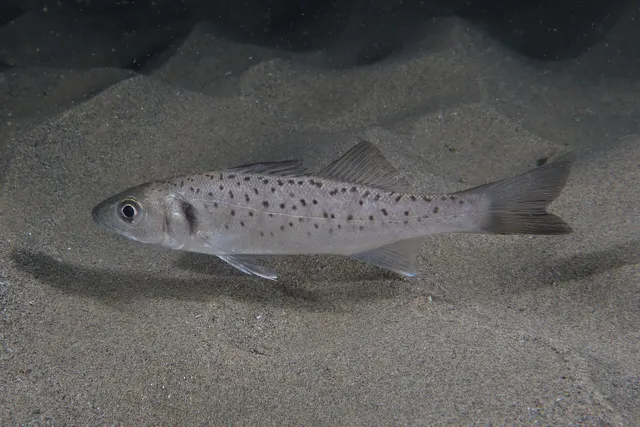 European sea bassA fast, predatory inshore fish that hunts in broken water and surf, and one of the most closely managed recreational species in European seas.
Julien Renoult — CC BY 4.0, via Wikimedia Commons
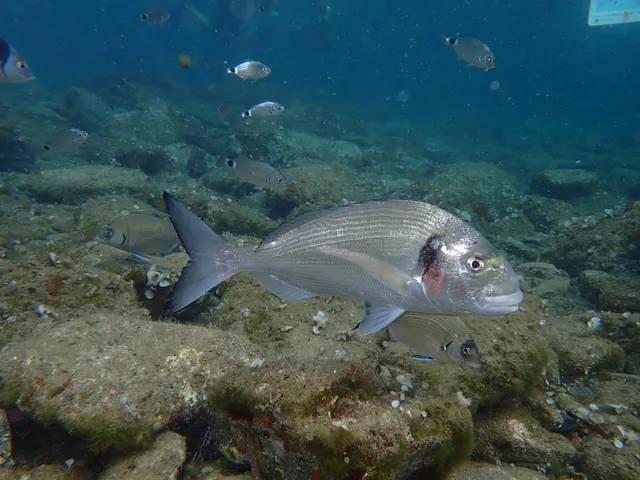 Gilthead breamThe Mediterranean's most prized sea bream, marked by a golden band between the eyes, with a jaw powerful enough to crush shellfish and a range now expanding northward.
jujurenoult — CC BY 4.0, via Wikimedia Commons
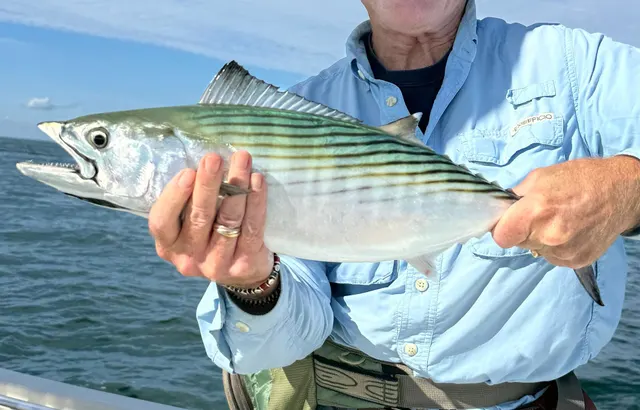 Atlantic bonitoA small, fast, striped tuna relative that arrives on temperate coasts in shoals each year and is the most accessible member of the family to a shore angler.
ricofish — CC0, via Wikimedia Commons
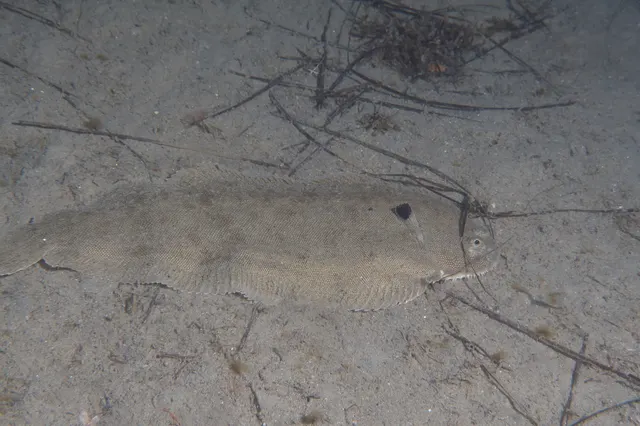 Common soleA nocturnal, sand-dwelling flatfish with a rounded head and a small twisted mouth, and one of the most valuable food fish in European waters.
Julien Renoult — CC BY, via iNaturalist
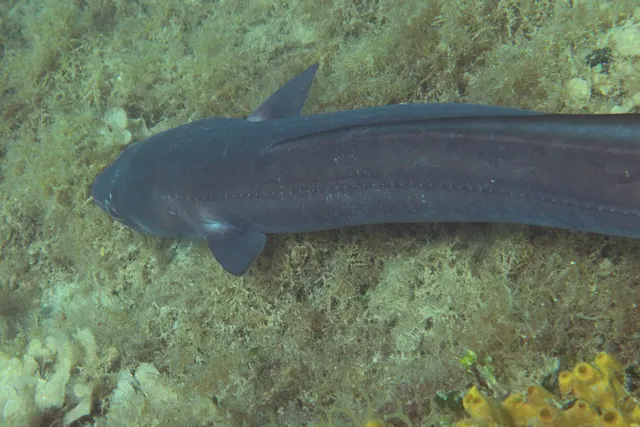 Conger eelA very large scaleless eel of wrecks, rock and harbour walls, reaching three metres, and among the most powerful and most genuinely dangerous fish to handle in European seas.
Holger Krisp — CC BY 3.0, via Wikimedia Commons
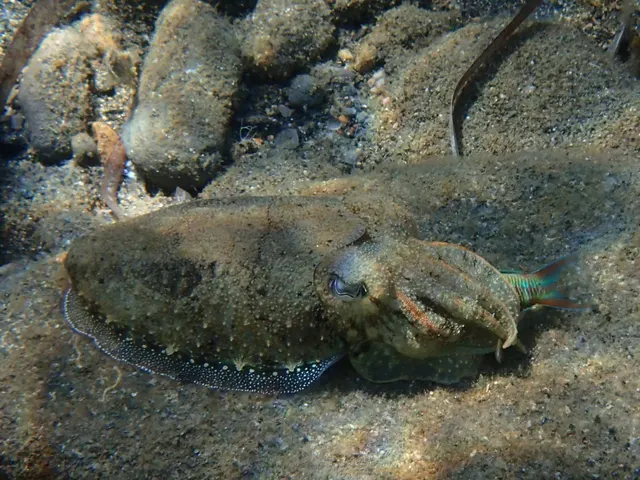 Common cuttlefishA bottom-oriented cephalopod with an internal buoyancy shell, the best-studied invertebrate mind in the sea, and a fishery that works quite differently from squid.
Katerina Kalogerini — CC BY, via iNaturalist
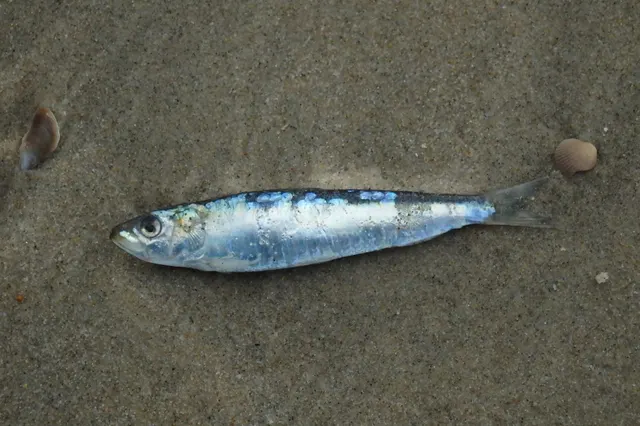 European sardineThe small silver fish that upwelling coasts produce in millions — the same species as a Cornish pilchard, the foundation of the Moroccan and Iberian fisheries, and the forage base almost every predator on those coasts depends on.
Duarte Frade — CC BY, via iNaturalist
Safety
Cliffs and rock platforms — Can cause serious injury or death
Long-period North Atlantic swell arrives on wave-cut rock platforms independently of local wind. Anglers and shellfish gatherers are swept off by a set wave substantially larger than those preceding it, frequently after an hour of comfortable conditions, into cold deep moving water with no easy exit.
What reduces it: Read swell height, period and direction rather than wind, watch a full set before committing to a platform, stand higher than feels necessary, never turn your back on the sea, wear a buoyancy aid, and fish with somebody who can raise help.
Worse when:
- Long-period ground swell from a distant Atlantic depression, which gives no local warning.
- A rising tide, which brings the break progressively further up the platform.
- Unfamiliar ground, where which platforms are workable at which swell is entirely local knowledge.
Moving water and currents — Can cause serious injury or death
The long open surf beaches generate strong, persistent rip currents, and there is no shelter along much of the coast. People wading or working the wash are carried offshore into cold water.
What reduces it: Recognise a rip as darker calmer water running seaward between areas of breaking waves and stay out of it. Do not wade beyond thigh depth in surf, and treat a beach with no lifeguard cover as one where self-rescue is the only rescue.
Cold water shock — Can cause injury needing treatment
Upwelling keeps the sea cold at a latitude where visitors expect warmth. Immersion produces the involuntary gasp and hyperventilation response, and swimming ability is lost in the first minute — a risk consistently underestimated because the air is warm.
What reduces it: Treat the water temperature rather than the air temperature as the risk, wear a buoyancy aid on exposed ground, and if immersed, float and control breathing before attempting to swim.
Further safety reading
- Cold water shock and immersion — Upwelling keeps the sea cold at a latitude where visitors expect warmth, which is a risk consistently underestimated because the air is warm.
- Rock platform and cliff safety — Long-period North Atlantic swell arrives on wave-cut platforms independently of local wind, and being swept from a ledge is the characteristic fatal accident on this coast.
- Shore entry and exit for divers — Rip currents on the long open surf beaches are strong and persistent, and there is no shelter along much of the coast.
Check the rules before you fish
Fishing laws, bylaws, access rules, seasons, bait restrictions and permitted methods vary by location and can change. Check the current rules from the relevant authority and the water you intend to fish before fishing.
Check with:
- Current national or regional law for where you are fishing
- Current local bylaws
- The relevant fisheries authority
- The landowner, club or fishery whose water it is
- Any restrictions specific to the species or the method you intend to use
Where to go next
What swims here
- Atlantic bluefin tunaPasses along the coast on migration between Atlantic feeding grounds and the Mediterranean, which links this coast to the trap fisheries at the Strait of Gibraltar.
- Atlantic bonitoWorks the productive upwelling-influenced shelf water, following the small pelagic shoals along the coast.
- Atlantic horse mackerelA major component of the small pelagic complex the upwelling produces, and one of the coast's principal landings.
- Common cuttlefishMoves into shallow water to spawn in the warmer months and is a significant component of the coast's cephalopod fishery.
- Common soleOccupies the clean sand offshore of the long Atlantic beaches, feeding at night over soft ground.
- Conger eelHolds the rocky ground and structure along the coast, in the holes and broken rock the species occupies everywhere.
- European anchovyOne of the small pelagic species the Canary Current upwelling supports in quantity, and part of the forage base the whole coastal fishery rests on.
- European sardineThe foundation of the coast's fisheries and of its canning industry, and among the largest sardine landings in the world.
4 more
- European sea bass Fish
- European squid Fish
- Gilthead bream Fish
- Meagre Fish
How people fish here
- HandliningLine fishing from small open boats worked out of beach landings and small ports is the artisanal sector's principal method.
- Purse seiningThe small pelagic fishery the upwelling supports is worked by purse seine at a scale that makes Morocco one of the world's largest sardine producers.
- Sea fishingSurfcasting from the long exposed beaches and rock fishing from the wave-cut platforms are the two halves of an established shore fishery.
- Traps and potsOctopus is the coast's highest-value catch and is taken in pots and traps, which is the fishery the whole management framework is built around.
Local knowledge
How this compares
- Canary IslandsThe Canarian fleet fished these grounds for generations and the loss of that access was a substantial economic event in the islands — two records describing two ends of one historical fishery.
- Coastal lagoonsThe Moroccan Atlantic coast carries lagoon and internationally designated wetland systems that behave nothing like the surf coast around them, and that the coast page can only gesture at.
- Kayak conditions: wind, tide, swell, and the decision not to launchA harbourless surf coast taking long-period Atlantic swell that arrives independently of local wind is the hardest launch environment on FishingHQ, and 'do not launch' is the answer that must lead.
- Moroccan mountain and reservoir fresh waterBreaks 'Morocco = coast'. The same country holds trout streams at altitude, a national reservoir system and endemic river barbels, administered by a different authority from the sea.
- Saltwater fly fishingCoastal fly fishing here is small, real and growing, principally among visitors. The general coastal fly fishing page answers it, which is why Morocco does not get one of its own.
- The Humboldt CurrentTwo of the world's four great eastern boundary upwelling systems, running the same physics on opposite sides of the Atlantic, with sardine and anchovy fisheries built on both.
- The Moroccan Mediterranean coastThe most important edge in the Moroccan model. Cold upwelled Atlantic with heavy swell and real tide on one side; warm, clear, effectively tideless Alboran water on the other, a few hours' drive apart. A reader asking about fishing in Morocco has two answers and must be able to find the second.
- The Strait of GibraltarThe strait's southern shore and the Atlantic coast beyond it are the same country's water, and the tuna passing through one migrate along the other.
1 more
- What a saltwater fly imitates Explainer
Rules and access
- Close seasonsThe biological rest period applied to the octopus fishery, timed around spawning and recruitment, is one of the more actively managed cephalopod closures anywhere.
- Taking crabs, lobsters, squid and shellfish: how the rules are structuredOctopus and cephalopods are the coast's highest-value catch rather than an afterthought, and the quota and rest-period framework is built around them.
Environment and conservation
Sources and evidence
- ICES Advice on fishing opportunities, catch and effort — International Council for the Exploration of the Sea (Scientific institute)Relied on for: Stock assessment, the environmental drivers of stock distribution and abundance, and the scientific basis for advice in the sea areas concerned.States this directlyCitation checked — the work exists and is described correctly
- FishBase: a global information system on fishes — Froese, R. and D. Pauly, eds. — FishBase Consortium (Scientific institute)Relied on for: Distribution, temperature tolerance, migratory behaviour and habitat association of the species concerned.Background and mechanism onlyPassage read and verified
- FAO Species Identification Guides for Fishery Purposes and the FAO Species Catalogues — Food and Agriculture Organization of the United Nations (Scientific institute)Relied on for: Distribution, habitat, depth and fishery accounts for the species of the eastern central Atlantic and Mediterranean in the FAO regional identification guides.States this directlyCitation checked — the work exists and is described correctly
- FishBase: a global information system on fishes — Froese, R. and D. Pauly, eds. — FishBase Consortium (Scientific institute)Relied on for: Distribution, habitat association and depth range recorded for the species.States this directlyPassage read and verified
- Rock fishing safety and the declared lifejacket areas of New South Wales — NSW Department of Primary Industries and Surf Life Saving NSW (Water-safety or diver-training authority)Relied on for: Rock and ledge fishing hazards, the mechanism by which anglers are swept from exposed platforms, and the measures that reduce it.States this directlyCitation checked — the work exists and is described correctly
- United States Lifesaving Association public education on rip currents and the surf zone — United States Lifesaving Association (Water-safety or diver-training authority)Relied on for: Surf zone hazards, rip current formation and behaviour, and the circumstances in which people are carried offshore.States this directlyCitation checked — the work exists and is described correctly
Why the 32 connections on this page are here, and the sources
What swims here
Backed by research — 12 connections
Supported by peer-reviewed research or fisheries science. The sources are listed and can be checked.
Atlantic bluefin tuna
A distribution association between an animal and a kind of water, rather than a claim about any named mark.
- FAO Species Identification Guides for Fishery Purposes and the FAO Species Catalogues — Food and Agriculture Organization of the United Nations (Scientific institute)Relied on for: Distribution, habitat, depth and fishery accounts for the species of the eastern central Atlantic and Mediterranean in the FAO regional identification guides.States this directlyCitation checked — the work exists and is described correctly
- FishBase: a global information system on fishes — Froese, R. and D. Pauly, eds. — FishBase Consortium (Scientific institute)Relied on for: Distribution, habitat association and depth range recorded for the species.States this directlyPassage read and verified
Atlantic bonito
A distribution association between an animal and a kind of water, rather than a claim about any named mark.
- FAO Species Identification Guides for Fishery Purposes and the FAO Species Catalogues — Food and Agriculture Organization of the United Nations (Scientific institute)Relied on for: Distribution, habitat, depth and fishery accounts for the species of the eastern central Atlantic and Mediterranean in the FAO regional identification guides.States this directlyCitation checked — the work exists and is described correctly
- FishBase: a global information system on fishes — Froese, R. and D. Pauly, eds. — FishBase Consortium (Scientific institute)Relied on for: Distribution, habitat association and depth range recorded for the species.States this directlyPassage read and verified
Atlantic horse mackerel
A distribution association between an animal and a kind of water, rather than a claim about any named mark.
- FAO Species Identification Guides for Fishery Purposes and the FAO Species Catalogues — Food and Agriculture Organization of the United Nations (Scientific institute)Relied on for: Distribution, habitat, depth and fishery accounts for the species of the eastern central Atlantic and Mediterranean in the FAO regional identification guides.States this directlyCitation checked — the work exists and is described correctly
- FishBase: a global information system on fishes — Froese, R. and D. Pauly, eds. — FishBase Consortium (Scientific institute)Relied on for: Distribution, habitat association and depth range recorded for the species.States this directlyPassage read and verified
Common cuttlefish
A distribution association between an animal and a kind of water, rather than a claim about any named mark.
- FAO Species Identification Guides for Fishery Purposes and the FAO Species Catalogues — Food and Agriculture Organization of the United Nations (Scientific institute)Relied on for: Distribution, habitat, depth and fishery accounts for the species of the eastern central Atlantic and Mediterranean in the FAO regional identification guides.States this directlyCitation checked — the work exists and is described correctly
- FishBase: a global information system on fishes — Froese, R. and D. Pauly, eds. — FishBase Consortium (Scientific institute)Relied on for: Distribution, habitat association and depth range recorded for the species.States this directlyPassage read and verified
Common sole
A distribution association between an animal and a kind of water, rather than a claim about any named mark.
- FAO Species Identification Guides for Fishery Purposes and the FAO Species Catalogues — Food and Agriculture Organization of the United Nations (Scientific institute)Relied on for: Distribution, habitat, depth and fishery accounts for the species of the eastern central Atlantic and Mediterranean in the FAO regional identification guides.States this directlyCitation checked — the work exists and is described correctly
- FishBase: a global information system on fishes — Froese, R. and D. Pauly, eds. — FishBase Consortium (Scientific institute)Relied on for: Distribution, habitat association and depth range recorded for the species.States this directlyPassage read and verified
Conger eel
A distribution association between an animal and a kind of water, rather than a claim about any named mark.
- FAO Species Identification Guides for Fishery Purposes and the FAO Species Catalogues — Food and Agriculture Organization of the United Nations (Scientific institute)Relied on for: Distribution, habitat, depth and fishery accounts for the species of the eastern central Atlantic and Mediterranean in the FAO regional identification guides.States this directlyCitation checked — the work exists and is described correctly
- FishBase: a global information system on fishes — Froese, R. and D. Pauly, eds. — FishBase Consortium (Scientific institute)Relied on for: Distribution, habitat association and depth range recorded for the species.States this directlyPassage read and verified
European anchovy
A distribution association between an animal and a kind of water, rather than a claim about any named mark.
- FAO Species Identification Guides for Fishery Purposes and the FAO Species Catalogues — Food and Agriculture Organization of the United Nations (Scientific institute)Relied on for: Distribution, habitat, depth and fishery accounts for the species of the eastern central Atlantic and Mediterranean in the FAO regional identification guides.States this directlyCitation checked — the work exists and is described correctly
- FishBase: a global information system on fishes — Froese, R. and D. Pauly, eds. — FishBase Consortium (Scientific institute)Relied on for: Distribution, habitat association and depth range recorded for the species.States this directlyPassage read and verified
European sardine
A distribution claim about the world, so it rests on the reference works rather than on angling report. FishingHQ's evidence policy requires it.
- FishBase: a global information system on fishes — Froese, R. and D. Pauly, eds. — FishBase Consortium (Scientific institute)Relied on for: Distribution, habitat association and depth range recorded for the species, including its occurrence in the water body concerned.States this directlyPassage read and verified
- FAO Species Identification Guides for Fishery Purposes and the FAO Species Catalogues — Food and Agriculture Organization of the United Nations (Scientific institute)Relied on for: Distribution, habitat, depth and fishery accounts for the species of the eastern central Atlantic and Mediterranean.States this directlyCitation checked — the work exists and is described correctly
European sea bass
A distribution association between an animal and a kind of water, rather than a claim about any named mark.
- FAO Species Identification Guides for Fishery Purposes and the FAO Species Catalogues — Food and Agriculture Organization of the United Nations (Scientific institute)Relied on for: Distribution, habitat, depth and fishery accounts for the species of the eastern central Atlantic and Mediterranean in the FAO regional identification guides.States this directlyCitation checked — the work exists and is described correctly
- FishBase: a global information system on fishes — Froese, R. and D. Pauly, eds. — FishBase Consortium (Scientific institute)Relied on for: Distribution, habitat association and depth range recorded for the species.States this directlyPassage read and verified
European squid
A distribution association between an animal and a kind of water, rather than a claim about any named mark.
- FAO Species Identification Guides for Fishery Purposes and the FAO Species Catalogues — Food and Agriculture Organization of the United Nations (Scientific institute)Relied on for: Distribution, habitat, depth and fishery accounts for the species of the eastern central Atlantic and Mediterranean in the FAO regional identification guides.States this directlyCitation checked — the work exists and is described correctly
- FishBase: a global information system on fishes — Froese, R. and D. Pauly, eds. — FishBase Consortium (Scientific institute)Relied on for: Distribution, habitat association and depth range recorded for the species.States this directlyPassage read and verified
Gilthead bream
A distribution association between an animal and a kind of water, rather than a claim about any named mark.
- FAO Species Identification Guides for Fishery Purposes and the FAO Species Catalogues — Food and Agriculture Organization of the United Nations (Scientific institute)Relied on for: Distribution, habitat, depth and fishery accounts for the species of the eastern central Atlantic and Mediterranean in the FAO regional identification guides.States this directlyCitation checked — the work exists and is described correctly
- FishBase: a global information system on fishes — Froese, R. and D. Pauly, eds. — FishBase Consortium (Scientific institute)Relied on for: Distribution, habitat association and depth range recorded for the species.States this directlyPassage read and verified
Meagre
A distribution association between an animal and a kind of water, rather than a claim about any named mark.
- FAO Species Identification Guides for Fishery Purposes and the FAO Species Catalogues — Food and Agriculture Organization of the United Nations (Scientific institute)Relied on for: Distribution, habitat, depth and fishery accounts for the species of the eastern central Atlantic and Mediterranean in the FAO regional identification guides.States this directlyCitation checked — the work exists and is described correctly
- FishBase: a global information system on fishes — Froese, R. and D. Pauly, eds. — FishBase Consortium (Scientific institute)Relied on for: Distribution, habitat association and depth range recorded for the species.States this directlyPassage read and verified
How people fish here
What experienced anglers do — 4 connections
Widely and independently recommended by experienced anglers and specialist sources. This is real angling knowledge, not proof: controlled evidence for it is limited, and FishingHQ records it as convention rather than as a demonstrated effect.
Handlining
A discipline that is characteristic of the place rather than merely possible there, joined so a reader can move between the place and the practice.
- General angling website restatements of established technique — Various (Credible secondary source)Relied on for: Widely restated practice associating this discipline with this place, recorded as practitioner consensus rather than as tested fact.Background and mechanism onlyCitation checked — the work exists and is described correctly
- Fishers' Craft and Lettered Art: Tracts on Fishing from the End of the Middle Ages — University of Toronto Press, 1997 (Scientific literature)Relied on for: That fishing traditions develop around the water and fish available to them, and the historical method of reading such traditions.States this directlyCitation checked — the work exists and is described correctly
Purse seining
A discipline that is characteristic of the place rather than merely possible there, joined so a reader can move between the place and the practice.
- General angling website restatements of established technique — Various (Credible secondary source)Relied on for: Widely restated practice associating this discipline with this place, recorded as practitioner consensus rather than as tested fact.Background and mechanism onlyCitation checked — the work exists and is described correctly
- Fishers' Craft and Lettered Art: Tracts on Fishing from the End of the Middle Ages — University of Toronto Press, 1997 (Scientific literature)Relied on for: That fishing traditions develop around the water and fish available to them, and the historical method of reading such traditions.States this directlyCitation checked — the work exists and is described correctly
Sea fishing
A discipline that is characteristic of the place rather than merely possible there, joined so a reader can move between the place and the practice.
- General angling website restatements of established technique — Various (Credible secondary source)Relied on for: Widely restated practice associating this discipline with this place, recorded as practitioner consensus rather than as tested fact.Background and mechanism onlyCitation checked — the work exists and is described correctly
- Fishers' Craft and Lettered Art: Tracts on Fishing from the End of the Middle Ages — University of Toronto Press, 1997 (Scientific literature)Relied on for: That fishing traditions develop around the water and fish available to them, and the historical method of reading such traditions.States this directlyCitation checked — the work exists and is described correctly
Traps and pots
A discipline that is characteristic of the place rather than merely possible there, joined so a reader can move between the place and the practice.
- General angling website restatements of established technique — Various (Credible secondary source)Relied on for: Widely restated practice associating this discipline with this place, recorded as practitioner consensus rather than as tested fact.Background and mechanism onlyCitation checked — the work exists and is described correctly
- Fishers' Craft and Lettered Art: Tracts on Fishing from the End of the Middle Ages — University of Toronto Press, 1997 (Scientific literature)Relied on for: That fishing traditions develop around the water and fish available to them, and the historical method of reading such traditions.States this directlyCitation checked — the work exists and is described correctly
Local knowledge
Backed by research — 1 connection
Supported by peer-reviewed research or fisheries science. The sources are listed and can be checked.
Upwelling, and the coasts it makes
A place that describes a physical process in prose and cannot point at it is restating something FishingHQ should explain once. This is the link that turns the restatement into a reference.
- ICES Advice on fishing opportunities, catch and effort — International Council for the Exploration of the Sea (Scientific institute)Relied on for: Stock assessment and advice for north-east Atlantic stocks, including the environmental drivers of small pelagic productivity and recruitment.States this directlyCitation checked — the work exists and is described correctly
- Cefas science, advice and data on marine and freshwater environments — Centre for Environment, Fisheries and Aquaculture Science (Government fisheries body)Relied on for: Marine environmental science including coastal physical processes, productivity and the monitoring behind them.States this directlyCitation checked — the work exists and is described correctly
How this compares
What experienced anglers do — 8 connections
Widely and independently recommended by experienced anglers and specialist sources. This is real angling knowledge, not proof: controlled evidence for it is limited, and FishingHQ records it as convention rather than as a demonstrated effect.
Canary Islands
Two places a reader would reasonably weigh against one another, joined where the comparison teaches something about both. It is also how the larger geography is linked to what sits inside it.
- General angling website restatements of established technique — Various (Credible secondary source)Relied on for: Widely restated practice associating this discipline with this place, recorded as practitioner consensus rather than as tested fact.Background and mechanism onlyCitation checked — the work exists and is described correctly
- Fishers' Craft and Lettered Art: Tracts on Fishing from the End of the Middle Ages — University of Toronto Press, 1997 (Scientific literature)Relied on for: That fishing traditions develop around the water and fish available to them, and the historical method of reading such traditions.States this directlyCitation checked — the work exists and is described correctly
Kayak conditions: wind, tide, swell, and the decision not to launch
Two places a reader would reasonably weigh against one another, joined where the comparison teaches something about both. It is also how the larger geography is linked to what sits inside it.
- RNLI water safety guidance: cold water shock and Float to Live — Royal National Lifeboat Institution (Water-safety or diver-training authority)Relied on for: Water safety guidance including cold water shock, the immersion response and the circumstances in which recreational water users get into difficulty.States this directlyPassage read and verified
- United States Lifesaving Association public education on rip currents and the surf zone — United States Lifesaving Association (Water-safety or diver-training authority)Relied on for: Public education on rip currents, surf zone hazards and the circumstances in which people are swept from shorelines.States this directlyCitation checked — the work exists and is described correctly
Moroccan mountain and reservoir fresh water
Two places a reader would reasonably weigh against one another, joined where the comparison teaches something about both. It is also how the larger geography is linked to what sits inside it.
- General angling website restatements of established technique — Various (Credible secondary source)Relied on for: Widely restated angling practice and belief, recorded as practitioner consensus rather than as tested fact.Background and mechanism onlyCitation checked — the work exists and is described correctly
- Sea Angler — Bauer Media (Specialist angling publication)Relied on for: Contemporary sea angling practice as reported and restated by practitioners, including shore and boat technique and tackle convention.Background and mechanism onlyCitation checked — the work exists and is described correctly
Saltwater fly fishing
Two places a reader would reasonably weigh against one another, joined where the comparison teaches something about both. It is also how the larger geography is linked to what sits inside it.
- General angling website restatements of established technique — Various (Credible secondary source)Relied on for: Widely restated angling practice and belief, recorded as practitioner consensus rather than as tested fact.Background and mechanism onlyCitation checked — the work exists and is described correctly
- Sea Angler — Bauer Media (Specialist angling publication)Relied on for: Contemporary sea angling practice as reported and restated by practitioners, including shore and boat technique and tackle convention.Background and mechanism onlyCitation checked — the work exists and is described correctly
The Humboldt Current
Two places a reader would reasonably weigh against one another, joined where the comparison teaches something about both. It is also how the larger geography is linked to what sits inside it.
- General angling website restatements of established technique — Various (Credible secondary source)Relied on for: Widely restated practice associating this discipline with this place, recorded as practitioner consensus rather than as tested fact.Background and mechanism onlyCitation checked — the work exists and is described correctly
- Fishers' Craft and Lettered Art: Tracts on Fishing from the End of the Middle Ages — University of Toronto Press, 1997 (Scientific literature)Relied on for: That fishing traditions develop around the water and fish available to them, and the historical method of reading such traditions.States this directlyCitation checked — the work exists and is described correctly
The Moroccan Mediterranean coast
Two places a reader would reasonably weigh against one another, joined where the comparison teaches something about both. It is also how the larger geography is linked to what sits inside it.
- General angling website restatements of established technique — Various (Credible secondary source)Relied on for: Widely restated angling practice and belief, recorded as practitioner consensus rather than as tested fact.Background and mechanism onlyCitation checked — the work exists and is described correctly
- Sea Angler — Bauer Media (Specialist angling publication)Relied on for: Contemporary sea angling practice as reported and restated by practitioners, including shore and boat technique and tackle convention.Background and mechanism onlyCitation checked — the work exists and is described correctly
The Strait of Gibraltar
Two places a reader would reasonably weigh against one another, joined where the comparison teaches something about both. It is also how the larger geography is linked to what sits inside it.
- General angling website restatements of established technique — Various (Credible secondary source)Relied on for: Widely restated practice associating this discipline with this place, recorded as practitioner consensus rather than as tested fact.Background and mechanism onlyCitation checked — the work exists and is described correctly
- Fishers' Craft and Lettered Art: Tracts on Fishing from the End of the Middle Ages — University of Toronto Press, 1997 (Scientific literature)Relied on for: That fishing traditions develop around the water and fish available to them, and the historical method of reading such traditions.States this directlyCitation checked — the work exists and is described correctly
What a saltwater fly imitates
Two records a reader would reasonably weigh against one another, joined where the comparison teaches something about both.
- Sea Angler — Bauer Media (Specialist angling publication)Relied on for: Contemporary UK sea angling practice as reported and restated by practitioners, including shore technique, species behaviour and tackle convention.Background and mechanism onlyCitation checked — the work exists and is described correctly
- General angling website restatements of established technique — Various (Credible secondary source)Relied on for: Widely restated angling practice and belief, recorded as practitioner consensus rather than as tested fact.Background and mechanism onlyCitation checked — the work exists and is described correctly
Backed by research — 1 connection
Supported by peer-reviewed research or fisheries science. The sources are listed and can be checked.
Coastal lagoons
A named water joined to the kind of habitat it is an example of, so the habitat page carries real examples and the place page can stop restating the physics.
- NOAA National Ocean Service education on estuaries and the National Estuarine Research Reserve System — National Oceanic and Atmospheric Administration, United States (Government fisheries body)Relied on for: The physical structure and ecology of estuarine, lagoon and coastal systems, including salinity gradients, exchange and nursery function.States this directlyCitation checked — the work exists and is described correctly
- Cefas science, advice and data on marine and freshwater environments — Centre for Environment, Fisheries and Aquaculture Science (Government fisheries body)Relied on for: Coastal and transitional water science, including salinity, water quality and the biology those conditions support.States this directlyCitation checked — the work exists and is described correctly
Safety reading
Official guidance — 3 connections
Stated by a fisheries authority, scientific institute or recognised angling body. Authoritative, but summarising rather than demonstrating.
Cold water shock and immersion
A place is joined to the safety topic that explains a hazard genuinely characteristic of it, so the mechanism is reachable rather than restated as a weak warning.
- RNLI water safety guidance: cold water shock and Float to Live — Royal National Lifeboat Institution (Water-safety or diver-training authority)Relied on for: Cold water shock and the immersion response, shore angling hazards, small-craft guidance and the circumstances in which water users are most often killed.States this directlyPassage read and verified
- RoSPA water safety information and UK accidental drowning statistics — Royal Society for the Prevention of Accidents (Water-safety or diver-training authority)Relied on for: Accidental drowning statistics and the circumstances in which recreational water users are most often killed.Background and mechanism onlyPassage read and verified
Rock platform and cliff safety
A place is joined to the safety topic that explains a hazard genuinely characteristic of it, so the mechanism is reachable rather than restated as a weak warning.
- Rock fishing safety and the declared lifejacket areas of New South Wales — NSW Department of Primary Industries and Surf Life Saving NSW (Water-safety or diver-training authority)Relied on for: Rock and ledge fishing hazards, the mechanism by which anglers are swept from exposed platforms, and the measures that reduce it.States this directlyCitation checked — the work exists and is described correctly
- United States Lifesaving Association public education on rip currents and the surf zone — United States Lifesaving Association (Water-safety or diver-training authority)Relied on for: Surf zone hazards, rip current formation and behaviour, and the circumstances in which people are carried offshore.States this directlyCitation checked — the work exists and is described correctly
Shore entry and exit for divers
A place is joined to the safety topic that explains a hazard genuinely characteristic of it, so the mechanism is reachable rather than restated as a weak warning.
- Rock fishing safety and the declared lifejacket areas of New South Wales — NSW Department of Primary Industries and Surf Life Saving NSW (Water-safety or diver-training authority)Relied on for: Rock and ledge fishing hazards, the mechanism by which anglers are swept from exposed platforms, and the measures that reduce it.States this directlyCitation checked — the work exists and is described correctly
- United States Lifesaving Association public education on rip currents and the surf zone — United States Lifesaving Association (Water-safety or diver-training authority)Relied on for: Surf zone hazards, rip current formation and behaviour, and the circumstances in which people are carried offshore.States this directlyCitation checked — the work exists and is described correctly
Rules and access
Official guidance — 2 connections
Stated by a fisheries authority, scientific institute or recognised angling body. Authoritative, but summarising rather than demonstrating.
Close seasons
A place joined to the regulatory concept whose structure it illustrates. The edge asserts that the concept applies here, never what any current rule says.
- Code of Conduct for Responsible Fisheries — Food and Agriculture Organization of the United Nations, Rome, 1995 (Standards body)Relied on for: Principles for the management of fisheries, including licensing, closed seasons, size limits and the treatment of small-scale and shared stocks.States this directlyCitation checked — the work exists and is described correctly
- Good Fish Guide — Marine Conservation Society (Conservation authority)Relied on for: Assessment of fisheries and the management measures applied to them, including the instruments used and their purpose.Background and mechanism onlyCitation checked — the work exists and is described correctly
Taking crabs, lobsters, squid and shellfish: how the rules are structured
A place joined to the regulatory concept whose structure it illustrates. The edge asserts that the concept applies here, never what any current rule says.
- Code of Conduct for Responsible Fisheries — Food and Agriculture Organization of the United Nations, Rome, 1995 (Standards body)Relied on for: Principles for the management of fisheries, including licensing, closed seasons, size limits and the treatment of small-scale and shared stocks.States this directlyCitation checked — the work exists and is described correctly
- Good Fish Guide — Marine Conservation Society (Conservation authority)Relied on for: Assessment of fisheries and the management measures applied to them, including the instruments used and their purpose.Background and mechanism onlyCitation checked — the work exists and is described correctly
Environment and conservation
Backed by research — 1 connection
Supported by peer-reviewed research or fisheries science. The sources are listed and can be checked.
Fish stocks and sustainability
An environmental pressure that is specific to this place rather than general to fishing, joined so the issue is anchored to a real example.
- The IUCN Red List of Threatened Species — International Union for Conservation of Nature (Conservation authority)Relied on for: Assessment of the species and habitats affected, and the pressures acting on them, including habitat change and exploitation.States this directlyCitation checked — the work exists and is described correctly
- Code of Conduct for Responsible Fisheries — Food and Agriculture Organization of the United Nations, Rome, 1995 (Standards body)Relied on for: Principles for responsible fisheries management, precaution, gear selectivity and the treatment of shared and small-scale fisheries.Background and mechanism onlyCitation checked — the work exists and is described correctly
How FishingHQ labels evidence is explained in the evidence policy.