Moroccan mountain and reservoir fresh water
Fishing regions · Last reviewed 2026-08-14
Trout streams at altitude in the Atlas, a national system of large reservoirs holding introduced pike and black bass, endemic barbels in the rivers between them, and a hydrology in which the water is not always there.
Being listed here is not permission to fish. What that meansClose
Access, fishing rights, seasons, licences, local bylaws and permitted methods vary and can change. Check current access, permission, local regulations, closures and restrictions before you travel or fish. FishingHQ describes what the ground is and names who holds the answer; it does not hold the answer itself.
Find the authority for a jurisdiction · What FishingHQ does and does not cover
Morocco has a substantial freshwater fishery, and almost nobody outside the country knows it. Correcting that assumption is the point of this page.
THE ATLAS HOLDS TROUT WATER. The Middle and High Atlas rise high enough to hold cold, oxygenated streams and mountain lakes, and they support brown trout — native populations in some catchments and introduced stock in others — at latitudes nobody associates with salmonids. Fly fishing for them is a genuine, if small, activity, and the mountain lakes are a destination fishery in their own right.
RESERVOIRS ARE THE DOMINANT ENVIRONMENT BY VOLUME AND BY EFFORT. Morocco built a large national system of dams through the twentieth century for irrigation, water supply and power, and those impoundments are now the country's principal freshwater fisheries. They hold introduced pike, black bass, roach, carp and other species stocked deliberately, and they are managed as a national resource rather than as recreational waters first.
THE RIVERS BETWEEN THEM HOLD AN ENDEMIC FAUNA. The Sebou, Oum Er-Rbia, Moulouya and Sous are substantial systems, and North Africa's native freshwater fish — barbels in particular — include species found nowhere else. Several are of serious conservation concern, and some are restricted to single catchments.
THE HYDROLOGY IS SEMI-ARID AND IT GOVERNS EVERYTHING. Flow is fed by winter rain and by snowmelt from the mountains, peaks in the cooler part of the year, and falls away through the dry season until many rivers become chains of disconnected pools. Water is abstracted heavily for agriculture, so the natural pattern and the managed one are frequently indistinguishable from the bank.
AND THE ADMINISTRATION IS A DIFFERENT AUTHORITY ENTIRELY from the one governing the sea, which is exactly the kind of fact a visitor cannot guess and which FishingHQ can legitimately describe as a framework.
What fishing here is like
A semi-arid country with a genuine and largely unknown freshwater fishery, organised around a national reservoir system and a mountain range that holds cold water. Fishing effort concentrates on the large impoundments, which hold introduced predators and coarse species, with a small specialist trout fishery in the Atlas streams and mountain lakes. The rivers connecting them hold a native and partly endemic fauna of considerable conservation interest and comparatively little angling attention. Freshwater angling is administered by a different authority from sea fishing, and permits are part of the framework.
What dominates
Lure and bait fishing on the reservoirs for introduced pike, black bass and carp, which is where most freshwater effort goes. Fly fishing for trout in Atlas streams and mountain lakes, a small specialist activity with a genuine destination character. Bait fishing in rivers for barbel and other native cyprinids. Traditional and subsistence fishing in some rural areas, which is a different activity from recreational angling and is governed differently. Ice fishing does not exist: no water in the country freezes to a fishable thickness. Carp fishing in the European specimen sense is not established. Kayak and float-tube fishing on reservoirs is a small but growing activity.
The water available
High mountain streams and lakes in the Middle and High Atlas, cold and oxygenated, some above the tree line; a national system of large reservoirs behind dams, deep, subject to heavy drawdown and with fluctuating margins; substantial river systems including the Sebou, Oum Er-Rbia, Moulouya and Sous, running from mountain to sea across increasingly arid country; seasonal watercourses that flow strongly in the wet season and contract to disconnected pools or dry entirely; irrigation channels and canals which are locally fished; and lowland lagoon and wetland systems where the rivers meet the coast, which are brackish rather than fresh.
How the rules are structured
Inland fisheries are administered by the national authority responsible for water and forests, which is a different body from the ministry governing maritime fisheries — so the sea framework and the freshwater framework are separate and neither can be inferred from the other. Recreational freshwater fishing sits within a permit framework administered by that authority, with regional offices implementing it. Closed seasons apply to some waters and species, notably around trout spawning, and specific waters may carry their own conditions. Reservoirs are managed primarily as water resources for irrigation, supply and power, so angling access is subject to the operating authority's arrangements as well as to fisheries rules. Several native freshwater species are of conservation concern and some are restricted to single catchments, which brings protected-species considerations into play. Protected areas, national parks and designated wetlands cover parts of the freshwater system and may restrict activity inside their boundaries. Introduced species have been stocked deliberately in some waters and are an ecological concern in others, and biosecurity between catchments matters for that reason. FishingHQ does not state what any current rule is. Licences, authorisations, closed seasons, size limits, catch limits, permitted methods, protected areas and access arrangements all change, and they vary by location as well as by country. Underwater fishing in particular is separately regulated in most jurisdictions and nothing here should be read as saying it may be practised. Before fishing, check the current position with the authority named above and locally.
Who to ask
- The national authority responsible for water and forests, which administers inland fisheries and the freshwater permit framework — a different body from the maritime fisheries ministry.
- The regional office of that authority for the area concerned, which implements measures locally and is the practical point of contact.
- The agency or operator responsible for the reservoir concerned, since impoundments are managed primarily as water resources and access arrangements follow from that.
- The authority managing any national park, protected area or designated wetland where the fishing takes place.
- The national body responsible for protected species, where restricted-range or threatened native fishes are present.
Words you will meet
- Barrage
- A dam, and by extension the reservoir behind it. The dominant Moroccan freshwater environment and the word a visitor will meet constantly when asking about fishing.
- Oued
- A river or watercourse, including ones that flow only seasonally. The word covers both a permanent river and a dry bed that carries water after rain, which is a distinction a northern European reader has no single term for.
- Seguia
- An irrigation channel. The network is extensive, it is locally fished in places, and it is part of the hydrology rather than separate from it — water in a seguia is water not in the river.
- Dayet
- A natural lake, generally in the Middle Atlas, as distinct from a barrage. Several hold trout and are the closest thing the country has to a classic stillwater trout fishery.
- Aguelmam
- A mountain lake in the Amazigh languages of the Atlas, appearing in the names of several of the higher-altitude waters.
Conditions and hazards
Altitude and exposure are the dominant hazards in the mountains: the Atlas rises high enough for genuine cold, snow and rapid weather change, and mountain lakes can be a long way from help with no mobile coverage. Flash flooding is a serious and underestimated risk in semi-arid catchments — rain falling many kilometres upstream can send water down a dry or low watercourse with very little warning, and a wadi bed is a dangerous place to be in unsettled weather. Reservoir margins are frequently steep, unstable and made of drawdown mud that appears solid and is not. Summer heat and sun on open water cause dehydration and heat illness, and shade is often absent. Water quality varies and contact and consumption considerations differ between waters. Remote access means self-sufficiency: telling somebody where you are going is ordinary rather than cautious.
Water at altitude, water behind dams, and water that leaves
Moroccan fresh water divides into three quite different environments, and the differences between them are larger than the differences between countries elsewhere.
THE ATLAS STREAMS AND LAKES ARE COLD-WATER ENVIRONMENTS at a latitude that suggests nothing of the kind. The Middle and High Atlas rise high enough for snow to lie, for streams to stay cold and oxygenated through summer, and for mountain lakes to hold salmonids. This is genuine trout water, and its existence is the single most surprising fact about Moroccan fishing.
THE RESERVOIRS ARE THE VOLUME. A national system of dams built through the twentieth century for irrigation, supply and power created large, deep impoundments that are now the country's principal freshwater fisheries. They behave like reservoirs everywhere and more so: heavy drawdown exposes wide margins, water level can change substantially between visits, and the shape of the fishable water changes with it.
DRAWDOWN IS THE DEFINING RESERVOIR MECHANIC. Because these waters exist to supply agriculture and cities, they are drawn down hard through the dry season. That concentrates fish, exposes structure that was underwater, makes margins treacherous, and means a bank that was fishable in spring may be a long walk from the water later in the year.
THE RIVERS RUN FROM MOUNTAIN TO SEA ACROSS DRYING COUNTRY. The Sebou, Oum Er-Rbia, Moulouya and Sous each begin in cold uplands and end in a very different climate, so a single river system passes through several fishing environments along its length.
SEASONAL WATERCOURSES ARE NORMAL RATHER THAN EXCEPTIONAL. Many oueds carry water only for part of the year, contracting to disconnected pools and in some cases drying entirely, and the fish in them are adapted to exactly that.
AND ABSTRACTION IS PART OF THE HYDROLOGY. Irrigation, reservoirs and groundwater pumping change when and whether water is present, so what looks like natural drought is frequently a management outcome, and the two cannot be separated from the bank.
Backed by research — why, and the sources (3)
Supported by peer-reviewed research or fisheries science. The sources are listed and can be checked.
- Cefas science, advice and data on marine and freshwater environments — Centre for Environment, Fisheries and Aquaculture Science (Government fisheries body)Relied on for: Marine and freshwater environmental science, including coastal physical processes, productivity, water quality and the biology those conditions support.States this directlyCitation checked — the work exists and is described correctly
- The IUCN Red List of Threatened Species — International Union for Conservation of Nature (Conservation authority)Relied on for: Assessment, population trend and range account for the species, including endemic and restricted-range freshwater fishes.States this directlyCitation checked — the work exists and is described correctly
- FishBase: a global information system on fishes — Froese, R. and D. Pauly, eds. — FishBase Consortium (Scientific institute)Relied on for: Distribution, habitat association, depth range, diet and reproductive parameters recorded for the species concerned.States this directlyPassage read and verified
Endemic barbels, introduced predators, and trout where trout should not be
The Moroccan freshwater species list divides sharply between what was here and what was put here, and both halves are interesting.
BROWN TROUT ARE PRESENT IN ATLAS WATERS, with native North African populations in some catchments and introduced stock in others. North African trout populations are at the southern edge of the species' range, they are genetically distinctive, and they are vulnerable to warming and to abstraction in a way northern populations are not.
NATIVE BARBELS ARE THE CHARACTERISTIC RIVER FISH. North Africa holds a cyprinid fauna including species found nowhere else, several restricted to individual catchments, and a number of them are of serious conservation concern. This is the part of Moroccan fresh water that matters most biologically and receives least angling attention.
INTRODUCED PREDATORS DOMINATE THE RESERVOIRS. Northern pike and black bass were stocked deliberately during the twentieth century and now support the principal reservoir fisheries. Roach, carp and other coarse species were introduced alongside them.
THE INTRODUCTION PROGRAMME IS THE INTELLIGENCE, not the species list. A deliberate mid-century effort to create sport fisheries in new impoundments is why a North African reservoir holds a European predator, and understanding that explains the fishery better than any account of the fish.
INTRODUCED SPECIES ARE ALSO AN ECOLOGICAL PROBLEM where they meet the native fauna, and the same fish that makes a reservoir worth fishing may be a pressure on an endemic barbel in the river above it. Both things are true and FishingHQ records both.
EELS ARE PRESENT in some coastal systems, and the European eel is critically endangered across its range with protection applying widely.
AND THE LOWER RIVERS AND LAGOONS ARE BRACKISH RATHER THAN FRESH, holding mullet, sea bass and other euryhaline species well inland of the coast — which is a reminder that the freshwater and marine lists overlap at the edges.
Backed by research — why, and the sources (3)
Supported by peer-reviewed research or fisheries science. The sources are listed and can be checked.
- The IUCN Red List of Threatened Species — International Union for Conservation of Nature (Conservation authority)Relied on for: Assessment, population trend and range account for the species, including endemic and restricted-range freshwater fishes.States this directlyCitation checked — the work exists and is described correctly
- FishBase: a global information system on fishes — Froese, R. and D. Pauly, eds. — FishBase Consortium (Scientific institute)Relied on for: Distribution, habitat association, depth range, diet and reproductive parameters recorded for the species concerned.States this directlyPassage read and verified
- FAO Species Identification Guides for Fishery Purposes and the FAO Species Catalogues — Food and Agriculture Organization of the United Nations (Scientific institute)Relied on for: Identification, distribution, habitat and fishery accounts for the species of the eastern central Atlantic and Mediterranean, including the Alboran Sea and the north-west African margin.States this directlyCitation checked — the work exists and is described correctly
Lures on the barrages, flies in the mountains
Freshwater effort in Morocco concentrates in a few places and a few methods, and the distribution is uneven in a way worth stating.
RESERVOIR LURE FISHING IS WHERE MOST OF IT HAPPENS. Pike and black bass in large impoundments are fished with the same lure craft that works anywhere — reading structure, working drop-offs, covering water — with the local complication that the structure moves as the water level does.
BAIT FISHING ON THE RESERVOIRS for carp and coarse species is common and comparatively informal, and it is closer to a food fishery than to European specimen carp culture, which is not established here.
FLY FISHING IN THE ATLAS is the specialist activity and the one with genuine destination appeal. Mountain streams and lakes holding trout, at altitude, in country that looks nothing like a trout landscape, reached by roads that take time. Small streams demand short-range accuracy rather than distance, and the lakes fish like any high stillwater.
RIVER BAIT FISHING for barbel and native cyprinids is practised locally and largely undocumented.
TRADITIONAL AND SUBSISTENCE FISHING exists in rural areas and is a different activity from recreational angling, with different methods and a different regulatory position. It is worth acknowledging rather than confusing with sport fishing.
KAYAK AND FLOAT-TUBE FISHING on reservoirs is small and growing, and it suits large waters with limited bank access and long walks to the water after drawdown.
AND WHAT DOES NOT EXIST IS AS INFORMATIVE AS WHAT DOES. There is no ice fishing, because nothing freezes fishably. There is no canal-fishing culture in the British sense despite an extensive irrigation network. And there is no organised match scene. Recording absence honestly is what stops a geography record becoming a wish list.
What experienced anglers do — why, and the sources (2)
Widely and independently recommended by experienced anglers and specialist sources. This is real angling knowledge, not proof: controlled evidence for it is limited, and FishingHQ records it as convention rather than as a demonstrated effect.
- General angling website restatements of established technique — Various (Credible secondary source)Relied on for: Widely restated angling practice and belief, recorded as practitioner consensus rather than as tested fact.Background and mechanism onlyCitation checked — the work exists and is described correctly
- FishBase: a global information system on fishes — Froese, R. and D. Pauly, eds. — FishBase Consortium (Scientific institute)Relied on for: Distribution, habitat association, depth range, diet and reproductive parameters recorded for the species concerned.States this directlyPassage read and verified
A year that runs on water rather than on temperature
The Moroccan freshwater year is organised by the presence and absence of water, which is a different governing variable from the one temperate anglers are used to.
THE WET SEASON IS THE COOL SEASON. Rain falls in the cooler part of the year, and snow accumulates in the Atlas. Rivers run, reservoirs fill, and the system recharges. This is the opposite arrangement from a temperate country where the growing season and the wet season broadly coincide.
SNOWMELT EXTENDS THE FLOW into the warming part of the year, which is why Atlas streams hold cold water later than the surrounding climate would suggest, and why the mountain trout fishing has a window rather than a season.
THE DRY SEASON IS A CONTRACTION. Flow falls, rivers shrink towards their pools, reservoirs are drawn down for irrigation, and both the fish and the fishing concentrate. It is easier fishing and harder on the fish.
WARM SHALLOW WATER MAKES HANDLING CONSEQUENTIAL. A contracted pool in the hot season is warm, low in oxygen and crowded, and fish in it are already stressed. Catch-and-release survival in those conditions is poor, and the honest response is frequently to fish elsewhere, fish at the cool edges of the day, or not fish at all.
RECONNECTION IS THE EVENT OF THE YEAR in seasonal systems. When substantial rain returns, pools join, fish move and spawn, and the whole system redistributes. The date varies by weeks between years and is not on any calendar.
TROUT SPAWNING drives closed seasons on some waters, and those are set by the responsible authority and revised.
AND FLASH FLOODING IS A SEASONAL HAZARD RATHER THAN A CURIOSITY. Rain falling far upstream can send water down a low or dry watercourse with little warning, and the transition between drought and flood in a semi-arid catchment is much faster than in a temperate one.
Backed by research — why, and the sources (3)
Supported by peer-reviewed research or fisheries science. The sources are listed and can be checked.
- Cefas science, advice and data on marine and freshwater environments — Centre for Environment, Fisheries and Aquaculture Science (Government fisheries body)Relied on for: Marine and freshwater environmental science, including coastal physical processes, productivity, water quality and the biology those conditions support.States this directlyCitation checked — the work exists and is described correctly
- FishBase: a global information system on fishes — Froese, R. and D. Pauly, eds. — FishBase Consortium (Scientific institute)Relied on for: Distribution, habitat association, depth range, diet and reproductive parameters recorded for the species concerned.States this directlyPassage read and verified
- The IUCN Red List of Threatened Species — International Union for Conservation of Nature (Conservation authority)Relied on for: Assessment, population trend and range account for the species, including endemic and restricted-range freshwater fishes.States this directlyCitation checked — the work exists and is described correctly
Barrage, oued, dayet: the words for water
Moroccan freshwater vocabulary is precise about water in ways that a wetter country's language is not, and the distinctions are practical.
BARRAGE is a dam and, by extension, the reservoir behind it. It is the word a visitor will meet constantly, and it is where most freshwater fishing happens. Asking about fishing without knowing this word makes the conversation much harder.
OUED is a river or watercourse, and it covers both a permanently flowing river and a bed that carries water only after rain. English has no single word for that, and the ambiguity is not sloppiness — in a semi-arid country the distinction between the two is a matter of season rather than of kind.
SEGUIA is an irrigation channel. The network is extensive and locally fished, and it is part of the hydrology: water in a seguia is water that is not in the river, which is why abstraction and fishing are the same subject here.
DAYET is a natural lake, generally in the Middle Atlas, as opposed to a barrage. Several hold trout and they are the nearest thing Morocco has to a classic stillwater trout fishery.
AGUELMAM is a mountain lake in the Amazigh languages of the Atlas and appears in the names of several higher-altitude waters. Recognising it in a place name tells you what kind of water you are looking at.
BARBEAU is the French term a visitor will hear for the native barbels, which are the characteristic river fish and include species found nowhere else.
AND THE LANGUAGE PICTURE ITSELF IS PRACTICAL INTELLIGENCE. Arabic, Amazigh languages and French are all in use, freshwater fishing information circulates mostly in French and Arabic, and almost none of it exists in English — which is a large part of why the fishery is unknown outside the country rather than because it is not there.
What experienced anglers do — why, and the sources (2)
Widely and independently recommended by experienced anglers and specialist sources. This is real angling knowledge, not proof: controlled evidence for it is limited, and FishingHQ records it as convention rather than as a demonstrated effect.
- General angling website restatements of established technique — Various (Credible secondary source)Relied on for: Widely restated angling practice and belief, recorded as practitioner consensus rather than as tested fact.Background and mechanism onlyCitation checked — the work exists and is described correctly
- The IUCN Red List of Threatened Species — International Union for Conservation of Nature (Conservation authority)Relied on for: Assessment, population trend and range account for the species, including endemic and restricted-range freshwater fishes.States this directlyCitation checked — the work exists and is described correctly
Dams, stocking and a twentieth-century fishery
Moroccan freshwater fishing has a short and deliberate history, which is unusual and makes it unusually legible.
THE DAM PROGRAMME CREATED THE FISHERY. Morocco built large dams through the twentieth century as national infrastructure for irrigation, water supply and power. Those impoundments were not built for fishing, and they became the country's principal freshwater fisheries as a by-product.
STOCKING WAS DELIBERATE AND PLANNED. Pike, black bass and other species were introduced to create sport fisheries in the new waters, in a programme that reflects both the period's confidence about moving species around and a genuine intention to create a recreational resource.
THAT LEGACY IS NOW DOUBLE-EDGED. The same introductions that made reservoir fishing possible are an ecological pressure on a native fauna that includes endemic species with nowhere else to go, and contemporary conservation thinking about introductions is very different from mid-century thinking. FishingHQ records the fishery and the pressure together rather than choosing one.
TRADITIONAL RIVER FISHING IS MUCH OLDER and much less documented. Subsistence and local fishing in rivers and pools long predates any of the above, and it operates on different logic from recreational angling.
THE TROUT INTRODUCTIONS have their own history, with stocking in Atlas waters overlaying native North African populations in some catchments, which complicates the genetic picture and is of real scientific interest.
WATER MANAGEMENT HAS BECOME THE DOMINANT STORY. Drought, abstraction pressure and competing demands on a limited resource shape the freshwater fishery more than fishing does, and any account of Moroccan fresh water that ignores water policy is describing half the subject.
AND THE FISHERY REMAINS ALMOST UNKNOWN ABROAD, which is a fact about language and publication rather than about the fishing.
Official guidance — why, and the sources (3)
Stated by a fisheries authority, scientific institute or recognised angling body. Authoritative, but summarising rather than demonstrating.
- Fishers' Craft and Lettered Art: Tracts on Fishing from the End of the Middle Ages — University of Toronto Press, 1997 (Scientific literature)Relied on for: The medieval and early-modern development of fishing in Europe and the Mediterranean, including the emergence of fisheries, rights and traditional practice.Background and mechanism onlyCitation checked — the work exists and is described correctly
- The IUCN Red List of Threatened Species — International Union for Conservation of Nature (Conservation authority)Relied on for: Assessment, population trend and range account for the species, including endemic and restricted-range freshwater fishes.States this directlyCitation checked — the work exists and is described correctly
- Code of Conduct for Responsible Fisheries — Food and Agriculture Organization of the United Nations, Rome, 1995 (Standards body)Relied on for: The international framework for responsible fisheries, including management structures, access arrangements and the obligations of coastal states.States this directlyCitation checked — the work exists and is described correctly
A quiet fishery, and what a visitor should expect
Freshwater fishing in Morocco is low-key, lightly pressured and largely undocumented in English, and a visitor should plan accordingly.
EXPECT VERY LITTLE PUBLISHED INFORMATION. Almost nothing about Moroccan freshwater fishing exists in English, some exists in French, and most of what is genuinely useful is held locally and shared in conversation. A visitor arriving expecting to research a water in advance will be disappointed, and one who allows time to ask will not.
THE PERMIT AND THE AUTHORITY COME FIRST, and they are not the ones a sea angler will have dealt with. Establishing the freshwater position with the water and forests authority's regional office is the first practical step, and it is separate from anything to do with the coast.
DISTANCES AND ROADS ARE PART OF THE PLANNING. Atlas waters are a long way from the coastal cities most visitors arrive in, mountain roads take longer than a map suggests, and the best trout water is remote.
FISHING IS NOT A MASS LEISURE ACTIVITY here in the way it is in Europe, so infrastructure — tackle shops, guides, day tickets, marked access — is limited outside the main reservoirs.
HOSPITALITY IS GENUINE AND SO IS THE OBLIGATION IT CREATES. Local help is freely offered, and a visitor should be conscious that they are a guest on water people depend on.
WATER IS A SERIOUS SUBJECT. In a semi-arid country with real drought pressure, water is not a recreational amenity first, and an angler who treats a reservoir as a fishery without acknowledging what it is for has misread the situation.
CONSERVATION AWARENESS IS UNEVEN, and the endemic freshwater fauna is under-appreciated. An angler who handles native barbels carefully, avoids moving fish or water between catchments, and takes identification seriously is doing something genuinely useful.
AND THE HEAT AND THE REMOTENESS DESERVE RESPECT. Shade is scarce, help can be distant, and flash flooding in unsettled weather is a real hazard rather than a theoretical one.
What experienced anglers do — why, and the sources (3)
Widely and independently recommended by experienced anglers and specialist sources. This is real angling knowledge, not proof: controlled evidence for it is limited, and FishingHQ records it as convention rather than as a demonstrated effect.
- General angling website restatements of established technique — Various (Credible secondary source)Relied on for: Widely restated angling practice and belief, recorded as practitioner consensus rather than as tested fact.Background and mechanism onlyCitation checked — the work exists and is described correctly
- The IUCN Red List of Threatened Species — International Union for Conservation of Nature (Conservation authority)Relied on for: Assessment, population trend and range account for the species, including endemic and restricted-range freshwater fishes.States this directlyCitation checked — the work exists and is described correctly
- RNLI water safety guidance: cold water shock and Float to Live — Royal National Lifeboat Institution (Water-safety or diver-training authority)Relied on for: Water safety guidance including cold water shock, the immersion response and the circumstances in which recreational water users get into difficulty.States this directlyPassage read and verified
Some of what lives here
Fish recorded here that FishingHQ holds a reviewed photograph of. It is not a complete list of what Moroccan mountain and reservoir fresh water holds, and it is not a prediction that you will catch any of them — it is a way in to the ones we can show you.
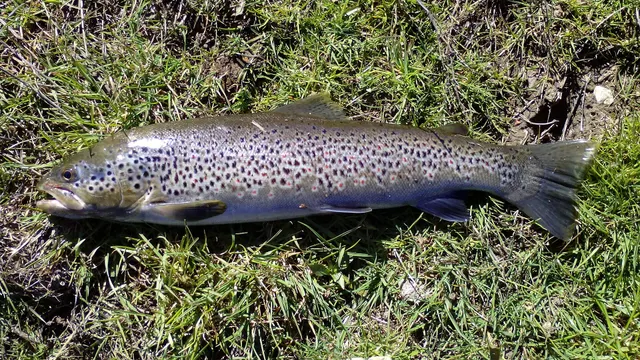 Brown troutA single, extraordinarily plastic species that appears as a tiny hill-stream fish, a deep-bodied loch trout and a silver sea-run migrant — all the same animal.
Robermix, CC0, via Wikimedia Commons
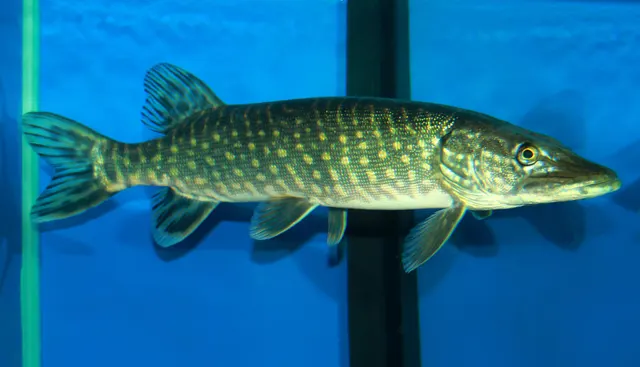 Northern pikeThe dominant freshwater ambush predator of the northern hemisphere: long, cryptic, and built for one violent acceleration rather than pursuit.
Karelj, Public domain, via Wikimedia Commons
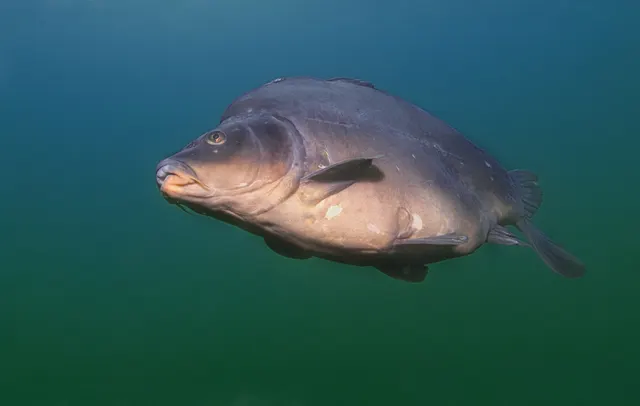 Common carpA large, long-lived, highly adaptable cyprinid whose capacity to learn has shaped more angling technique than any other freshwater fish.
Sven Riewe, CC0, via Wikimedia Commons
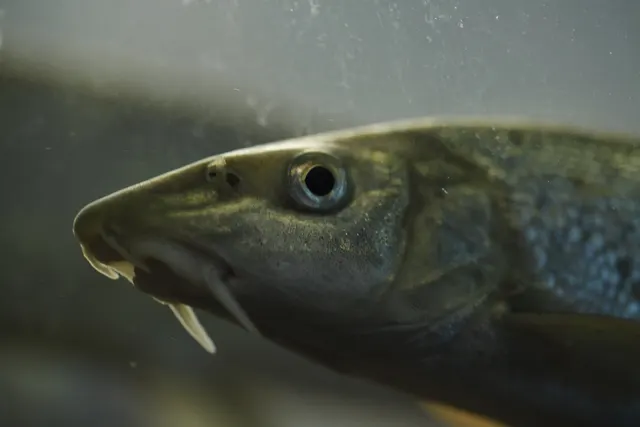 BarbelA powerful, streamlined river cyprinid built for holding station in fast water — and the hardest-fighting freshwater fish most British anglers will meet.
Pmau, CC BY-SA 4.0, via Wikimedia Commons
Check the rules before you fish
Fishing laws, bylaws, access rules, seasons, bait restrictions and permitted methods vary by location and can change. Check the current rules from the relevant authority and the water you intend to fish before fishing.
Check with:
- Current national or regional law for where you are fishing
- Current local bylaws
- The relevant fisheries authority
- The landowner, club or fishery whose water it is
- Any restrictions specific to the species or the method you intend to use
Where to go next
What swims here
- BarbelStands for the native North African cyprinid fauna of these rivers, which includes species restricted to single catchments and of serious conservation concern.
- Brown troutPresent in Atlas streams and mountain lakes at the southern edge of the species' range, with native North African populations in some catchments and introduced stock in others.
- Common carpIntroduced and widespread in the reservoirs and lower rivers, and fished more as food than as a specimen fish.
- Northern pikeIntroduced deliberately into the reservoir system during the twentieth century and now the principal predator of those fisheries.
Local knowledge
- Rain and fishing: before, during and afterSemi-arid hydrology, which the completeness engine recorded as unmodelled during an earlier pass: summer flow falling to a chain of pools, and rain arriving as a flood rather than as a season.
- Seasonal rivers, and water that is not always thereThe mechanism this freshwater system runs on: winter rain and snowmelt, contraction to disconnected pools through the dry season, and reconnection when substantial rain returns.
- Warm-water fishing, and the oxygen problemA contracted pool in the hot season is the oxygen problem in its most concentrated form, and it is why catch-and-release survival here is a real question rather than an assumption.
How this compares
- Invasive species and biosecurityDeliberate mid-century stocking created the reservoir fisheries and is a pressure on an endemic river fauna with nowhere else to go. Moving fish, water or wet equipment between catchments is how that pressure spreads.
- ReservoirsReservoirs are the dominant Moroccan freshwater environment by volume and by effort, and drawdown for irrigation is the mechanic that governs them.
- The Moroccan Atlantic coastBreaks 'Morocco = coast'. The same country holds trout streams at altitude, a national reservoir system and endemic river barbels, administered by a different authority from the sea.
- The Moroccan Mediterranean coastThe Rif and the Atlas both send water to the sea, and the freshwater and marine frameworks are administered separately — so a visitor establishing one has established nothing about the other.
Rules and access
- Close seasonsClosed seasons apply to some waters and species, notably around trout spawning, and are set and revised by the responsible authority.
- Licences and permissionAdministered by the authority responsible for water and forests — a different body from the maritime fisheries ministry, so neither framework can be inferred from the other.
Sources and evidence
- The IUCN Red List of Threatened Species — International Union for Conservation of Nature (Conservation authority)Relied on for: Assessment, population trend and range account for the species, including endemic and restricted-range freshwater fishes.States this directlyCitation checked — the work exists and is described correctly
- FishBase: a global information system on fishes — Froese, R. and D. Pauly, eds. — FishBase Consortium (Scientific institute)Relied on for: Distribution, habitat association, depth range, diet and reproductive parameters recorded for the species concerned.States this directlyPassage read and verified
- Code of Conduct for Responsible Fisheries — Food and Agriculture Organization of the United Nations, Rome, 1995 (Standards body)Relied on for: The international framework for responsible fisheries, including management structures, access arrangements and the obligations of coastal states.States this directlyCitation checked — the work exists and is described correctly
- Cefas science, advice and data on marine and freshwater environments — Centre for Environment, Fisheries and Aquaculture Science (Government fisheries body)Relied on for: Marine and freshwater environmental science, including coastal physical processes, productivity, water quality and the biology those conditions support.States this directlyCitation checked — the work exists and is described correctly
Why the 13 connections on this page are here, and the sources
What swims here
Backed by research — 4 connections
Supported by peer-reviewed research or fisheries science. The sources are listed and can be checked.
Barbel
A distribution claim about the world, so it rests on the reference datasets rather than on angling report. FishingHQ's evidence policy requires it.
- FishBase: a global information system on fishes — Froese, R. and D. Pauly, eds. — FishBase Consortium (Scientific institute)Relied on for: Distribution, habitat association and depth range recorded for the species, including its occurrence in the water body concerned.States this directlyPassage read and verified
- FAO Species Identification Guides for Fishery Purposes and the FAO Species Catalogues — Food and Agriculture Organization of the United Nations (Scientific institute)Relied on for: Distribution, habitat, depth and fishery accounts for the species of the eastern central Atlantic and Mediterranean.States this directlyCitation checked — the work exists and is described correctly
Brown trout
A distribution claim about the world, so it rests on the reference datasets rather than on angling report. FishingHQ's evidence policy requires it.
- FishBase: a global information system on fishes — Froese, R. and D. Pauly, eds. — FishBase Consortium (Scientific institute)Relied on for: Distribution, habitat association and depth range recorded for the species, including its occurrence in the water body concerned.States this directlyPassage read and verified
- FAO Species Identification Guides for Fishery Purposes and the FAO Species Catalogues — Food and Agriculture Organization of the United Nations (Scientific institute)Relied on for: Distribution, habitat, depth and fishery accounts for the species of the eastern central Atlantic and Mediterranean.States this directlyCitation checked — the work exists and is described correctly
Common carp
A distribution claim about the world, so it rests on the reference datasets rather than on angling report. FishingHQ's evidence policy requires it.
- FishBase: a global information system on fishes — Froese, R. and D. Pauly, eds. — FishBase Consortium (Scientific institute)Relied on for: Distribution, habitat association and depth range recorded for the species, including its occurrence in the water body concerned.States this directlyPassage read and verified
- FAO Species Identification Guides for Fishery Purposes and the FAO Species Catalogues — Food and Agriculture Organization of the United Nations (Scientific institute)Relied on for: Distribution, habitat, depth and fishery accounts for the species of the eastern central Atlantic and Mediterranean.States this directlyCitation checked — the work exists and is described correctly
Northern pike
A distribution claim about the world, so it rests on the reference datasets rather than on angling report. FishingHQ's evidence policy requires it.
- FishBase: a global information system on fishes — Froese, R. and D. Pauly, eds. — FishBase Consortium (Scientific institute)Relied on for: Distribution, habitat association and depth range recorded for the species, including its occurrence in the water body concerned.States this directlyPassage read and verified
- FAO Species Identification Guides for Fishery Purposes and the FAO Species Catalogues — Food and Agriculture Organization of the United Nations (Scientific institute)Relied on for: Distribution, habitat, depth and fishery accounts for the species of the eastern central Atlantic and Mediterranean.States this directlyCitation checked — the work exists and is described correctly
Local knowledge
Backed by research — 3 connections
Supported by peer-reviewed research or fisheries science. The sources are listed and can be checked.
Rain and fishing: before, during and after
A link from a practice, an environment or a geography to the mechanism it rests on. It asserts that the mechanism is load-bearing here rather than merely relevant, which is the test applied throughout this file.
- Freshwater Fishes of the British Isles — HarperCollins (New Naturalist 75), 1992 (Reference work)Relied on for: Ecology, habitat requirement and behaviour of European freshwater fishes in relation to flow, temperature, level and the modification of their waters.States this directlyCitation checked — the work exists and is described correctly
- The European Environment Agency's assessments of Europe's waters, seas and coasts — European Environment Agency, Copenhagen (Conservation authority)Relied on for: Assessment of Europe's surface waters, including regulation, abstraction, hydromorphological modification and the barriers those produce.States this directlyCitation checked — the work exists and is described correctly
Seasonal rivers, and water that is not always there
What is distinctive about fishing somewhere is usually a process working differently there, so the process is explained once here rather than restated for every place.
- Cefas science, advice and data on marine and freshwater environments — Centre for Environment, Fisheries and Aquaculture Science (Government fisheries body)Relied on for: Marine and freshwater environmental science, including coastal physical processes, productivity and the monitoring behind them.States this directlyCitation checked — the work exists and is described correctly
- ICES Advice on fishing opportunities, catch and effort — International Council for the Exploration of the Sea (Scientific institute)Relied on for: Stock assessment and advice for north-east Atlantic and adjacent stocks, including the environmental drivers of productivity.Background and mechanism onlyCitation checked — the work exists and is described correctly
Warm-water fishing, and the oxygen problem
What is distinctive about fishing somewhere is usually a process working differently there, so the process is explained once here rather than restated for every place.
- Cefas science, advice and data on marine and freshwater environments — Centre for Environment, Fisheries and Aquaculture Science (Government fisheries body)Relied on for: Marine and freshwater environmental science, including coastal physical processes, productivity and the monitoring behind them.States this directlyCitation checked — the work exists and is described correctly
- ICES Advice on fishing opportunities, catch and effort — International Council for the Exploration of the Sea (Scientific institute)Relied on for: Stock assessment and advice for north-east Atlantic and adjacent stocks, including the environmental drivers of productivity.Background and mechanism onlyCitation checked — the work exists and is described correctly
How this compares
What experienced anglers do — 4 connections
Widely and independently recommended by experienced anglers and specialist sources. This is real angling knowledge, not proof: controlled evidence for it is limited, and FishingHQ records it as convention rather than as a demonstrated effect.
Invasive species and biosecurity
Two places a reader would reasonably weigh against one another, joined where the comparison teaches something about both. It is also how the larger geography is linked to what sits inside it.
- Cefas science, advice and data on marine and freshwater environments — Centre for Environment, Fisheries and Aquaculture Science (Government fisheries body)Relied on for: Marine and freshwater environmental science, including coastal physical processes, productivity and the monitoring behind them.States this directlyCitation checked — the work exists and is described correctly
- ICES Advice on fishing opportunities, catch and effort — International Council for the Exploration of the Sea (Scientific institute)Relied on for: Stock assessment and advice for north-east Atlantic and adjacent stocks, including the environmental drivers of productivity.Background and mechanism onlyCitation checked — the work exists and is described correctly
Reservoirs
Two places a reader would reasonably weigh against one another, joined where the comparison teaches something about both. It is also how the larger geography is linked to what sits inside it.
- Cefas science, advice and data on marine and freshwater environments — Centre for Environment, Fisheries and Aquaculture Science (Government fisheries body)Relied on for: Marine and freshwater environmental science, including coastal physical processes, productivity and the monitoring behind them.States this directlyCitation checked — the work exists and is described correctly
- ICES Advice on fishing opportunities, catch and effort — International Council for the Exploration of the Sea (Scientific institute)Relied on for: Stock assessment and advice for north-east Atlantic and adjacent stocks, including the environmental drivers of productivity.Background and mechanism onlyCitation checked — the work exists and is described correctly
The Moroccan Atlantic coast
Two places a reader would reasonably weigh against one another, joined where the comparison teaches something about both. It is also how the larger geography is linked to what sits inside it.
- General angling website restatements of established technique — Various (Credible secondary source)Relied on for: Widely restated angling practice and belief, recorded as practitioner consensus rather than as tested fact.Background and mechanism onlyCitation checked — the work exists and is described correctly
- Sea Angler — Bauer Media (Specialist angling publication)Relied on for: Contemporary sea angling practice as reported and restated by practitioners, including shore and boat technique and tackle convention.Background and mechanism onlyCitation checked — the work exists and is described correctly
The Moroccan Mediterranean coast
Two places a reader would reasonably weigh against one another, joined where the comparison teaches something about both. It is also how the larger geography is linked to what sits inside it.
- General angling website restatements of established technique — Various (Credible secondary source)Relied on for: Widely restated angling practice and belief, recorded as practitioner consensus rather than as tested fact.Background and mechanism onlyCitation checked — the work exists and is described correctly
- Sea Angler — Bauer Media (Specialist angling publication)Relied on for: Contemporary sea angling practice as reported and restated by practitioners, including shore and boat technique and tackle convention.Background and mechanism onlyCitation checked — the work exists and is described correctly
Rules and access
Official guidance — 2 connections
Stated by a fisheries authority, scientific institute or recognised angling body. Authoritative, but summarising rather than demonstrating.
Close seasons
A place joined to the regulatory concept whose structure it illustrates. The edge asserts that the concept applies here, never what any current rule says.
- Code of Conduct for Responsible Fisheries — Food and Agriculture Organization of the United Nations, Rome, 1995 (Standards body)Relied on for: The international framework for responsible fisheries, including management structures, access arrangements and the obligations of coastal states.States this directlyCitation checked — the work exists and is described correctly
- FAO Species Identification Guides for Fishery Purposes and the FAO Species Catalogues — Food and Agriculture Organization of the United Nations (Scientific institute)Relied on for: Regional fishery accounts for the eastern central Atlantic and Mediterranean, including the management context for the species concerned.Background and mechanism onlyCitation checked — the work exists and is described correctly
Licences and permission
A place joined to the regulatory concept whose structure it illustrates. The edge asserts that the concept applies here, never what any current rule says.
- Code of Conduct for Responsible Fisheries — Food and Agriculture Organization of the United Nations, Rome, 1995 (Standards body)Relied on for: The international framework for responsible fisheries, including management structures, access arrangements and the obligations of coastal states.States this directlyCitation checked — the work exists and is described correctly
- FAO Species Identification Guides for Fishery Purposes and the FAO Species Catalogues — Food and Agriculture Organization of the United Nations (Scientific institute)Relied on for: Regional fishery accounts for the eastern central Atlantic and Mediterranean, including the management context for the species concerned.Background and mechanism onlyCitation checked — the work exists and is described correctly
How FishingHQ labels evidence is explained in the evidence policy.