The Moroccan Mediterranean coast
Fishing regions · Last reviewed 2026-08-14
Warm, clear and effectively tideless, fed by Atlantic water pouring through Gibraltar that makes the Alboran the most productive corner of the Mediterranean — and a completely different fishery from the Atlantic coast a few hours' drive away.
Being listed here is not permission to fish. What that meansClose
Access, fishing rights, seasons, licences, local bylaws and permitted methods vary and can change. Check current access, permission, local regulations, closures and restrictions before you travel or fish. FishingHQ describes what the ground is and names who holds the answer; it does not hold the answer itself.
Find the authority for a jurisdiction · What FishingHQ does and does not cover
Morocco's Mediterranean coast runs roughly 500 km from the Strait of Gibraltar east to the Algerian frontier, and almost nothing about it resembles the country's Atlantic side.
THE ALBORAN SEA IS THE MEDITERRANEAN'S FRONT DOOR. Atlantic water flows in through the Strait of Gibraltar at the surface, and denser Mediterranean water flows out beneath it. That inflow is cooler, fresher and richer than the basin it enters, and it sets up gyres and fronts that make the Alboran the most biologically productive part of the Mediterranean. A coast that looks like the rest of the Mediterranean on a map behaves like a transition zone in the water.
THERE IS EFFECTIVELY NO TIDE, and this is the single biggest practical difference from the Atlantic coast. Tidal range through most of the Mediterranean is a few tens of centimetres, so the entire body of tide craft that organises Atlantic shore fishing — reading a flood, timing a mark, fishing the ebb — has almost nothing to work on. What moves water here is wind, pressure and current, and anglers read those instead.
THE WATER IS WARM AND CLEAR, which inverts the Atlantic problem. Instead of cold upwelled water and heavy surf, the constraints are clarity, wariness and fish that can see a leader. Lighter presentation, longer casts and low light matter more than distance and grip.
THE COAST IS ROCK, NOT SURF. The Rif mountains meet the sea directly for much of its length, giving cliff, boulder and rock platform with deep water close in, punctuated by small bays, harbours and one very large coastal lagoon at Nador. That geometry puts genuinely deep water within a shore angler's reach in a way the Atlantic beaches do not.
AND THE CULTURE IS MEDITERRANEAN RATHER THAN ATLANTIC. Spearfishing has a following here that it does not have on the surf coast, small-boat fishing from harbours is the norm rather than beach launching, and the fishing year and the food culture belong to the Mediterranean world.
What fishing here is like
A mountainous, rocky, largely harbour-based coast on the most productive corner of the Mediterranean, with warm clear water, negligible tide and deep water close to shore. Fishing is dominated by rock and harbour shore angling, small-boat work out of a modest number of ports, and a genuine spearfishing following. Commercial fishing is artisanal and small-boat in character rather than the industrial small-pelagic operation of the Atlantic side, with the exception of the larger ports. The Nador lagoon is a major coastal feature and a different environment again from the open coast beside it.
What dominates
Rock and cliff shore fishing, which is the default here and which reaches deep water directly. Harbour and breakwater fishing in and around the ports, the most accessible fishing on the coast. Small-boat fishing out of harbours for bottom species and pelagics. Lure and light-rock fishing for predators over the rock and around structure, which suits clear water and visible ground. Spearfishing, which has a genuine Mediterranean following here that it does not have on the Atlantic surf coast, and which is separately regulated. Squid and cuttlefish fishing from shore and boat, ordinary rather than specialist. Shellfish and urchin gathering on the rock, a traditional practice. Coastal fly fishing is a very small but real activity. Beach and surf fishing barely exists in the Atlantic sense because there is neither the surf nor the tide to support it.
The water available
Rock platform, boulder ground and cliff where the Rif mountains reach the sea, with deep water close inshore; small pocket beaches and bays between headlands; a small number of substantial harbours and many small landing places; the Nador lagoon, a large shallow coastal lagoon connected to the sea through a restricted opening; the Strait of Gibraltar at the western end, where the whole Mediterranean exchanges with the Atlantic through a narrow gap; seagrass beds on the softer bottom; and offshore, a narrow shelf dropping quickly into deep water.
How the rules are structured
Fisheries are administered nationally by the ministry responsible for maritime fisheries, with regional maritime delegations implementing measures along the coast and a national research institute providing stock advice — the same national structure that governs the Atlantic coast, applied to a very different fishery. Mediterranean stocks are additionally the subject of regional multilateral management arrangements to which Mediterranean coastal states are party, so measures here sit inside an international framework as well as a national one. Recreational sea fishing is subject to national rules on gear, methods and species. Underwater fishing is regulated separately from rod angling, as it is in most Mediterranean jurisdictions, and separate authorisation is commonly part of such frameworks. Marine protected areas and designated coastal sites exist along this coast, including around the Al Hoceima massif, and they may restrict or prohibit activity inside their boundaries irrespective of general rules. The Nador lagoon is a designated coastal wetland with its own management considerations. Taking shellfish, urchins and other non-finfish catches is governed separately from finfish angling. FishingHQ does not state what any current rule is. Licences, authorisations, closed seasons, size limits, catch limits, permitted methods, protected areas and access arrangements all change, and they vary by location as well as by country. Underwater fishing in particular is separately regulated in most jurisdictions and nothing here should be read as saying it may be practised. Before fishing, check the current position with the authority named above and locally.
Who to ask
- The national ministry responsible for maritime fisheries, for the framework governing recreational and commercial sea fishing, gear, methods and species.
- The regional maritime fisheries delegation for the stretch of coast concerned, which implements measures locally and is the practical point of contact.
- The national fisheries research institute, whose stock assessments underpin management measures.
- The authority managing any marine protected area or designated coastal site, including the protected massif and the Nador lagoon.
- The port or maritime authority for the harbour concerned, for small-craft requirements and launching.
- The body responsible for authorising underwater fishing, which is regulated separately from rod angling in most jurisdictions of this region.
Words you will meet
- Alboran
- The westernmost basin of the Mediterranean, between Morocco and Spain. Fed by Atlantic inflow through Gibraltar, and the reason this coast is more productive than the Mediterranean average.
- Rif
- The mountain range running along this coast. It is why the shoreline is rock and cliff with deep water close in, and why the road access to much of it is indirect.
- Marchica
- The Nador lagoon, a large shallow coastal lagoon behind a sand barrier with a restricted opening to the sea. A designated wetland and an environment quite unlike the rock coast around it.
- Barque
- The small open artisanal boat of the coastal fishery, worked from harbours and landing places with lines, nets and pots. The vessel the coastal sector runs on, on both Moroccan coasts.
- Levante and Poniente
- The easterly and westerly winds of the Strait region. They set the sea state and the current on this coast the way tide does on an Atlantic one, and local fishing decisions are made from them.
Conditions and hazards
The hazards here are the inverse of the Atlantic coast's and are underestimated for that reason. Swell is smaller and less frequent, which encourages people onto low rock platforms that are occasionally swept by a set arriving from a distant Atlantic storm through the Strait. Rock and boulder ground is sharp, unstable and slippery, and the commonest injuries are falls rather than immersions. Water is warm enough in summer to make long immersion survivable and cold enough in winter for cold water shock to be real. Current through the Strait of Gibraltar and around headlands is powerful and is the principal hazard for small craft and for anybody in the water. Boat traffic through the Strait is among the heaviest in the world, which matters greatly for anyone diving or in a small craft. Summer sun and dehydration are serious on exposed rock with no shade.
Why the Alboran is not the Mediterranean people expect
Almost everything distinctive about this coast follows from its position at the mouth of a nearly enclosed sea, and it is worth setting out properly.
THE MEDITERRANEAN LOSES MORE WATER THAN IT RECEIVES. Evaporation across the basin exceeds the rain and river input, so the sea would fall without replenishment. It is replenished through the Strait of Gibraltar, where Atlantic surface water flows in continuously while denser, saltier Mediterranean water flows out beneath it in the opposite direction.
THAT INFLOW IS COOLER, FRESHER AND RICHER than the water it enters. The Mediterranean is nutrient-poor over most of its area — famously clear and correspondingly unproductive — and the Atlantic water arriving through the Strait carries nutrients the basin lacks.
THE INFLOW ORGANISES ITSELF INTO GYRES. Rather than spreading evenly, the incoming jet forms large rotating cells in the Alboran, and at their edges are fronts where water masses meet. Those fronts concentrate plankton, plankton concentrates baitfish, and baitfish concentrate everything larger.
THE RESULT IS THE MOST PRODUCTIVE PART OF THE MEDITERRANEAN, and it is a narrow one. Productivity falls away eastward as the Atlantic influence is lost, which is why this coast fishes better than a map would suggest and why the difference is real rather than local pride.
THERE IS EFFECTIVELY NO TIDE, and it is worth saying what that removes. Tidal range through most of the basin is a few tens of centimetres. The daily rhythm that organises fishing on any Atlantic coast — a flooding tide bringing fish over ground, a window either side of high water, a mark that only fishes on the ebb — simply is not there. Water moves with wind, pressure and current instead, and reading those is the local skill.
AND THE STRAIT IS A MIGRATION CORRIDOR AS WELL AS A HYDRAULIC ONE. Tuna, bonito and other pelagic migrants pass through it on predictable movements, which is why a narrow gap between two continents is one of the most significant pieces of fishing water in the region.
Backed by research — why, and the sources (3)
Supported by peer-reviewed research or fisheries science. The sources are listed and can be checked.
- Cefas science, advice and data on marine and freshwater environments — Centre for Environment, Fisheries and Aquaculture Science (Government fisheries body)Relied on for: Marine and freshwater environmental science, including coastal physical processes, productivity, water quality and the biology those conditions support.States this directlyCitation checked — the work exists and is described correctly
- FAO Species Identification Guides for Fishery Purposes and the FAO Species Catalogues — Food and Agriculture Organization of the United Nations (Scientific institute)Relied on for: Identification, distribution, habitat and fishery accounts for the species of the eastern central Atlantic and Mediterranean, including the Alboran Sea and the north-west African margin.States this directlyCitation checked — the work exists and is described correctly
- ICES Advice on fishing opportunities, catch and effort — International Council for the Exploration of the Sea (Scientific institute)Relied on for: Stock assessment and advice for north-east Atlantic and adjacent stocks, including small pelagic productivity and the environmental drivers behind it.Background and mechanism onlyCitation checked — the work exists and is described correctly
What swims here, and how little of it overlaps with the Atlantic list
The species picture is Mediterranean with an Atlantic seasoning, and it differs substantially from the country's other coast.
SEABREAMS DOMINATE THE ROCK FISHING. The sparids are the characteristic Mediterranean shore species — white seabream, gilthead, and their relatives — feeding over rock, seagrass and mixed ground, and they are what most shore anglers here are actually catching.
EUROPEAN SEA BASS occupies the rougher water, the harbour mouths and the lagoon entrances, and is a principal lure target.
WRASSE, SCORPIONFISH AND ROCK SPECIES hold the boulder and platform ground, and scorpionfish in particular carry venomous spines that make careless handling a genuine injury risk rather than a theoretical one.
DUSKY GROUPER is the iconic Mediterranean rock-dwelling predator and is a species of conservation concern across the basin, slow-growing and long-lived, with protection applying in places.
ATLANTIC BONITO AND SMALL TUNAS work the productive water offshore and through the Strait, following the baitfish, and they are the pelagic fishery.
SARDINE, ANCHOVY AND HORSE MACKEREL form the forage base, as they do on the Atlantic side, though not at the industrial scale the upwelling coast supports.
MULLET occupy harbours and the lagoon in quantity and are largely ignored, exactly as they are elsewhere.
CEPHALOPODS ARE AN ORDINARY CATCH. Squid, cuttlefish and octopus are taken from shore and boat and are part of the food culture rather than a specialist pursuit.
AND THE NON-FINFISH LIST IS REAL: sea urchins gathered from the rock, limpets and mussels, and crustaceans, all under separate rules from finfish and all subject to the same food-safety considerations that apply to gathering anywhere.
Backed by research — why, and the sources (3)
Supported by peer-reviewed research or fisheries science. The sources are listed and can be checked.
- FAO Species Identification Guides for Fishery Purposes and the FAO Species Catalogues — Food and Agriculture Organization of the United Nations (Scientific institute)Relied on for: Identification, distribution, habitat and fishery accounts for the species of the eastern central Atlantic and Mediterranean, including the Alboran Sea and the north-west African margin.States this directlyCitation checked — the work exists and is described correctly
- FishBase: a global information system on fishes — Froese, R. and D. Pauly, eds. — FishBase Consortium (Scientific institute)Relied on for: Distribution, habitat association, depth range, diet and reproductive parameters recorded for the species concerned.States this directlyPassage read and verified
- The IUCN Red List of Threatened Species — International Union for Conservation of Nature (Conservation authority)Relied on for: Assessment, population trend and range account for the species, including endemic and restricted-range freshwater fishes.States this directlyCitation checked — the work exists and is described correctly
Rock, harbour and boat, and almost no beachcasting at all
The disciplines practised here follow directly from a coast with deep water, clear water and no tide.
ROCK FISHING IS THE DEFAULT. The Rif meets the sea directly for much of the coast, giving platform and boulder ground with real depth a rod-length out. That puts species within reach from the shore that would need a boat on a shallow shelving coast.
HARBOUR AND BREAKWATER FISHING IS THE MOST ACCESSIBLE, and it is where most people start. Structure, lights at night, deep water and shelter make ports productive and easy to reach.
LIGHT LURE FISHING SUITS THE CONDITIONS EXACTLY. Clear water over visible ground, predators holding on structure, and no tide to fight make finesse lure work more rewarding here than heavy bottom fishing.
BOAT FISHING IS HARBOUR-BASED rather than beach-launched, working the drop-offs, the banks and the pelagic water offshore.
SPEARFISHING HAS A GENUINE FOLLOWING, which it does not have on the Atlantic surf coast, because the water is warm, clear and comparatively calm. It is separately regulated wherever it is practised in this region, and the safety posture that applies to it everywhere applies here without modification: proper freediving training first, never alone, a competent buddy watching, and calling the dive whenever conditions or judgement say so.
SQUID AND CUTTLEFISH FISHING is ordinary from shore and boat, particularly around harbours at night.
SHELLFISH AND URCHIN GATHERING on the rock is traditional and continues.
AND BEACHCASTING BARELY EXISTS. The distance-and-grip discipline that dominates the Atlantic coast solves a problem — holding bottom in surf against a running tide — that this coast does not have. The tackle would work; the reason for it is absent.
What experienced anglers do — why, and the sources (3)
Widely and independently recommended by experienced anglers and specialist sources. This is real angling knowledge, not proof: controlled evidence for it is limited, and FishingHQ records it as convention rather than as a demonstrated effect.
- General angling website restatements of established technique — Various (Credible secondary source)Relied on for: Widely restated angling practice and belief, recorded as practitioner consensus rather than as tested fact.Background and mechanism onlyCitation checked — the work exists and is described correctly
- CMAS technical and sporting standards for underwater activities — Confédération Mondiale des Activités Subaquatiques (Standards body)Relied on for: Technical and sporting standards for underwater activities, including the organisation of spearfishing and the training and safety framework around it.Background and mechanism onlyCitation checked — the work exists and is described correctly
- FAO Species Identification Guides for Fishery Purposes and the FAO Species Catalogues — Food and Agriculture Organization of the United Nations (Scientific institute)Relied on for: Identification, distribution, habitat and fishery accounts for the species of the eastern central Atlantic and Mediterranean, including the Alboran Sea and the north-west African margin.States this directlyCitation checked — the work exists and is described correctly
A year organised by temperature and wind rather than by tide
The fishing year here is driven by water temperature, by the pelagic migrations through the Strait and by wind, and not at all by the tidal cycle that organises Atlantic fishing.
WATER TEMPERATURE IS THE MASTER VARIABLE. The Mediterranean warms considerably in the warm half of the year and cools in the cold half, and the swing is larger than on the upwelling-cooled Atlantic coast at the same latitude. Species distribution, depth and feeding activity all follow it.
THE WARM SEASON brings pelagic species inshore and to the surface, extends the productive shallow-water fishing, and is when spearfishing and light lure work are at their best. It is also when clear, warm, still water makes fish most wary and pushes the good fishing into dawn, dusk and darkness.
THE COOL SEASON pushes species deeper, brings some of the better rock fishing for seabream as the water clears further, and is when weather rather than temperature limits what is possible.
PELAGIC MIGRATION THROUGH THE STRAIT is the event that structures the offshore year. Tuna and bonito pass through on movements between the Atlantic and the Mediterranean, and the timing of those passages is the closest thing this coast has to a fixed calendar — though it varies between years and should be treated as a pattern rather than a date.
CEPHALOPOD SEASONALITY IS A SPAWNING MOVEMENT, as it is everywhere: squid and cuttlefish come within reach when they move inshore to spawn, which is temperature-driven and therefore shifts.
WIND SETS THE FISHABLE DAYS. Easterly and westerly winds through the Strait region build sea quickly on an exposed rock coast, and local anglers plan around the forecast the way an Atlantic angler plans around the tide table.
AND THE ABSENCE OF A TIDAL CYCLE CHANGES THE RHYTHM OF A SESSION. Without a tide window, the productive periods are the light edges and the night, so the fishing day here is shaped by the sun rather than by the moon.
Backed by research — why, and the sources (3)
Supported by peer-reviewed research or fisheries science. The sources are listed and can be checked.
- FishBase: a global information system on fishes — Froese, R. and D. Pauly, eds. — FishBase Consortium (Scientific institute)Relied on for: Distribution, habitat association, depth range, diet and reproductive parameters recorded for the species concerned.States this directlyPassage read and verified
- Cefas science, advice and data on marine and freshwater environments — Centre for Environment, Fisheries and Aquaculture Science (Government fisheries body)Relied on for: Marine and freshwater environmental science, including coastal physical processes, productivity, water quality and the biology those conditions support.States this directlyCitation checked — the work exists and is described correctly
- FAO Species Identification Guides for Fishery Purposes and the FAO Species Catalogues — Food and Agriculture Organization of the United Nations (Scientific institute)Relied on for: Identification, distribution, habitat and fishery accounts for the species of the eastern central Atlantic and Mediterranean, including the Alboran Sea and the north-west African margin.States this directlyCitation checked — the work exists and is described correctly
The general framework, and what a visitor has to establish
The regulatory structure here is the national Moroccan one applied to a Mediterranean fishery, with an additional international layer that the Atlantic coast does not have in the same form.
THE NATIONAL STRUCTURE IS CENTRALISED AND LEGIBLE. A ministry responsible for maritime fisheries sets the framework, regional maritime delegations implement it along the coast, and a national research institute provides the stock advice measures are built on. The regional delegation is the practical point of contact for the stretch of coast a visitor is on.
MEDITERRANEAN STOCKS SIT INSIDE A REGIONAL MULTILATERAL FRAMEWORK as well as a national one, because the basin is shared between many states and the fish do not divide between them. Measures here therefore reflect international arrangements in a way that is less visible on the Atlantic side.
UNDERWATER FISHING IS REGULATED SEPARATELY FROM ROD ANGLING, as it is in most jurisdictions of this region, and separate authorisation is commonly a feature of such frameworks. Nothing about the angling position may be used to infer the spearfishing position: they are different regimes and must be established independently with the competent authority.
PROTECTED AREAS EXIST ALONG THIS COAST and they override general rules inside their boundaries. The protected massif at Al Hoceima and the designated wetland at the Nador lagoon are the most significant, and the fact that the most interesting water is also the most likely to be designated is a pattern rather than a coincidence.
NON-FINFISH CATCH IS GOVERNED SEPARATELY. Shellfish, urchins and crustaceans have their own rules, and gathering them raises food-safety questions — biotoxins in particular — that are a matter for local public-health classification rather than for a general account.
AND SMALL CRAFT CARRY THEIR OWN REQUIREMENTS through the port and maritime authority, which is a separate matter again from fisheries rules.
FishingHQ does not state what any current rule is. Licences, authorisations, closed seasons, size limits, catch limits, permitted methods, protected areas and access arrangements all change, and they vary by location as well as by country. Underwater fishing in particular is separately regulated in most jurisdictions and nothing here should be read as saying it may be practised. Before fishing, check the current position with the authority named above and locally.
Official guidance — why, and the sources (3)
Stated by a fisheries authority, scientific institute or recognised angling body. Authoritative, but summarising rather than demonstrating.
- Code of Conduct for Responsible Fisheries — Food and Agriculture Organization of the United Nations, Rome, 1995 (Standards body)Relied on for: The international framework for responsible fisheries, including management structures, access arrangements and the obligations of coastal states.States this directlyCitation checked — the work exists and is described correctly
- FAO Species Identification Guides for Fishery Purposes and the FAO Species Catalogues — Food and Agriculture Organization of the United Nations (Scientific institute)Relied on for: Identification, distribution, habitat and fishery accounts for the species of the eastern central Atlantic and Mediterranean, including the Alboran Sea and the north-west African margin.States this directlyCitation checked — the work exists and is described correctly
- CMAS technical and sporting standards for underwater activities — Confédération Mondiale des Activités Subaquatiques (Standards body)Relied on for: Technical and sporting standards for underwater activities, including the organisation of spearfishing and the training and safety framework around it.Background and mechanism onlyCitation checked — the work exists and is described correctly
The words that matter on this coast
The vocabulary here is Mediterranean, with Spanish, Riffian and French threads running through it, and several terms carry practical weight.
ALBORAN is the westernmost Mediterranean basin, between Morocco and Spain. It is the name for the water that makes this coast productive, and the reason the fishing differs from the Mediterranean further east.
RIF is the mountain range along the coast. It explains the shoreline — rock, cliff and deep water close in — and it explains why access to much of the coast is indirect.
MARCHICA is the Nador lagoon: a large shallow coastal lagoon behind a sand barrier, connected to the sea through a restricted opening. A designated wetland and a completely different environment from the rock coast beside it.
BARQUE is the small open artisanal boat that the coastal fishery runs on, worked from harbours and landing places. The same word and the same vessel as on the Atlantic side.
LEVANTE AND PONIENTE are the easterly and westerly winds of the Strait region. On a tideless coast these do the job the tide table does elsewhere: they set the sea state, the current and whether the fishing is possible.
SPARIDS is the family name worth knowing because the seabreams are the characteristic shore species, and local names for individual species vary between languages and villages in a way the family name does not.
AND POULPE, the French word for octopus, is in general use for a target that is ordinary here rather than exotic — as it is on the Atlantic coast, where the octopus fishery is of international economic weight.
What experienced anglers do — why, and the sources (2)
Widely and independently recommended by experienced anglers and specialist sources. This is real angling knowledge, not proof: controlled evidence for it is limited, and FishingHQ records it as convention rather than as a demonstrated effect.
- General angling website restatements of established technique — Various (Credible secondary source)Relied on for: Widely restated angling practice and belief, recorded as practitioner consensus rather than as tested fact.Background and mechanism onlyCitation checked — the work exists and is described correctly
- FAO Species Identification Guides for Fishery Purposes and the FAO Species Catalogues — Food and Agriculture Organization of the United Nations (Scientific institute)Relied on for: Identification, distribution, habitat and fishery accounts for the species of the eastern central Atlantic and Mediterranean, including the Alboran Sea and the north-west African margin.States this directlyCitation checked — the work exists and is described correctly
A frontier coast, and a fishery shaped by it
This coast's fishing history is inseparable from its position at the meeting point of two seas and two continents.
THE STRAIT HAS BEEN A FISHING PLACE FOR MILLENNIA. The predictable passage of tuna through a narrow gap supported organised fisheries in the ancient Mediterranean world, and trap fisheries built around those migrations were an economic institution on both shores for a very long time.
SALTING AND PRESERVING WAS THE INDUSTRY. Before refrigeration, the value of a seasonal glut of migratory fish lay in preserving it, and salting and processing installations around the Strait region were a significant part of the ancient and medieval economy.
THE RIF'S ISOLATION SHAPED ITS FISHING COMMUNITIES. Mountains meeting the sea meant settlements connected more easily by water than by land, and small harbours and landing places developed a strong local maritime character.
THE COLONIAL PERIOD LEFT ITS MARK on the ports and on the vocabulary, with Spanish influence particularly strong along this coast and visible in place names, boat types and fishing terms.
ARTISANAL FISHING REMAINS THE BACKBONE. Unlike the Atlantic coast, where an industrial small-pelagic and cephalopod fishery dominates, this coast's commercial activity is largely small-boat and local, which keeps the relationship between the fishing and the community closer.
RECREATIONAL FISHING IS COMPARATIVELY RECENT here as an organised activity, and spearfishing arrived as part of the broader Mediterranean development of the sport in the twentieth century.
AND THE LAGOON AT NADOR HAS BEEN SUBSTANTIALLY DEVELOPED in recent decades, changing a large coastal wetland's relationship with the sea and with the town beside it — a reminder that the physical geography of a fishery is not always older than the people fishing it.
Official guidance — why, and the sources (3)
Stated by a fisheries authority, scientific institute or recognised angling body. Authoritative, but summarising rather than demonstrating.
- Fishers' Craft and Lettered Art: Tracts on Fishing from the End of the Middle Ages — University of Toronto Press, 1997 (Scientific literature)Relied on for: The medieval and early-modern development of fishing in Europe and the Mediterranean, including the emergence of fisheries, rights and traditional practice.Background and mechanism onlyCitation checked — the work exists and is described correctly
- General angling website restatements of established technique — Various (Credible secondary source)Relied on for: Widely restated angling practice and belief, recorded as practitioner consensus rather than as tested fact.Background and mechanism onlyCitation checked — the work exists and is described correctly
- Code of Conduct for Responsible Fisheries — Food and Agriculture Organization of the United Nations, Rome, 1995 (Standards body)Relied on for: The international framework for responsible fisheries, including management structures, access arrangements and the obligations of coastal states.States this directlyCitation checked — the work exists and is described correctly
Some of what lives here
Fish recorded here that FishingHQ holds a reviewed photograph of. It is not a complete list of what The Moroccan Mediterranean coast holds, and it is not a prediction that you will catch any of them — it is a way in to the ones we can show you.
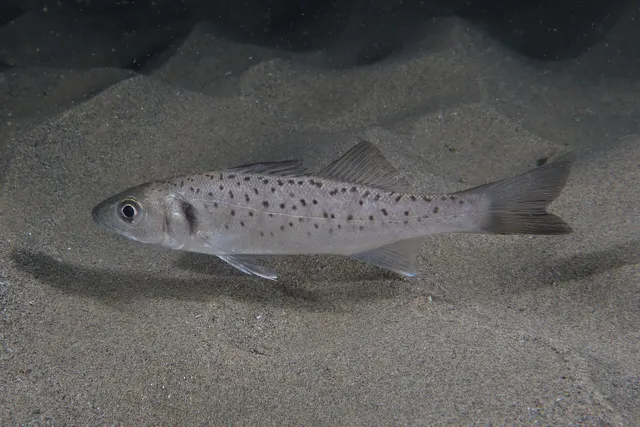 European sea bassA fast, predatory inshore fish that hunts in broken water and surf, and one of the most closely managed recreational species in European seas.
Julien Renoult — CC BY 4.0, via Wikimedia Commons
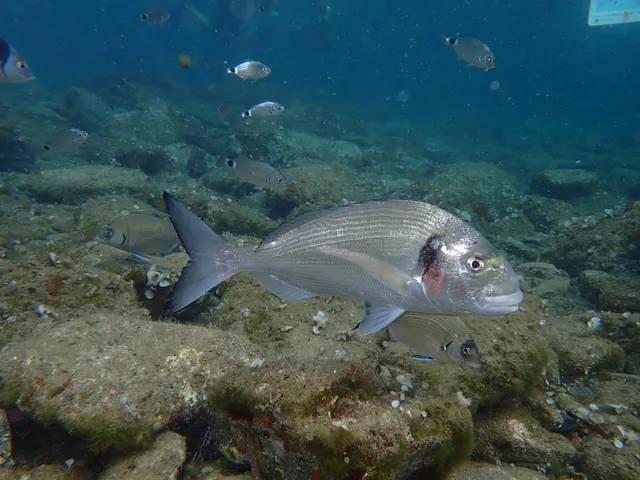 Gilthead breamThe Mediterranean's most prized sea bream, marked by a golden band between the eyes, with a jaw powerful enough to crush shellfish and a range now expanding northward.
jujurenoult — CC BY 4.0, via Wikimedia Commons
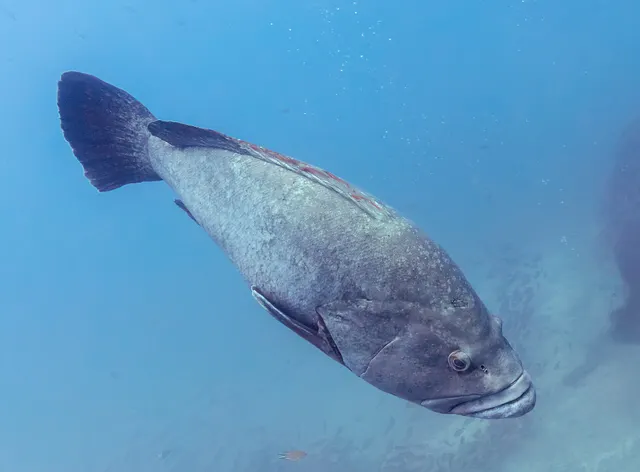 Dusky grouperThe Mediterranean's iconic reef predator: territorial, slow to mature, sex-changing, and the species whose decline made the case for marine protected areas there.
Diego Delso — CC BY-SA 4.0, via Wikimedia Commons
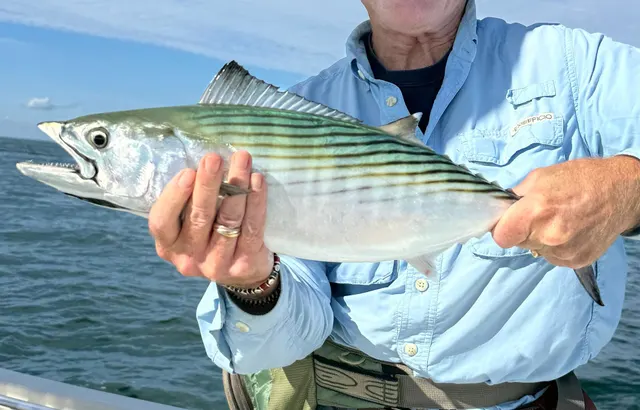 Atlantic bonitoA small, fast, striped tuna relative that arrives on temperate coasts in shoals each year and is the most accessible member of the family to a shore angler.
ricofish — CC0, via Wikimedia Commons
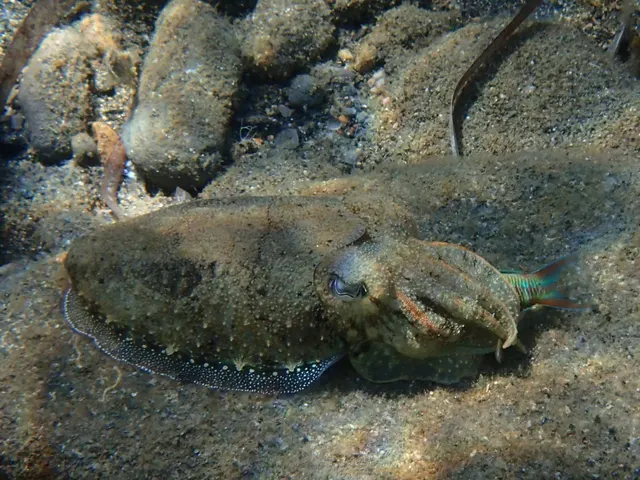 Common cuttlefishA bottom-oriented cephalopod with an internal buoyancy shell, the best-studied invertebrate mind in the sea, and a fishery that works quite differently from squid.
Katerina Kalogerini — CC BY, via iNaturalist
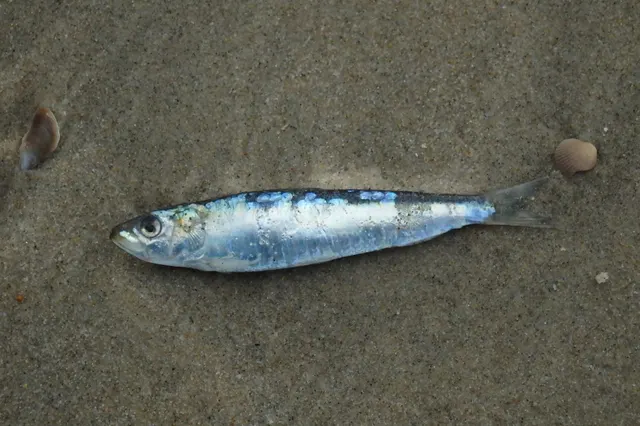 European sardineThe small silver fish that upwelling coasts produce in millions — the same species as a Cornish pilchard, the foundation of the Moroccan and Iberian fisheries, and the forage base almost every predator on those coasts depends on.
Duarte Frade — CC BY, via iNaturalist
Safety
Further safety reading
- Rock platform and cliff safety — The hazard here is the inverse of the Atlantic coast's and is underestimated for that reason: smaller, less frequent swell encourages people onto low rock platforms that are occasionally swept by a set arriving through the Strait.
- Surface markers and boat traffic — Traffic through the Strait region is among the heaviest in the world, which makes surface marking a non-negotiable rather than a courtesy for anyone diving or in a small craft.
Check the rules before you fish
Fishing laws, bylaws, access rules, seasons, bait restrictions and permitted methods vary by location and can change. Check the current rules from the relevant authority and the water you intend to fish before fishing.
Check with:
- Current national or regional law for where you are fishing
- Current local bylaws
- The relevant fisheries authority
- The landowner, club or fishery whose water it is
- Any restrictions specific to the species or the method you intend to use
Where to go next
What swims here
- Atlantic bonitoWorks the productive Alboran water and passes through the Strait on migration, following the small pelagic shoals.
- Common cuttlefishTaken from shore and boat and part of the food culture rather than a specialist catch, moving inshore to spawn as water warms.
- Dusky grouperThe iconic Mediterranean rock-dwelling predator, slow-growing, long-lived and of conservation concern across the basin.
- European sardinePart of the forage base here as on the Atlantic side, though without the industrial scale the upwelling coast supports.
- European sea bassOccupies rough water, harbour mouths and the lagoon entrances, and is the principal lure target on this coast.
- Gilthead breamWorks the mixed ground, the lagoon and the harbour approaches, and is a mainstay of the shore fishery on both Moroccan coasts.
- White seabreamOne of the characteristic sparids of the rock and seagrass ground, and among the commonest shore captures here.
Local knowledge
How this compares
- Casting into windThe Levante and Poniente set the fishable days on this coast, and wind is the constraint a shore angler here actually plans around.
- Coastal lagoonsThe Nador lagoon is a large shallow coastal lagoon behind a sand barrier with a restricted opening — the geometry the lagoon page describes, and an environment quite unlike the rock coast beside it.
- Gathering shellfish, and the hazard that cooking does not removeThe biotoxin page deliberately refuses to answer 'can I eat it here', which is exactly what makes it safe to inherit into a jurisdiction whose monitoring FishingHQ cannot see.
- Gathering winkles, whelks and limpetsShellfish and urchin gathering on the rock is a traditional practice here, and the gathering craft, the ground and the food-safety frame are the same everywhere.
- Marine protected areas and spearfishingProtected areas along this coast, including the Al Hoceima massif and the designated wetland at Nador, override general rules inside their boundaries.
- MediterraneanThe Alboran is where the Mediterranean exchanges with the Atlantic, so it is both an instance of the basin record and the exception that explains why the rest of the basin is less productive.
- Moroccan mountain and reservoir fresh waterThe Rif and the Atlas both send water to the sea, and the freshwater and marine frameworks are administered separately — so a visitor establishing one has established nothing about the other.
- Reading a coast for the flyOn a tideless coast, wind and current replace tide state as the thing a fly angler reads, which is the same skill applied to a different variable.
6 more
- Saltwater fly fishing Method
- Spearfishing Discipline
- The Moroccan Atlantic coast Fishing regions
- The Strait of Gibraltar Fishing regions
- What squid fishing actually is Explainer
- Why spearfishing is never a solo activity Explainer
Rules and access
- Licences and permissionA centralised national framework with regional maritime delegations implementing it, sitting inside a regional multilateral arrangement for shared Mediterranean stocks.
- Taking crabs, lobsters, squid and shellfish: how the rules are structuredShellfish, urchins and crustaceans are governed separately from finfish angling here as everywhere, and underwater fishing is a separate regime again from rod angling.
Sources and evidence
- FAO Species Identification Guides for Fishery Purposes and the FAO Species Catalogues — Food and Agriculture Organization of the United Nations (Scientific institute)Relied on for: Identification, distribution, habitat and fishery accounts for the species of the eastern central Atlantic and Mediterranean, including the Alboran Sea and the north-west African margin.States this directlyCitation checked — the work exists and is described correctly
- Cefas science, advice and data on marine and freshwater environments — Centre for Environment, Fisheries and Aquaculture Science (Government fisheries body)Relied on for: Marine and freshwater environmental science, including coastal physical processes, productivity, water quality and the biology those conditions support.States this directlyCitation checked — the work exists and is described correctly
- Code of Conduct for Responsible Fisheries — Food and Agriculture Organization of the United Nations, Rome, 1995 (Standards body)Relied on for: The international framework for responsible fisheries, including management structures, access arrangements and the obligations of coastal states.States this directlyCitation checked — the work exists and is described correctly
Why the 26 connections on this page are here, and the sources
What swims here
Backed by research — 7 connections
Supported by peer-reviewed research or fisheries science. The sources are listed and can be checked.
Atlantic bonito
A distribution claim about the world, so it rests on the reference datasets rather than on angling report. FishingHQ's evidence policy requires it.
- FishBase: a global information system on fishes — Froese, R. and D. Pauly, eds. — FishBase Consortium (Scientific institute)Relied on for: Distribution, habitat association and depth range recorded for the species, including its occurrence in the water body concerned.States this directlyPassage read and verified
- FAO Species Identification Guides for Fishery Purposes and the FAO Species Catalogues — Food and Agriculture Organization of the United Nations (Scientific institute)Relied on for: Distribution, habitat, depth and fishery accounts for the species of the eastern central Atlantic and Mediterranean.States this directlyCitation checked — the work exists and is described correctly
Common cuttlefish
A distribution claim about the world, so it rests on the reference datasets rather than on angling report. FishingHQ's evidence policy requires it.
- FishBase: a global information system on fishes — Froese, R. and D. Pauly, eds. — FishBase Consortium (Scientific institute)Relied on for: Distribution, habitat association and depth range recorded for the species, including its occurrence in the water body concerned.States this directlyPassage read and verified
- FAO Species Identification Guides for Fishery Purposes and the FAO Species Catalogues — Food and Agriculture Organization of the United Nations (Scientific institute)Relied on for: Distribution, habitat, depth and fishery accounts for the species of the eastern central Atlantic and Mediterranean.States this directlyCitation checked — the work exists and is described correctly
Dusky grouper
A distribution claim about the world, so it rests on the reference datasets rather than on angling report. FishingHQ's evidence policy requires it.
- FishBase: a global information system on fishes — Froese, R. and D. Pauly, eds. — FishBase Consortium (Scientific institute)Relied on for: Distribution, habitat association and depth range recorded for the species, including its occurrence in the water body concerned.States this directlyPassage read and verified
- FAO Species Identification Guides for Fishery Purposes and the FAO Species Catalogues — Food and Agriculture Organization of the United Nations (Scientific institute)Relied on for: Distribution, habitat, depth and fishery accounts for the species of the eastern central Atlantic and Mediterranean.States this directlyCitation checked — the work exists and is described correctly
European sardine
A distribution claim about the world, so it rests on the reference datasets rather than on angling report. FishingHQ's evidence policy requires it.
- FishBase: a global information system on fishes — Froese, R. and D. Pauly, eds. — FishBase Consortium (Scientific institute)Relied on for: Distribution, habitat association and depth range recorded for the species, including its occurrence in the water body concerned.States this directlyPassage read and verified
- FAO Species Identification Guides for Fishery Purposes and the FAO Species Catalogues — Food and Agriculture Organization of the United Nations (Scientific institute)Relied on for: Distribution, habitat, depth and fishery accounts for the species of the eastern central Atlantic and Mediterranean.States this directlyCitation checked — the work exists and is described correctly
European sea bass
A distribution claim about the world, so it rests on the reference datasets rather than on angling report. FishingHQ's evidence policy requires it.
- FishBase: a global information system on fishes — Froese, R. and D. Pauly, eds. — FishBase Consortium (Scientific institute)Relied on for: Distribution, habitat association and depth range recorded for the species, including its occurrence in the water body concerned.States this directlyPassage read and verified
- FAO Species Identification Guides for Fishery Purposes and the FAO Species Catalogues — Food and Agriculture Organization of the United Nations (Scientific institute)Relied on for: Distribution, habitat, depth and fishery accounts for the species of the eastern central Atlantic and Mediterranean.States this directlyCitation checked — the work exists and is described correctly
Gilthead bream
A distribution claim about the world, so it rests on the reference datasets rather than on angling report. FishingHQ's evidence policy requires it.
- FishBase: a global information system on fishes — Froese, R. and D. Pauly, eds. — FishBase Consortium (Scientific institute)Relied on for: Distribution, habitat association and depth range recorded for the species, including its occurrence in the water body concerned.States this directlyPassage read and verified
- FAO Species Identification Guides for Fishery Purposes and the FAO Species Catalogues — Food and Agriculture Organization of the United Nations (Scientific institute)Relied on for: Distribution, habitat, depth and fishery accounts for the species of the eastern central Atlantic and Mediterranean.States this directlyCitation checked — the work exists and is described correctly
White seabream
A distribution claim about the world, so it rests on the reference datasets rather than on angling report. FishingHQ's evidence policy requires it.
- FishBase: a global information system on fishes — Froese, R. and D. Pauly, eds. — FishBase Consortium (Scientific institute)Relied on for: Distribution, habitat association and depth range recorded for the species, including its occurrence in the water body concerned.States this directlyPassage read and verified
- FAO Species Identification Guides for Fishery Purposes and the FAO Species Catalogues — Food and Agriculture Organization of the United Nations (Scientific institute)Relied on for: Distribution, habitat, depth and fishery accounts for the species of the eastern central Atlantic and Mediterranean.States this directlyCitation checked — the work exists and is described correctly
Local knowledge
Backed by research — 1 connection
Supported by peer-reviewed research or fisheries science. The sources are listed and can be checked.
Currents, eddies and where fish hold
What is distinctive about fishing somewhere is usually a process working differently there, so the process is explained once here rather than restated for every place.
- Cefas science, advice and data on marine and freshwater environments — Centre for Environment, Fisheries and Aquaculture Science (Government fisheries body)Relied on for: Marine and freshwater environmental science, including coastal physical processes, productivity and the monitoring behind them.States this directlyCitation checked — the work exists and is described correctly
- ICES Advice on fishing opportunities, catch and effort — International Council for the Exploration of the Sea (Scientific institute)Relied on for: Stock assessment and advice for north-east Atlantic and adjacent stocks, including the environmental drivers of productivity.Background and mechanism onlyCitation checked — the work exists and is described correctly
How this compares
What experienced anglers do — 14 connections
Widely and independently recommended by experienced anglers and specialist sources. This is real angling knowledge, not proof: controlled evidence for it is limited, and FishingHQ records it as convention rather than as a demonstrated effect.
Casting into wind
Two places a reader would reasonably weigh against one another, joined where the comparison teaches something about both. It is also how the larger geography is linked to what sits inside it.
- General angling website restatements of established technique — Various (Credible secondary source)Relied on for: Widely restated angling practice and belief, recorded as practitioner consensus rather than as tested fact.Background and mechanism onlyCitation checked — the work exists and is described correctly
- Sea Angler — Bauer Media (Specialist angling publication)Relied on for: Contemporary sea angling practice as reported and restated by practitioners, including shore and boat technique and tackle convention.Background and mechanism onlyCitation checked — the work exists and is described correctly
Coastal lagoons
Two places a reader would reasonably weigh against one another, joined where the comparison teaches something about both. It is also how the larger geography is linked to what sits inside it.
- Cefas science, advice and data on marine and freshwater environments — Centre for Environment, Fisheries and Aquaculture Science (Government fisheries body)Relied on for: Marine and freshwater environmental science, including coastal physical processes, productivity and the monitoring behind them.States this directlyCitation checked — the work exists and is described correctly
- ICES Advice on fishing opportunities, catch and effort — International Council for the Exploration of the Sea (Scientific institute)Relied on for: Stock assessment and advice for north-east Atlantic and adjacent stocks, including the environmental drivers of productivity.Background and mechanism onlyCitation checked — the work exists and is described correctly
Gathering shellfish, and the hazard that cooking does not remove
Two places a reader would reasonably weigh against one another, joined where the comparison teaches something about both. It is also how the larger geography is linked to what sits inside it.
- General angling website restatements of established technique — Various (Credible secondary source)Relied on for: Widely restated angling practice and belief, recorded as practitioner consensus rather than as tested fact.Background and mechanism onlyCitation checked — the work exists and is described correctly
- Sea Angler — Bauer Media (Specialist angling publication)Relied on for: Contemporary sea angling practice as reported and restated by practitioners, including shore and boat technique and tackle convention.Background and mechanism onlyCitation checked — the work exists and is described correctly
Gathering winkles, whelks and limpets
Two places a reader would reasonably weigh against one another, joined where the comparison teaches something about both. It is also how the larger geography is linked to what sits inside it.
- General angling website restatements of established technique — Various (Credible secondary source)Relied on for: Widely restated angling practice and belief, recorded as practitioner consensus rather than as tested fact.Background and mechanism onlyCitation checked — the work exists and is described correctly
- Sea Angler — Bauer Media (Specialist angling publication)Relied on for: Contemporary sea angling practice as reported and restated by practitioners, including shore and boat technique and tackle convention.Background and mechanism onlyCitation checked — the work exists and is described correctly
Marine protected areas and spearfishing
Two places a reader would reasonably weigh against one another, joined where the comparison teaches something about both. It is also how the larger geography is linked to what sits inside it.
- Code of Conduct for Responsible Fisheries — Food and Agriculture Organization of the United Nations, Rome, 1995 (Standards body)Relied on for: The international framework for responsible fisheries, including management structures, access arrangements and the obligations of coastal states.States this directlyCitation checked — the work exists and is described correctly
- FAO Species Identification Guides for Fishery Purposes and the FAO Species Catalogues — Food and Agriculture Organization of the United Nations (Scientific institute)Relied on for: Regional fishery accounts for the eastern central Atlantic and Mediterranean, including the management context for the species concerned.Background and mechanism onlyCitation checked — the work exists and is described correctly
Mediterranean
Two places a reader would reasonably weigh against one another, joined where the comparison teaches something about both. It is also how the larger geography is linked to what sits inside it.
- Cefas science, advice and data on marine and freshwater environments — Centre for Environment, Fisheries and Aquaculture Science (Government fisheries body)Relied on for: Marine and freshwater environmental science, including coastal physical processes, productivity and the monitoring behind them.States this directlyCitation checked — the work exists and is described correctly
- ICES Advice on fishing opportunities, catch and effort — International Council for the Exploration of the Sea (Scientific institute)Relied on for: Stock assessment and advice for north-east Atlantic and adjacent stocks, including the environmental drivers of productivity.Background and mechanism onlyCitation checked — the work exists and is described correctly
Moroccan mountain and reservoir fresh water
Two places a reader would reasonably weigh against one another, joined where the comparison teaches something about both. It is also how the larger geography is linked to what sits inside it.
- General angling website restatements of established technique — Various (Credible secondary source)Relied on for: Widely restated angling practice and belief, recorded as practitioner consensus rather than as tested fact.Background and mechanism onlyCitation checked — the work exists and is described correctly
- Sea Angler — Bauer Media (Specialist angling publication)Relied on for: Contemporary sea angling practice as reported and restated by practitioners, including shore and boat technique and tackle convention.Background and mechanism onlyCitation checked — the work exists and is described correctly
Reading a coast for the fly
Two records a reader would reasonably weigh against one another, joined where the comparison teaches something about both.
- Sea Angler — Bauer Media (Specialist angling publication)Relied on for: Contemporary UK sea angling practice as reported and restated by practitioners, including shore technique, species behaviour and tackle convention.Background and mechanism onlyCitation checked — the work exists and is described correctly
- General angling website restatements of established technique — Various (Credible secondary source)Relied on for: Widely restated angling practice and belief, recorded as practitioner consensus rather than as tested fact.Background and mechanism onlyCitation checked — the work exists and is described correctly
Saltwater fly fishing
Two places a reader would reasonably weigh against one another, joined where the comparison teaches something about both. It is also how the larger geography is linked to what sits inside it.
- General angling website restatements of established technique — Various (Credible secondary source)Relied on for: Widely restated angling practice and belief, recorded as practitioner consensus rather than as tested fact.Background and mechanism onlyCitation checked — the work exists and is described correctly
- Sea Angler — Bauer Media (Specialist angling publication)Relied on for: Contemporary sea angling practice as reported and restated by practitioners, including shore and boat technique and tackle convention.Background and mechanism onlyCitation checked — the work exists and is described correctly
Spearfishing
Two places a reader would reasonably weigh against one another, joined where the comparison teaches something about both. It is also how the larger geography is linked to what sits inside it.
- General angling website restatements of established technique — Various (Credible secondary source)Relied on for: Widely restated angling practice and belief, recorded as practitioner consensus rather than as tested fact.Background and mechanism onlyCitation checked — the work exists and is described correctly
- Sea Angler — Bauer Media (Specialist angling publication)Relied on for: Contemporary sea angling practice as reported and restated by practitioners, including shore and boat technique and tackle convention.Background and mechanism onlyCitation checked — the work exists and is described correctly
The Moroccan Atlantic coast
Two places a reader would reasonably weigh against one another, joined where the comparison teaches something about both. It is also how the larger geography is linked to what sits inside it.
- General angling website restatements of established technique — Various (Credible secondary source)Relied on for: Widely restated angling practice and belief, recorded as practitioner consensus rather than as tested fact.Background and mechanism onlyCitation checked — the work exists and is described correctly
- Sea Angler — Bauer Media (Specialist angling publication)Relied on for: Contemporary sea angling practice as reported and restated by practitioners, including shore and boat technique and tackle convention.Background and mechanism onlyCitation checked — the work exists and is described correctly
The Strait of Gibraltar
Two places a reader would reasonably weigh against one another, joined where the comparison teaches something about both. It is also how the larger geography is linked to what sits inside it.
- Cefas science, advice and data on marine and freshwater environments — Centre for Environment, Fisheries and Aquaculture Science (Government fisheries body)Relied on for: Marine and freshwater environmental science, including coastal physical processes, productivity and the monitoring behind them.States this directlyCitation checked — the work exists and is described correctly
- ICES Advice on fishing opportunities, catch and effort — International Council for the Exploration of the Sea (Scientific institute)Relied on for: Stock assessment and advice for north-east Atlantic and adjacent stocks, including the environmental drivers of productivity.Background and mechanism onlyCitation checked — the work exists and is described correctly
What squid fishing actually is
Two places a reader would reasonably weigh against one another, joined where the comparison teaches something about both. It is also how the larger geography is linked to what sits inside it.
- General angling website restatements of established technique — Various (Credible secondary source)Relied on for: Widely restated angling practice and belief, recorded as practitioner consensus rather than as tested fact.Background and mechanism onlyCitation checked — the work exists and is described correctly
- Sea Angler — Bauer Media (Specialist angling publication)Relied on for: Contemporary sea angling practice as reported and restated by practitioners, including shore and boat technique and tackle convention.Background and mechanism onlyCitation checked — the work exists and is described correctly
Why spearfishing is never a solo activity
Two places a reader would reasonably weigh against one another, joined where the comparison teaches something about both. It is also how the larger geography is linked to what sits inside it.
- General angling website restatements of established technique — Various (Credible secondary source)Relied on for: Widely restated angling practice and belief, recorded as practitioner consensus rather than as tested fact.Background and mechanism onlyCitation checked — the work exists and is described correctly
- Sea Angler — Bauer Media (Specialist angling publication)Relied on for: Contemporary sea angling practice as reported and restated by practitioners, including shore and boat technique and tackle convention.Background and mechanism onlyCitation checked — the work exists and is described correctly
Safety reading
Official guidance — 2 connections
Stated by a fisheries authority, scientific institute or recognised angling body. Authoritative, but summarising rather than demonstrating.
Rock platform and cliff safety
A place joined to the hazard that is characteristic of it, so the hazard has a real setting and the place cannot describe the fishing without the risk.
- RNLI water safety guidance: cold water shock and Float to Live — Royal National Lifeboat Institution (Water-safety or diver-training authority)Relied on for: Water safety guidance including cold water shock, the immersion response and the circumstances in which recreational water users get into difficulty.States this directlyPassage read and verified
- United States Lifesaving Association public education on rip currents and the surf zone — United States Lifesaving Association (Water-safety or diver-training authority)Relied on for: Public education on rip currents, surf zone hazards and the circumstances in which people are swept from shorelines.States this directlyCitation checked — the work exists and is described correctly
Surface markers and boat traffic
A place joined to the hazard that is characteristic of it, so the hazard has a real setting and the place cannot describe the fishing without the risk.
- RNLI water safety guidance: cold water shock and Float to Live — Royal National Lifeboat Institution (Water-safety or diver-training authority)Relied on for: Water safety guidance including cold water shock, the immersion response and the circumstances in which recreational water users get into difficulty.States this directlyPassage read and verified
- United States Lifesaving Association public education on rip currents and the surf zone — United States Lifesaving Association (Water-safety or diver-training authority)Relied on for: Public education on rip currents, surf zone hazards and the circumstances in which people are swept from shorelines.States this directlyCitation checked — the work exists and is described correctly
Rules and access
Official guidance — 2 connections
Stated by a fisheries authority, scientific institute or recognised angling body. Authoritative, but summarising rather than demonstrating.
Licences and permission
A place joined to the regulatory concept whose structure it illustrates. The edge asserts that the concept applies here, never what any current rule says.
- Code of Conduct for Responsible Fisheries — Food and Agriculture Organization of the United Nations, Rome, 1995 (Standards body)Relied on for: The international framework for responsible fisheries, including management structures, access arrangements and the obligations of coastal states.States this directlyCitation checked — the work exists and is described correctly
- FAO Species Identification Guides for Fishery Purposes and the FAO Species Catalogues — Food and Agriculture Organization of the United Nations (Scientific institute)Relied on for: Regional fishery accounts for the eastern central Atlantic and Mediterranean, including the management context for the species concerned.Background and mechanism onlyCitation checked — the work exists and is described correctly
Taking crabs, lobsters, squid and shellfish: how the rules are structured
A place joined to the regulatory concept whose structure it illustrates. The edge asserts that the concept applies here, never what any current rule says.
- Code of Conduct for Responsible Fisheries — Food and Agriculture Organization of the United Nations, Rome, 1995 (Standards body)Relied on for: The international framework for responsible fisheries, including management structures, access arrangements and the obligations of coastal states.States this directlyCitation checked — the work exists and is described correctly
- FAO Species Identification Guides for Fishery Purposes and the FAO Species Catalogues — Food and Agriculture Organization of the United Nations (Scientific institute)Relied on for: Regional fishery accounts for the eastern central Atlantic and Mediterranean, including the management context for the species concerned.Background and mechanism onlyCitation checked — the work exists and is described correctly
How FishingHQ labels evidence is explained in the evidence policy.